
Reviewed · ENTRY TICKETS
Tokyo to Osaka Shinkansen Tickets & Schedule
The Shinkansen turns the long stretch between Tokyo and Osaka into a comfortable train ride, not a day lost to travel. You can choose from hundreds of daily departures, and the direct journey takes from about 2 hours 14 minutes to 3 hours 56 minutes.
I like the frequent service and simple, direct ride, and I like being able to book a seat and use a QR code on most routes instead of collecting a paper ticket. The main caution is that prices and journey times vary by train and seat type, so check the exact itinerary before paying.
In This Review
- At a glance
- What the ride is like
- Picking the right departure
- Ordinary Car or Green Car?
- Luggage: plan before you board
- The Tokyo station approach
- A window seat and the Mount Fuji question
- Is the ticket good value?
- Booking through Klook
- Who should book this ride?
- Should you book?
- FAQ
- How much is a Tokyo to Osaka Shinkansen ticket?
- How long does the train take from Tokyo to Osaka?
- How many trains run each day?
- Does the train require a transfer?
- Which seat types can I choose?
- Can I board with a QR code?
At a glance
- A direct ride: The Tokyo to Osaka route has no transfers.
- Frequent departures: There are 369 listed daily schedules, making it easier to fit the train around your plans.
- Time in transit: The stated range is 2 hours 14 minutes to 3 hours 56 minutes, with an average of about 3 hours 5 minutes.
- Several seat choices: Pick a non-reserved Ordinary Car seat, a reserved Ordinary Car seat, or a reserved Green Car seat, depending on availability.
- QR boarding on most routes: Your phone may be all you need at the gate, but check the instructions attached to your particular ticket.
- Luggage needs a little thought: Overhead racks handle smaller and medium suitcases, while oversized bags may require a seat with reserved luggage space.
What the ride is like
This is a point-to-point train ticket, not a guided tour. You board in Tokyo, settle into your seat, and ride directly toward Osaka. There are no transfers to plan around, which is a real advantage if you have bags or are still learning Japan’s rail system.
The Tokaido Shinkansen is the usual fast-train choice for this route. Nozomi services are described as the quickest, while Hikari and Kodama services make more stops and can take longer. The overall schedule gives a broad range rather than one fixed journey time, so the departure you choose matters.
The train itself is designed for a smooth, quiet ride. Ordinary Car seats recline, with overhead storage for smaller luggage. Green Car offers wider seats, more legroom and reserved seating. You can expect a clean, organized setting rather than a sightseeing train with commentary or hosted stops.
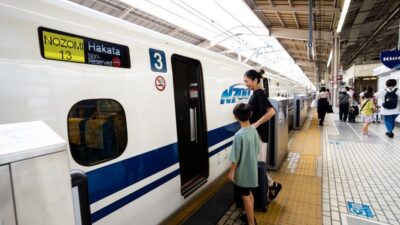
A few practical notes stand out. The departure station can take time to navigate, so arrive with enough margin to find your platform and gate. One passenger suggested allowing at least 20 minutes, including time to get oriented. That is sensible, especially if you have not used the station before or are carrying bags.
More Entry Tickets in Tokyo
- Tokyo Disney Resort – Tokyo Disneyland & Tokyo DisneySea Park Tickets
★ 4.8 · 99,488 reviews - SHIBUYA SKY Ticket
★ 4.7 · 46,509 reviews - JR Whole Japan Rail Pass
★ 4.8 · 29,150 reviews
Picking the right departure
With 369 daily schedules listed, you are unlikely to be limited to one narrow departure window. That makes the train useful for a range of plans, from leaving Tokyo early to spending more of the day there before heading west. The journey is direct, so the key choice is the timing and service that best fits your day.
The advertised journey times do not all match one another exactly. The route summary gives a fastest trip of 2 hours 14 minutes and an average of 3 hours 5 minutes. Elsewhere, the Nozomi is described as taking about 2 hours 30 minutes, while a named Nozomi example is listed at 3 hours 5 minutes. Treat the figures as a general range, not a guarantee for every train. Before booking, compare the actual departure and arrival times shown for your selected service.
Hikari and Kodama trains take longer because they make more stops, but that does not make them poor choices. If you are not trying to reach Osaka as quickly as possible, a slower train can still be a comfortable, direct option. The listing’s slowest stated journey is 3 hours 56 minutes.
Ordinary Car or Green Car?
The Ordinary Car is the sensible default for most people. Seats are arranged three on one side of the aisle and two on the other, and they recline. You can choose a reserved seat or, on eligible services, a non-reserved seat. A reserved seat removes the uncertainty of looking for an open place, especially if you are travelling with family or want to sit together.
A non-reserved ticket can offer flexibility, but you should not assume that a specific seat will be waiting for you. If having a guaranteed place matters, choose a reserved seat and verify the seat details before checkout. Ticket choices may vary by train.
The Green Car is the upgrade. It has wider seats, additional legroom and reserved seating. For a journey of roughly three hours, that extra space may be worth the higher fare if comfort is a priority, or if you want a quieter-feeling trip with more room to settle in. It is not essential, though. Some people find the Ordinary Car comfortable enough and see little reason to pay more.
Gran Class is not available on the Tokaido Shinkansen, so do not expect that option on this route. The ticket choices described here center on Ordinary and Green Car seats.
Luggage: plan before you board
Small bags and many medium suitcases can go on the overhead racks, according to passenger experience. That can be enough if you are travelling light. But luggage space is not unlimited, and a bag that does not fit overhead can become awkward once you are seated.
If you have oversized luggage, choose a ticket that includes reserved luggage space when that option is available. The booking information specifically offers seats with oversized luggage space, but availability can depend on the train and seat selection. Read the ticket details carefully rather than assuming that every reserved seat includes a luggage space.
There is a useful distinction between having a reserved seat and having a reserved seat with room for a large bag. A reserved seat guarantees your place, but it does not necessarily solve a luggage problem. If you are travelling with more than one large suitcase, check the available arrangement closely. Some passengers have found that spare or unreserved luggage areas are limited, and bags placed in inconvenient spots can interfere with the seat behind them.
A completely different kind of day out:
- Mt Fuji and Hakone 1-Day Bus Tour Return by Bullet Train
★ 5.0 · 26,383 reviews - TOKYO SKYTREE® Ticket
★ 4.7 · 25,136 reviews - teamLab Borderless Tickets: MORI Building DIGITAL ART MUSEUM
★ 4.7 · 24,126 reviews - teamLab Planets TOKYO Ticket
★ 4.7 · 21,663 reviews
The Tokyo station approach
Give yourself time to find the right platform and gate. A large station can turn a simple ticket into a last-minute puzzle if you arrive just before departure. Allowing around 20 minutes is a practical buffer, particularly if you need to read signs, check the app or move through the gates with luggage.
Shinagawa is another boarding point mentioned by people using this route, and some find it less crowded than Tokyo Station, with food options and clear directional signs. If your itinerary allows you to board there, compare it with the departure station on your ticket. Do not assume you can switch stations without checking your specific booking.
For many routes, Klook supplies a QR code that can be scanned at the gate, avoiding a separate visit to a ticket machine. That convenience is a major part of the appeal for international visitors. Still, follow the exact instructions in your booking. The QR method is described as applying to most routes, not every possible ticket.
Double-check your date and departure before checkout. A wrong-date ticket can mean missing the train, even if the booking process itself is straightforward. The app offers changes for some bookings, but conditions depend on the ticket type, so do not count on every fare being changeable.
A window seat and the Mount Fuji question
The ride can offer a view of Mount Fuji from the train, and one passenger specifically recommends seat E for a chance to see it. But a view is never assured: cloud cover, visibility and the side of the train all matter. If a Fuji glimpse would be a bonus, enjoy the possibility without treating it as the main reason to buy a particular ticket.
One passenger paid extra for a Fuji-side view and saw nothing, then suggested standing near a doorway window as a cheaper alternative. That is an individual tip, not a guarantee or a formal viewing service. Do not block the aisle or doorway, and follow onboard rules. The sensible approach is to choose a comfortable seat first and count any mountain view as luck.
Is the ticket good value?
Prices are listed from US$87.65, with an average fare given as US$119.09 in one section. Other parts of the fare information quote an average of US$134 and a possible upper price of US$169.39, while another range tops out at US$150.55. These figures do not line up perfectly, which is a reason to use the live price for your exact train and seat as the deciding figure.
At the lower end, the ticket can be strong value for a fast, direct trip between two major cities. You are paying for a much shorter journey than the highway bus, which takes around 8 to 9 hours, depending on traffic. A flight takes about an hour in the air, but airport check-in, security and transfers can make the full trip longer than the train. For many itineraries, the Shinkansen’s station-to-station simplicity is worth the fare.
The upgrade decision is more personal. Green Car costs more, but offers wider seats, added legroom and a reserved place. If your priority is getting there efficiently, Ordinary Car is likely enough. If you value extra room or want the comfort upgrade for a longer day, compare the difference at checkout and decide if it suits your budget.
Booking through Klook
The booking flow asks you to enter your departure and arrival points, select a date, compare available times and fares, then choose an itinerary. The platform offers multiple payment options and lets you pay in your currency before departure. For many routes, the QR code can be used at the gate, saving a ticket-machine stop.
The main benefit is reducing friction, not changing the train ride itself. The Shinkansen is the same train whether you book through the app or another eligible sales channel. Klook can be useful if you want to settle the purchase ahead of time and keep your ticket on your phone, but you should still confirm the date, departure, seat class and luggage arrangement.
Changes and refunds depend on the fare and train. The app has a booking area where eligible reservations can be managed, but not every ticket has the same terms. Check the conditions before you pay, especially if your plans may shift.
Who should book this ride?
I would choose the Shinkansen if you want to get between Tokyo and Osaka quickly, prefer a direct route, or would rather avoid the extra airport steps involved in flying. It also suits families and groups who can reserve seats in advance, as well as anyone who values predictable travel time more than the lowest possible transport cost.
Budget-minded passengers should compare the fare with the highway bus. The bus takes much longer, but may be cheaper. If you are choosing the train, compare departure times and seat types rather than assuming the lowest advertised price applies to every schedule.
For a first Shinkansen ride, this route is an easy way to see how Japan’s high-speed rail works: direct travel, orderly boarding and a comfortable seat. Just leave time to find your platform, check your ticket details, and plan for large bags before you reach the station.
Should you book?
For most people making the Tokyo to Osaka trip, yes. The Shinkansen combines speed, frequent departures and a direct ride, while Klook’s QR ticket option can make boarding simpler. Book the Ordinary Car if you want the practical choice, or compare Green Car pricing if extra space matters to you.
Pause before paying if you are choosing solely by the lowest headline fare, carrying several large suitcases, or relying on a particular Mount Fuji view. Check the exact schedule, seat and luggage terms first. With those details sorted, this is a convenient way to spend less of your day getting to Osaka and more of it there.
FAQ
How much is a Tokyo to Osaka Shinkansen ticket?
Fares start at US$87.65. One price estimate gives an average of US$119.09, while other displayed averages and upper limits differ. Your final fare depends on the train, time and seat type, so check the price for your chosen itinerary.
How long does the train take from Tokyo to Osaka?
The stated journey range is 2 hours 14 minutes to 3 hours 56 minutes, with an average of about 3 hours 5 minutes. Check the departure and arrival times for the specific train you select.
How many trains run each day?
There are 369 daily schedules listed for the route. Departure times and ticket choices vary.
Does the train require a transfer?
No. The Tokyo to Osaka route is listed with zero transfers.
Which seat types can I choose?
Available options include non-reserved Ordinary Car seats, reserved Ordinary Car seats and reserved Green Car seats. The choices can vary by train. Green Car seats are reserved, and Gran Class is not available on this Tokaido Shinkansen route.
Can I board with a QR code?
A QR code is available for most routes, allowing you to scan at the gate without collecting a separate ticket at a machine. Check the instructions on your specific booking, since the QR option is not stated to apply to every route.
Just added in Tokyo
- Simply Japan★ 4.6 · 262 reviews
- Japan: Tokyo Nights & Kyoto Temples★ 4.7 · 20 reviews
- Japan: Land of the Rising Sun★ 4.7 · 122 reviews
- Japan Classic 14 Day – One Life Adventures★ 4.9 · 1,003 reviews
- A Classic 11 Day Japan Holiday★ 4.8 · 32 reviews
- 5 Day All Inclusive Japan Classics(Private Guide and Driver)Family Tour Customizable★ 5.0 · 4 reviews
- 13-Day Japan Tour: Tokyo, Mount Fuji, Kyoto, Nara, Osaka & Beyond★ 4.5 · 207 reviews
- TV Anime “The Apothecary Diaries” x TOKYO CITY VIEW★ 4.8 · 49 reviews
Entry Tickets, compared.

Tokyo Disney Resort – Tokyo Disneyland & Tokyo DisneySea Park Tickets
Read our review →



teamLab Borderless Tickets: MORI Building DIGITAL ART MUSEUM
Read our review →
Browse the lists this tour appears in