Reviewed · TOKYO TOURS
Tokyo: True Crime And Ghost Stories Tour
Tokyo has a darker side worth hearing about. This three-hour walk links Kabukicho’s crime and nightlife history with wartime atrocities, Japanese ghost stories, and the narrow drinking lanes of Golden Gai. I like the mix of serious history and wicked humor, and I especially like that guide John puts the stories into a wider picture of how Tokyo developed. The main drawback is clear: this is a long walk with adult subjects, dirty jokes, murder, prostitution, and war crimes.
You begin at Hanazono Shrine, near Golden Gai, and finish at Aoyama-Itchome Station. Along the way, John uses dramatic storytelling, acting, jokes, and plenty of local context. If you want a polished sightseeing loop with temples and shopping, this is not it. If you enjoy true crime, uncomfortable history, and ghost lore, it offers an unusual look at Tokyo for $35.
In This Review
- Key points at a glance
- Starting at Hanazono Shrine beside Golden Gai
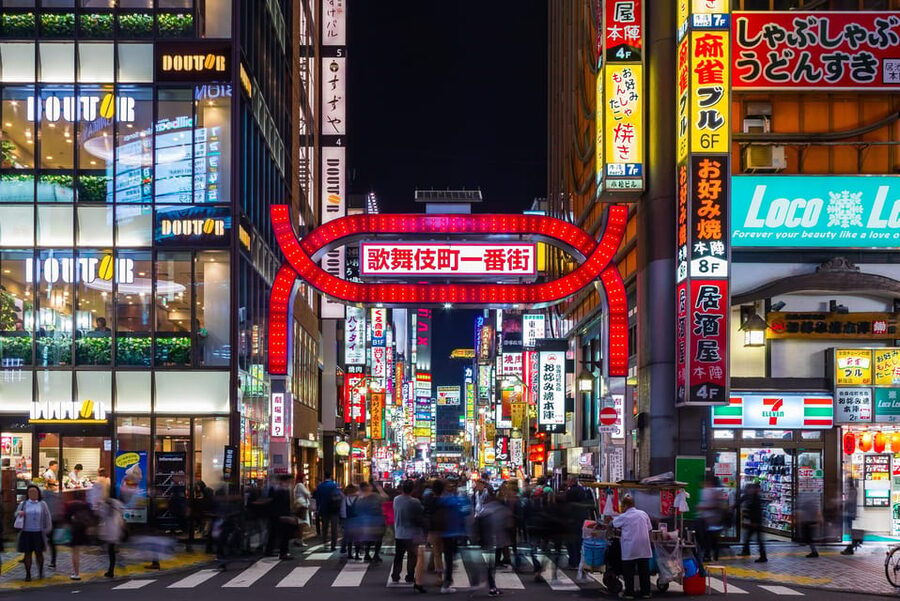
- Kabukicho: crime, nightlife, and the yakuza world
- Toyama Park and the crimes of Unit 731
- Aoyama Cemetery after dark
- John’s storytelling makes or breaks the evening
- Walking conditions, timing, and comfort
- Is $35 good value?
- Who should book this Tokyo walk?
- Should you book the True Crime and Ghost Stories Tour?
- FAQ
- How long does the Tokyo True Crime and Ghost Stories Tour last?
- Where does the tour begin?
- Where does the tour finish?
- What language is the tour conducted in?
- Who guides the tour?
- Is transportation included?
- Are entry fees included?
- Is dinner included?
- Is the tour suitable for children or wheelchair users?
Key points at a glance
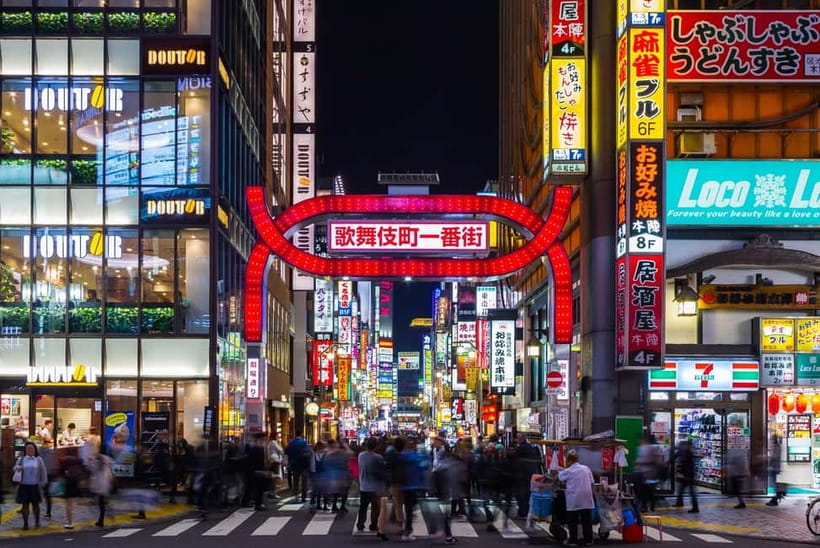
- Kabukicho opens the evening: Learn about organized crime, gang conflict, murders, love troubles, and Tokyo’s quasi-legal sex trade in Japan’s best-known red light district.
- Toyama Park carries serious weight: The tour connects this quiet park with Unit 731 and human experimentation during World War II.
- Aoyama Cemetery sets the mood: Ghost stories land differently among dark paths, graves, and trees, especially later in the day.
- John is the main attraction: His strong storytelling, expressive acting, humor, and broad knowledge of Japan receive the most consistent praise.
- Golden Gai adds local atmosphere: The tour begins beside one of Tokyo’s most famous drinking districts rather than at a standard sightseeing landmark.
- Plan for a demanding walk: You need decent fitness, and the route is not suitable for wheelchair users, children under 14, or people who tire easily.
Starting at Hanazono Shrine beside Golden Gai
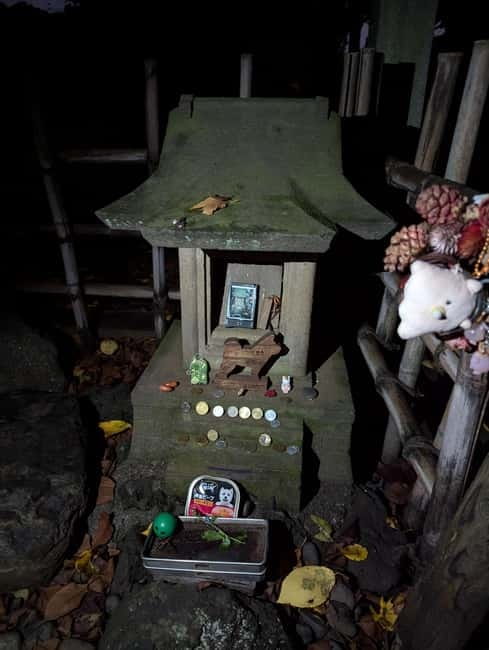
The meeting point is just in front of the stairs leading to the main shrine building inside Hanazono Shrine. That detail matters because the shrine grounds can feel quiet and tucked away, while the surrounding Shinjuku streets are anything but quiet. Check your booking messages for the final meeting instructions, then look for John, described as a thin, bald white man.
Beginning here gives the tour a fitting first scene. Hanazono Shrine sits close to Golden Gai and Kabukicho, where old religious space, nightlife, tiny bars, and commercial entertainment crowd together. You do not need to pay an entry fee for the places visited along the route, so the experience depends almost entirely on the guide and the stories.
John’s style is informal and theatrical. He tells grim stories with a funny twist, sometimes acting them out. Several people praised his dramatic delivery, quirky personality, and ability to keep the group engaged even in heat, humidity, rain, or after a long day of walking.
That humor will not suit everyone. The jokes can be dark, and adult language appears from time to time. Still, the humor has a practical purpose. Some of the material is disturbing or depressing, and John uses lighter moments to give you a breather before the next grim tale.
A few more options to weigh up in Tokyo
- Tokyo Disney Resort – Tokyo Disneyland & Tokyo DisneySea Park Tickets
★ 4.8 · 99,488 reviews - SHIBUYA SKY Ticket
★ 4.7 · 46,509 reviews - JR Whole Japan Rail Pass
★ 4.8 · 29,150 reviews
Kabukicho: crime, nightlife, and the yakuza world
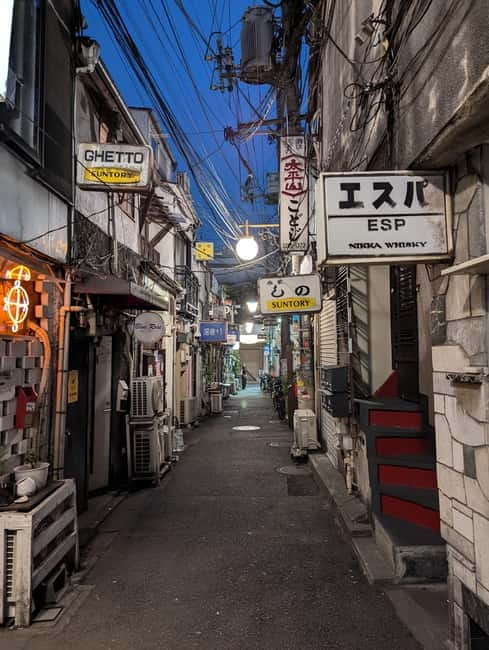
The first main section takes about 45 minutes in Shinjuku. Kabukicho is Japan’s largest red light district and Tokyo’s organized crime capital in the tour’s telling. You see a side of Shinjuku that most visitors pass through without understanding.
John covers gang wars, shocking murders, betrayed or abandoned lovers, and the workings of the city’s quasi-legal sex industry. The material includes prostitution, girl and boy clubs, love hotels, and the social world around them. This is not a tour of glamorous nightlife. It is an explanation of how money, crime, desire, and entertainment overlap in one of Tokyo’s most famous neighborhoods.
I like this part because it gives you useful context for the streets around Kabukicho. Tokyo can look orderly and safe at first glance, yet the district has long had its own rules and power networks. The tour does not merely point at neon signs and announce that the area is exciting. It explains the darker systems behind the signs.
This section also benefits from John’s ability to answer questions. He is open to wider questions about Japan, local history, and society, so you can ask for clarification instead of simply listening to a fixed script. The experience feels more like a conversation than a lecture, although the amount of information depends on the group and the questions asked.
The hard part is the subject matter. If discussions of murder, sex work, organized crime, and exploitation make you uncomfortable, you may not enjoy the opening section. It is also worth remembering that Kabukicho remains an active entertainment district, not a museum set. Stay alert around crowds and follow John’s instructions as you walk.
Toyama Park and the crimes of Unit 731
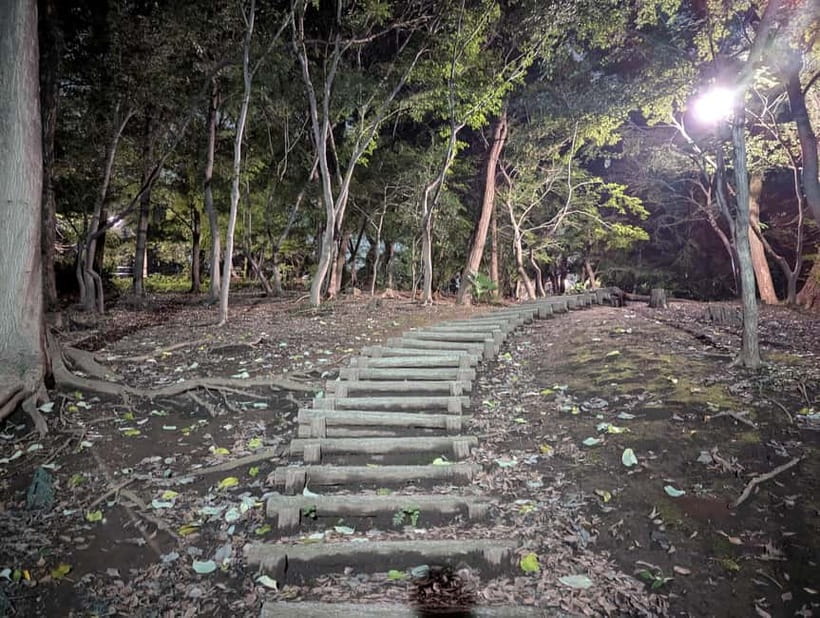
After Shinjuku, the route continues on foot to Toyama Park. This is one of the tour’s most serious sections and the point where the experience moves far beyond spooky entertainment.
Toyama Park is linked to Unit 731, the Japanese military unit responsible for horrific human experimentation during World War II. The tour presents the park as a place associated with terrible crimes against humanity and the ghosts of those who suffered. It uses the stark comparison of Tokyo’s mini-Auschwitz to signal the gravity of the subject, though you should expect a spoken discussion rather than a formal memorial visit.
This part gives the tour its historical purpose. Without it, the evening could be just a collection of sensational crime stories and ghost tales. By including wartime atrocities, John asks you to think about how countries remember, avoid, or soften difficult parts of their past.
I appreciate that the experience places modern Tokyo beside a much darker wartime story. The park itself may feel ordinary, which makes the contrast unsettling. You are not walking through a dramatic horror set. You are hearing about events connected to a real place in a modern city.
The topic can be upsetting, and John’s humor does not make every subject light. For me, this is a reason to choose the tour only if you are prepared for serious material. You should not book it simply because you like ghost stories and assume the evening will be harmless fun.
The supplied timing gives this section about 30 minutes. That is enough for a focused explanation, but not enough for a full academic study of Unit 731 or wartime Japan. Think of it as an introduction that may leave you wanting to read more, rather than a complete treatment of the subject.
Aoyama Cemetery after dark
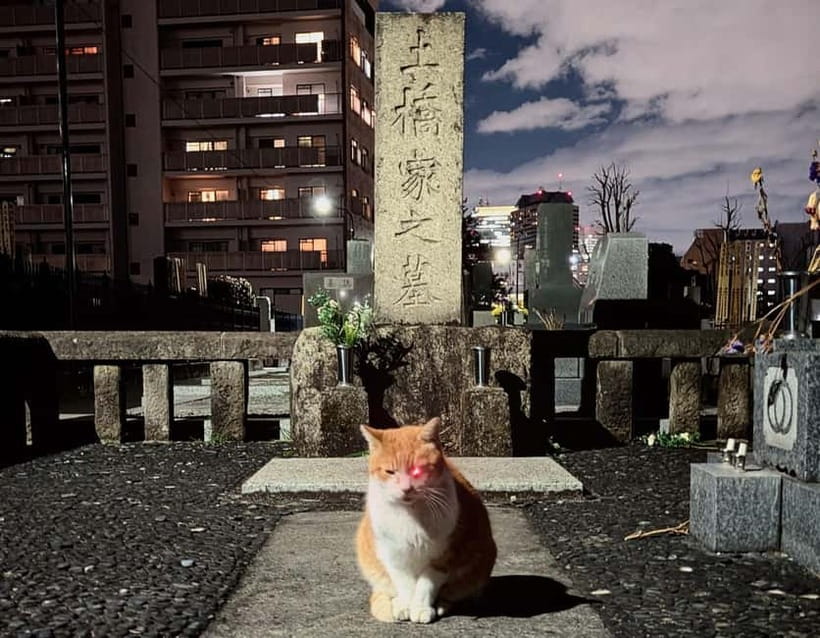
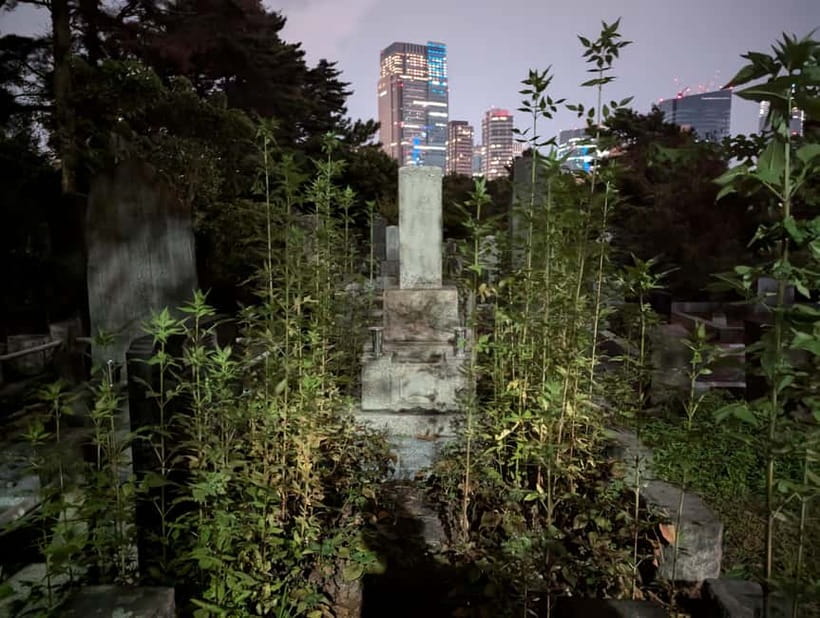
The final major stop is Aoyama Cemetery, described as the largest cemetery in Tokyo. The route ends at Aoyama-Itchome Station, and the cemetery provides the right setting for traditional ghost stories: quiet paths, graves, darkness, and a change from the bright streets of Shinjuku.
This section lasts about 45 minutes. John tells Japanese ghost stories and local legends, using expressive delivery rather than relying on props or special effects. The setting does much of the work. A story that might seem merely odd in daylight can feel much more vivid when you are standing among graves in the evening.
The timing can affect the mood. One useful suggestion is to consider an earlier start if you want to see the cemetery before it becomes fully dark. That gives you a better sense of the place itself, while a later finish provides the strongest spooky atmosphere. Check the available starting times when you book.
The cemetery also includes the grave of Hachiko, Japan’s famous loyal dog. That adds a surprisingly gentle moment to an otherwise grim route. Hachiko’s story is widely associated with loyalty and devotion, so the visit gives the final section a different emotional note before you leave for the station.
The cemetery is not a haunted attraction. You are visiting a real burial ground, so respectful behavior matters. Keep your voice under control when appropriate, stay with the group, and remember that the setting is meaningful to families and local residents, not only a backdrop for ghost stories.
A completely different kind of day out:
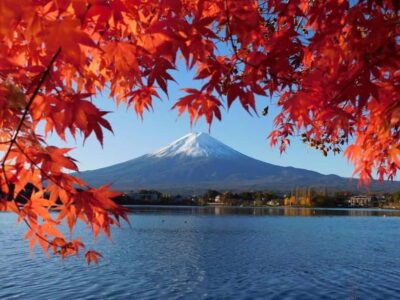
- Mt Fuji and Hakone 1-Day Bus Tour Return by Bullet Train
★ 5.0 · 26,383 reviews - TOKYO SKYTREE® Ticket
★ 4.7 · 25,136 reviews - teamLab Borderless Tickets: MORI Building DIGITAL ART MUSEUM
★ 4.7 · 24,126 reviews - teamLab Planets TOKYO Ticket
★ 4.7 · 21,663 reviews
John’s storytelling makes or breaks the evening
This tour depends heavily on its guide. John is repeatedly praised for his preparation, humor, dramatic delivery, and passion for the subject. He is not presented as a distant academic. He acts out parts of stories, makes silly jokes, and sometimes turns his own personality into part of the show.
That style has clear benefits. The material is dense, and three hours of crime and wartime history could become exhausting. John keeps the pace lively, answers questions, and moves between gruesome facts and lighter stories. One unusual description portrays him as an introverted scholar who enjoys day drinking with his cat. That tells you more about the tone than any formal guide biography could.
I also value the practical help he provides. He has helped people find their trains after the tour, including on rainy evenings and after Halloween-night walks. Since the tour finishes at Aoyama-Itchome Station rather than returning to Shinjuku, that kind of help can be useful if you are unfamiliar with Tokyo’s rail network.
His humor is not universally safe or polished. Adult language, sexual subjects, and dirty jokes are part of the presentation. Some people will find the jokes a welcome release; others may feel they undercut the seriousness of the wartime material. I would expect an irreverent performance, not a solemn historical seminar.
The biggest strength is John’s ability to connect individual cases with broader Japanese history and society. People who already know something about Japanese dark history can ask more detailed questions. People who know little can still follow the stories because he provides background and explains why the locations matter.
Walking conditions, timing, and comfort
The tour lasts three hours and involves quite a bit of walking. The route moves from Hanazono Shrine and Kabukicho to Toyama Park, then onward to Aoyama Cemetery and Aoyama-Itchome Station. The booking information also warns about stairs, so wear comfortable shoes and avoid scheduling this after an exhausting day of sightseeing.
Tokyo’s heat and humidity can make the distance feel longer. Rain does not automatically cancel the experience, but wet conditions will make the walk less comfortable. Bring water, dress for the weather, and leave enough energy for the cemetery section instead of treating this as a gentle after-dinner stroll.
There are no entry fees along the route. You should budget 200 yen for transportation, which keeps the basic cost low. Dinner is not included, so eat beforehand or plan food after the finish. The tour does not function as a bar crawl, despite beginning near Golden Gai and passing through nightlife districts.
The group can be private, which may suit couples, friends, or families with older teenagers who are comfortable with the material. The standard language is English. Children under 14 are not accepted, and the experience is not suitable for wheelchair users, people with a low level of fitness, or anyone weighing over 300 pounds, or 136 kilograms.
Is $35 good value?
At $35 per person, the price is reasonable if you want a focused guide and an unusual route through central Tokyo. You are paying for three hours of live narration, not for transport, meals, entry tickets, or a staged attraction. Since the route has no admission fees, John’s time and storytelling carry most of the value.
I would compare it with the cost of spending an evening in Golden Gai or Kabukicho without context. You can walk those areas for free, but you will not automatically learn how the crime stories, sex industry, wartime events, and ghost traditions connect to Tokyo. The tour gives structure to places you might otherwise see only as nightlife districts or ordinary city streets.
The value is strongest for people who enjoy history, true crime, paranormal stories, and candid discussion. It is weaker for anyone seeking a broad introduction to Tokyo’s temples, food, architecture, or everyday neighborhoods. This is a specialist tour, and its strength comes from staying focused.
The rating is 4.9 from 163 reviews, a very strong result. The praise centers on John’s storytelling, historical knowledge, humor, acting, and personal help with trains and meeting arrangements. The consistent pattern suggests the guide is the product, so I would place more weight on your comfort with his irreverent style than on the route alone.
Who should book this Tokyo walk?
I would recommend it to adults and older teenagers who enjoy crime documentaries, Japanese horror, difficult wartime history, and unusual city stories. It also suits repeat visitors who have already seen the standard Tokyo sights and want a less polished, more challenging evening.
You do not need to be a serious paranormal believer. The tour includes real crime and historical events alongside folklore, so you can enjoy the ghost stories as cultural tales rather than claims that every location is haunted.
I would skip it if you tire easily, dislike graphic subjects, or want a calm walk. I would also avoid booking it for a mixed group if one person is likely to object to sexual topics, adult jokes, or descriptions of violence. The tour is honest about its tone, and you should be equally honest about your own limits.
Should you book the True Crime and Ghost Stories Tour?
Book it if you want Tokyo explained through its crimes, social shadows, wartime record, and ghost lore. The route is affordable, the locations are unusual, and John’s animated storytelling gives the evening its energy.
Skip it if you want a family-friendly activity or a gentle introduction to the city. For the right audience, this is a memorable counterpoint to Tokyo’s bright tourist image, with enough history to make the jokes and scares feel grounded in real places.
FAQ
How long does the Tokyo True Crime and Ghost Stories Tour last?
The tour lasts three hours, including the walking sections and guided stops in Shinjuku, Toyama Park, and Aoyama Cemetery.
Where does the tour begin?
It begins at Hanazono Shrine in Shinjuku, just in front of the stairs leading to the main shrine building inside the shrine grounds, near Golden Gai.
Where does the tour finish?
The tour finishes at Aoyama-Itchome Station.
What language is the tour conducted in?
The tour is conducted in English with a live guide.
Who guides the tour?
The guide is John, who is described as a thin, bald white man at the meeting point. He is known for his storytelling, acting, humor, and broad knowledge of Japanese history and crime.
Is transportation included?
Transportation is not included. You should budget 200 yen for transportation during the route.
Are entry fees included?
There are no entry fees for the places visited along the route.
Is dinner included?
No. Dinner is not part of the tour.
Is the tour suitable for children or wheelchair users?
The tour is not suitable for children under 14 or wheelchair users. It is also not recommended for people with a low level of fitness, people who tire easily, or anyone over 300 pounds, or 136 kilograms.
Just added in Tokyo
- A One-of-a-Kind Sushi Experience in a Special Place of Japan★ 5.0 · 15 reviews
- Tokyo Cute Bento Cooking Class – Make a Kawaii Character Lunchbox★ 5.0 · 126 reviews
- Japanese Home Cooking Class & Walk in Todoroki Temple Tokyo★ 5.0 · 88 reviews
- Japan Tokyo Tower Observatory Deck E-Ticket★ 4.0 · 34 reviews
- Catch a Baseball Game in Tokyo with a Local – Tickets Included★ 5.0 · 24 reviews
- JDM Experience with Fast&Furious RX-7 (English speaking Driver)★ 5.0 · 57 reviews
- Tokyo Private Day Tour by Car with English speaking Driver Guide★ 4.0 · 29 reviews
- Japan Classic 10 Day – One Life Adventures★ 5.0 · 129 reviews
Tokyo Tours, compared.
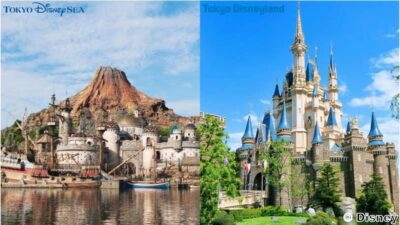
Tokyo Disney Resort – Tokyo Disneyland & Tokyo DisneySea Park Tickets
Read our review →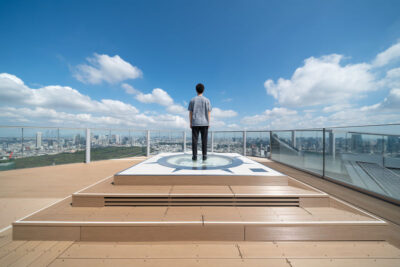
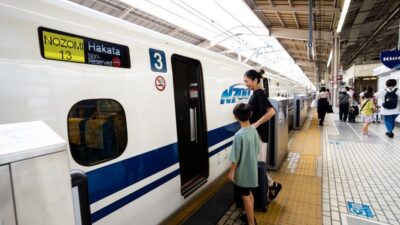
Mt Fuji and Hakone 1-Day Bus Tour Return by Bullet Train
Read our review →

teamLab Borderless Tickets: MORI Building DIGITAL ART MUSEUM
Read our review →