Reviewed · TOKYO TOURS
Tokyo:Calligraphy &Make your original folding fan in Asakusa
Slow down with ink and paper. This Asakusa workshop gives you a calm, hands-on introduction to Japanese calligraphy, with an English-speaking instructor, traditional ink, and a final original folding fan to take home. I especially like the patient, personal teaching style and the chance to write a postcard to yourself after the class. The $16 price is also appealing for a Tokyo activity that leaves you with something more meaningful than a quick photograph.
The main consideration is time. The experience can last anywhere from 30 to 90 minutes, depending on the option and how long you practice, so you should not squeeze it between tightly timed plans. Ink can also make a mess, although aprons are provided. If you choose the henna tattoo option, you do not receive the calligraphy experience.
In This Review
- Key points to know before you book
- Why calligraphy makes a good break in Asakusa
- Beginning with hiragana, kanji, and calligraphy culture
- Learning posture, brush grip, and the eight basic techniques
- Melting a traditional ink stick
- Thirty minutes of practice before the final design
- Creating your one-of-a-kind folding fan
- Green tea and a postcard to your future self
- How Mana teaches beginners and families
- Who will get the most from this activity
- Is $16 good value in Tokyo?
- Practical tips for a smoother session
- Should you book the Asakusa calligraphy workshop?
- FAQ
- How much does the calligraphy and folding fan activity cost?
- How long does the activity last?
- Is the instruction available in English?
- What do I make during the workshop?
- Is green tea included?
- Can I print my calligraphy on a T-shirt?
Key points to know before you book
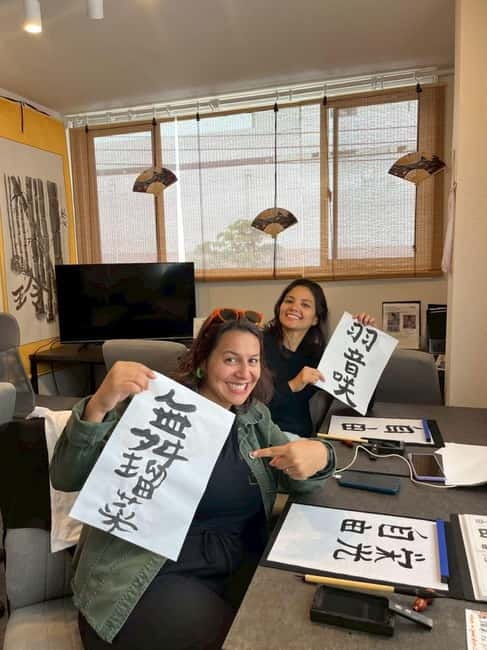
- You practice before making the final fan: Guide paper and staff support let you work on your brush strokes before committing to the souvenir.
- Mana teaches in English: Her calm, patient approach has been a major part of the experience for many participants, including children and first-time learners.
- Traditional ink is part of the lesson: You use water to melt a solid ink stick rather than simply squeezing ink from a bottle.
- The workshop explains posture and brush control: You learn the basic attitude, sitting position, brush grip, and amount of ink needed.
- Green tea and a postcard add a personal finish: You can write a note to yourself, helping preserve the memory after you return home.
- The price is low for a creative Tokyo activity: At $16 per person, this is an inexpensive way to make a personal souvenir in Asakusa.
Why calligraphy makes a good break in Asakusa
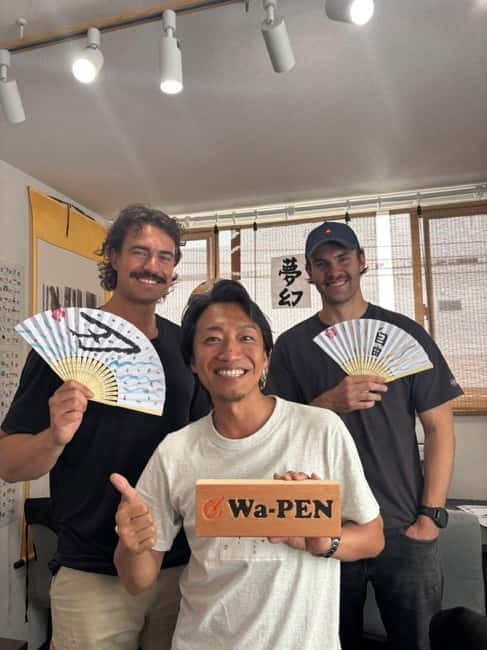
Asakusa can fill a day with temples, shopping streets, food stops, and plenty of walking. A calligraphy class gives you a different pace. Instead of rushing from one sight to another, you sit down, handle a brush, and pay attention to a single line.
That change of rhythm is one of the strongest reasons I like this activity. Several participants described it as relaxing, almost meditative, and a welcome break from Tokyo heat and crowds. You do not need artistic experience to take part. The point is not to produce museum-quality work. It is to learn how the brush behaves and create something that carries your own effort.
The setting near Asakusa also makes practical sense. You can pair the workshop with a visit to Senso-ji, and one participant even arranged to meet a friend at the temple afterward. The exact meeting point can vary by option, so check your booking details carefully rather than relying only on the general Asakusa location.
A few more options to weigh up in Tokyo
- Tokyo Disney Resort – Tokyo Disneyland & Tokyo DisneySea Park Tickets
★ 4.8 · 99,488 reviews - SHIBUYA SKY Ticket
★ 4.7 · 46,509 reviews - JR Whole Japan Rail Pass
★ 4.8 · 29,150 reviews
Beginning with hiragana, kanji, and calligraphy culture
The class begins with an introduction to Japanese calligraphy and the role of writing in Japanese culture. You learn about hiragana, kanji, and how traditional writing connects with modern daily life.
This opening matters because Japanese characters are not simply decorative shapes. A word or name can carry a meaning that changes the feeling of the finished design. You may choose a kanji character with a personal meaning, write your name in kanji, or select a design from the sample book.
The instructor helps explain those choices in English. That makes the activity more than a paint-and-take souvenir session. You get some context before selecting what will appear on your fan or paper.
The lesson also introduces the mind of hiragana. That phrase points to the flowing, expressive quality of Japanese writing. You may not master it in one visit, but learning why the forms look and move as they do helps you see Japanese writing differently during the rest of your time in Tokyo.
Learning posture, brush grip, and the eight basic techniques
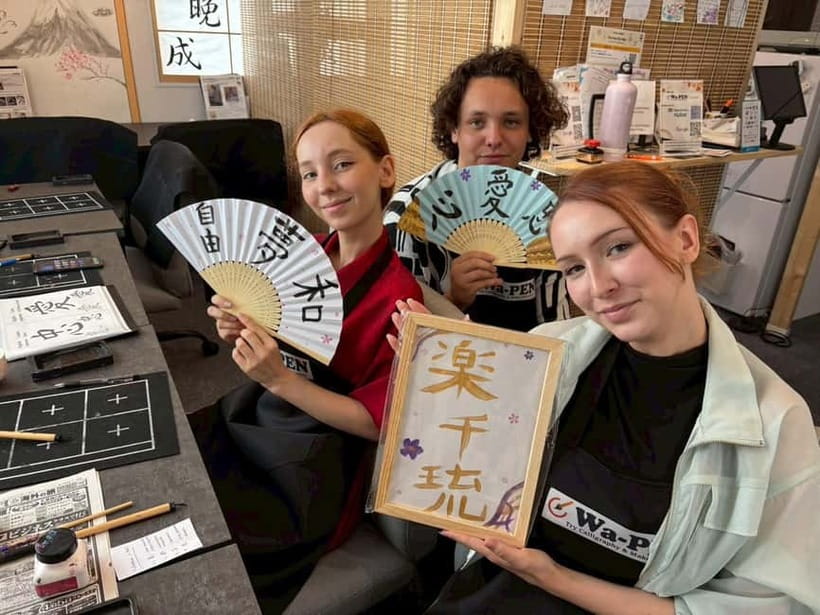
Before you write, the instructor explains the proper posture and attitude for calligraphy. You learn how to sit, how to hold the fude, or Japanese brush, and how to control the amount of ink.
These details can sound small, but they affect the result. Too much ink can make a stroke heavy and blurred. Too little can leave a line weak. The angle and pressure of the brush also change the width and character of each mark.
You practice about eight basic techniques with guide paper. This is the part that makes the workshop suitable for beginners. Instead of being handed a brush and told to copy a character, you get a foundation for making the strokes.
The guide sheets give you room to repeat the movements without worrying about ruining your final design. I like this approach because it takes pressure off the first attempt. You can make mistakes on practice paper, ask for help, and try again.
Melting a traditional ink stick
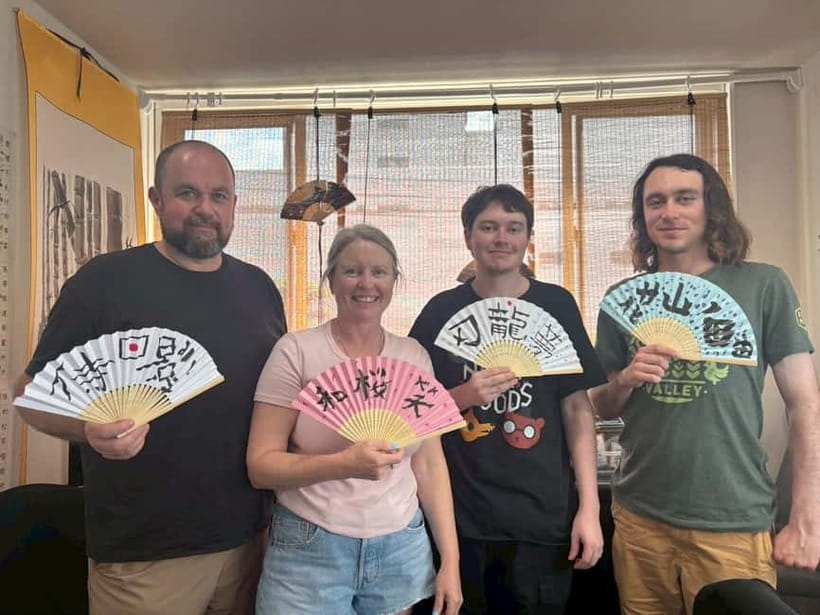
One distinctive part of the class is preparing the ink. You use water to melt a traditional solid ink stick for calligraphy.
This adds a small but useful piece of craft to the session. You see that the ink is not just a ready-made supply, but part of a process. It also gives you a better sense of how carefully calligraphy is traditionally prepared.
For a short workshop, this kind of detail helps the experience feel connected to the art itself. You are not simply filling in a pre-printed design. You are handling the main tools and learning the conditions needed to use them.
The downside is that liquid ink requires care. Wear clothes that can get a little dirty. Aprons are available, but an apron is not a guarantee against every splash. One participant wished for a towel at the end, so bringing a little patience for inky fingers is sensible.
A completely different kind of day out:
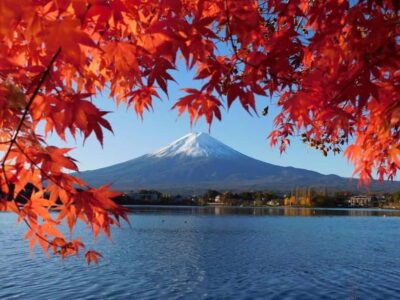
- Mt Fuji and Hakone 1-Day Bus Tour Return by Bullet Train
★ 5.0 · 26,383 reviews - TOKYO SKYTREE® Ticket
★ 4.7 · 25,136 reviews - teamLab Borderless Tickets: MORI Building DIGITAL ART MUSEUM
★ 4.7 · 24,126 reviews - teamLab Planets TOKYO Ticket
★ 4.7 · 21,663 reviews
Thirty minutes of practice before the final design
The practice period lasts about 30 minutes, though the total activity can run from 30 to 90 minutes. The exact length depends on the option booked and how much time you spend refining your work.
You can choose a design from a sample book or ask the instructor for help with a custom idea. Participants have written names in kanji and selected meaningful Japanese characters. This is where you should think about the souvenir you actually want, rather than choosing the first attractive shape you see.
Mana, the instructor, has been praised for giving people time to practice until they feel satisfied. She has also allowed participants to extend their time to finish their work. That flexibility is useful for beginners, who may need several attempts before their strokes feel comfortable.
Still, do not assume every session will stretch beyond the advertised duration. If you need more time, ask politely and check what your specific booking allows. The activity is best treated as an unhurried experience, not a quick stop that must end at an exact minute.
Creating your one-of-a-kind folding fan
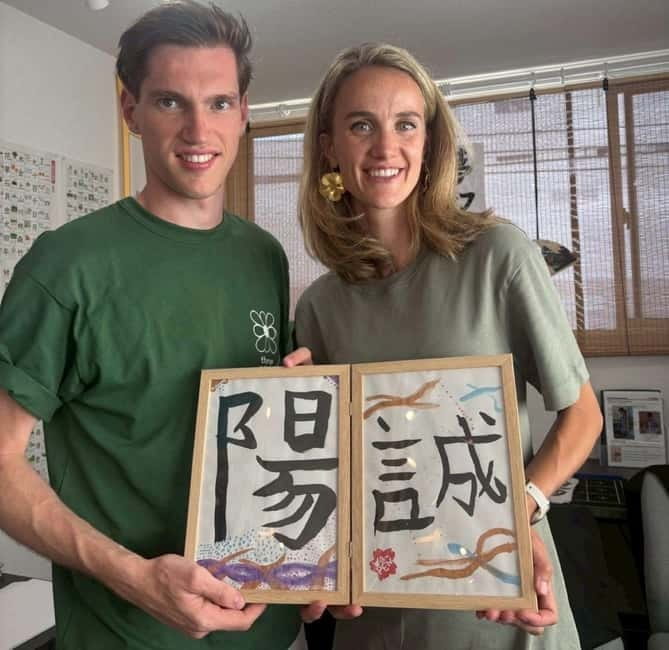
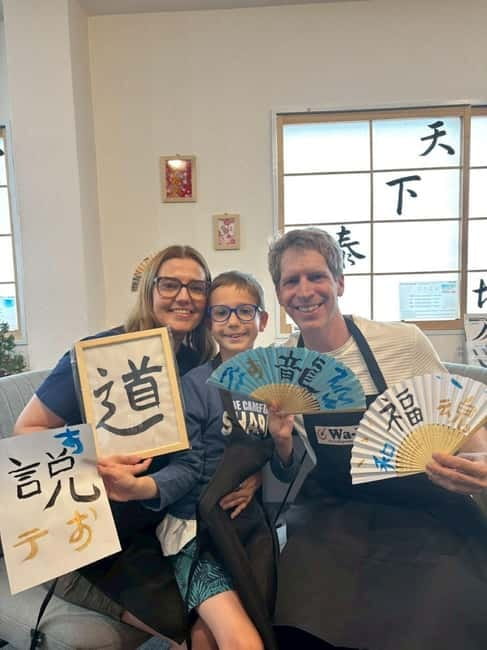
After practicing, you choose your favorite design for the final piece. The design is then used to create your original folding fan, which becomes the main souvenir from the class.
The fan is a practical choice. It is light, easy to pack, and clearly connected to the activity you completed. Unlike a mass-produced souvenir, it carries your handwriting, including its small irregularities. Those marks are part of its charm.
You should not expect professional calligraphy after one lesson. Your strokes may be uneven, and the character may look different from the sample. That is normal. The value comes from understanding the process and making a personal object, not from producing flawless work.
Some participants also asked about printing their calligraphy on a T-shirt. That is not included. You may buy a T-shirt in the shop if you want to print the design, but the shirt and printing cost extra. The included fan should be the souvenir you plan around.
Green tea and a postcard to your future self
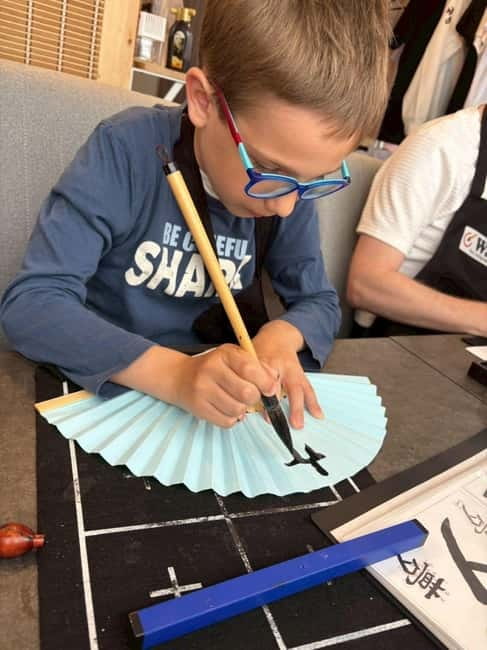
The class ends with green tea and a postcard-writing activity. You write a postcard to yourself at home, explaining how you felt during the calligraphy session and recalling your Tokyo trip.
This is a simple touch, but I find it one of the best ideas in the experience. The fan gives you a physical souvenir, while the postcard creates a delayed reminder. When it arrives after you return home, it can bring back the mood of the afternoon more effectively than another photograph on your phone.
The green tea also helps the class finish slowly. You are not pushed straight from the final brush stroke back into the noise of Asakusa. Food and drinks are not allowed during the calligraphy session itself, so the tea belongs at the end rather than during the practice.
How Mana teaches beginners and families
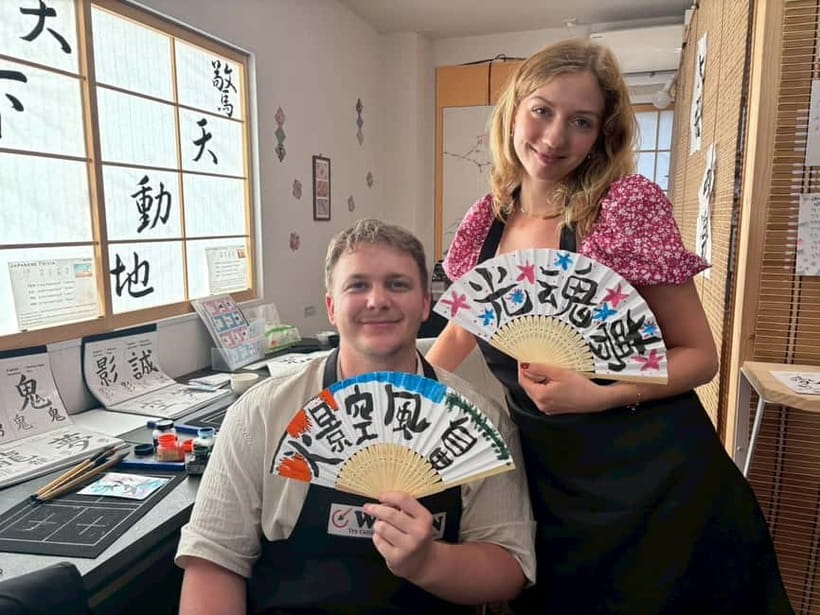
The instructor, Mana, receives especially strong praise for her patience, encouragement, and clear English. She has taught solo participants, couples, grandparents, and young children.
A six-year-old was able to take part with a parent, and a grandmother who had always liked calligraphy enjoyed having a proper introduction. That suggests the class works well for mixed-age groups, provided everyone can sit and follow basic instructions.
Mana also offers help beyond the brush. She has shared suggestions for Tokyo food and sightseeing, including advice for a participant planning a final day in the city. Another time, she hand-delivered finished T-shirts to people who needed to leave for Senso-ji, though T-shirts are an extra purchase rather than part of the standard package.
That kind of personal attention can make the session feel more like a private lesson than a fixed assembly line. Even so, the experience is conducted in English, so you should be comfortable following spoken instructions in English.
Who will get the most from this activity
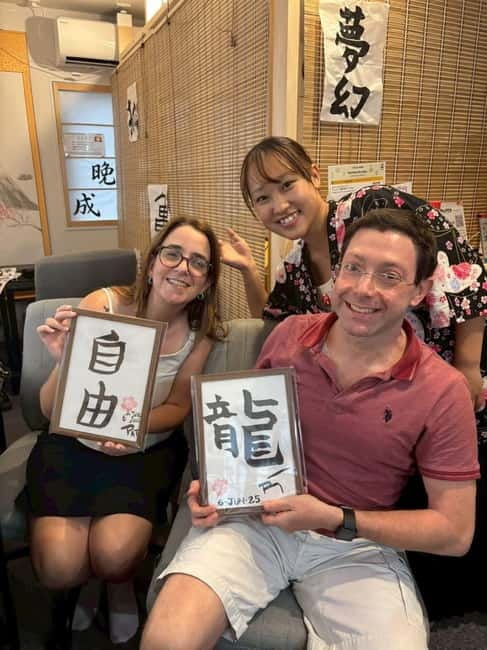
I would recommend this workshop to several types of visitors:
- First-time visitors to Japan: You get a small cultural lesson and a handmade souvenir without committing to a full-day class.
- Couples and families: The fan gives everyone a shared project, while each person can choose a different character or name.
- Visitors who enjoy slow activities: If you like crafts, drawing, or quiet hands-on work, the practice period may be the highlight.
- People seeking a thoughtful souvenir: The final fan has a personal story behind it and is easy to carry home.
- Anyone needing a break from sightseeing: It offers a seated activity in the middle of a busy Tokyo schedule.
It may be less suitable if you want a polished finished product with no trial and error. Calligraphy takes control and patience. The class gives you guidance, but it does not turn a beginner into a master in one sitting.
The experience is also not suitable for wheelchair users according to the activity information. If accessibility affects your plans, confirm the arrangements before booking.
Is $16 good value in Tokyo?
At $16 per person, the cost is modest for Tokyo. You receive instruction, practice materials, traditional ink preparation, access to guide sheets, a custom design session, green tea, a postcard activity, and an original folding fan.
The value is strongest if you care about the process. If you only want a souvenir, you can buy a fan much faster and probably with cleaner lettering. But that misses the reason to book this activity. You are paying for the chance to learn the basic movements and make the object yourself.
The price also makes this an easy addition to a day in Asakusa. It is not a major financial commitment, and free cancellation is available up to 24 hours before the activity for a full refund. You can also reserve now and pay later, which helps if your Tokyo schedule is still shifting.
Keep extra money in mind if you want your calligraphy printed on a T-shirt. That option is not included, and clothing fees apply.
Practical tips for a smoother session
Wear comfortable clothes that you do not mind getting marked with ink. Aprons are supplied, but dark or casual clothing is still the safer choice.
Allow more time than the minimum 30 minutes if your schedule permits. The best part of the workshop is repeating the strokes until you feel ready, and rushing that process defeats the purpose.
Think about a meaningful word, character, or name before you arrive. You can choose from a sample book, but having an idea in mind will make the final design easier.
If you are visiting with a child, explain that the goal is practice rather than perfect handwriting. A relaxed approach will make the activity more enjoyable for everyone.
Finally, check the meeting point for the option you book. The location is in the Asakusa area, but the meeting point may vary.
Should you book the Asakusa calligraphy workshop?
I would book it if you want a quiet, affordable activity with a souvenir you help create from start to finish. The strongest features are the patient English instruction from Mana, the generous practice time, the traditional ink preparation, and the folding fan at the end.
Choose something else if you dislike seated crafts, need a fully accessible activity, or have only a narrow gap between major Tokyo plans. Also remember that the henna tattoo option does not include calligraphy.
For most visitors, this is a pleasant way to slow down in Asakusa. You leave with more than a fan. You leave knowing how a brush, ink, posture, and patience combine to turn a blank sheet into Japanese writing.
FAQ
How much does the calligraphy and folding fan activity cost?
The listed price is $16 per person.
How long does the activity last?
The duration is listed as 30 to 90 minutes. Starting times and the exact length depend on the option you book.
Is the instruction available in English?
Yes. The instructor teaches in English, and Mana has been specifically praised for her clear English.
What do I make during the workshop?
You practice Japanese calligraphy and use your chosen design to make an original folding fan. You can also write a postcard to yourself at home.
Is green tea included?
Yes. A cup of green tea is part of the experience at the end of the calligraphy session.
Can I print my calligraphy on a T-shirt?
T-shirt printing is not included. You may buy a T-shirt in the shop if you want to use that option, and additional clothing fees apply.
Just added in Tokyo
- Manga Lesson with a Professional Japanese Manga Artist in Nakano★ 5.0 · 77 reviews
- Making a bento box with cute character look in Japan★ 5.0 · 15 reviews
- Tokyo/Ikebukuro Manga drawing workshop by pro-Manga artists★ 5.0 · 65 reviews
- Make Your Own Bonsai with a Professional Bonsai Artist in Tokyo★ 4.5 · 18 reviews
- Luxury Tokyo Sake, Cocktail, Whisky and Pairing Tour★ 5.0 · 18 reviews
- Tokyo Ueno Food & Nature & Localtown Tour: 10Dishes+ Drinks★ 5.0 · 34 reviews
- Make Traditional Nerikiri Sweets & Matcha experience in Shibuya★ 5.0 · 130 reviews
- Daikoku Parking Tokyo Drift & APIT Car Meet JDM Culture Tour★ 5.0 · 79 reviews
Tokyo Tours, compared.

Tokyo Disney Resort – Tokyo Disneyland & Tokyo DisneySea Park Tickets
Read our review →
Mt Fuji and Hakone 1-Day Bus Tour Return by Bullet Train
Read our review →

teamLab Borderless Tickets: MORI Building DIGITAL ART MUSEUM
Read our review →