Reviewed · TOKYO TOURS
Tokyo’s Authentic and Finest Taiko Drumming Experience
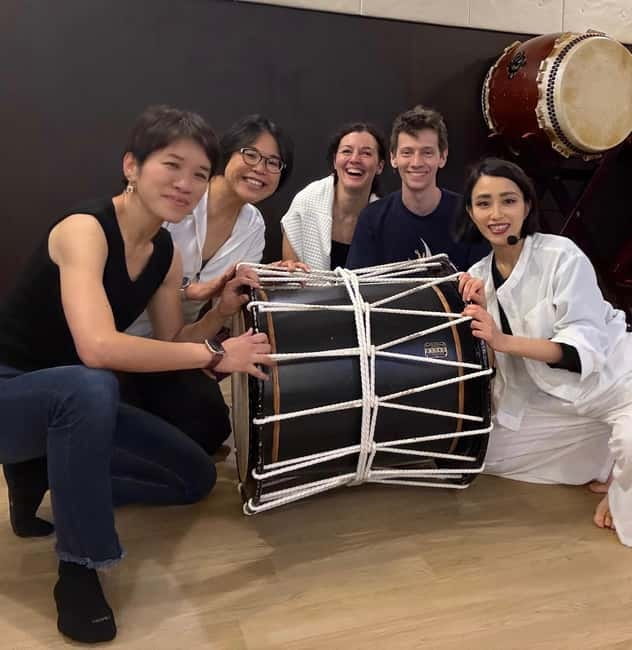
Feel the rhythm through your whole body. This 90-minute Tokyo workshop gives you a real introduction to taiko, not just a quick photo opportunity, with professional drummer Eva Kestner leading foundation drills, rhythm work, and traditional and contemporary pieces. I especially like the personalized video you receive afterward, and the chance to see Eva perform before trying the drums yourself.
The class also has genuine cultural value. You learn why taiko matters in Japan, how form and posture shape the music, and how different rhythms fit together. The main thing to consider is physical effort: several people found the session tiring, and one person described it as a serious workout. Wear light, comfortable clothes and bring water.
In This Review
- Key points to know before booking
- Why this Tokyo taiko class feels different
- The first stage: holding the sticks and building your form
- Rhythm training turns noise into music
- Learning a traditional piece from Miyake Island
- A contemporary piece keeps the class from feeling like a museum lesson
- Eva’s demonstration is worth your attention
- The personal video adds real value
- Is $120 per person a good value?
- Location and timing require a little care
- Who will enjoy this most?
- What to wear and bring
- Should you book this taiko workshop?
- FAQ
- How long does the taiko drumming experience last?
- How much does the experience cost?
- Do I need previous taiko or drumming experience?
- What does the workshop include?
- What should I bring?
- What languages are available?
- Is a private group option available?
- Can I cancel for a refund?
Key points to know before booking
- Eva Kestner teaches the class: She is a professional taiko drummer, former founder and first musical director of Cornell University’s Taiko Drumming group, and a recipient of an excellence award from the Tokyo University of Arts New Artists Competition.
- You learn more than basic beats: The class covers stick handling, stance, foundation technique, rhythm exercises, and at least one traditional and one contemporary piece.
- The workshop has real physical energy: You may be moving, posing, switching rhythms, and playing continuously enough to work up a sweat.
- A traditional Miyake piece may be part of the lesson: This style comes from Miyake Island, one of the islands near Tokyo, and gives the class a direct link to regional taiko tradition.
- You take home a private recording: Eva provides a personalized video of you playing, useful as a keepsake and for practicing your form.
- The price includes the essentials: At $120 per person, your 90 minutes includes instruction, drums, sticks, the history talk, demonstration, and video.
Why this Tokyo taiko class feels different
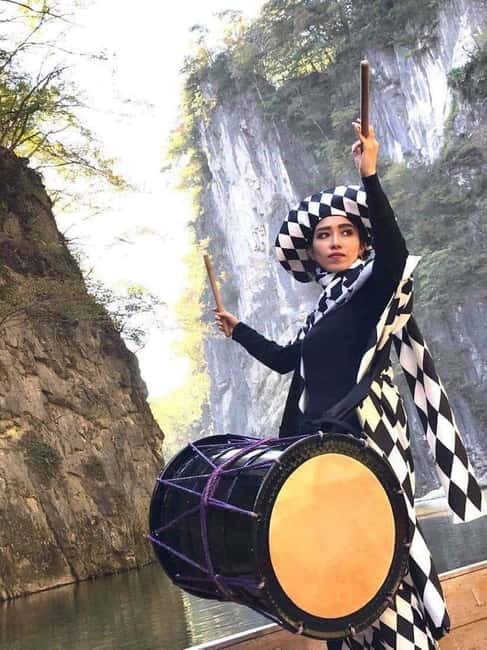
Tokyo offers many cultural activities, but not all of them give you time with a working artist. This workshop is built around Eva Kestner, whose background reaches beyond casual instruction. Her original music has been published by Harper Collins and Cambridge International Curriculum, and she brings both performance skill and teaching experience to the room.
That matters because taiko is easy to misunderstand. From a distance, it can look like people simply hit large drums with wooden sticks. In practice, the sound depends on stance, arm movement, timing, posture, volume, and group awareness. The physical form is part of the music.
I like that the workshop treats taiko as an art form rather than a novelty. You are not simply handed sticks and asked to copy a short rhythm for a photograph. You learn the basic mechanics first, then build toward pieces with more structure.
The class is taught in English, with Japanese also available. That makes it practical for international visitors who want direct explanations rather than a demonstration with little instruction.
A few more options to weigh up in Tokyo
- Tokyo Disney Resort – Tokyo Disneyland & Tokyo DisneySea Park Tickets
★ 4.8 · 99,488 reviews - SHIBUYA SKY Ticket
★ 4.7 · 46,509 reviews - JR Whole Japan Rail Pass
★ 4.8 · 29,150 reviews
The first stage: holding the sticks and building your form
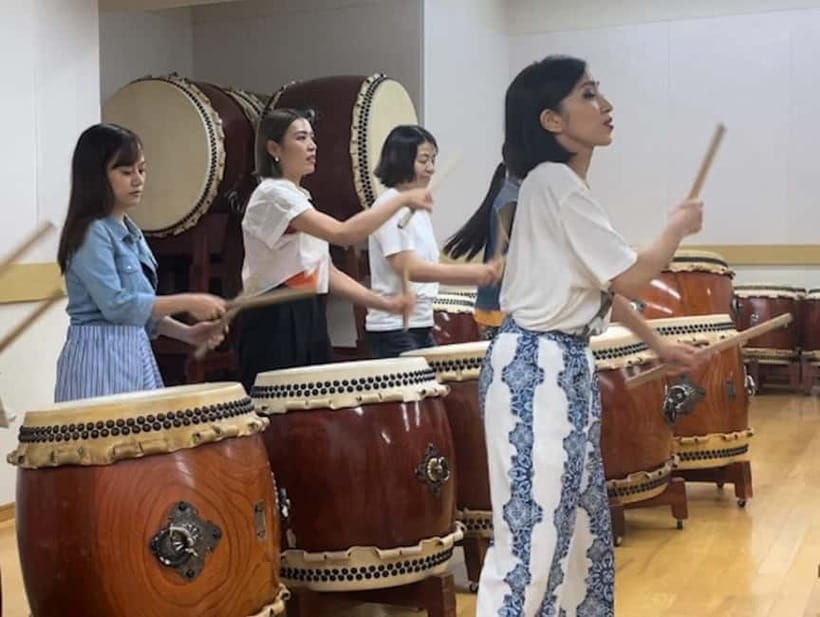
The workshop begins with foundation training. You learn how to hold the taiko sticks, how to position your body, and how to make controlled movements. These details can feel simple at first, but they are important. Poor form makes the drumming harder and can leave your arms tired sooner.
The class also puts attention on style. Taiko performance uses strong visual movement, including poses and coordinated gestures. One recent session included paired performances in which each person had different beats and poses. That sort of exercise helps you understand that taiko is both sound and movement.
This opening section should suit complete beginners. No previous drumming experience is required, and Eva is described as patient and clear in her explanations. You do not need to read music or arrive with any technical skill.
Still, do not expect a relaxed seated lesson. The goal is to get you playing, and that means you will likely be standing and using your arms for much of the session. If you have limited energy, plan your day around this activity rather than squeezing it between several other demanding outings.
Rhythm training turns noise into music
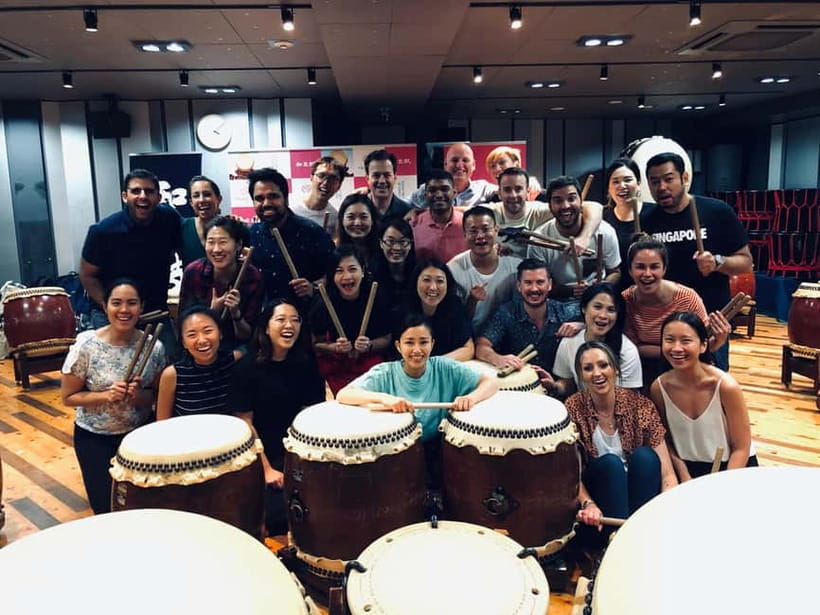
Once you have the basic technique, the class moves into rhythm training. This is where the workshop becomes more than a loud session with drums. You work through different beat patterns and learn to listen for timing, repetition, and changes in the group.
I like this part because it gives you a clear sense of progress. You may begin by repeating a simple beat, then add a change in timing or movement. The exercises can include switching on and off the drum, playing in pairs, and combining different rhythms.
That group element is especially good for families and friends. You are not only trying to remember your own pattern. You also have to hear what others are doing and respond at the right moment. The result can be exciting, but it also requires concentration.
Several people found the class highly focused and energetic. One person specifically appreciated the strong concentration required, while others described the activity as exhausting. Take those comments seriously. The class is fun, but it is not passive entertainment.
A water bottle is listed as an essential item, and comfortable clothes are strongly advised. One participant found the room warm and suggested shorts. That is useful advice, particularly if you are visiting Tokyo during a hot season or prefer not to exercise in heavy clothing.
Learning a traditional piece from Miyake Island
The workshop builds toward a proper taiko composition. The traditional piece taught in one session came from Miyake Island, near Tokyo. This gives you a more meaningful connection to Japanese regional performance than a made-up tourist rhythm would provide.
Miyake taiko is known for powerful movement and strong rhythmic patterns. The class does not assume that you can master the entire tradition in 90 minutes. Instead, Eva breaks the material into manageable sections and leads you through it step by step.
That balance is one of the activity’s strongest features. You face a genuine challenge, but the lesson is arranged so beginners can take part. You may feel awkward at first, especially when the rhythm, arm movement, and poses need to happen together. By the time you perform the piece, you have a better understanding of the discipline behind the sound.
Some sessions have used two different types of drums. The contrast helps show that taiko is not one single instrument with one standard role. Different drums can add different tones and functions to a piece.
You should not book this expecting to leave as a taiko performer. You will, however, leave with a short piece of real repertoire, a better sense of traditional form, and a memorable physical experience.
A completely different kind of day out:
- Mt Fuji and Hakone 1-Day Bus Tour Return by Bullet Train
★ 5.0 · 26,383 reviews - TOKYO SKYTREE® Ticket
★ 4.7 · 25,136 reviews - teamLab Borderless Tickets: MORI Building DIGITAL ART MUSEUM
★ 4.7 · 24,126 reviews - teamLab Planets TOKYO Ticket
★ 4.7 · 21,663 reviews
A contemporary piece keeps the class from feeling like a museum lesson
The class also includes a contemporary taiko piece. This is a smart part of the program because it shows that taiko is not frozen in the past. Traditional technique can support newer arrangements, different group structures, and more playful performance choices.
The contemporary section may feel more approachable if you enjoy modern music or group performance. It also gives Eva room to use her own artistic experience and to create a lively contrast with the older regional piece.
The two styles help keep the 90 minutes varied. You learn cultural context, then apply it with your body. You work on strict rhythm, then take part in a more current performance style. That variety is valuable at a fixed price because you are getting both instruction and a small performance program.
Eva’s demonstration is worth your attention
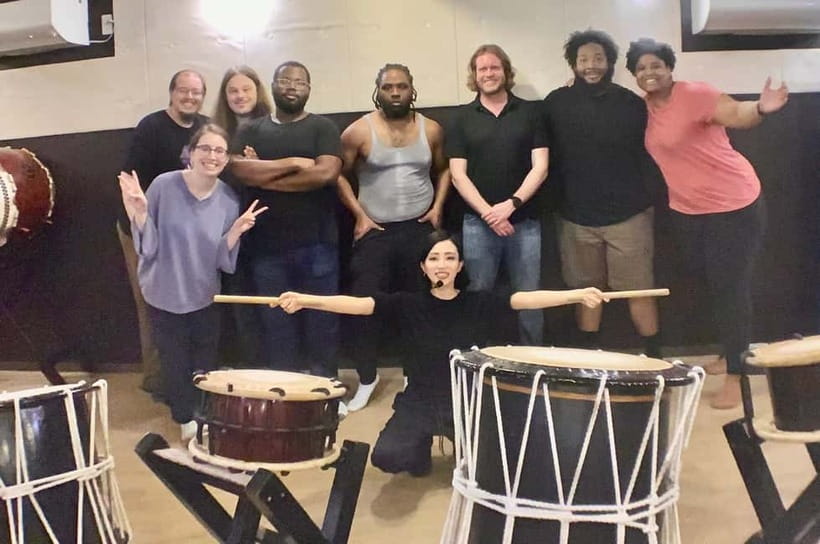
At some point, Eva performs a demonstration. Do not treat this as filler while you wait for the next exercise. It gives you a reference point for the sound, speed, posture, and force that the class is working toward.
Eva’s background as a highly accomplished performer is one of the clearest reasons to choose this workshop. Her credentials include founding and directing Cornell University’s taiko group, receiving an award from the Tokyo University of Arts New Artists Competition, and publishing original music through major educational and publishing channels.
The best teachers do more than perform well. They make difficult work understandable. The class is designed around clear explanations, basic drills, and gradual progress, which helps bridge the gap between watching an expert and trying the skill yourself.
I also like that the demonstration can reset your expectations. Taiko is not about using brute force. It involves precision, visual form, and control. After seeing Eva play, you are more likely to notice those details in your own movements.
The personal video adds real value
After the workshop, you receive a personalized video of yourself playing taiko. This is a small feature with unusually good value.
Most short cultural activities disappear as soon as you leave. You may remember the noise and excitement, but the details of your technique fade quickly. A recording lets you see the piece again, remember the rhythm, and share the experience with family or friends.
The video can also help with practice. One participant used a private YouTube link to check form, while another liked having a recording of the sessions to continue practicing. It is not a replacement for regular instruction, but it gives you a useful record of what you learned.
For families, this may be the best souvenir of the day. You do not just take home an object. You have a record of everyone making music together, complete with the movement and energy that photographs cannot capture.
Is $120 per person a good value?
At $120 per person, this is not a cheap drop-in activity. Tokyo has plenty of lower-cost cultural options, so the price deserves a close look.
The fee covers 90 minutes of private instruction, foundation and rhythm training, traditional and contemporary material, a performance by Eva, a brief taiko history explanation, use of the drums and sticks, and a personalized video. You are also paying for access to an instructor with serious performance and teaching credentials.
I think the value is strongest if you want a focused cultural activity rather than a general sightseeing stop. The class gives you direct participation, structured teaching, and a lasting recording. It also works well for a family or small private group because everyone can learn and perform together.
The value is weaker if you only want to hear taiko. In that case, attending a performance may give you more music for less money. This workshop is for people who want to understand the instrument by playing it, even if their final performance is far from polished.
The private group option may make the cost easier to justify for a family, friends, or a special occasion. Larger groups of more than 20 people should contact Eva directly to arrange the session.
Location and timing require a little care
The meeting point can vary depending on the option you book, so check the final details rather than assuming the class is in central Shibuya. For larger groups, the studio is described as about 20 minutes from Shibuya by train.
That short rail journey is not a major obstacle, but it affects your schedule. Allow enough time to reach the correct meeting point and avoid booking another activity immediately afterward. The class itself lasts 90 minutes, but you should also allow time for the train ride, finding the studio, and changing your pace from sightseeing to physical activity.
Starting times depend on availability. The reserve-now-and-pay-later option can help if your Tokyo schedule is still changing, and cancellation is allowed up to 24 hours in advance for a full refund.
The available languages are English and Japanese. This is particularly helpful during rhythm drills, where a small misunderstanding can make the next section harder to follow.
Who will enjoy this most?
I would recommend this class to:
- First-time visitors seeking a hands-on Japanese cultural activity
- Families with older children or teenagers who enjoy active experiences
- Couples and friends who want to make music together
- Anyone interested in Japanese performance traditions
- People who like structured classes and learning a short piece
- Visitors who want a personal video rather than another souvenir shop purchase
It is also a good choice for people who are curious about how much work sits behind a taiko performance. The class gives you a taste of the discipline without requiring previous training.
You should think twice if you dislike physical activities, have difficulty standing for an extended class, or want a quiet cultural experience. The lesson can be tiring, and several people reported sore arms or a need to be very fit. The activity information does not provide specific accessibility details, so contact the provider if you have mobility or health concerns.
What to wear and bring
Keep your clothing simple and practical. Comfortable clothes are required, and lighter clothing may be wise because the studio can feel warm during an energetic session.
Bring a water bottle. You do not need to bring drums or sticks, as both are provided. Avoid planning a formal meal or tightly timed attraction immediately after the class if you expect to need a few minutes to cool down.
The main preparation is mental: expect to move, repeat patterns, listen carefully, and try again when the rhythm slips. Beginners are welcome, but the class is not designed to let you sit back and watch.
Should you book this taiko workshop?
Book it if you want active, expert-led cultural instruction and you are happy to work for your souvenir. Eva’s teaching, the traditional Miyake material, the contemporary piece, and the personal video give this experience more substance than a quick tourist demonstration.
The $120 cost makes sense for visitors who value personal attention and a lasting recording. I would especially recommend it for families and friends, since the paired rhythms and group performances give you something to do together.
Skip it if your priority is a low-cost activity or a seated show. Taiko takes effort, and this class may leave your arms tired. For everyone else, it offers a lively and respectful introduction to a Japanese art form, with enough structure to make your 90 minutes feel well spent.
FAQ
How long does the taiko drumming experience last?
The workshop lasts 90 minutes.
How much does the experience cost?
The listed price is $120 per person.
Do I need previous taiko or drumming experience?
No. The workshop is suitable for beginners and does not require prior taiko experience.
What does the workshop include?
It includes 90 minutes of instruction, foundation training, rhythm training, a traditional and contemporary taiko piece, a demonstration by Eva, a brief history explanation, drums, drumsticks, and a personalized video of you playing.
What should I bring?
Bring comfortable clothing and a water bottle. The class can be physically tiring, so light, practical clothing is recommended.
What languages are available?
The instructor teaches in English and Japanese.
Is a private group option available?
Yes. Private groups are available. Groups larger than 20 people should contact Eva directly to coordinate the session.
Can I cancel for a refund?
You can cancel up to 24 hours in advance for a full refund. A reserve-now-and-pay-later option is also available.
Just added in Tokyo
- Manga Lesson with a Professional Japanese Manga Artist in Nakano★ 5.0 · 77 reviews
- Making a bento box with cute character look in Japan★ 5.0 · 15 reviews
- Tokyo/Ikebukuro Manga drawing workshop by pro-Manga artists★ 5.0 · 65 reviews
- Make Your Own Bonsai with a Professional Bonsai Artist in Tokyo★ 4.5 · 18 reviews
- Luxury Tokyo Sake, Cocktail, Whisky and Pairing Tour★ 5.0 · 18 reviews
- Tokyo Ueno Food & Nature & Localtown Tour: 10Dishes+ Drinks★ 5.0 · 34 reviews
- Make Traditional Nerikiri Sweets & Matcha experience in Shibuya★ 5.0 · 130 reviews
- Daikoku Parking Tokyo Drift & APIT Car Meet JDM Culture Tour★ 5.0 · 79 reviews
Tokyo Tours, compared.

Tokyo Disney Resort – Tokyo Disneyland & Tokyo DisneySea Park Tickets
Read our review →
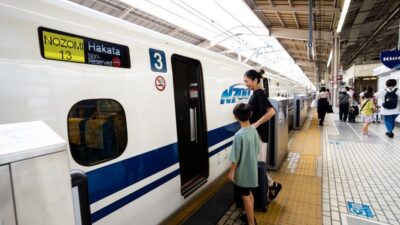

Mt Fuji and Hakone 1-Day Bus Tour Return by Bullet Train
Read our review →

teamLab Borderless Tickets: MORI Building DIGITAL ART MUSEUM
Read our review →