Reviewed · TOKYO TOURS
Tokyo’s Scariest Shitamachi Ghost Tour
Tokyo gets stranger after sunset. This evening walk links grim local tales with shrines, temples, cemeteries, and old neighborhoods that most visitors pass without noticing. I like the way it takes you from modern Otemachi to historic Asakusa, and I like the small-group format, capped at eight people, which leaves room for questions and conversation. The main catch is simple: the tour is much more walking than sitting, and the ghost content can feel thin if you expect three hours of nonstop supernatural scares.
The experience is also a useful introduction to how Japanese communities deal with troubled spirits. You will hear about deaths, vengeance, folklore, and attempts to calm the dead through worship and ritual. Guides such as Joris, Maik, Frank, Haruka, and Melissa have been praised for their warmth, humor, English, and command of Tokyo’s past. Still, you should eat a proper meal before meeting at 6 p.m. The included snack is welcome, but it is not dinner.
In This Review
- Key things to know before you book
- A 6 p.m. start at Tokyo Station
- Otemachi: a ghost story beneath the office towers
- Minamisenju: tragic places and spiritual unease
- Asakusa: Sensoji, Kappabashi, and the Old Hag’s Pond
- How scary is it?
- The walking is the real physical challenge
- Guides and the value of a small group
- Is $114.95 a fair price?
- Who should book this Tokyo ghost walk?
- Should you book Tokyo’s Scariest Shitamachi Ghost Tour?
- FAQ
- Where does the tour start?
- What time does the tour begin?
- How long does the tour last?
- Where does the tour finish?
- How many people can join the tour?
- Is public transportation included?
- Is food included?
- Can children join the tour?
- Can I cancel or change my booking?
Key things to know before you book
- The route crosses three very different areas: Begin among the office towers of Otemachi, continue through Minamisenju, and finish around Sensoji and Asakusa.
- Expect a serious walk: The route can run three hours or more and may reach roughly 8,000 steps, with public transport used between some areas.
- The stories mix ghosts with history: Some stops focus on tragic deaths, old crimes, and spiritual unease rather than traditional ghost sightings.
- Small groups make the night personal: The maximum group size is eight, and guides can adapt the tone to be family-friendly.
- One local snack is included: Public transport is not. Set aside about 400 yen per person for fares.
- You finish in a useful neighborhood: The guide can leave you at an Asakusa restaurant or bar, or near a metro entrance.
A 6 p.m. start at Tokyo Station
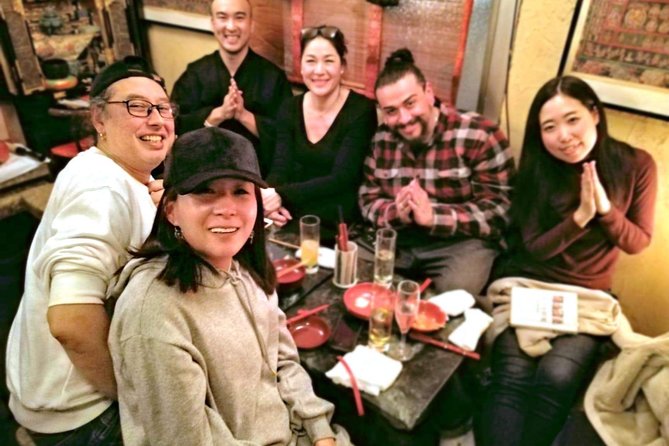
The tour begins at the Yamato Transport baggage service counter by the Marunouchi North Exit of Tokyo Station. This is a sensible meeting point, but Tokyo Station is enormous, so give yourself time to find the correct exit and counter. Arriving early is better than racing through the station while trying to decode signs.
The start time works well for a ghost walk. You can spend the afternoon sightseeing, have a late lunch, and meet the guide as office workers begin heading home. From there, the group uses public transport during the evening. The fare is not included, and the total is expected to be around 400 yen per person.
That extra cost is small compared with the tour price, but it is still worth planning for. Bring cash, especially if you prefer not to stop and sort out a transit card at the start of the night.
The maximum group size is eight. That matters here. A guide trying to tell a quiet story at a shrine or cemetery needs to keep everyone close, and a small group makes it easier to ask about Japanese customs, local names, and the difference between folklore and recorded events.
A few more options to weigh up in Tokyo
- Tokyo Disney Resort – Tokyo Disneyland & Tokyo DisneySea Park Tickets
★ 4.8 · 99,488 reviews - SHIBUYA SKY Ticket
★ 4.7 · 46,509 reviews - JR Whole Japan Rail Pass
★ 4.8 · 29,150 reviews
Otemachi: a ghost story beneath the office towers
The first stop is Otemachi, one of central Tokyo’s most modern office districts. Glass towers and polished streets make an odd setting for a story about a vengeful spirit.
Your guide takes you to a shrine connected with a spirit said to haunt the area. The story has had such a hold on local imagination that people working nearby are said to avoid turning their backs toward the shrine. That detail gives the opening stop its force. You are not being led to a ruined castle or a remote forest. The unsettling place sits beside the daily machinery of corporate Tokyo.
The stop lasts about 20 minutes and has no admission fee. It is a good introduction to the tour’s larger idea: old beliefs can remain present even in a city built around speed, steel, and convenience.
This is also where expectations matter. The opening story may satisfy you if you enjoy Japanese folklore and the way old fears survive in modern settings. If you want a rapid series of jump scares, it may feel more like a cultural talk with an eerie edge.
Pay attention to the guide’s explanation of respect at sacred sites. This is not a stage show, and the group visits places that still matter to local worshippers. Keep your voice down, follow the guide’s instructions, and avoid treating shrines or graves as props.
Minamisenju: tragic places and spiritual unease
The route then moves to Minamisenju, where you spend about 40 minutes visiting several places of interest. Two separate sites of worship have tragic associations and reports of paranormal activity. You also visit a location tied to a grim historical event.
This section is likely to appeal most to people who enjoy the sad, unsettling side of ghost stories. The atmosphere comes from the weight of the places and the events linked to them, not from theatrical effects. The stories can be disturbing, so parents should ask for the family-friendly version if younger children are joining.
Minamisenju also changes the pace of the night. The area does not feel like a standard sightseeing circuit. You are moving through places that connect local belief, death, remembrance, and the long memory of the city.
At this point, you may notice the tour’s biggest weakness. The walking can take up more time than expected, while the number of major stories remains limited. Some people find the conversation and setting rewarding. Others feel they covered too much ground for too few ghost tales.
I would think of this section as a neighborhood walk with dark stories, not as a haunted attraction. The guide’s skill makes a real difference. Joris has been praised for making the evening conversational and informative, while Maik and Frank have received warm comments for mixing humor, culture, and frightening material.
Asakusa: Sensoji, Kappabashi, and the Old Hag’s Pond
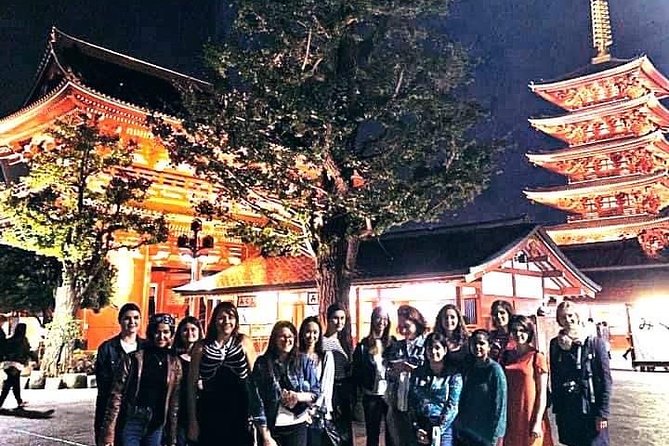
The longest part of the tour takes place in Asakusa, lasting about 1 hour and 20 minutes. You visit a viewpoint, Sensoji Temple, the streets around the temple, the Old Hag’s Pond, and Kappabashi.
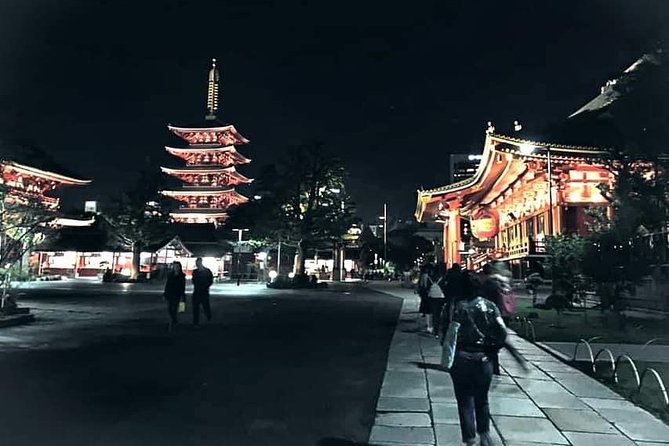
This is a strong finish because Asakusa offers much more than the familiar postcard view of Kaminarimon and Sensoji. After dark, the temple district takes on a different mood. Streets that feel busy and colorful during the day can seem quieter and more mysterious once the crowds thin.
Sensoji provides an important cultural layer. You may learn how to pray and pay your respects properly, rather than simply walking through a famous temple complex for a quick photograph. That makes the stop useful even if the spooky material does not fully satisfy you.
The Old Hag’s Pond is among the more memorable locations because it carries a disturbing tale connected with an old woman and a tragic death. The story is dark, and the site has an eerie reputation, but the impact depends on the guide’s storytelling and the mood of the group.
Kappabashi adds another unusual turn. The district is known for kitchenware shops and restaurant supplies, yet it becomes part of the nighttime route through Tokyo’s stranger stories. A stop here shows the tour’s appeal: it links ordinary city streets with old tales you would probably miss on a normal Asakusa visit.
The viewpoint can also help you understand the area’s layout. You get a chance to look across the district before continuing on foot. Do not expect a grand lookout experience or a long rest break, but it is a welcome change from walking at street level.
A completely different kind of day out:
- Mt Fuji and Hakone 1-Day Bus Tour Return by Bullet Train
★ 5.0 · 26,383 reviews - TOKYO SKYTREE® Ticket
★ 4.7 · 25,136 reviews - teamLab Borderless Tickets: MORI Building DIGITAL ART MUSEUM
★ 4.7 · 24,126 reviews - teamLab Planets TOKYO Ticket
★ 4.7 · 21,663 reviews
How scary is it?
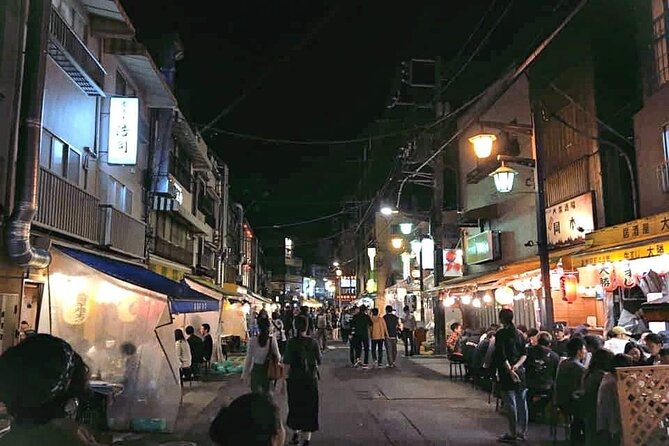
The title promises Tokyo’s scariest Shitamachi ghost tour, so it is fair to ask how closely the experience matches that promise. The honest answer is that the tour’s fright level depends on what you consider scary.
You will hear grim stories involving death, vengeance, tragic figures, and spirits that need to be appeased. A few tales are genuinely creepy, especially when told at the places connected with them. The nighttime setting and quiet sacred sites add atmosphere without artificial tricks.
But several people have found the supernatural material too limited. The evening can include only a handful of major stories, while the walking and transport take up a large part of the schedule. Much of the content concerns Japanese history, customs, and tragic events rather than ghosts appearing in a traditional sense.
That is not necessarily a flaw. In Japan, a ghost tour can be about the relationship between the living and the dead, including the shrines and rituals meant to calm angry spirits. That approach gives the tour more cultural substance than a simple parade of haunted-house stories.
I would book it if you enjoy folklore, old crimes, sacred places, and uncomfortable stories. I would skip it if you want actors, special effects, repeated jump scares, or a new ghost tale every ten minutes.
The walking is the real physical challenge
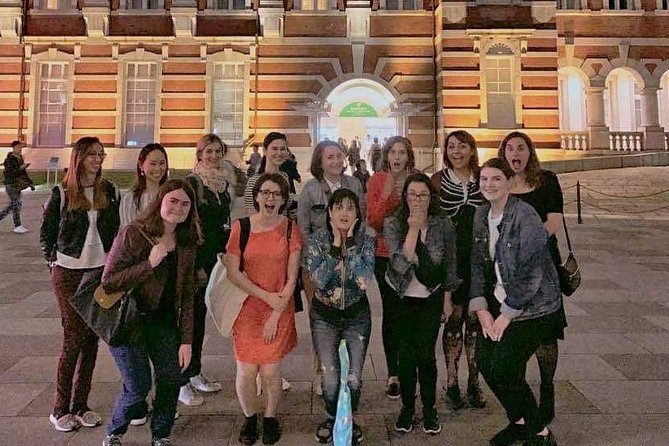
Wear comfortable walking shoes. This is not a casual stroll between two nearby attractions. The route may cover around 8,000 steps, and some people have found the walking closer to four hours than three.
There are public transport segments, but they do not turn the experience into a seated tour. You will still spend much of the evening on foot, often moving between sites rather than stopping for long periods.
Plan your evening around that fact:
- Eat before the 6 p.m. meeting time.
- Bring water.
- Wear sneakers or other supportive shoes.
- Carry the extra transit fare.
- Avoid scheduling a formal dinner immediately after the start.
One local snack is provided because the tour runs through dinner hours. That is a thoughtful touch, but it should be treated as a small refreshment, not a meal. One person specifically found there was no proper dinner stop, so do not arrive hungry and expect the tour to solve that problem.
The end point is convenient. The guide can leave you near a restaurant or bar in Asakusa, or at the entrance to a metro station. This gives you a chance to eat afterward, but the exact choice depends on what is open and where the guide drops you.
Guides and the value of a small group
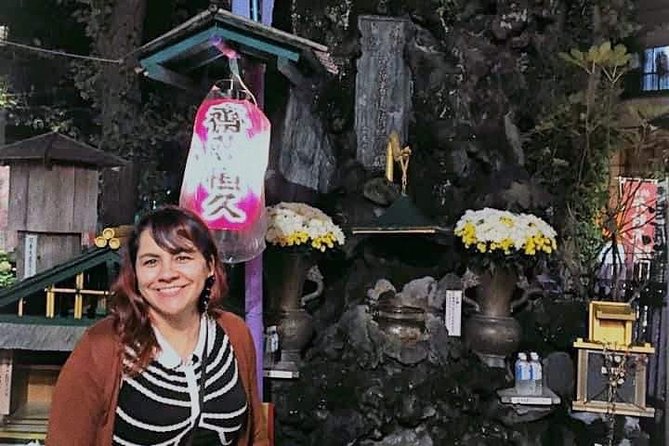
The guides are a major part of the experience. Joris has been praised for his conversation, English, and ability to connect Tokyo’s past with the places you see. Maik has been described as funny and good at balancing scary tales with cultural insight. Frank has been appreciated for answering questions and chatting about the city beyond the route.
Haruka has also been praised for asking about personal interests and following up with suggestions for other places to visit. Melissa has been noted for her friendly approach and strong explanations at eerie sites. These details matter because the tour is not built around elaborate production. The guide is the main event.
A maximum of eight people keeps the evening manageable. You can hear the story without standing in a large crowd, and you have a better chance to ask why a shrine exists, how a ritual works, or what part of a tale belongs to folklore.
The mood can also be adjusted for families. That does not make every story light. Some material involves death and dark historical events, so parents should decide how much detail younger children can handle.
Is $114.95 a fair price?
At $114.95 per person, this is not a cheap walking tour. The value depends on how much you want the guide’s interpretation and access to unusual locations rather than a standard list of Tokyo sights.
The price includes the guide and one local snack. Admission is free at the listed stops, while public transport costs about 400 yen extra. You are paying mainly for a three-hour guided route, the research behind the stories, and the chance to connect places that would be difficult to identify on your own.
For someone who wants a polished ghost experience with many supernatural stories, the price may feel high. The limited number of tales and heavy walking can make the evening seem less focused than the name suggests.
For someone who has already seen the major temples and neighborhoods, the value improves. The tour offers a different way to approach Otemachi, Minamisenju, and Asakusa. You also get a guide who can explain customs and answer questions in real time, which is hard to reproduce with a map or audio guide.
Group discounts may be available, so check the final price for your party. Confirmation is sent within 48 hours, subject to availability. The booking is non-refundable and cannot be changed after purchase, so choose your date carefully.
Who should book this Tokyo ghost walk?
This tour suits you if:
- You enjoy folklore more than theatrical scares.
- You want to see less obvious corners of Tokyo.
- You are comfortable walking for several hours.
- You like history told through specific places.
- You want a small group and plenty of conversation.
- You are curious about shrines, rituals, and the Japanese approach to appeasing spirits.
You may want another option if:
- You need frequent sitting breaks.
- You expect dinner to be included.
- You want a strongly supernatural tour.
- You dislike stories involving death or tragedy.
- You have a tight evening schedule after 9 p.m.
Most people can participate, and service animals are allowed. The route is near public transport, but the amount of walking still makes footwear and stamina important.
Should you book Tokyo’s Scariest Shitamachi Ghost Tour?
Book it for the unusual route, thoughtful guides, and cultural stories about spirits, worship, and Tokyo’s darker past. Do not book it expecting a nonstop horror show.
I especially like this experience for a second or third night in Tokyo, when you have already seen the major daytime sights and want a different side of the city. Arrive fed, bring cash, wear good shoes, and treat the $114.95 price as payment for a personal history walk with eerie material, not a haunted attraction.
If that sounds appealing, the tour can make a memorable evening in Asakusa. If the word ghost is doing all the work for you, choose carefully.
FAQ
Where does the tour start?
It starts at the Yamato Transport Tokyo Station Marunouchi North Exit Baggage Service Counter near the Marunouchi North Exit of Tokyo Station.
What time does the tour begin?
The tour begins at 6 p.m.
How long does the tour last?
The scheduled duration is approximately three hours, although some accounts describe the walking as lasting more than three hours.
Where does the tour finish?
It finishes in Asakusa at 1-chome-2-35 Asakusa, Taito City. The guide can drop you at a nearby restaurant or bar, or at the entrance to a metro station.
How many people can join the tour?
The maximum group size is eight people.
Is public transportation included?
No. Public transportation costs extra, at around 400 yen per person during the tour.
Is food included?
One local snack is included because the tour takes place around dinner time. A full dinner is not provided.
Can children join the tour?
The tour can be made family-friendly. Some stories are dark, so families should discuss the tone with the guide.
Can I cancel or change my booking?
No. The experience is non-refundable and cannot be changed for any reason after booking.
Just added in Tokyo
- Toyosu Market Morning Tuna Auction and Tsukiji Food Tour with Licensed Guide★ 4.5 · 146 reviews
- Tsukiji Food and Toyosu Market with Government-Licensed Guide★ 5.0 · 158 reviews
- JDM Itasha trip to famous car meet up spot Daikoku Parking★ 4.5 · 175 reviews
- Tokyo Spectacular View Day-Cruise in 90 Minutes★ 5.0 · 25 reviews
- From Tokyo to Kyoto and Nara: A Captivating Full-Day Private Tour★ 5.0 · 17 reviews
- Master the art of Sushi : Toyosu Market Tour & Tuna Cutting★ 5.0 · 60 reviews
- Private Tour: Tokyo’s Oldest Sake Brewery and Riverside Walk★ 5.0 · 25 reviews
- 3-Hour Tokyo Private E-Bike Tour Starting from Your Hotel★ 5.0 · 117 reviews
Tokyo Tours, compared.

Tokyo Disney Resort – Tokyo Disneyland & Tokyo DisneySea Park Tickets
Read our review →
Mt Fuji and Hakone 1-Day Bus Tour Return by Bullet Train
Read our review →

teamLab Borderless Tickets: MORI Building DIGITAL ART MUSEUM
Read our review →