
Reviewed · WORKSHOPS
2 hours sushi class
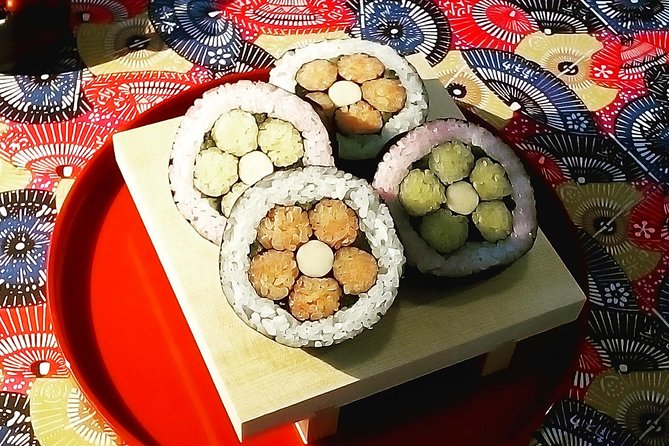
Beautiful sushi is easier than it looks. In Sapporo, Yuki teaches you to make decorative sushi rolls in her home workshop, turning rice, colorful fillings, and careful wrapping into flower-shaped designs. I like the hands-on format and the warm personal touch, including tea, conversation, and the chance to meet Yuki’s friendly cat. The main thing to watch is the meeting location: confirm the address and pickup plan carefully before class.
At about $20.08 per person, this two-hour lesson offers strong value, especially since you take your sushi home and receive English recipes. Pickup from Makomanai subway station is available, but the class is not private, and one past booking went badly after the participant went to the wrong place.
In This Review
- Key points to know before booking
- A Sapporo cooking class with a personal welcome
- What you make during the two-hour lesson
- Why the home setting works
- Getting there from Makomanai station
- The optional bento and Japanese food lessons
- Food allergies and dietary requests
- How the teaching style affects your experience
- Price, group size, and overall value
- Cancellation and booking timing
- Who should book this Sapporo sushi class?
- Should you book the two-hour sushi class?
- FAQ
- How long does the sushi class last?
- Where does the class begin and end?
- Is pickup available?
- Is the class taught in English?
- Can I take the sushi home?
- Can I request vegetarian or vegan arrangements?
Key points to know before booking
- Make decorative flower sushi: Learn the method behind colorful, patterned sushi rolls rather than simply watching a demonstration.
- Yuki teaches in English: Her instructions are clear, patient, and suitable for first-time sushi makers.
- Pickup from Makomanai station: Free pickup is offered if you request it in advance.
- Take your creations home: Your finished sushi rolls become both lunch and a useful souvenir.
- Small group setting: The class accepts a maximum of 12 people, though it is not a private experience.
- Optional Japanese cooking lessons: You can add bento decoration, dashi, homemade miso soup, steamed rice, rice balls, and Hokkaido beef options.
A Sapporo cooking class with a personal welcome
This is not a restaurant lesson held in a large commercial kitchen. Yuki welcomes you to her home in Minami Ward, where the mood is closer to a friendly cooking visit than a formal culinary school.
The class begins with introductions and green tea. That small opening matters. It gives you time to settle in, meet Yuki, and ask questions before the rice and fillings appear. If you are traveling with children or with relatives who want a slower morning, this gentle start can make the experience feel easy rather than rushed.
Yuki is the main instructor, and Yui may help with the added Japanese cooking options. Yuki is also an experienced decorative sushi roll teacher who has appeared on television. In 2024, she demonstrated her decorative rolls at a Sapporo hotel during celebrations for the 65th anniversary of the sister-city relationship between Sapporo and Portland, Oregon.
That background adds interest, but you do not need cooking experience to take part. The strongest reason to book is her teaching style. She checks each stage closely, explains why the sushi is assembled in a certain way, and stays patient when your first roll does not look quite like the example.
A few more options to weigh up in Sapporo
- Sapporo Bar Hopping Food Tour
★ 5.0 · 232 reviews - Hokkaido Seasonal: Lake Toya & Noboribetsu Jigokudani Valley
★ 4.7 · 173 reviews - Sapporo Private Tour with a Local – Highlights & Hidden Gems
★ 5.0 · 91 reviews
What you make during the two-hour lesson
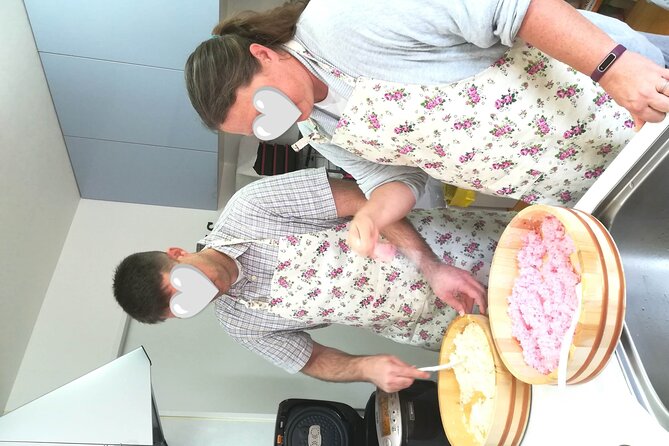
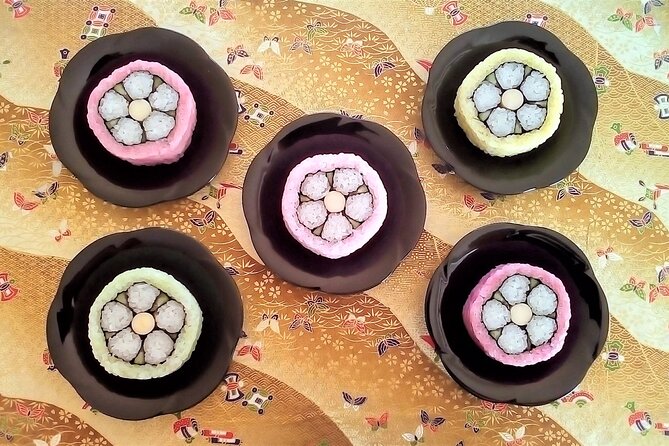
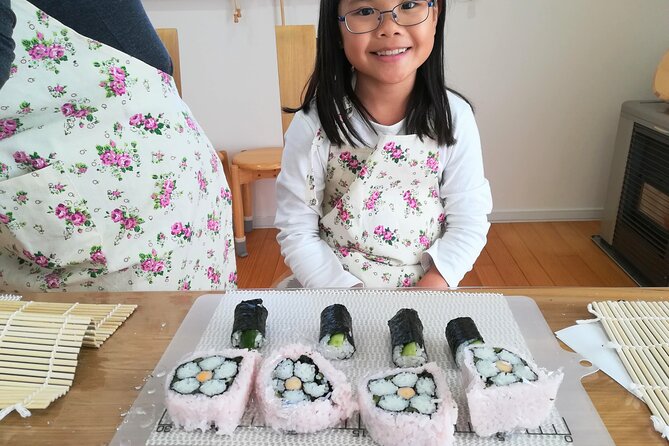
The central activity is decorative sushi roll preparation. You learn how to prepare and arrange the ingredients so that the finished cross-section forms a pattern, often a flower design. Some classes use pink rice and other colored elements to create a more detailed result.
The key skill is not just rolling. You need to place each strip and layer in the right order so the picture appears when the roll is cut. That makes this more interesting than a simple lesson in shaping ordinary makizushi. You are building a small edible design, then discovering the result when it is sliced.
Yuki provides the ingredients, English instruction, an apron at no extra charge, and an English recipe. The recipe is particularly useful because decorative sushi takes practice. You may understand the process in class, but the written instructions give you a chance to try it again at home.
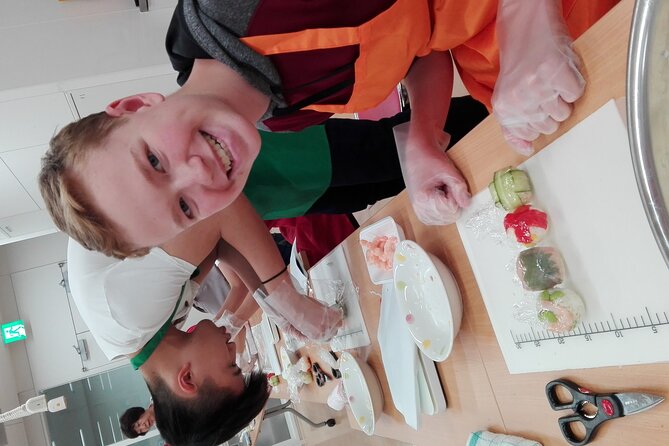
The lesson is practical rather than polished for show. Your roll may not be perfect on the first attempt, and that is part of the fun. You can expect guidance at each step, but you are the person handling the rice and assembling the design. Families have found the format suitable for children, and the teacher’s patience is a real advantage when small hands need extra help.
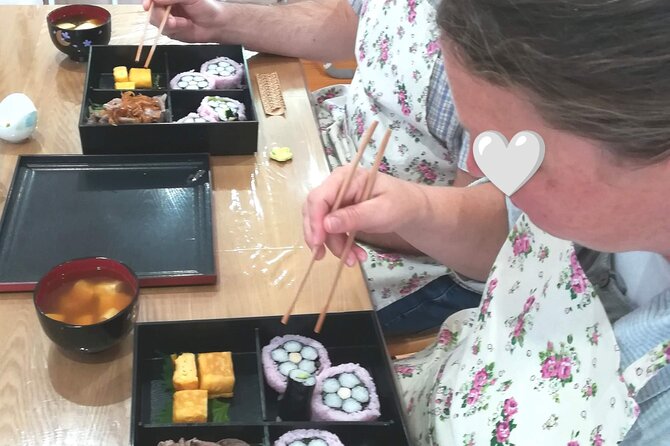
At the end, you can take your sushi rolls with you. This is both a useful meal and a memorable souvenir. The food is not just something you watched an expert make. You created it yourself, which gives the activity more lasting value than a standard tasting.
Why the home setting works
Yuki’s home gives the lesson a relaxed feel. Tea and conversation are part of the welcome, and the setting allows you to learn about everyday Japanese food from someone who teaches it with care.
You may also meet TiTi, Yuki’s large Maine Coon cat. Several accounts specifically enjoyed the cat, so this will be a pleasant extra for animal lovers. If you have allergies, however, you should keep the home setting in mind and ask the provider about any concerns before booking.
The personal setting also means the experience has some limits. You are not visiting a purpose-built attraction with a large sign, a staffed reception desk, or a constant flow of public transport right outside the door. That makes accurate directions important. One participant spent 30 minutes in the rain after going to a different location and being unable to reach the host by phone.
The practical lesson is simple: confirm the exact venue and meeting instructions before the day of the class. If you need the station pickup, request it clearly and make sure you know where and when to meet. The published starting point is 7 Chome Ishiyamahigashi, Minami Ward, Sapporo, Hokkaido 005-0850. The activity ends back at the meeting point.
Getting there from Makomanai station
Free pickup is available from Makomanai subway station if you require it. This is one of the most useful features because the workshop is in Minami Ward rather than in central Sapporo’s main sightseeing area.
Do not treat pickup as an automatic service. Request it in advance and confirm the details. The same advice applies if you plan to arrange your own transport. Keep the address available on your phone, and make sure you are heading to the correct location before leaving the station.
The pickup option can make the class easier to fit into a Sapporo day, particularly if you are not familiar with the local streets. It also removes some of the uncertainty of finding a private home in a residential area.
The tradeoff is that this is not a central market-side class you can easily combine with a quick walk around Odori Park or Susukino. Plan for the trip to Minami Ward and allow enough time for the return. Since the activity lasts about two hours, the full outing will be longer once transport is included.
A completely different kind of day out:
- Sapporo: Sumo Show Experience with Japanese food & Photo
★ 4.9 · 81 reviews - Popular in SapporoExperience authentic hand-made soba at a real soba shop!
★ 5.0 · 77 reviews - Mondo’s most popular plan! Experience making soba noodles and the king of Japanese cuisine, tempura, in Sapporo!
★ 5.0 · 71 reviews - 【Private Car】Asahiyama Zoo, Blue Pond, Shirahige Falls, Ningle Terrace (from Sapporo)
★ 5.0 · 60 reviews
The optional bento and Japanese food lessons
If making decorative sushi is not enough, Yuki and Yui offer additional cooking choices. These options let you turn the short sushi class into a broader lesson in Japanese home cooking.
One option focuses on decorating a bento in the traditional Shokado style. You then enjoy your own lunch box after preparing it. This adds a cultural element because the arrangement of food matters in Japanese cooking, not just the taste.
Other possible additions include:
- Hokkaido-branded beef, such as Biratori Wagyu or Shiraoi beef
- Rice balls and steamed rice
- Three additional dishes with miso soup
- Two additional dishes with miso soup
- One additional dish with miso soup
The miso soup option begins with dashi, the soup stock that gives many Japanese dishes their savory base. You then make soup using homemade miso. This is valuable if you want to understand the building blocks of Japanese cooking rather than focus only on presentation.
You can also learn how to prepare steamed rice without a rice cooker. That is a useful detail for anyone hoping to repeat Japanese recipes at home with ordinary kitchen equipment.
The available information does not give prices for these additions, so ask before booking if you want one. Also ask how much extra time each option requires. The basic experience is advertised as two hours, while a larger menu may need a longer visit.
Food allergies and dietary requests
Tell the provider about allergies or dietary needs in advance. Vegetarian, vegan, and other special requests are specifically invited, but you should not wait until you arrive to explain them.
Decorative sushi can include several separate ingredients, and substitutions may affect the final design. Early notice gives Yuki a chance to tell you what can be changed and what may not work with the planned pattern.
If you are booking for a family, include every person’s dietary needs when you make the reservation. This is especially important if you choose the bento or soup additions, since they introduce more ingredients than the basic sushi lesson.
How the teaching style affects your experience
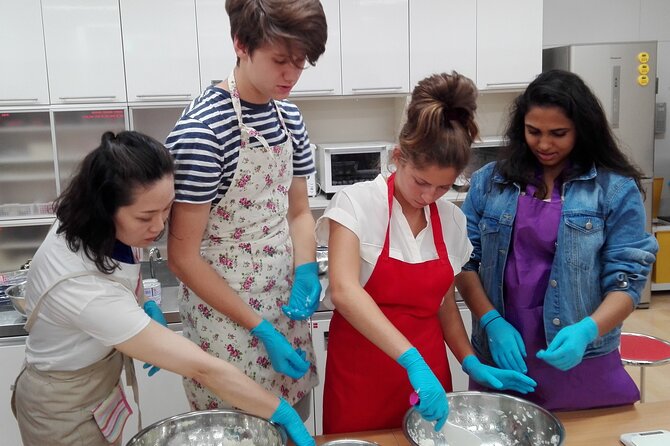
The most praised part of this class is Yuki herself. She is described as kind, patient, friendly, and easy to talk with. Her instructions are clear, and she examines each stage carefully instead of leaving you to guess what comes next.
That patience is useful because decorative rolls involve several steps. You need to understand the rice, the color, the placement, and the pressure used while rolling. A rushed instructor could make the class frustrating. Yuki’s slower approach suits beginners and families.
The conversation is another part of the appeal. You can talk with her about Japanese food and daily life while you work. The class is not only a technical lesson, but it is also a chance to spend time with a local teacher in a relaxed setting.
Past participants have included couples, families, parents with daughters, and first-time sushi makers. The class can work well for a parent and child because you share a task and end with something you can eat together. It also makes a pleasant break from temples, shopping, and city sightseeing.
Price, group size, and overall value
At roughly $20.08 per person, the class is inexpensive for a two-hour activity that includes ingredients, English instruction, apron rental, a recipe, and finished food to take away. Free station pickup adds value if you need help reaching the workshop.
The price looks especially good for families and first-time cooks who want an activity rather than another meal in a restaurant. You receive instruction and a skill you can repeat, not just a plate of sushi that disappears in a few minutes.
The class accepts up to 12 people. That is still a manageable maximum for a hands-on lesson, but the experience is not private. If you want the teacher’s full attention or you are organizing a larger party, ask about a private class. The provider also requests advance notice for large groups.
The value is less clear if you are looking for professional chef training, advanced knife work, or a long tour of Japanese cuisine. This is a friendly introduction to decorative sushi, not a full culinary qualification. The optional bento and cooking lessons are the better choice if you want more depth.
Cancellation and booking timing
You can cancel for a full refund up to 24 hours before the start time. Cancellations or changes made less than 24 hours before the class are not refunded or accepted, and the cutoff uses local Sapporo time.
The class is often reserved well in advance, with bookings averaging about 41 days ahead. That suggests you should not assume you can wait until the last day of your Sapporo stay. Book early if you have a fixed schedule, then confirm the meeting details once your plans are settled.
Confirmation is sent within 48 hours, subject to availability. Near public transportation and the station pickup help with access, but the private-home setting makes clear communication just as important as the reservation itself.
Who should book this Sapporo sushi class?
I would choose this experience if you want a friendly, personal activity and you like the idea of eating what you make. It is particularly well suited to:
- Families with children
- Couples seeking a quiet local activity
- First-time sushi makers
- Visitors who want an English-language cooking lesson
- Anyone interested in Japanese home food and bento presentation
- People who enjoy meeting a host in a home setting
You may want another type of food tour if you prefer a central venue, a market visit, or a menu built around eating rather than making. You should also think twice if you need a fully private class, dislike cats, or cannot confirm the meeting address carefully.
Should you book the two-hour sushi class?
Yes, if you want a low-cost, hands-on memory from Sapporo. The flower-shaped sushi, English recipe, station pickup, and take-home food make this a useful experience rather than a quick photo opportunity.
Book it with two safeguards: give advance notice about dietary needs, and confirm the exact meeting point and pickup plan. If you want more than sushi, ask about the Shokado bento, dashi, homemade miso soup, rice, and Hokkaido beef options. For a relaxed morning with a patient teacher, this class offers very good value.
FAQ
How long does the sushi class last?
The basic sushi class lasts approximately two hours.
Where does the class begin and end?
It begins at 7 Chome Ishiyamahigashi, Minami Ward, Sapporo, Hokkaido 005-0850, Japan, and ends back at the meeting point.
Is pickup available?
Yes. Free pickup is offered from Makomanai subway station if required. Request and confirm this service in advance.
Is the class taught in English?
Yes. English instruction and recipes in English are provided.
Can I take the sushi home?
Yes. You can take away the decorative sushi rolls you make during the class.
Can I request vegetarian or vegan arrangements?
Yes. You should inform the provider in advance about food allergies, vegan needs, vegetarian needs, or other dietary concerns.
Just added in Sapporo
- Hokkaido 7 Days Noboribetsu, Asahikawa, Biei by Delightful Travel★ 5.0 · 1 review
- 6 Days Hokkaido’s Floral Symphony Tour by UME Travel★ 5.0 · 2 reviews
- Full Day Private Skiing / Snowboarding Tour in Sapporo★ 5.0 · 30 reviews
- Snowshoe Hike Tour from Sapporo include hotel p/up & drop off★ 5.0 · 16 reviews
- Wagashi traditional japanese sweets class★ 5.0 · 49 reviews
- Snowshoeing and Onsen Adventures in a Winter Wonderland -Sapporo.★ 5.0 · 30 reviews
- Authentic Sapporo: Nijo Market Seafood Lunch & Local History Tour★ 5.0 · 13 reviews
- Sapporo Sumo Show Experience with Japanese Food and Photo★ 4.5 · 38 reviews
Workshops, compared.
Sushi Making Tokyo Roll and Authentic Japanese Sushi Class
Read our review →
Gion Make Your Own Chopsticks with Engraving Option
Read our review →
Roll and Authentic Sushi Making Class in Asakusa
Read our review →
Ramen Cooking Class at Ramen Factory in Kyoto
Read our review →
Tokyo Asakusa Chopsticks Workshop: Make Your Own Pair
Read our review →
Ring Making Workshop : Vintage Japanese Coin Ring
Read our review →Browse the lists this tour appears in