Reviewed · MULTI-DAY TOURS THAT VISIT KAWAGUCHIKO
9 Days In Depth Cultural Japan Small Group Tour by UME Travel – Osaka to Tokyo – Reviews & Prices
Nine days take you from Kyoto’s vermilion torii gates to Hiroshima’s Peace Memorial Park, then onward by bullet train to Tokyo and Mount Fuji country. The appeal is the range: Japan’s sacred sites, wartime history, mountain scenery and city life all fit into one trip, with hotels and intercity transport arranged for you.
I like two things in particular: the small group size, capped at 16, and the mix of guided sightseeing with a few open periods to rest or explore independently. One consideration: this is a highlights tour, not a slow stay. Several days involve long outings, walking and stairs, and the price does not include flights, travel insurance or airport transfers.
In This Review
- Key points to know before you book
- Kyoto opens with room to recover
- Torii gates, hillside temples and old Kyoto
- Nara’s Buddha, then Osaka after dark
- Hiroshima and Miyajima by bullet train
- Tokyo by Shinkansen, with a free first afternoon
- Mount Fuji views from Arakurayama and Lake Kawaguchi
- Tokyo’s shrines, crossing and market
- What the $3,470 starting price covers
- Should you book this Japan tour?
- FAQ
- Does the tour include airport transfers?
- What is included in the tour price?
- How large is the group?
- How much walking should I expect?
- Is Mount Fuji guaranteed to be visible?
- Are meals other than breakfast included?
- Can someone aged 75 or older travel on the tour?
Key points to know before you book
- Kyoto gets three nights, with visits to Kinkaku-ji, Nijo Castle, Fushimi Inari and Gion.
- Hiroshima and Miyajima make a full day trip from Osaka by Shinkansen, ferry and local transport.
- Mount Fuji is weather dependent, and the Kawaguchi outing lasts more than eight hours.
- The group is small, with no more than 16 people and roughly eight typical, according to the operator.
- Eight breakfasts are included, but you should budget separately for most lunches and dinners.
- Airport transfers are extra, and you make your own way to the first hotel and from the last one.
Kyoto opens with room to recover
The tour begins with an arrival in Osaka, but the first hotel is in Kyoto. You make your own way from the airport to the hotel unless you arrange a paid private transfer. That makes the first day less like a hosted arrival and more like a soft landing: check in, shake off the flight and meet your group.
The named Kyoto hotel is Kyoto Tokyu Hotel. The tour describes its accommodation as standard four-star, while the hotel information labels this property five-star. Treat the named hotel as a reference rather than a guarantee, since a hotel of similar standard may replace it if it is full. The operator describes the hotels as centrally located, with restaurants and convenient transport nearby.
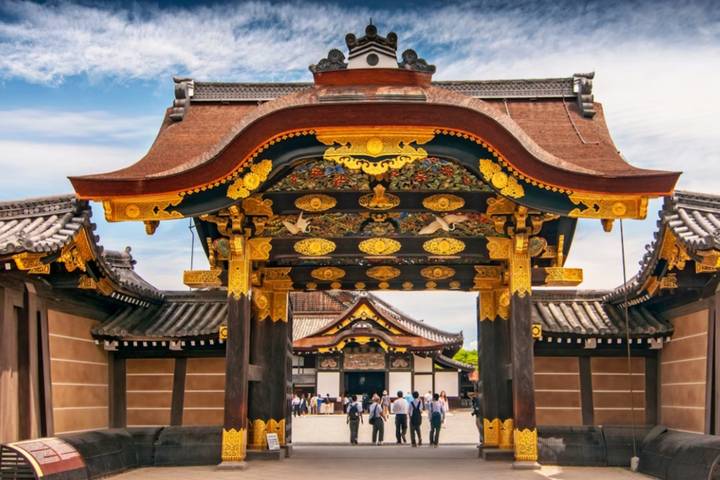
Day 2 leaves the morning free, a sensible way to handle jet lag. In the afternoon, a guide and driver take you to Kinkaku-ji, the Golden Pavilion, then Nijo Castle. The gold-leaf pavilion reflected in its pond is one of Kyoto’s signature views. Nijo Castle adds substance to the photo stop: its nightingale floors were designed to squeak underfoot, alerting guards to intruders, and the Ninomaru Garden offers a quieter pause after the castle rooms.
The afternoon-only schedule gives you some breathing room, but it also means this is not a full day of independent Kyoto wandering. If you want to add a museum, tea ceremony or other activity, the free morning is your best opening, subject to your energy and the hotel’s location.
A few more options to weigh up in Japan
- Universal Studios Japan Studio Pass
★ 4.8 · 89,883 reviews - Universal Studios Japan Express Pass
★ 4.7 · 53,138 reviews - Osaka Amazing Pass
★ 4.7 · 21,697 reviews
Torii gates, hillside temples and old Kyoto
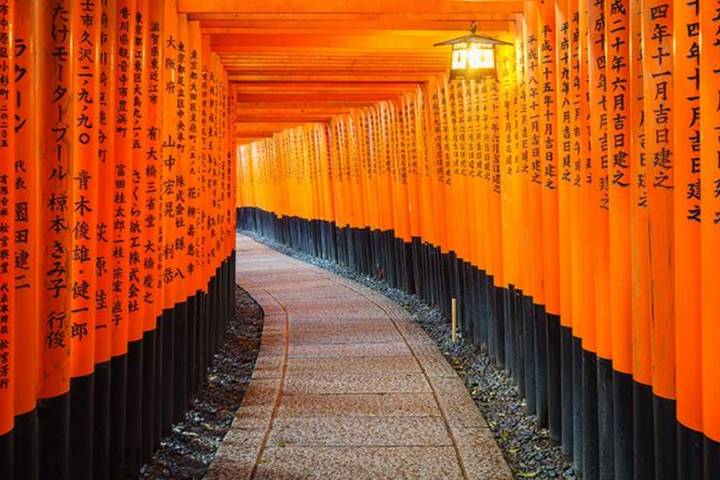
Day 3 is the most concentrated Kyoto day. At Fushimi Inari, thousands of red torii gates climb the wooded mountain. You can follow the route as far as the Four-Way Crossroads, about 30 to 40 minutes uphill, for a view over Kyoto. Going all the way to the summit takes roughly two to three hours round trip, so you will need to weigh that against the rest of the day’s schedule.
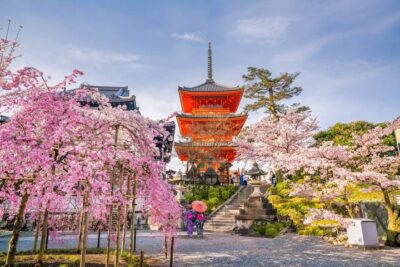
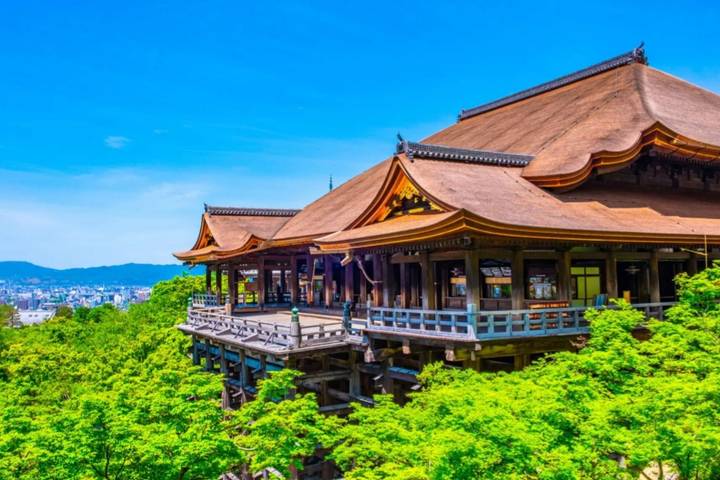
Kiyomizu-dera follows, with its wooden stage jutting out over the hillside. The temple grounds also include Otowa Waterfall, where water from three streams is associated with wishes for longevity, wisdom and health. The day continues on foot through Ninenzaka and Sannenzaka, historic lanes lined with shops, teahouses and cafés, then on to Yasaka Shrine and Gion.
This route brings together major sites and a traditional neighborhood, but it asks for more walking than the tour’s low-intensity label might suggest. The streets around Kiyomizu-dera are sloped, and the Fushimi Inari stairs can be a challenge if you have mobility concerns. You do not need to climb to the summit to get a feel for the shrine.
Gion is best approached with respect. Geiko and maiko may be seen heading to evening appointments, but sightings are not guaranteed, and the district is a working neighborhood, not a stage set. Keep a respectful distance and follow local rules about photography.
Nara’s Buddha, then Osaka after dark
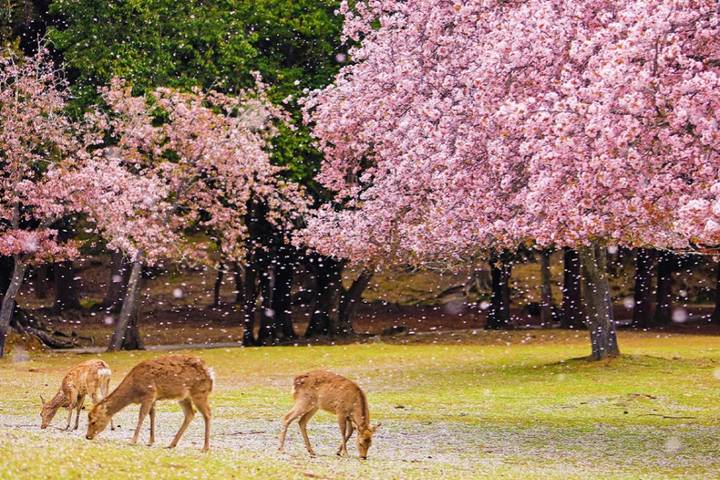
On Day 4, the coach takes you from Kyoto to Nara, about an hour and a half away. At Todai-ji, the Great Buddha sits inside an enormous wooden hall. The scale is the point: this is not a quick temple façade stop, but a chance to see one of Japan’s most important Buddhist sites and its monumental bronze figure.
Nara Park’s deer are accustomed to people and can be fed with special crackers sold in the park. They are friendly, but not plush toys; keep food tucked away until you are ready to feed them, and take care around the animals. Kasuga Taisha, known for its vermilion buildings and lanterns, completes the Nara visits.
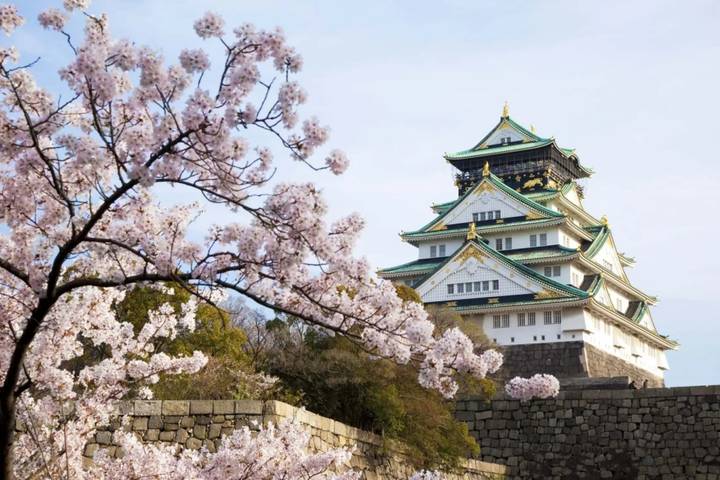
The route then continues to Osaka, where the planned stops include Osaka Castle Park and Shinsaibashi-suji, with Dotonbori also described as part of the shopping and food outing. This is a full day with two cities and several stops, so don’t count on a leisurely afternoon. Osaka’s street food is a good reason to keep dinner open: takoyaki and okonomiyaki are local favorites, though meals are not included beyond breakfast.
The castle park gives you the setting and history, while the shopping streets show a more contemporary side of the city. Shinsekai and Tsutenkaku Tower are suggested only if time allows, so regard them as a bonus rather than a promised stop.
Hiroshima and Miyajima by bullet train
Day 5 is one of the tour’s longest and most meaningful outings. You travel from Osaka to Hiroshima by Shinkansen, with the ride taking about 1.5 to 2 hours each way. In Hiroshima, the guide leads you through Peace Memorial Park, the A-Bomb Dome and the Peace Memorial Museum.
The museum and park focus on the atomic bombing of August 6, 1945, and its consequences. Give this visit the attention it deserves. It is not simply another landmark on a checklist, and some of the museum’s material can be emotionally difficult. The tour’s inclusion of both the park and museum helps connect the surviving structure of the Dome with the human history behind it.
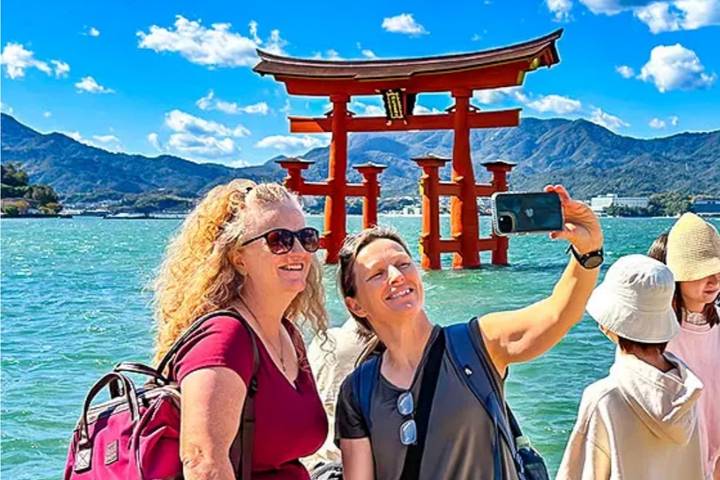
Afterward, you take a ferry to Miyajima Island for Itsukushima Shrine and its well-known torii gate on the Seto Inland Sea. The ferry ride and island setting offer a striking change of pace after Hiroshima’s memorial sites. The guide accompanies the group, and public transport is used between Hiroshima Station and the attractions.
Expect a busy day with train connections, local transit and a ferry. The itinerary is efficient, but you have limited time to linger at either destination. The tour returns to Osaka that evening, so this is not an overnight stay in Hiroshima.
A completely different kind of day out:
- Tokyo Disney Resort – Tokyo Disneyland & Tokyo DisneySea Park Tickets
★ 4.8 · 99,488 reviews - SHIBUYA SKY Ticket
★ 4.7 · 46,509 reviews - Mt. Fuji Instagram-Worthy Spots Day Tour: Ladder Town, Oshino Hakkai, Lake Kawaguchi, Lawson Convenience Store (Departing from Tokyo Station or Shinjuku Station)
★ 4.8 · 35,467 reviews - JR Whole Japan Rail Pass
★ 4.8 · 29,150 reviews
Tokyo by Shinkansen, with a free first afternoon
Day 6 takes you from Osaka to Tokyo by bullet train. The transfer is included, as is breakfast, but the rest of the day is left open. That is useful after the Hiroshima excursion: you can rest, find a meal or make a first independent outing rather than rush straight into another guided circuit.
The Tokyo hotel is Shibuya Excel Hotel Tokyu, listed as a four-star property. Its Shibuya location makes the area’s crossing and Hachiko statue easy to reach on your own, though the hotel may be substituted with a similar-standard option if needed. You are responsible for moving your own luggage between hotels and stations, so pack with train transfers in mind.
Mount Fuji views from Arakurayama and Lake Kawaguchi
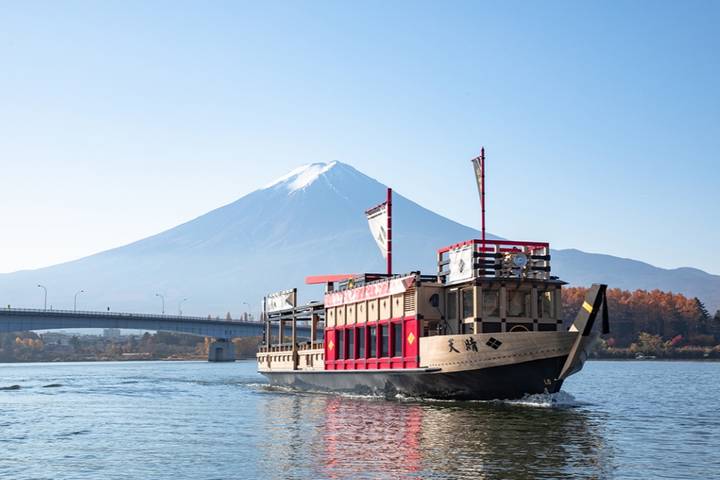
Day 7 heads out of Tokyo for Arakurayama Sengen Park and Lake Kawaguchi. At the park, the classic view combines Mount Fuji with a five-story pagoda. Reaching the observation deck involves a walk and stairs, so bring comfortable shoes and allow for the climb.
The coach continues to Lake Kawaguchi for a boat cruise, with time potentially available for a lakeside walk or nearby galleries and museums. The outing lasts more than eight hours, and the view of Fuji depends on weather. Clear winter days from December to February are often best for seeing the summit, while spring blossoms and autumn leaves add seasonal color. Even in a favorable season, clouds can hide the mountain, so treat the view as a possibility rather than a promise.
This is the tour’s main countryside excursion, and the coach keeps the logistics simple. The trade-off is a long day on the road, with less flexibility than staying overnight in the Fuji area.
Tokyo’s shrines, crossing and market
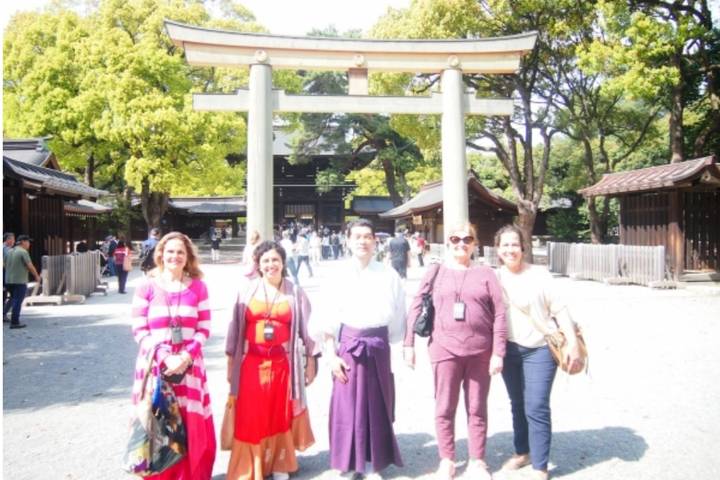
Day 8 starts at Meiji Jingu, a Shinto shrine set among tall trees in central Tokyo. The approach feels markedly calmer than the city streets beyond it. From there, the tour moves to Shibuya Crossing, where crowds stream across the intersection from several directions. The nearby Hachiko statue is an optional stop.
In the afternoon, Senso-ji brings you into Asakusa, one of Tokyo’s best-known temple areas. You pass through Kaminarimon Gate and Nakamise Shopping Street before reaching the main temple grounds. Tokyo Skytree can be viewed nearby, but the listed plan is to see it from the area, not to go up the tower.
The final stop is Tsukiji’s outer market, where you can buy seafood, sushi and other local food, or browse kitchenware shops. The old wholesale and auction operations have moved, so come for the food stalls and market atmosphere, not for a tuna auction. Since lunch is not included, this is a convenient place to choose your own meal.
The order packs together distinct corners of Tokyo, and the coach helps connect them. You will still want comfortable shoes and a little patience at busy sites. This is a guided overview, not an invitation to spend hours in any one neighborhood.
What the $3,470 starting price covers
The advertised starting price is $3,470, based on the cheapest room option. Accommodation is based on two people sharing; a solo room brings an extra supplement, but no amount is given here. International flights, travel insurance, airport transfers and most meals are not included.
The price does include eight breakfasts, accommodation, an English-speaking guide, listed attraction admissions and the transport described for the tour. That includes the Shinkansen journeys, coaches, local public transport and the Miyajima ferry. The value is clearest if you want these major transfers and visits organized for you. You are paying for a guided route through several regions, not just hotel nights.
I would budget for lunches, dinners, snacks and airport travel before deciding the trip fits your budget. Dietary needs deserve advance attention too. The operator warns that vegan meals and other strict requirements can be difficult to arrange in Japan, so you may need to plan some meals yourself.
The tour is advertised for groups of up to 16, with a typical group size of around eight. That is small enough to make it easier to hear a guide and move together than on a large coach tour, though a group tour still means fixed stops and shared timing. The guide and organized transport are among the strongest reasons to choose this format: past feedback has particularly praised the explanations, smooth coordination, comfortable hotels and pace.
Should you book this Japan tour?
Book it if you want a well-organized first visit that links Kyoto, Nara, Osaka, Hiroshima, Miyajima, Mount Fuji and Tokyo without planning every train and hotel yourself. It is especially suited to people who value an English-speaking guide and a small group, and who are happy with a brisk schedule of famous cultural sites.
Think twice if you want long stretches of free time, private touring or a slower stay in each city. The itinerary includes significant walking and stairs, a long Fuji day and a full Hiroshima excursion. If you are comfortable with that rhythm and plan for extra meals and transfers, this is a practical way to cover a broad sweep of Japan in nine days.
FAQ
Does the tour include airport transfers?
No. Airport pickup in Osaka and drop-off in Tokyo are optional services at extra cost. You make your own way to the first hotel and from the final hotel to the airport.
What is included in the tour price?
The price includes accommodation, eight breakfasts, an English-speaking local guide, listed attraction admissions and the tour’s intercity and local transport, including Shinkansen trains. International flights, travel insurance, airport transfers and most other meals are excluded.
How large is the group?
The maximum group size is 16. The operator says groups are typically around eight people.
How much walking should I expect?
The tour is rated low intensity, but several sightseeing days involve walking. Fushimi Inari includes an uphill route and stairs, and Arakurayama Sengen Park requires a climb to its observation deck. The operator notes that some outdoor walking may be difficult for people with mobility limitations.
Is Mount Fuji guaranteed to be visible?
No. The tour visits Arakurayama Sengen Park and Lake Kawaguchi for Fuji views, but cloud and rain can obscure the mountain. December to February is noted as a good period for clear views, with spring and autumn also popular.
Are meals other than breakfast included?
No other meals are listed as included. Plan to pay separately for lunches and dinners. The operator also cautions that strict dietary requirements, particularly vegan meals, may be difficult to accommodate.
Can someone aged 75 or older travel on the tour?
Yes, but the stated policy requires each traveler aged 75 or older to be accompanied by a younger family member or friend on a one-to-one basis.
Just added in Japan
- Mt. Fuji & Hakone Cherry Blossom private One Day Tour★ 4.5 · 35 reviews
- Fish Market & Tokyo Skyline Private Walking Tour★ 5.0 · 14 reviews
- 25-Min Downtown Helicopter Tour : Tokyo Skytree and Tokyo Tower★ 5.0 · 19 reviews
- Private Tour with a Local Guide – Learn about daily life in Japan★ 5.0 · 22 reviews
- Tokyo: 3-Hour Bike/E-Bike Tour of the City’s Highlights★ 5.0 · 209 reviews
- Official Japan Go-Kart Through Tokyo Bay / Ginza (IDP Required)★ 4.5 · 71 reviews
- 30-Min Tokyo Central Private Heli Tour– Asakusa, Skytree, Shibuya★ 5.0 · 13 reviews
- Tokyo 2-Hour Genuine Samurai Experience: Kendo in Japan★ 5.0 · 112 reviews
Multi-Day Tours That Visit Kawaguchiko, compared.



Essential Japan GO by Europamundo – 7-Day Tokyo to Osaka Tour
Read our review →
Visions of Japan with Hiroshima & Osaka 15-Day Tour by Globus
Read our review →
14 Days Japan Panoramic (Private 3 Star Hotels) by Stunning Tours
Read our review →
Wonders of Japan End Osaka GO by Europamundo – 12-Day Tour
Read our review →
Wonders of Japan End Osaka (including Fukuyama) 12-Day Tour by Europamundo
Read our review →