
Reviewed · MULTI-DAY TOURS THAT VISIT OTARU
Discover Japan by Europamundo – 15-Day Tour from Tokyo Review
Japan in 15 days means a lot of ground, and this tour covers it: Tokyo, Kyoto, Mount Fuji, the Japanese Alps, Hokkaido and historic towns between them. I love the contrast between major sights such as Fushimi Inari and smaller experiences such as tea overlooking Matsushima Bay.
I also like that the route includes practical comforts: hotels with private bathrooms, breakfast, several included lunches and dinners, and two ferry crossings. The main consideration is pace. You change hotels often, spend long stretches on the road, and have limited time to explore some places on your own.
- Mount Fuji comes with several viewpoints: Arakurayama Sengen Park, Lake Kawaguchiko and the Fifth Station give you distinct ways to see the mountain, though weather and winter road closures can affect access.
- Kyoto is a full sightseeing day: Arashiyama, Fushimi Inari, the Imperial Palace and Kinkakuji are on the schedule, with Gion left for your own time.
- The route reaches Hokkaido by ferry: You visit Hakodate, Noboribetsu, Sapporo, Otaru and Toyako before sailing back to Sendai.
- Traditional stays are part of the trip: Ryokan nights in Kawaguchiko and Ikaho include access to hot-spring baths; dinner is included at both.
- The strongest ratings are for guides and the route: The available scores are 5.0 for guides and 4.7 for itinerary and transport, though the overall sample is only three reviews.
- Plan for walking and changing scenery: The activity rating is low intensity, but temple grounds, forest trails and mountain sites still mean time on your feet.
In This Review
- A broad route, with little time to waste
- Tokyo begins with temples, crossings and city views
- Fuji views and a first taste of ryokan life
- Kyoto’s temples, gates and bamboo paths
- From Tsumago and Matsumoto to the snow monkeys
- Nikko’s ornate shrine and Matsushima’s quiet rituals
- Crossing to Hokkaido by ferry
- Sapporo, Otaru and Ainu culture
- Yamadera and the long return to Tokyo
- What the price includes, and what it does not
- Who should book this Japan circuit
- FAQ
- What is the tour price?
- How long is the tour, and where does it start and end?
- What meals are included?
- Is the tour guided in English?
- How large can the group be?
- Are the ryokan and hot-spring stays included?
- How physically demanding is the tour?
A broad route, with little time to waste
This is a guided coach tour for seeing many sides of Japan without arranging every hotel, transfer and regional connection yourself. Over 15 days, you move from Tokyo to Kyoto, then north through the Alps and Tohoku, cross to Hokkaido, and return by overnight ferry before the final journey to Tokyo.
That coverage is the tour’s main value. You visit major cities, small historic communities, hot-spring towns, religious sites and volcanic areas, with some less familiar stops mixed in. It is also a busy route: packing and unpacking are routine, and most days combine multiple stops with a drive to the next overnight city.
The group size can range from 2 to 72. A large group may mean less flexibility at stops, while a small departure can feel quite different. English is the stated tour language, but guides may change during the trip, and some departures may use bilingual English and Spanish explanations.
Tokyo begins with temples, crossings and city views
Your first day is deliberately light. A shared shuttle takes you from the airport to the Shinagawa Prince Hotel, and the rest of the day is free. Use it to recover from the flight and get ready for the early starts ahead. Tour details are provided in the afternoon.
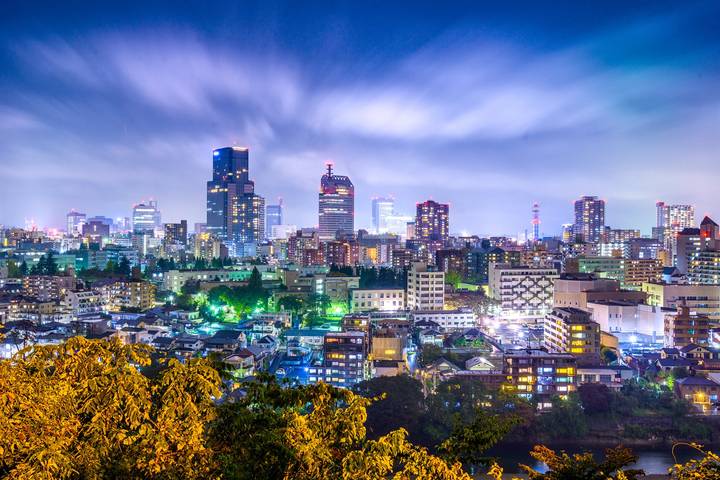
The next day is a long city tour, about seven hours. You visit Zojoji Temple, where rows of small Jizo statues sit near Tokyo Tower, and see Shibuya Crossing from the bus. That is a useful distinction: this is a look at the crossing, not a stop to wander around it. Meiji Shrine offers a calmer setting, while Tokyo Skytree’s Tembo Deck, at 350 meters, gives you a sweeping view over the city when weather allows.
The day continues at Nakamise Street in Asakusa, then passes through Akihabara and Ginza. In the evening, you take the subway with your guide to Shinjuku for a walk and an included dinner at a local restaurant. Subway tickets are included for this outing. The schedule packs in a lot, so you should not expect long, unstructured visits at each stop.
A few more options to weigh up in Tokyo
- Tokyo Disney Resort – Tokyo Disneyland & Tokyo DisneySea Park Tickets
★ 4.8 · 99,488 reviews - SHIBUYA SKY Ticket
★ 4.7 · 46,509 reviews - JR Whole Japan Rail Pass
★ 4.8 · 29,150 reviews
Fuji views and a first taste of ryokan life
On day three, the route leaves Tokyo for the Mount Fuji area. Arakurayama Sengen Park is a signature viewpoint, with a pagoda and Fuji in the distance when skies cooperate. At Kawaguchiko, you take a boat ride on the lake before driving up the mountain road to the Fifth Station, at 2,305 meters.
The Fifth Station is not guaranteed in every season. Snow or poor weather can close the road, particularly in winter, and the coach will go as far as conditions permit. A night at a ryokan adds a change of pace: you can use the public onsen and have dinner included. Room style may be Japanese, with tatami mats, or Western; occasionally, a Western-style hotel replaces the ryokan.
The following day adds Iyashi no Sato Nenba, a restored village now used as an open-air museum, and Shiraito Falls. The Toyota Museum in Nagoya gives the day a modern-industrial turn before you continue to Kyoto. It is a long transfer day, but the stops break up the drive.
Kyoto’s temples, gates and bamboo paths
Kyoto gets one full sightseeing day. In Arashiyama, you see Togetsukyo Bridge, Tenryu-ji’s garden and the bamboo grove. The setting is lovely, but the grove is a popular stop, not a private retreat. At Fushimi Inari, the many red torii gates climb into the hills; time limits may keep you from walking far beyond the main paths.
The tour also includes the Imperial Palace and Kinkakuji, the Golden Pavilion, set beside gardens and water. Visit order can change, so you may not see the sites in the sequence described. Gion is offered as free time afterward, with an evening transfer to the traditional district listed among the services. Since the schedule is full, treat any independent stroll as a bonus rather than a long exploration.
You have a hotel night in Kyoto, but not a second day to revisit a favorite temple or explore at a slower pace. If Kyoto is your main reason for traveling, this quick survey may leave you wanting more time.
From Tsumago and Matsumoto to the snow monkeys
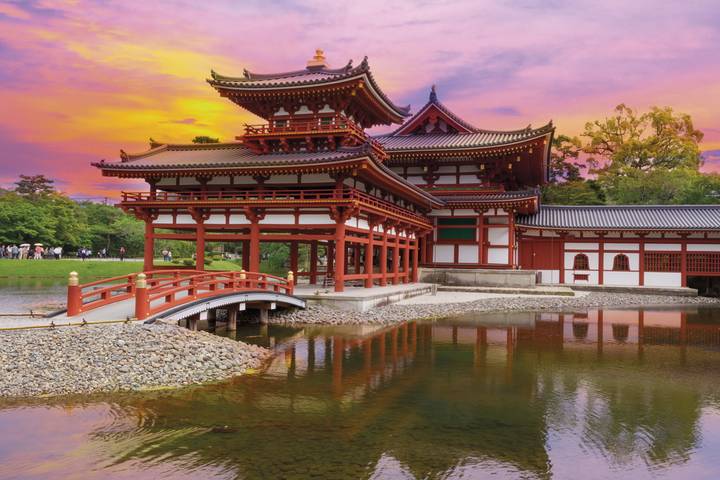
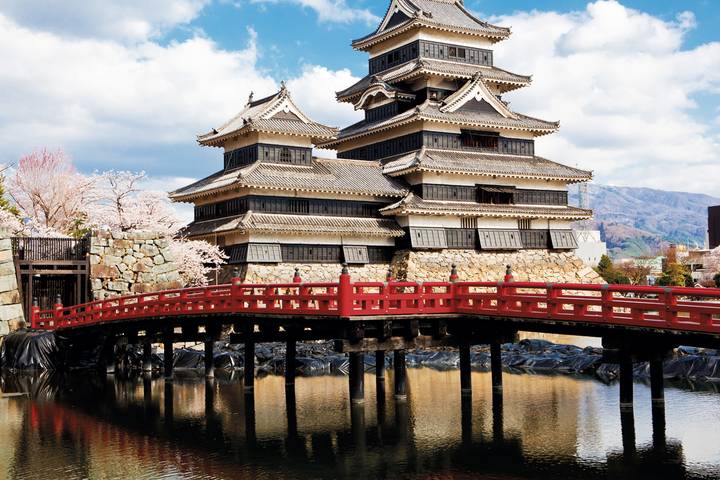
Day six takes you to Tsumago, a small village of traditional wooden buildings, where you have time to walk and lunch is included. Then comes Matsumoto Castle, a 16th-century fortress known as the Crow for its dark exterior. You get free time in Matsumoto before the coach continues to Nagano.
In Nagano, Zenko-ji Temple is both a major pilgrimage site and the setting for a Gomakuyo ceremony for good fortune. The day’s most memorable stop for many nature-minded visitors may be Jigokudani Monkey Park, reached by forest trails. Japanese macaques live in the area and bathe in hot springs. This is a wildlife visit, so sightings and monkey movements cannot be guaranteed; in autumn, the animals may not come down, and the park may close.
The route then crosses high mountain country to Kusatsu and its hot-spring park, before ending in Ikaho. You can walk the old center and its stone stairways, then stay at a ryokan with onsen access and a traditional dinner. Kusatsu visits may be canceled in bad weather from November through April, so this part of the itinerary is especially season-sensitive.
A completely different kind of day out:
- Mt Fuji and Hakone 1-Day Bus Tour Return by Bullet Train
★ 5.0 · 26,383 reviews - TOKYO SKYTREE® Ticket
★ 4.7 · 25,136 reviews - teamLab Borderless Tickets: MORI Building DIGITAL ART MUSEUM
★ 4.7 · 24,126 reviews - teamLab Planets TOKYO Ticket
★ 4.7 · 21,663 reviews
Nikko’s ornate shrine and Matsushima’s quiet rituals
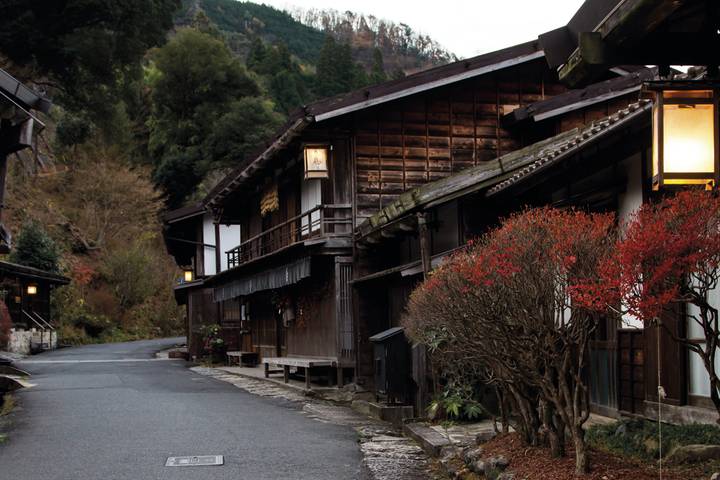
Nikko offers a different kind of spiritual stop. Toshogu Shrine is known for its elaborate details, and the tour also visits Taiyuinbyo Mausoleum and the Kanmangafuchi Abyss, where Jizo statues line the river. There is some free time in town before the drive to Sendai.
The next day, Matsushima Bay pairs scenery with a cultural experience: tea at a tea house overlooking the water, followed by a 50-minute cruise with lunch on board. At Hiraizumi, Chusonji and Motsuji connect the trip with the region’s Buddhist past. A Zen ceremony in Motsuji’s gardens is included. These are smaller, more reflective moments in a tour otherwise shaped by tight schedules and coach travel.
You continue to Morioka for the night. The day covers three places, so expect visits to be focused rather than leisurely.
Crossing to Hokkaido by ferry
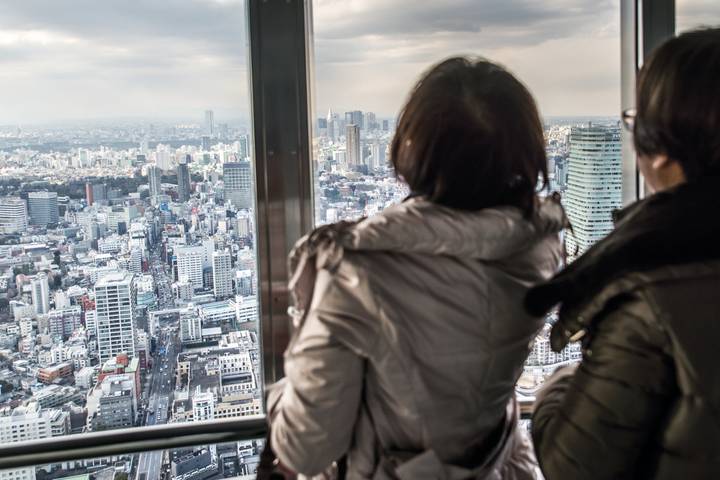
The route north includes an outside view of Hirosaki Castle and a stop at Aomori’s Nebuta Museum, where festival floats show the scale and craft of the region’s summer celebrations. Lunch is included before the roughly three-and-a-half-hour ferry to Hakodate. You have free time to see Hakodate’s historic district after arrival.
The next morning, the fish market gives you a look at local food culture, while Goryokaku Tower offers a clear view of the star-shaped fortress below. Onuma adds islands, walking paths and an optional boat ride. Lunch is included, then you visit Noboribetsu’s Hell Valley, with steaming vents and volcanic water, before reaching Sapporo.
This is a substantial travel day, and the ferry is functional transport as well as a scenic crossing. It saves the need to retrace the route by coach, but it still takes several hours.
Sapporo, Otaru and Ainu culture
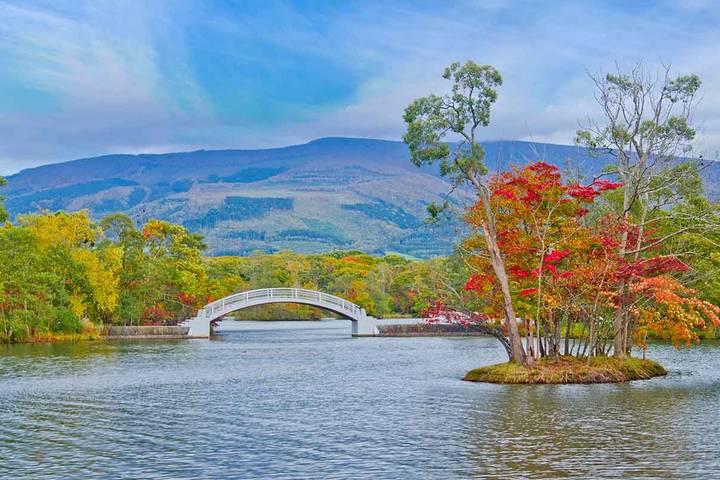
Sapporo’s city tour includes the Clock Tower, Odori Park and the TV Tower, followed by Hokkaido Jingu shrine and a Kito ceremony. On the outskirts, the Hill of Buddha combines a large Buddha statue with a lavender-covered hill and replicas of Easter Island’s Moai. It is an unusual stop, quite unlike the older temples elsewhere on the route.
You also visit Otaru, with its canal, shopping streets and museums. Lunch is included, and the coach returns to Sapporo at about 3:30 p.m., leaving the afternoon free. That open time is welcome after several tightly planned days.
On day thirteen, Upopoy Museum introduces Ainu culture, an important Indigenous culture of northern Japan. At Toyako, you visit the lakeshore and Volcanology Museum, then ride a cable car toward Mount Usu for views and a walk through volcanic terrain. Lunch is included before the coach takes you to Tomakomai for the overnight ferry to Sendai. Double cabins with private bathrooms and dinner are included.
Yamadera and the long return to Tokyo
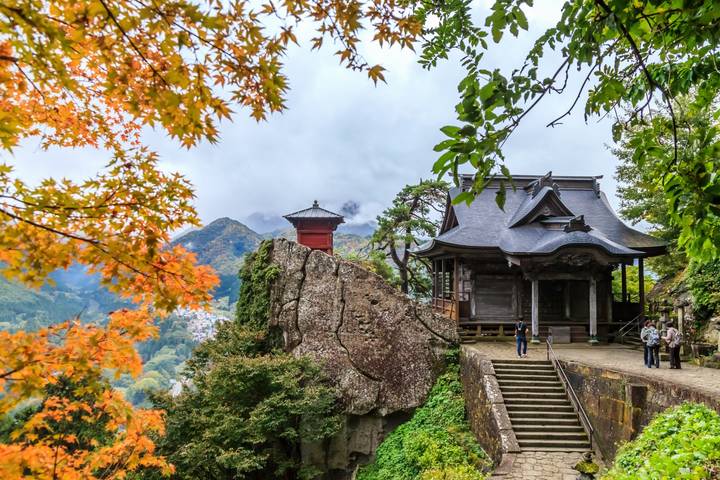
The ferry reaches Sendai around 10 a.m. The coach then takes you to Yamadera, a mountain temple complex founded more than a thousand years ago. You have time to explore and lunch is included. The schedule also includes the Sake Museum in Yonezawa before the overnight stay in Aizuwakamatsu.
On the final day, you visit the Samurai Mansion, a castle garden and Iimoriyama, associated with the city’s young martyrs and featuring sculptures donated by Mussolini. Ouchi-juku, with its thatched-roof houses, is the lunch stop. Then comes the Oya Museum, set in former stone quarries, before the long drive back to Tokyo.
The tour ends in the evening, and no departure airport transfer is included. Do not book a same-night flight without checking the arrival time and your airport connection. An extra Tokyo night may be the sensible choice.
What the price includes, and what it does not
The starting price is $5,187. Flights before and after the tour are not included, so compare the full cost of your trip, not only the tour price. The package includes accommodation, breakfast, an arrival shuttle, coach transport, an English-speaking guide, basic travel insurance and a long list of admissions and activities.
Seven lunches and four dinners are included, in addition to breakfast. The included meals fall on specific days, so you should budget for other lunches and dinners yourself. The two ryokan stays and the overnight ferry also add variety that a string of ordinary city hotels would not provide.
Hotels are listed as four-star, with private bathrooms and televisions, but the operator describes them as practical rather than luxury properties. Most are outside the city center, though public transport is nearby. Room size, bed size and standards can vary. The sample ratings place accommodation and food at 4.0, below the guide score of 5.0 and itinerary and transport scores of 4.7. Those scores come from only three tour reviews, so they are a small snapshot, not a guarantee.
Who should book this Japan circuit
I would consider this tour if you want a well-organized first trip with a broad route and do not want to coordinate Japan’s regional transport and hotel changes on your own. The strongest parts are the range of destinations, the included transport, and the mix of major sights with ceremonies, hot springs and smaller historic towns.
It is less suitable if you want several unhurried days in each city, prefer to choose every meal and hotel, or find long coach journeys tiring. The physical rating is low intensity, but forest paths, temple grounds and mountain stops involve walking. One past participant specifically advised taking limited mobility into account when considering activities. Ask the operator about your needs before booking rather than assuming every stop is easy to manage.
Overall, this is a high-coverage tour with a useful balance of city visits and regional Japan. Book it for breadth and convenience; choose a slower itinerary if you would rather spend more time in fewer places.
FAQ
What is the tour price?
The price starts at $5,187. Flights to Japan and flights home are not included, so you will need to account for those separately.
How long is the tour, and where does it start and end?
The tour lasts 15 days, starts in Tokyo and returns to Tokyo on the final day. It ends in the evening, and an airport departure transfer is not included.
What meals are included?
Breakfast is included, along with seven lunches and four dinners. Included dinners are scheduled in Tokyo, Kawaguchiko, Ikaho and on the Tomakomai to Sendai ferry.
Is the tour guided in English?
English is the stated tour language. English-speaking guides lead city tours in Tokyo, Kyoto and Sapporo, and guide arrangements may change during the tour. Some departures may use bilingual English and Spanish explanations.
How large can the group be?
The group size is listed as 2 to 72 people. The tour is open to all ages.
Are the ryokan and hot-spring stays included?
Yes. The tour includes ryokan stays in Kawaguchiko and Ikaho, with access to public hot-spring baths. Dinner is included on both nights. Room styles can vary, and a Western-style hotel may occasionally replace the planned ryokan in Kawaguchiko.
How physically demanding is the tour?
It is rated low intensity, but you should expect walking at temples, forest trails and outdoor sites. The monkey park involves a walk on forest paths, and some stops are in mountain settings.
Just added in Tokyo
- Mt. Fuji & Hakone Cherry Blossom private One Day Tour★ 4.5 · 35 reviews
- Fish Market & Tokyo Skyline Private Walking Tour★ 5.0 · 14 reviews
- 25-Min Downtown Helicopter Tour : Tokyo Skytree and Tokyo Tower★ 5.0 · 19 reviews
- Private Tour with a Local Guide – Learn about daily life in Japan★ 5.0 · 22 reviews
- Tokyo: 3-Hour Bike/E-Bike Tour of the City’s Highlights★ 5.0 · 209 reviews
- Official Japan Go-Kart Through Tokyo Bay / Ginza (IDP Required)★ 4.5 · 71 reviews
- 30-Min Tokyo Central Private Heli Tour– Asakusa, Skytree, Shibuya★ 5.0 · 13 reviews
- Tokyo 2-Hour Genuine Samurai Experience: Kendo in Japan★ 5.0 · 112 reviews
Multi-Day Tours That Visit Otaru, compared.
Japanese Scenes and Mount Fuji 19-Day Tour by Europamundo
Read our review →
Japan Sapporo Snow Festival by Explore! – 11-Day Tour
Read our review →
12 Days Summer Tokyo and Hokkaido Tour by UME Travel
Read our review →
6 Days Hokkaido’s Floral Symphony Tour by UME Travel
Read our review →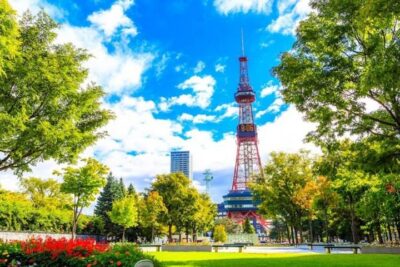
Hokkaido 7 Days Noboribetsu, Asahikawa, Biei by Delightful Travel
Read our review →Browse the lists this tour appears in