
Reviewed · FOOD TOURS
Eat Osaka: Street Food Cooking in an Authentic Kitchen!
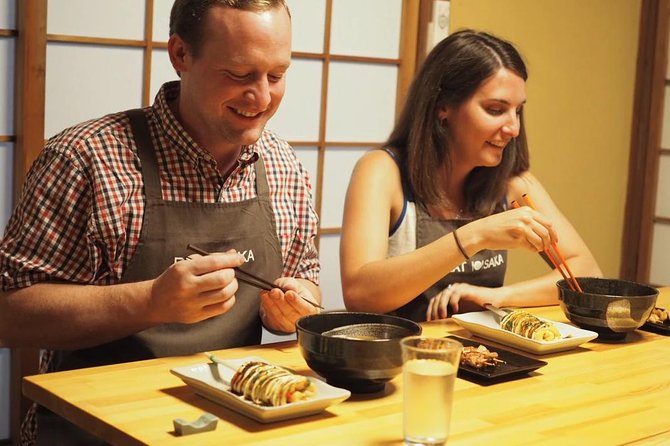
Osaka tastes better when you make it yourself. This small-group cooking class takes you into an old Japanese house in Higashinari, where a bilingual local chef guides you through Osaka-style dishes using professional tools and fresh ingredients. I like the personal scale, with no more than eight people, and the chance to eat what you prepare with beer, sake, or green tea.
I also like that the class goes beyond one famous dish. You may make hand-cut udon, vegetable tempura, pickled cucumber, yakitori with a house sauce, okonomiyaki, and a sweet mochi dessert, depending on the menu offered that day. The main thing to consider is the menu description appears to vary, so confirm the exact dishes when booking if one particular recipe matters to you.
In This Review
- Key points to know before booking
- Entering Eat Osaka in Higashinari
- The first steps: ingredients, tools, and Osaka food culture
- Okonomiyaki, the Osaka pancake with plenty of personality
- Hand-made udon and the satisfaction of working the dough
- Tempura, yakitori, and the details that make simple food work
- Finishing with mochi and a drink
- Why the old house setting matters
- The two-and-a-half-hour pace
- Is the $79.28 price fair?
- Who should book this cooking class?
- Should you book Eat Osaka?
- FAQ
- Where does the cooking class begin?
- Where does the experience end?
- How long does the cooking class last?
- How many people can join the class?
- Is the class near public transportation?
- Are ingredients included?
- Are drinks included?
- What dishes might I make?
- Can vegetarian guests be accommodated?
- Can I cancel for a full refund?
Key points to know before booking
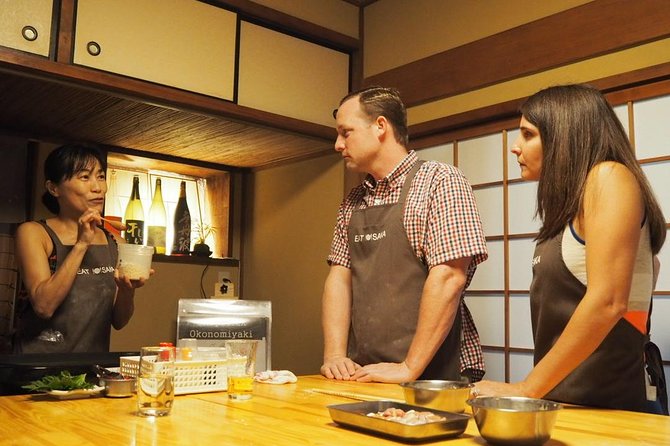
- An old Japanese kitchen: You cook inside a traditional-style house rather than a large commercial studio.
- Small groups of up to eight: The format allows more help with knives, batter, noodles, and cooking temperatures.
- Hands-on Osaka food: The class may include okonomiyaki, udon, tempura, yakitori, cucumber pickles, and mochi.
- Drinks are part of the meal: Finish your cooking with local beer, sake, or green tea.
- Strong guide feedback: Miki, Niki, and Nathalie are praised for patient teaching and friendly conversation.
- A useful two-and-a-half-hour plan: The class gives you enough time to cook, eat, ask questions, and learn about local food customs.
Entering Eat Osaka in Higashinari
The class begins at Eat Osaka Higashinari, at 1-2-10 Higashinaka-Honmachi, Higashinari Ward, Osaka. The meeting point is near public transportation, and the activity ends at the same location, so you do not need to arrange a second pickup point after the meal.
That return-to-start setup is handy in Osaka, where a cooking class can fit neatly between sightseeing plans. You can arrive with your hands free, cook for around two and a half hours, and leave without wondering where the final course will take you.
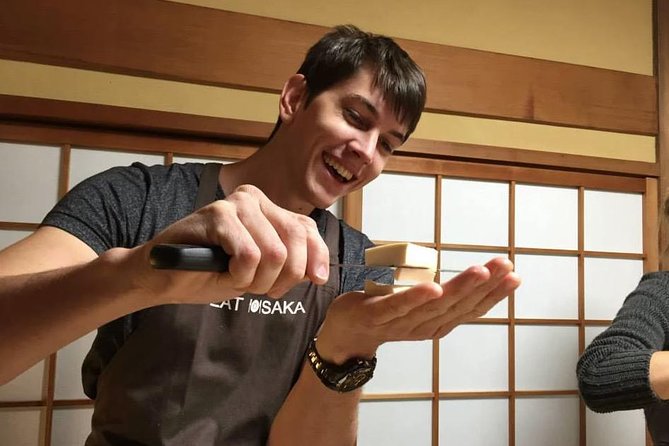
The setting is part of the appeal. You are not simply standing at a modern counter in a tourist building. The experience takes place in an old Japanese house with a purpose-built cooking space. That gives the class a more local feel, while still providing the tools and setup needed for a first-time cook.
I would allow extra time to find the address. The meeting point is given in Japanese and English, but Osaka’s residential streets can be less obvious than the city’s major shopping areas. Keep the mobile ticket ready and check the meeting instructions before you set out.
More Food Tours in Osaka
- Osaka: Shinsekai Food Tour with 13-15 Dishes at 5 Eateries
★ 4.8 · 2,204 reviews - Osaka Food Tour: 13 Dishes at 5 Local Eateries
★ 5.0 · 2,149 reviews - Hungry Osaka Street Food Tour:15 Tastings & 3 Drinks with a Local
★ 5.0 · 1,727 reviews
The first steps: ingredients, tools, and Osaka food culture
The class includes the ingredients, instruction, and professional-level cooking tools. That matters if you are coming straight from sightseeing and do not want to buy specialty items or guess which Japanese flour, sauce, or garnish to use.
A bilingual local chef leads the session. The teaching style appears to be a major part of the experience. Miki is praised for explaining not only what to do, but why each step matters. Nathalie is also singled out for creating a calm, friendly class and for helping a vegetarian participant adjust the meal.
That kind of guidance is especially useful with Japanese cooking. A batter can change with only a little extra water. Udon dough needs the right handling. Sauce, heat, and timing can make the difference between a crisp piece of tempura and a heavy one. You get more from this class than a list of recipes because the chef can correct your technique as you work.
The group limit of eight is important here. With a large class, you might spend much of the time watching someone else chop or waiting for a burner. A smaller group gives you a better chance to ask questions and receive help without holding up the whole room.
Okonomiyaki, the Osaka pancake with plenty of personality
One version of the class focuses on Osaka-style okonomiyaki, prepared from scratch. This savory pancake is closely linked with Osaka food culture and works well as a cooking-class dish because you can see the mixture come together in stages.
You may learn how the batter, cabbage, and other ingredients are combined before the pancake is cooked and finished with sauces and toppings. The appeal is practical: the dish looks complicated when ordered in a restaurant, but the basic method becomes easier to understand once you have made it yourself.
Okonomiyaki is also a good introduction to Osaka’s relaxed approach to food. It is filling, informal, and made for sharing. You do not need advanced kitchen skills to enjoy the process, but you still learn useful details about texture, heat, and presentation.
The available information also describes a menu that includes vegetable tempura, hand-made udon, yakitori skewers, pickled cucumber, and mochi. Since the published dish list is not fully consistent, I would not book this class solely for okonomiyaki, udon, or yakitori without checking the current menu first.
Hand-made udon and the satisfaction of working the dough
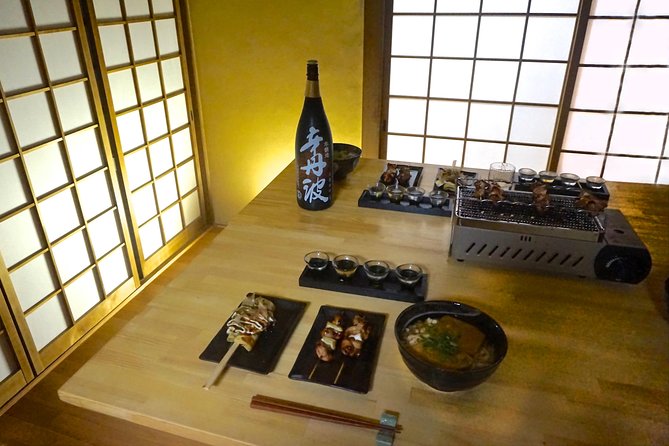
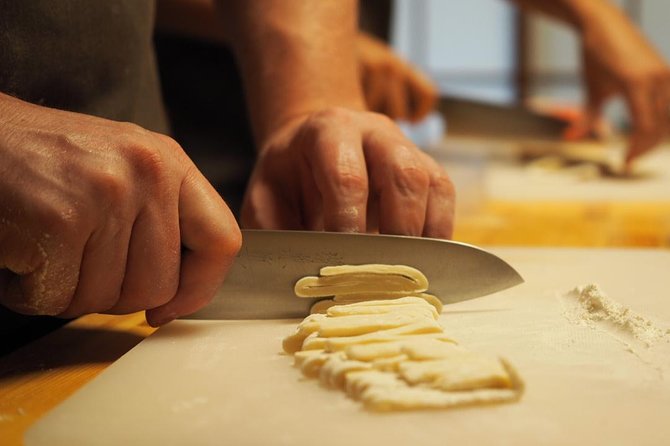
Making udon is one of the more distinctive parts of the experience. You work with the dough rather than simply boiling noodles from a packet. That gives you a clearer sense of how a simple Japanese staple gets its texture.
A bowl of udon can look humble, but the preparation rewards care. The class lets you handle the ingredients, follow the chef’s instructions, and see how the noodles change through the process. For many people, this will be the most memorable technique of the session because it feels like a skill you could try again at home.
The class is not presented as an advanced culinary course. That is good news if you are a beginner. The chef’s role is to keep the instructions clear and the mood relaxed, so you can focus on learning instead of worrying about getting every step perfect.
If you are cooking with children or a mixed-age family group, noodles can also be an easier activity than a long sequence of delicate knife work. One family described the hosts as warm and patient, with an approach that kept everyone involved.
More Food Tours in Japan:
- Tokyo: Shinjuku Food Tour (13 Dishes at 4 Local Eateries)
★ 5.0 · 6,603 reviews - Tokyo: Shinjuku Food Tour (15 Dishes and 4 Eateries)
★ 4.9 · 2,033 reviews - Best of Shinjuku: Izakaya Food Tour (4 Stops, 14+ Tastings)
★ 5.0 · 1,863 reviews - Kyoto Night Foodie Tour in Gion (9+ dishes + 6 Sake tastings)
★ 5.0 · 1,762 reviews
Tempura, yakitori, and the details that make simple food work
The menu information describes Osaka-style tempura in one place and yakitori skewers with a signature sauce in another. Both dishes offer a practical lesson in Japanese cooking, even though the techniques are different.
Tempura depends on light batter and careful cooking. You can expect guidance as you prepare vegetables and work with professional tools. This is one area where close instruction helps, since oil temperature and batter consistency are not always easy to judge on your own.
Yakitori gives the class a different rhythm. You prepare skewers and use a house sauce to finish them. The sauce is a small detail, but it shows why a dish served at a street stall or casual restaurant can taste more complete than the ingredient list suggests.
One participant received a vegetarian adjustment, which is a useful sign for people with dietary needs. Still, you should state your requirements in advance. The information supports a vegetarian accommodation, but it does not promise that every dietary restriction can be handled.
Pickled cucumber may also appear as part of the menu. It is a quick side dish, but it helps explain how Japanese meals balance rich, fried, savory, and fresh flavors. A small pickle can do a lot of work beside okonomiyaki or tempura.
Finishing with mochi and a drink
The class includes a sweet mochi dessert in the described menu. Mochi gives the meal a soft, chewy finish and adds a little variety after the savory cooking.
Dessert also helps make the experience feel like a complete meal rather than a demonstration with a few samples. You prepare the food, sit down, and eat your results at the end. That final table time is when you can compare dishes, ask the chef about ingredients, and enjoy the social side of the class.
Welcome drinks are included, and the meal can be matched with local beer, sake, or green tea. The choice makes the class easier for mixed groups. One person can have sake, another beer, and someone else can choose tea without paying separately for a drink.
Alcohol is part of the food experience, not the main event. The class is still suitable for people who do not drink, since green tea is included as an option. I would choose tea if you have a full afternoon of sightseeing afterward and want to stay fresh.
Why the old house setting matters
The location adds character without turning the class into a museum visit. You are using an old Japanese house as a working kitchen, which helps connect the food to ordinary domestic cooking rather than a polished stage set.
That setting may appeal to you if you want a break from Osaka’s department stores, neon streets, and major attractions. The class offers a quieter look at local food habits, with conversation and cooking taking priority over photo stops.
The tradeoff is that an older house may not offer the same spacious, uniform layout as a modern culinary school. The supplied details do not provide accessibility information, so anyone with mobility needs should ask the provider before booking. The maximum of eight people keeps the group small, but it does not tell you how easy every part of the room will be to navigate.
The two-and-a-half-hour pace
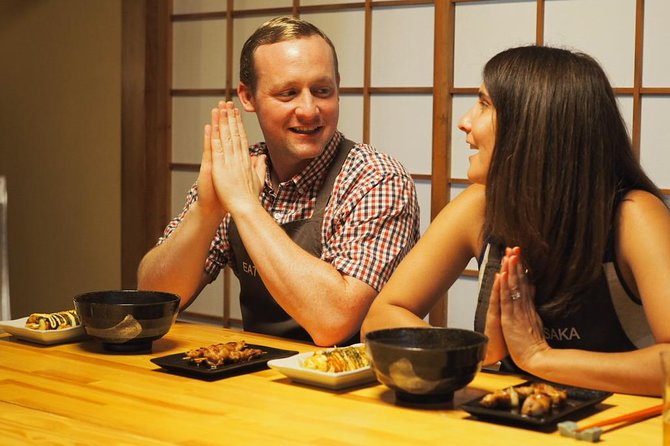
At about two hours and 30 minutes, this is long enough to feel substantial but short enough to fit into a busy Osaka visit. You have time for instruction, preparation, cooking, and the final meal without giving up an entire day.
The class will suit you best if you enjoy doing rather than simply watching. You will handle ingredients and tools, so expect an active session. It is not the right choice if you want a quick tasting stop with no preparation.
The pace should also give the bilingual chef room to explain food customs and cooking reasons. Miki’s teaching style is praised for encouraging questions, while Nathalie is praised for making the room feel relaxed. Those details suggest that the class is as much about conversation and understanding as it is about producing lunch or dinner.
Because the group is capped at eight, dates can fill. More than 10 bookings were recorded in the previous month, and the experience has a 99 percent recommendation rate from 87 ratings. Those figures suggest steady demand, so I would book ahead if the class is an important part of your Osaka plans.
Is the $79.28 price fair?
At $79.28 per person, this is not the cheapest way to eat in Osaka. You can find street food for far less, and a restaurant meal may cost less than a cooking class.
But you are paying for more than the final plate. The price covers the ingredients, instruction, cooking tools, drinks, a small group, and access to an old Japanese house. You also leave with techniques that may stay with you after the meal, especially the udon and tempura methods.
The value is strongest if you enjoy food stories, hands-on activities, and local conversation. It is less convincing if you only want to sample Osaka dishes quickly. A street-food walk would likely give you more variety with less effort, while this class gives you more participation and personal attention.
For families, couples, and solo visitors who like meeting people, the price is easier to justify. The small group can turn a meal into a shared social experience. One booking included a couple from Ireland, and the class created an easy setting for meeting other people without forcing a large-group tour atmosphere.
Who should book this cooking class?
I would recommend it to first-time visitors who want to understand Osaka food instead of simply photographing it. It also suits repeat visitors looking for a slower, more personal activity away from the main tourist routes.
Families should consider it because the hosts are described as warm and patient, and the session offers several kinds of tasks. Couples may like the meal at the end, while solo visitors can count on a small group rather than an impersonal demonstration.
Vegetarians can ask about adjustments before booking. The class accommodated one vegetarian participant, but you should not assume that all allergies, religious restrictions, or special diets can be handled without advance notice.
You may want to skip it if you dislike cooking, have very little time in Osaka, or want a fixed menu with no uncertainty. The changing descriptions of the dishes are the only real planning concern, so confirm what you will prepare if that detail matters to you.
Free cancellation is available up to 24 hours before the start time for a full refund. Changes or cancellations inside that window are not accepted, and the activity can be canceled if its minimum number is not reached. In that case, you are offered another date or experience, or a full refund.
Should you book Eat Osaka?
Book this class if you want a friendly, hands-on food experience with a local chef, a small group, and a proper meal at the end. The strongest reasons are the old-house kitchen, the patient teaching style associated with Miki, Niki, and Nathalie, and the chance to learn several Osaka staples rather than one recipe.
The class is a good value for people who care about how food is made. Confirm the exact menu before paying, especially if you have your heart set on okonomiyaki, udon, tempura, yakitori, or mochi. If you accept that small condition, this is an easy way to add a personal taste of Osaka to your trip.
FAQ
Where does the cooking class begin?
It begins at Eat Osaka Higashinari, 1-2-10 Higashinaka-Honmachi, Higashinari Ward, Osaka, Japan.
Where does the experience end?
The activity ends back at the same meeting point.
How long does the cooking class last?
The class lasts approximately two hours and 30 minutes.
How many people can join the class?
The experience has a maximum of eight participants.
Is the class near public transportation?
Yes. The meeting point is described as being near public transportation.
Are ingredients included?
Yes. All ingredients and cooking instruction are included.
Are drinks included?
Yes. Welcome drinks are included, and you can enjoy beer, sake, or green tea with the food you prepare.
What dishes might I make?
The described dishes include Osaka-style okonomiyaki, hand-made udon, vegetable tempura, yakitori with a signature sauce, pickled cucumber, and mochi dessert. The exact menu may vary, so confirm the dishes when booking.
Can vegetarian guests be accommodated?
A vegetarian adjustment has been accommodated during the class. You should share your dietary needs in advance because the experience does not state that every restriction can be handled.
Can I cancel for a full refund?
Yes, if you cancel at least 24 hours before the local start time. Cancellations or changes made less than 24 hours in advance are not refunded or accepted.
Just added in Japan
- A One-of-a-Kind Sushi Experience in a Special Place of Japan★ 5.0 · 15 reviews
- Tokyo Cute Bento Cooking Class – Make a Kawaii Character Lunchbox★ 5.0 · 126 reviews
- Japanese Home Cooking Class & Walk in Todoroki Temple Tokyo★ 5.0 · 88 reviews
- Japan Tokyo Tower Observatory Deck E-Ticket★ 4.0 · 34 reviews
- Catch a Baseball Game in Tokyo with a Local – Tickets Included★ 5.0 · 24 reviews
- JDM Experience with Fast&Furious RX-7 (English speaking Driver)★ 5.0 · 57 reviews
- Tokyo Private Day Tour by Car with English speaking Driver Guide★ 4.0 · 29 reviews
- Japan Classic 10 Day – One Life Adventures★ 5.0 · 129 reviews
Food Tours, compared.
Shinjuku Food Tour (13 Dishes at 4 Local Eateries)
Read our review →
Shinsekai Food Tour with 13-15 Dishes at 5 Eateries
Read our review →
Osaka Food Tour: 13 Dishes at 5 Local Eateries
Read our review →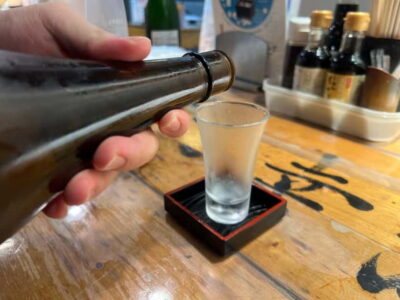
Shinjuku Food Tour (15 Dishes and 4 Eateries)
Read our review →
Best of Shinjuku: Izakaya Food Tour (4 Stops, 14+ Tastings)
Read our review →
Kyoto Night Foodie Tour in Gion (9+ dishes + 6 Sake tastings)
Read our review →
Hungry Osaka Street Food Tour:15 Tastings & 3 Drinks with a Local
Read our review →
Tokyo Night Foodie Tour in Shinjuku – Seasonal Sushi, Wagyu Beef
Read our review →Browse the lists this tour appears in