
Reviewed · PRIVATE TOURS IN TOKYO
Edo Tokyo & Japanese Culture Tour with Government Licensed Guide
Tokyo’s past is hiding in plain sight. This private six-hour tour connects the old city to the modern capital, taking you from the former Edo Castle site to sumo country, Hokusai art, earthquake history, and recreated Edo neighborhoods. You can shape the day around three or four places, which is a major advantage if you already know what interests you.
I like the private format and the chance to work with a licensed English-speaking guide who can explain what you are seeing instead of leaving you to decode signs. I also like the practical help with Tokyo’s public transport. One guide, Show, helped a group learn to use an IC card and navigate the city rail system, while Shinji, Kei-san, and Andy were praised for clear communication, thoughtful answers, and flexible planning.
The main consideration is distance. This is chiefly a walking tour, and transport costs are extra. If you choose sites spread across Tokyo, six hours can become a tight schedule, and one group’s day ran well over time because of the long journeys between stops.
In This Review
- Key points to know before booking
- What this private Tokyo tour is really offering
- Starting at the Imperial Palace and former Edo Castle
- Ryogoku, where Tokyo’s sumo world gathers
- Hokusai and the Sumida district
- The Kanto Earthquake Memorial Museum and Tokyo’s rebuilding
- Ryogoku Edo Noren and a meal you pay for yourself
- Nihonbashi and the old road network
- The two Edo museums: open air or recreated neighborhood
- How the guides add value
- Walking, trains, cash, and the six-hour clock
- Who should book this experience?
- Should you book the Edo Tokyo tour?
- FAQ
- How long does the Edo Tokyo and Japanese Culture Tour last?
- Is this a private tour?
- How many sites can I choose?
- Is pickup included?
- Are transportation costs included?
- Are entrance fees included?
- Can I enter the Imperial Palace?
- Is lunch included?
- Can I cancel for a full refund?
Key points to know before booking
- Choose three or four sites: The day is customizable, but trying to squeeze in every possible stop will make the tour rushed.
- Expect a walking day: Your guide meets you on foot within the designated Tokyo area. There is no private vehicle.
- Pay extra for transport and admissions: Lunch, train or subway fares, museum tickets, and personal costs are not included.
- Ryogoku adds a strong cultural angle: Sumo, chanko restaurants, and the Kokugikan area give this tour more flavor than a standard sightseeing loop.
- The guides are the main value: Shinji, Kei-san, Andy, and Show have been praised for English, patience, transit help, and custom planning.
- The Imperial Palace visit is exterior only: You see the grounds and former Edo Castle site, not the inside of the palace.
What this private Tokyo tour is really offering
At $154.37 per person, this experience is not the cheapest way to see Tokyo. The price makes more sense if you want a private guide for your own group, help with transport, and a day shaped around Japanese history rather than a fixed checklist.
You are paying for interpretation and planning. Tokyo can be easy to admire but harder to understand. A guide can connect the Imperial Palace to Edo Castle, explain why Nihonbashi mattered, place sumo within Japanese culture, and show how the city responded to the Great Kanto earthquake.
The tour includes a licensed local English-speaking guide and a custom choice of three or four sites from the available attractions. It does not include a private car, meals, entrance tickets, or public transport. That matters because Tokyo’s distances can make fares add up, especially when your chosen stops sit in different parts of the city.
The private setup is best for couples, families, or a small group with a shared interest. You will not be combined with another party. That gives you room to ask questions, adjust the pace, and tell your guide when you need a short break.
More Private Tours in Tokyo
- Tokyo 6hr Private Tour with Government-Licensed Guide
★ 5.0 · 3,902 reviews - Private Tour to Mt. Fuji and Hakone (Fully Licenced Operator)
★ 5.0 · 1,910 reviews - Tokyo Customized Private Tour (Must See Places in 1 Day)
★ 5.0 · 1,499 reviews
Starting at the Imperial Palace and former Edo Castle
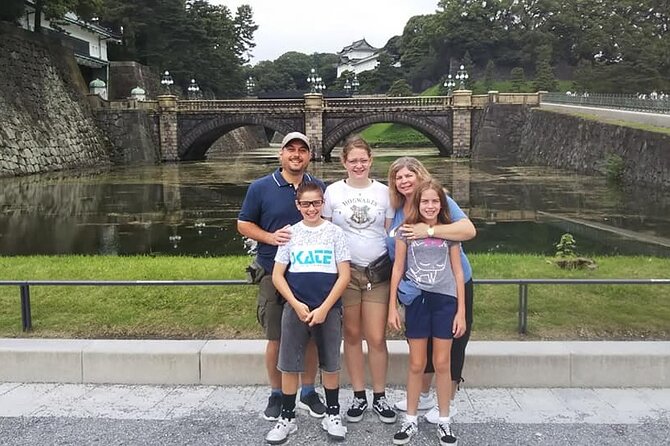
The Imperial Palace is a useful first stop because it introduces the basic story of Tokyo. The current palace occupies the former site of Edo Castle, once the center of political power during the Edo period from 1603 to 1868.
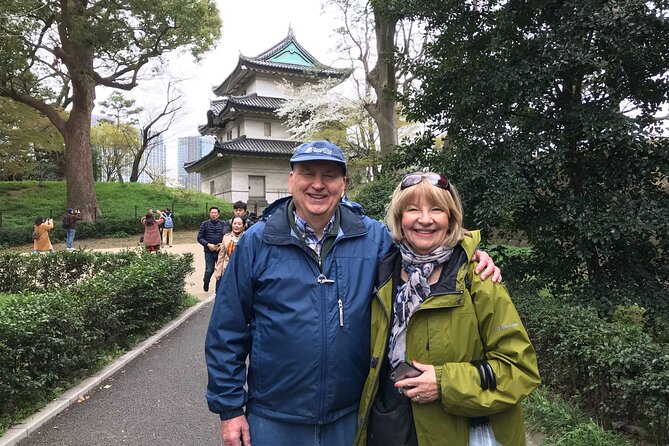
You can expect an outdoor visit around the palace area, including the large park setting, moats, and historic castle connections. You cannot enter the inside of the Imperial Palace on this tour, so set your expectations correctly. This is a place for views, context, and a sense of scale, not an interior palace tour.
I would choose this stop if you want a broad introduction to Tokyo’s political past or if you are visiting the city for the first time. I would think twice if your main goal is to see palace rooms or access restricted areas. The visit takes about an hour, and that time may be better used elsewhere if you already understand the Edo period.
A guide is especially useful here because the modern city can make the site’s former role hard to picture. The moats and open grounds offer physical clues, while the explanation fills in the missing story.
Ryogoku, where Tokyo’s sumo world gathers
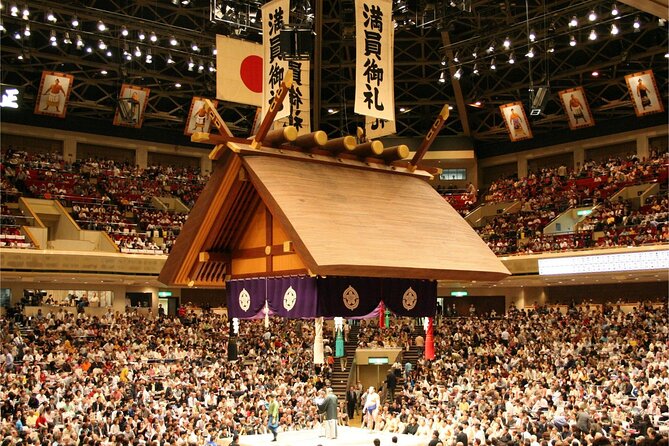
Ryogoku gives the day a different rhythm. This district is associated with the sumo stadium, sumo stables, chanko restaurants, and other parts of sumo culture. It is the home base of Tokyo’s sumo world.
The planned stop at Ryogoku Kokugikan lasts about 30 minutes and has no admission fee. That short visit works well for seeing the area and understanding its importance. It does not mean you are attending a sumo tournament or entering a stable, so do not book this expecting a full sumo event.
For me, Ryogoku is one of the most appealing choices because it moves beyond temples and castles. Sumo is a living part of Japanese culture, and the district gives your guide a natural opening to explain customs, training, food, and the place of wrestling in Japanese life.
You can also combine the area with the Sumida Hokusai Museum and Ryogoku Edo Noren. That creates a compact cluster of stops, which is smart planning for a six-hour tour. Fewer long train rides mean more time on site.
Hokusai and the Sumida district
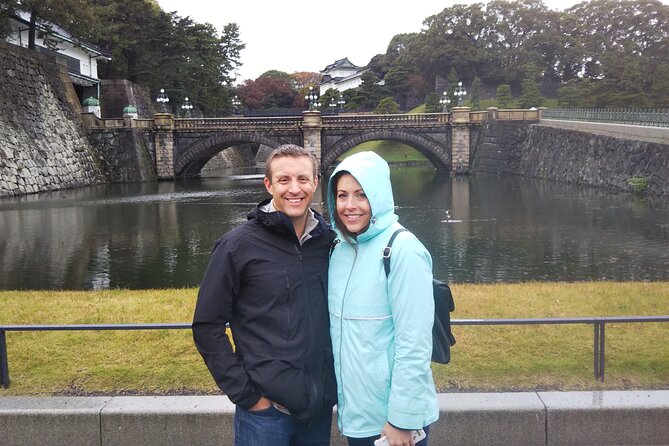
The Sumida Hokusai Museum is dedicated to Katsushika Hokusai, the ukiyo-e artist known around the world for works including The Great Wave. The museum adds an art focus to a day otherwise centered on urban history, politics, and traditional culture.
A visit is listed at about 30 minutes, with admission extra. That is enough for a focused introduction, but not a leisurely examination of every display. If Hokusai is a major interest, tell your guide in advance and consider giving this stop more weight in the day.
I like the way this museum fits with Ryogoku. Both help you understand eastern Tokyo through local culture rather than only famous monuments. You can pair visual art with sumo and Edo-era food without crossing the entire city.
Keep an eye on the clock. The museum is not simply a quick photo stop, and adding too many distant attractions after it can force you to hurry.
A completely different kind of day out:
- Tokyo Disney Resort – Tokyo Disneyland & Tokyo DisneySea Park Tickets
★ 4.8 · 99,488 reviews - SHIBUYA SKY Ticket
★ 4.7 · 46,509 reviews - JR Whole Japan Rail Pass
★ 4.8 · 29,150 reviews - Mt Fuji and Hakone 1-Day Bus Tour Return by Bullet Train
★ 5.0 · 26,383 reviews
The Kanto Earthquake Memorial Museum and Tokyo’s rebuilding
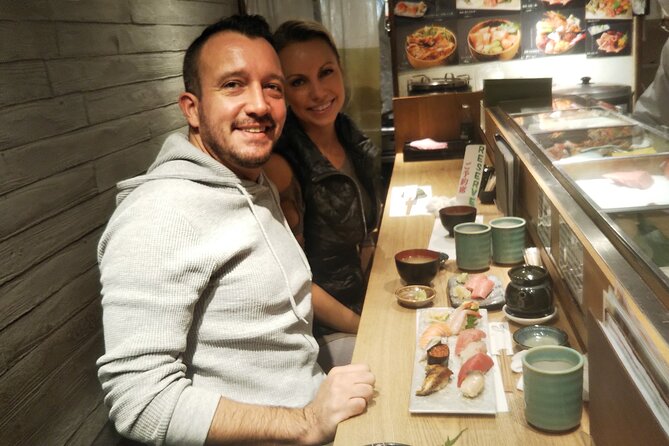
The Kanto Earthquake Memorial Museum focuses on the Great Kanto earthquake and the rebuilding of Tokyo afterward. The planned visit lasts about an hour, making it one of the more substantial stops.
This is valuable because Tokyo’s story is not only about old wooden neighborhoods and traditional customs. The city has been reshaped by disaster, reconstruction, and modern planning. A visit here helps explain why parts of Tokyo look as they do today and how the city recovered from a devastating event.
I would recommend this stop for anyone interested in urban history or the forces that changed Tokyo. It may be less appealing if you want a day devoted only to art, food, or scenic places. The museum’s subject is serious, but it gives the city’s past needed balance.
Pairing the museum with nearby Ryogoku sites also makes practical sense. You can spend time in the same general part of the city instead of losing a large part of the tour to transport.
Ryogoku Edo Noren and a meal you pay for yourself
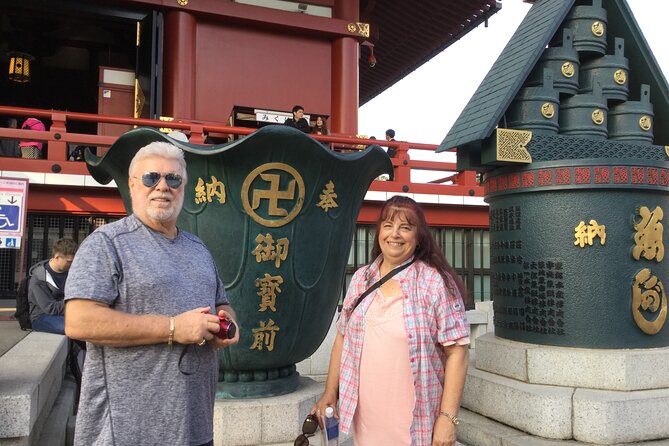
Ryogoku Edo Noren is a food court designed to resemble Edo-period Japan. The planned stop lasts about 45 minutes, and food is not included.
This is a pleasant way to break up a museum-heavy day. You can sample Tokyo-style dishes in a setting that refers back to the old city. Since the meal is your own expense, you have some control over how much time and money you spend here.
Do not treat this as a formal food tour unless your guide confirms a more specific plan. The information supports a food court visit, not a set menu or included tasting. Still, it can be a useful place to ask your guide about local dishes and eating customs.
The stop works best when you choose several Ryogoku attractions together. If you travel across town solely to eat here, the time may not be worth it during a six-hour tour.
Nihonbashi and the old road network
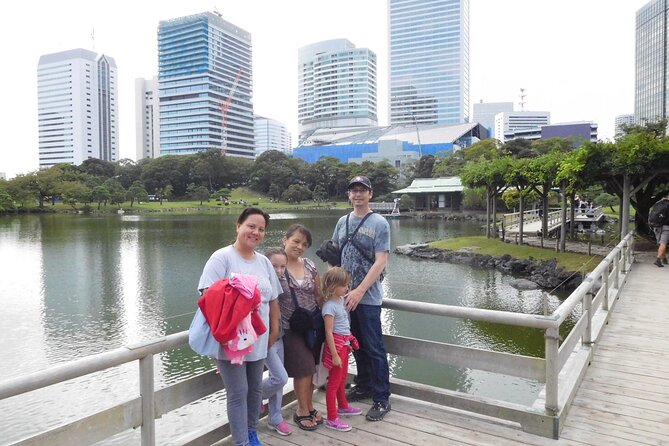
Nihonbashi once marked the starting point of five major roads running across Japan. During the Edo period, it prospered as a center of the city, and it still offers a sense of older Tokyo amid the modern streets.
This stop is not given a fixed duration, which is actually helpful. Your guide can decide how much time fits your interests and the rest of the day. You might focus on the bridge, the old road network, trade, or the contrast between historic Tokyo and the surrounding commercial district.
I would choose Nihonbashi if you want to understand how Edo functioned as a capital and trading center. It may not satisfy you if you are looking for a large museum or a long list of preserved buildings. Its value comes from the story attached to the place.
The Sumida River can also be included. It is one of Tokyo’s main rivers and a familiar waterway in the eastern part of the city. The river gives useful geographic context, especially when your guide explains how water shaped movement and settlement.
The two Edo museums: open air or recreated neighborhood
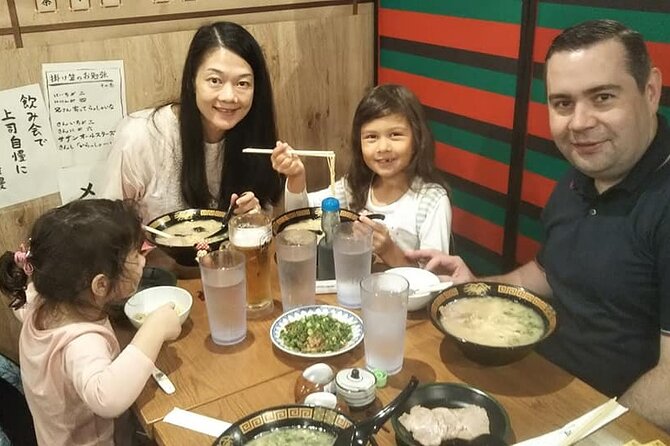
The Edo Tokyo Open Air Architectural Museum offers an off-the-beaten-track look at Japanese culture in western Tokyo. It was established by the Tokyo Metropolitan Government in 1993 and presents historic architecture in an outdoor setting.
The planned time shown for this stop is only 15 minutes, so you should clarify the intended visit before choosing it. Fifteen minutes would allow little more than a quick look. If you are interested in buildings, ask whether the schedule can give this museum enough time to be worthwhile.
The Fukagawa Edo Museum offers a different approach. It recreates an entire Edo-era neighborhood with streets, houses, and shops. The listed visit takes about 30 minutes, and admission is extra.
Fukagawa may work better for you if you want to picture ordinary daily life. Instead of looking mainly at individual objects, you get a reconstructed sense of an Edo street. It is a strong choice for families and for anyone who learns best by seeing how homes, shops, and public spaces fit together.
You probably should not choose both western Tokyo’s open-air museum and the eastern Tokyo stops unless your guide confirms that the timing works. The distance between areas is the central challenge of this experience.
How the guides add value
The guide makes or breaks a tour like this, and the strongest praise centers on personal attention. Shinji was commended for communicating before the tour, shaping the day around the group’s interests, and speaking excellent English.
Kei-san was praised for an eye for architecture and aesthetics, along with explanations of Japanese history and philosophy. That combination could be particularly useful at the Imperial Palace, Nihonbashi, or the architectural museum.
Andy was described as patient with questions and willing to research answers afterward. Show helped a group learn to use an IC card and understand Tokyo’s public transport system. Another guide helped a group take photographs and sent them afterward.
These details matter. You are not simply hiring someone to point toward a building. You are getting help with the practical parts of Tokyo, including transit and route planning, plus a person who can adjust the conversation to your interests.
Still, guide quality can vary by individual. If you care about architecture, sumo, art, or disaster history, say so before the day begins and ask for the guide best suited to that subject if the agency can accommodate the request.
Walking, trains, cash, and the six-hour clock
This is a walking tour with pickup on foot within a designated area of Tokyo. Public transport may be used, but you pay the fares yourself. There is no private vehicle.
You should carry local cash. Tokyo’s transport system may not accept ordinary credit cards in every situation, and the practical advice from the tour is to have money ready for fares and other purchases. An IC card can make public transport easier, and one guide specifically helped participants learn how to use one.
Wear comfortable shoes and plan for movement. The tour may include outdoor palace grounds, district walks, museums, a river area, and train or subway connections. The more sites you select, the more time disappears between them.
The best plan is to choose three or four places with a clear connection. For example:
- Imperial Palace, Nihonbashi, and the Sumida River for a broad city-history day
- Ryogoku Kokugikan, Hokusai Museum, and Ryogoku Edo Noren for culture, art, and food
- Fukagawa Edo Museum, Nihonbashi, and the Imperial Palace for an Edo-focused route
Weather can affect the experience because walking is central. Keep the schedule flexible, and do not assume every possible stop can fit into six hours.
Who should book this experience?
I would recommend it to history enthusiasts, first-time Tokyo visitors who want context, families seeking a private guide, and anyone nervous about using Tokyo’s public transport. It also suits you if you prefer asking questions instead of listening to a fixed group presentation.
The tour is less suitable if you want a relaxed food excursion, a private car, a palace interior visit, or a fixed schedule with no extra costs. It is also not the best pick if you dislike walking or want to see a large number of far-flung attractions in one day.
The price is reasonable when split among a group and used for thoughtful planning. It is harder to justify if you select only free outdoor sights and do not need help with transport. Remember that admission tickets, meals, fares, and personal expenses come on top of the $154.37 per-person price.
Free cancellation is available up to 24 hours before the start time. Changes or cancellations inside that window are not accepted for a refund.
Should you book the Edo Tokyo tour?
Book this tour if you want Tokyo explained through its older layers, especially Edo Castle, sumo, Hokusai, earthquake recovery, historic roads, and recreated neighborhoods. The private format and strong guide support can turn a confusing day of rail connections into a useful introduction to the city.
Choose your stops carefully, keep the route compact, and budget for tickets, lunch, and transport. If you do that, this is a thoughtful way to meet Tokyo’s past without pretending the modern city has disappeared.
FAQ
How long does the Edo Tokyo and Japanese Culture Tour last?
The tour lasts approximately six hours.
Is this a private tour?
Yes. Only your group participates, and you cannot combine multiple tour groups.
How many sites can I choose?
The tour includes a customizable selection of three or four sites from the available attractions.
Is pickup included?
Meetup with the guide is provided on foot within the designated area of Tokyo. There is no private vehicle pickup.
Are transportation costs included?
No. Public transport may be used, but transportation fees are extra.
Are entrance fees included?
Generally, entrance fees are not included. Guide entry fees are covered only for sights listed under the What to Expect section.
Can I enter the Imperial Palace?
No. The tour does not include access to the inside of the Imperial Palace.
Is lunch included?
No. Lunch and other personal expenses are extra. Ryogoku Edo Noren is available as a place to purchase Tokyo-style dishes.
Can I cancel for a full refund?
Yes, if you cancel at least 24 hours before the experience start time. Cancellations or changes made less than 24 hours before the start time are not eligible for a refund.
Just added in Tokyo
- Mount Fuji Full Day Sightseeing Tour from Tokyo★ 4.5 · 101 reviews
- Tokyo: Harajuku Meiji Shrine to Shibuya Crossing Guided Tour★ 5.0 · 27 reviews
- Mt Fuji Customizable Private Tour English Speaking Driver Pick-up★ 5.0 · 69 reviews
- From Tokyo Kamakura, Hachimangu Shrine and Enoshima Full Day Tour★ 4.5 · 36 reviews
- Discover the Art of Ikebana in Tokyo’s Historic Yanaka District★ 5.0 · 60 reviews
- Shinjuku Food and Drink Walking Tour★ 5.0 · 13 reviews
- Freely set up plans Guided Private Tours in Tokyo★ 4.5 · 130 reviews
- Flavors of Japan Food Tour in Tokyo★ 5.0 · 39 reviews
Private Tours in Tokyo, compared.
Tokyo 6hr Private Tour with Government-Licensed Guide
Read our review →
Private Tour to Mt. Fuji and Hakone (Fully Licenced Operator)
Read our review →
Tokyo Customized Private Tour (Must See Places in 1 Day)
Read our review →
Mount Fuji Full-Day Private Tour from Tokyo (Customizable)
Read our review →
Tokyo 4hr Private Tour with Government-Licensed Guide
Read our review →
Tokyo Customized Private Tour: See Top Attractions in 1 Day
Read our review →
Mt Fuji Private Tour with English Speaking Driver
Read our review →
Mt. Fuji & Hakone Private Day Tour with English-Speaking Driver
Read our review →Browse the lists this tour appears in