
Reviewed · TAKAYAMA TOURS
Explore Kiso Valley : Magome – Tsumago Mountain Trail Walk
A footpath through old Japan still feels wonderfully real. This private walk follows a 9-kilometer stretch of the Nakasendo Trail between Magome and Tsumago, linking two beautifully preserved post towns with forest paths, mountain scenery, and small historic sites. I like the private format, which lets your guide adjust the pace, and I like that bus tickets and entry fees are handled for you.
The main consideration is physical effort. You will walk about 5.5 miles, with slopes and uneven sections, and the tour requires strong fitness. The $171.31 price is not a bargain walk, but it covers an English guide, transportation by bus, and admissions while removing much of the route-finding work.
In This Review
- Key points about the Magome to Tsumago walk
- Why this old highway makes a fine day out
- Starting at Nakatsugawa Station at 9:00
- Magome-juku, where the walk begins
- Magome Observatory and the high point of the route
- Forest paths and the Odaki-Medaki Waterfalls
- Otsumago and the quieter edge of Tsumago
- Tsumago-juku and the old inn district
- The Nagisomachi Museum and Waki-honjin Okuya
- The guides can shape the whole experience
- Is $171.31 a fair price?
- Who should book this walk?
- Should you book the Magome to Tsumago trail walk?
- FAQ
- Where does the tour begin?
- Where does the tour finish?
- How far do you walk?
- How long does the experience last?
- Is the tour private?
- Is transportation included?
- Are entrance fees included?
- Is food included?
- What level of fitness do I need?
Key points about the Magome to Tsumago walk
- Walk 5.5 miles through the Kiso Valley: Expect a full active day with uphill and downhill sections rather than a casual town stroll.
- Travel from Nakatsugawa to Magome by bus: The tour begins at Nakatsugawa Station and finishes at Nagiso Station.
- See two preserved Nakasendo post towns: Magome-juku and Tsumago-juku offer old wooden buildings, former inns, shops, and historic streets.
- Pause at waterfalls and a mountain viewpoint: Odaki-Medaki Waterfalls and Magome Observatory break up the walk with scenic stops.
- Explore the Waki-honjin Okuya residence: Admission includes the Nagisomachi Museum and this important former inn and provision store.
- Enjoy a private, adjustable outing: Only your group takes part, so the guide can respond to your pace and interests.
Why this old highway makes a fine day out
The Nakasendo was an inland highway connecting Kyoto and Tokyo. In the Edo period, it carried samurai, merchants, officials, and ordinary people through the mountains of central Japan. Today, the Magome to Tsumago section gives you a manageable taste of that long route without requiring a multi-day trek.
I like this stretch because the past is not confined to a museum. You walk through forests, along quiet rural roads, and into towns where old buildings still define the street. The experience connects scenery with daily life. You are not simply looking at a restored facade. You are following the route people once used to cross the Kiso Valley.
The private arrangement matters here. A group of strangers can make a mountain walk feel rushed, especially when some people want photographs and others want to keep moving. With only your group participating, you can ask questions, stop briefly, or request a gentler pace. The tour is described as customizable, though the 5.5-mile route and approximately seven-hour schedule still set the basic shape of the day.
A few more options to weigh up in Takayama
- Kanazawa: World Heritage Shirakawa-go Morning Guided Tour
★ 4.9 · 988 reviews - Kanazawa: World Heritage Shirakawa-go & Two Local Experience
★ 4.9 · 274 reviews - Kanazawa/Takayama: Shirakawago & Takayama Private Day Tour
★ 4.8 · 172 reviews
Starting at Nakatsugawa Station at 9:00
Meet your English-speaking guide at the ticket gate of Nakatsugawa Station at 9:00 in the morning. From there, you take a bus to Magome-juku, the starting point for the walk.
This is one of the tour’s practical strengths. The Kiso Valley route is easy to enjoy but less simple to organize if you are arranging every bus and connection yourself. Having the bus ticket included means you can arrive at the station and focus on meeting your guide rather than sorting out the first leg.
Your day ends at Nagiso Station at about 15:45. The guide will help you buy the train ticket back to your accommodation, but your return train fare is not included. Private taxi, car, or bus transportation is also not part of the package, so the included transport refers to the scheduled bus transfer to Magome.
Magome-juku, where the walk begins
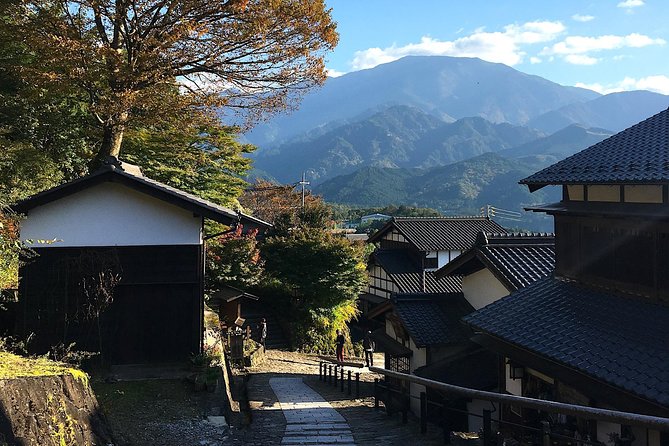
Magome-juku is one of the old post towns on the Nakasendo. Its sloping main street and traditional buildings make an immediate impression, especially if you have spent the morning arriving through modern Japan by train and bus.
The first stop allows about 40 minutes. That is enough time to get oriented, look at the town’s architecture, and hear how post towns worked along the highway. Samurai and officials used the route, but the inns also served ordinary people moving between regions. That mixed social role gives the old street more interest than a simple line of picturesque houses.
Magome is built on a slope, so the town itself gives you an early hint of the physical nature of the day. Wear shoes with a firm grip. Comfortable walking shoes are far more useful than stylish but smooth-soled footwear, particularly if the trail is wet.
The town can feel more polished than the forest sections that follow. That is not a flaw, but it means you should enjoy Magome as an introduction rather than expect the entire day to feel equally quiet. Your guide helps connect the visible buildings with the larger story of the highway.
Magome Observatory and the high point of the route
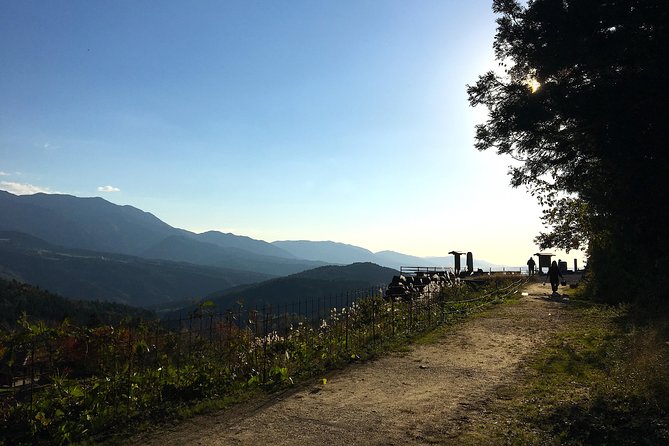
A short walk up the slope brings you to Magome Observatory, where you spend about 15 minutes. At an altitude of 801 meters, it sits at the highest point of the Magome to Tsumago hiking course.
The reward is a broad view toward Magome and the surrounding Kiso Valley. Weather matters greatly here. On a clear day, the viewpoint gives the route a strong sense of place. In mist or rain, the mood changes, and the view may be limited, though the forest walk still has its own appeal.
This is also where the uphill work becomes more obvious. The observatory is not a difficult sightseeing stop in itself, but it confirms that this outing is a hike with cultural stops, not a town tour with a little walking added. If you need frequent breaks, tell your guide early. The private setup gives you room to do that.
A completely different kind of day out:
- Departing from Takayama [Regular sightseeing bus] World Heritage Sites Shirakawago and Gokayama Ainokura
★ 4.5 · 137 reviews - 1-Day Takayama Tour: Explore Scenic Takayama and Shirakawago
★ 5.0 · 113 reviews - From Takayama: Guided Day Trip to Takayama and Shirakawa-go
★ 4.9 · 113 reviews - Private Afternoon Cycling Tour in Hida-Furukawa
★ 5.0 · 109 reviews
Forest paths and the Odaki-Medaki Waterfalls
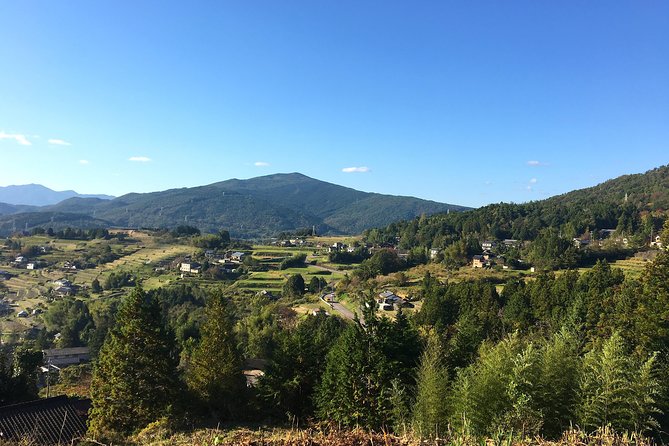
The route then continues through the Kiso Valley toward Tsumago. The forested portions are the heart of the experience for me. You get a sense of the old highway as a route through nature, with the sound of the woods replacing traffic and shopfronts.
About 10 minutes are set aside for Odaki-Medaki Waterfalls. Odaki is known as the man waterfall and Medaki as the woman waterfall. Their position along the former highway made them a natural place for people to stop, cool off, and refresh themselves.
It is a short stop, so do not expect a long waterfall visit. Its value is in the pause. After walking uphill and across wooded sections, water and shade make a welcome break. Your guide can also explain the local meaning attached to the two falls, giving a small natural feature more cultural weight.
The route’s beauty comes with a practical catch: conditions can affect footing. The tour requires good weather, and it can be canceled if conditions are poor. You will be offered another date or a full refund in that situation. Even on a dry day, a strong pair of shoes is sensible.
Otsumago and the quieter edge of Tsumago
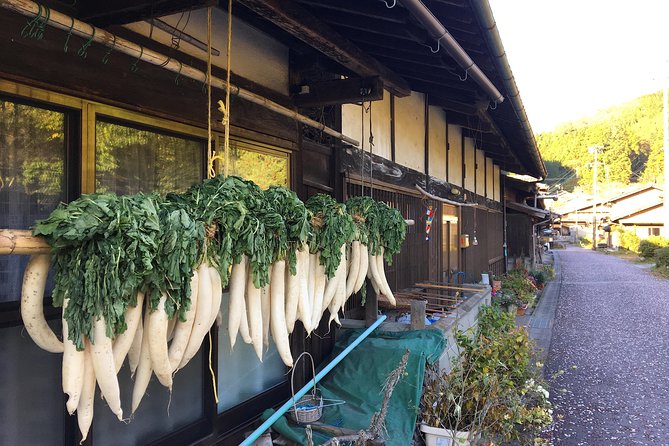
Otsumago is part of the Tsumago-juku Preservation Area. The stop lasts about 20 minutes and shows a less concentrated side of the historic settlement, with houses built in Hon-Udatsu and Dashibari Zukuri styles lining the road.
This is a useful part of the day because it widens your view beyond the famous central street. Tsumago is known for its preserved appearance, but Otsumago helps show how the historic district extends into the surrounding community. The area remains tied to ordinary homes and local life, even as interest in the route brings more sightseeing.
You may find this section quieter than the main town. That makes it a good place to listen to your guide and notice construction details. Look at the rooflines, timber, and how the buildings sit beside the road. The charm is in small features rather than one grand monument.
Tsumago-juku and the old inn district
The tour allows about 1 hour and 10 minutes at Tsumago-juku, giving you time to explore one of the best-known post towns along the Nakasendo.
Tsumago once had one Honjin inn, one Waki-honjin inn, and 31 Hatago inns. The Honjin served higher-ranking officials, while the Hatago inns housed common travelers using the highway. That contrast helps explain the town’s layout and why so many lodging buildings were needed along this route.
I would use this stop for a mix of wandering and listening. The street is attractive, but the guide’s explanation gives it purpose. You can see where people slept, how the town supported passing traffic, and how travel worked before trains and modern roads changed the valley.
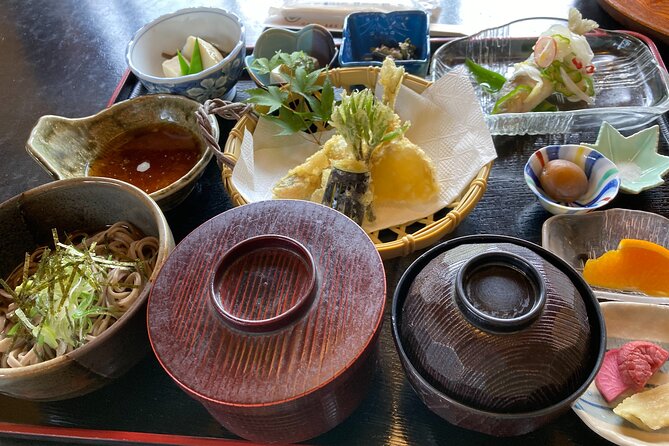
The long stop also gives your group some breathing room after the trail. You can look at shops and buildings without having to hurry from one scheduled point to another. Food and drinks are not included, so budget separately if you want to eat during the day. One guide, Harumoto, has been praised for introducing regional food and special treats along the way, but you should not assume those extras are part of every departure or included in the price.
The Nagisomachi Museum and Waki-honjin Okuya
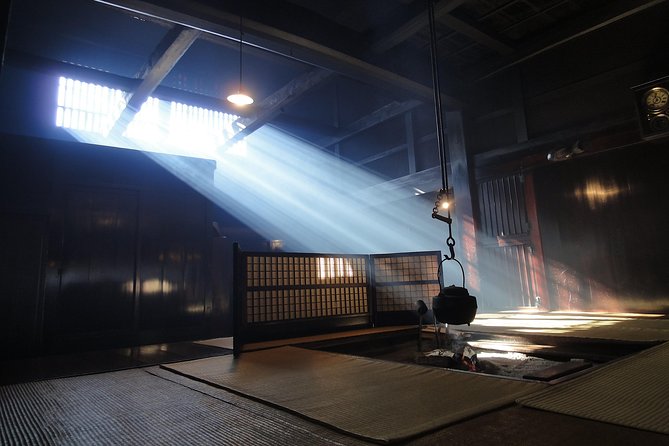
The final cultural portion takes place in the Nagisomachi Museum, which occupies the Waki-honjin Okuya residence. You have about 25 minutes here, followed by another 25 minutes at the residence itself.
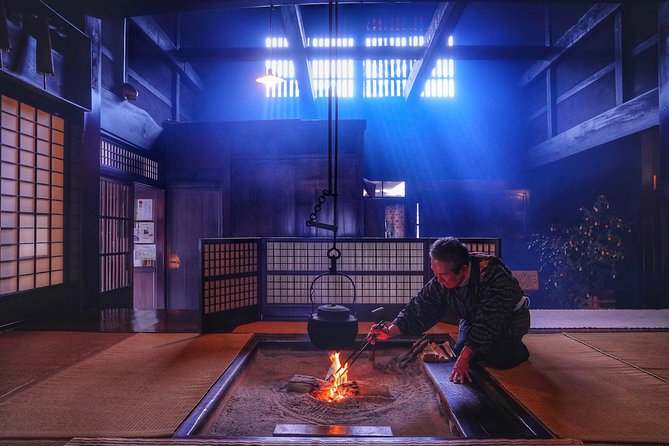
The building is the Hayashiya House, a designated Important Cultural Property. It has been restored using floor plans from the late Edo period, giving you a clearer sense of how a former lodging house was arranged. This is a valuable counterpoint to the outdoor walk. Instead of seeing only the front of old buildings, you can enter a historic interior and consider how the people who used the highway lived and worked.
The 1877 Waki-honjin Okuya residence also served as a provision store for generations. It was built from fragrant Japanese cypress, a material that had only recently become legal for construction when the house was built. That detail gives the structure a specific story and helps explain why the building feels more than simply old.
Admission to both the museum and Waki-honjin Okuya is included. These are not long visits, so the guide’s commentary matters. If you enjoy architecture, local customs, or the practical side of historical travel, ask questions here. The private format is especially useful for that kind of discussion.
The guides can shape the whole experience
The strongest praise for this walk centers on its guides. Ryo is described as having grown up near the Nakasendo Trail, which gives him a personal connection to the area as well as local knowledge. His friendly manner and enthusiasm are a good match for a route that combines exercise with history.
Harumoto has been praised for making the day fun and memorable, explaining regional culture, and pointing out food along the route. Kazuo is described as patient and considerate, especially when answering many questions. These details matter because the trail itself is not difficult to find with a map, but a good guide turns a walk into a story.
Guide quality can vary from person to person, of course. The experience is offered in English, and the named guides associated with it have received strong praise for warmth, patience, and local understanding. If you have a particular interest in architecture, food, or the old highway, tell your guide at the beginning so the day can reflect it.
Is $171.31 a fair price?
At $171.31 per person, this is a premium day walk. You are paying for a private experience rather than joining a large group, and the price includes an English guide, the bus to Magome, and entrance fees to the museum and Waki-honjin Okuya.
The value improves if you are uncomfortable navigating rural buses or finding the correct trail connections. The guide meets you at Nakatsugawa Station, takes care of the route, and assists with the train ticket at Nagiso. That removes several small tasks that can become awkward when schedules and Japanese station signs are unfamiliar.
The price is less attractive if you already know the Nakasendo route, prefer to walk independently, or are traveling alone on a tight budget. Food, drinks, and the return train fare are extra. Group discounts are available, so the per-person cost may make more sense when shared among several people.
The tour is highly rated, with 33 ratings and a 100 percent recommendation figure provided for the experience. That suggests strong satisfaction, especially with the guides and the balance of scenery and history, but the price and fitness requirement still deserve an honest look.
Who should book this walk?
I would choose this for active visitors who want a meaningful day outside the major Japanese cities. It suits families with older children or adults who can comfortably manage 9 kilometers, couples who prefer a private guide, and first-time visitors who want help with rural transport.
It is also a good opening to Japan. One pair described the outing with Harumoto as an excellent first tour because it combined mountain views, old towns, and a clear introduction to regional culture.
I would not choose it for anyone seeking a relaxed sightseeing day with minimal walking. The trail includes slopes, the schedule runs from 9:00 to roughly 15:45, and the route requires strong physical fitness. If your main interest is only Tsumago’s old street, a shorter visit may be a better fit.
Free cancellation is available up to 24 hours before the start time. Changes or cancellations inside that window are not refunded, and poor weather can lead to a different date or a full refund.
Should you book the Magome to Tsumago trail walk?
Book it if you want the Nakasendo to feel like a real journey rather than a quick photo stop. The best parts are the private pacing, the forest route, the preserved post towns, and guides such as Ryo, Harumoto, and Kazuo, who bring local detail to the walk.
Skip it if the distance, price, or fixed full-day schedule feels too demanding. For the right person, though, this is a well-organized way to walk through old Japan, with enough practical support to let you focus on the trail.
FAQ
Where does the tour begin?
The tour begins at the ticket gate of Nakatsugawa Station in Gifu Prefecture. The meeting time is 9:00 in the morning.
Where does the tour finish?
The tour finishes at Nagiso Station in Nagano Prefecture at about 15:45. The guide will assist with buying the train ticket back to your accommodation.
How far do you walk?
The route covers about 5.5 miles, or 9 kilometers, between Magome and Tsumago.
How long does the experience last?
The full experience lasts approximately seven hours. The scheduled day begins at 9:00 and ends at Nagiso Station around 15:45.
Is the tour private?
Yes. Only your group participates in the private activity.
Is transportation included?
A bus ticket for the journey from Nakatsugawa Station to Magome is included. Private taxi, private car, private bus, and the return train ticket are not included.
Are entrance fees included?
Yes. Entrance to the Nagisomachi Museum and Waki-honjin Okuya is included.
Is food included?
No. Food and drinks are not included in the tour price.
What level of fitness do I need?
You should have a strong level of physical fitness because the experience includes a 9-kilometer walk with slopes and uneven trail sections. The tour also requires suitable weather.
Just added in Takayama
- Takayama Old Town Walking Tour with Local Guide★ 4.5 · 50 reviews
- Takayama Local Cuisine, Food & Sake Cultural Tour with Government-Licensed Guide★ 5.0 · 17 reviews
- Takayama Rice Ball and Miso Soup Making at a buddhist temple★ 5.0 · 13 reviews
- Takayama Half Day Tour (Private Guide)★ 5.0 · 15 reviews
- Private Transfer from Takayama to Kanazawa Including Shirakawago★ 5.0 · 17 reviews
- Takayama: Authentic Sake Tasting at a Historic Brewery★ 5.0 · 65 reviews
- Takayama Full-Day Private Tour with Government Licensed Guide★ 4.5 · 13 reviews
- Shuriken Experience in Takayama★ 5.0 · 46 reviews
Takayama Tours, compared.
World Heritage Shirakawa-go Morning Guided Tour
Read our review →
World Heritage Shirakawa-go & Two Local Experience
Read our review →
Kanazawa/Takayama: Shirakawago & Takayama Private Day Tour
Read our review →![Departing from Takayama [Regular sightseeing bus] World Heritage Sites Shirakawago and Gokayama Ainokura](https://media.japanvisits.com/wp-content/uploads/departing-from-takayama-regular-sightseeing-bus-world-heritage-sites-shirakawago-and-gokayama-ainokura-400x267.jpg)
Departing from Takayama [Regular sightseeing bus] World Heritage Sites Shirakawago and Gokayama Ainokura
Read our review →
From Takayama: Guided Day Trip to Takayama and Shirakawa-go
Read our review →
1-Day Takayama Tour: Explore Scenic Takayama and Shirakawago
Read our review →
Private Afternoon Cycling Tour in Hida-Furukawa
Read our review →
Private-group Morning Cycling Tour in Hida-Furukawa
Read our review →Browse the lists this tour appears in