
Reviewed · PRIVATE TOURS IN TAKAYAMA
Takayama Full-Day Private Tour with Government Licensed Guide
Old Japan rewards a slower look. This six-hour private tour lets you shape your day around Takayama’s old streets, temples, festival floats, museums, and food culture instead of following a fixed route. I like the custom choice of three or four sights and the chance to explore with a licensed local guide. I also like that guides such as Akane Ito, Yuriko, and Elvis have been praised for explaining the town’s culture in a warm, personal way. The main catch is clear: public transport, admission tickets, lunch, and other personal costs come on top of the $153.50 price.
You meet your guide at 9am and travel on foot and by public transportation. That makes the tour practical in a Japanese town where trains and buses work well, but it also means you should expect a fair amount of walking and some extra planning. If your interests run toward old buildings, festivals, crafts, and local food, this can be a very useful introduction to Takayama. If you simply want to wander the compact old town, you may not need a private guide.
In This Review
- Key points at a glance
- A flexible six-hour introduction to Takayama
- Sanmachi Suji and the old town
- Hida Folk Village and traditional mountain homes
- Takayama Jinya and the power of the shogunate
- Takayama’s festival tradition
- Higashiyama Walking Course and Kokubun-ji Temple
- Morning markets and old merchant homes
- Sakurayama Hachimangu and the smaller museums
- What the guides add to the day
- Price, transport, and the real value
- Who should book this Takayama tour?
- Should you book it?
- FAQ
- How long does the Takayama private tour last?
- Is this a private tour?
- How many attractions can I visit?
- Is transportation included?
- Is lunch included?
- Are admission fees included?
- Where do I meet the guide?
- Can I cancel for a full refund?
Key points at a glance

- Choose three or four sights: Build the day around old streets, temples, folk houses, festival displays, or museums.
- Meet at 9am: The tour lasts about six hours, giving you a solid daytime introduction to Takayama.
- Use public transportation: Transit costs are extra, and the tour does not provide a private vehicle.
- Try Hida beef: Lunch is not included, but your guide can help you fit a meal into the day.
- Private, English-speaking service: Only your group participates, with a government-licensed local guide.
- Best for curious first-time visitors: The guide adds the most value when you want context, not just directions.
A flexible six-hour introduction to Takayama
Takayama is easy to like. Its central old town has dark wooden buildings, small shops, sake breweries, cafés, shrines, and narrow lanes that feel far removed from Japan’s giant cities. The town also has a strong connection to Hida culture, mountain life, timber, craftsmanship, and seasonal festivals.
This tour gives you about six hours with a licensed English-speaking guide. You meet at 9am within the designated area of Takayama, and pickup is on foot. There is no private car included, so you move around by walking and public transport. That arrangement keeps the tour tied to ordinary local life, though you pay the transit fares yourself.
The important detail is that the long list of attractions is a menu, not a promise that you will visit every one. You select three or four sites with your guide. That is a good design for a private tour. A family might favor the folk village and old town, while a visitor interested in Japanese government and religion could choose Takayama Jinya, the Higashiyama course, and Kokubun-ji Temple.
The guide can help you judge travel time and opening hours, but you should be realistic. Three or four main stops in six hours is comfortable. Trying to squeeze in every museum, shrine, and neighborhood would turn the day into a checklist.
More Private Tours in Takayama
- Kanazawa/Takayama: Shirakawago & Takayama Private Day Tour
★ 4.8 · 172 reviews - Takayama Half-Day Private Tour with Government Licensed Guide
★ 5.0 · 69 reviews - Magome & Tsumago Nakasendo Trail Day Hike with Government-Licensed Guide
★ 5.0 · 38 reviews
Sanmachi Suji and the old town
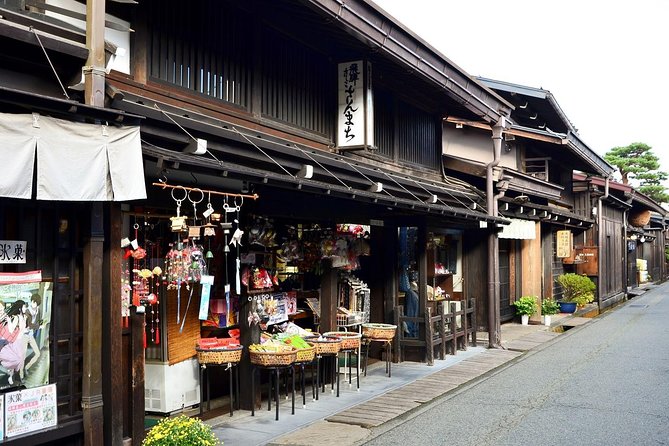
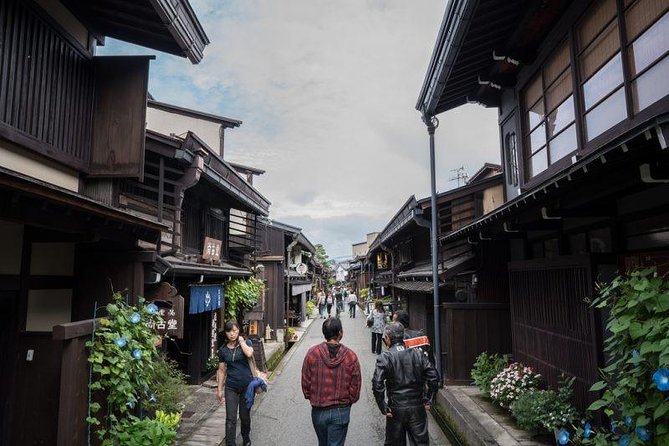
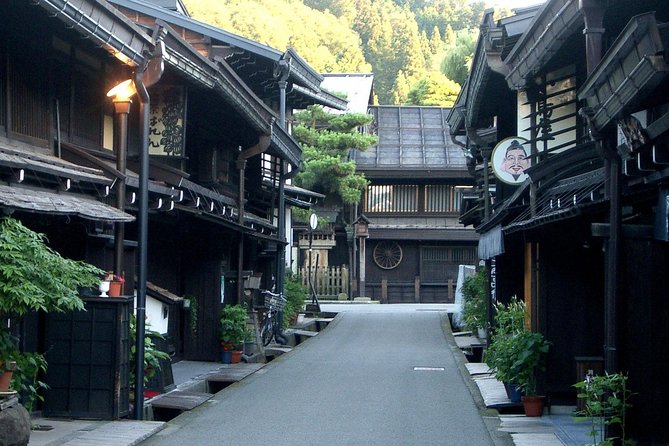
Sanmachi Suji is the natural starting point for many people. This old-town district preserves houses and shops dating from the Edo period, from 1603 to 1868. The streets are lined with stores selling local specialties, making this a good place to get your bearings and see how Takayama presents its traditional side.
The listed visit is only about 30 minutes, which is enough for a quick walk and explanation but not enough for a leisurely look through every shop. If you enjoy browsing, tasting, and photographing building details, tell your guide that you want to give this area more time. A private itinerary lets you make that trade.
The real value here is interpretation. A guide can point out details you might pass without noticing, explain the role of the old merchant houses, and connect the street to Takayama’s wider identity. Without that help, Sanmachi Suji is still pleasant, but it can become little more than a photogenic shopping lane.
Hida Folk Village and traditional mountain homes
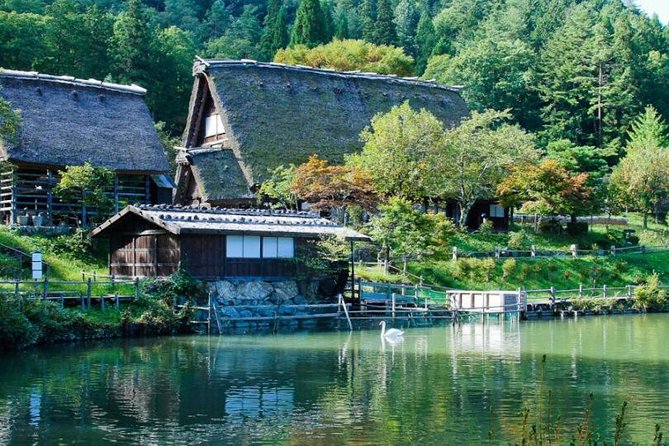
Hida no Sato, also called Hida Folk Village, is an open-air museum with more than 30 traditional houses from the Hida region. These buildings were moved from surrounding mountain areas and arranged as a village setting.
This is one of the strongest choices for anyone interested in architecture, rural life, or regional customs. The houses give you a broader picture than the central streets alone. Takayama’s old town shows merchant life, while Hida no Sato helps explain how people lived in the surrounding mountain district.
The scheduled stop is about 30 minutes. That is a short visit for an open-air museum, so you should ask your guide how much of the grounds you can reasonably cover. If this is your priority, it may be wiser to select fewer additional sights.
The site is outside the central old town, which is where public transport matters. The extra fare is not a major surprise, but it is part of the true cost of the day. This stop also suits visitors who want more than shops and streets.
Takayama Jinya and the power of the shogunate
Takayama Jinya was the local government office for the Hida region after the area came under the direct control of the Tokugawa shogunate in 1692. Hida’s valuable timber resources helped make the region important, and the government office reflects that political and economic role.
This stop adds substance to your visit. It explains why a mountain town mattered to the central government and gives you a look at how administration worked during the Edo period. If you are interested in Japan’s political past, this is a better choice than adding another small museum.
Admission is not included, and the suggested visit lasts about 30 minutes. That can work for a guided overview, but visitors who like to read displays and examine rooms may want more time. Tell your guide if you prefer a careful visit rather than a quick exterior look.
A completely different kind of day out:
- Kanazawa: World Heritage Shirakawa-go Morning Guided Tour
★ 4.9 · 988 reviews - Kanazawa: World Heritage Shirakawa-go & Two Local Experience
★ 4.9 · 274 reviews - Departing from Takayama [Regular sightseeing bus] World Heritage Sites Shirakawago and Gokayama Ainokura
★ 4.5 · 137 reviews - 1-Day Takayama Tour: Explore Scenic Takayama and Shirakawago
★ 5.0 · 113 reviews
Takayama’s festival tradition
Takayama is famous for its spring and autumn festivals, held on April 14 and 15, and October 9 and 10. Several stops on the menu explain this tradition from different angles.
The Takayama Festival Floats Exhibition Hall beside Sakurayama Hachimangu Shrine displays four actual festival floats. These elaborate structures help you understand why the festivals are regarded among Japan’s most beautiful. The shrine itself is the venue for the autumn festival, so visiting both places creates a useful connection between religious setting and festival craft.
Matsuri no Mori, or Festival Forest, lies outside the city center and presents full-sized replica floats decorated with gold leaf and lacquer. It is a more museum-like experience and can be useful if your visit does not coincide with the festival dates.
The itinerary includes both a 30-minute listing for Matsuri no Mori and a separate 10-minute entry for the same attraction. Treat these as alternatives or itinerary choices, not as two essential visits. Admission is extra at both festival-related museums.
I would choose one festival museum unless festivals are your main reason for coming. The Floats Exhibition Hall has the advantage of displaying actual floats and sitting next to the shrine. Matsuri no Mori may suit you if you want to focus on the visual scale and decoration of the parade tradition.
Higashiyama Walking Course and Kokubun-ji Temple
The Higashiyama Walking Course passes through Takayama’s temple district, quieter residential areas, and Shiroyama Park, a wooded hill above town. The suggested 30-minute portion gives you a taste rather than a full walk.
This is a good choice when you need a break from commercial streets. It brings temples, greenery, and local lanes into the day, and it gives your guide room to talk about religious life in Takayama. The course is also a reminder that the town is more than Sanmachi Suji.
Hida Kokubun-ji Temple is near JR Takayama Station, about a five-minute walk away. Its three-story pagoda was built in 1820, and the temple includes a Buddhist statue believed to be connected with the area’s early religious tradition. The stop is free and lasts about 30 minutes.
Kokubun-ji is an efficient choice if you are arriving or departing by train. It offers a clear landmark without requiring a long trip across town. I would pair it with Sanmachi Suji if you want a gentle first look at Takayama’s streets and religious buildings.
Morning markets and old merchant homes
The Hida-Takayama Miyagawa Morning Market runs beside the Miyagawa River in the old town. Takayama also has the Jinya-mae Market. Both operate daily from around 7am to noon, or from 8am in winter.
Because this tour starts at 9am, the market can fit naturally into the first part of your morning. It is a useful stop if you enjoy local produce, small food items, and everyday commerce. The exact range of stalls can vary, and the market is time-sensitive, so do not leave it until the end of the six-hour tour.
Kusakabe Folk Museum occupies a private residence built in the Meiji period in the style of Edo architecture. It is known for its fine design and gives you a look inside a historic merchant home. Admission is extra, and the suggested stop is 30 minutes.
Yoshijima Heritage House was built in 1908 and operated as a sake brewery. A large cedar-leaf sake sign hangs beneath the roof. The suggested visit is only 10 minutes, making it an easy add-on if you are already in the old town, though the brief timing limits how much you can absorb.
These stops are best for people who enjoy buildings and domestic details. They also help balance the larger attractions. A festival museum tells you about public ceremony, while a merchant house shows you how a family business used its home.
Sakurayama Hachimangu and the smaller museums
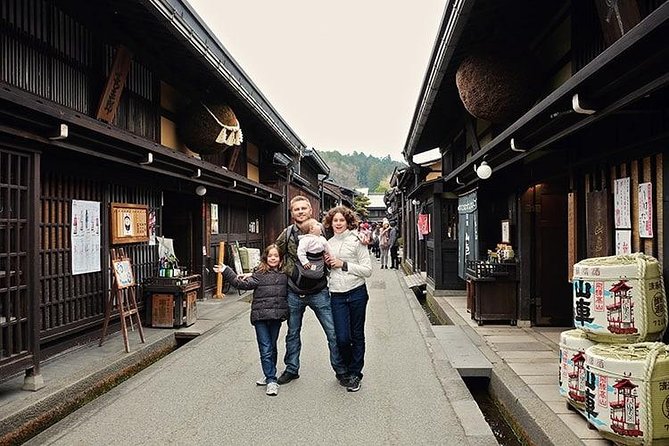
Sakurayama Hachimangu Shrine is a free stop with strong festival connections. The shrine hosts the autumn Takayama Festival and sits beside the Floats Exhibition Hall. If you select the hall, visiting the shrine at the same time makes geographic and cultural sense.
The smaller museums offer a different mood. Takayama Showakan recreates streets and daily life from around 1950, including a barbershop, a bar, and Midget Alley. The Hida Takayama Retro Museum focuses on Showa-era objects such as films, magazines, posters, toys, games, and pachinko machines.
Both are listed as 10-minute visits, which suggests a quick look rather than a full museum session. They may appeal to you if you like postwar nostalgia, unusual displays, or playful photo opportunities. They are less useful if your main goal is Edo-period architecture or traditional religion.
The key is not to treat every available stop as equally important. The guide’s strength is helping you choose. A well-made day might include one old-town area, one major cultural site, one religious or festival stop, and one personal-interest museum.
What the guides add to the day
The most praised part of this experience is the personal guide service. Akane Ito has been singled out for shaping the visit around individual interests and questions. Yuriko, also called Lily, was praised for making the day educational and for helping choose a good lunch restaurant. Elvis has been described as a warm companion who introduced the life and history of Takayama in an engaging way.
Those details matter because a private tour succeeds or fails with its guide. You are not paying only for directions. You are paying for someone who can explain why a street looks the way it does, connect a festival float to local culture, and adjust the pace when you want more time.
The experience is also a reminder that a guide is not automatically necessary for every sight. Takayama’s central areas are manageable, and a confident independent visitor can walk through Sanmachi Suji, visit a shrine, and find a museum without help. The guide becomes most useful when you want interpretation, language support, local context, or a day shaped around your interests.
One three-star assessment made precisely this point: a pleasant guide may simply walk you around places you could have visited alone. That is a fair warning. Before booking, decide if you want a cultural explanation or just a route through town.
Price, transport, and the real value
At $153.50 per person, this is not a budget walking tour. The price pays for a private, licensed English-speaking guide and a customizable six-hour service. It does not cover transport, admission, lunch, or personal purchases.
The value improves when you are traveling with people who share your interests. Group discounts are offered, but separate tour groups cannot be combined. Since the activity is private, your group gets the benefit of choosing the sights and asking questions without strangers setting the pace.
The extra costs are easy to understand, but you should budget for them. You pay public transport fares as you move around, and entrance fees apply at places such as Takayama Jinya, the festival museums, Kusakabe Folk Museum, and the retro museums. Lunch is also your responsibility, though a guide may help you choose a restaurant. Hida beef is the obvious local splurge if it fits your budget.
I see the strongest value for a first visit limited to one day. A guide can help you avoid wasting time, make the best three or four selections, and give the town a human story. If you have several days in Takayama and enjoy researching on your own, the cost may be harder to justify.
Who should book this Takayama tour?
I would recommend it to first-time visitors who have only one day, families who want a flexible pace, and anyone curious about Takayama’s architecture, festivals, crafts, religion, and food. It also suits people who appreciate having a local person explain customs rather than reading every sign alone.
The tour is less suitable if you want a private car, a packed sightseeing schedule, or a fully included price. It is also not the best match for someone who plans to spend the whole day independently browsing Sanmachi Suji.
Before the tour begins, prepare a short wish list. Pick your top two sights, then add one or two backups. Tell the guide if you prefer walking, museums, old houses, temples, festival culture, or food. That small bit of preparation will make the custom format work much better.
The tour is a walking experience, and the pickup is on foot within the designated Takayama area. Most people can participate, and service animals are allowed. Free cancellation is available up to 24 hours before the start time, which gives you some flexibility if your plans change.
Should you book it?
Book this tour if you want Takayama explained, not simply photographed. The private format, licensed guide, and choice of three or four sights give you a practical way to see the town in a single day, especially when you choose a guide such as Akane, Yuriko, or Elvis who can connect the places to your interests.
Skip it if you are comfortable navigating public transport, reading up before arrival, and exploring the old town at your own pace. Takayama is approachable without a guide. The deciding question is simple: do you want a local interpreter beside you for six hours? If yes, the price can be worthwhile. If not, spend the money on admission tickets, Hida beef, and a slower independent walk.
FAQ
How long does the Takayama private tour last?
The tour lasts approximately six hours and begins at 9am.
Is this a private tour?
Yes. Only your group participates, and multiple tour groups cannot be combined.
How many attractions can I visit?
The tour includes a customizable itinerary of three or four sites chosen from the available attractions.
Is transportation included?
No. You travel by walking and public transportation, and transportation fees are paid separately. Private transportation is not included.
Is lunch included?
No. Lunch is at your own expense. Hida beef is suggested as a local option, and a guide may help you choose a restaurant.
Are admission fees included?
Entrance fees are not included. Admission may be required at sites such as Takayama Jinya, the festival museums, Kusakabe Folk Museum, and the retro museums.
Where do I meet the guide?
You meet the guide on foot within the designated area of Takayama. Pickup is offered on foot rather than by private vehicle.
Can I cancel for a full refund?
Yes. You can cancel at least 24 hours before the experience start time for a full refund. Changes or cancellations made less than 24 hours in advance are not accepted for a refund.
Just added in Takayama
- Takayama Old Town Walking Tour with Local Guide★ 4.5 · 50 reviews
- Takayama Local Cuisine, Food & Sake Cultural Tour with Government-Licensed Guide★ 5.0 · 17 reviews
- Takayama Half Day Tour (Private Guide)★ 5.0 · 15 reviews
- Private Transfer from Takayama to Kanazawa Including Shirakawago★ 5.0 · 17 reviews
- Takayama Rice Ball and Miso Soup Making at a buddhist temple★ 5.0 · 13 reviews
- Takayama: Authentic Sake Tasting at a Historic Brewery★ 5.0 · 65 reviews
- Shuriken Experience in Takayama★ 5.0 · 46 reviews
- Sawanobori River Trekking Tour★ 5.0 · 30 reviews
Private Tours in Takayama, compared.
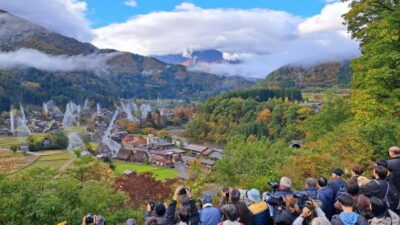
Kanazawa/Takayama: Shirakawago & Takayama Private Day Tour
Read our review →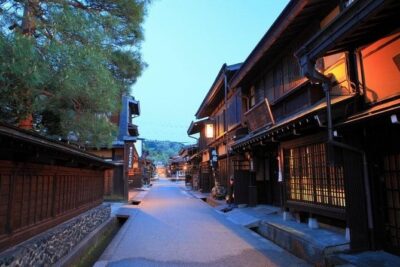
Takayama Half-Day Private Tour with Government Licensed Guide
Read our review →
Magome & Tsumago Nakasendo Trail Day Hike with Government-Licensed Guide
Read our review →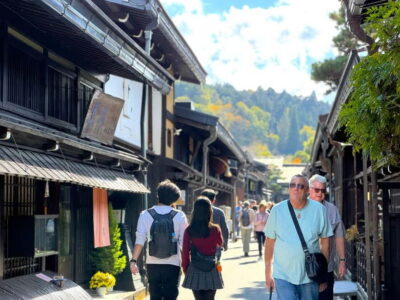
Takayama: Takayama Jinya & Old Town Private Walking Tour
Read our review →
Takayama: Private Walking Tour with a Local Guide
Read our review →
Magome & Tsumago Nakasendo Full-Day Private Trip with Government-Licensed Guide
Read our review →
Takayama Local Cuisine, Food & Sake Cultural Tour with Government-Licensed Guide
Read our review →
Browse the lists this tour appears in