
Reviewed · CYCLING AND E-BIKE TOURS
Private Afternoon Cycling Tour in Hida-Furukawa
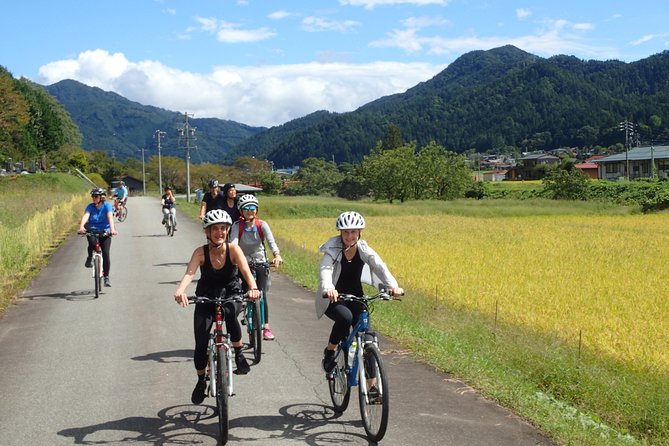
Quiet roads tell better stories. This 22-kilometer cycling tour leaves Hida-Furukawa’s graceful old town behind and rolls into rice fields, farming villages, canals, and mountain-framed Satoyama countryside. I like the relaxed pace and the chance to see ordinary local life rather than only the sights prepared for tourists. I also like that guides such as Hisa, Ayato, Nanami, Kazuki, and Marino adjust the ride to the group’s ability.
The main consideration is distance. Twenty-two kilometers over about three and a half hours is gentle for regular cyclists, but it may feel long if you have not ridden for years. Rain can also change the plan. One outing ended early because of wet weather, though guide Hisa helped turn the afternoon into a town and museum visit.
In This Review
- Key points at a glance
- Why Hida-Furukawa is better seen on two wheels
- The 2:00 pm start and first ride through town
- Rice fields, farm villages, and the Satoyama route
- What the guides add to the ride
- Is 22 kilometers really easy?
- The market, old houses, shrines, and tea stop
- Rain, timing, and practical planning
- Is the $214.48 price fair?
- Who will enjoy this Hida cycling tour?
- Should you book the afternoon ride?
- FAQ
- Where does the cycling tour begin?
- What time does the tour start?
- How long is the experience?
- How far do you cycle?
- How many people can join?
- What is the minimum age?
- Are bicycles and helmets provided?
- Is food included?
Key points at a glance
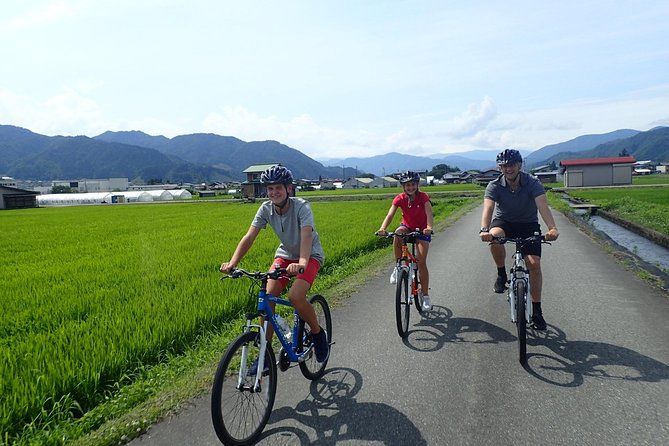
- A 22-kilometer route beyond the old town: You ride through rice fields, farm villages, and quiet countryside most visitors miss.
- A genuinely small outing: The activity is limited to eight people, helping the guide adjust speed and give individual attention.
- Guides make the difference: Hisa, Ayato, Nanami, Kazuki, and Marino are praised for warmth, safety, local stories, and flexible pacing.
- A good first cycling tour: The route is described as easy, with no special gear required, and bikes and helmets are provided.
- Useful local stops: Expect possible visits to a farmers market, traditional houses, canals with koi, shrines, and a tea-and-biscuit break.
- Plan for country weather: The tour runs at 2:00 pm and may be shortened in rain, so carry suitable clothing and keep plans flexible.
Why Hida-Furukawa is better seen on two wheels
Hida-Furukawa is often visited as a side trip from Takayama, but the town rewards a slower look. Its old streets, waterways, traditional houses, and nearby fields make sense together when you move between them by bicycle.
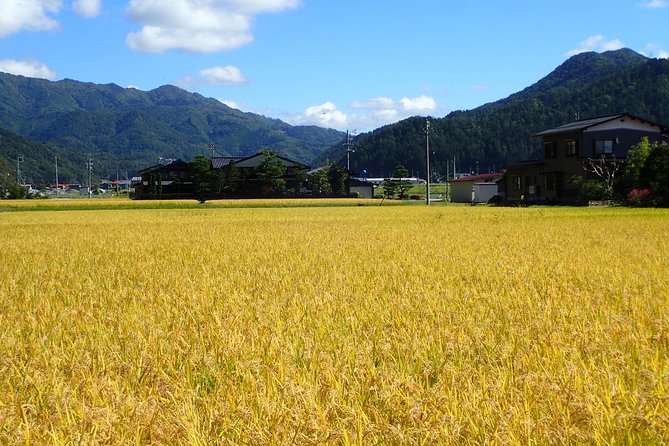
A short walk can show you the historic center. Cycling lets you see how the town gives way to working farmland. You pass vegetables arranged at a local market, large old folk houses scattered through the countryside, and rice fields running toward the mountains. That change is the heart of the outing.
I like this kind of touring because the countryside is not presented as a stage set. You get a glimpse of places where people grow food, maintain houses, manage fields, and go about their day. The guide helps explain what you are seeing, including local customs, wildlife, nature, and the role of water in town life.
The route is described as Satoyama, a Japanese term for the managed countryside where villages, woodland, streams, and farmland meet. You are not simply pedaling through scenery. You are seeing the relationship between residents and the land around them.
More Bike Tours in Takayama:
- Private-group Morning Cycling Tour in Hida-Furukawa
★ 5.0 · 105 reviews - Short Morning Cycling Tour in Hida
★ 5.0 · 17 reviews - Bike Tour Exploring North Kyoto plus Lunch
★ 5.0 · 1,087 reviews
The 2:00 pm start and first ride through town
You meet at the local operator’s Furukawa office at 11-32 Furukawachō Ninomachi, Hida, Gifu 509-4235. The afternoon departure is at 2:00 pm, and the tour returns to this same point after roughly three and a half hours.
The beginning of the ride takes you through Hida-Furukawa’s old town. This is a useful introduction because your guide can explain the buildings and streets before you move into the countryside. You will likely have time to settle onto the bike, get used to the pace, and ask questions before the route becomes more open.
The tour is not designed as a race or a serious cycling workout. Its stated aim is a balance of exercise and rest, with plenty of time to take in the setting. Several guides have been praised for stopping for photographs and giving the group enough time to look around.
That relaxed style matters. If you are trying to cover a long distance quickly, this is not the right outing. If you want to ride comfortably while listening to stories and noticing details, the pace should suit you well.
Rice fields, farm villages, and the Satoyama route
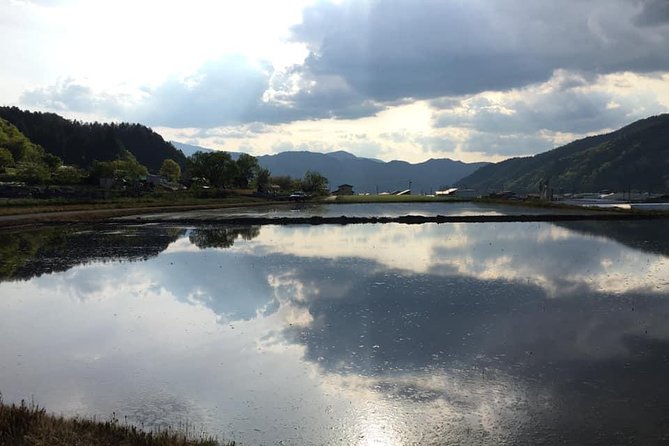
After the old town, the built-up streets gradually give way to farming country. The route passes through rice fields and a small village, with mountains surrounding the area. In spring and summer, the fields can be especially attractive, though the experience will change with the season.
You may see local vegetables for sale at a farmers market and large traditional homes set among the fields. These stops give the ride some structure, but the real pleasure comes from the spaces between them. The quiet roads let you watch daily work at close range without turning the visit into a formal sightseeing parade.
One especially memorable kind of encounter is possible in this setting: a person working in the fields, such as the 95-year-old woman noted during one outing. Details like this make the countryside feel lived in. Your guide can help you understand what is happening without interrupting the people who live there.
The route also includes local nature and wildlife explanations. One guide’s story about why koi fish live in the town’s canals was singled out as particularly interesting. That sort of detail is easy to miss if you simply walk past the water. On a guided ride, a canal becomes part of the town’s story rather than just a pleasant photo background.
What the guides add to the ride
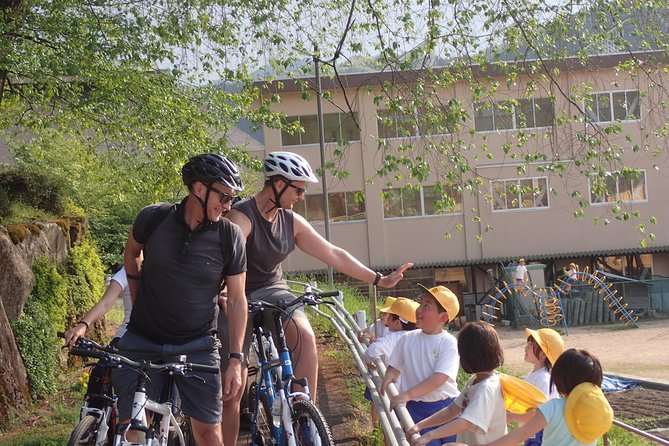
The guides are the strongest part of this experience. Several are praised by name, and their styles appear to share the same useful qualities: warmth, clear explanations, attention to safety, and a willingness to adapt.
Hisa has adjusted rides to suit children’s ages and the group’s cycling level. He also helped one group continue enjoying the afternoon after rain forced the cycling to stop early. Kazuki supported a rider who had not been on a bicycle for more than 20 years, helping rebuild confidence while keeping the group safe.
Ayato is praised for his enthusiasm and for explaining Japanese culture, nature, and the countryside. Nanami is noted for her care, local knowledge, and ability to stop for photographs. Marino has been appreciated for explaining the surrounding area and giving a strong introduction to the rice fields.
This range of comments suggests that the experience depends partly on who leads your outing, but the pattern is encouraging. The guide is not there only to point out landmarks. You can expect help with the ride itself and explanations that connect local customs with what you see.
A small group helps here. With a maximum of eight people, the guide can pay attention to slower riders and answer questions without holding a microphone over a crowd. The activity is also described as private, meaning only your group should participate, although one customer reported riding with six people they did not already know. If traveling with a larger party, ask how the booking will be organized before paying.
A few more options to weigh up in Takayama
- Kanazawa: World Heritage Shirakawa-go Morning Guided Tour
★ 4.9 · 988 reviews - Kanazawa: World Heritage Shirakawa-go & Two Local Experience
★ 4.9 · 274 reviews - Kanazawa/Takayama: Shirakawago & Takayama Private Day Tour
★ 4.8 · 172 reviews - Departing from Takayama [Regular sightseeing bus] World Heritage Sites Shirakawago and Gokayama Ainokura
★ 4.5 · 137 reviews
Is 22 kilometers really easy?
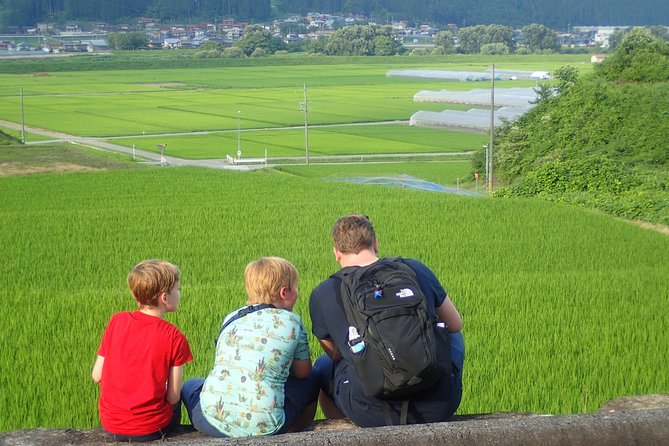
The route is described as easy and suitable for most participants, with no special cycling equipment required. Still, easy is not the same as effortless. Twenty-two kilometers is a substantial ride for someone unused to cycling, even if the pace is gentle and the tour includes stops.
The minimum age is six, and children must be at least 125 centimeters tall, about 4.1 feet. This height rule is important because children need to fit the provided bicycles safely. Families with children aged seven and nine have completed the ride successfully, and the guide adjusted the plan to match their ages.
Bicycles and helmets are included, along with insurance and local taxes. The bikes have been described as first rate, but no basket is attached. You should avoid bringing a large loose bag. Keep your belongings compact and secure, since you will be riding for several hours.
The tour includes snacks, but food and drinks are otherwise not included. Bring water and any extra food you may need. This is particularly sensible in warm weather, since the route combines steady pedaling with time outdoors.
The market, old houses, shrines, and tea stop
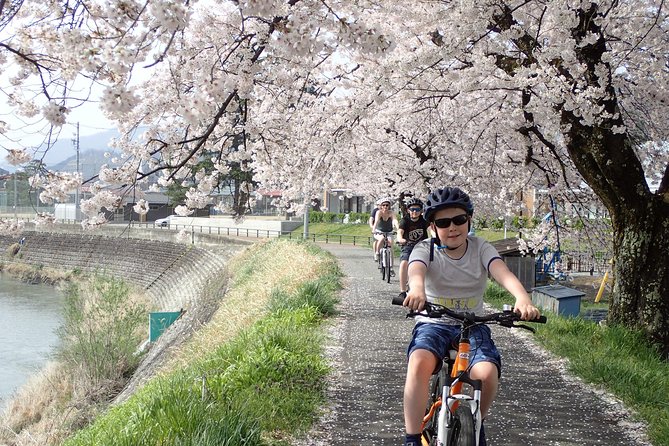
The route is not just a continuous ride. Stops give you a chance to look closely at local life.
A farmers market may be one of the most useful pauses. Instead of seeing only packaged souvenirs, you can see local vegetables and get a sense of what is grown and sold in the area. Your guide may also explain local wildlife and customs while you are there.
Traditional folk houses add another layer. Their size and placement show how the countryside differs from a dense urban neighborhood. They are part of the working village setting, not merely preserved buildings behind a fence.
Some outings have included shrines and peaceful canals, while another included a tea and biscuit stop. These breaks make the tour comfortable for mixed-ability groups. They also keep the experience from becoming a test of endurance.
If you are hoping to enter every building or spend a long time at formal attractions, set your expectations carefully. The tour is built around cycling and observation. Stops are brief enough to keep the route moving, and the exact balance may depend on weather, the guide, and the group’s pace.
Rain, timing, and practical planning
The 2:00 pm start makes this a useful choice for a day when you have already visited Takayama or explored Hida-Furukawa in the morning. It also means you should check your transport plans carefully, especially if you need to catch a train or bus after returning.
The activity ends back at the meeting point, which simplifies the finish. You do not need to arrange a separate pickup from the countryside. The meeting office is near public transportation, according to the supplied details.
Weather deserves attention. One ride stopped early because of rain. The guide then showed the group the town and museums, which helped salvage the afternoon, but you should not assume that a full bicycle route will operate in poor weather.
Wear clothing you can pedal in and bring rain protection if the forecast is uncertain. The tour includes insurance, but that does not make wet roads comfortable or guarantee that the entire route will run.
You receive booking confirmation within 48 hours, subject to availability. Since this outing is often reserved well ahead, with an average booking lead time of 139 days, it is wise to reserve early if your dates are fixed.
Free cancellation is available until 24 hours before the local start time for a full refund. Changes or cancellations inside that window are not accepted and are not refunded.
Is the $214.48 price fair?
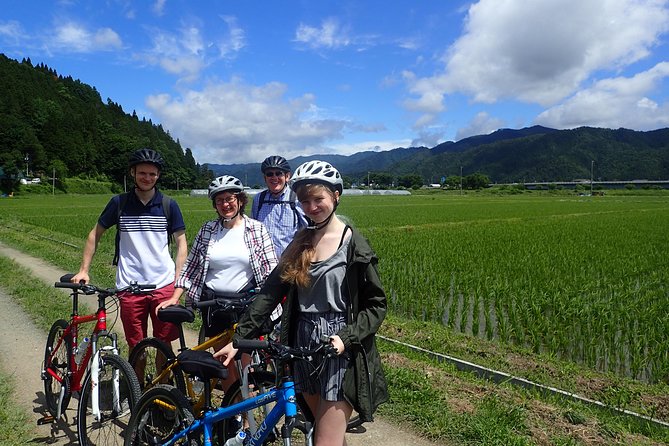
At $214.48 per person, this is not a bargain bicycle rental. You are paying for a guide-led outing, a provided bicycle and helmet, insurance, local taxes, snacks, and several hours of personal interpretation.
The value depends on what you want from Hida-Furukawa. If you only need a bike to pedal around town, the price will feel high. If you want to understand the area, ride beyond the main streets, and have someone adjust the pace and explain local life, the cost is easier to justify.
The small group is important to the price. A maximum of eight people gives the guide room to help nervous riders, families, and people who want photo stops. Group discounts may also be available, so the per-person cost could make more sense for a larger party.
I would compare this tour with the price of arranging a bicycle, route, and local information on your own. The organized option removes much of the guesswork. You also gain access to details such as the canal koi, local markets, wildlife, and village customs that you might otherwise pass without noticing.
Who will enjoy this Hida cycling tour?
This outing suits you best if you want:
- A gentle introduction to rural Japan
- A break from crowded sightseeing centers
- A guided ride rather than an athletic challenge
- Local stories about culture, nature, food, and village life
- A family activity for children who meet the age and height limits
- A flexible guide who can adjust the pace
It may not suit you if you dislike bicycles, need a guaranteed route in all weather, or want a short ride with no sustained distance. The 22-kilometer route requires reasonable comfort on a bicycle, even at an easy pace.
It is also a strong choice for anyone staying in Takayama who wants to see a different side of the Hida region. The ride gives you a reason to visit Hida-Furukawa, rather than treating it as a quick stop for old streets and photographs.
Should you book the afternoon ride?
I would book this tour if your main goal is to see how rural Hida works, not simply to collect another attraction. The combination of old town streets, rice fields, farm villages, canals, markets, and local stories gives the afternoon a clear sense of place.
The best reason to book is the guide. Hisa’s care with children and less confident cyclists, Ayato’s cultural explanations, Nanami’s attention to photographs and nature, Kazuki’s safety support, and Marino’s local knowledge all point to a people-focused experience.
Before booking, check your cycling comfort, the forecast, and the no-basket rule. If you are comfortable with those details, this is a worthwhile way to spend an afternoon in Hida-Furukawa, especially for families and curious visitors who want the countryside to feel real rather than decorative.
FAQ
Where does the cycling tour begin?
The tour begins at the Furukawa office of the local operator at 11-32 Furukawachō Ninomachi, Hida, Gifu 509-4235, Japan.
What time does the tour start?
The afternoon tour starts at 2:00 pm.
How long is the experience?
The tour lasts approximately three and a half hours.
How far do you cycle?
The route is approximately 22 kilometers long.
How many people can join?
The activity is limited to a maximum of eight people per booking.
What is the minimum age?
The minimum age is six years, and children must have a minimum height of 125 centimeters, about 4.1 feet.
Are bicycles and helmets provided?
Yes. Bicycle use and helmet use are included in the tour price.
Is food included?
Snacks are included, but food and drinks are not. A basket is not attached to the bicycle, so pack lightly and carry belongings securely.
Just added in Takayama
- Ninja experience in Takayama – Special Course★ 5.0 · 20 reviews
- Departing from Takayama [Regular sightseeing bus] World Heritage Sites Shirakawago and Gokayama Ainokura★ 4.5 · 137 reviews
- Ninja Experience in Takayama – Trial Course★ 5.0 · 20 reviews
- Japanese Cooking Class with Local Family in Takayama Old Town★ 5.0 · 40 reviews
- From Takayama: Alpine Splendor – Shinhotaka Ropeway and Kamikochi★ 5.0 · 91 reviews
- Private group Local Food Tour in Takayama★ 5.0 · 59 reviews
- 1-Day Tour from Takayama: Hida Folk Village, Caves & Ropeway★ 5.0 · 24 reviews
- 1-Day Takayama Tour: Explore Scenic Takayama and Shirakawago★ 5.0 · 113 reviews
Cycling and E-Bike Tours, compared.
3h Tokyo E-Bike Tour: Hidden Gems, and Local Life with guide
Read our review →
Arashiyama Bamboo Forest & Hidden Gems Bike Tour (Early Bird)
Read our review →
5 Top Highlights of Kyoto Full Day Bike Tour (E-bike option)
Read our review →
Hiroshima 2hr Peace Cycling Tour with Local Guide
Read our review →Browse the lists this tour appears in