
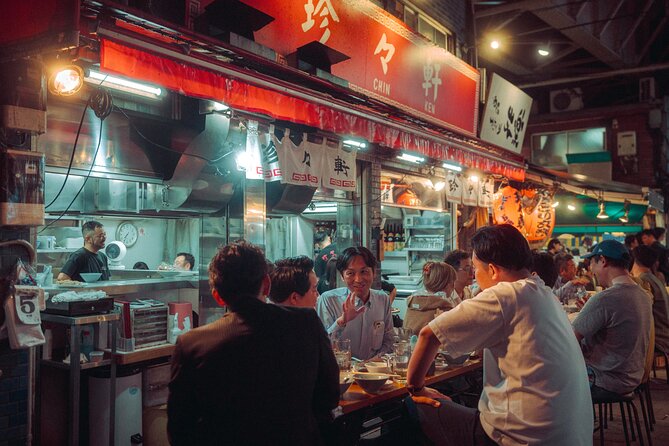
Reviewed · PHOTOGRAPHY SESSIONS
Explore Unique Tokyo Streets / Learn with a Pro Photographer
Tokyo rewards a patient camera. This evening walk pairs Yurakucho and Shinbashi street scenes with practical coaching from professional photographer Deniz Demir. I like the tiny group limit of six, which gives you room to ask about your own camera, and I like that the lessons move beyond buttons and settings into framing, timing, and street-photography choices. The main catch is simple: two hours is enough for a focused introduction, not a full photography course.
You can choose from several evening departures, and weekday outings may offer a close look at Japan’s salaryman culture as offices empty into the streets. The $128.09 price is not cheap for a short walk, so this makes the most sense if you want personal feedback and better photographs, not just a guided introduction to central Tokyo.
In This Review
- Key points to know before you book
- Starting at Shimbashi Station after dark
- Yurakucho and Shimbashi through a photographer’s eye
- What Deniz Demir teaches in two hours
- Learning to make better night photographs
- Why the six-person limit matters
- Is $128.09 a fair price for two hours?
- Who will get the most from this walk?
- Timing, flexibility, and practical details
- Should you book Deniz Demir’s Tokyo photo walk?
- FAQ
- Where does the experience begin?
- Where does the experience end?
- How long does the photography tour last?
- How many people can join?
- What areas of Tokyo does the tour explore?
- Can the guide bring a tripod?
- What photography topics are covered?
- Can I cancel for a full refund?
Key points to know before you book
- Small groups of up to six: You get a better chance to ask about your camera and receive direct advice.
- Two Tokyo districts in one evening: The route begins near Shimbashi Station and explores Shimbashi and Yurakucho.
- Practical camera coaching: Topics can include settings, lenses, gear, LED lights, prisms, framing, and street-shooting ideas.
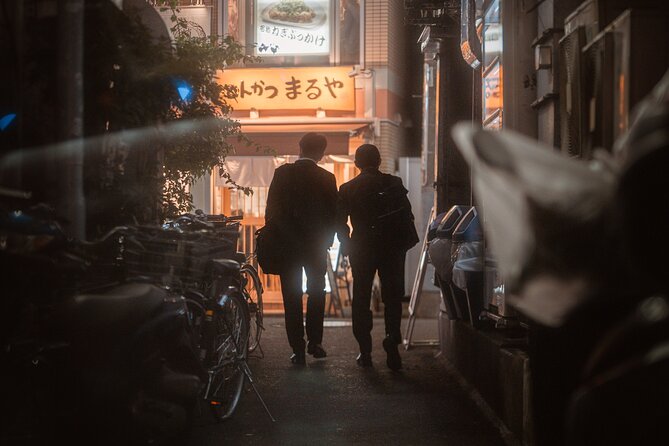
- Weekday salaryman scenes: Evening weekday departures can bring you close to a distinctive part of Tokyo’s work culture.
- Tripod available on request: Deniz Demir can bring one if you would like to work with longer exposures or steadier compositions.
- A workshop, not only a walk: You are expected to practice what you learn during the outing.
Starting at Shimbashi Station after dark
The meeting point is Shimbashi Station, at 2 Chome-17 Shinbashi, Minato City, Tokyo 105-0004. That location puts you in a useful part of central Tokyo from the start. You are not being taken far outside the city for a scenic viewpoint. Instead, the experience begins in an active urban setting where signs, people, shop fronts, rail lines, and artificial light can all become photographic material.
That matters because street photography rarely depends on one famous monument. It depends on noticing what is already around you. A station district gives you plenty to work with, and Deniz’s role is to help you see those possibilities rather than simply point out landmarks.
You should arrive ready to walk and ready to use your camera. The stated fitness level is moderate, so this is not a demanding hike, but it is still an active evening on city streets. Wear shoes you can walk in comfortably, and keep your equipment manageable. A large bag full of unused gear can become a burden during a short practical session.
The tour returns to the same meeting point. That makes the outing easier to fit into an evening plan, especially if you are using Tokyo’s rail system or meeting friends afterward. You will not need to arrange a separate pickup or figure out where the walk ends.
More Photography Sessions in Tokyo
Yurakucho and Shimbashi through a photographer’s eye
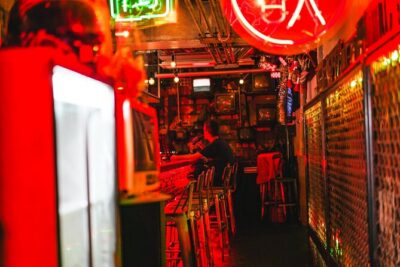
Yurakucho and Shimbashi are good districts for a lesson in urban photography because they offer more than polished postcard views. The route is designed around places Deniz has photographed over time, including viewpoints you might not find by simply following a sightseeing map.
The exact sequence can vary with the evening option and the pace of the group, but the purpose is consistent: use Tokyo’s ordinary streets as a working studio. You may be encouraged to study how light falls across a scene, how people move through the frame, or how a familiar street changes once you stop treating it as background.
I like this approach more than a route built around a long list of famous sights. You can photograph a major landmark in a few seconds, but learning how to frame a less obvious corner is a skill you can use for the rest of your trip. The strongest value here comes from learning to make your own choices.
Shimbashi also gives the evening a useful social context. On weekday outings, you may see the salaryman culture that shapes much of Tokyo’s after-work rhythm. The experience does not promise a staged performance or a private meeting with office workers. Instead, you are photographing the city as people leave work and move through their evening routines.
That distinction is important. You should approach these scenes with care and follow Deniz’s guidance about street shooting. The goal is not to treat people as props. It is to understand timing, distance, composition, and the atmosphere of a real city at the end of the workday.
What Deniz Demir teaches in two hours
Deniz Demir’s background shapes the experience. He first came to Japan in 2015 with a new camera and a desire to take better travel photographs. He now works as a professional photographer in Tokyo and runs a large Meetup group for creatives in the city.
That creative-community background is useful for this format. The walk is built around conversation and practice, not a lecture delivered while you trail behind a guide. With no more than six people, you have a reasonable chance to explain what you are trying to photograph and ask why a certain approach may or may not work.
The basic material can include:
- Camera settings
- Lens choices
- Other equipment
- LED lights
- Prisms
- Framing
- What to look for on the street
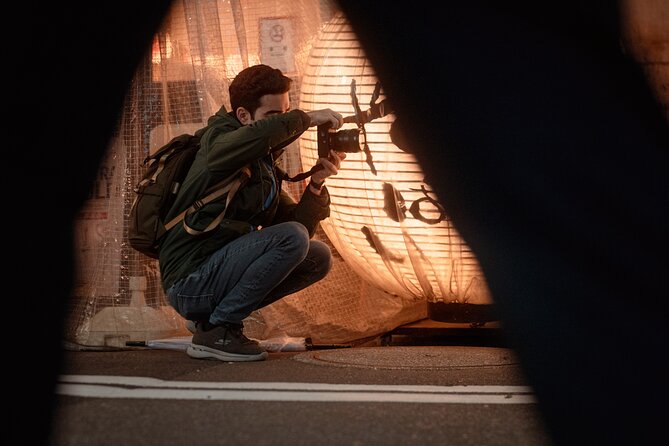
The session can also move into more advanced ideas. Deniz describes street photography in terms of personal philosophy, visual choices, and the way you use the surrounding environment. That may mean learning to work with reflections, foreground shapes, color, artificial light, or unexpected angles rather than simply pointing your camera at a subject.
The benefit is clear if you already own a camera but still use it like a large automatic phone. One participant found out how much they did not know about their own equipment, then tested the advice during the walk and came away with good photographs. That is a useful outcome for a short class: not mastery, but a sharper understanding of what your camera can do.
You should also set realistic expectations. A two-hour session cannot cover every menu, lens type, and night technique in depth. If you are a complete beginner, the number of new terms may feel high. If you already shoot often, the basic settings discussion may be familiar. The small group and personal feedback help balance this, since you can steer the questions toward your level.
Learning to make better night photographs
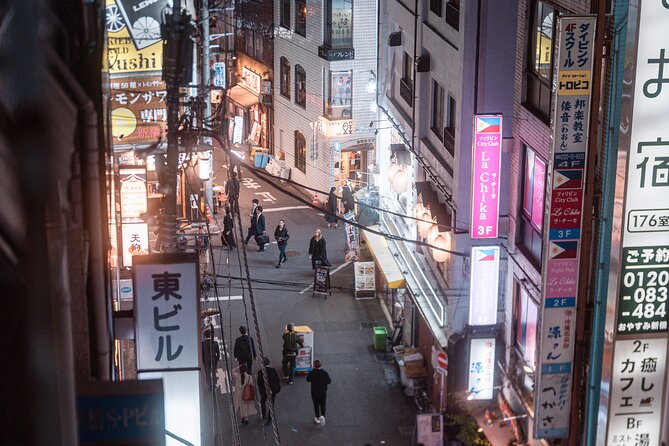
Evening photography creates problems that daytime shooting can hide. Bright signs can fool your exposure. Dark streets can blur movement. Mixed light can change skin tones and make colors look odd. A professional guide can help you understand these issues while you are standing in front of them, rather than explaining them only in a classroom.
You may discuss settings, lenses, and the role of extra tools such as LED lights or prisms. The value of those conversations is practical. Instead of buying equipment because it appears in a social media photograph, you can consider what a tool actually adds to your picture.
A tripod is available if requested. That option matters most if you want to experiment with slower shutter speeds, night scenes, or carefully composed images. It is not a promise that every part of the walk will become a tripod session, so ask for one in advance if it is important to your plans.
The most useful lesson may be learning what not to photograph. Tokyo offers endless signs and lights, but a bright street does not automatically make a strong image. Deniz’s focus on framing and observation can help you decide when a scene has a clear subject, useful layers, or a moment worth waiting for.
I would approach the walk with one or two goals. You might want to understand manual settings, improve low-light images, learn how to photograph people respectfully, or get more from a particular lens. A short session works better when you have a question ready.
A completely different kind of day out:
- Tokyo Disney Resort – Tokyo Disneyland & Tokyo DisneySea Park Tickets
★ 4.8 · 99,488 reviews - SHIBUYA SKY Ticket
★ 4.7 · 46,509 reviews - JR Whole Japan Rail Pass
★ 4.8 · 29,150 reviews - Mt Fuji and Hakone 1-Day Bus Tour Return by Bullet Train
★ 5.0 · 26,383 reviews
Why the six-person limit matters
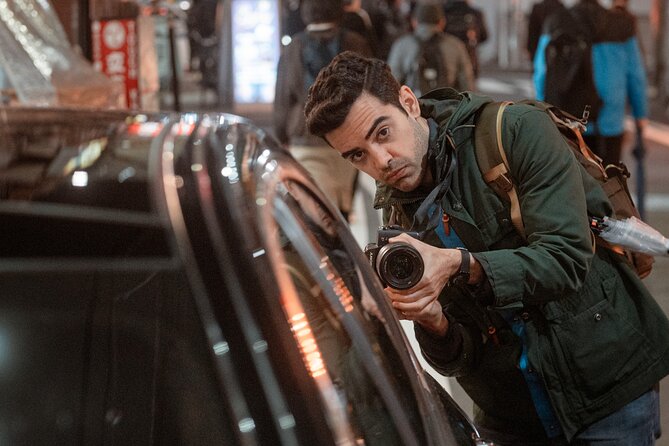
A maximum of six people keeps this from feeling like a standard sightseeing group. In a large group, a guide can give general advice, but there is little time to look at each person’s camera or help with a specific shot. Here, you have a better chance to pause, ask a question, and try again.
The small size also supports different experience levels. One person may need help with shutter speed, while another wants to discuss composition or street-photography style. Deniz can address those needs more easily when the group is limited.
Still, six is not the same as a private lesson. You will share the guide’s attention, and the pace may sometimes be set by the group. If you want constant one-to-one instruction, you should ask whether a private arrangement is available before booking. The advertised experience is a small group activity, not an exclusive personal shoot.
Group discounts may reduce the cost for people booking together. This can be a sensible choice for friends who want to learn with the same equipment and compare results afterward. The social side may also suit you if you enjoy meeting other creative people, a focus Deniz has through his Meetup work.
Is $128.09 a fair price for two hours?
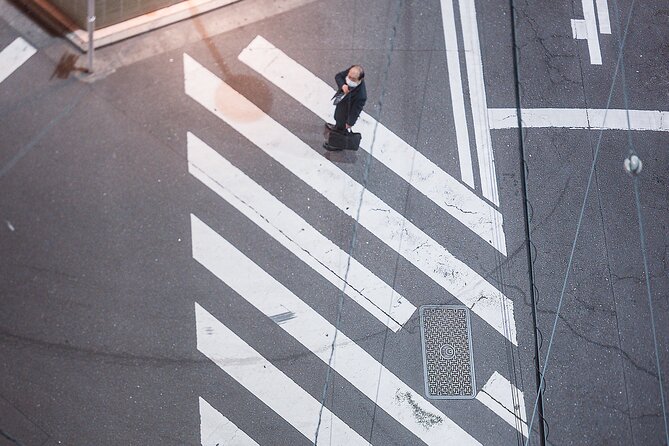
At $128.09 per person, this costs more than a basic evening walking tour. You are paying for a short route, but the main product is instruction from a working photographer and the chance to receive personal feedback.
The price makes more sense if you already own a camera and want to use it with more confidence. It is also easier to justify if you are hoping to return home with a few strong night photographs rather than a collection of quick snapshots. A regular sightseeing walk can show you where to go. This experience aims to show you how to photograph what you see.
The value is weaker if you only want to see Yurakucho and Shimbashi or if you plan to use your phone without interest in photography technique. It may also feel expensive if you expect a long list of attractions. The route is a vehicle for learning, not a full central Tokyo tour.
I would think of the cost as a compact private-school style lesson shared with a few other people. The 4.9 out of 5 score from 19 ratings and a 100 percent recommendation rate support the idea that the format is working well for its intended audience. One less-than-perfect experience still points to the right expectation: the session can be helpful and insightful without turning every participant into an expert in two hours.
Who will get the most from this walk?
This experience suits you best if you fall into one of these groups:
- You own a DSLR, mirrorless camera, or similar device and want to understand it better.
- You enjoy street photography but struggle to find strong subjects or compositions.
- You want a small group instead of a large sightseeing crowd.
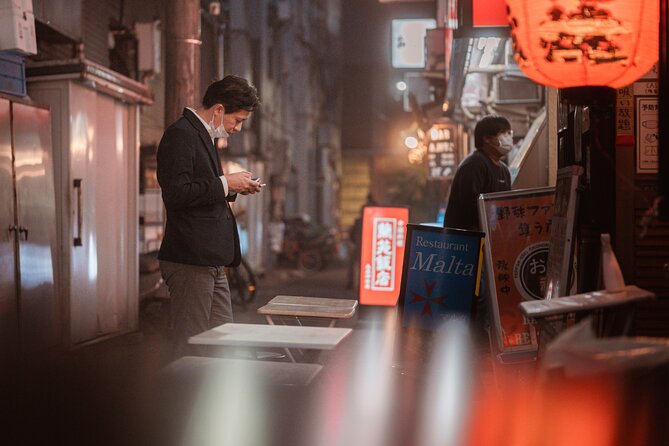
- You are curious about Tokyo after dark and want to photograph everyday city life.
- You like learning by taking pictures, reviewing your choices, and trying again.
- You want an evening activity that combines local streets with a creative skill.
It may not suit you if you dislike walking, want a purely historical tour, or prefer a fixed list of famous sights. The physical requirement is moderate, and the content centers on photography. You should also be comfortable spending much of the two hours listening, experimenting, and adjusting your own camera.
The experience can work for beginners, but do not worry about arriving with perfect technical knowledge. In fact, the format is useful partly because it can reveal gaps in what you know. Bring the camera you actually want to use on your trip, not a second device that feels unfamiliar.
Timing, flexibility, and practical details
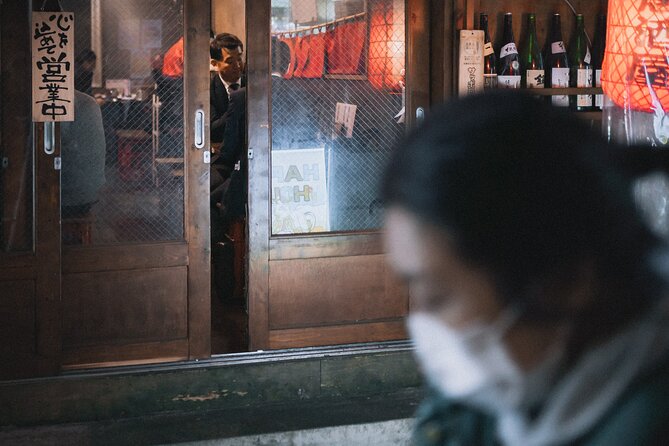
Several evening tour options provide some scheduling flexibility. Weekday timing has a special advantage because it may bring you close to salaryman culture after work. If that social setting interests you, choose a weekday evening when possible.
Confirmation is provided when you book. The activity is near public transportation, starts and finishes at Shimbashi Station, and accepts service animals. You should have a moderate level of fitness for the walk.
Free cancellation is available if you cancel at least 24 hours before the local start time. Cancellations or changes made inside that window are not accepted for a refund. That rule is worth noting if your Tokyo plans are still changing.
Because the tour is booked an average of 16 days ahead, it is sensible to reserve early if your schedule is tight. The group limit is only six, and several evening options do not guarantee that your preferred date will remain open.
Should you book Deniz Demir’s Tokyo photo walk?
Book it if you want to improve your photographs while seeing central Tokyo in an everyday evening setting. The strongest reasons are the six-person limit, Deniz Demir’s professional experience, the focus on both camera technique and artistic choices, and the chance to practice immediately in Yurakucho and Shimbashi.
Skip it if you want a cheap city walk, a major-sights checklist, or a long sightseeing program. At $128.09 for about two hours, the price depends on how much you value instruction.
My practical advice is to bring a camera you know only partly, prepare one clear question, and request the tripod ahead of time if you need it. With that mindset, this can be a useful way to turn Tokyo’s evening lights, streets, and working-day rhythms into better photographs, not just more photographs.
FAQ
Where does the experience begin?
It begins at Shimbashi Station, 2 Chome-17 Shinbashi, Minato City, Tokyo 105-0004, Japan.
Where does the experience end?
The activity ends back at the meeting point near Shimbashi Station.
How long does the photography tour last?
The experience lasts approximately two hours.
How many people can join?
The maximum group size is six people.
What areas of Tokyo does the tour explore?
The experience explores the Yurakucho and Shinbashi areas during the evening.
Can the guide bring a tripod?
Yes. Deniz Demir can bring a tripod if you request one.
What photography topics are covered?
Topics can include camera settings, lenses, gear, LED lights, prisms, framing, what to look for, and street-photography approaches.
Can I cancel for a full refund?
Yes, if you cancel at least 24 hours before the experience start time. Cancellations or changes made less than 24 hours before the start time are not accepted for a refund.
Just added in Tokyo
- Mount Fuji Full Day Sightseeing Tour from Tokyo★ 4.5 · 101 reviews
- Mt Fuji Customizable Private Tour English Speaking Driver Pick-up★ 5.0 · 69 reviews
- From Tokyo Kamakura, Hachimangu Shrine and Enoshima Full Day Tour★ 4.5 · 36 reviews
- Tokyo: Harajuku Meiji Shrine to Shibuya Crossing Guided Tour★ 5.0 · 27 reviews
- Shinjuku Food and Drink Walking Tour★ 5.0 · 13 reviews
- Freely set up plans Guided Private Tours in Tokyo★ 4.5 · 130 reviews
- Discover the Art of Ikebana in Tokyo’s Historic Yanaka District★ 5.0 · 60 reviews
- Flavors of Japan Food Tour in Tokyo★ 5.0 · 39 reviews
Photography Sessions, compared.
Tokyo Ryogoku Sumo Morning Practice + Photo Shoot with Wrestlers
Read our review →
Tokyo by Night Photography Tour (Private Option Available)
Read our review →
Browse the lists this tour appears in