
Reviewed · CITY TOURS AND SIGHTSEEING
Half Day Sightseeing Tour in Tokyo
Tokyo in one morning is a tall order. This air-conditioned coach tour makes a sensible first pass through the city, linking Meiji Jingu, the Imperial Palace area, and Asakusa without asking you to decode several train lines before breakfast. I especially like the calm forest walk at Meiji Jingu and the easy finish beside Senso-ji, where you can continue exploring on your own. The main catch is that some sights are brief, and the Imperial Palace stop may amount to a bridge and gate rather than a stroll through the gardens.
The tour costs $94.84 per person and runs about three to four hours. Guides such as Aiko, Ayaka, Yuki, Hiro, Mao, and Tsubasa have earned strong praise for clear English, humor, and good group care, but the quality of commentary can vary. Read the end point carefully: you start in Ginza or Shinjuku, then finish in Asakusa, with no return to your original pickup point.
In This Review
- Key points at a glance
- A useful first morning in Tokyo
- Meeting the coach at the LOVE sculpture
- Meiji Jingu, Tokyo’s forested shrine
- The coach ride through Harajuku, Akihabara, and Ueno
- The Imperial Palace stop, with realistic expectations
- Asakusa and the matcha pause
- Senso-ji, Nakamise, and the real ending
- Guides, group size, and the listening experience
- Is $94.84 a fair price?
- Who should book this Tokyo tour?
- Should you book it?
- FAQ
- How long does the Tokyo sightseeing tour last?
- Where does the tour begin?
- Where does the tour finish?
- Is Senso-ji Temple included?
- What languages are available?
- Is matcha included?
- Can anyone join the tour?
Key points at a glance
- Meiji Jingu gives you Tokyo’s quietest 50 minutes: Walk beneath tall trees to one of the city’s best-known Shinto shrines, with sake and wine barrels along the approach.
- The coach covers ground quickly: You pass districts such as Harajuku, Akihabara, Ueno, and the National Diet area without managing the transport yourself.
- Imperial Palace access is limited: The scheduled stop may show the outer bridge, moat, and gates, while the East Garden or other palace areas can be closed.
- Asakusa is the strongest independent finish: Matcha, Nakamise Avenue, Kaminari-mon Gate, and Senso-ji put you in a part of Tokyo worth extending beyond the formal tour.
- Guide quality matters: Aiko, Ayaka, Yuki, Hiro, Mao, and Tsubasa are praised by name, while some groups found the commentary thin or hard to hear at the back.
- Plan for walking and an early start: Pickup is at 7:20 a.m. from Matsuya Ginza or 7:50 a.m. from the LOVE sculpture in Shinjuku.
A useful first morning in Tokyo
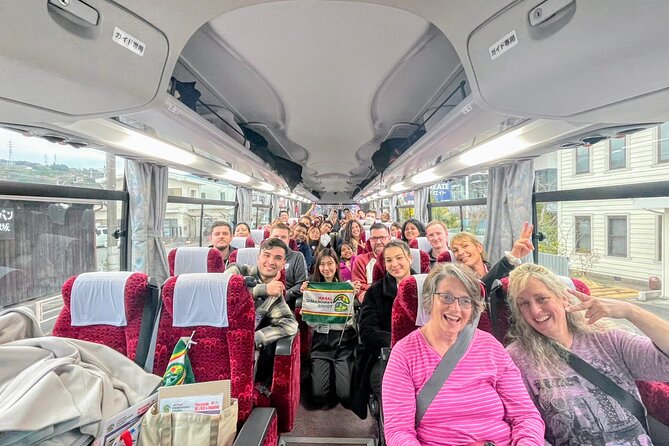
This tour is designed for efficiency, not deep exploration of every district. You board a deluxe coach, hear live explanations in English, and use the bus to connect places that sit far apart on the map.
That arrangement has real value on a first Tokyo morning. You can see a slice of Harajuku, Akihabara, Ueno, and central government Tokyo from the window, then get out for three principal stops. The bus also offers Wi-Fi and multilingual audio in English, French, Italian, Spanish, German, Portuguese, and Ukrainian.
The tradeoff is time. Three hours is enough for orientation, but not enough for a leisurely shrine visit, palace garden walk, and full Asakusa visit. At up to 43 people, the guide must count heads and keep the schedule moving. If you prefer to linger, this may feel rushed. If you want a clean introduction before exploring alone, it makes more sense.
More Sightseeing Tours in Tokyo
- Tokyo: Private City Highlights Tour with Local Guide
★ 4.8 · 1,433 reviews - Tokyo Private Sightseeing Tour by Car- English speaking chauffeur
★ 5.0 · 1,004 reviews - Tokyo: 3-Hour Bike or E-Bike City Highlights Tour
★ 4.8 · 435 reviews
Meeting the coach at the LOVE sculpture
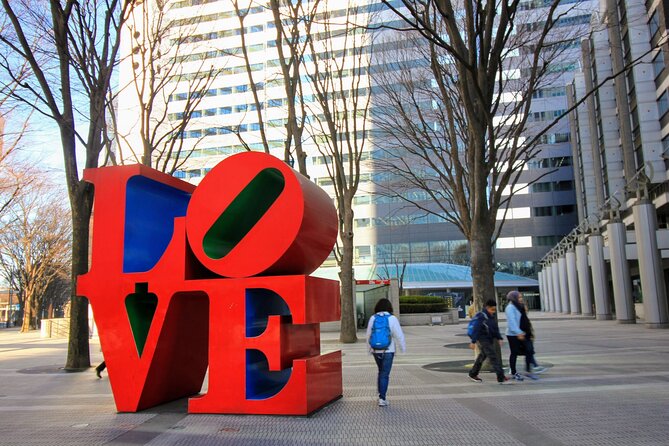
The tour uses two early pickup points. From Ginza, you meet at Matsuya Ginza at 7:20 a.m. From Shinjuku, the meeting point is the Robert Indiana LOVE sculpture at 7:50 a.m.
The LOVE sculpture is a practical landmark in a busy part of Shinjuku, but do not treat the meeting instructions casually. The tour does not wait for late arrivals, and joining halfway is not permitted. If you book more than once or split your party across separate bookings, send the booking numbers and total headcount before departure.
The vehicle is air-conditioned, a welcome feature in Tokyo’s humid summer or during a hot spell. Still, you should expect walking once you leave the coach. The tour specifically warns against joining if you cannot walk long distances.
Meiji Jingu, Tokyo’s forested shrine
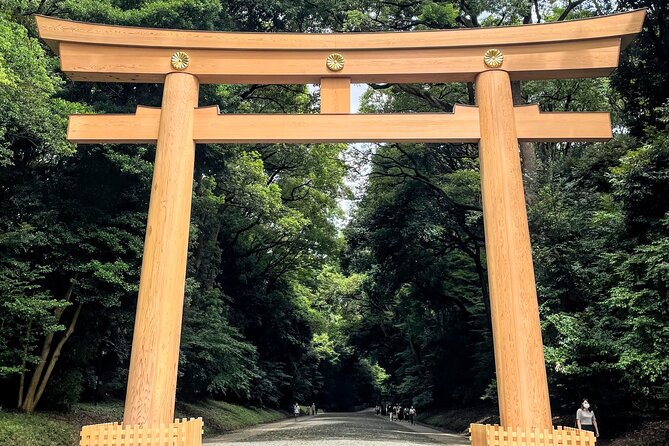
Meiji Jingu is the first major stop and receives about 50 minutes. Built in 1920 for Emperor Meiji, the Shinto shrine sits in a large wooded area that feels far removed from nearby Harajuku.
I like this opening because it gives you a change of pace right away. Tokyo can feel like concrete, signs, and traffic, but the shrine approach offers shade, tall trees, broad paths, and a quiet sacred mood. You may also see the famous sake barrels and wine barrels displayed along the way. Guides have explained the meaning of these offerings and pointed out that the large torii gate was a gift from Taiwan.
Your guide should explain the basic difference between a shrine and a temple, a useful distinction for the rest of your Japan visit. One guide, Levin, was especially praised for making that point clear, while Aiko was noted for adding small cultural details that made the walk more meaningful.
Fifty minutes is enough to see the main approach and shrine area, but it is not a slow visit. You will not have unlimited time for every side path, prayer ritual, or stamp counter. Wear shoes that are comfortable on firm walking paths, and stay aware of the meeting time.
The coach ride through Harajuku, Akihabara, and Ueno
Much of the tour takes place from your seat. The route passes major districts including Harajuku, Akihabara, Ueno, and the area around Japan’s parliament building, the National Diet. You also hear about places such as Kappabashi, known for kitchen goods, Japanese dishes, knives, and remarkably realistic plastic food displays.
These drive-by sections help you place Tokyo’s neighborhoods on a mental map. Harajuku is linked with youth fashion and Japanese pop culture. Akihabara is associated with anime, games, electronics, and maid cafes. Ueno Park is one of Tokyo’s oldest parks, with cherry blossoms in spring and autumn color later in the year. Beside it, Ameyoko market offers a lively shopping street.
The limitation is obvious: you are seeing these areas through the windows. You do not get time to shop in Akihabara, walk through Ueno Park, or browse Ameyoko. The guide may provide live commentary, and the bus has automated audio support, but several people found the narration too light or difficult to hear from the rear seats.
Choose a seat near the front if you can. One person found the experience much better after moving forward because the guide was easier to hear and the visual material was easier to see. If the bus is full, the multilingual audio may help, but it will not replace a detailed walking tour.
A completely different kind of day out:
- Tokyo Disney Resort – Tokyo Disneyland & Tokyo DisneySea Park Tickets
★ 4.8 · 99,488 reviews - SHIBUYA SKY Ticket
★ 4.7 · 46,509 reviews - JR Whole Japan Rail Pass
★ 4.8 · 29,150 reviews - Mt Fuji and Hakone 1-Day Bus Tour Return by Bullet Train
★ 5.0 · 26,383 reviews
The Imperial Palace stop, with realistic expectations
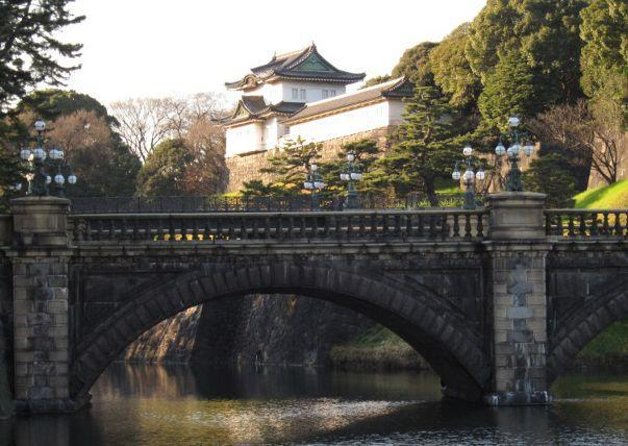
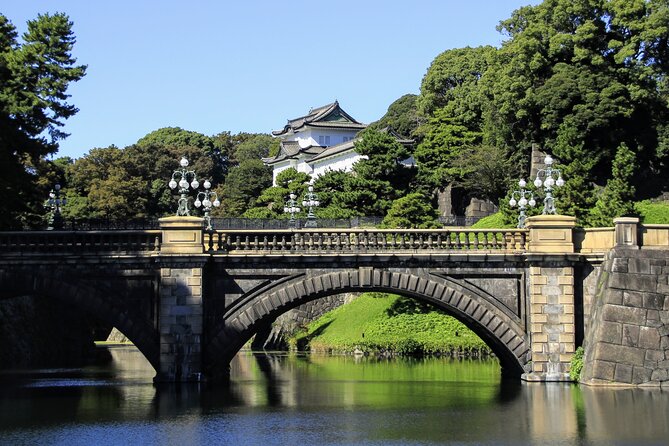
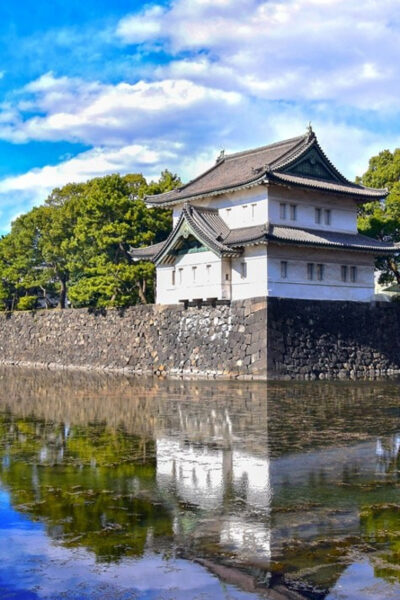
The Imperial Palace is scheduled for about 50 minutes. It occupies the former site of Edo Castle and remains the residence of Japan’s Imperial family. The grounds include moats, bridges, gardens, and historic structures.
This is where the tour description needs careful interpretation. You may visit the East Garden or another open section, but access depends on operating conditions. On some departures, the stop has been limited to the outer bridge and gate. The palace is not a simple attraction where every area is open every day.
I would treat this as a photo and orientation stop, not a full palace visit. The bridge and moat can be attractive, and guides may point out nearby monuments. Aiko, for example, explained the horse position on a samurai statue, noting how one raised leg symbolized a warrior who lost the battle but survived.
Still, if your main goal is to wander the palace gardens, verify the day’s access expectations before booking. Several people found this stop disappointing because they expected a proper stroll. The operator can change the order or substitute a location if weather, traffic, or closures interfere, and refunds are not provided for those changes.
Asakusa and the matcha pause
The tour then moves to Asakusa, one of the most rewarding parts of the morning. The scheduled Asakusa stop lasts about 30 minutes and includes a matcha experience using first-flush tea from Uji in Kyoto.
You receive either a matcha drink or matcha gelato. The tea is described as premium matcha with a mild taste and little bitterness. That makes this a friendly introduction if you are unsure about traditional matcha. The shop may also offer a range of matcha products, so you can browse briefly without committing to a full meal or ceremony.
The matcha stop is a pleasant cultural touch, but it is not a substitute for lunch. Food and other drinks are not included. The shop can also close on certain dates. For May 9, for example, the operator plans to provide matcha souvenirs instead of the usual shop experience.
The timing here can feel administrative. The guide may need to collect orders for hot or cold drinks, count the group, and organize movement through the shop. That is understandable with a large party, but it can reduce the sense of discovery.
Senso-ji, Nakamise, and the real ending
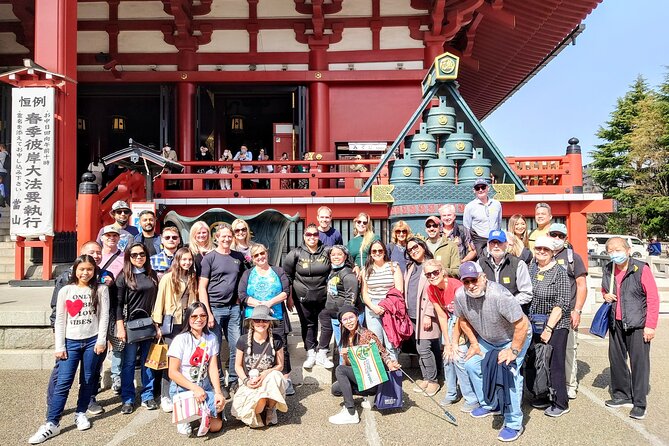
Senso-ji is listed as a short formal stop of about 10 minutes, but the important point is that the tour ends in Asakusa. You can continue independently around the temple, even though the guided portion is brief.
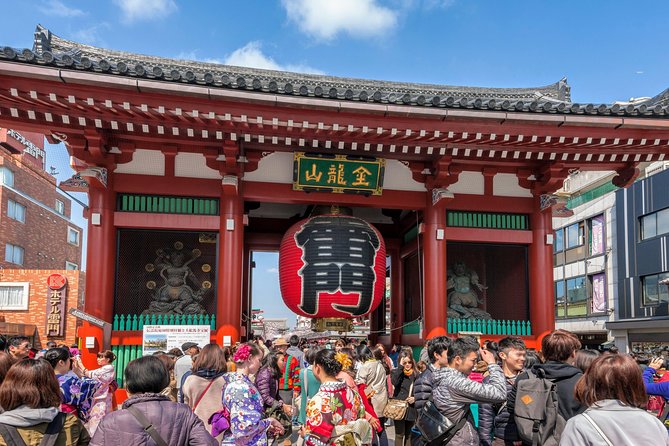
Senso-ji is one of Tokyo’s most famous sights. The red Kaminari-mon Gate makes an obvious first photo, and Nakamise Avenue leads toward the temple with souvenir stalls and traditional goods. You can also purify yourself, pray, and collect a goshuin if that is part of your Japan plans.
This is the tour’s best handoff. Instead of returning you to Ginza or Shinjuku, the coach leaves you in a district with plenty more to see. You can spend extra time at Senso-ji, browse Nakamise, look for lunch, or use nearby transit to continue your day.
Do not make the mistake of assuming the tour returns to the pickup point. The end point is Asakusa. That detail has caused genuine frustration, especially for people who believed pickup and drop-off would match. The information is provided, but you need to read it before paying.
Guides, group size, and the listening experience
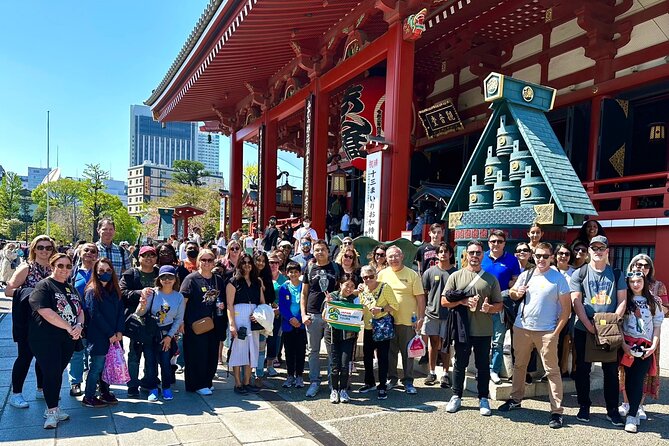
The strongest part of this tour is often the guide. Aiko was praised for warm cultural explanations, Ayaka for fluent English and a friendly manner, Yuki for caring for a large group, and Hiro for making sure a person with walking difficulties was comfortable. Mao, Tsubasa, Lisa, Marin, Yume, and Elven also received strong personal praise for organization, humor, or clear explanations.
That personal touch can change the whole morning. A good guide turns a passing statue, a shrine barrel, or a palace bridge into something you understand. The best guides also manage a large group without making you feel like a number.
But you should not assume every departure will feel the same. Some groups found the guide nervous, repetitive, or too focused on counting people. Others felt the historical commentary was too limited. With as many as 43 people, seat position and group dynamics matter.
If you want detailed cultural instruction at every stop, choose a smaller walking tour. If you want transport, structure, and a guide who can handle the basic logistics, this format is more suitable.
Is $94.84 a fair price?
At $94.84, the tour is not cheap for only three to four hours. Your payment covers the coach, professional English-speaking guide, multilingual audio, bus Wi-Fi, pickup, and matcha drink or gelato. It also saves you the effort of planning a route between distant parts of Tokyo.
The value depends on your alternative. If you are comfortable using Tokyo’s trains and researching Meiji Jingu, the Imperial Palace, and Asakusa yourself, you can likely see the principal places without paying for a coach. Several people felt exactly that way.
I see the price as reasonable for a first morning when convenience matters more than depth. You get a guided overview and finish in Asakusa, ready to continue. I would not book it expecting exclusive access, long walks through palace gardens, or a full cultural seminar.
The 4.2 rating from 134 submitted ratings reflects that middle ground. Strong guides can make it a very good introduction, while a closed palace area or thin commentary can make it feel ordinary.
Who should book this Tokyo tour?
I would recommend it to you if this is your first visit, your morning is short, or you want an air-conditioned ride between major areas. It also suits anyone who would rather not plan several train connections immediately after arriving in Tokyo.
It works well for people who like a clear schedule and a little independent time at the end. Families and older adults may appreciate the coach, though the walking requirement still matters.
I would skip it if you have already seen Meiji Jingu and Senso-ji, want long visits at each sight, or care most about entering the Imperial Palace gardens. I would also look elsewhere if you want a small group and continuous, detailed commentary.
Free cancellation is available up to 24 hours before the start time. Changes or cancellations inside that window are not refunded, so keep the early departure and firm meeting rules in mind.
Should you book it?
Book this half-day Tokyo sightseeing tour if you want a practical overview, strong transport support, and a useful finish in Asakusa. The Meiji Jingu walk and the chance to hear a good guide such as Aiko, Yuki, Hiro, or Mao are the best reasons to go.
Skip it if you expect the Imperial Palace to be fully open or believe you will return to Ginza or Shinjuku. The smartest approach is to view the tour as a guided sampler, then use your free time in Asakusa to explore Senso-ji and the surrounding streets at your own pace.
FAQ
How long does the Tokyo sightseeing tour last?
The tour lasts approximately three to four hours. Some people have found the half-day version closer to three hours, depending on traffic and the day’s operation.
Where does the tour begin?
You can board from Matsuya Ginza at 7:20 a.m. or the Robert Indiana LOVE sculpture in Shinjuku at 7:50 a.m.
Where does the tour finish?
The tour finishes in Asakusa near Senso-ji Temple. There is no additional drop-off service to the original pickup point.
Is Senso-ji Temple included?
The tour ends at Senso-ji, and you can have free time there after the formal guided portion. The scheduled stop is listed as approximately 10 minutes, so plan extra time if you want to explore the temple and Nakamise Avenue.
What languages are available?
A professional English-speaking guide leads the tour. Multilingual audio guidance is available in English, French, Italian, Spanish, German, Portuguese, and Ukrainian.
Is matcha included?
Yes. The tour includes either a matcha drink or matcha gelato. The matcha experience uses first-flush tea from Uji, Kyoto.
Can anyone join the tour?
Most people can participate, but the tour is not recommended if you cannot walk long distances. The maximum group size is 43 people.
Just added in Tokyo
- A One-of-a-Kind Sushi Experience in a Special Place of Japan★ 5.0 · 15 reviews
- Tokyo Cute Bento Cooking Class – Make a Kawaii Character Lunchbox★ 5.0 · 126 reviews
- Japanese Home Cooking Class & Walk in Todoroki Temple Tokyo★ 5.0 · 88 reviews
- Japan Tokyo Tower Observatory Deck E-Ticket★ 4.0 · 34 reviews
- Catch a Baseball Game in Tokyo with a Local – Tickets Included★ 5.0 · 24 reviews
- Tokyo Private Day Tour by Car with English speaking Driver Guide★ 4.0 · 29 reviews
- Japan Classic 10 Day – One Life Adventures★ 5.0 · 129 reviews
- JDM Experience with Fast&Furious RX-7 (English speaking Driver)★ 5.0 · 57 reviews
City Tours and Sightseeing, compared.
Private City Highlights Tour with Local Guide
Read our review →
Tokyo Private Sightseeing Tour by Car- English speaking chauffeur
Read our review →
Naha: North Okinawa Sightseeing Tour & Churaumi Aquarium
Read our review →
Private Highlights Tour with Guide and Luxury Vehicle
Read our review →
Custom Hidden Gems & Highlights Tour with Local Guide
Read our review →
Mount Fuji Full Day Sightseeing Tour from Tokyo
Read our review →Browse the lists this tour appears in