
Reviewed · HIKING AND TREKKING
Hike Hakone Hachiri
An old road makes Hakone feel new. This private hike follows the ancient Tokaido between Odawara and Mishima, combining mountain scenery with teahouse traditions, castle ruins, and Japan’s old travel system. I like the personal guiding from Tony, including his fluent Japanese translation at the 13th-generation Amazake Chaya, and I like that the route reaches quieter historic places many day visitors miss. The main drawback is the physical demand: this is a 12-kilometer hike over stone paths, and wet weather can make it tougher.
I also appreciate the flexible, private format. Your group gets the guide’s full attention, and Tony has adjusted the day during heavy rain rather than forcing a rigid plan. You should still arrive ready for a long day, bring sturdy comfortable shoes, and remember that lunch, drinks, and an air-conditioned vehicle are not included.
In This Review
- Key points to know before you book
- Why the old Tokaido is worth your time
- Amazake Chaya and a living piece of Edo-era travel
- Lake Ashi adds scenery and a sensible lunch break
- The 400-year-old Cedar Avenue
- Hakone Sekisho explains control at the mountain pass
- Yamanaka Castle Ruins and the chance of Mt Fuji
- The five-hour Old Tokaido hike
- Finishing in Mishima beside Genbegawa
- What the $231.18 price really buys
- Who should book the Hakone Hachiri hike?
- Weather, cancellation, and practical planning
- Should you book it?
- FAQ
- Where does the hike begin?
- Where does the experience end?
- What time does the tour start?
- How long does the experience last?
- How far is the main hike?
- What level of fitness is required?
- Is lunch included?
- Are coffee and tea included?
- Is transportation in an air-conditioned vehicle included?
- Is this a private tour?
- What happens if bad weather cancels the tour?
Key points to know before you book
- A 12-kilometer historic walk: The main hike follows the preserved Old Tokaido Foot Highway between Odawara and Mishima.
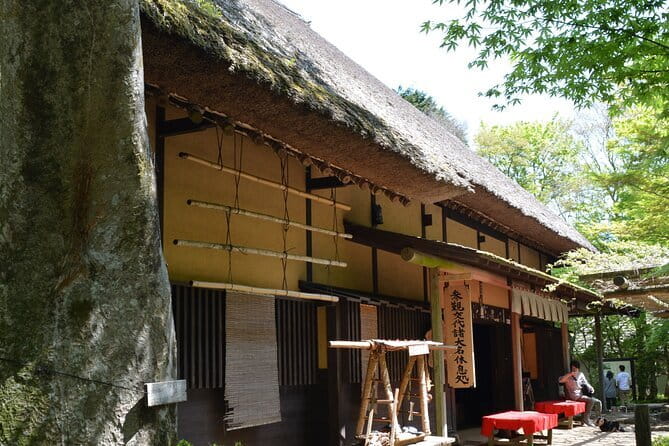
- A 13th-generation teahouse: Amazake Chaya is still managed by the Yamamoto family, giving the first stop a rare sense of continuity.
- Private guiding with Tony: His Japanese translation, local knowledge, humor, and attention to each person are major strengths.
- Mt Fuji depends on the weather: Yamanaka Castle Ruins offer the chance for a fine view, but clouds can easily hide it.
- A full nine-hour day: The experience begins and ends at Mishima Station at 8:30 a.m., with about five hours assigned to the hike itself.
- Good shoes matter: Stone sections become more demanding in rain, so this is not a casual stroll through town.
Why the old Tokaido is worth your time
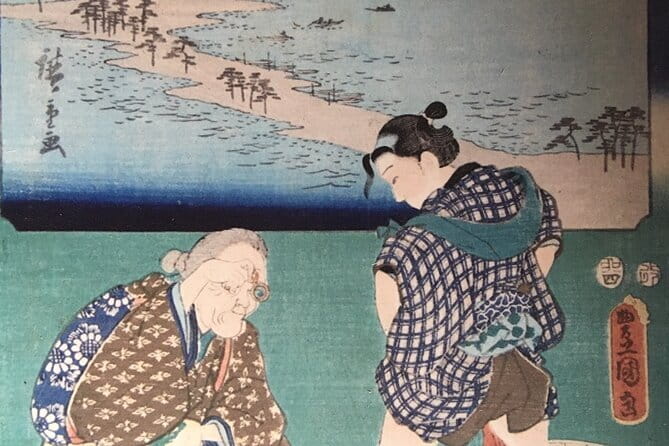
The Tokaido was the main road connecting Edo, the capital now called Tokyo, with Kyoto and Osaka. The Hakone Hachiri section crosses the mountain route between Odawara and Mishima, a route once used by officials, merchants, pilgrims, and ordinary people making a difficult journey through central Japan.
What makes this outing appealing is the mix of walking and interpretation. You are not simply looking at a forest path. You are following a working road with checkpoints, teahouses, planted cedar trees, military defenses, and settlements that served people on the move.
The route has been recognized as a Japan Heritage Area, which helps explain its value. The appeal is not one single spectacular sight. It is the way several pieces fit together across a full day.
I would choose this experience if you want context for Hakone beyond its hot springs, lake cruises, and famous views. If you want a short, easy walk with lots of free time, this is probably the wrong choice.
More Hiking and Trekking in Hakone:
- Hike Japan Heritage Hakone Hachiri with certified mountain guide
★ 5.0 · 46 reviews - Traverse Outer Rim of Hakone Caldera and Enjoy Onsen Hiking Tour
★ 5.0 · 30 reviews - Hakone Hachiri: Old Tokaido Highway Hiking Tour
★ 4.9 · 22 reviews
Amazake Chaya and a living piece of Edo-era travel
The day includes about an hour at Hakone Amazake Tea House, one of the few surviving teahouses from the old Tokaido network. At one time, hundreds of teahouses served people along the road. Today, Amazake Chaya is managed by Mr. Yamamoto, the family’s 13th-generation manager.
That detail makes the stop more than a refreshment break. You are seeing a family business tied directly to the route’s past, with the possibility of meeting members of the next generation as well. Tony’s fluent Japanese translation is especially useful here. It allows the visit to feel personal rather than like a quick stop where you only take photographs.
Coffee and tea are not included in the tour price, so plan to pay for your own drinks if you want them. The stop is also a good chance to settle into the day before the longer walking section begins.
I like this part because it gives the hike a human voice. Cedar trees and ruins can be impressive, but a family still caring for a centuries-old institution helps you understand how the road once functioned.
Lake Ashi adds scenery and a sensible lunch break
Lake Ashi, also called Lake Ashinoko, is a roughly 700-meter-deep crater lake in the Hakone area. The itinerary allows about an hour for lunch beside the water, and a red torii gate in the lake provides one of the area’s familiar views.
Lunch is not included, so you will need to pay for your own meal. That gives you some choice, but the tour price is not all-inclusive. Keep that in mind when comparing the $231.18 per-person cost with other day tours.
The lake stop breaks up the walking and gives you a chance to rest before the next historic sites. I would not treat it as a long sightseeing session, though. The day has several stops and a substantial hike, so the hour is best used for food, a quick look at the water, and a little recovery.
Weather matters throughout Hakone. Mist, rain, or cloud can change the lake views quickly, just as they can hide Mt Fuji later in the day.
The 400-year-old Cedar Avenue
The Cedar Trees of Hakone Old Road are among the most memorable parts of the walk. The avenue is lined with Japanese cedar trees, many planted about four centuries ago on the orders of Tokugawa Hidetada, the second shogun of the Edo period.
The purpose was practical. The trees shaded people using the Tokaido and helped make the mountain road less harsh. Today, their height and age give the path a strong sense of scale. You walk beneath a corridor shaped by deliberate human planning, not untouched woodland.
The planned 30-minute stop may sound short, but the cedar avenue is part of the larger hike rather than a separate attraction requiring a long visit. Your guide can connect the trees to the road system, the shogunate, and the people who depended on this route.
The old highway is not uniformly smooth. Stone sections can be uneven, and wet conditions make footing more difficult. One rainy-day outing required adjustments, but the route still included a moderate hike over stones. I would wear shoes with good grip and avoid bringing anything that makes balance harder.
A few more options to weigh up in Hakone
- Hakone 6 hour Private Tour with Government-Licensed Guide
★ 5.0 · 218 reviews - Hakone Open-Air Museum Ticket
★ 4.9 · 133 reviews - Custom Private Tour in Hakone with a Certified Local Guide
★ 5.0 · 91 reviews - Hakone 8 hour Private Tour with Government-Licensed Guide
★ 5.0 · 63 reviews
Hakone Sekisho explains control at the mountain pass
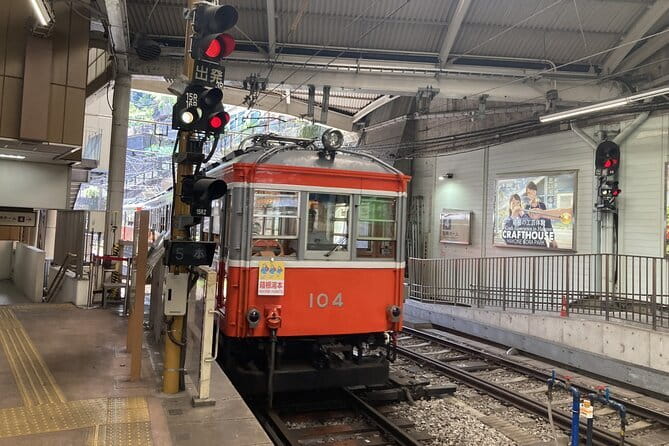
Hakone Sekisho and the Hakone Sekisho Museum introduce the political side of the Tokaido. Checkpoints were placed along the road to inspect people and goods, protect the shogun in Edo, and control movement.
Because Hakone was the closest major checkpoint to Edo, it was heavily policed. The short 30-minute visit works well as a change of pace after the cedar avenue. Instead of focusing only on scenery, you see how travel was monitored and why this mountain route mattered to the government.
I would pay close attention to Tony’s explanation here. A checkpoint can look like a collection of buildings unless someone explains who passed through, what officials were watching for, and why this location received such strict attention.
The limited time means you should not expect a long museum visit. Think of it as a compact historical stop that adds meaning to the road beneath your feet.
Yamanaka Castle Ruins and the chance of Mt Fuji
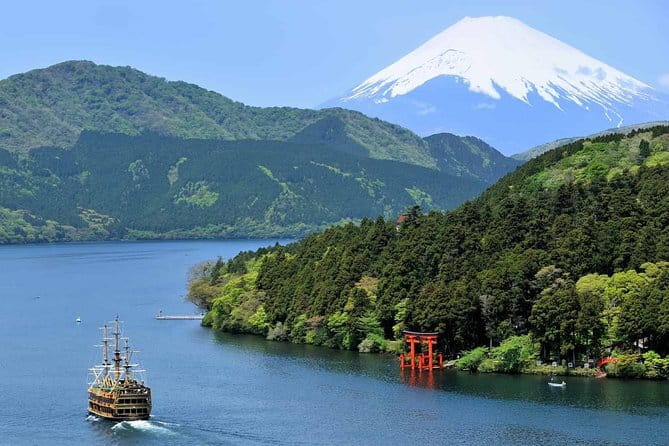
Yamanaka Castle Ruins take you back to 1590, when the Hojo family used the castle to protect its western boundary. The name means castle in the middle of the mountain, and the setting matches it.
The remains are valued for their earthworks and defensive design rather than grand standing buildings. You can see how the site used the mountain itself as part of its protection. For anyone interested in Japanese castle history, this is a useful reminder that many castles relied on banks, ditches, slopes, and position rather than stone towers.
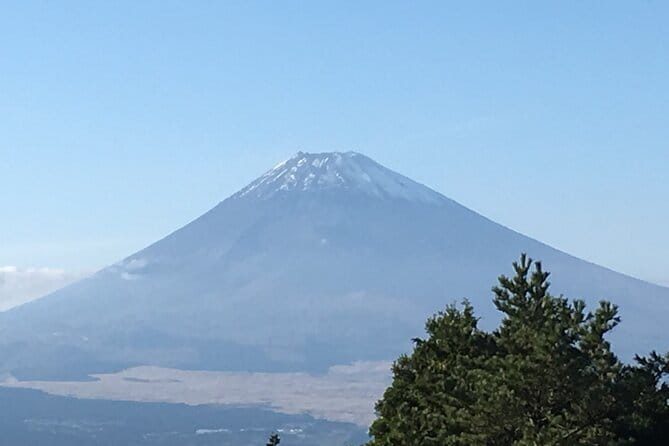
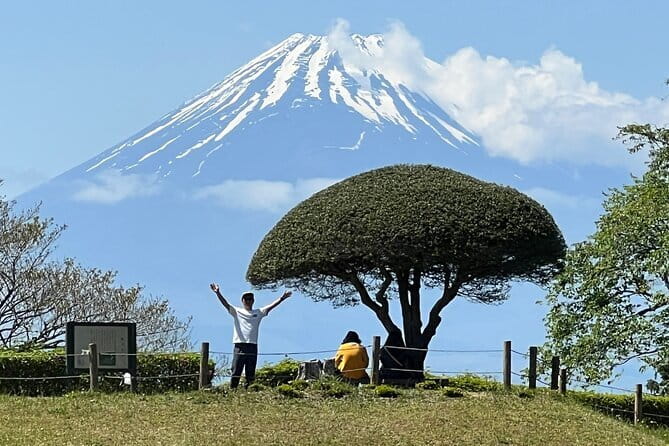
The stop lasts about 30 minutes. The major bonus is the possible view of Mt Fuji. The qualification matters: Fuji is visible only when weather conditions cooperate. You should enjoy the ruins and treat the mountain view as a reward, not a promise.
This is one of the places where a private guide helps. Tony can explain what you are seeing instead of leaving you to guess at grassy mounds and earth defenses.
The five-hour Old Tokaido hike

The main event is the approximately five-hour, 12-kilometer walk along the Old Tokaido Foot Highway. That is enough distance to require real preparation, even though the overall description places the outing in the moderate range.
Some people will find the hike challenging and enjoy exactly that. It provides a proper day outdoors, away from the busiest sightseeing areas, with huge trees, waterfalls, old stones, and changing views along the route. Others may find the length tiring, particularly in rain or if they are not used to uneven paths.
Tony’s style appears well suited to this kind of day. He has been described as funny, considerate, attentive to each person, and willing to change the plan when severe weather affects conditions. Those qualities matter more on a long walk than a polished speech does. A guide who watches the group and communicates clearly can make a difficult section feel manageable.
You should bring footwear you can trust for several hours. Comfortable shoes are essential, and sturdy shoes are the safer choice if rain is in the forecast. The tour requires a moderate level of physical fitness, so I would not book it as a last-minute activity after a tiring series of other hikes.
Finishing in Mishima beside Genbegawa
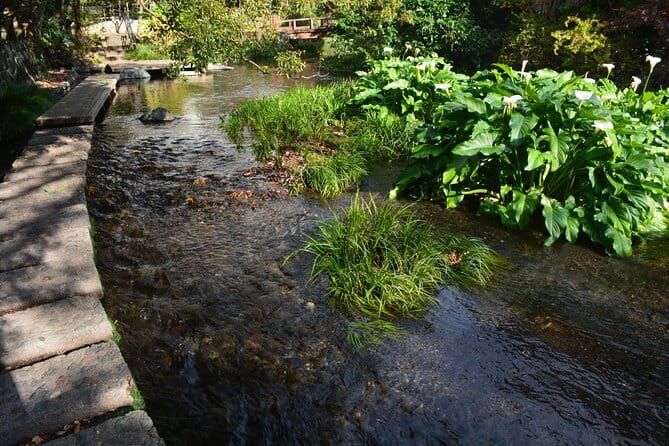
The day returns to Mishima Station, the same place where you meet at 8:30 a.m. The final listed stop is a 30-minute walk along the Genbegawa World Water Heritage Area.
That ending provides a gentler finish after the long mountain section. It also gives you a look at Mishima itself rather than treating the city only as a transport point. Since the tour begins and ends at the station, the arrangement is straightforward for anyone planning a day around Mishima.
The total duration is about nine hours. With five hours of hiking plus the tea house, lake, cedar avenue, checkpoint, castle ruins, and Genbegawa walk, the schedule is full. You should keep the rest of your day flexible rather than planning a tightly timed evening activity.
What the $231.18 price really buys
At $231.18 per person, this is not a budget walk. The price covers the guide fee, while lunch, coffee or tea, and an air-conditioned vehicle are extra. Group discounts are available, but the exact savings are not provided, so check the price for your party before booking.
The value comes from the private format and the subject matter. You are paying for a full day with a guide who can link a remote-feeling trail to Japanese political history, family traditions, military defenses, and local geography. Tony’s Japanese translation at Amazake Chaya is an especially useful part of that value.
A cheaper self-guided outing could take you to some of the same places, but it would not necessarily provide the connections between them. You would also need to manage the day yourself. If you have a group that cares about history and wants focused attention, the cost becomes easier to justify.
If your priority is simply seeing Lake Ashi or catching a Fuji photograph, this is probably too expensive and too long. You are paying for the walk and the explanation, not just the postcard stops.
Who should book the Hakone Hachiri hike?
I would recommend this for active adults, families with older children who can handle a long walk, and anyone who prefers old roads and local stories to a packed schedule of famous sights. It is also a good fit if you want a private experience rather than a large group tour.
You will likely appreciate it most if you enjoy:
- Long walks over historic paths
- Japanese castle and shogunate history
- Quiet forest sections
- Traditional food and family-run places
- Scenic stops where weather plays a role
- A guide who can translate and adapt the day
I would hesitate if you have limited mobility, dislike uneven stone paths, or want a relaxed sightseeing circuit. The tour requires moderate fitness, and the five-hour walking block is the part you need to take seriously.
The experience is private, so only your group participates. That makes it easier to move at a sensible pace and ask questions, but it does not remove the physical demands of the route.
Weather, cancellation, and practical planning
This experience requires good weather. If poor conditions cause cancellation, you will be offered another date or a full refund. If you cancel for another reason or request an amendment, the payment is non-refundable, so check the forecast and your plans carefully before committing.
The tour begins at Mishima Station at 8:30 a.m. and ends there. Confirmation is provided when you book, and the meeting point is near public transportation.
Because lunch and drinks are separate, budget for them in addition to the tour price. An air-conditioned vehicle is not included, so do not book this expecting a private sightseeing van. The experience is built around walking and the historic route.
Should you book it?
Book the Hakone Hachiri hike if you want to understand Hakone through its old road, not just its lake and mountain views. The combination of Amazake Chaya, the cedar avenue, Hakone Sekisho, Yamanaka Castle Ruins, and the 12-kilometer trail gives you a full picture of why this route mattered.
I would book it with sturdy shoes, a weather check, and realistic expectations about the effort. If you can handle a long day on uneven ground, Tony’s personal guiding and Japanese translation add real value. If you want an easy half-day or guaranteed Mt Fuji views, choose something shorter and less weather-dependent.
FAQ
Where does the hike begin?
The hike begins at Mishima Station, at 16-1 Ichibanchō, Mishima, Shizuoka 411-0036, Japan.
Where does the experience end?
The experience ends at Mishima Station, the same location as the starting point.
What time does the tour start?
The scheduled start time is 8:30 a.m.
How long does the experience last?
The tour lasts approximately nine hours.
How far is the main hike?
The main hiking section covers about 12 kilometers of the Old Tokaido Foot Highway between Odawara and Mishima.
What level of fitness is required?
A moderate level of physical fitness is required. The route includes stone sections, and the main walking portion lasts about five hours.
Is lunch included?
No. Lunch is not included, and you should budget separately for your meal.
Are coffee and tea included?
No. Coffee and tea are not included in the tour price.
Is transportation in an air-conditioned vehicle included?
No. An air-conditioned vehicle is not included.
Is this a private tour?
Yes. Only your group participates in the activity.
What happens if bad weather cancels the tour?
If poor weather causes cancellation, you will be offered a different date or a full refund. The experience is otherwise non-refundable and cannot be changed for any reason.
Just added in Hakone
- Hakone Open-Air Museum Ticket★ 4.9 · 133 reviews
- Forest Bathing in Temple and Enjoy onsen with healing power★ 5.0 · 17 reviews
- Odawara Castle and Town Guided Discovery Tour★ 5.0 · 15 reviews
- Traverse Outer Rim of Hakone Caldera and Enjoy Onsen Hiking Tour★ 5.0 · 30 reviews
- Hike Japan Heritage Hakone Hachiri with certified mountain guide★ 5.0 · 46 reviews
- Private Hakone Half-day Car Tour with Hotel Pickup – Local Guide★ 5.0 · 48 reviews
- Hike Japan Heritage Hakone Hachiri (Half Day)★ 5.0 · 18 reviews
- Easygoing Nature Walk in Hakone Tour★ 5.0 · 15 reviews
Hiking and Trekking, compared.
Fushimi Inari Hidden Hiking Tour (Private Option Available)
Read our review →![[Nagoya Kamikochi Hiking Tour] One-Day Nature Forest Hiking Tour of Kamikochi & Taisho Pond & Tashiro Pond & Kappa Bridge & Myojin Pond & Hotaka Mountain Range & Hotaka Shrine Okumiya (Departure from Nagoya)](https://media.japanvisits.com/wp-content/uploads/nagoya-kamikochi-hiking-tour-one-day-nature-forest-hiking-tour-of-kamikochi-taisho-pond-tashiro-pond-kappa-bridge-myojin-pond-hotaka-mountain-range-hotaka-shrine-okumiya-departure-from-nagoya-k132013-400x733.jpg)
Hiroshima Local guided Hiking Tour&Open-air Tea Ceremony
Read our review →![Hiking the Historic Nakasendo Trail [1 Day Tour from Nagoya]](https://media.japanvisits.com/wp-content/uploads/hiking-the-historic-nakasendo-trail-1-day-tour-from-nagoya-400x267.jpg)
Hiking the Historic Nakasendo Trail [1 Day Tour from Nagoya]
Read our review →
Kyoto Hiking Tour: The Nature and Legends of Kurama and Kibune
Read our review →
Browse the lists this tour appears in