
Reviewed · HIROSHIMA TOURS
Hiroshima and Miyajima 1 Day Bus Tour
Some days in Japan carry more weight than others. This 7-hour-40-minute tour links Hiroshima’s Atomic Bomb Dome, Peace Memorial Park, and Peace Memorial Museum with the beauty of Miyajima, making it a useful choice when your time is short. I like the included Hiroshima-style okonomiyaki lunch and the fact that ferry tickets and transport are handled for you.
The English-speaking guides are a major strength. Guides such as Tom, Hiro, Yuka, Kaori, Takane, and Toe have been praised for clear explanations, warm personalities, and careful timing. The main drawback is that the schedule can feel tight at the Peace Memorial Museum, and the day involves plenty of walking.
In This Review
- Key points to know before booking
- What the day is really designed to do
- Facing the Atomic Bomb Dome
- Walking through Hiroshima Peace Memorial Park
- Allowing enough time for the Peace Memorial Museum
- Eating Hiroshima-style okonomiyaki
- Crossing to Miyajima and Itsukushima Shrine
- Guides who make the history easier to follow
- Bus comfort, timing, and group size
- Is the $118.92 price good value?
- Who should book this Hiroshima day tour?
- Final verdict: book it for efficiency and context
- FAQ
- Where does the Hiroshima and Miyajima tour begin?
- Where does the tour end?
- How long does the experience last?
- Is lunch included?
- Can dietary restrictions be accommodated?
- Are the Miyajima ferry and shrine tickets included?
- Is the tour suitable for people with limited mobility?
- Can I take a Shinkansen after the tour?
Key points to know before booking
- Two very different sides of Hiroshima: You move from the quiet, sobering Peace Memorial sites to Miyajima’s sea views, shrine, shops, and food stalls.
- A real Hiroshima lunch: The included okonomiyaki comes with pork, cabbage, bean sprouts, fish powder, noodles, and eggs, with limited alternatives available if arranged in advance.
- A strong guide-led experience: Guides including Hiro, Tom, Yuka, Kaori, Takane, and Toe have been praised for history, organization, English, and personal connection to Hiroshima.
- Ferry transport is included: You do not need to arrange your own ferry ticket to Miyajima.
- A long but efficient day: The tour begins at Hiroshima Station at 10:00 am and returns to the same meeting point.
- Plan your evening carefully: If you are taking a Shinkansen afterward, book a departure after 6:30 pm.
What the day is really designed to do
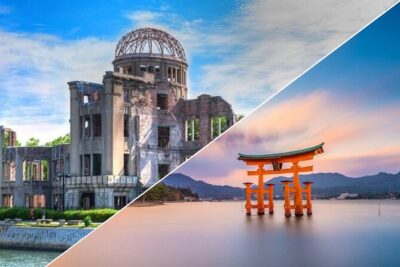
This is not a slow, open-ended exploration of Hiroshima. It is a carefully packed introduction to the city’s two essential experiences: confronting the atomic bombing and visiting Itsukushima Shrine on Miyajima.
You spend roughly an hour at the Atomic Bomb Dome, an hour in Hiroshima Peace Memorial Park, an hour at the Peace Memorial Museum, and about three hours around Miyajima. The air-conditioned vehicle saves energy between stops, while the guide keeps the history and meeting times clear.
For you, the value is simple: the tour removes the need to work out transport, ferry arrangements, museum admission, lunch, and the order of sights. The tradeoff is control. You will not have unlimited time at the museum or the freedom to linger wherever you like.
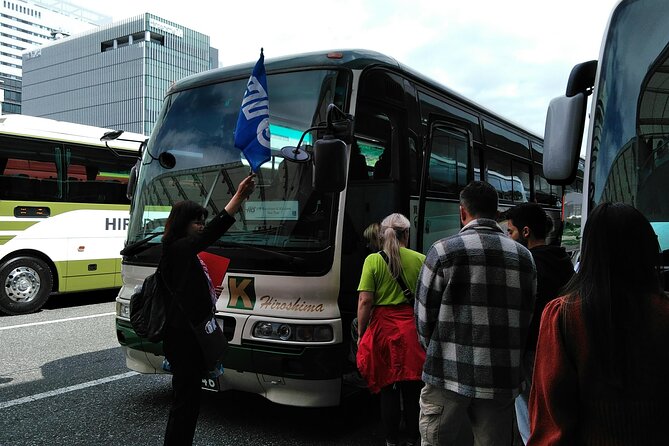
The tour starts at 10:00 am at Hiroshima Station, at 1-2-37 Matsubaracho in Minami Ward. The group can include up to 40 people, so this is not a private or intimate outing. Still, the guide’s earphone system is intended to help you hear explanations while walking.
A few more options to weigh up in Hiroshima
- Peaceful Hiroshima & Miyajima UNESCO 1 Day Bus Tour
★ 5.0 · 5,309 reviews - Hiroshima Peace Memorial Museum Ticket
★ 4.8 · 2,727 reviews - Hiroshima: Hiroshima and Miyajima UNESCO Sites 1-Day Tour
★ 4.9 · 2,330 reviews
Facing the Atomic Bomb Dome
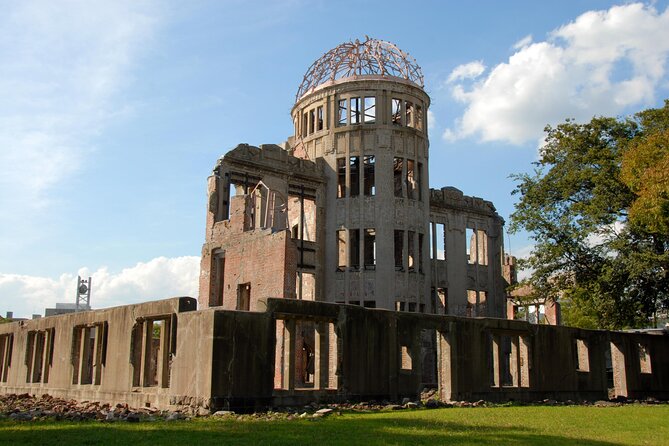
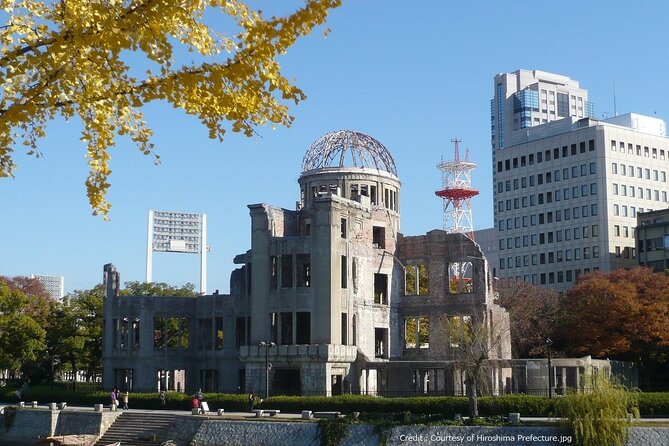
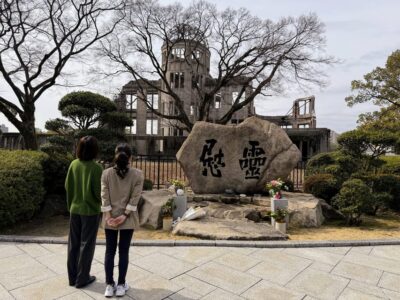
The Atomic Bomb Dome is the first major stop, with about an hour to take in the building and its setting. The structure is a preserved reminder of the August 6 bombing, and its damaged frame gives the subject a direct, physical presence.
The site itself is free to enter. You do not need a ticket for this part, and the guide supplies the historical setting that can be easy to miss if you simply walk past for a photograph.
The Dome also carries a later story. After Japan joined the UNESCO World Heritage Convention in 1992, atomic bomb survivors and others pushed for its recognition as a World Heritage Site. That effort reflected a desire to preserve the building as a warning and a call for peace, not as a monument to destruction alone.
An hour is enough to see the Dome and listen to the guide, though you should not expect a long period for quiet reflection. The group schedule keeps everyone moving. I recommend staying close to the guide here because the explanation gives the building its full meaning.
Several guides have been praised for adding personal context. One guide shared the story of grandparents who survived the bombing and explained how the event affected later generations. That sort of account can make the history feel human rather than distant, but the tone remains serious and respectful.
Walking through Hiroshima Peace Memorial Park
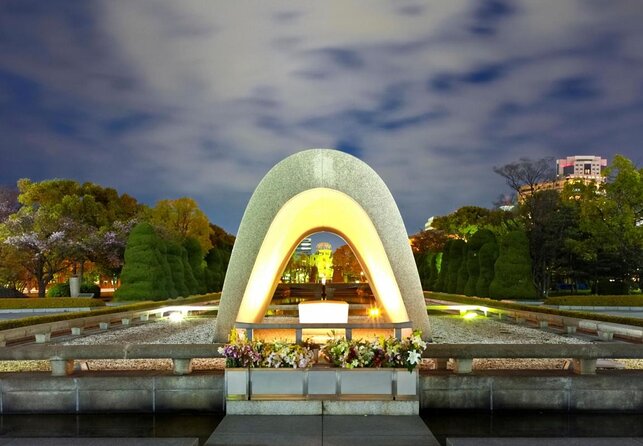
The next hour is spent in Hiroshima Peace Memorial Park, where the city has set aside the former Nakajima District for memorial facilities. This is a place to slow your pace, even though the schedule continues to move forward.
The park connects the Atomic Bomb Dome with the museum and other memorial spaces. Your guide helps explain why the area was planned as a peace site after the Hiroshima Peace Memorial City Construction Law was enacted in 1949.
This portion of the tour works well because you are not asked to absorb the museum’s difficult exhibits immediately. The open park gives you time to understand the setting and the city’s effort to remember the dead while looking toward peace.
You should expect a quiet and emotional visit. Some people find the subject matter upsetting, and the museum afterward can be graphic. I would not choose this day for very young children or anyone who knows they will struggle with wartime displays.
The walking is manageable for most people, but it is not a sit-down tour. The provider specifically says the experience is not recommended for anyone who has difficulty walking long distances. Comfortable shoes are a practical choice.
Allowing enough time for the Peace Memorial Museum
The Peace Memorial Museum receives about an hour of the schedule, with admission included. It has two buildings and covers Hiroshima before the bombing, the development of the atomic bomb, and the events of August 6.
The museum’s purpose is not to entertain you. Its displays can be graphic, upsetting, and emotionally demanding. You are likely to leave with a clearer understanding of the human cost of the bombing, but you may also wish you had more time to process what you saw.
This is the most common concern about the schedule. Some people feel that one hour is not enough, especially if they want to read the displays carefully. If the museum is your main reason for visiting Hiroshima, a separate visit would give you more freedom.
For a first visit, though, the hour still offers real value. The guide frames the experience, and the included ticket means you do not lose time arranging entry. The tour also makes sure you do not accidentally skip a place that many people find difficult to approach on their own.
The audio equipment deserves a practical note. Earphone guides are provided, but one person found the sound mumbled and hard to follow. Treat the equipment carefully, since loss or damage can lead to a replacement charge of up to 18,000 yen. If you cannot hear clearly, tell the guide at once rather than waiting until the next stop.
A completely different kind of day out:
- Hiroshima Peace Memorial Museum Admission
★ 4.6 · 1,308 reviews - Hiroshima / Miyajima Full-day Private Tour with Government Licensed Guide
★ 5.0 · 1,298 reviews - Hiroshima Historical Walking Tour – Why A-Bomb was Dropped
★ 4.8 · 893 reviews - Hiroshima Peace (Heiwa) Walking Tour at World Heritage Sites
★ 5.0 · 872 reviews
Eating Hiroshima-style okonomiyaki
The included lunch is one of the day’s more local touches. Hiroshima-style okonomiyaki is built with pork, cabbage, bean sprouts, fish powder, noodles, and eggs. Unlike a simple pancake, it arrives as a layered meal, and the noodles make it filling enough for a full touring afternoon.
Several guides and participants have received praise for the lunch stop, calling it tasty, cute, and different from standard sightseeing food. One person found the okonomiyaki disappointing because it appeared to have been prepared before they sat down, so expectations should be sensible. This is a group meal, not a long restaurant experience built around choosing every detail.
You must tell the provider about allergies or dietary restrictions when you book. The listed choices are:
- Regular okonomiyaki
- No pork, with eggs
- No pork, no fish powder, and no eggs
Menu changes cannot be made on the day. You also cannot bring your own food or drinks into the restaurant. Vegetarians have been accommodated, but you should arrange that in advance rather than rely on a last-minute request.
The lunch has value beyond the food itself. It gives you a taste of a dish strongly associated with Hiroshima and breaks up a morning of serious memorial visits. It is a useful contrast before the more relaxed part of the day on Miyajima.
Crossing to Miyajima and Itsukushima Shrine
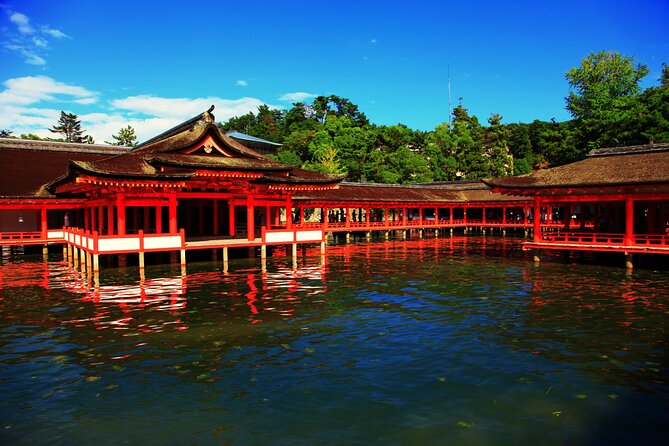
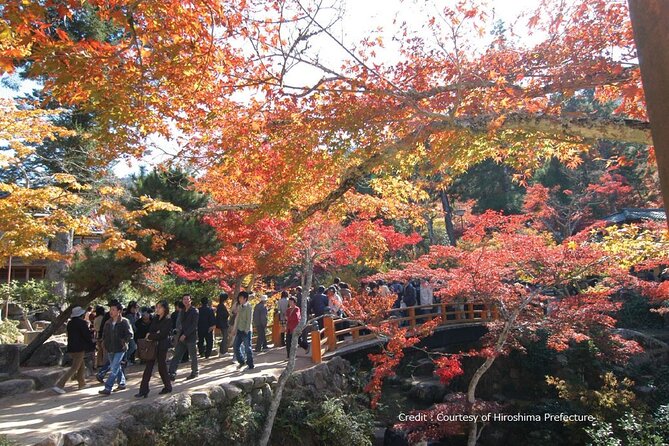
Miyajima receives about three hours, including the ferry ticket. That is a healthy portion of the day and gives you time to see Itsukushima Shrine, walk around the inlet, and browse the island’s shopping and food areas.
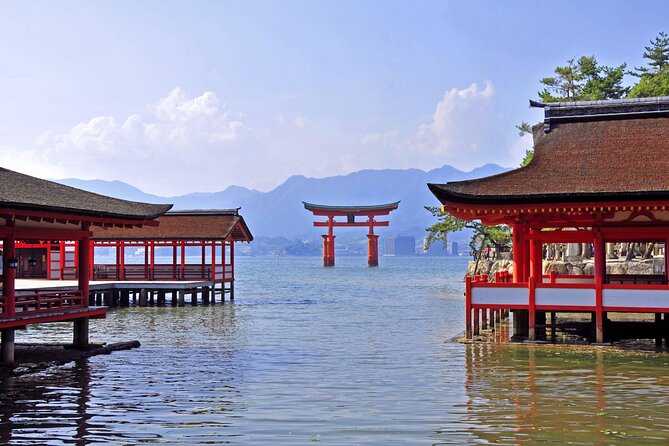
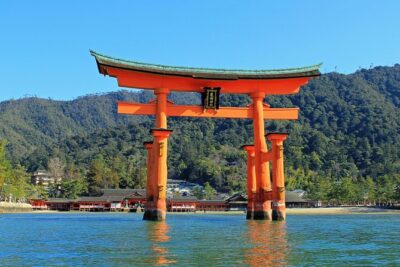
Itsukushima Shrine is built beside a small inlet, while its famous torii gate sits out in the Seto Inland Sea. The relationship between shrine, water, and gate is the main visual reason to visit. Paths around the inlet let you view the shrine from several angles, and the setting feels very different from the memorial district.
The shrine ticket is included, as is the ferry fare. That matters because ferry planning can add friction to a short visit, particularly when you are trying to fit an island visit into the same day as Hiroshima’s central sights.
Three hours is enough for a useful first look, though not enough for every possible activity on Miyajima. Your time is shared between the shrine, views, shopping streets, and food stalls. You may need to choose between browsing, eating, taking photographs, and simply sitting by the water.
The tour does not promise sunset access, and the schedule starts at 10:00 am. If you want a late evening view of the shrine, this is not the format for you. If you want to see the island without managing the ferry yourself, the arrangement is much easier.
The island also provides an emotional reset after the museum. You go from memorials and difficult evidence to sea air, traditional religious architecture, and a more casual afternoon. That contrast is one of the tour’s best decisions.
Guides who make the history easier to follow
The guide can make or break a day with this much ground to cover. The strongest guide names connected with this experience include Hiro, Tom, Yuka, Kaori, Takane, and Toe, along with assistants such as Yuki.
Hiro has been praised for her pride in Hiroshima, her clear explanations, and her ability to keep the bus ride interesting. Tom has been described as funny, organized, and highly fluent in English. Yuka has received praise for kindness and careful management of large groups.
Kaori is particularly well regarded for giving detailed background on the area, while Takane has been praised for keeping the group together and supplying the needed historical information. Toe and Yuki have been singled out for helpfulness, strong English, and personal stories about the places visited.
You should still allow for some variation from one departure to another. A guide may be excellent but the earphone equipment may not work perfectly, or a large group may make it harder to ask questions. The good news is that the tour is conducted in English only, so the format is clear from the start.
Bus comfort, timing, and group size
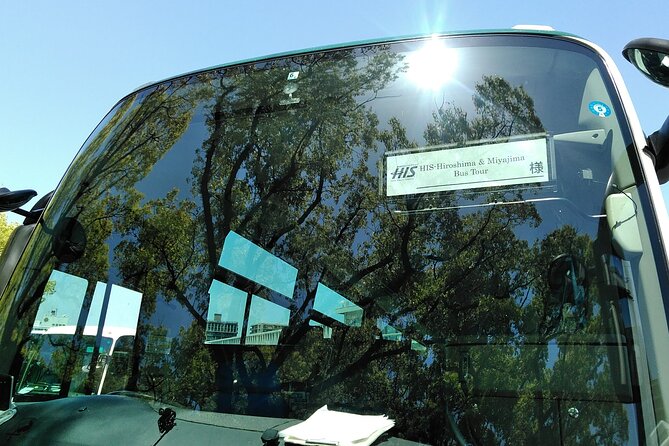
The air-conditioned vehicle is important because this is a long day with several walking sections. You can rest between locations instead of arranging trains, buses, and ferry connections yourself.
The maximum group size is 40 people. That is large enough to feel like a standard coach tour, especially at busy meeting points, but the schedule is designed to manage the group with set times and pickup instructions.
The day ends back at the Hiroshima Station meeting point. Luggage can be stored in the bus compartment during the tour, which is useful if you are moving hotels or arriving before check-in. It also means you do not need to carry bags through the park, museum, lunch stop, and island visit.
Allow extra breathing room after the official end. The provider recommends booking a Shinkansen departure after 6:30 pm if you are continuing to another city. That is sensible advice, since delays, group movement, and the return from Miyajima can all affect your timing.
The mobile ticket is convenient, and confirmation arrives when you book. The meeting point is at Hiroshima Station, but if you have trouble finding it, contact the operator promptly. Staff have helped people reach the bus by phone, which is useful when station exits and street addresses become confusing.
Is the $118.92 price good value?
At $118.92 per person, the price is fair if you want Hiroshima’s major sights covered in one day. The package includes the air-conditioned vehicle, English-speaking guide, museum admission, Itsukushima Shrine admission, ferry fare, and lunch.
Buying each part separately might give you more freedom, but it would also require you to organize the order of visits and allow time for transfers. The tour’s value lies in the coordination, especially for anyone with only one day in Hiroshima.
The price is less attractive if you want long museum hours, a leisurely lunch, or a private guide. You are paying for efficiency, not unlimited time. A group of up to 40 also means the experience will not have the relaxed pace of a small walking tour.
I think the strongest value comes when Hiroshima is a stop on a wider Japan trip. You can see the central memorial sites and Miyajima without giving up several days to local planning. If you are already staying in Hiroshima for a few days, you may prefer to visit the museum separately and explore Miyajima at your own pace.
Who should book this Hiroshima day tour?
I would recommend it to you if:
- You have one day in Hiroshima.
- You want both the memorial district and Miyajima.
- You prefer a guide to explain the history.
- You value included tickets and organized transport.
- You want to try okonomiyaki without choosing a restaurant yourself.
- You are comfortable walking for much of the day.
- You need luggage storage during the outing.
I would think twice if you want a slow museum visit, a quiet private experience, or a flexible island day. The memorial portion is emotionally heavy, and the museum’s one-hour allocation may feel short.
The tour is also a better fit for adults and older children who can handle serious historical material. The provider warns that the museum may not suit children or anyone who is faint-hearted, and that is worth taking seriously.
Final verdict: book it for efficiency and context
I would book this tour if I had limited time and wanted Hiroshima’s essential sights explained in English. The combination of Atomic Bomb Dome, Peace Memorial Park, Peace Memorial Museum, okonomiyaki, ferry travel, and Itsukushima Shrine gives you a meaningful first look at the city.
The strongest reasons to choose it are the guides, the included transport, and the way Miyajima balances the difficult morning. The main compromise is time, especially at the museum. Go in expecting a full, organized day rather than a leisurely one, and the $118.92 price makes good sense.
Free cancellation is available up to 24 hours before the start time. The experience may be canceled for poor weather or if the minimum number of participants is not reached, in which case you are offered another date or a full refund.
FAQ
Where does the Hiroshima and Miyajima tour begin?
It begins at Hiroshima Station, at 1-2-37 Matsubaracho in Hiroshima’s Minami Ward. The start time is 10:00 am.
Where does the tour end?
The tour ends back at the Hiroshima Station meeting point.
How long does the experience last?
The listed duration is approximately 7 hours and 40 minutes.
Is lunch included?
Yes. Lunch is Hiroshima-style okonomiyaki made with pork, cabbage, bean sprouts, fish powder, noodles, and eggs.
Can dietary restrictions be accommodated?
You must provide allergy or dietary information when booking. The listed alternatives include no pork with eggs, and no pork, fish powder, or eggs. Menu changes cannot be made on the day.
Are the Miyajima ferry and shrine tickets included?
Yes. The ferry ticket to Miyajima and admission to Itsukushima Shrine are included.
Is the tour suitable for people with limited mobility?
The tour is not recommended for people who have difficulty walking long distances. It includes walking at the Atomic Bomb Dome, Peace Memorial Park, the museum, and Miyajima.
Can I take a Shinkansen after the tour?
Yes, but the provider recommends booking a Shinkansen departure after 6:30 pm to allow enough time after the tour ends.
Just added in Hiroshima
- Hiroshima Peace Memorial Museum Ticket★ 4.8 · 2,727 reviews
- Hiroshima Peace Memorial Museum Admission★ 4.6 · 1,308 reviews
- Private Full Day Hiroshima Tour★ 4.5 · 29 reviews
- The Peace Memorial to Miyajima : Icons of Peace and Beauty★ 4.5 · 31 reviews
- Shore Excursion from Hiroshima Port : Private Tour in Hiroshima★ 5.0 · 17 reviews
- Hiroshima & Miyajima All-Inclusive Tour w/Licensed guide Pancho★ 5.0 · 54 reviews
- Hiroshima Country Cycling: Explore Rural Life 1 HR from City★ 5.0 · 22 reviews
- Hiroshima Saijo Sake Tasting Tour with visit to 7 Breweries★ 5.0 · 104 reviews
Hiroshima Tours, compared.
Peaceful Hiroshima & Miyajima UNESCO 1 Day Bus Tour
Read our review →
Hiroshima and Miyajima UNESCO Sites 1-Day Tour
Read our review →
Hiroshima / Miyajima Full-day Private Tour with Government Licensed Guide
Read our review →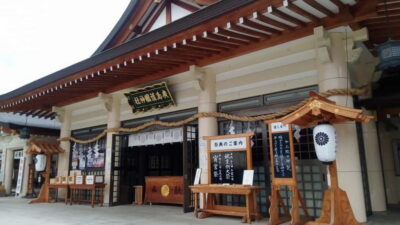
Hiroshima Historical Walking Tour – Why A-Bomb was Dropped
Read our review →
Hiroshima Peace (Heiwa) Walking Tour at World Heritage Sites
Read our review →
Hiroshima in a Nutshell: Morning Bike Adventure
Read our review →Browse the lists this tour appears in