
Reviewed · MORNING
Hiroshima in a Nutshell: Morning Bike Adventure
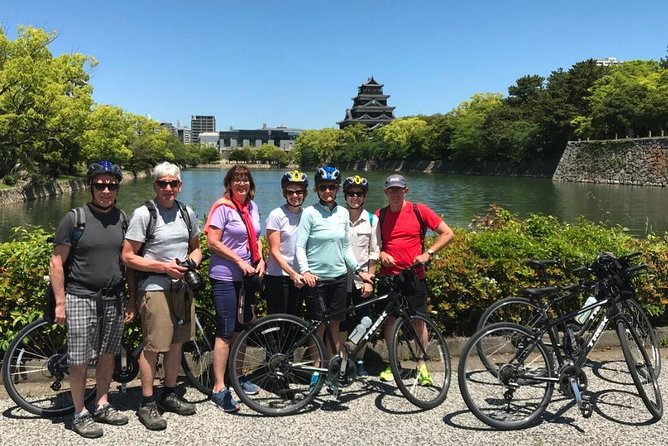
Hiroshima rewards a closer look. This small-group morning ride is a smart way to see the city’s key sights, cover more ground than you could on foot, and hear thoughtful stories about the bombing, the city’s rebuilding, and local life. I especially like the maximum group size of eight, which should make questions and street riding easier, and the included bike, helmet, and bottled water. The main consideration is that the tour can run close to four hours, and the frequent stops may feel slow if you want a nonstop cycling workout.
I also like how the route mixes major monuments with quieter canal-side roads and lesser-known corners of the city. Guides such as Awais, James, Melissa, Yuki, Amy, Levi, Ihsan, and Aways have been praised for clear explanations, safety help, and a friendly manner. You should know that regular bikes are included, while an e-bike costs extra, reportedly around ¥2,000, with limited availability.
In This Review
- Key Points at a Glance
- Why a Bike Works So Well in Hiroshima
- Starting at 10:00 am in Ōtemachi
- Peace Memorial Park: A Quiet Start
- The Atomic Bomb Dome: Hiroshima’s Defining Image
- Hiroshima Castle and Its Rebuilt Story
- Shukkei-en: A Change of Pace
- What the Guides Add
- Is the Cycling Difficult?
- The Value of $72.96
- Timing, Weather, and Practical Planning
- Who Should Book This Morning Ride?
- Should You Book It?
- FAQ
- How long does the Hiroshima bike tour last?
- What time does the tour start?
- Where does the tour begin?
- Where does the tour finish?
- Are the bicycle and helmet included?
- Is an e-bike included?
- Is admission to Shukkei-en included?
- Can children join the tour?
- What happens if the weather is poor?
Key Points at a Glance
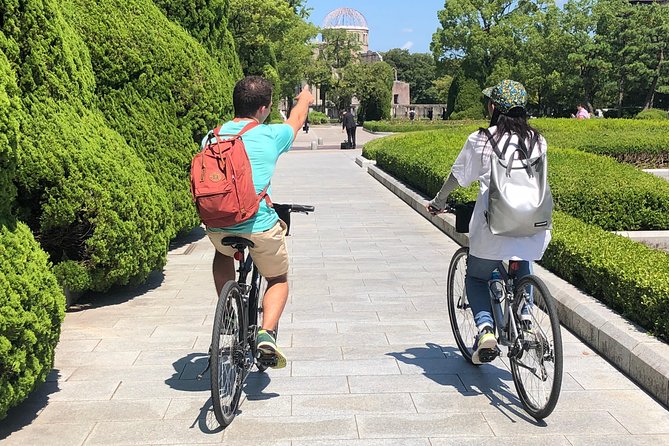
- A compact Hiroshima introduction: See Peace Memorial Park, the Atomic Bomb Dome, Hiroshima Castle, and Shukkei-en in roughly three to four hours.
- A small group of up to eight: The limited size allows the guide to help with bike setup, questions, and street safety.
- Mostly easy cycling: Hiroshima is largely flat, and the pace is described as steady rather than rushed.
- Serious history handled with care: The Peace Park portion includes old photographs, short commentary, and time for quiet thought.
- A useful option for a short stay: If you have only one day or two in Hiroshima, the route helps you decide which places deserve a longer return visit.
- E-bike upgrade available: Regular bikes are included, but an e-bike may cost extra and should be arranged ahead of time.
Why a Bike Works So Well in Hiroshima
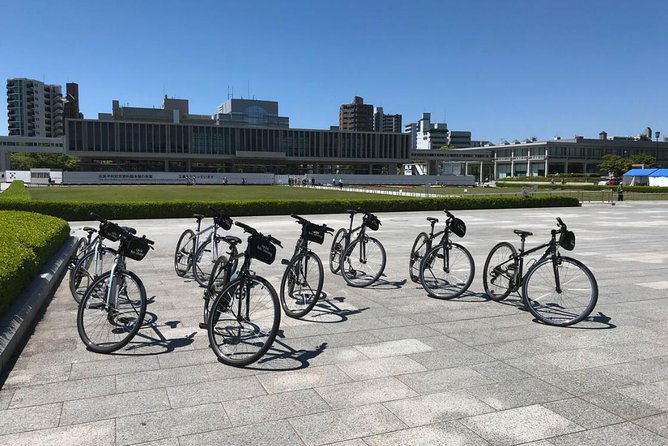
Hiroshima’s central sights are spread out enough that walking between every stop takes time, but they are close enough for a relaxed bike route. A bus or taxi can move you from one place to another, yet a bicycle gives you a better sense of how the city fits together.
I like the way cycling lets you move through ordinary streets between the famous sites. You are not simply transferred from one attraction to the next. You see canals, city blocks, gardens, and daily life along the way. Several rides also use routes that are awkward to reach by car or bus.
This is not a racing tour. The city is mostly flat, and the pace is intended to keep the group together. One ride covered about 6.81 miles over more than four hours, though the exact distance and timing can vary. You will get on and off the bike often for explanations and photographs, so this is better viewed as a sightseeing tour with cycling than as a serious athletic outing.
The guides begin by helping you choose a bike, adjust the seat, and understand hand signals. That basic preparation matters in a city ride. Water is provided, and helmets are included. The regular bikes have been described as being in good condition.
A few more options to weigh up in Hiroshima
- Peaceful Hiroshima & Miyajima UNESCO 1 Day Bus Tour
★ 5.0 · 5,309 reviews - Hiroshima Peace Memorial Museum Ticket
★ 4.8 · 2,727 reviews - Hiroshima: Hiroshima and Miyajima UNESCO Sites 1-Day Tour
★ 4.9 · 2,330 reviews
Starting at 10:00 am in Ōtemachi
The tour begins at Cycle Hiroshima at 4-chōme-5-4 Ōtemachi, in Hiroshima’s Naka Ward. The start time is 10:00 am, and the ride finishes back at the same meeting point.
That central starting point works well for a morning plan, but you should allow enough time to reach it. Hotel pickup and return are not included, so you need to make your own way there and back. The meeting location is also useful if you want to continue exploring central Hiroshima after the tour.
The group is capped at eight people. That is a real advantage for a bike ride. A large group can stretch out at traffic lights and make it harder to hear commentary. Here, the guide can usually keep a closer eye on everyone and make small adjustments to the route or pace.
The tour is conducted in English. The guides have received strong praise for their clear explanations, warmth, and willingness to answer questions. Awais is frequently singled out for his enthusiasm and detailed answers. James has been praised for safety instructions and careful attention to the group, while Melissa is noted for her energy and ability to keep families engaged. Guides vary by date, so you should not assume a particular person will lead your ride.
Peace Memorial Park: A Quiet Start
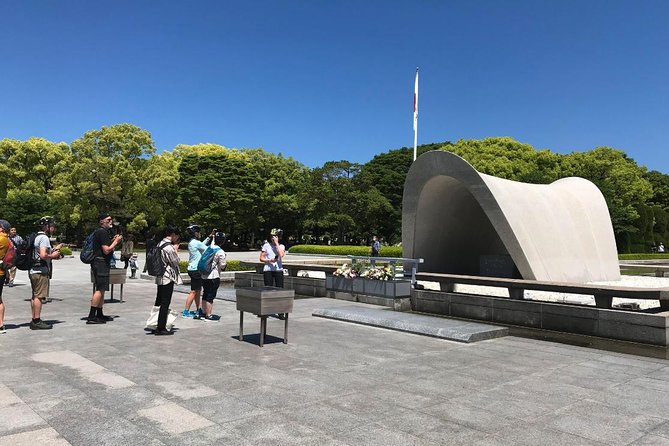
The first major stop is Hiroshima Peace Memorial Park, where the ride slows down considerably. You spend about 20 minutes moving through the park, hearing a short explanation and seeing old photographs showing what the area looked like before the Second World War.
This is an appropriate place to begin. The park is not just a list of monuments. It asks you to pause and consider the people who lived in Hiroshima before the bombing, the destruction that followed, and the city’s later efforts to promote peace.
The guide’s role is especially important here. Several guides have been praised for presenting the subject with care and balance. One tour included making origami cranes for the Children’s Peace Monument, a small activity that gives the visit a personal touch without turning a solemn place into entertainment.
You should expect this part to be emotional. The commentary focuses on the atomic bombing and its aftermath, but the tour also includes local history and the rebuilding of Hiroshima. One comment described the approach as positive as well as informative. That balance can help you understand the city as a living place rather than only as a site of tragedy.
The main limitation is time. Twenty minutes is enough for an introduction, not a full examination of the park or its museums. If the subject matters to you, plan to return later for the Hiroshima Peace Memorial Museum. This bike tour helps you understand the setting, but it does not replace a longer museum visit.
The Atomic Bomb Dome: Hiroshima’s Defining Image
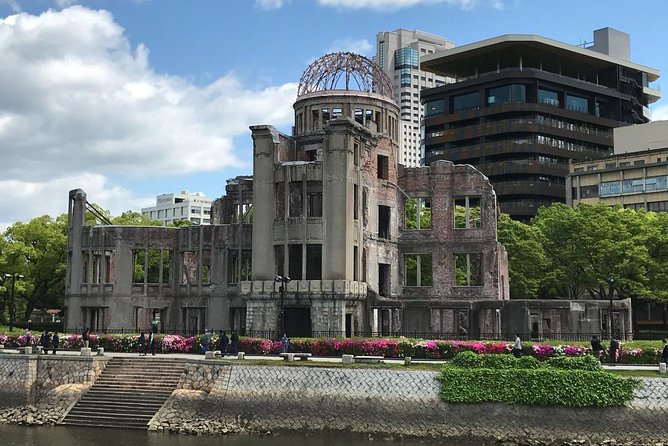
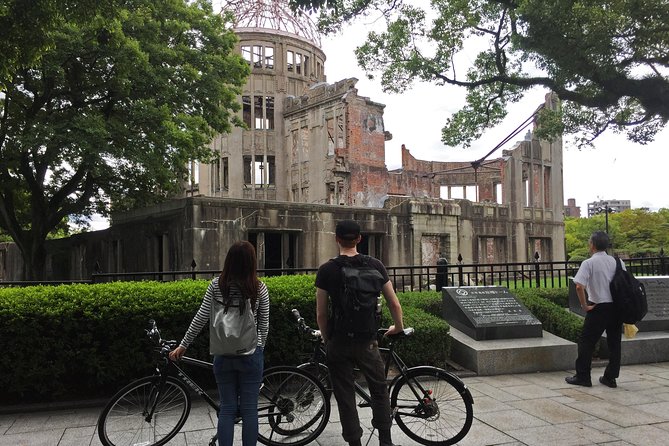
The ride continues to the Atomic Bomb Dome, with about 10 minutes for photographs and reflection. The building is one of Hiroshima’s most recognizable symbols, and seeing it beside the river gives you a clear sense of its place in the modern city.
The short stop is practical. You can take photographs, listen to the guide’s explanation, and consider the event connected to the structure. The visit is not rushed in the sense of being careless, but it is brief. You will not spend a long time examining every detail.
This is one reason the tour works best as an introduction. The guide can explain why the dome matters, then move you onward to other parts of Hiroshima. You can later return on your own if you want more time.
The route’s cycling element also adds useful context. Instead of viewing the dome as an isolated monument, you ride through the surrounding city and see how close it is to parks, waterways, and working streets. That contrast is one of the tour’s strongest qualities.
A completely different kind of day out:
- Hiroshima Peace Memorial Museum Admission
★ 4.6 · 1,308 reviews - Hiroshima / Miyajima Full-day Private Tour with Government Licensed Guide
★ 5.0 · 1,298 reviews - Hiroshima Historical Walking Tour – Why A-Bomb was Dropped
★ 4.8 · 893 reviews - Hiroshima Peace (Heiwa) Walking Tour at World Heritage Sites
★ 5.0 · 872 reviews
Hiroshima Castle and Its Rebuilt Story
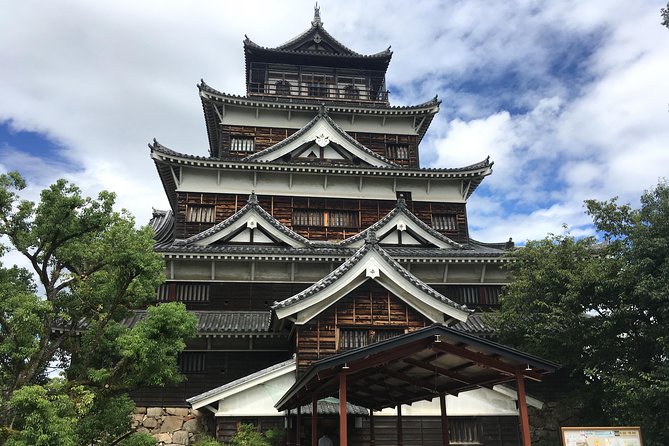
Hiroshima Castle comes next, with about 25 minutes to ride through the grounds, hear about its past, and take photographs. The castle was destroyed in the atomic bombing and later rebuilt, so it offers another way to understand Hiroshima’s history beyond the Peace Park.
The stop adds variety to the morning. After the quiet seriousness of the park and dome, the castle grounds bring trees, open space, and traditional architecture into the route. You get to see Hiroshima as a former castle town as well as a city shaped by the events of 1945.
The tour focuses on the outside and the surrounding grounds. The supplied details do not promise entry to the castle interior, so you should not book this expecting a full indoor visit. If you want the museum displays inside, check whether you need a separate admission ticket and extra time after the ride.
Twenty-five minutes is enough for the guide’s main points and photographs. It is not enough for a leisurely visit to every corner. That is a fair trade on a short city tour, especially if your goal is to get oriented quickly.
Shukkei-en: A Change of Pace
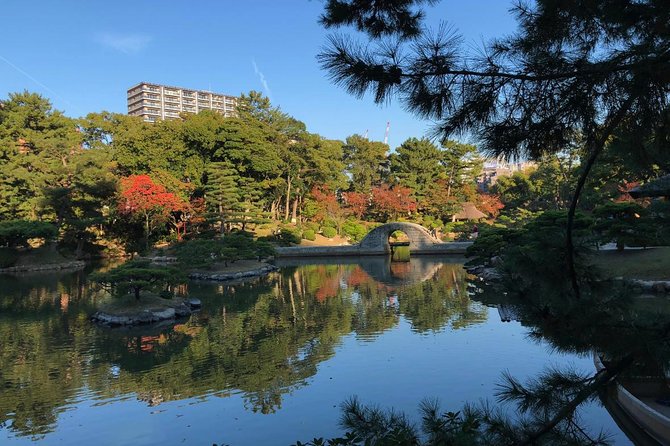
The final listed stop is Shukkei-en Garden, where you spend about 25 minutes. Admission is included, and the guide explains the design and balance of Japanese gardens while you enjoy the greenery.
This is a good closing stop because it changes the mood. The morning begins with war and remembrance, moves through the castle grounds, and ends in a carefully designed garden. You get a broader picture of Hiroshima, including its traditional culture and calm public spaces.
The garden visit is still fairly short. You will see the setting and learn how Japanese garden design uses balance, scale, water, and planted areas, but you may want to return later if you enjoy gardens or photography. The included admission removes one small planning task, which is useful on a tightly scheduled day.
The mix of sites is one of the reasons I consider the tour good value. You are not paying only for a ride through the Peace Park. The route links Hiroshima’s wartime memory, castle heritage, and garden traditions in one morning.
What the Guides Add
The guide is the heart of this experience. The route itself is useful, but the quality of the morning depends heavily on how well the guide explains Hiroshima and manages the ride.
Awais has been praised for detailed explanations, strong English, friendly conversation, and careful attention to photographs. James has been noted for explaining hand signals, testing the bikes, keeping the pace comfortable, and helping people feel safe. Melissa has been described as energetic and engaging with families, while Levi begins with a history lesson and gives detailed explanations at each monument.
I would not expect every guide to use exactly the same approach. Some may offer a steady stream of facts, while others may leave more space for questions and quiet observation. One participant felt that a guide occasionally moved into political territory and found that uncomfortable. That is worth keeping in mind because Hiroshima’s history involves difficult questions about war, responsibility, memory, and national viewpoints.
Overall, the experience appears strongest for people who want context rather than just directions. If you prefer to visit monuments silently and read at your own pace, a self-guided day may suit you better. If you want to ask why a site matters and hear local background as you move, the guide adds real value.
Is the Cycling Difficult?
The route is described as mostly flat and not especially demanding. The steady pace makes it suitable for many ordinary cyclists, but you still need to be comfortable riding in a city and stopping repeatedly.
The tour is not recommended for children aged 12 and under, and riders under 140 centimeters cannot participate. Most other people can take part, subject to the practical demands of cycling. The supplied information does not state that the tour is wheelchair accessible, so you should contact the operator if you have mobility concerns.
An e-bike upgrade may be available for an additional fee of about ¥2,000. Because options can be limited, arrange it ahead of time rather than assuming you can decide at the meeting point. An e-bike could make sense if you have not ridden a regular bicycle recently or are worried about heat and stamina.
The tour can also change form in poor weather. One ride became a walking tour because of rain, and the experience remained useful, but you should not count on cycling in every condition. If the operator cancels because of weather, you are offered another date or a full refund.
The Value of $72.96
At $72.96 per person, this is not the cheapest way to see Hiroshima. You are paying for a bike, helmet, bottled water, an English-speaking guide, garden admission, route planning, and a small group. You are also paying for the time saved by linking several sights in one morning.
For a first visit, the value is strongest if you have only a day or two in Hiroshima. The tour helps you get your bearings, identify places you want to revisit, and understand the basic shape of the city. It is also a good fit for someone arriving by cruise ship with limited time ashore.
The value is weaker if you plan to spend several days in Hiroshima and are happy using public transport or walking. You could visit several of these places independently, then spend more time at each one. The tour’s advantage is convenience and interpretation, not exclusive access.
A small-group limit of eight helps justify the price. So does the fact that bikes are included. Just remember that the regular bike is part of the stated package, while an e-bike costs extra.
Timing, Weather, and Practical Planning
The ride lasts approximately three to four hours and starts at 10:00 am. It ends at the original meeting point, so you can plan lunch or an afternoon visit from there.
Because the tour includes several stops, it may run longer than the shortest advertised estimate. One group’s ride extended beyond three hours because the guide took extra time to explain the sites. That can be welcome if you enjoy history, but it matters if you have a train, cruise departure, or another timed booking.
Wear clothes that are comfortable for cycling and walking. The information provided does not specify a dress code or luggage service, so keep your belongings manageable. Bottled water is supplied, but the tour takes place outdoors and may feel hot in sunny weather.
Free cancellation is available when you cancel at least 24 hours before the local start time. Changes or cancellations inside that window are not refunded. The tour also requires a minimum number of participants, so a cancellation by the operator can result in another date, another experience, or a full refund.
Who Should Book This Morning Ride?
I would recommend it most strongly to first-time visitors, people with limited time, cruise passengers, and anyone who wants a guided introduction before exploring alone. Families with older children and teenagers may also like it, particularly when the guide keeps the history clear and engaging.
It suits you if you are comfortable on a bicycle, want more range than a walking tour, and appreciate a mix of major monuments and quieter streets. It is also useful if you prefer a small group instead of a large coach excursion.
I would hesitate if you dislike cycling, need a fully accessible activity, want a long museum visit, or have a tight departure immediately after the tour. You should also think carefully about the e-bike fee if regular cycling is difficult for you.
Should You Book It?
Yes, if your Hiroshima visit is short and you want a well-organized introduction to the city. The route covers the Peace Memorial Park, Atomic Bomb Dome, Hiroshima Castle, and Shukkei-en, while the guide supplies the context that turns a quick sightseeing ride into a more meaningful morning.
Book it with realistic expectations. This is not a hard bike ride, a full museum tour, or a private deep examination of every monument. It is a thoughtful orientation, made more useful by the small group, flat roads, included equipment, and guides such as Awais, James, Melissa, Yuki, Amy, Levi, and Ihsan.
If you have only one day, this gives you a strong first look. If you have several days, use it on your first morning, then return to the Peace Museum, castle, or garden that captured your attention.
FAQ
How long does the Hiroshima bike tour last?
The tour lasts approximately three to four hours. The exact duration can vary, and the ride may run longer when the guide spends extra time answering questions or explaining the sites.
What time does the tour start?
The tour starts at 10:00 am.
Where does the tour begin?
It begins at Cycle Hiroshima, 4-chōme-5-4 Ōtemachi, Naka Ward, Hiroshima, 730-0051, Japan.
Where does the tour finish?
The activity ends back at the original meeting point.
Are the bicycle and helmet included?
Yes. Bike rental and a helmet are included, along with bottled water.
Is an e-bike included?
No. An e-bike requires an additional fee, reported as about ¥2,000. Availability may be limited, so arrange one ahead of time if needed.
Is admission to Shukkei-en included?
Yes. Admission to Shukkei-en Garden is included in the tour price.
Can children join the tour?
The tour is not recommended for children aged 12 and under. Riders must also be at least 140 centimeters tall.
What happens if the weather is poor?
The tour may be canceled or changed because of poor weather. You will be offered an alternative date or a full refund if the operator cancels for that reason.
Just added in Hiroshima
- Hiroshima Peace Memorial Museum Ticket★ 4.8 · 2,727 reviews
- Hiroshima Peace Memorial Museum Admission★ 4.6 · 1,308 reviews
- Private Full Day Hiroshima Tour★ 4.5 · 29 reviews
- The Peace Memorial to Miyajima : Icons of Peace and Beauty★ 4.5 · 31 reviews
- Shore Excursion from Hiroshima Port : Private Tour in Hiroshima★ 5.0 · 17 reviews
- Hiroshima & Miyajima All-Inclusive Tour w/Licensed guide Pancho★ 5.0 · 54 reviews
- Hiroshima Country Cycling: Explore Rural Life 1 HR from City★ 5.0 · 22 reviews
- Hiroshima Saijo Sake Tasting Tour with visit to 7 Breweries★ 5.0 · 104 reviews
Morning, compared.
Kyoto Early Morning Tour with English-Speaking Guide
Read our review →Early Morning Tour with English-Speaking Guide
Read our review →
World Heritage Shirakawa-go Morning Guided Tour
Read our review →
Nara Early Morning Tour (Kyoto or Osaka Departure Available)
Read our review →
Browse the lists this tour appears in