
Reviewed · SUMO EXPERIENCES
Tokyo: Sumo Morning Training Visit
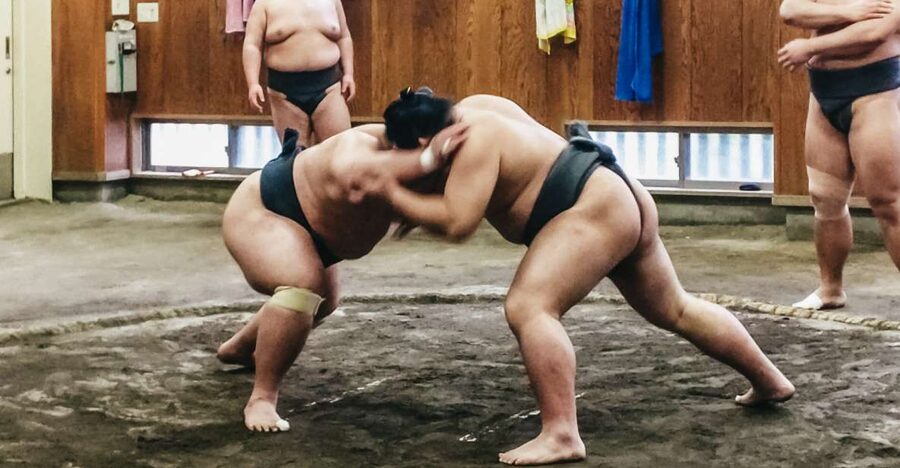
Sumo begins before the stadium fills. This Tokyo morning visit puts you inside a working sumo stable, close enough to hear wrestlers collide and watch their drills, warm-ups, and sparring. I like the rare access to active professionals, and I like that the experience ends with a group photo. The main catch is that you must sit quietly on the floor, often for much longer than the advertised one hour.
This is not a staged sumo show. It is a real practice session, and that makes the experience feel special. Still, the guide may provide little or no explanation, the meeting location arrives only a few days before the visit, and training can be shorter during tournament months.
In This Review
- Key points to know before booking
- Entering a working sumo stable in Tokyo
- What the morning training actually looks like
- Why the close distance changes the experience
- Sitting still for an hour, or possibly much longer
- Learning the rituals without much explanation
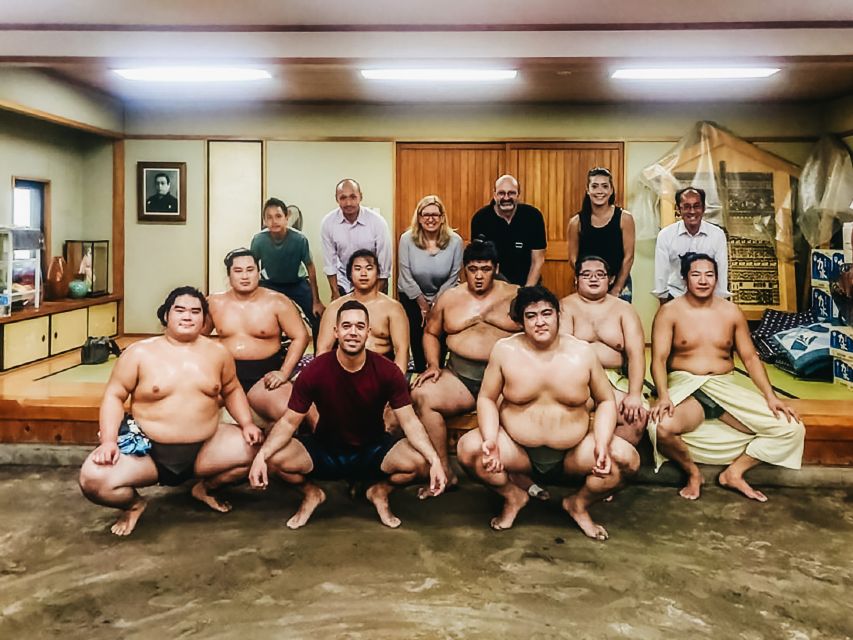
- The group photo with the wrestlers
- Timing your visit around the Tokyo tournaments
- Is $77 a fair price?
- Who will enjoy this morning most
- Booking details that can save your morning
- Should you book the Tokyo sumo morning training visit?
- FAQ
- Where is the sumo morning training visit held?
- How long does the sumo training last?
- Can I take photographs or record video?
- Do I receive a photo with the sumo wrestlers?
- Is hotel pickup available?
- What should I bring and what is prohibited?
Key points to know before booking
- You enter a real Tokyo sumo stable: This is a working training space, not a theater performance or tourist demonstration.
- The action is close and physical: You can watch stretching, ritual movements, pushing drills, and sparring from nearby.
- The schedule can change: Sessions are normally about 60 minutes, but some last 90 minutes or two hours, while tournament-period practices may last only 30 minutes.
- Silence is part of the experience: Phones must be silent, loud talking is forbidden, and flash photography is not allowed.
- Arrive early for the best view: Seating is free and may place you behind other people if you arrive late.
- The meeting details come late: The exact stable and meeting point are usually confirmed by email about three days before the visit.
Entering a working sumo stable in Tokyo
The first thing to understand is that this visit does not take place at one permanent, easy-to-find attraction. The actual stable is selected for the day, and the meeting point is confirmed by email roughly three days before your scheduled date.
The Google Maps location shown during booking may not be correct. Use the sumo stable written on your voucher and the final confirmation email, not the automatic account page. This detail matters, since one late arrival caused by an incorrect original address resulted in missed training time.
Check-in begins at the stated meeting time. If you arrive early, do not ring the doorbell or enter the building on your own. Entry is allowed only with the guide, so wait outside until the host or greeter receives you. If you have trouble finding the place, use the phone number in your confirmation email. Quick help has been available in at least one early-morning mix-up.
The guide language is English, but the amount of help can vary. Sometimes the guide mainly checks names and hands out behavior rules. That is useful for getting inside, but it may not give you the cultural background many people want.
More Sumo Experiences in Tokyo
- Tokyo: Sumo Show Experience with Chicken Hot Pot and a Photo
★ 4.8 · 6,678 reviews - Tokyo: Sumo Live Show with Photo in Shinjuku
★ 5.0 · 3,438 reviews - Tokyo: Sumo Show and Dining Experience
★ 4.8 · 2,742 reviews
What the morning training actually looks like
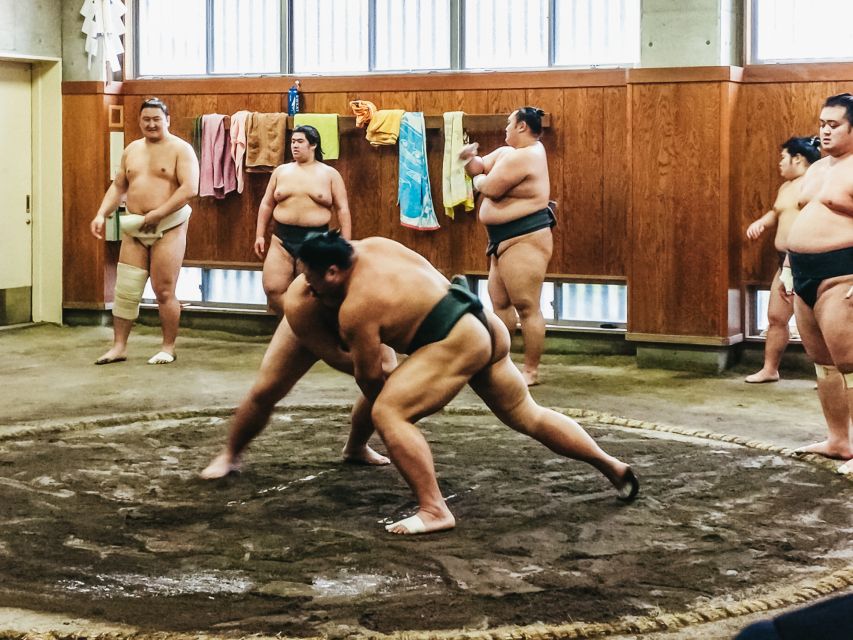
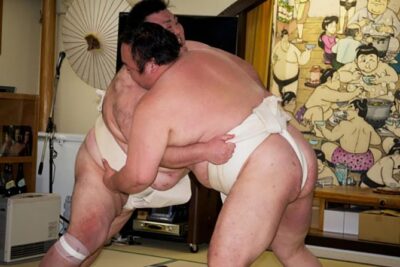
Once seated, you watch the wrestlers work through their morning practice. The routine can include warm-ups, stretching, strength drills, pushing exercises, and bouts of sparring. The most memorable moments are often not the formal contests, but the short bursts when two wrestlers drive into each other and the entire room seems to register the impact.
You are close enough to notice details that disappear from the spectator seats at a tournament. You can see the concentration in a wrestler’s face, the balance needed to stay upright, and the effort behind each movement. Sumo is not simply about size. The training shows speed, timing, footwork, control, and technique.
Some sessions feel intensely physical, with wrestlers repeatedly pushing and colliding. Others may look quieter, with more emphasis on drills and warm-up work. Do not arrive expecting every visit to include a full match. This is a practice session, and the wrestlers’ condition and training plan can change the schedule.
That uncertainty is part of the value, but it is also the main reason this visit will not suit everyone. If you want guaranteed bouts, a tournament ticket is the safer choice. If you want to see how professionals prepare, the stable visit gives you a much closer look.
Why the close distance changes the experience
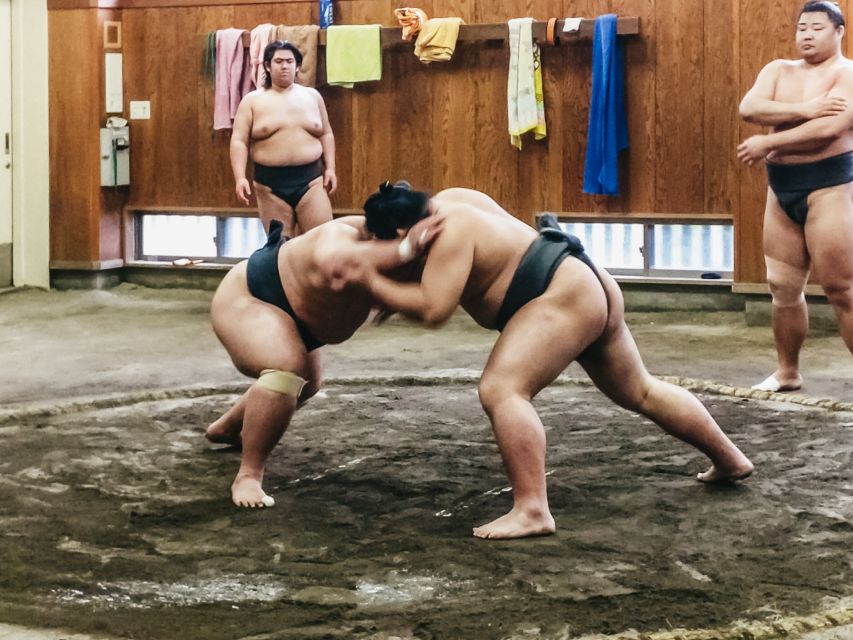
At a tournament, you see sumo as a polished public sport. Inside the stable, you see the work behind it. The sound of bodies hitting the floor, the repeated drills, and the long periods of concentration make the training feel less like entertainment and more like a demanding daily discipline.
I especially like the way the session reveals the wrestlers’ technique. From a distance, it is easy to reduce sumo to two large athletes pushing each other. From close by, you can see how quickly they move and how much balance and timing matter.
The setting also carries a clear sense of respect. You are entering a private working environment, not wandering through a museum. That is why silence, stillness, and careful behavior are not minor rules. They protect the practice and show respect to the wrestlers.
This can be difficult if you have young children who need to move around, or if you dislike sitting in one position. One family found that even children aged nine and twelve stayed focused, while another parent said a three-year-old was fascinated and received special attention during the photo. The key is knowing your group.
Sitting still for an hour, or possibly much longer
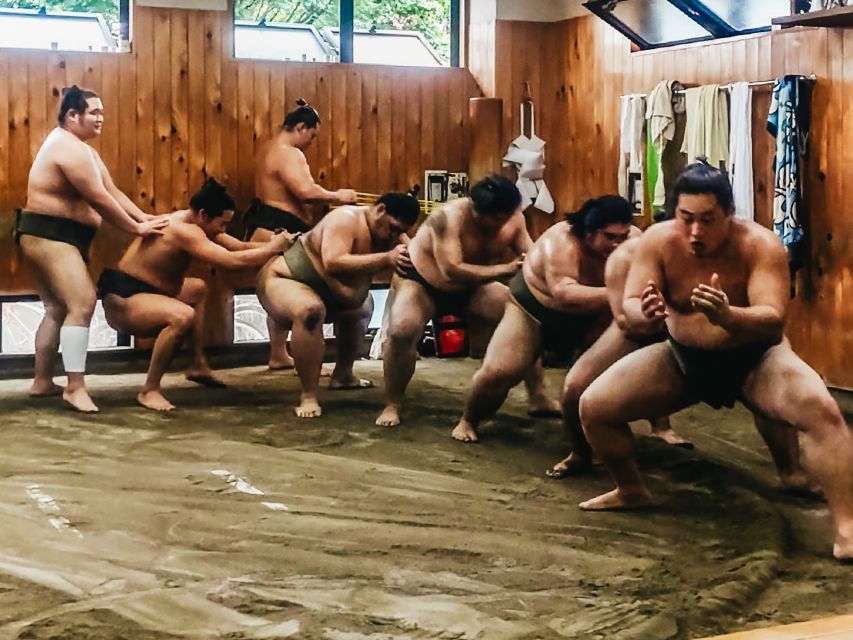
The advertised duration is one hour, and the normal training time is about 60 minutes. In practice, you should allow extra time. Several sessions have lasted 90 minutes or two hours, and one report described an even longer wait before the training finished.
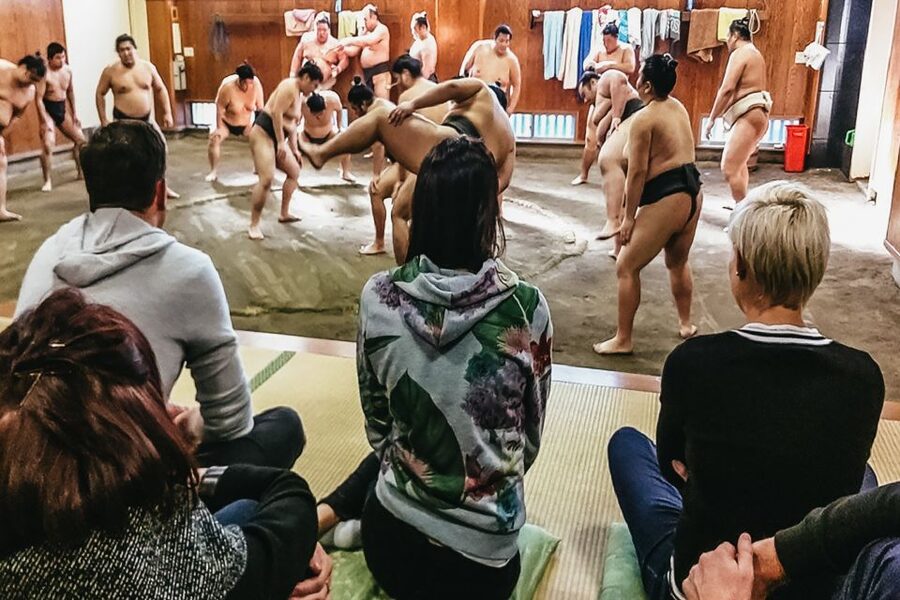
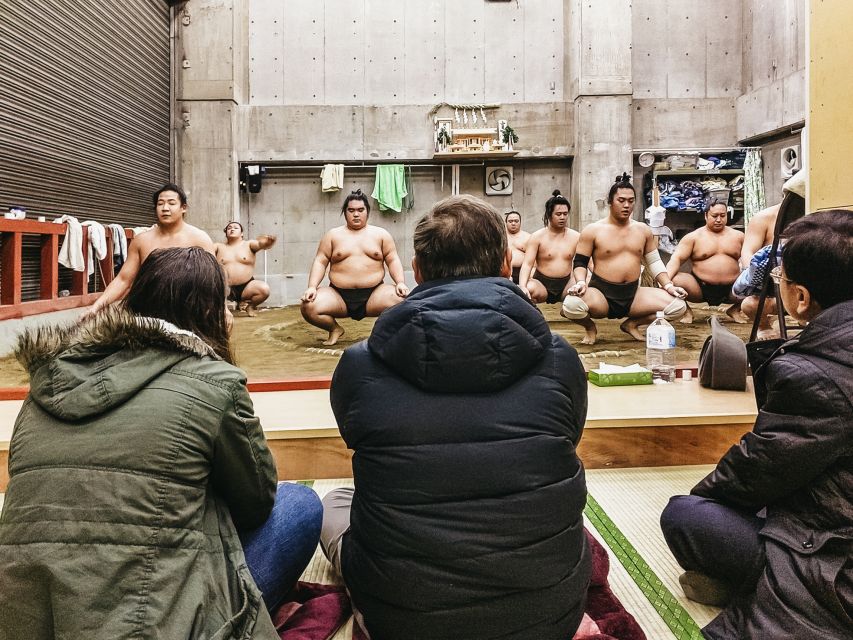
Seating is generally on the floor, and cushions or chairs may not be supplied. One person found the floor uncomfortable, while another warned that sitting for hours with limited movement was the hardest part of the visit. If you have knee, hip, or back problems, contact the operator in advance to ask about a chair or special seating. It may need to be arranged before the day.
You are expected to remain quiet and still during training. Do not eat or drink inside, and do not expect to take a casual bathroom break. Keep your feet positioned appropriately and avoid leaning against walls or making movements that distract from the practice.
Arriving early helps in two ways. It gives you time to find the stable without rushing, and it improves your chance of sitting near the front. Seating is free, so a late arrival may leave you behind other people with a partly blocked view. The stable can also feel crowded, depending on the group size and layout.
If you leave early, you will not receive the group photo. That rule gives you a practical choice: stay for the full session and photo, or leave when your legs have had enough.
A completely different kind of day out:
- Tokyo Disney Resort – Tokyo Disneyland & Tokyo DisneySea Park Tickets
★ 4.8 · 99,488 reviews - SHIBUYA SKY Ticket
★ 4.7 · 46,509 reviews - JR Whole Japan Rail Pass
★ 4.8 · 29,150 reviews - Mt Fuji and Hakone 1-Day Bus Tour Return by Bullet Train
★ 5.0 · 26,383 reviews
Learning the rituals without much explanation
The experience is strongest as a visual lesson. You see the drills and rituals directly, but the educational side may be thin. Several people wanted a short explanation of the movements, the training system, food, the wrestlers’ path into professional sumo, and the meaning of gestures and routines.
I recommend reading a little about sumo before you go. Even a basic understanding of the dohyo, warm-up movements, practice bouts, and the general structure of a training morning will help you recognize what you are seeing.
Do not assume the guide will narrate the session. English ability and guide involvement can vary, and some people have reported almost no interaction after check-in. Others found communication helpful, especially when they had trouble locating the meeting point.
This is an important distinction in the value calculation. If you want a guided cultural lesson, you may find the visit under-explained. If you are happy to watch quietly and work out some of the details through observation, the lack of commentary becomes less important.
The group photo with the wrestlers
At the end, you can take a group picture with the sumo wrestlers. It is a simple extra, but it gives the morning a clear finish and provides a keepsake from an unusual experience.
The photo is not guaranteed if you leave before training ends. You should also follow the stable’s instructions about where to stand and when to take pictures. Flash photography is forbidden, and video recording requires prior permission. In some sessions, video is not allowed at all.
Do not wear a hat or sunglasses inside. Food, drinks, luggage, and large bags are also not permitted. Smoking indoors is forbidden, and your phone must remain on silent. Bring a face mask or protective covering, as this is listed among the required items.
The photo opportunity should not be the main reason you book. The training is the experience. The picture works best as a small reward after you have respected the stable’s rules and stayed through the session.
Timing your visit around the Tokyo tournaments
Tokyo hosts Grand Sumo Tournaments in January, May, and September. During those months, morning practice sessions may last only about 30 minutes. There is no refund when the shorter schedule applies.
That timing can change the value of the booking. A short visit still lets you see professional wrestlers up close and usually includes the photo, but it gives you less training time for the same $77 price. One person who visited during the September tournament saw mainly a 30 to 40 minute warm-up and felt a tournament ticket offered better value for watching actual competition.
If your main goal is to see live bouts, plan around getting a tournament ticket instead. If your priority is close access to the wrestlers and the stable environment, a tournament-period training visit can still be worthwhile.
Outside the tournament months, allow for a longer session than the one-hour description suggests. The schedule may depend on the wrestlers’ condition, and practice can continue well past the point when you expected to leave.
Is $77 a fair price?
At $77 per person, this is not a cheap sightseeing stop. You are paying for access to a setting that is normally closed to casual visitors, along with an English-language arrival service and a group photo.
The value is strongest if you care about authentic sport and cultural access. A tournament lets you see official competition, but the athletes are farther away and the event offers a different kind of spectacle. This stable visit lets you observe the preparation, effort, and repeated practice that support the public performances.
The value is weaker if you want a polished tour with constant commentary, comfortable seats, or a guaranteed series of matches. You may spend much of the time sitting on the floor with little explanation. During January, May, and September, the shorter practice period makes the price harder to justify unless close-up access is your top priority.
An optional one-way hotel transfer is available for an added cost. It applies only within Tokyo’s 23 wards, carries a maximum of four passengers, and uses Japanese-speaking drivers who do not speak English. Hotels without a front desk cannot be used for pickup. Send the hotel name, check-in date, and booking name by email after reserving, and watch for the pickup time.
The transfer may help with an early start, but do not treat it as a fully guided ride. If you miss the pickup by more than 10 minutes, it is considered a waiver.
Who will enjoy this morning most
I would choose this for someone who wants a close look at traditional Japanese sport and can sit quietly for an unpredictable length of time. It is especially good for visitors who have already seen Tokyo’s major sights and want something less polished and more connected to daily practice.
It can also work well for families with children who can follow strict rules. The physical action holds attention, but children must stay quiet, remain seated, and avoid food, drinks, and movement during training.
I would think twice if you have limited mobility, chronic knee pain, or difficulty sitting on the floor. Ask about a chair before booking, since seating support may need advance planning.
You should also reconsider it if you want a detailed English lecture. The experience provides access first and interpretation second. A little preparation on your part will make the movements and rituals easier to understand.
Booking details that can save your morning
Free cancellation is available up to 11 days before the experience for a full refund. After that point, the supplied booking terms do not promise the same flexibility.
Keep checking both your voucher and the separate confirmation email. The exact meeting time, stable, and directions are normally sent about three days before the visit, and specific stable requests cannot be accommodated. All participating stables are within Tokyo.
The final email is more important than the map shown at checkout. Save the contact number, plan extra time for the journey, and arrive at the exact meeting point rather than going directly to a door on your own.
Wear clothing that lets you sit comfortably, bring only what you need, and leave large bags at your accommodation. Since the location varies, do not build a tightly timed morning around a fixed train arrival or another reservation immediately afterward.
Should you book the Tokyo sumo morning training visit?
Book it if you want to hear and see professional wrestlers train at close range, and if you value access over comfort. The force of the drills, the wrestlers’ balance and speed, and the chance to enter a real stable make this one of Tokyo’s more unusual cultural activities.
Skip it if you need guaranteed matches, a comfortable chair, or a guide who explains every movement. The variable schedule and limited commentary are real drawbacks, especially during the January, May, and September tournament periods.
For most people who prepare properly, the experience earns its strong 4.4 rating. Arrive early, read the final meeting instructions, expect silence and floor seating, and treat the session as genuine training rather than a show. That mindset gives you the best chance of finding the $77 worthwhile.
FAQ
Where is the sumo morning training visit held?
The stable and meeting point vary by day. The actual location is normally confirmed by email about three days before the scheduled date. Use the stable listed on your voucher and the final confirmation email, not the different location shown on Google Maps.
How long does the sumo training last?
The activity is listed as one hour, and training normally lasts about 60 minutes. Some sessions may last 90 minutes or two hours. During Tokyo Grand Sumo Tournament months in January, May, and September, training may last only about 30 minutes.
Can I take photographs or record video?
Flash photography is not allowed. Video can be taken only with prior permission, and video recording may not be permitted during your session. Follow the instructions given inside the stable.
Do I receive a photo with the sumo wrestlers?
A group picture is included. You must stay until the end of the training to receive it, since leaving early means you will not receive the group photo.
Is hotel pickup available?
An optional one-way hotel transfer is available for hotels within Tokyo’s 23 wards. Pickup is limited to four passengers, drivers speak Japanese rather than English, and hotels without a front desk are not accepted.
What should I bring and what is prohibited?
Bring a face mask or protective covering. Hats, sunglasses, food, drinks, luggage, and large bags are not allowed. Smoking indoors is forbidden, and phones must be switched to silent mode.
Just added in Tokyo
- Tokyo Cute Bento Cooking Class – Make a Kawaii Character Lunchbox★ 5.0 · 126 reviews
- Japanese Home Cooking Class & Walk in Todoroki Temple Tokyo★ 5.0 · 88 reviews
- A One-of-a-Kind Sushi Experience in a Special Place of Japan★ 5.0 · 15 reviews
- Japan Tokyo Tower Observatory Deck E-Ticket★ 4.0 · 34 reviews
- Catch a Baseball Game in Tokyo with a Local – Tickets Included★ 5.0 · 24 reviews
- JDM Experience with Fast&Furious RX-7 (English speaking Driver)★ 5.0 · 57 reviews
- Tokyo Private Day Tour by Car with English speaking Driver Guide★ 4.0 · 29 reviews
- Japan Classic 10 Day – One Life Adventures★ 5.0 · 129 reviews
Sumo Experiences, compared.
Sumo Show Experience with Chicken Hot Pot and a Photo
Read our review →
Tokyo Shinjuku Sumo Show & Experience with Photo
Read our review →
Asakusa Sumo Club Sumo Show Admission with Chankonabe in Tokyo
Read our review →
Tokyo Ginza Sumo Experience: Performance vs Pure Practice
Read our review →Browse the lists this tour appears in