
Reviewed · SUMO EXPERIENCES
Tokyo: Sumo Morning Practice Tour at Sumida City
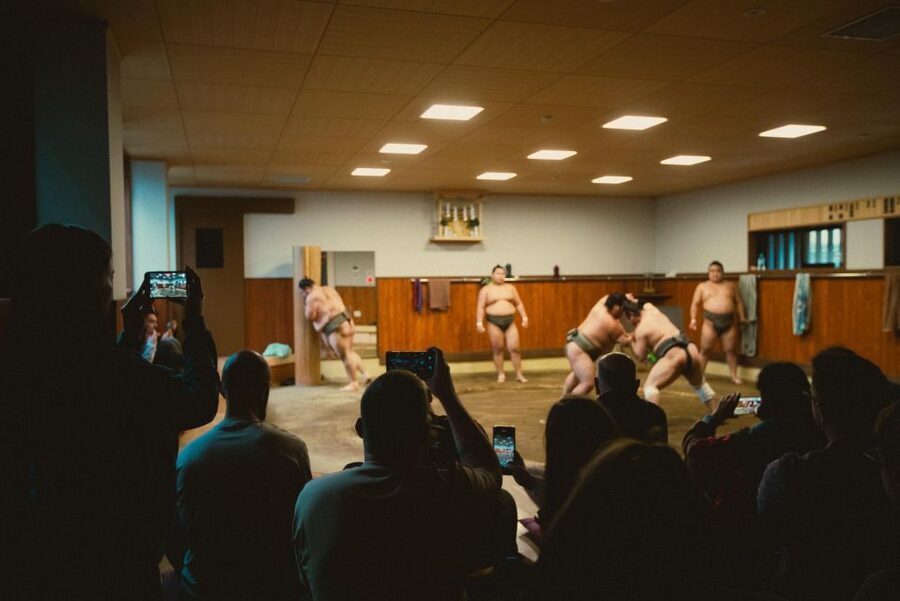
Sumo practice is not a staged show. This two-hour morning visit takes you inside a working stable in Sumida, where you sit close to wrestlers as they train, stretch, grapple, and repeat demanding drills. I like the close view of real practice and the chance to ask the stable master questions afterward. The main drawback is simple: you sit on the floor for about 90 minutes, with no chairs and no toilet break.
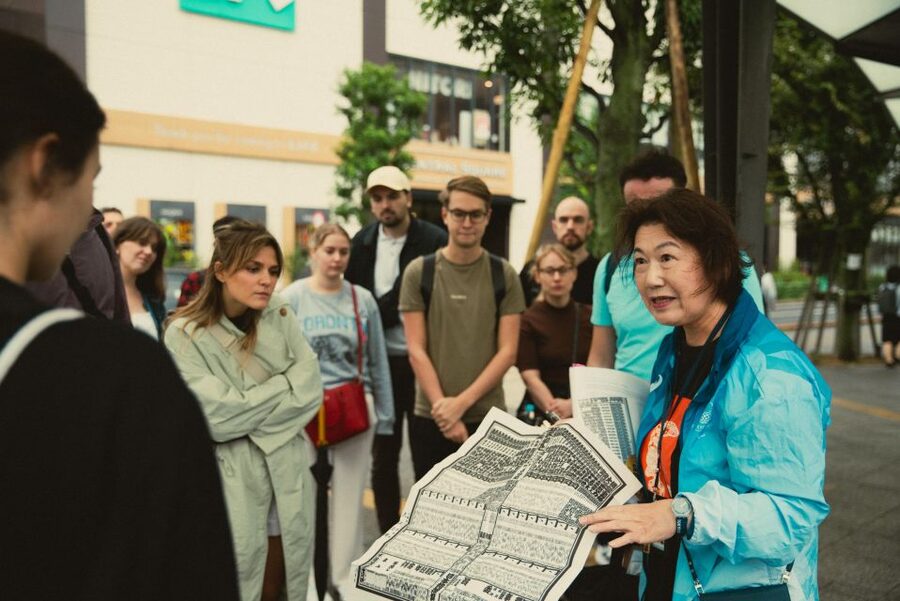
You meet at Oshiage Station near Tokyo Skytree at 7:15 a.m., then walk 15 to 20 minutes to the stable. I also like the guide’s role here. Guides such as Tadashi, Kiyomi, Yoko, Yukiko, and Oku have helped visitors understand the rules, rituals, and quiet etiquette. Still, guide quality and group size can affect how clearly you hear the explanations.
In This Review
- Key details before you book
- Why a Sumo Stable Is Different From a Tournament
- Meeting at Oshiage Station at 7:15 a.m.
- Entering the Stable and Settling on the Floor
- Watching 90 Minutes of Sumo Training
- The Guide’s Role: Rituals, Rules, and Context
- Meeting the Stable Master After Practice
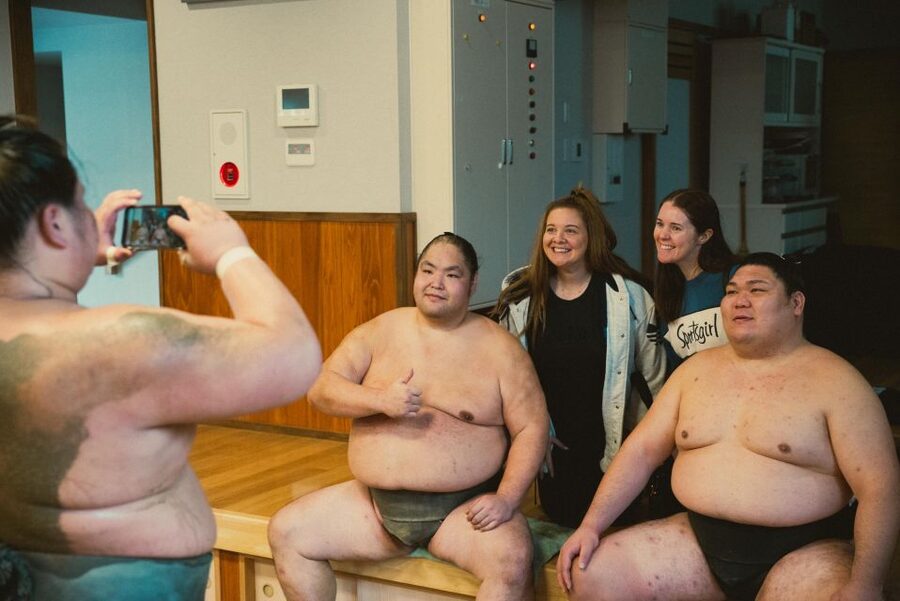
- Photos With the Wrestlers Are a Bonus
- Is $116 a Fair Price?
- Best Time to Plan This Morning
- Who Will Enjoy This Most?
- Should You Book This Sumo Morning Tour?
- FAQ
- Where does the tour meet?
- What time should I arrive?
- How long does the tour last?
- How far is the stable from the station?
- Can I use the restroom during practice?
- Are chairs provided?
- Can children join the tour?
- Can I take photos or videos?
- Is the tour held in March, July, or November?
- What is included in the price?
- What happens if I arrive late?
- Can I cancel for a refund?
Key details before you book
- Training begins early: Meet at 7:15 a.m. at Oshiage Station, with the stable practice starting around 7:30.
- You sit close to the ring: The view can be excellent, but seating may change and some places are less comfortable than others.
- The practice is serious: You are watching athletes train, not attending a performance arranged for tourists.
- The stable master answers questions: The post-practice discussion is one of the most valuable parts of the morning.
- Photos may be possible: You might take a picture with the wrestlers, but photography must be quiet and without flash or shutter sounds.
- The calendar matters: No morning practice tours are held in March, July, or November because Grand Sumo tournaments take place outside Tokyo.
Why a Sumo Stable Is Different From a Tournament
A Tokyo sumo tournament gives you the excitement of official bouts, crowds, ceremony, and a full day of competition. This tour gives you something else: a look at the work behind the sport.
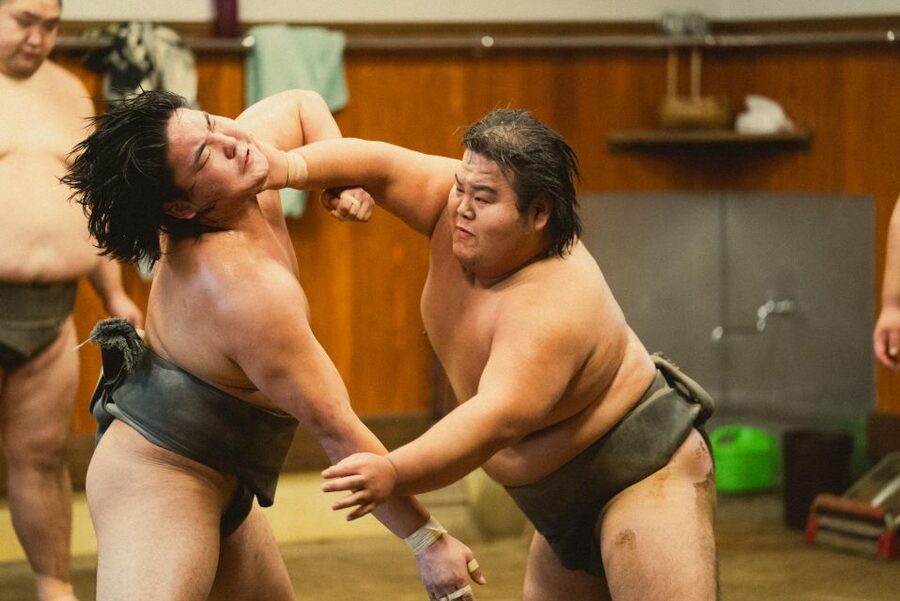
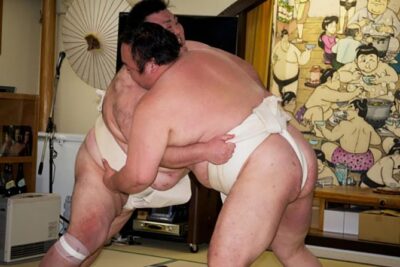
Inside the stable, the wrestlers train in a small, focused setting. You see repeated movements rather than a polished contest. They may stretch, practice footwork, perform basic exercises, and face one another in intense bouts. The physical contrast is striking. These are very large men, yet they show surprising flexibility, balance, and speed.
I find that this format can teach you more about sumo culture than simply watching a match. You notice the silence, discipline, concentration, and respect built into the routine. The practice is not performed for your entertainment, so you must watch quietly and avoid treating the stable like a photo attraction.
That distinction matters. The most satisfying part of the morning is often the feeling that you are observing a private working tradition, not a theater production.
More Sumo Experiences in Tokyo
- Tokyo: Sumo Show Experience with Chicken Hot Pot and a Photo
★ 4.8 · 6,678 reviews - Tokyo: Sumo Live Show with Photo in Shinjuku
★ 5.0 · 3,438 reviews - Tokyo: Sumo Show and Dining Experience
★ 4.8 · 2,742 reviews
Meeting at Oshiage Station at 7:15 a.m.
The meeting point is the ground floor outside Exit A1 of Oshiage Station, also called Tokyo Metro Oshiage, Skytree Mae, and Toei-Asakusa Line Oshiage Station. The tour begins at 7:30 a.m., but you should arrive early enough to find the correct exit without rushing.
Tokyo Skytree Town is nearby, and the station area is easy to recognize once you are above ground. The group then walks about 15 to 20 minutes to the stable. That walk is part of the practical planning, especially in summer heat or rain. One visitor found the August walk tiring, and you should prepare for it with comfortable shoes and a small towel if rain is expected.
The tour provider asks you to use the restroom before meeting the group. You cannot leave for a toilet break during practice. This is not a small technical point. Once the training starts, you are expected to remain seated and quiet.
If you are late, contact the provider before going to the stable. You may receive the address and walk there on your own, but you must wait outside for the guide. Do not ring the bell or enter by yourself, since that could interrupt the wrestlers’ concentration.
Entering the Stable and Settling on the Floor
At the stable, you remove your shoes before entering. Wear shoes that are easy to take off and put on, and choose clean, comfortable socks. The floor seating is traditional but not forgiving.
There are no chairs. You will sit cross-legged on the ground for roughly an hour and a half, although you may need to adjust your position. One person in a group found the sitting difficult, and another noted that some visitors may need to kneel or stand as viewpoints change.
This arrangement is worth considering before you pay $116. If floor sitting causes pain or you have a mobility impairment, this is probably not the right activity. The tour is also not suitable for children under five. Children aged six and older may attend, but they must remain quiet and still. If a child moves around, makes noise, or cannot watch respectfully, the family may be asked to leave the stable.
The room can also feel crowded if another group or visiting team has priority seating. Some people may get a front position while others begin farther back. A group was moved around during one visit so everyone could see, but you should not assume every seat will provide the same view.
Watching 90 Minutes of Sumo Training
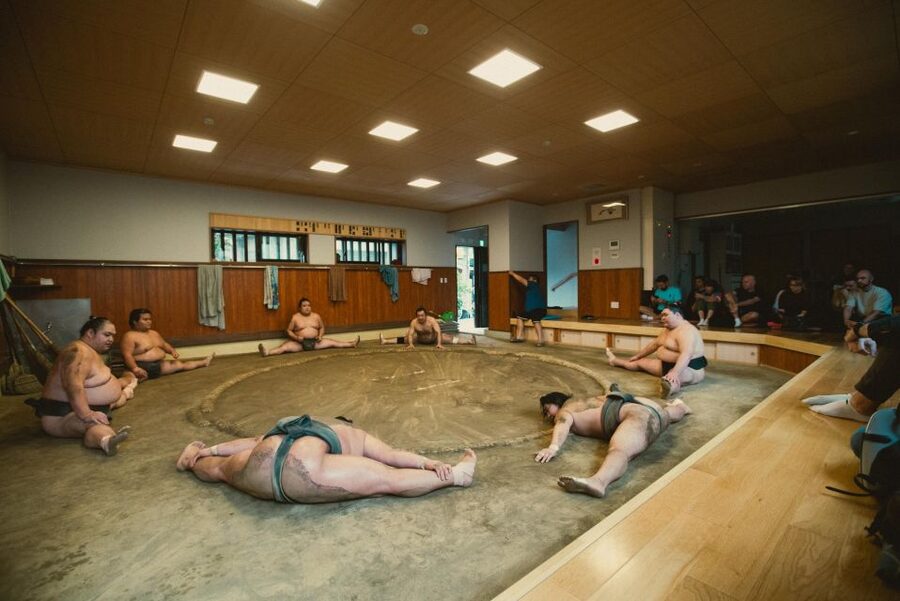
The practice itself is the reason to book. You sit close enough to notice the force of each movement, the sound of feet on the floor, and the concentration before a bout begins.
The wrestlers are not simply pushing one another around. You can watch how they prepare their bodies, repeat techniques, and test strength against different opponents. Several people were especially impressed by the combination of size and agility. That is easy to understand once you see the wrestlers move at close range.
The exact intensity can vary. During a tournament period, training may be lighter, and one visit included practice without a full bout. The people you see may also be trainees rather than the sport’s best-known elite competitors. That does not make the session uninteresting, but it sets a fair expectation. You are seeing the daily work of a sumo stable, not necessarily famous championship wrestlers.
Some visitors watched seven wrestlers train. The number of athletes and the sequence of practice can change, so do not expect a fixed show with a guaranteed cast.
Your job is to observe quietly. Flash photography is forbidden, and photos or videos must not include flash or shutter sounds. You are also told not to upload the images to social media. Sunglasses, hats, food, drinks, baby strollers, luggage, and large bags are not allowed.
A completely different kind of day out:
- Tokyo Disney Resort – Tokyo Disneyland & Tokyo DisneySea Park Tickets
★ 4.8 · 99,488 reviews - SHIBUYA SKY Ticket
★ 4.7 · 46,509 reviews - JR Whole Japan Rail Pass
★ 4.8 · 29,150 reviews - Mt Fuji and Hakone 1-Day Bus Tour Return by Bullet Train
★ 5.0 · 26,383 reviews
The Guide’s Role: Rituals, Rules, and Context
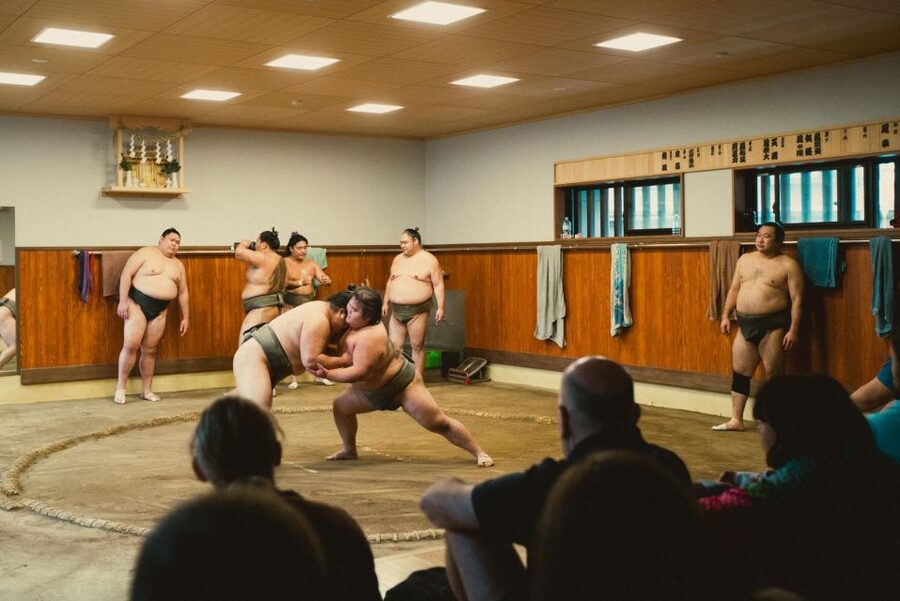
The English-speaking guide helps you understand what you are seeing. Without explanation, a sumo practice can look like a series of repetitive exercises. With context, the small gestures and pauses become easier to read.
The tour covers the history, rules, and rituals of sumo, along with details about the wrestlers’ daily life. It also explains the link between sumo and religion, a connection that surprised some visitors. A guide may describe what happens at each stage and explain the behavior expected from the group before you enter.
Guide quality has a real effect on this tour. Yoko was praised for her clear explanations and passion for sumo. Yukiko helped visitors know where to go and what would happen next. Yuriko was also helpful after the practice, offering directions for the rest of the morning. Tadashi went out of his way to check whether the Sumo Museum was open when a visitor asked for help afterward.
Not every guide speaks loudly enough for every group. One person had difficulty hearing in a larger group, and another felt the basic history could have been explained more fully. If you are placed toward the back, stay alert during the initial briefing and ask the guide to repeat anything you miss.
Meeting the Stable Master After Practice
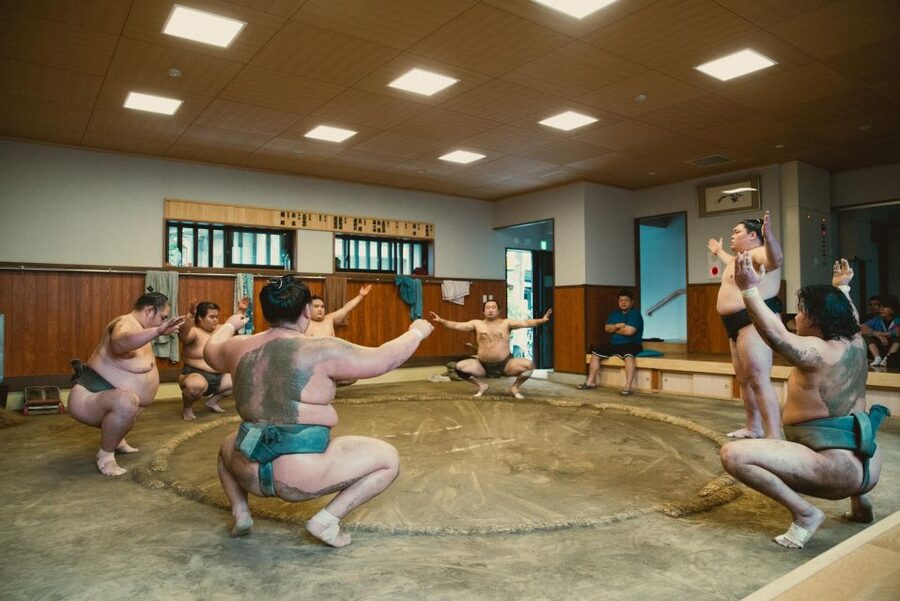
The question-and-answer period is a major reason this tour offers more than a quick look through a doorway. After training, you may ask the stable master about the sport, the wrestlers, and life inside the stable.
The stable master has been described as welcoming and generous with time. This is where you can ask about the techniques you just saw, the wrestlers’ routines, or the traditions that shape the stable. You may also learn that one of the wrestlers you watched is well known in the sumo world.
The order can vary, but one visit described about 90 minutes of training followed by roughly 30 minutes for questions and pictures. Another person felt the practice ended earlier than advertised, so I would treat the two-hour schedule as an overall guide rather than a promise that every part will last exactly the same amount of time.
The conversation is especially useful if you arrive with a few questions ready. Ask about the training routine, what makes a wrestler successful, or how the stable prepares for competitions. The guide can help translate the exchange into clear English.
Photos With the Wrestlers Are a Bonus
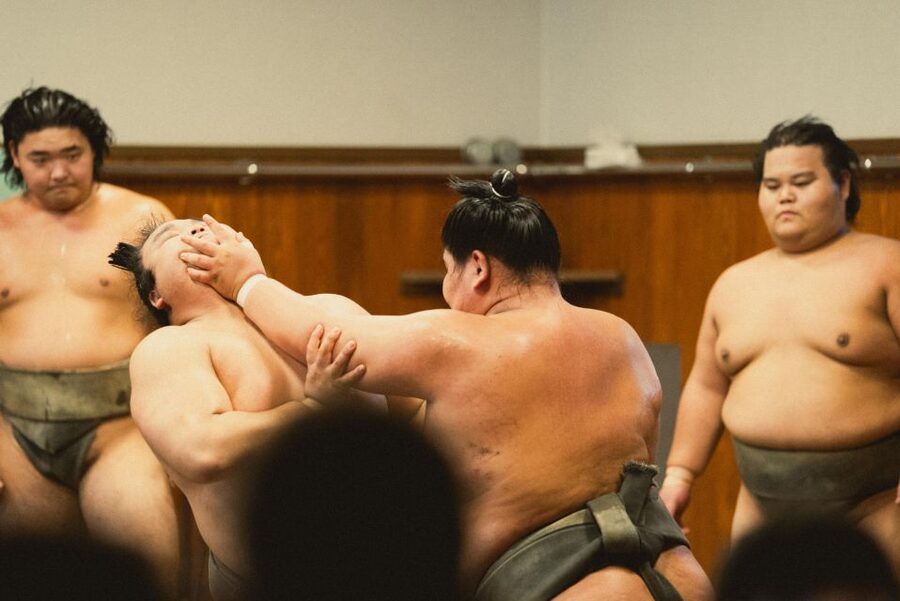
A picture with the wrestlers may be possible after practice. Several people were able to take souvenir photos, and the wrestlers gave friendly farewells as the group left.
Do not book this tour solely for the photo. It depends on the stable’s schedule, the available time, and what the wrestlers can accommodate that morning. The photo works best as a quiet bonus after you have respected the practice.
Keep your camera ready but discreet. Flash and artificial shutter sounds are not allowed, and the images cannot be uploaded to social media. Follow the guide’s instructions rather than assuming you can photograph freely.
Is $116 a Fair Price?
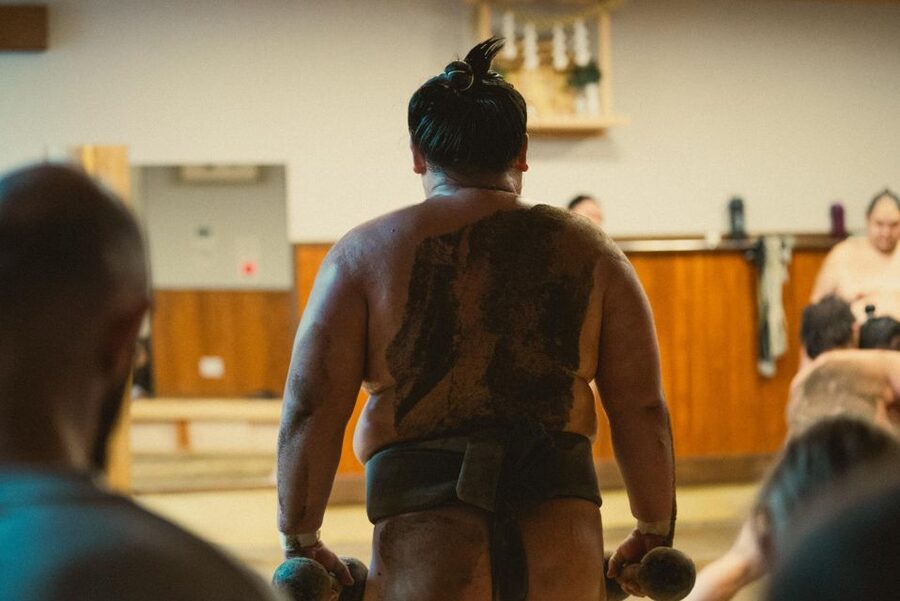
At $116 per person, this is not a cheap morning activity. You are paying for an English-speaking guide, access to the stable, and the chance to observe training from inside a working sumo environment.
The value depends on what you want. If your goal is the least expensive way to see sumo, this price may feel high, especially if the practice is lighter or your seat is not ideal. One person specifically considered the tour overpriced, and another felt the cost was steep for a shorter training session.
I think the price makes more sense if you value access and explanation. You cannot simply walk into a stable on your own. You also need someone to explain the customs, organize the visit, translate questions, and make sure you do not disrupt the wrestlers. For someone curious about Japanese culture and the life behind the sport, that access is the main purchase.
The rating of 4.8 from 308 reviews reflects how strongly the experience has worked for most people. Even so, your value calculation should include the hard floor, early start, possible crowding, and the fact that practice conditions can change.
Best Time to Plan This Morning
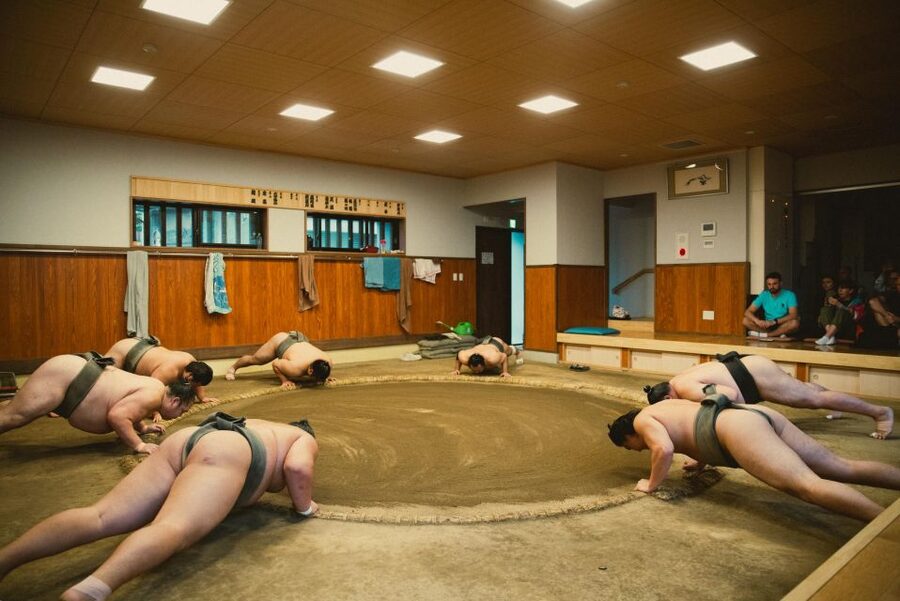
The tour is not held in March, July, or November because Grand Sumo tournaments take place outside Tokyo during those months. If you are visiting in one of those months, check the schedule carefully before building your plans around this activity.
Practice dates are usually known one to two months ahead, and reservations open after the schedule is set. If your Tokyo dates are fixed, check about two months before arrival rather than waiting until the last week.
The early start works well with a full sightseeing day. You return to the same Oshiage area, close to Tokyo Skytree Town, so you can continue exploring afterward. It also means you should plan your transport carefully and leave enough time to find Exit A1.
Who Will Enjoy This Most?
I would recommend this tour to you if you have an interest in Japanese traditions, sports, religion, or daily life. You do not need to know the rules before arriving. The guide’s explanations and the stable master’s questions help you follow the action.
It is also a good choice if you prefer a small cultural encounter to a standard sightseeing stop. The practice feels personal, quiet, and physical. You see the wrestlers close enough to appreciate the effort in a way television cannot provide.
I would hesitate to recommend it if you need comfortable seating, a flexible schedule, or frequent bathroom access. It is also a poor match for a young child who cannot remain silent for 90 minutes. Anyone expecting a tournament atmosphere or a guaranteed appearance by famous wrestlers may leave disappointed.
Should You Book This Sumo Morning Tour?
Book it if you can sit on the floor, wake early, follow strict etiquette, and accept that the practice is genuine rather than staged. The strongest parts are the close view, the stable master’s question period, and the chance to see the discipline behind a sport many people know only from television.
Skip it if mobility, comfort, or a rigid sightseeing timetable matters more to you than access. For the right visitor, this is one of Tokyo’s more memorable cultural activities, and the $116 cost is easier to justify because it opens a door you could not normally enter alone.
FAQ
Where does the tour meet?
Meet at the ground floor of Exit A1 at Oshiage Station, also called Tokyo Metro Oshiage, Skytree Mae, and Toei-Asakusa Line Oshiage Station.
What time should I arrive?
The meeting time is 7:15 a.m. The tour starts at 7:30 a.m.
How long does the tour last?
The stated duration is two hours. About 15 to 20 minutes of the route is the walk from the station to the sumo stable.
How far is the stable from the station?
The walk from the meeting point to the stable takes about 15 to 20 minutes.
Can I use the restroom during practice?
No. You should use the restroom before joining because you cannot go to the toilet during the practice.
Are chairs provided?
No. There are no chairs in the stable, and you should be prepared to sit cross-legged on the floor for about 1.5 hours.
Can children join the tour?
The minimum age is six. Children must watch quietly and remain still, or they may be asked to leave the stable.
Can I take photos or videos?
Photos and videos are allowed without flash or shutter sounds. You cannot upload them to social media.
Is the tour held in March, July, or November?
No. Morning practice tours are not held in those months because Grand Sumo tournaments take place outside Tokyo.
What is included in the price?
The price includes an English-speaking guide and the entrance fee to the sumo stable. Food, drinks, and hotel transportation are not included.
What happens if I arrive late?
Contact the activity provider. You may be sent the stable’s address, but you must wait outside for the guide. Do not enter alone or ring the doorbell.
Can I cancel for a refund?
You can cancel up to two days in advance for a full refund.
Just added in Tokyo
- A One-of-a-Kind Sushi Experience in a Special Place of Japan★ 5.0 · 15 reviews
- Tokyo Cute Bento Cooking Class – Make a Kawaii Character Lunchbox★ 5.0 · 126 reviews
- Japanese Home Cooking Class & Walk in Todoroki Temple Tokyo★ 5.0 · 88 reviews
- Japan Tokyo Tower Observatory Deck E-Ticket★ 4.0 · 34 reviews
- Catch a Baseball Game in Tokyo with a Local – Tickets Included★ 5.0 · 24 reviews
- Japan Classic 10 Day – One Life Adventures★ 5.0 · 129 reviews
- JDM Experience with Fast&Furious RX-7 (English speaking Driver)★ 5.0 · 57 reviews
- Tokyo Private Day Tour by Car with English speaking Driver Guide★ 4.0 · 29 reviews
Sumo Experiences, compared.
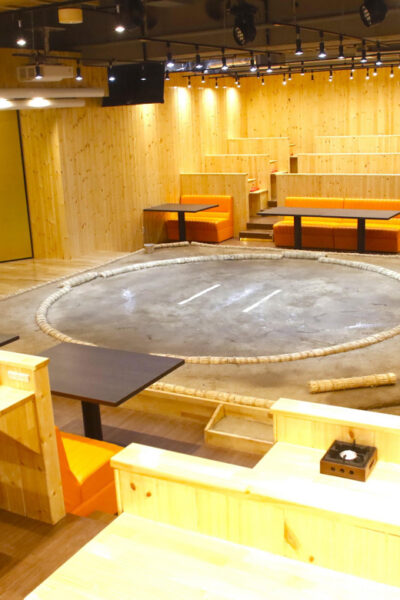
Sumo Show Experience with Chicken Hot Pot and a Photo
Read our review →
Tokyo Shinjuku Sumo Show & Experience with Photo
Read our review →
Asakusa Sumo Club Sumo Show Admission with Chankonabe in Tokyo
Read our review →
Tokyo Ginza Sumo Experience: Performance vs Pure Practice
Read our review →Browse the lists this tour appears in