
Reviewed · SUMO EXPERIENCES
Tokyo: Sumo Morning Practice Viewing Tour
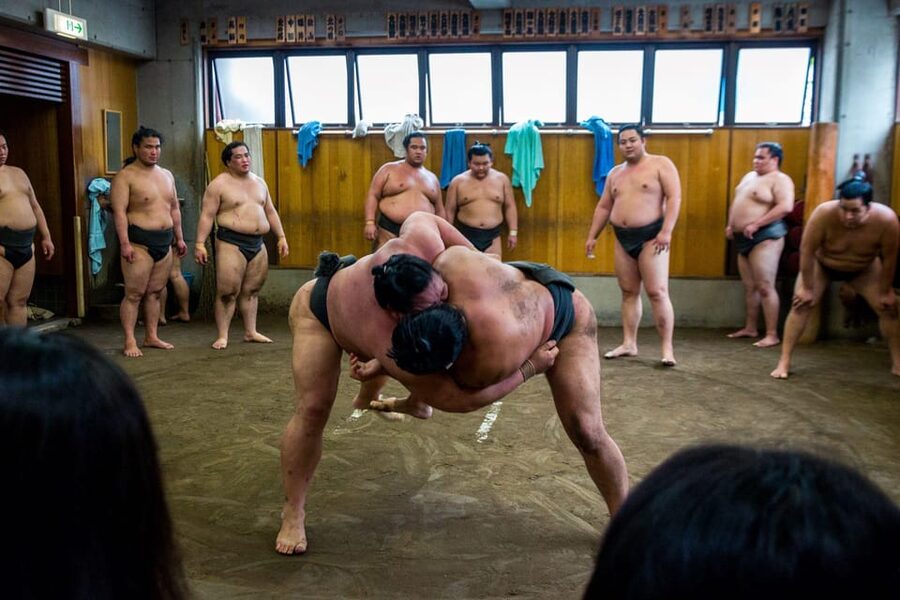
Sumo is best understood from a few feet away. This morning visit takes you inside a working Tokyo stable, where wrestlers train rather than perform for a crowd. I especially like the close view of the training and the guide-led explanations that help you understand the rituals, drills, and rules. The chance for a photo with wrestlers, when available, adds a memorable finish.
The setting in Ryogoku, Tokyo’s sumo district, makes the experience feel grounded in daily life. You may pass other stables on the way and finish close to the National Sumo Arena. The main consideration is that you must sit quietly and remain until practice ends, usually sometime between 9:00 and 10:00 AM.
This is not a flashy dinner show. It is a quiet visit to a place of work, with real athletes training hard. The tour costs about $81 per person, which is a fair price if you value access and explanation, though it is more expensive than simply watching a tournament from a distant seat.
In This Review
- Key points before you book
- Why a stable visit beats a staged sumo show
- Meeting in Ryogoku and walking to the stable
- The briefing explains the rules that matter
- Watching practice from only a few feet away
- Meeting the stable master and wrestlers
- What the tour teaches about sumo culture
- Group size, seating, and the best viewing position
- Is $81 a fair price?
- How to fit it into a Tokyo day
- Who should book this experience
- Should you book the Tokyo sumo stable tour?
- FAQ
- How long does the sumo morning practice tour last?
- Is the sumo stable open to the general public?
- Can I take photos with the sumo wrestlers?
- Can I record video during the practice?
- Do I have to stay until the end of practice?
- Is the tour suitable for children?
- Is the tour accessible for people with mobility impairments?
Key points before you book
- Real stable access: You enter a working sumo stable where wrestlers live and train.
- Training from close range: Expect to sit only a few feet from the action, with powerful collisions and repeated drills.
- English guidance: Your guide explains sumo customs, techniques, history, and tournament preparation.
- Silence matters: You cannot stand, move around, eat, drink, use flash, or record video during practice.
- Photos are possible: Pictures with wrestlers may be offered after training, depending on the day.
- Ryogoku location: The tour fits well with the National Sumo Arena, sumo restaurants, and nearby Asakusa plans.
Why a stable visit beats a staged sumo show
A sumo tournament is thrilling, but tickets can be difficult to secure and the best seats cost far more than a casual outing. A dinner show gives you entertainment, food, and a planned performance. This experience offers something different: a look at the work behind the spectacle.
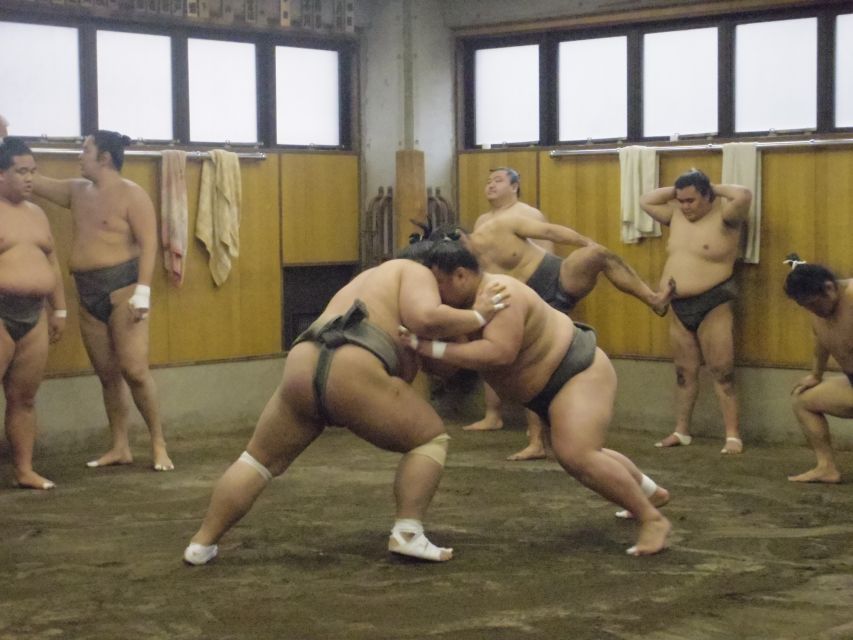
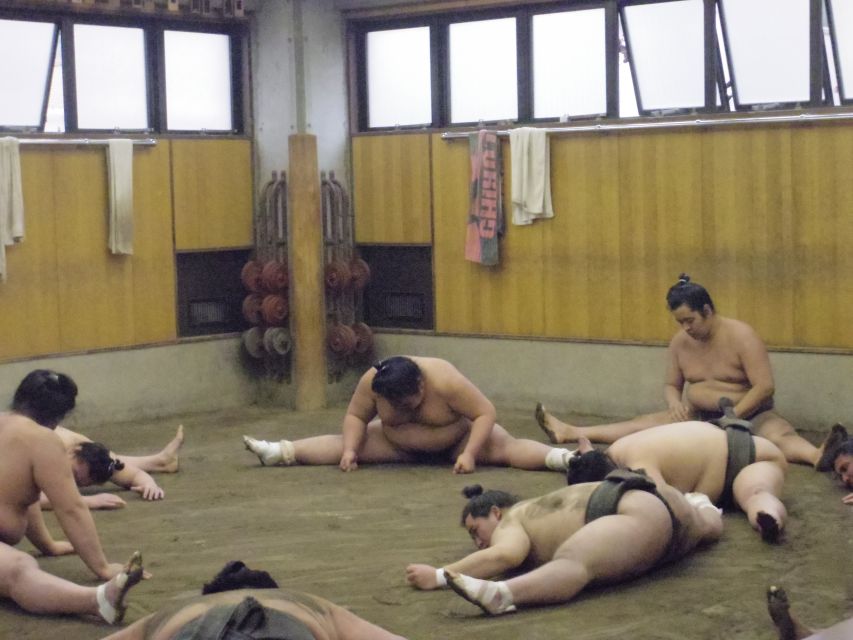
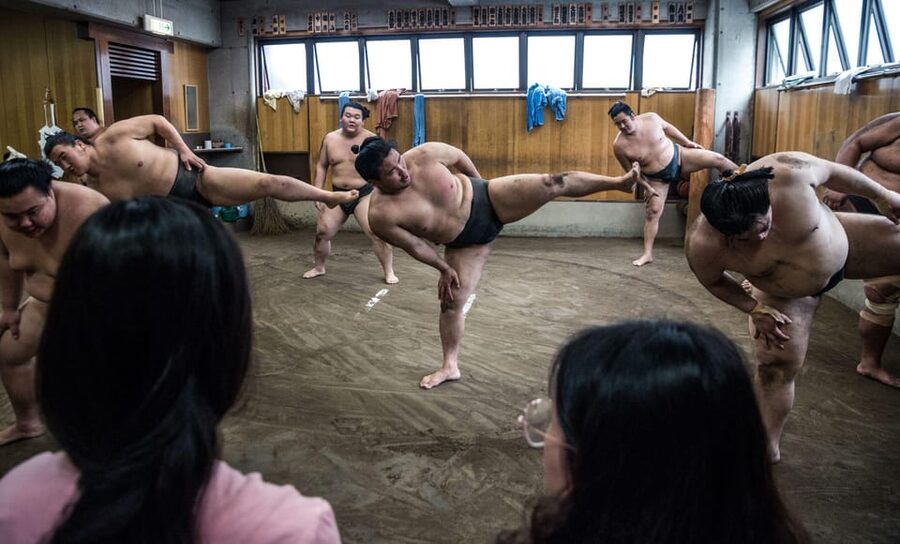
The wrestlers are not putting on a special act for the group. They are following their training routine, overseen by the stable master and coaches. You might see stretching, traditional exercises, practice bouts, and technical drills. The exact session changes with the day, so you should not expect a fixed show with a guaranteed lineup.
That uncertainty is part of the appeal. One morning, you might see a stable with a group of young wrestlers. On another, well-known competitors may be present. One visit included former yokozuna Terunofuji overseeing about 20 wrestlers, along with wrestlers such as Enho and Takerufuji. That kind of sighting cannot be promised, but it shows why the experience can feel special.
You also get a better sense of sumo as a demanding sport. On television, a bout may last only a few seconds. From the edge of the practice area, you notice the preparation, balance, footwork, explosive force, and concentration that make those few seconds possible.
More Sumo Experiences in Tokyo
- Tokyo: Sumo Show Experience with Chicken Hot Pot and a Photo
★ 4.8 · 6,678 reviews - Tokyo: Sumo Live Show with Photo in Shinjuku
★ 5.0 · 3,438 reviews - Tokyo: Sumo Show and Dining Experience
★ 4.8 · 2,742 reviews
Meeting in Ryogoku and walking to the stable
The meeting point can change depending on the option you choose, so check your booking details carefully. After meeting your English-speaking guide, the group may take a train to the stable. The walk and transport are part of the orientation, not wasted time.
Ryogoku is one of the best areas in Tokyo for making sense of sumo. The National Sumo Arena is nearby, and the streets include several stables and restaurants connected with the sport. Guides such as Yuko, Noriko, Oku San, Kaz, Mako, Taku, and Nobu have been praised for explaining the neighborhood and keeping groups together on the way.
Allow extra time to find the meeting point. One person found the exact location hard to identify, even after arriving early. The meeting spot can be less obvious than a major station entrance, so do not cut it close.
The walk itself may take around 15 minutes, and the stable can be less than 10 minutes from the National Sumo Arena, depending on the route and location. Some people found the guide’s walking pace a little slow, but that can help if you want local context and clear instructions before entering.
The briefing explains the rules that matter
Before practice, the guide gives you an introduction to sumo. You learn about the sport’s connection to Shinto beliefs, the basic aim of forcing an opponent out of the ring or making any part of the body touch the ground, and the ranking system that gives the athletes their goals.
This briefing is useful even if you already know the basics. Sumo has customs that are easy to miss when you watch a tournament from the stands. Your guide may also explain the names of the wrestlers, the meaning of particular exercises, and how the stable prepares for the six annual tournaments.
The rules for spectators are strict because you are entering a workplace. Dress modestly. Turn your phone to silent. Do not wear a hat or sunglasses, and do not bring food or drinks into the stable. Flash photography and video recording are not allowed.
The most important rule is to stay seated, quiet, and still. You cannot leave during practice and return later. Once you leave the stable, there is no re-entry. If you have a train, lunch reservation, or another booking afterward, allow a generous buffer.
Watching practice from only a few feet away
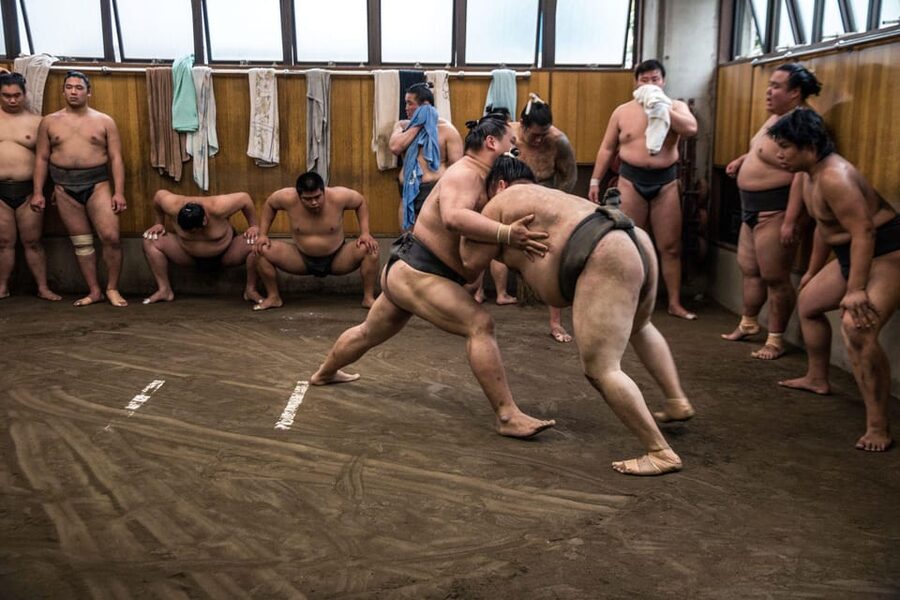
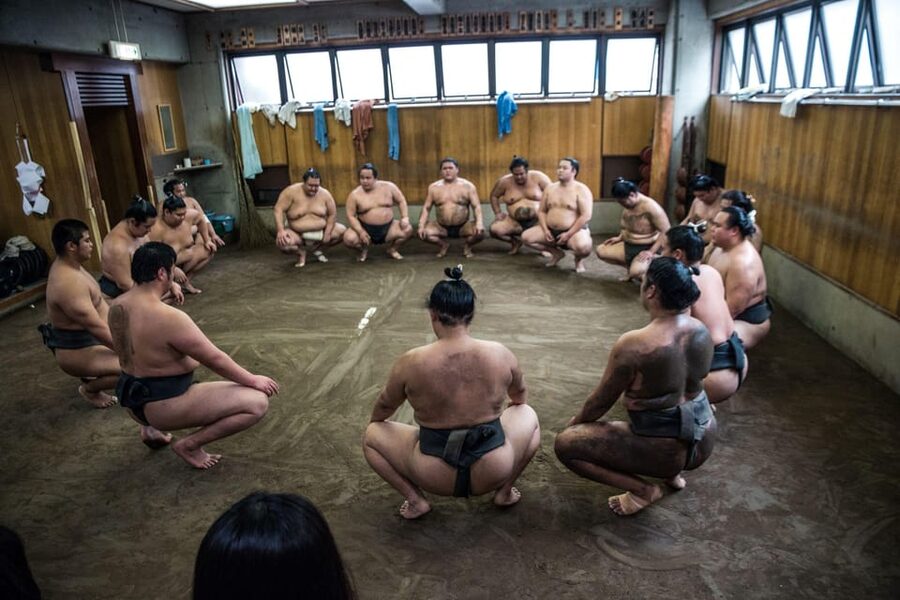
The central part of the visit lasts about 60 to 90 minutes, though the full experience runs roughly 90 minutes to two hours. You sit on the floor, usually in a small viewing area. Arrive early if you care about your position, because seating is arranged by arrival and the front row gives you the clearest view.
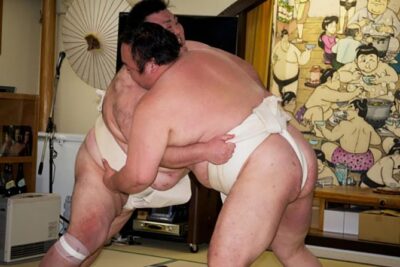
The closeness changes what you notice. You hear the impact of bodies and feet. You see the wrestlers reset, concentrate, and repeat movements. The power can be startling at first, especially when two men collide in a practice bout only a short distance away.
You will not be encouraged to chat through the session. That is a positive feature, not a flaw. The quiet lets you pay attention to the stable’s rhythm and shows respect to the wrestlers. Guides have used written explanation cards, name sheets, pencils, and small notes passed around during pauses. This is a smart way to add information without turning the practice into a lecture.
The quiet can also make the English explanations difficult to hear. One person found the guide’s comments hard to catch during louder bouts, since everyone had to remain nearly silent. If you want to ask a question, write it down for the guide to answer later.
The session may feel repetitive if you are expecting constant competition. Sumo practice includes repeated drills and bouts, and not every wrestler will be in the ring at the same time. I would compare it to watching a serious sports training session, not attending a finished match.
That said, the repetition has value. It shows how much work goes into a sport often judged by one brief clash. You may come away with a new respect for the athletes, even if you arrived with little interest in sumo.
A completely different kind of day out:
- Tokyo Disney Resort – Tokyo Disneyland & Tokyo DisneySea Park Tickets
★ 4.8 · 99,488 reviews - SHIBUYA SKY Ticket
★ 4.7 · 46,509 reviews - JR Whole Japan Rail Pass
★ 4.8 · 29,150 reviews - Mt Fuji and Hakone 1-Day Bus Tour Return by Bullet Train
★ 5.0 · 26,383 reviews
Meeting the stable master and wrestlers
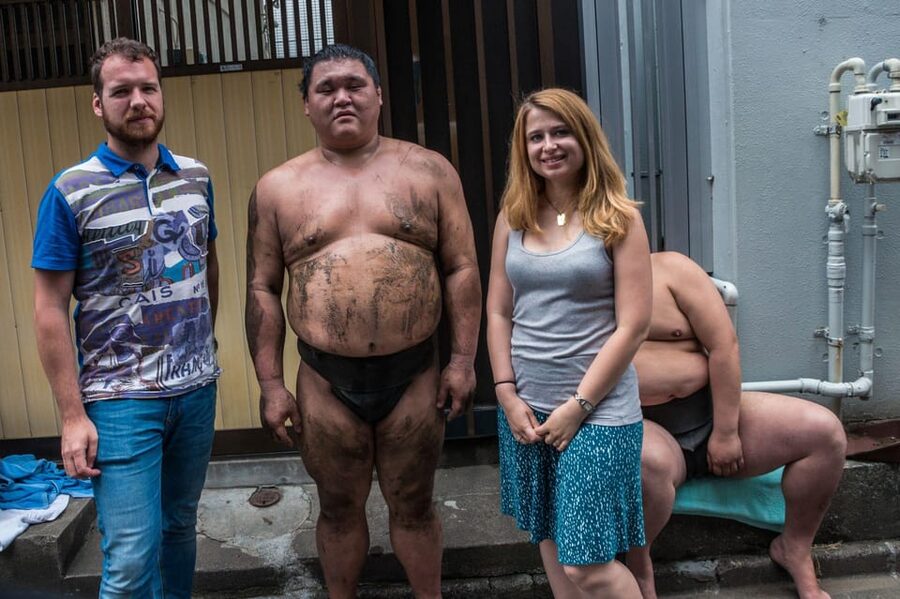
The stable master may welcome the group or answer questions, depending on the day. In one visit, the stable owner, a former wrestler, spoke with the group and offered useful insight into the athletes’ lives and the sport. Another included a question-and-answer session after practice.
Do not count on a long personal conversation. The wrestlers and staff are working, and access depends on the stable’s schedule and rules. The value is in being allowed into the space at all, then receiving a little direct contact when the day permits.
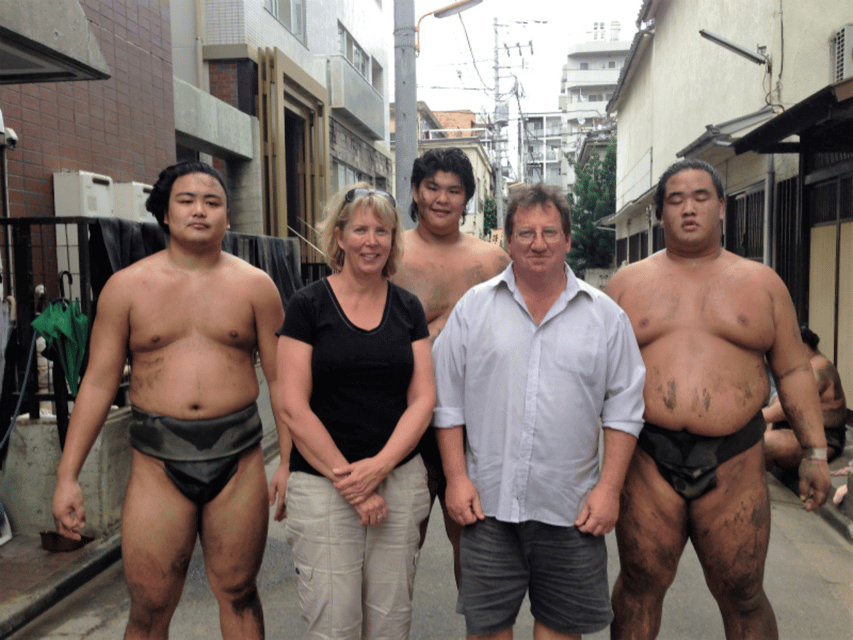
Photos with wrestlers may be available after training. Several people received pictures with one or more wrestlers, while the activity description makes clear that this depends on the day. Treat it as a welcome extra, not the main reason to book.
The most respectful approach is to follow the guide’s instructions and avoid acting as if the athletes are props. A short photo can be a fine souvenir, but the real experience is the practice itself.
What the tour teaches about sumo culture
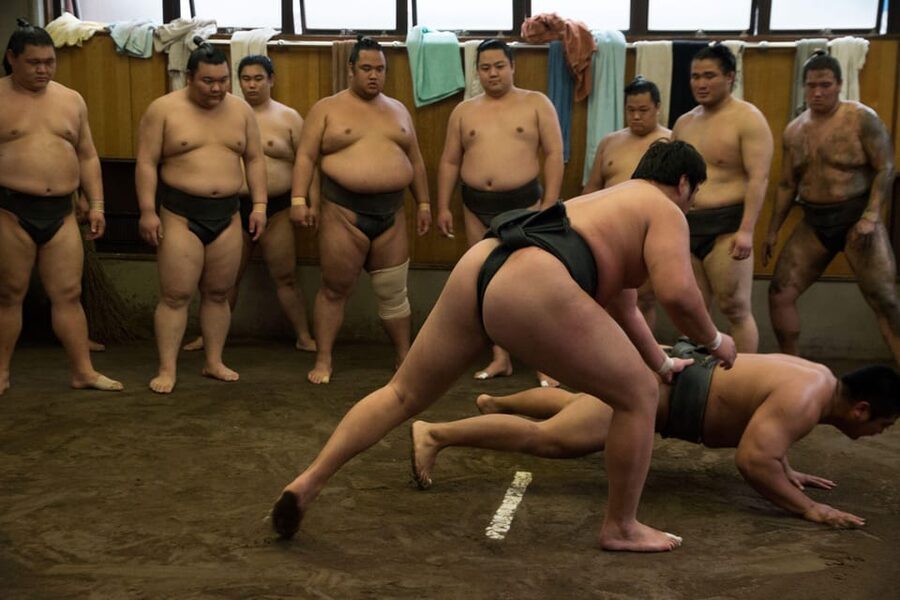
Sumo is often reduced to size and force. The morning practice shows a more complex picture. The wrestlers live together, train from early in the morning, and work toward the highest ranks in a strict system.
You can watch customs that connect the sport to older Japanese traditions while also seeing modern athletes preparing for professional competition. The guide helps translate what might otherwise look like a series of ritual movements into something you can follow.
If you plan to attend a tournament later in your trip, this visit can make the arena experience much easier to understand. You will recognize the basic techniques, know what the wrestlers are trying to achieve, and have a better sense of the effort behind each bout.
One person visited a tournament later the same day and felt the morning session made the competition far more enjoyable. That is a good pairing if the dates work, especially during one of the six official tournament periods.
Group size, seating, and the best viewing position
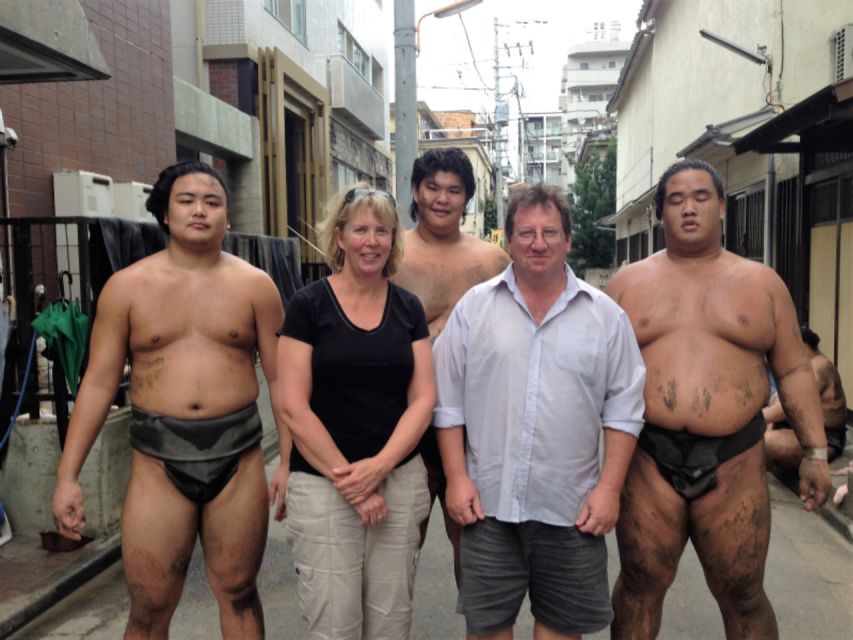
The experience can feel intimate, but group size is not always tiny. One particularly busy session had about 30 people. The layout and arrival order matter, since a group that gets there first may occupy much of the front row.
For the best view:
- Arrive early at the stated meeting point.
- Wear clothing that allows you to sit respectfully on the floor.
- Keep your phone ready for permitted photos, but do not record video.
- Expect to remain in one position until the practice ends.
- Do not assume you can move closer once training begins.
Front-row seating can make a real difference for photographs and for seeing footwork. If you arrive later, you may sit in the second row or at the far end. You will still be close to the action, but your view may be less direct.
The floor seating also matters for comfort. This tour is not suitable for people with mobility impairments, and it is not recommended for children under 11. I would not bring a child simply because the child likes sports. The long quiet period demands patience and careful behavior.
Is $81 a fair price?
At about $81 per person, this is not a cheap way to fill a morning. You are paying for a licensed English-speaking guide, stable access, transport guidance when needed, cultural explanation, and the chance to watch a full practice session in a place normally closed to the public.
The cost feels easier to justify when you compare it with the alternatives. A tournament ticket gives you the excitement of official competition, but not this behind-the-scenes view. A staged show is more relaxed, but less connected to the athletes’ daily work.
The price is harder to defend if you only want a quick photo or a guaranteed celebrity sighting. Neither is assured. You should book because you want to understand how sumo wrestlers train and because you value access to a private working setting.
The strong 4.8 rating from 570 reviews supports the basic promise of the activity. The praise is especially consistent around the guides, organization, close viewing area, and genuine feel. Still, the price will seem high to some people, and the format requires more patience than a standard sightseeing stop.
How to fit it into a Tokyo day
The session ends around 9:00 to 10:00 AM, though the exact finish can change. The ending location may differ from the meeting point, so do not schedule an important appointment immediately afterward.
Ryogoku makes a natural follow-up area. You can look for a sumo meal restaurant, visit the National Sumo Arena area, or continue toward Asakusa. The stable’s location may vary, but the tour keeps you in or near Tokyo’s sumo district.
The morning timing works well with a full day of sightseeing. You get an activity before the city’s main attractions become crowded, then have the rest of the day for museums, temples, shopping, or food.
If you are visiting during a tournament, check the calendar before booking. Practice offers a close look at the sport, while a tournament gives you formal bouts and the charged atmosphere of competition. If tickets are unavailable, this is a strong second choice. It is also worthwhile for someone who wants the training story rather than only the final match.
Who should book this experience
I recommend it most strongly if you:
- Want an authentic cultural activity instead of a staged performance.
- Have a real interest in Japanese sport and tradition.
- Are willing to sit quietly for up to 90 minutes.
- Can follow strict rules inside a working stable.
- Want an English explanation of techniques and customs.
- Are planning to attend a tournament and want useful background first.
I would hesitate if you need flexible timing, dislike floor seating, or expect a fast-paced attraction. You should also reconsider if a child in your group cannot stay silent and still for the full practice.
Solo visitors may enjoy the chance to ask more questions, particularly on a quiet day. Couples and families with older children can also find it memorable, but everyone must accept that this is an observation visit, not an interactive sports lesson.
Should you book the Tokyo sumo stable tour?
Book it if close access matters more to you than polished entertainment. Watching real wrestlers train, with the slap of bodies and the steady work of the stable, gives you a side of Japan that an arena seat cannot provide.
The guides are a major part of the value. Yuko, Noriko, Oku San, Kaz, Mako, Taku, Nobu, and others have been praised for clear explanations, good organization, and respectful handling of the group. The stable staff may also answer questions or allow photos, but those extras depend on the day.
My advice is simple: arrive early, dress modestly, leave your schedule open afterward, and prepare to be quiet. If you can do that, this is one of Tokyo’s more unusual and worthwhile morning activities.
FAQ
How long does the sumo morning practice tour last?
The tour lasts about 90 minutes to two hours. The practice itself usually runs for 60 to 90 minutes, and the end time is generally around 9:00 to 10:00 AM.
Is the sumo stable open to the general public?
Sumo stables are not usually open to the public and have traditionally been accessible mainly to sponsors. This tour provides a special opportunity to enter one and watch training.
Can I take photos with the sumo wrestlers?
Photos with wrestlers may be available after practice, depending on the day. They are included when available, but no specific wrestler or photo opportunity is guaranteed.
Can I record video during the practice?
No. Video recording, flash photography, and phone use that disrupts the session are not allowed. Your phone must be on silent.
Do I have to stay until the end of practice?
Yes. You must remain until the practice ends, usually around 9:00 to 10:00 AM. Once you leave the stable, you cannot re-enter.
Is the tour suitable for children?
The tour is not suitable for children under 11. All participants must sit quietly and remain still during the practice, so older children should also be comfortable following those rules.
Is the tour accessible for people with mobility impairments?
No. The experience is not suitable for people with mobility impairments, and participants must be able to sit on the floor respectfully during practice.
Just added in Tokyo
- A One-of-a-Kind Sushi Experience in a Special Place of Japan★ 5.0 · 15 reviews
- Tokyo Cute Bento Cooking Class – Make a Kawaii Character Lunchbox★ 5.0 · 126 reviews
- Japanese Home Cooking Class & Walk in Todoroki Temple Tokyo★ 5.0 · 88 reviews
- Japan Tokyo Tower Observatory Deck E-Ticket★ 4.0 · 34 reviews
- Catch a Baseball Game in Tokyo with a Local – Tickets Included★ 5.0 · 24 reviews
- JDM Experience with Fast&Furious RX-7 (English speaking Driver)★ 5.0 · 57 reviews
- Tokyo Private Day Tour by Car with English speaking Driver Guide★ 4.0 · 29 reviews
- Japan Classic 10 Day – One Life Adventures★ 5.0 · 129 reviews
Sumo Experiences, compared.
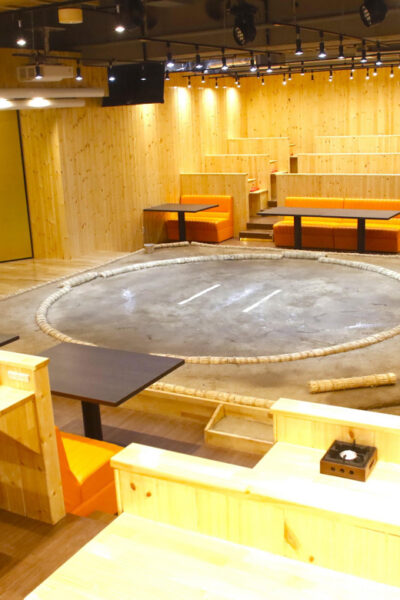
Sumo Show Experience with Chicken Hot Pot and a Photo
Read our review →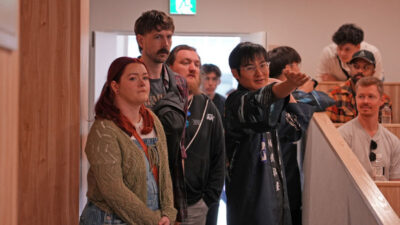
Tokyo Shinjuku Sumo Show & Experience with Photo
Read our review →
Asakusa Sumo Club Sumo Show Admission with Chankonabe in Tokyo
Read our review →
Tokyo Ginza Sumo Experience: Performance vs Pure Practice
Read our review →Browse the lists this tour appears in