Reviewed · MORNING
Kyoto Early Morning Tour with English-Speaking Guide
Kyoto rewards early risers. This half-day outing links Fushimi Inari Shrine, Arashiyama, and Kinkaku-ji while the city is still relatively quiet, giving you a calm start and most of the afternoon free. I especially like the small group limit of eight and the chance to learn how Kyoto’s trains and buses work as you move between sights.
The English-speaking guides are the heart of the experience. Guides such as Haruki, Aya, Genki, Arisa, Akari, and Karin receive repeated praise for clear explanations, helpful route-finding, good photo advice, and patience with both adults and children. The main drawback is the pace of the route: three major areas in five to six hours means plenty of walking and time on public transportation, and the transport fare and Kinkaku-ji admission cost extra.
In This Review
- Key Points at a Glance
- Why Starting Early Changes Kyoto
- Fushimi Inari’s Torii Gates in the Quiet Hours
- Arashiyama and the Bamboo Grove
- Kinkaku-ji and the Golden Pavilion
- Trains and Buses With a Local Guide
- What the Guides Add
- Pace, Walking, and Family Comfort
- Is $68.98 a Fair Price?
- Who Should Book This Morning Tour?
- My Booking Verdict
- FAQ
- How long does the Kyoto Early Morning Tour last?
- Which attractions are included?
- Is an English-speaking guide included?
- How large is the group?
- Are public transportation fares included?
- Is the Kinkaku-ji entrance fee included?
- Can I cancel for a full refund?
Key Points at a Glance
- Fushimi Inari before the crowds: Early timing makes the famous red gates easier to photograph and more peaceful to walk through.
- Three major Kyoto sights in one morning: You visit Fushimi Inari, the Arashiyama Bamboo Grove, and Kinkaku-ji in a single organized route.
- Small groups of up to eight: A compact group makes it easier to hear the guide, ask questions, and keep a sensible pace.
- Public transportation is part of the lesson: Your guide helps you use Kyoto’s trains and buses, a useful skill for the rest of your stay.
- Strong guide-led experience: Named guides including Genki, Aya, Haruki, Arisa, and Akari are praised for history, local customs, photos, and family-friendly help.
- Useful afternoon freedom: Finishing after an early start leaves time for lunch, rest, shopping, or another Kyoto neighborhood.
Why Starting Early Changes Kyoto
The early departure is not a minor detail. It is the reason this tour works.
Kyoto’s most famous sights can feel very different as the morning wears on. Fushimi Inari is a prime example. The shrine’s orange-red torii gates are one of Japan’s best-known sights, so the paths can become crowded later in the day. Arriving early gives you a better chance to take photos without a constant stream of people passing through the frame.
You should still expect other early risers, since Fushimi Inari is popular for good reason. But the difference between a quiet morning visit and a crowded late-morning visit can be substantial. One person who returned later to collect a goshuin found the shrine far more crowded than it had been during the tour.
The timing also protects the rest of your day. A five to six-hour outing may sound long before you book, but the morning schedule lets you see three signature places without giving up the full day. You can use the afternoon for Nishiki Market, Gion, another temple, or simply a well-earned meal and rest.
Several start times are available, including a 7:15 option. Check the precise departure time when booking, since the value of the tour depends heavily on starting early.
A few more options to weigh up in Kyoto
- PERFECT KYOTO 1-Day Bus Tour
★ 5.0 · 13,518 reviews - [Kyoto & Nara Day Tour] Sagano Scenic Railway & Nara Park & Fushimi Inari Taisha Thousand Torii Gates & Togetsukyo Bridge & Bamboo Grove & Kimono Forest (Departing from Osaka)
★ 4.9 · 10,942 reviews - Kyoto: Fushimi Inari, Kinkakuji, Bamboo Grove 1 Day Bus Tour
★ 4.8 · 4,316 reviews
Fushimi Inari’s Torii Gates in the Quiet Hours
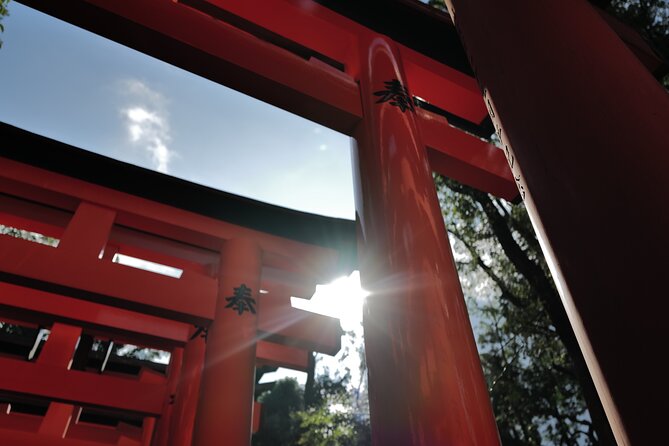
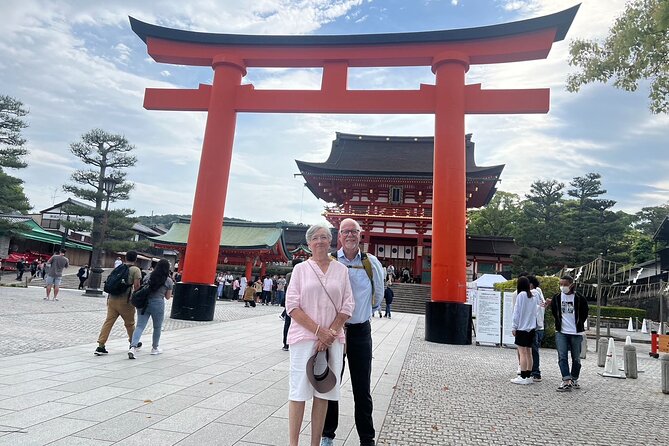
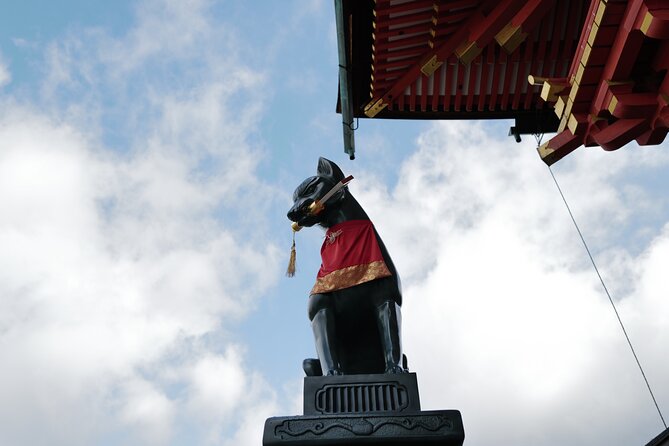
Fushimi Inari-taisha is the most atmospheric stop on the route. The shrine is dedicated to Inari, associated with rice, business, and prosperity, and its paths lead through thousands of vermilion torii gates. The gates form long corridors of color, light, and shadow as the route climbs through the wooded hillside.
You receive about an hour here. That is enough to experience the most famous sections, take photos, and hear useful explanations from your guide. It is not enough for an exhaustive hike across the entire mountain, so set your expectations accordingly.
This stop is especially good for photography. Early light and thinner foot traffic make it easier to pause without blocking the path. Hina is praised for knowing strong photo spots, while guides such as Aya and Genki are praised for explaining the customs and stories that give the shrine more meaning than a series of attractive gates alone.
The walking can be uphill and uneven in places. You need a moderate level of physical fitness, and comfortable shoes are a sensible choice. The shrine itself has no admission fee, but that does not mean the visit is effortless. You are on your feet, and the route includes stairs and slopes.
Arashiyama and the Bamboo Grove
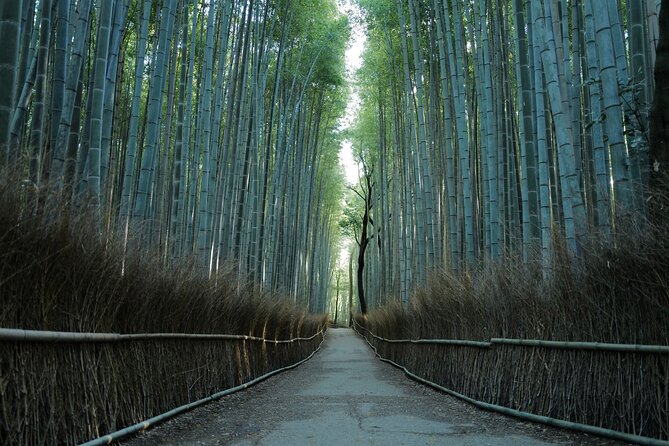
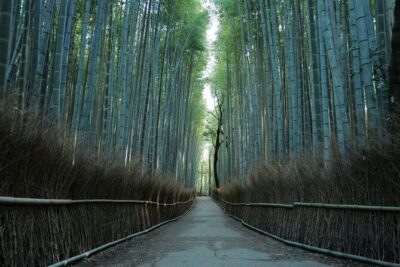
The move to Arashiyama gives you a different side of Kyoto. At the Bamboo Grove, tall bamboo rises on both sides of the path, creating a narrow green corridor that feels removed from the city. The grove is visually striking, but it is not a remote wilderness experience. The path is a well-known attraction and can become crowded later in the day.
That makes the early schedule useful again. You can photograph the bamboo with fewer people in the way, and the quieter setting makes it easier to notice the movement of the stalks and the changing light. One guide, Aya, is also praised for recommending local snacks near the grove, and you may have some free time around this stop.
The tour allots about an hour. That allows you to walk through the main section and enjoy the setting, but Arashiyama has more than the bamboo path. Depending on the exact flow of the morning, you may not have time to explore every nearby temple, garden, or riverside area.
This is an important tradeoff. The tour is designed as an introduction to three famous Kyoto areas, not as a full day in Arashiyama. If the bamboo grove is your main reason for visiting Kyoto, you may prefer to return on your own with more time. If you want a useful first look and help finding your way, the organized visit is a good fit.
Kinkaku-ji and the Golden Pavilion
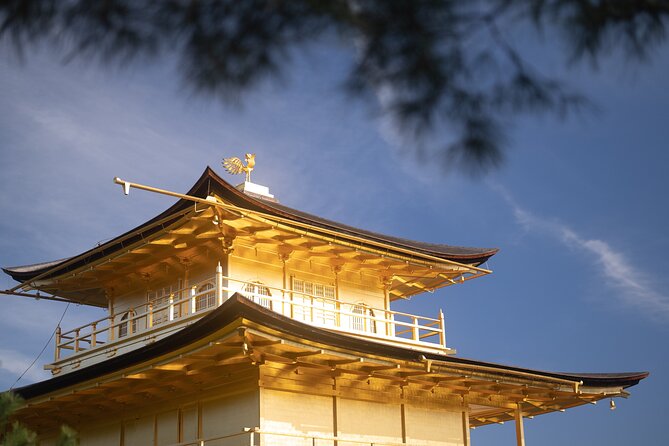
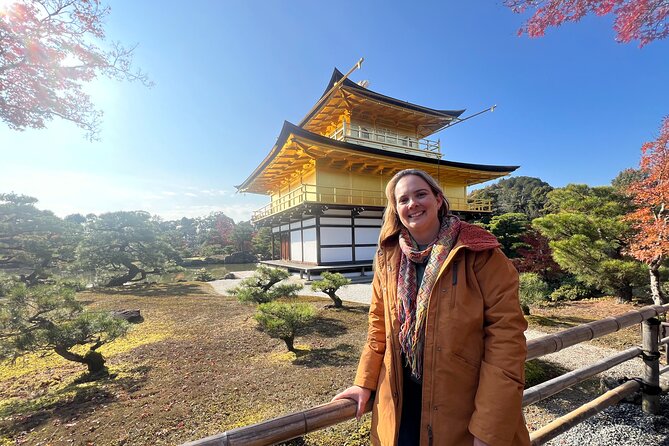
Kinkaku-ji, also called the Golden Pavilion, supplies the tour’s most instantly recognizable view. The temple’s gold-covered exterior reflects over a pond, creating the kind of scene that explains why it appears on so many Kyoto postcards.
You have about an hour at the site. The visit centers on the temple view and the surrounding grounds rather than a long interior tour. The entrance fee is not included and costs ¥500 per person, so include it in your budget.
The Golden Pavilion can feel busy, but an early visit helps. Roger described the temple as breathtaking, and that reaction makes sense when the building catches the morning light. Your guide can also explain the site’s place in Japanese culture and Kyoto’s temple tradition, turning a quick photo stop into a more useful visit.
One practical point: Kinkaku-ji is not close to the other two stops. The route covers a wide section of Kyoto, so travel time takes up part of the five to six hours. The itinerary is efficient, but you are trading depth at each place for variety across the city.
A completely different kind of day out:
- Kyoto: Tea Ceremony in a Traditional Tea House in Kiyomizu
★ 4.9 · 3,519 reviews - Kyoto: Gion Make Your Own Chopsticks with Engraving Option
★ 5.0 · 3,465 reviews - Kyoto Nara Day Trip │ Kiyomizu-dera Temple + Fushimi Inari-taisha Shrine + Nara Park (Departing from Osaka/Kyoto)
★ 4.7 · 3,408 reviews - Kyoto Geisha Walking Tour: Gion District & Hidden Gems
★ 4.7 · 3,273 reviews
Trains and Buses With a Local Guide
Public transportation is included in the route, but the fare is not. Expect to pay about ¥1,240 for transportation during the tour, in addition to the ¥500 Kinkaku-ji admission and anything you buy to eat or drink.
That extra cost is worthwhile for many visitors because the transport itself becomes a practical lesson. Kyoto’s system is manageable once you understand how the lines and buses connect, but the first few rides can be confusing when you are still learning the city. Guides such as Karin and Suzuka are praised for making train and bus travel feel comfortable and stress-free.
You also get a clearer sense of Kyoto’s layout. Instead of seeing each attraction as an isolated stop reached by taxi, you travel between major areas as local residents do. A guide can point out how to continue exploring independently, and Hiro is praised for giving useful suggestions for the rest of a visitor’s stay.
There is a small cost in comfort. Public transportation can mean standing, transfers, and navigating stations. This is not a private-car tour, and you should not expect door-to-door travel. For me, that is part of the value, but visitors who want a completely effortless ride should know what they are choosing.
What the Guides Add
The sights are famous enough to visit alone, but the guide determines how much you get from them.
The strongest praise centers on clear English, useful historical context, and friendly help rather than theatrical performance. Arisa is praised for keeping the route efficient while explaining Japanese culture. Genki receives repeated praise for his broad knowledge, calm attention, and ability to explain things clearly. Aya is praised for her local recommendations and photo help.
Families should pay attention to this pattern. Haruki is specifically praised for patience and good humor with a 10-year-old, while Kanami is praised for engaging both children and adults. That suggests the tour can work well for families who want structure without turning the morning into a lecture.
The guides also adjust to different needs. One solo participant ended up with a private-feeling tour because the group was very small, and the experience remained comfortable rather than awkward. With a maximum of eight people, you have a better chance to ask questions and hear the answer than you would on a large coach excursion.
Guide quality can vary from person to person, of course. The repeated praise for many different guides is encouraging, but you book the experience rather than a guaranteed individual guide. Still, the guide-led format is a major reason to choose this over arranging the same route alone.
Pace, Walking, and Family Comfort
This is a five to six-hour activity with travel time included. You will walk at all three sights, move through public transportation stations, and likely encounter stairs or sloped paths at Fushimi Inari.
The pace is generally described as relaxed and well organized, but relaxed does not mean sedentary. Arame’s tour was praised for being nicely paced while still involving a lot of walking. That is the most useful way to think about it: you are not racing, but you are active for much of the morning.
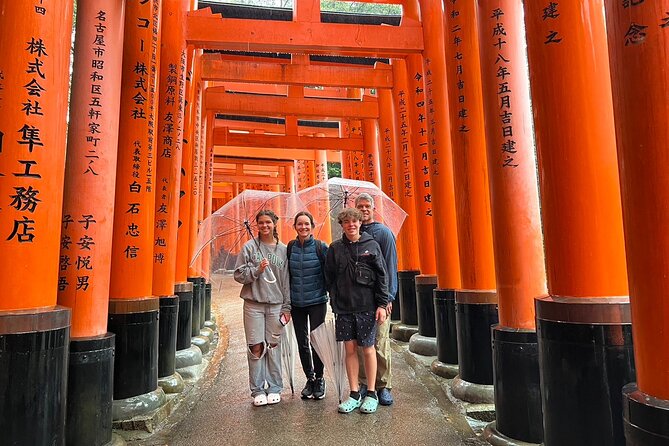
Rain does not automatically ruin the experience. Akari is praised for keeping a family group cheerful and unrushed in wet weather. Even so, the activity requires good weather and may be canceled if conditions are poor. In that case, you are offered another date or a full refund.
Bring water and plan your breakfast. Food and drinks are not included, and the early start may leave little time for a full meal before the tour begins. You may find time for a snack near Arashiyama, but do not count on a formal food stop.
Is $68.98 a Fair Price?
The listed price is $68.98 per person. That is not the cheapest way to see these attractions, since you can visit the shrines and temples independently. The real question is what you are paying to avoid.
You are paying for route planning, English explanations, crowd-aware timing, local transport guidance, and the ease of fitting three distant areas into one morning. If you are new to Kyoto, that can save time and reduce the stress of figuring out connections before breakfast.
The additional costs are clear:
- Public transportation: about ¥1,240
- Kinkaku-ji admission: ¥500 per person
- Food and drinks: not included
Group discounts may improve the value for more than one person. The small group limit also matters. Eight people is still a group, but it is far more personal than a large sightseeing bus.
I would call the price fair for a first morning in Kyoto, especially if you have limited time or want help getting oriented. It is less compelling for independent visitors who enjoy planning routes, already understand Kyoto’s transit system, and want several hours at one site instead of a broad overview.
Who Should Book This Morning Tour?
I would recommend it to first-time visitors who want Kyoto’s headline sights without spending their first day wrestling with train and bus maps. It also suits business visitors with one free day, families seeking a clear plan, and solo visitors who like having a local person to ask for advice.
It is a particularly good choice if photography matters to you. The early timing gives you a better chance at cleaner views of the torii gates and bamboo paths, though no tour can promise empty walkways.
You should think twice if you dislike early starts, avoid public transportation, or want a slow, in-depth visit to just one area. The route covers a lot, but the tradeoff is limited time at each stop. You will see the essential views and gain useful context, not explore every corner of Kyoto.
Free cancellation is available up to 24 hours before the start time for a full refund. Changes or cancellations made within 24 hours are not accepted for a refund, and weather-related cancellations offer a different date or full refund.
My Booking Verdict
Book this tour if you want an efficient, well-guided introduction to Kyoto and value arriving before the crowds. The combination of Fushimi Inari’s torii gates, Arashiyama’s bamboo, and Kinkaku-ji’s gold makes a strong first morning, while the public transportation practice helps you continue exploring on your own.
I would skip it only if you want maximum time at one attraction or prefer complete independence. For most first-time visitors, the early hour, small group, and consistently praised guides make the $68.98 price a reasonable exchange for a smoother start to Kyoto.
FAQ
How long does the Kyoto Early Morning Tour last?
The tour lasts approximately five to six hours, including travel time between the attractions.
Which attractions are included?
The tour visits Fushimi Inari-taisha Shrine, the Arashiyama Bamboo Grove, and Kinkaku-ji, also known as the Golden Pavilion.
Is an English-speaking guide included?
Yes. An English-speaking guide is included in the tour price.
How large is the group?
The tour has a maximum of eight travelers, creating a smaller group setting.
Are public transportation fares included?
No. Public transportation is not included. The estimated cost is about ¥1,240.
Is the Kinkaku-ji entrance fee included?
No. The entrance fee costs ¥500 per person and is paid separately.
Can I cancel for a full refund?
Yes, if you cancel at least 24 hours before the experience start time. Cancellations made less than 24 hours before the start time are not refunded. If poor weather causes the operator to cancel, you are offered another date or a full refund.
Just added in Kyoto
- The “Golden Route” and Ancient Japan by DIAMIR Erlebnisreisen – 14-Day Tour★ 2.0 · 2 reviews
- Japan: Castles & Cuisine by G Adventures – 6-Day Kyoto to Osaka Tour★ 4.5 · 4 reviews
- Cycle Japan by Explore! – 13-Day Kyoto to Tokyo Tour★ 4.7 · 12 reviews
- Cycle Japan by Intrepid Travel – 11-Day Kyoto to Tokyo Tour★ 4.8 · 2 reviews
- Classic Japan by Intrepid Travel – 11-Day Kyoto to Tokyo Tour★ 4.4 · 14 reviews
- Ancient & Modern Japan 14-Day Tour by Exodus Adventure Travels★ 4.4 · 40 reviews
- 5 Day Cultural Adventure of Kyoto, Nara & Osaka by Tourist Journey★ 2.5 · 2 reviews
- 12 Days Kinosaki Onsen Escape: A Journey Through Japan’s Timeless Towns by UME Travel★ 4.8 · 5 reviews
Morning, compared.
Early Morning Tour with English-Speaking Guide
Read our review →
World Heritage Shirakawa-go Morning Guided Tour
Read our review →
Nara Early Morning Tour (Kyoto or Osaka Departure Available)
Read our review →
Hiroshima in a Nutshell: Morning Bike Adventure
Read our review →