Reviewed · MORNING
From Kyoto: Nara Guided Morning Tour
Nara’s deer are only part of the story. This morning trip gives you a tidy introduction to Todaiji Temple and Kasuga Taisha, while the air-conditioned coach saves you the trouble of arranging transport from Kyoto. I especially like the early start and the guide-led visits, which help you make sense of places that can otherwise feel like a blur of gates, lanterns, and temple halls.
The main catch is simple: the ride back to Kyoto is not included. You finish at Kintetsu-Nara Station around noon and must arrange your own return, a detail that has surprised more than one person. Still, at $77, I see solid value if you have only a morning and want the major Nara sights handled in one organized outing.
In This Review
- Key points to know before booking
- Why this four-hour Nara trip works
- Meeting in Kyoto at 7:50 AM
- Kasuga Taisha and its lantern-lined approach
- Nara Park and the deer
- Nandaimon Gate and the road into Todaiji
- Todaiji Temple and the Great Buddha Hall
- The guides make the short schedule work
- Is $77 a fair price?
- Walking, weather, and comfort
- Who should book this morning tour?
- Should you book it?
- FAQ
- Where does the tour begin?
- What time should I arrive?
- Where does the tour finish?
- Is transportation back to Kyoto included?
- What languages are available?
- Is admission to Todaiji Temple included?
- Can I feed the deer?
- Is the tour suitable for wheelchair users?
- Can I cancel for a full refund?
Key points to know before booking
- The Great Buddha is the morning’s grandest sight: Todaiji’s enormous wooden hall gives this short tour real weight.
- Deer crackers come with a warning: Keep them hidden until you are ready to feed the deer, then show empty hands once they are gone.
- Kasuga Taisha feels best early: Its stone lantern-lined paths are quieter and more atmospheric in the morning.
- You walk on hills and stairs: Comfortable shoes are essential, and this trip is not suitable for wheelchair users or people with mobility impairments.
- Your return is independent: The coach goes from Kyoto to Nara, but not back to Kyoto.
- The guides are a major strength: Guides such as Ciel, Tommy, Nagomi, Den, Mai, Aoi, Harry, and Nanami have earned repeated praise for warmth, clear explanations, and practical help.
Why this four-hour Nara trip works
Nara is an easy side trip from Kyoto, but a short visit still requires choices. You could arrange trains, find the temples, learn the basic religious background, and keep an eye on the clock. Or you can let a guide connect the main sights while you concentrate on deer, lanterns, and one of Japan’s most impressive Buddha images.
This tour leaves from Kyoto Avanti at 8:00 AM and finishes at Kintetsu-Nara Station around 12:00 PM. That timing suits you if you want an afternoon back in Kyoto, have another reservation later, or are fitting Nara into a packed Japan itinerary.
The tour is brisk rather than lazy. You spend about 40 minutes at Kasuga Taisha, 30 minutes with free time in Nara Park, and 50 minutes at Todaiji. That gives you a useful first look, but not enough time for every path, museum, shop, or temple building in the area.
I like that balance for a first visit. You see the three things most associated with Nara: the Shinto shrine, the deer park, and the Great Buddha. If you want a slow photographic study of each site, take a full day instead.
A few more options to weigh up in Kyoto
- PERFECT KYOTO 1-Day Bus Tour
★ 5.0 · 13,518 reviews - [Kyoto & Nara Day Tour] Sagano Scenic Railway & Nara Park & Fushimi Inari Taisha Thousand Torii Gates & Togetsukyo Bridge & Bamboo Grove & Kimono Forest (Departing from Osaka)
★ 4.9 · 10,942 reviews - Kyoto: Fushimi Inari, Kinkakuji, Bamboo Grove 1 Day Bus Tour
★ 4.8 · 4,316 reviews
Meeting in Kyoto at 7:50 AM
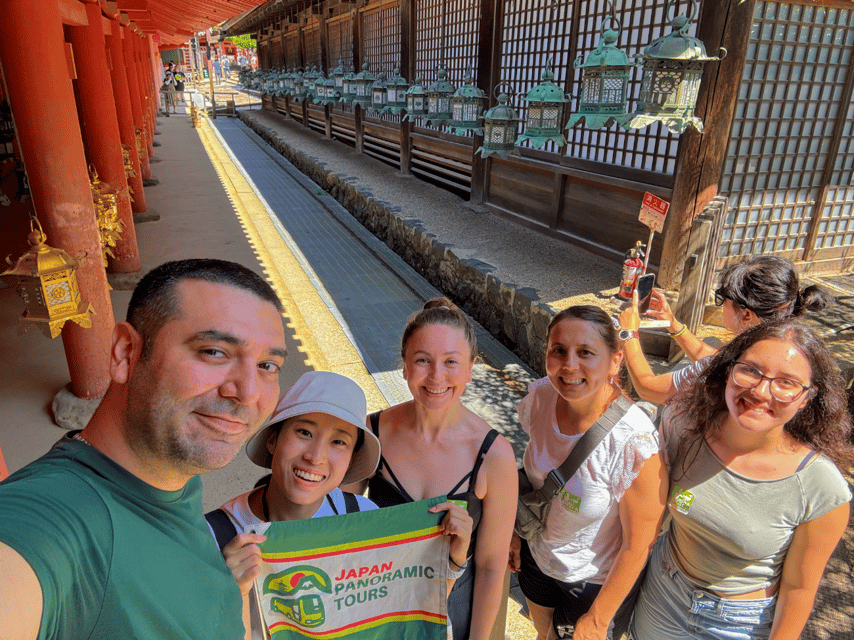
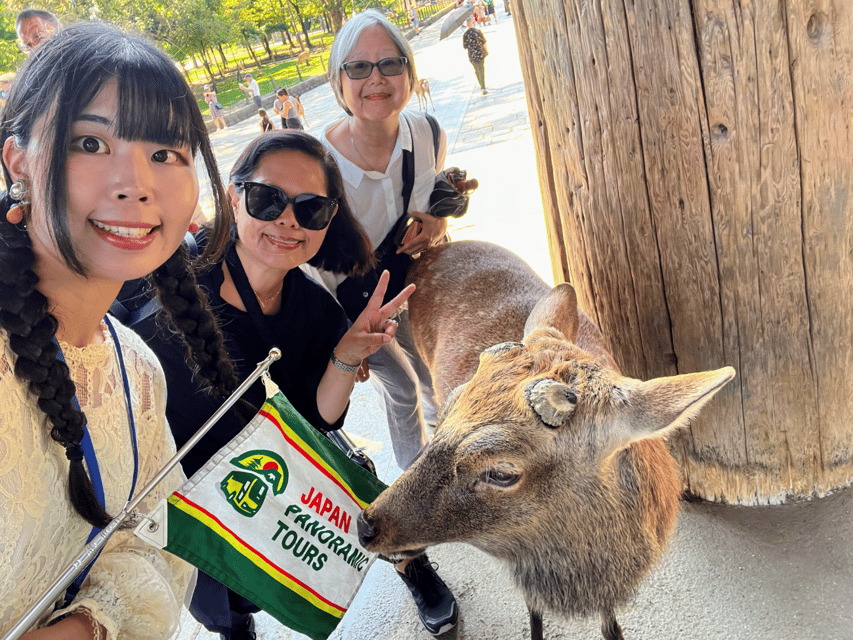
The meeting point is in front of Kyoto Avanti, on the Tully’s Coffee side, at 31 Higashikujo Nishiyamao-cho in Kyoto’s Minami Ward. Look for the green and white Japan Panoramic Tours flag.
You need to arrive by 7:50 AM for the 8:00 AM departure. This is not a flexible meeting arrangement. The bus leaves on time, and there are no refunds for late arrivals or no-shows. If you miss the departure, you cannot join the outing midway.
The departure area is near Kyoto Station, but do not rely on finding the group at the last second. Give yourself time to locate Kyoto Avanti and the coffee shop. That small bit of planning matters more than it sounds when you are navigating an unfamiliar station area with luggage, children, or a large group.
Once aboard, you get an air-conditioned coach with free Wi-Fi. The ride to the Nara area takes about an hour. Along the way, you may see Fushimi Castle and the former Heijokyo Palace area, two reminders that the route is passing through old imperial and cultural territory before you even reach the main stops.
Kasuga Taisha and its lantern-lined approach
Kasuga Taisha is your first major stop. This Shinto shrine is one of Nara’s UNESCO World Heritage sites and is known for its long approach lined with stone lanterns. There are also bronze lanterns around the shrine buildings, and the lanterns are lit during special festivals.
The morning timing helps here. The paths can feel calm and shaded, with the lanterns giving the approach a quiet, almost storybook quality. Your guide explains the setting and customs, which is useful because a shrine visit is not just about taking photographs. You will have a better sense of how the gates, lanterns, and worship spaces fit together.
You get about 40 minutes with guided touring. That is enough to see the central character of Kasuga Taisha, but it is not an exhaustive visit. You will need to stay with the group and keep moving, especially if traffic or weather changes the schedule.
This stop also involves walking on uneven ground, hills, and stairs. Rain can change the feel of the paths quickly, so bring an umbrella or raincoat in wet weather. In sunshine, a hat, water, and sunscreen are sensible additions.
Nara Park and the deer
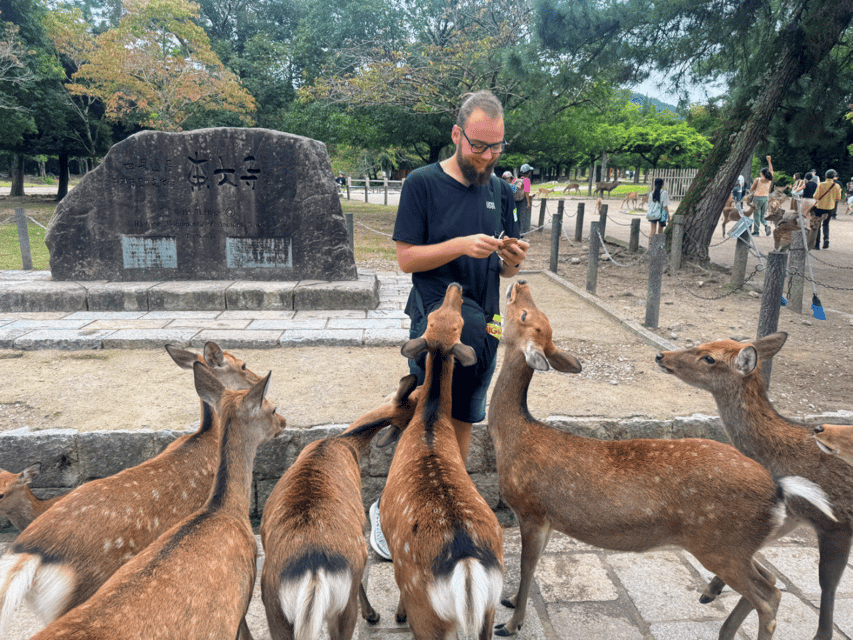
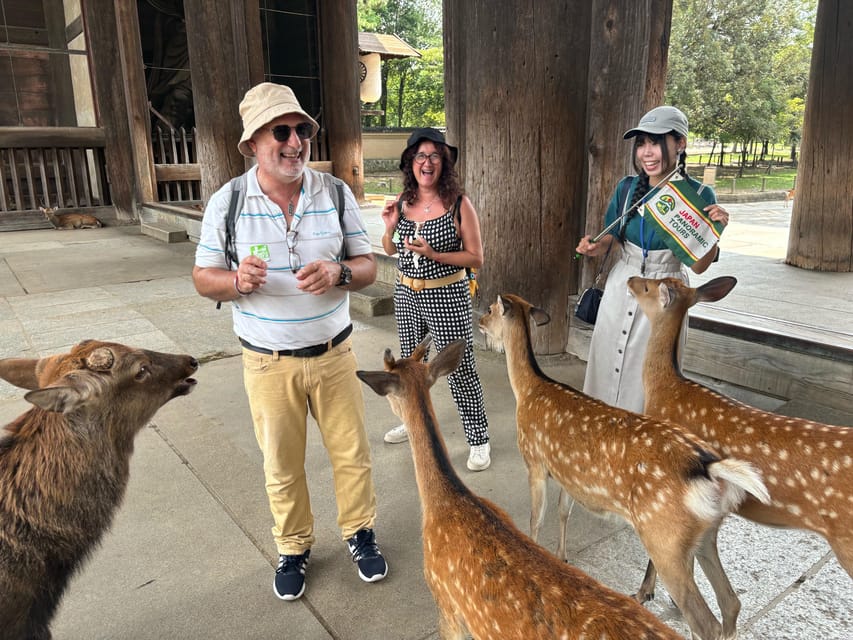
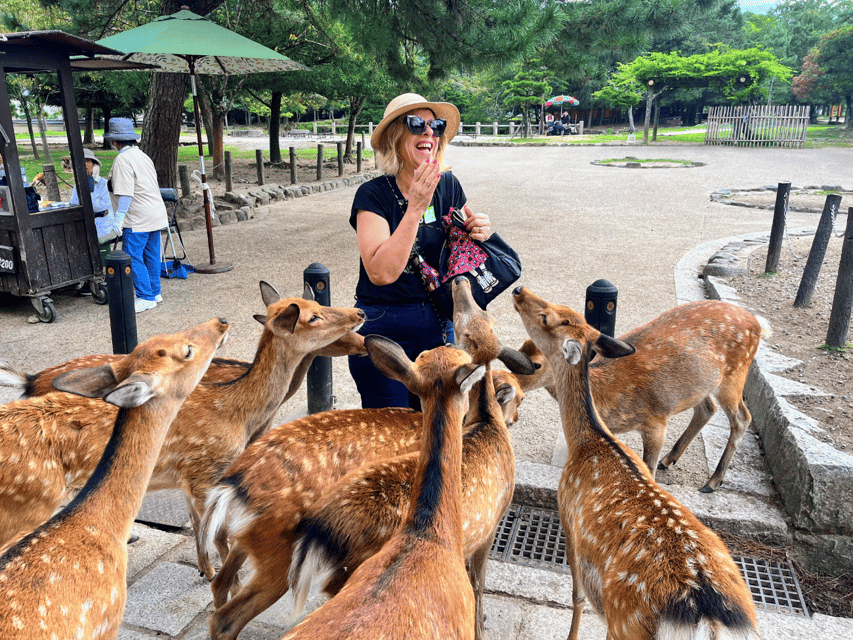
Nara Park is the tour’s most playful stop, but the deer are not tame pets. More than 1,400 wild deer roam the park, and they are traditionally regarded as sacred messengers of the gods.
You get around 30 minutes of free time in the park. That is enough to watch the deer, take photographs, and try feeding them, but you should not expect a long, relaxed walk through the whole park. The schedule is designed to give you a taste before moving on to Todaiji.
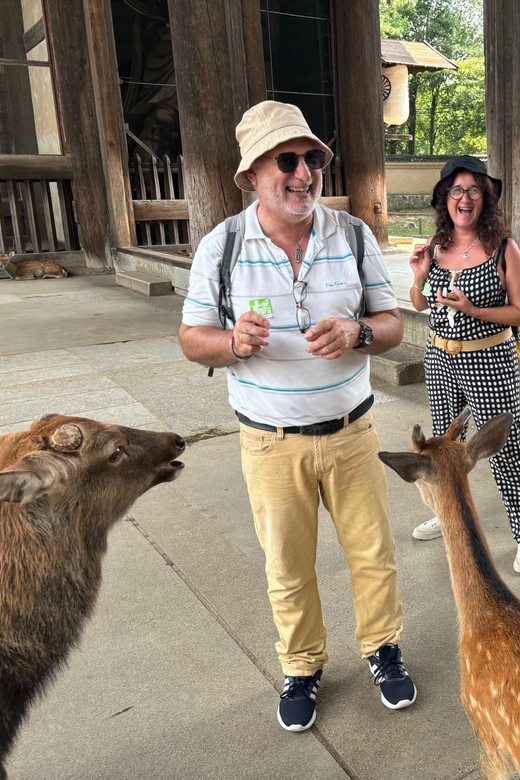
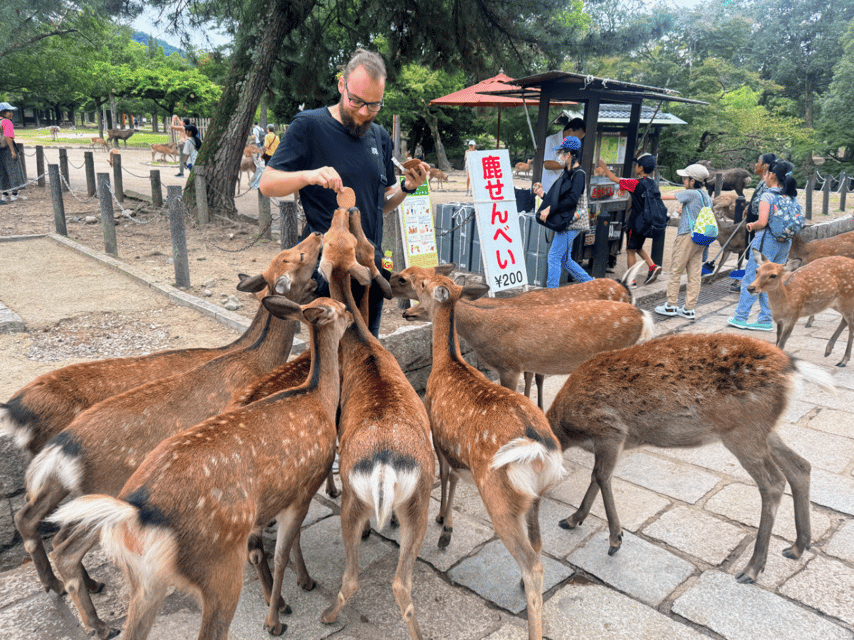
Deer crackers are sold in the park. Feed only those special crackers, and do it responsibly. The best practical tip from the guides is to keep the crackers tucked away until you are ready to use them. If the deer see food in your hands, they can crowd around you, nip at clothing, or nudge you for more. Once the crackers are gone, show your open hands so they understand you have nothing left.
That advice can make the difference between a funny encounter and an uncomfortable one. Some deer are gentle, while others are very determined. Keep your belongings secure, especially in crowded areas, and do not assume a deer will politely wait its turn.
The deer are the emotional highlight for many people, particularly children. Still, I would not book this solely as an animal-feeding activity. The temple and shrine give the morning its substance, while the deer add the memorable comic relief.
A completely different kind of day out:
- Kyoto: Tea Ceremony in a Traditional Tea House in Kiyomizu
★ 4.9 · 3,519 reviews - Kyoto: Gion Make Your Own Chopsticks with Engraving Option
★ 5.0 · 3,465 reviews - Kyoto Nara Day Trip │ Kiyomizu-dera Temple + Fushimi Inari-taisha Shrine + Nara Park (Departing from Osaka/Kyoto)
★ 4.7 · 3,408 reviews - Kyoto Geisha Walking Tour: Gion District & Hidden Gems
★ 4.7 · 3,273 reviews
Nandaimon Gate and the road into Todaiji
As you move through the Todaiji complex, you pass Nandaimon Gate, the huge entrance guarded by two fierce statues. The gate prepares you for the scale of the temple ahead.
The guardian figures are not gentle decorative figures. Their powerful poses and expressions were meant to protect the temple, and they give the entrance a dramatic punch. Your guide can help you notice details you might otherwise walk past while following the crowd toward the main hall.
The approach also gives you a sense of how Nara’s religious sites connect with the surrounding park. Deer wander through the same broad grounds where visitors approach one of Japan’s great Buddhist monuments. That mix of ordinary park life and sacred architecture is one of Nara’s special qualities.
Todaiji Temple and the Great Buddha Hall
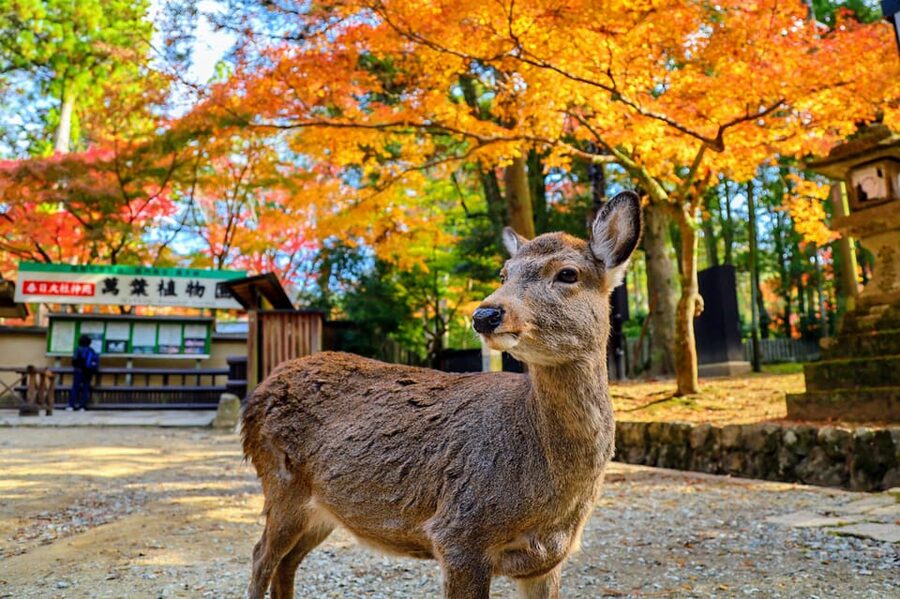
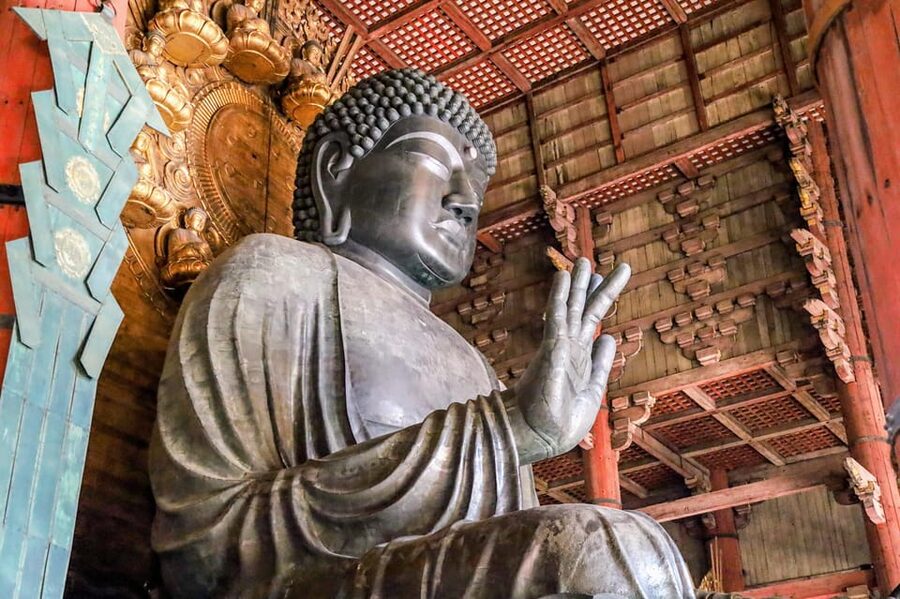
Todaiji is the tour’s biggest architectural moment. Its Great Buddha Hall, or Daibutsuden, houses the Great Buddha of Nara and is famous for its enormous wooden construction.
You get about 50 minutes with a guided visit, including admission to Todaiji. The building’s scale is difficult to grasp from photographs. Inside, the Great Buddha gives the space its center of gravity, and the hall’s size makes the statue feel even more imposing.
This is where the guide’s historical explanations pay off. Without context, you may simply see a very large statue in a very large hall. With a clear explanation of the temple and its religious role, the visit becomes easier to appreciate as more than a quick photo stop.
The time allowance is sensible for a half-day trip. You can enter the hall, see the Buddha, take in the main details, and listen to the guide without spending the rest of the morning indoors. If you want to study every corner of the complex, you will need to return on your own or set aside a separate visit.
Flash photography is not allowed. Respect the signs and the worship space, and keep your camera ready for non-flash photographs where permitted.
The guides make the short schedule work
The strongest part of this experience is the guide service. Names that appear repeatedly in the feedback include Ciel, Tommy, Nagomi, Den, Mai, Aoi, Harry, Nanami, Sakura, Rina, Yuta, and Tsubasa.
The praise is specific. Ciel is described as cheerful and helpful. Tommy is noted for warmth, local explanations, and practical assistance. Nagomi has used quizzes and cultural facts to keep the group involved. Den is praised for humor and clear explanations, while Aoi has helped with photographs and restaurant suggestions.
You should expect personality to vary by departure, since the guide is not fixed. The pattern is encouraging, though: people regularly describe the guides as friendly, organized, attentive, and easy to understand in English.
The best guides do more than recite dates. They explain how to behave around the deer, give clear return times, answer questions, and help you get photos. That matters on a short tour because every minute has a job.
The multilingual audio headsets are available in Spanish, French, Italian, German, Portuguese, and Ukrainian. The live tour guide speaks English. If you prefer listening in one of the audio-guide languages, this feature can make the cultural information easier to follow, though the precise balance between live commentary and recorded material may vary during the outing.
Is $77 a fair price?
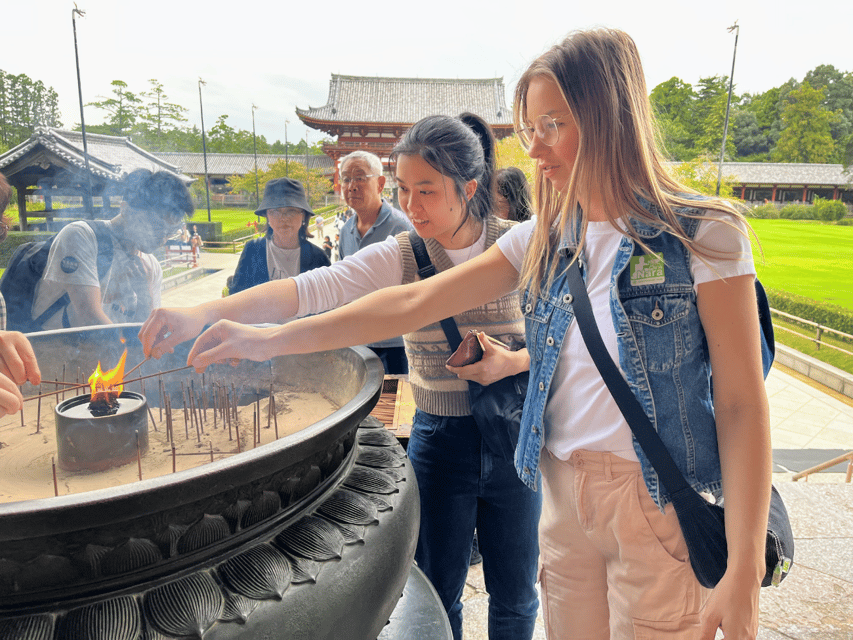
At $77 per person, the price is reasonable if you value convenience and guidance. You are paying for the coach from Kyoto, an English-speaking guide, free Wi-Fi, Todaiji admission, and a planned route through three major Nara sights.
The value is strongest when you are short on time or do not want to manage transport and directions. You can leave Kyoto in the morning, see the essential sites, and finish near a useful railway station by lunch.
The price is less attractive if you are comfortable using local trains and already know what you want to see. Nara rewards unhurried wandering, and a self-guided day can give you more control over meals, shopping, photography, and time at each temple.
Also budget for your return trip from Kintetsu-Nara Station to Kyoto. That fare is not included, and the tour does not provide a return bus. Several people found this confusing, even though the end point is provided in the tour details. I would plan the return before departure so you can enjoy the morning without worrying about the railway system afterward.
Meals, drinks, personal expenses, and hotel pickup are also excluded. You must reach the Kyoto meeting point yourself.
Walking, weather, and comfort
This is a walking tour delivered partly by coach. Expect a moderate amount of walking, plus stairs and hills. Comfortable shoes matter more than stylish ones.
Nara Park offers little shelter from hot sun or rain in the areas you visit. Bring water, sunscreen, and a hat for warm weather. On rainy days, pack an umbrella or raincoat. Rain does not automatically spoil the outing, but it can make paths slick and reduce the ease of moving between stops.
The experience is not suitable for wheelchair users or people with mobility impairments. If you have difficulty with stairs, slopes, or extended walking, this is not the right format.
Smoking, alcohol, drugs, intoxication, bikes, littering, and explosive substances are not allowed. Alcoholic drinks are also not permitted in the vehicle.
Who should book this morning tour?
I would choose this tour if you are visiting Kyoto for the first time, want to see Nara’s main sights in half a day, or prefer having a guide explain the religious and cultural details. Families can benefit from the clear structure, especially when children are excited about the deer but still need help managing them safely.
It also suits solo visitors. One solo person received help with photographs and found the group format easy to handle. You can listen to the explanations, enjoy free time, and avoid spending the morning figuring out every turn.
I would think twice if you want a quiet, slow day. Thirty minutes in Nara Park is limited, and the complete morning moves at a steady pace. I would also avoid it if returning independently from Nara to Kyoto feels stressful. The station staff can help, and the guides may offer suggestions, but the actual return is your responsibility.
The itinerary order can change because of traffic, weather, or operational needs. If a listed location closes, an alternative site may be substituted. That flexibility is normal for a coach tour, but it means you should not treat every stop time as fixed.
Should you book it?
Book this Nara morning tour if your priority is seeing Kasuga Taisha, Nara Park, and Todaiji without spending a full day on planning. The early timing, air-conditioned coach, strong guide service, and included Todaiji admission make $77 a fair deal for a compact introduction.
Skip it if you want long stretches of free time, a full Nara day, or door-to-door transport back to Kyoto. The key decision is the return: plan your trip from Kintetsu-Nara Station in advance, and this becomes a practical, well-paced way to meet Nara’s deer and its monumental Great Buddha.
FAQ
Where does the tour begin?
It begins in front of the Kyoto Avanti building, on the Tully’s Coffee side, at 31 Higashikujo Nishiyamao-cho in Kyoto’s Minami Ward.
What time should I arrive?
You should arrive by 7:50 AM. The coach departs at 8:00 AM.
Where does the tour finish?
The tour finishes at Kintetsu-Nara Station around 12:00 PM.
Is transportation back to Kyoto included?
No. Transportation is provided from Kyoto to Nara, but you arrange your own return from Kintetsu-Nara Station.
What languages are available?
The live tour is in English. Audio guides are available in Spanish, French, Italian, German, Portuguese, and Ukrainian.
Is admission to Todaiji Temple included?
Yes. Admission to Todaiji Temple is included in the tour price.
Can I feed the deer?
Yes. You may feed them with the special crackers sold in Nara Park. Feed them responsibly and keep the crackers hidden until you are ready.
Is the tour suitable for wheelchair users?
No. The tour is not suitable for wheelchair users or people with mobility impairments because it includes stairs, hills, and moderate walking.
Can I cancel for a full refund?
Yes. You can cancel up to 24 hours in advance for a full refund. Cancellations or date changes within 24 hours of the tour time are not refundable.
Just added in Kyoto
- The “Golden Route” and Ancient Japan by DIAMIR Erlebnisreisen – 14-Day Tour★ 2.0 · 2 reviews
- Japan: Castles & Cuisine by G Adventures – 6-Day Kyoto to Osaka Tour★ 4.5 · 4 reviews
- Cycle Japan by Explore! – 13-Day Kyoto to Tokyo Tour★ 4.7 · 12 reviews
- Cycle Japan by Intrepid Travel – 11-Day Kyoto to Tokyo Tour★ 4.8 · 2 reviews
- Classic Japan by Intrepid Travel – 11-Day Kyoto to Tokyo Tour★ 4.4 · 14 reviews
- Ancient & Modern Japan 14-Day Tour by Exodus Adventure Travels★ 4.4 · 40 reviews
- 5 Day Cultural Adventure of Kyoto, Nara & Osaka by Tourist Journey★ 2.5 · 2 reviews
- 12 Days Kinosaki Onsen Escape: A Journey Through Japan’s Timeless Towns by UME Travel★ 4.8 · 5 reviews
Morning, compared.
Kyoto Early Morning Tour with English-Speaking Guide
Read our review →Early Morning Tour with English-Speaking Guide
Read our review →
World Heritage Shirakawa-go Morning Guided Tour
Read our review →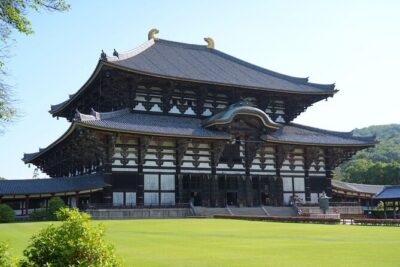
Nara Early Morning Tour (Kyoto or Osaka Departure Available)
Read our review →

Hiroshima in a Nutshell: Morning Bike Adventure
Read our review →