
Reviewed · WALKING TOURS
Hiroshima Historical Walking Tour – Why A-Bomb was Dropped
Start with the city before the bomb. This $35 English walking tour links Gokoku Shrine, Hiroshima Castle, and the Peace Memorial Park into one clear story. I especially like the way it explains Hiroshima’s military importance before 1945, then ends at the Peace Memorial Museum, and I like the chance to hear a local perspective from guides such as Chihiro or Emi. The main consideration is emotional: this is a serious subject, and 150 minutes can feel full when so much ground must be covered.
The route is well chosen for a first visit. You get useful background before seeing the Atomic Bomb Dome and memorials, rather than arriving at the park with only isolated facts. Guides such as Thomas have also been praised for answering side questions and offering food suggestions afterward, though the tour does not include tips, museum admission, or anything beyond the guided walk.
In This Review
- Key points to know before you book
- Why this Hiroshima walk works better than visiting the park first
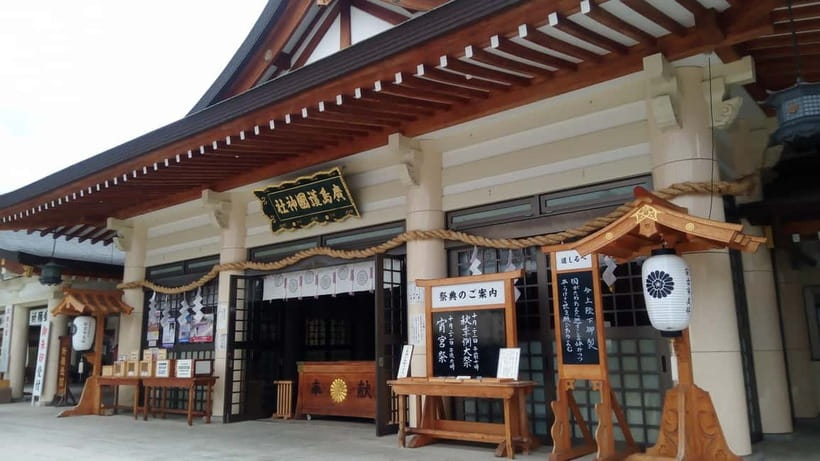
- Meeting at Gokoku Shrine, where the story begins
- Hiroshima Castle and the city’s military role
- Hiroshima Gate Park and the city between past and present
- The Atomic Bomb Dome, where the story becomes physical
- Peace Memorial Park and the meaning of the memorials
- Finishing at the Peace Memorial Museum
- Pace, walking comfort, and accessibility
- Is $35 good value for Hiroshima?
- Who should take this tour?
- Final verdict: book before the museum
- FAQ
- How long does the Hiroshima Historical Walking Tour last?
- How much does the tour cost?
- What language is the tour conducted in?
- Where is the meeting point?
- Where does the tour finish?
- Which main places are included on the route?
- Is the tour wheelchair accessible?
- Is a tip for the guide included?
- Can I cancel the booking?
Key points to know before you book
- Starts at a shrine for war dead: Gokoku Shrine provides the first look at Hiroshima’s military identity before 1945.
- Hiroshima Castle adds strategic context: The castle stop helps explain why the city mattered during the war.
- The route ends at the Peace Memorial Museum: This makes the walk a useful introduction before visiting the exhibits.
- Guides bring different perspectives: Chihiro and several other guides are from Hiroshima, while Thomas offers an outside perspective shaped by years living in Japan.
- Small sitting breaks help: The pace is described as manageable, with pauses between major sites.
- Flexible booking adds value: You can cancel up to 24 hours ahead for a full refund and reserve now while paying later.
Why this Hiroshima walk works better than visiting the park first
Hiroshima’s Peace Memorial Park is powerful, but it can also feel confusing on a first visit. The monuments, museum, riverbanks, and surviving structures carry layers of meaning that are not always obvious from a quick walk.
This tour gives you a narrative before you enter the museum. It begins with Hiroshima as a military city, moves through the bombing and its human cost, and finishes with the city’s peace message. That order matters. You are not simply looking at monuments. You are learning why the city was selected, what happened to its people and buildings, and how Hiroshima remembers the event today.
I also like that the tour does not begin at the most familiar memorial. Gokoku Shrine and Hiroshima Castle make you think about Hiroshima before the atomic bomb. The city was not only a symbol of destruction. It had its own political, military, cultural, and everyday identity.
The question in the title, why the A-bomb was dropped on Hiroshima, deserves care. There is no single sentence that explains such a decision. The tour is designed to discuss the military setting, Hiroshima’s strategic role, the selection of the target, and the consequences for civilians and the city’s culture. A good guide will help you see the wider chain of events instead of presenting a neat, overly simple answer.
More Walking Tours in Hiroshima
- Hiroshima Peace (Heiwa) Walking Tour at World Heritage Sites
★ 5.0 · 872 reviews - Hiroshima City 4hr Private Walking Tour with Licensed Guide
★ 5.0 · 437 reviews - Hiroshima Walking Tour Why A Bomb was dropped to Hiroshima
★ 5.0 · 347 reviews
Meeting at Gokoku Shrine, where the story begins
The meeting point is in front of the torii gate of Hiroshima Gokoku-jinja, near the main hall. Give yourself enough time to find the correct gate, especially if you are arriving in a hurry. The shrine is not just a convenient starting point. It sets the tone for the first part of the walk.
Gokoku shrines are associated with people who died in war, so this opening stop places Hiroshima within Japan’s military and national story. That is important because the rest of the tour focuses heavily on the bombing. You first encounter the city’s relationship with war and remembrance, then move toward the destruction caused by the atomic bomb.
The guide may spend less time here than at the later memorial sites, but the setting gives you a useful frame. You can expect historical explanation rather than a long religious visit. The emphasis is on what the shrine represents and how it connects to Hiroshima’s past.
This is also where the quality of the guide begins to matter. Chihiro has been praised for explaining the city through both historical facts and family experience. Other guides, including Emi and Chisa, have been described as warm, clear, and easy to question. The guide changes, so you should not book solely for one person, but the recurring strength is the human delivery of the subject.
Hiroshima Castle and the city’s military role
The walk continues to Hiroshima Castle, with about 20 minutes for a visit, guided explanation, and photographs. This is one of the most useful stops for understanding why Hiroshima became an important wartime target.
The castle helps shift your attention from memorial history to military geography and administration. You will hear about Hiroshima’s role during World War II and the reasons its location and facilities mattered. The guide uses the site to explain the city’s strategic significance before the bombing.
Do not expect a full castle tour at this point. Twenty minutes is enough for an overview and a photo stop, but not for a slow visit to every exhibit or corner. If you want a more detailed look at Hiroshima Castle, plan a separate visit.
That limitation is not a serious flaw. The purpose here is connection. The castle is one piece of a larger explanation, and the walk keeps moving so you can reach the Peace Memorial Park with the necessary background. A guide-led overview is more useful than spending the entire morning at one site and then trying to understand the bombing alone.
Hiroshima Gate Park and the city between past and present
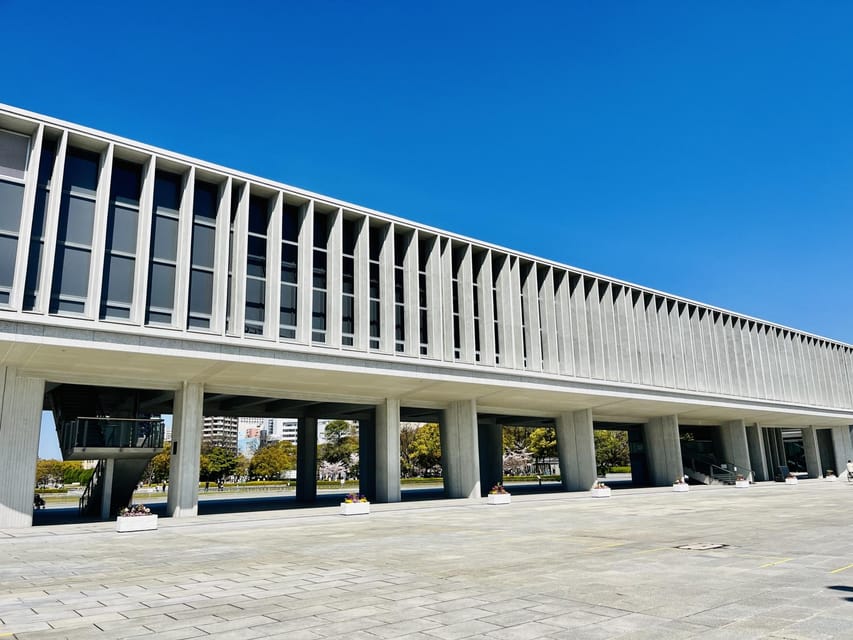
The itinerary includes about 30 minutes at Hiroshima Gate Park. This section gives the walk room to breathe between the military sites and the memorial core.
Gate Park helps you experience Hiroshima as a living city, not only as a place defined by one terrible morning. Guides can use this part of the route to discuss local culture, the city’s recovery, and the way Hiroshima presents itself today. Several guides have also offered practical suggestions for restaurants, museums, and other places to visit, which is useful if this is your first day in town.
This is one reason the tour feels broader than a basic A-bomb memorial walk. You learn about the city’s identity, not just the mechanics of the bombing. The balance is welcome, though the exact detail will depend on the guide and the questions your group asks.
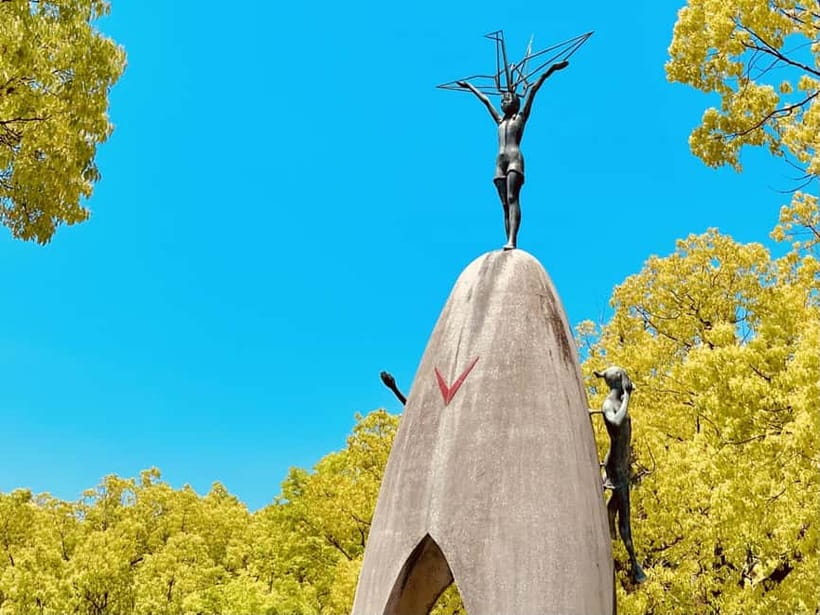
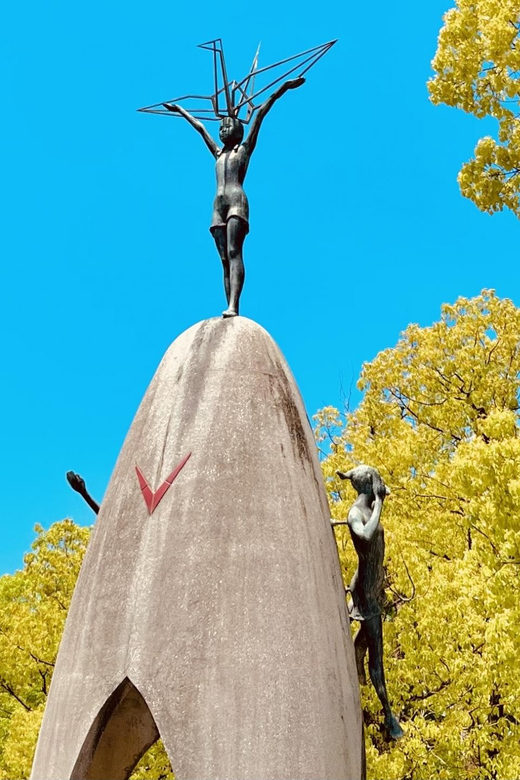
Some route accounts also mention Hiroshima Orizuru Tower and the Hiroshima Prefectural Industrial Promotion Hall among the landmarks seen along the way. The Orizuru connection is especially fitting because folded paper cranes have become tied to Hiroshima’s peace message. At one point, visitors may see origami cranes floating down at Orizuru Tower, while the Children’s Peace Monument is associated with millions of folded cranes.
Treat these as possible highlights along the walk rather than guaranteed extended visits. The main scheduled focus remains the castle, Gate Park, Atomic Bomb Dome, Peace Memorial Park, and the museum finish.
A completely different kind of day out:
- Peaceful Hiroshima & Miyajima UNESCO 1 Day Bus Tour
★ 5.0 · 5,309 reviews - Hiroshima Peace Memorial Museum Ticket
★ 4.8 · 2,727 reviews - Hiroshima: Hiroshima and Miyajima UNESCO Sites 1-Day Tour
★ 4.9 · 2,330 reviews - Hiroshima Peace Memorial Museum Admission
★ 4.6 · 1,308 reviews
The Atomic Bomb Dome, where the story becomes physical
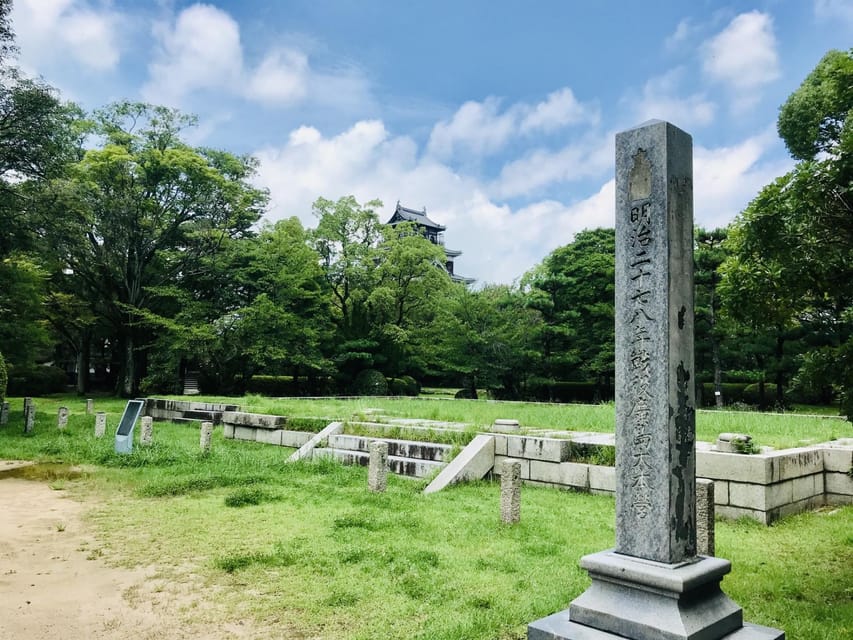
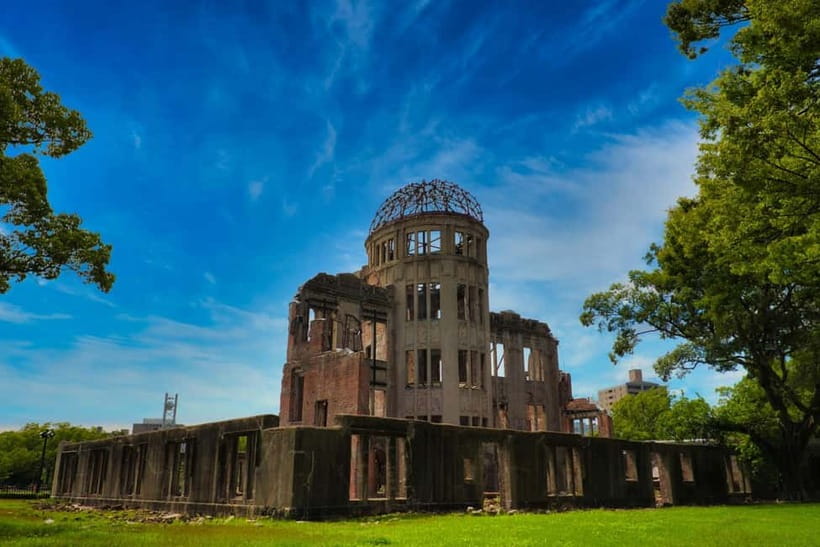
The Atomic Bomb Dome is scheduled for roughly 20 minutes with the guide. This is the moment when the historical explanation becomes a direct encounter with a surviving structure.
The building’s damaged frame makes the scale of the destruction easier to grasp than a paragraph of dates can. Your guide can explain its place in the story and point out why it has become one of Hiroshima’s best-known symbols. It is a photo stop, but it is not merely a photo stop. The sight asks you to hold two ideas together: the building survived, while much of the surrounding city did not.
You should expect a quiet and reflective part of the walk. The guide may give you time to look, then answer questions about the structure, the bombing, and the memorial area around it.
The 20-minute allocation is sensible for a guided introduction, but you may want to return later if you prefer to view the Dome slowly. The tour’s value is in giving you the explanation and setting. Your own second visit can then be more personal and unhurried.
Peace Memorial Park and the meaning of the memorials
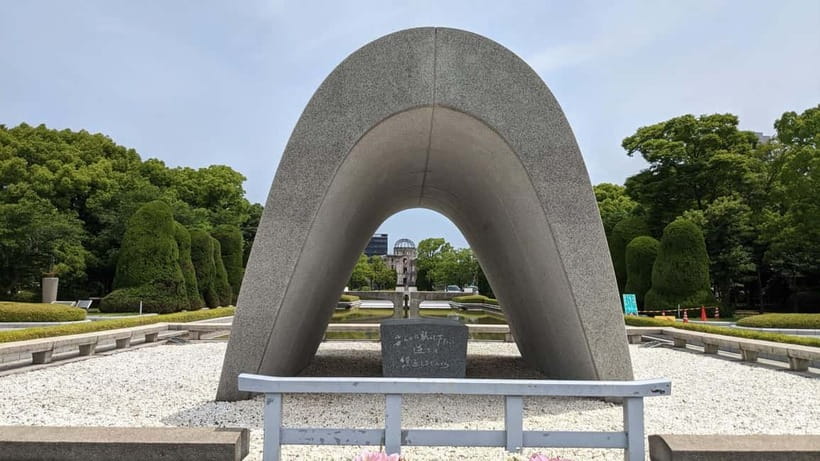
The final major walking section spends about 30 minutes in Hiroshima Peace Memorial Park. This is where the different threads of the tour come together.
You can expect explanations of the park’s monuments and their meaning, including the Children’s Peace Monument and the role of paper cranes. The park is not a single memorial with one message. It contains reminders of individual suffering, children affected by the bombing, calls for peace, and the city’s continuing effort to speak about nuclear weapons and reconciliation.
This part can be confronting. Some people will find the personal stories and memorial symbols harder than the earlier military discussion. That is not a reason to avoid it, but you should know what kind of afternoon you are choosing. The tone is serious, yet the guides are not described as cold or theatrical. They tend to combine painful facts with a sense of hope and responsibility.
The local perspective can make a real difference. Chihiro has shared family experiences and her commitment to peace education. Other Hiroshima-born guides have spoken about the city in personal terms. At the same time, Thomas and other non-Japanese guides have been praised for explaining Japanese culture in clear English and for bringing an outside viewpoint. If you are concerned about having only one national perspective, a guide with a different background may add useful balance.
Finishing at the Peace Memorial Museum
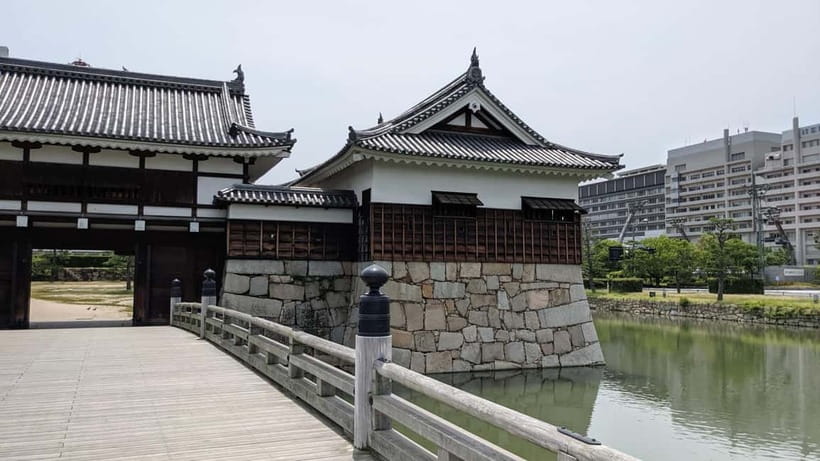
The walk finishes at the Hiroshima Peace Memorial Museum. This is one of the tour’s best practical features.
You arrive with a basic timeline and a clearer understanding of the sites you have just seen. That preparation can make the museum more coherent, especially if you are unfamiliar with Japanese wartime history or the political debates surrounding the bombing.
The tour itself is listed as a guided walk, so you should not assume that the museum visit is included as a guided museum tour. The stated inclusions cover the guide, and tips are not included. Check the current museum arrangements and admission details when booking if you want to enter immediately after the walk.
Finishing here also lets you decide how much more time you need. You may be ready to go inside at once, or you may need a quiet break after two and a half hours of heavy material. Either choice is reasonable.
Pace, walking comfort, and accessibility
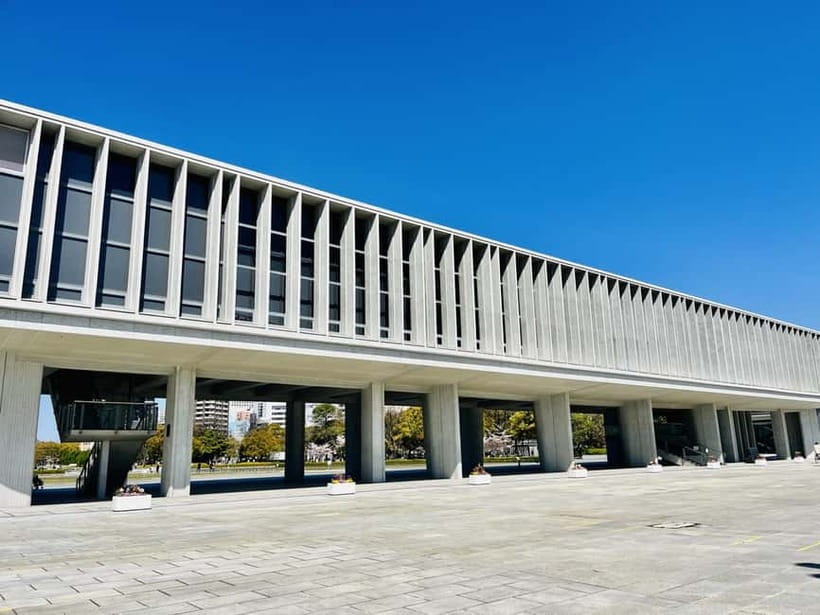
The total duration is 150 minutes, or two and a half hours. That is long enough to build a proper story but short enough to fit into a busy Hiroshima day.
The route includes several stops rather than a nonstop march. Sitting breaks are available during the walk, and the pace has been described as comfortable. You will still be on your feet for much of the experience, so sensible shoes are a good idea.
The tour is wheelchair accessible, which makes the planned route more practical for visitors who need step-free access. Even so, accessibility needs can differ from person to person. Ask the operator about your specific requirements if you need detailed information about surfaces, rest points, or access inside individual sites.
The walk is offered in English with a live guide. English quality has been praised across guides such as Emi, Thomas, Chihiro, and Chisa. Their styles vary. Some focus on family stories and personal commitment to peace, while others build a careful historical explanation and welcome detailed questions.
Is $35 good value for Hiroshima?
At $35 per person, this is a reasonable price for a 2.5-hour guided walk through the city’s most important historical area.
You are paying for structure and interpretation, not entry tickets or transport. A self-guided visit costs less, but you would need to work out the relationship between Gokoku Shrine, Hiroshima Castle, the military past, the Atomic Bomb Dome, and the Peace Memorial Park on your own. You would also miss the opportunity to ask why a site matters while standing in front of it.
The strongest value comes from the guide. A careful explanation of the bombing’s background can prevent the day from becoming a series of disconnected memorial stops. Food suggestions and local tips from guides such as Thomas and Chihiro are a welcome extra, though they should be viewed as a bonus rather than the main reason to book.
The price is less attractive if you only want photographs or a quick walk through the park. It is aimed at people who want interpretation, questions answered, and a clearer sense of Hiroshima before entering the museum.
You can cancel up to 24 hours before the start for a full refund, and the reserve-now, pay-later option keeps your schedule flexible. Those terms are useful when planning a Japan itinerary with several moving parts.
Who should take this tour?
I would recommend it most strongly if you are visiting Hiroshima for the first time and want historical guidance before seeing the museum. It also suits anyone who wants to understand the city before 1945, not only the events of August 1945.
Families can use the tour as a structured introduction, but parents should judge the subject for their children. One 12-year-old was able to engage with the tour and ask questions, yet the material remains serious.
It is also a good choice for people who value personal interpretation. Local guides can explain how the bombing shaped Hiroshima and their own families, while guides from overseas may help compare Japanese history with what you already know.
I would skip it if you dislike walking, want a completely private experience, or prefer to study the museum without any prior framing. The tour is also not the right fit for someone looking only for a light sightseeing outing.
Final verdict: book before the museum
This Hiroshima walking tour earns its strong 4.8 rating from more than 893 reviews because it does a difficult job with care. It explains the military setting, the reasons Hiroshima was selected, the human damage, and the city’s peace message without treating the subject as a quick sightseeing checklist.
I like the route’s order, the finish at the museum, and the chance to learn from guides such as Chihiro, Emi, Chisa, and Thomas. The main drawback is the emotional weight and the limited time at each stop.
Book it if you want context before the museum and a guide who welcomes questions. If you do, meet at the Gokoku Shrine torii gate, allow the full two and a half hours, and keep the rest of the day flexible enough for reflection.
FAQ
How long does the Hiroshima Historical Walking Tour last?
The tour lasts 150 minutes, or two and a half hours.
How much does the tour cost?
The listed price is $35 per person.
What language is the tour conducted in?
The tour is conducted in English with a live English-speaking guide.
Where is the meeting point?
Meet in front of the torii gate at Hiroshima Gokoku-jinja, near the main hall.
Where does the tour finish?
The tour finishes at the Hiroshima Peace Memorial Museum.
Which main places are included on the route?
The route includes Gokoku Shrine, Hiroshima Castle, Hiroshima Gate Park, the Atomic Bomb Dome, Hiroshima Peace Memorial Park, and the Peace Memorial Museum finish.
Is the tour wheelchair accessible?
Yes, the activity is listed as wheelchair accessible.
Is a tip for the guide included?
No. Tips for the guide are not included.
Can I cancel the booking?
Yes. You can cancel up to 24 hours in advance for a full refund. You can also reserve now and pay later.
Just added in Hiroshima
- Hiroshima Peace Memorial Museum Ticket★ 4.8 · 2,727 reviews
- Hiroshima Peace Memorial Museum Admission★ 4.6 · 1,308 reviews
- Private Full Day Hiroshima Tour★ 4.5 · 29 reviews
- The Peace Memorial to Miyajima : Icons of Peace and Beauty★ 4.5 · 31 reviews
- Shore Excursion from Hiroshima Port : Private Tour in Hiroshima★ 5.0 · 17 reviews
- Hiroshima & Miyajima All-Inclusive Tour w/Licensed guide Pancho★ 5.0 · 54 reviews
- Hiroshima Country Cycling: Explore Rural Life 1 HR from City★ 5.0 · 22 reviews
- Hiroshima Saijo Sake Tasting Tour with visit to 7 Breweries★ 5.0 · 104 reviews
Walking Tours, compared.
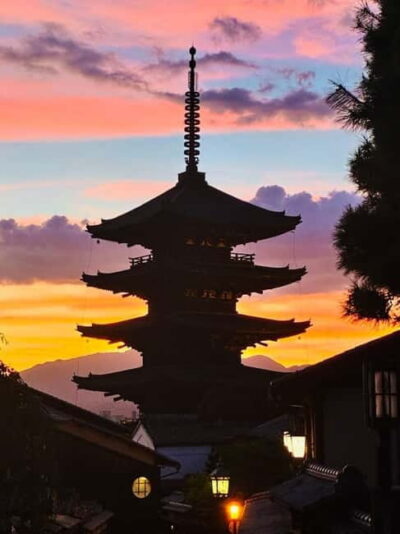
Kyoto Geisha Walking Tour: Gion District & Hidden Gems
Read our review →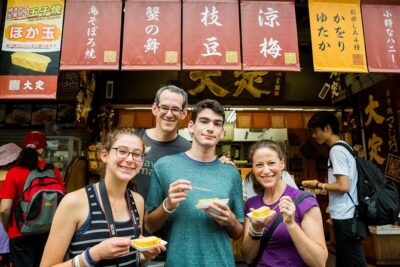
Tokyo Tsukiji Fish Market Food and Culture Walking Tour
Read our review →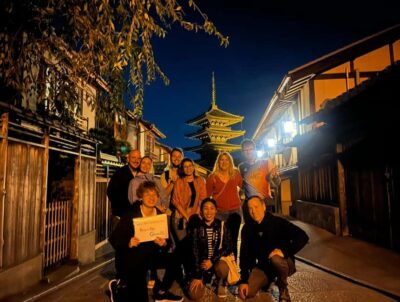
Gion Magical Night Walking Tour with Geisha Trivia
Read our review →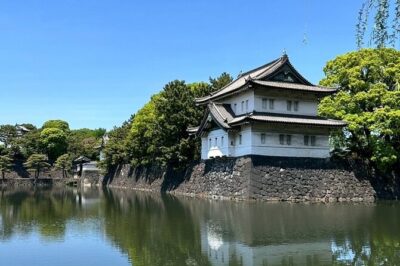
Imperial Palace and Shogun Historical Walking Tour
Read our review →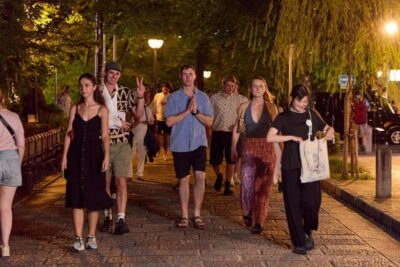
Gion Geisha District Walking Tour – Stories of Geisha
Read our review →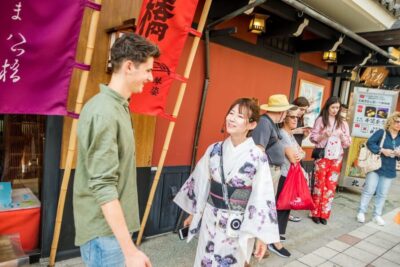
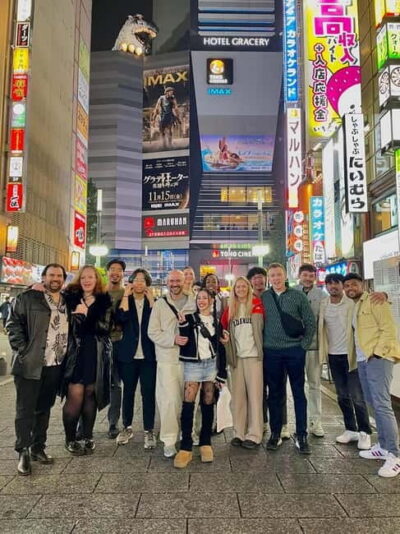
Shinjuku Local Bar and Izakaya Guided Walking Tour
Read our review →
Browse the lists this tour appears in