
Reviewed · HIROSHIMA TOURS
Hiroshima and Miyajima Private Guided Tour
Hiroshima asks you to remember. This private tour joins the Peace Memorial Park and its difficult, important stories with the beauty of Miyajima Island, creating a day that moves from sorrow to renewal. I like the personal guiding, especially with guides such as Kazuko, John, and Gajender, and I like that the plan can change around your interests.
The tour also takes care of the basic tram and ferry connections, with admission to the Peace Memorial Museum and Itsukushima Shrine included. The main caution is time: public transportation and long walks can eat up the day, especially from a distant port or pickup point. If you need to return to a cruise ship at a fixed hour, discuss the schedule before booking.
In This Review
- Key Points At A Glance
- From Peace Park To Miyajima In One Day
- Hiroshima Peace Memorial Park: Start With Respect
- The A-Bomb Dome And The Cenotaph
- The Peace Memorial Museum Requires Time
- Hiroshima Castle And Shukkeien Garden
- Hondori And Hiroshima-Style Food
- Miyajima And The Floating Torii Gate
- The Fast Boat Costs Extra
- Public Transit, Walking, And Pace
- The Guides Make The Difference
- Who Should Book This Experience?
- Should You Book It?
- FAQ
- How long does the Hiroshima and Miyajima tour last?
- Is transportation included?
- Are the Peace Memorial Museum and Itsukushima Shrine admissions included?
- Do Hiroshima Castle and Shukkeien Garden cost extra?
- Is lunch included?
- Can I cancel for a refund?
Key Points At A Glance
- The day connects two very different places: Hiroshima’s Peace Memorial Park and Miyajima’s shrine, sea views, and free-roaming deer.
- A private guide makes the history personal: Kazuko is praised for her local connection and care, while John and Gajender bring strong historical and cultural background.
- Normal city transport is included: The tour uses Hiroshima’s tram system and a ferry to Miyajima.
- The advertised length is flexible: Plan for roughly four to eight hours, but covering both Hiroshima and Miyajima properly usually calls for a full day.
- Extra costs can appear: Hiroshima Castle and Shukkeien Garden charge separate admission, and a faster direct boat from Miyajima to Peace Park costs extra.
- Expect plenty of walking: Heat, crowds, stairs, and station connections can affect the pace.
From Peace Park To Miyajima In One Day
This is an ambitious introduction to Hiroshima. In one private outing, you may visit the city’s principal memorial sites, Hiroshima Castle, Shukkeien Garden, and Miyajima. That range is the tour’s great strength, but also its main limit. You see a lot, yet you cannot linger everywhere.
The private format matters here. Your guide can spend more time on the subjects that interest you, shorten a stop if you are tired, or point out places that are easy to miss. Several guides are praised for offering local food suggestions, taking photographs, and helping with transport. Kazuko, in particular, is described as warm, patient, energetic, and closely connected to Hiroshima.
The experience costs $150 per person. That is not a bargain-basement walking tour, but the price includes a private English-speaking guide, tram and ferry transport, the Peace Memorial Museum, and Itsukushima Shrine. For a small group that wants help with a complicated day, the value is fair. You are paying for interpretation and coordination, not simply admission tickets.
The price becomes less attractive if you only want Miyajima or only want the Peace Park. It is best suited to a first visit when you want both places and would rather not work out the connections yourself.
A few more options to weigh up in Hiroshima
- Peaceful Hiroshima & Miyajima UNESCO 1 Day Bus Tour
★ 5.0 · 5,309 reviews - Hiroshima Peace Memorial Museum Ticket
★ 4.8 · 2,727 reviews - Hiroshima: Hiroshima and Miyajima UNESCO Sites 1-Day Tour
★ 4.9 · 2,330 reviews
Hiroshima Peace Memorial Park: Start With Respect
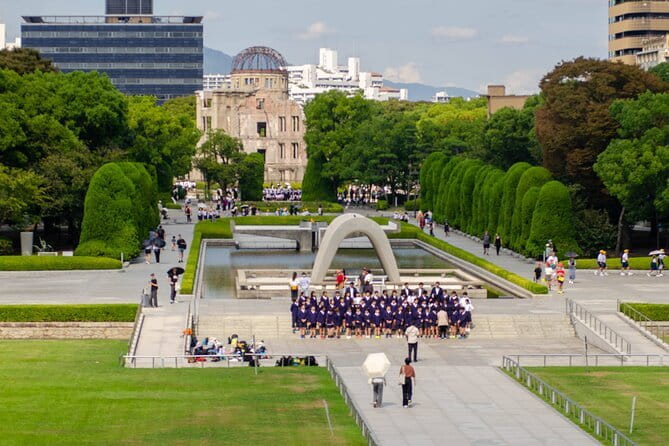
The tour begins at Hiroshima Peace Memorial Park, where the mood changes quickly. This is not a light sightseeing stop. Your guide will help place the monuments and open spaces within the story of August 6, 1945, and the city’s later commitment to peace.
You can expect about an hour here, with free admission to the park itself. The walking is generally straightforward, but the emotional weight is considerable. Give yourself permission to pause. You do not need to rush from one monument to the next simply because the schedule contains many stops.
The park works best with a guide who can explain what you are seeing without turning the visit into a lecture. Kazuko is praised for sharing both historical facts and personal connections to the city. John is also singled out for taking guests to less familiar places and explaining Hiroshima beyond its headline attractions.
The A-Bomb Dome And The Cenotaph
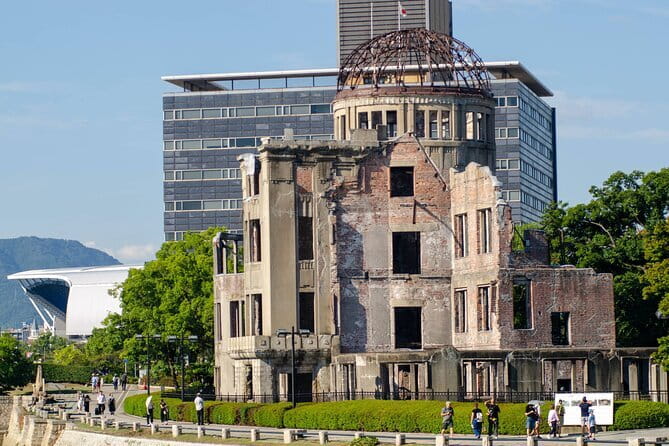
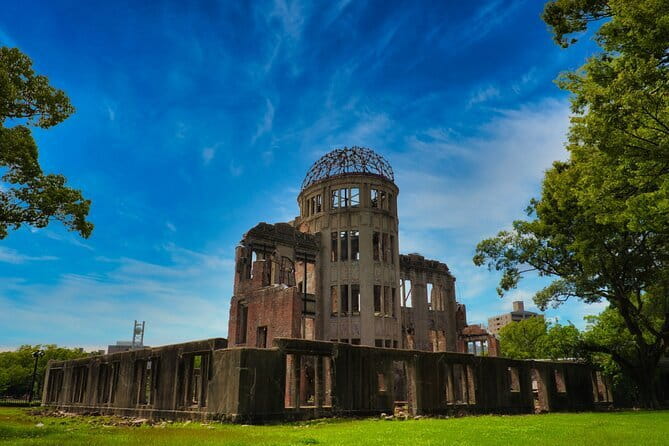
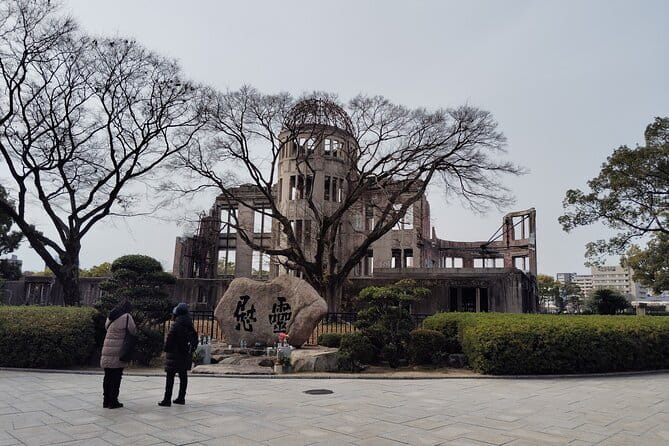
The A-Bomb Dome is one of Hiroshima’s most recognizable structures. Its damaged frame was preserved after the bombing, and the building now serves as a stark visual reminder of what happened. The planned stop is short, about 15 minutes, but it is worth taking time to look carefully from different angles.
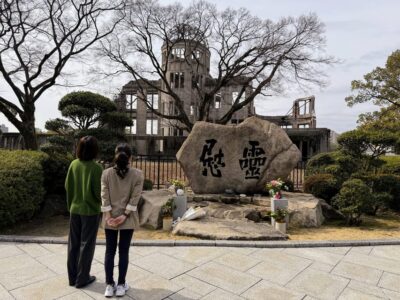
The Cenotaph for A-Bomb Victims receives a longer visit, around 45 minutes. Its curved form frames the Peace Flame and the A-Bomb Dome, creating one of the park’s most powerful views. Your guide can explain the memorial’s purpose and the words carved into it.
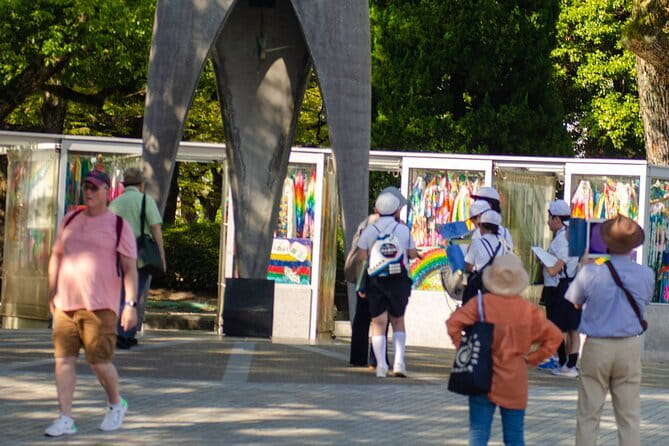
The Children’s Peace Monument is another brief but moving stop. It honors children who died from the bombing and its effects, with the story of Sadako Sasaki giving the monument a personal focus. The nearby Peace Bell invites visitors to ring it as a gesture for peace.
These stops are close enough to combine on foot, but the day can feel intense when the monuments come one after another. I would treat this first section as the heart of the tour, not merely something to check off before lunch.
The Peace Memorial Museum Requires Time
The Peace Memorial Museum is included, with about an hour set aside. That admission saves you a separate purchase, but the real benefit is having a guide to help you approach the exhibits.
The museum presents the events of August 6, 1945, and the suffering that followed. Some displays are upsetting. You may find the material difficult, particularly if you read every account and study every object. An hour gives you a meaningful visit, though you may want longer if modern wartime history is a major interest.
The strongest guiding reports describe explanations that are careful and humane. Gajender is praised for making the history understandable while also discussing Japanese culture and daily life. Kazuko is praised for connecting the city’s past with its present sense of hope. That balance is useful here. Hiroshima is not only a place of destruction. It is also a living city that chose to keep speaking about peace.
A completely different kind of day out:
- Hiroshima Peace Memorial Museum Admission
★ 4.6 · 1,308 reviews - Hiroshima / Miyajima Full-day Private Tour with Government Licensed Guide
★ 5.0 · 1,298 reviews - Hiroshima Historical Walking Tour – Why A-Bomb was Dropped
★ 4.8 · 893 reviews - Hiroshima Peace (Heiwa) Walking Tour at World Heritage Sites
★ 5.0 · 872 reviews
Hiroshima Castle And Shukkeien Garden
The tour may continue to Hiroshima Castle, also called Carp Castle. The present structure is a reconstruction, and the site introduces a different part of the city’s past, connected to feudal rule and the Mori clan. About an hour is suggested for the stop.
Admission to the castle is not included. The listed price is 500 yen. That is a modest extra charge, but you should know about it before the day begins. If you have only four hours, this stop may be dropped. If you have closer to eight hours, it becomes a more sensible addition.
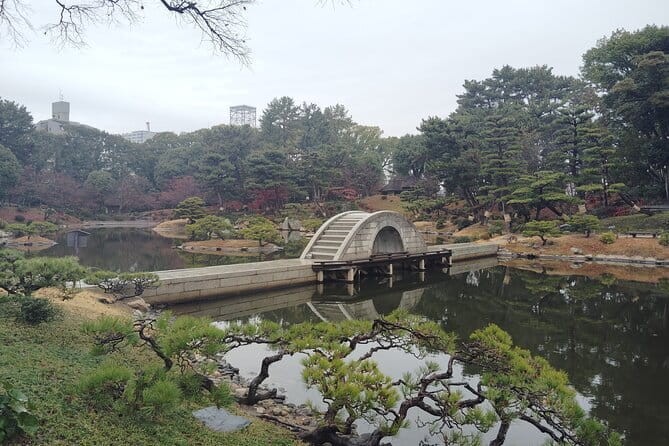
Shukkeien Garden offers another change of pace. Created in 1620, it is a traditional Japanese garden designed on a small scale, with paths, water, and carefully arranged scenery. Admission is 300 yen and is also separate.
I like the contrast these sites provide. After the memorial park and museum, the castle and garden show Hiroshima as a historic Japanese city, not only as a place defined by war. Still, do not assume both will fit comfortably into a short tour. A guide has warned some groups that the garden and castle might not be possible after a slow morning or a long Miyajima visit.
Hondori And Hiroshima-Style Food
Hondori is a pedestrian shopping and dining street in central Hiroshima. The tour description allows for a stop here, and the area can provide a useful look at ordinary city life between major sights.
The most practical reason to include Hondori is food. John has taken groups to a local restaurant for Hiroshima-style okonomiyaki, a layered savory pancake cooked with ingredients such as noodles, cabbage, and toppings. Lunch is not included, so you pay for your own meal.
A guide’s recommendation can make lunch more rewarding than simply choosing the first restaurant you see. One guide suggested okonomiyaki, and it became a favorite part of the day for the group. Ask your guide how much time lunch will take, since a sit-down meal can affect the afternoon schedule.
Miyajima And The Floating Torii Gate
Miyajima is the scenic half of the experience. The island is reached by ferry, and the crossing gives you views over the Seto Inland Sea before you arrive at the shrine area. The regular public ferry is included in the tour’s transportation.
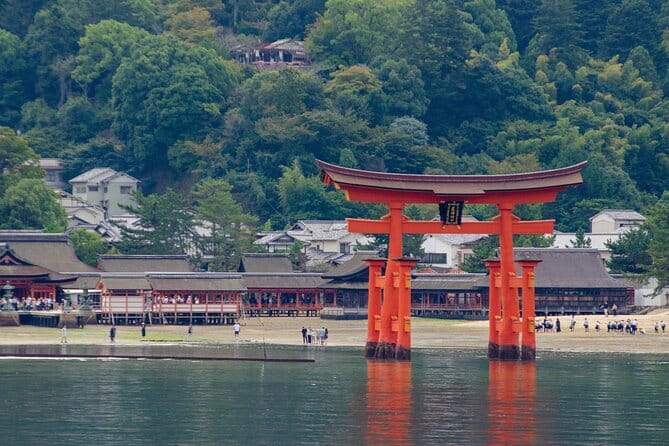
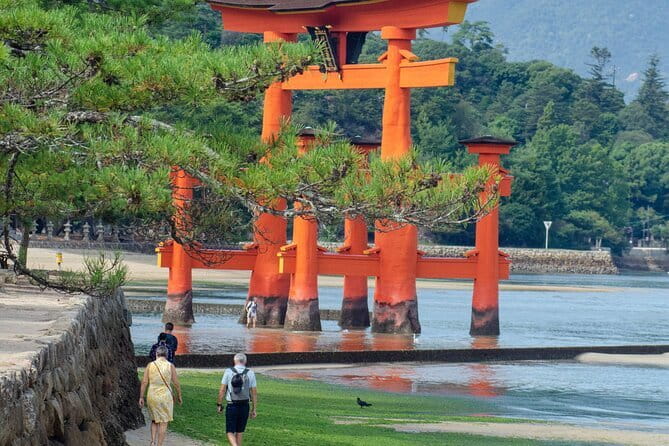
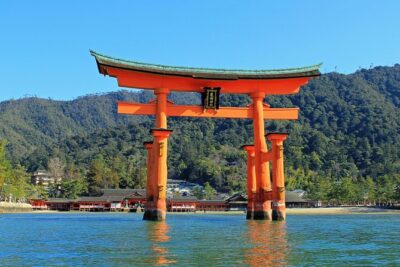
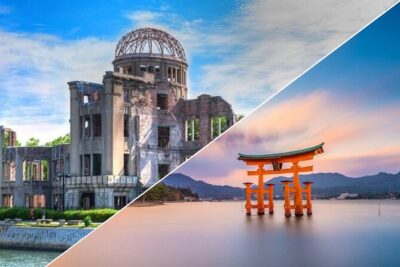
Miyajima is known for Itsukushima Shrine, the floating torii gate, and deer that roam freely around the island. The setting is beautiful, but it can also be crowded, especially around the main approach and shrine grounds. A private guide is useful here because you do not have to spend your time figuring out tickets, ferry connections, and the best order for the sights.
The suggested Miyajima visit is about an hour, followed by another hour at Itsukushima Shrine. That gives you a good first look, but it is not enough for every part of the island. You may not have time for a long walk or a leisurely meal. If Miyajima is your main goal, ask for a tour focused on the island rather than trying to fit in every Hiroshima stop.
Itsukushima Shrine admission is included. The shrine’s location over the water gives it a distinctive appearance, with the famous torii gate seeming to float at high tide. Conditions at the gate change with the tide, so the view will not look identical at every hour. The provided details do not promise a particular tide time, so do not book this tour solely for one exact photograph.
The Fast Boat Costs Extra
A useful but important detail concerns the boat that runs directly between Miyajima and Hiroshima Peace Park. This faster route costs 2,200 yen one way or 4,000 yen round trip, and it is not included.
The standard plan uses public transportation, including the tram and regular ferry. The direct boat can save time, but the fare is a significant extra cost, particularly if the guide’s ticket is also charged to the group. Confirm the price and who pays before agreeing to change the route during the day.
This issue matters most for cruise passengers or anyone with a strict departure deadline. One group needed a taxi after the tour ran late, while another had trouble because a pickup at a distant cruise port was not part of the accepted arrangement. The practical rule is simple: provide the exact port or hotel location when booking, and allow a generous return buffer.
Public Transit, Walking, And Pace
The tour includes pickup using public transportation rather than a private vehicle. That keeps the base price lower, but it means you will use trams, trains or station connections, and a ferry. Private transportation is not included.
Walking is a major part of the day. One group described the tour as enjoyable but noted the large number of steps. Another found the summer heat uncomfortable. Hiroshima and Miyajima can be hot, and the combination of pavement, open parkland, station platforms, and crowds can wear you down.
I would bring water, sun protection, and comfortable shoes. If you have mobility concerns, discuss them clearly before booking. The tour is private, so the guide can adjust the pace, but the distances between major sites and the need to use public transport remain. A private car may sometimes be arranged at an extra cost, as one group did during extreme heat.
The flexible length, listed as four to eight hours, needs careful handling. Four hours is not enough for an unhurried visit to both Hiroshima and Miyajima. An eight-hour day gives you the best chance of seeing the Peace Park, museum, shrine, and some additional sights. Ask for a written meeting point, end point, expected duration, and transport plan before you set out.
The Guides Make The Difference
The strongest reason to choose this tour is the guide. The names that receive the warmest praise are Kazuko, Gajender, and John.
Kazuko is described as thoughtful, energetic, and very good at steering groups through busy areas. She has helped with photographs, explained local customs, recommended okonomiyaki, and adjusted plans around personal needs. In one difficult situation, she accompanied a guest to a hospital and helped translate. That goes beyond sightseeing and shows the value of having a local person beside you.
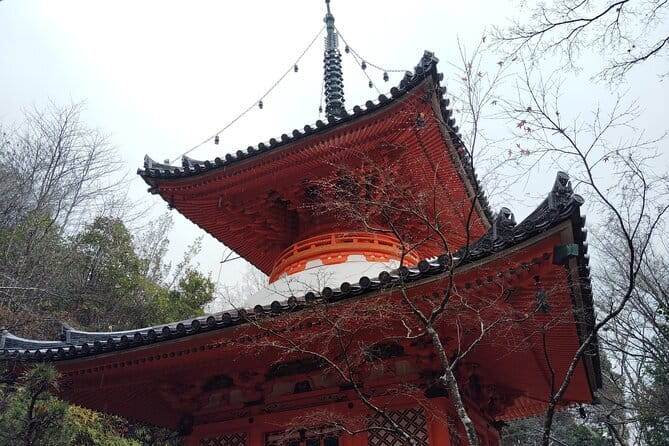
Gajender is praised for clear explanations of Japanese history, culture, and everyday life. He speaks English and Japanese fluently, and his academic background adds depth to the commentary. He is also noted for taking photographs and showing temple sites that many people would miss without local help.
John is praised for his long connection with Hiroshima, his historical background, and his willingness to include less common stops. His tours can include local food and personal stories, not just the standard memorial circuit.
Guide assignments may vary, so treat these names as useful requests rather than guarantees. The private format means your experience will depend heavily on the person assigned and on how clearly you explain your priorities.
Who Should Book This Experience?
I would recommend this tour to first-time visitors who want the essential Hiroshima experience in one day. It suits couples, families, and small groups that value private attention and do not want to manage the tram, ferry, admissions, and changing schedule alone.
It is especially useful if you want history explained in plain English, help finding local food, and the option to add a castle, garden, or quieter temple. The score of 4.7 from 75 ratings and a 93 percent recommendation rate reflect a strong overall record, though the lower ratings point to real planning concerns.
I would hesitate if you dislike walking, are visiting during severe heat, or have a tight cruise departure. I would also avoid squeezing this into four hours if both major destinations matter to you. A full day gives the guide room to do the Peace Museum justice and still reach Miyajima without turning the experience into a race.
Should You Book It?
Book this private tour if you want a thoughtful guide to connect Hiroshima’s memorial sites with Miyajima’s shrine and scenery. At $150 per person, it offers solid value for a small group when you use the included tickets and public transport, and the personal guidance can make a major difference at the Peace Memorial Museum.
Before paying, confirm your pickup location, tour length, walking demands, and return time. Ask about extra fares for the direct boat, and decide in advance whether Hiroshima Castle and Shukkeien Garden matter more to you than extra time on Miyajima. You can cancel for a full refund up to 24 hours before the start, but changes or cancellations inside that window are not refundable.
FAQ
How long does the Hiroshima and Miyajima tour last?
The experience is listed at approximately four to eight hours. A longer day is more suitable if you want to visit both the Peace Memorial Park and Miyajima without rushing.
Is transportation included?
Public transportation by tram and ferry is included. Private transportation is not included, and a direct boat between Hiroshima Peace Park and Miyajima costs extra.
Are the Peace Memorial Museum and Itsukushima Shrine admissions included?
Yes. Admission to the Peace Memorial Museum and Itsukushima Shrine is included in the tour price.
Do Hiroshima Castle and Shukkeien Garden cost extra?
Yes. Hiroshima Castle costs 500 yen, and Shukkeien Garden costs 300 yen. These admissions are not included.
Is lunch included?
No. Lunch is not included. Your guide may suggest a local restaurant, including places serving Hiroshima-style okonomiyaki.
Can I cancel for a refund?
You can receive a full refund if you cancel at least 24 hours before the experience begins. Cancellations or changes made less than 24 hours before the start are not refunded or accepted.
Just added in Hiroshima
- Hiroshima Peace Memorial Museum Ticket★ 4.8 · 2,727 reviews
- Hiroshima Peace Memorial Museum Admission★ 4.6 · 1,308 reviews
- Private Full Day Hiroshima Tour★ 4.5 · 29 reviews
- The Peace Memorial to Miyajima : Icons of Peace and Beauty★ 4.5 · 31 reviews
- Shore Excursion from Hiroshima Port : Private Tour in Hiroshima★ 5.0 · 17 reviews
- Hiroshima & Miyajima All-Inclusive Tour w/Licensed guide Pancho★ 5.0 · 54 reviews
- Okunoshima Rabbit Island Cycling Tour with Local Guide★ 4.5 · 17 reviews
- Hiroshima Country Cycling: Explore Rural Life 1 HR from City★ 5.0 · 22 reviews
Hiroshima Tours, compared.
Peaceful Hiroshima & Miyajima UNESCO 1 Day Bus Tour
Read our review →
Hiroshima and Miyajima UNESCO Sites 1-Day Tour
Read our review →
Hiroshima / Miyajima Full-day Private Tour with Government Licensed Guide
Read our review →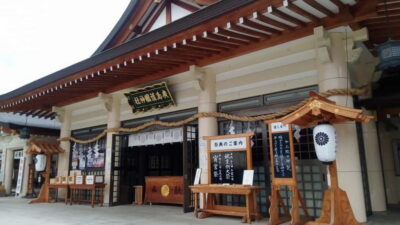
Hiroshima Historical Walking Tour – Why A-Bomb was Dropped
Read our review →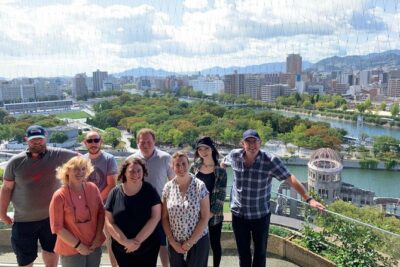
Hiroshima Peace (Heiwa) Walking Tour at World Heritage Sites
Read our review →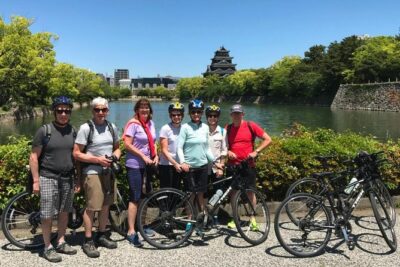
Hiroshima in a Nutshell: Morning Bike Adventure
Read our review →Browse the lists this tour appears in