
Reviewed · HIROSHIMA TOURS
Hiroshima/Guided Virtual Tour of Peace Park/PEACE PARK TOUR VR
History comes alive at street level. This Hiroshima tour pairs a short walk through Peace Memorial Park with VR scenes based on survivor testimony and old photographs. I like the personal focus on Eizo Nomura, the only person known to have survived inside the Fuel Hall, and I like the small group size, capped at six people. The main drawback is value: at $33.03, the tour may feel expensive if you already visited the Peace Memorial Museum or expect polished, game-quality VR.
You meet at the Peace Park Rest House at 10:30 am, and the guide handles the headset setup before leading you between several nearby sites. The tour lasts about 80 minutes, so it suits you if you want a focused introduction without a long walk. Guide Kazuko has earned special praise for answering questions and making the material feel personal, though the short videos may not satisfy you if you want a longer or more advanced digital production.
In This Review
- Key points to know before booking
- Starting at the Rest House with Eizo Nomura’s story
- Seeing the Atomic Bomb Dome before and after the blast
- Aioi Bridge and the city two months later
- The Atomic Bomb Dome as a World Heritage memorial
- Motoyasu Bridge and Hiroshima’s road to recovery
- Returning to the Rest House and writing a peace message
- Is $33.03 fair for 80 minutes?
- Timing, group size, and practical planning
- Who will get the most from PEACE PARK TOUR VR?
- Should you book this Hiroshima VR tour?
- FAQ
- Where does the tour start?
- What time does the tour begin?
- How long does the experience last?
- What does the price include?
- Are food and drinks included?
- How many people can join the tour?
- Can I cancel for a full refund?
Key points to know before booking
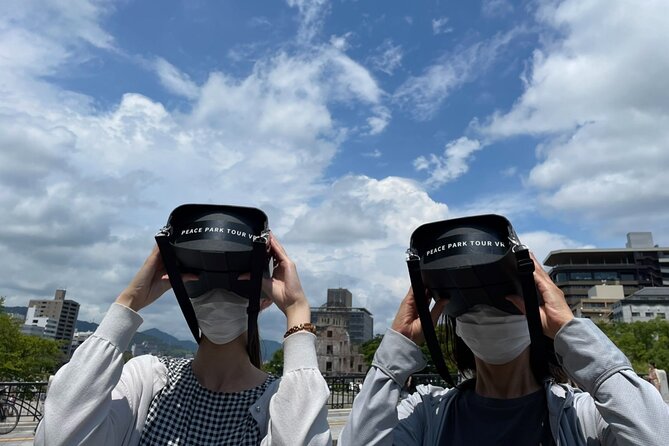
- Eizo Nomura’s story begins the tour: In the Rest House basement, you learn about the sole survivor of the Fuel Hall.
- VR changes the view of familiar places: The Atomic Bomb Dome and surrounding streets appear before and after August 6, 1945.
- The walk is short and manageable: Five stops fit into roughly 1 hour and 20 minutes, with little distance between them.
- The group is limited to six people: That gives you a better chance to ask questions and discuss difficult material.
- The final stop asks for a personal response: You can write a peace message on the River of Hope wall.
- The price rewards context, not technology alone: The guide and historical framing matter more than cutting-edge graphics.
Starting at the Rest House with Eizo Nomura’s story
Your meeting point is the Hiroshima Peace Park Rest House, at 1 Nakajimacho in Naka Ward. The tour begins at 10:30 am, and your guide waits at reception. You receive the VR goggles there, with an explanation of how to use them before heading down to the basement.
That first stop lasts about 20 minutes. Its subject is Eizo Nomura, whose experience gives the tour a human scale from the start. He was the only person to survive inside the Fuel Hall when the atomic bomb struck. Rather than beginning with a broad lecture, the tour places you in one person’s setting and asks you to picture what happened there.
This is one of the tour’s strongest choices. Peace Park can feel spacious and calm today, with lawns, monuments, and open paths. The basement setting helps you connect that peaceful present with the frightening reality of August 6, 1945.
The VR reenactment is based on historical facts, survivor accounts, and photographs. You are not simply looking at a headset screen for entertainment. The digital scenes serve as a bridge between the building you can see now and the life that occupied it before the bombing.
You should expect a guided historical experience, not a long museum visit. The headset is included, and the admission charge for each stop is also included. Food, drinks, and transportation to the Rest House are not included, so plan your route to the meeting point before 10:30.
A few more options to weigh up in Hiroshima
- Peaceful Hiroshima & Miyajima UNESCO 1 Day Bus Tour
★ 5.0 · 5,309 reviews - Hiroshima Peace Memorial Museum Ticket
★ 4.8 · 2,727 reviews - Hiroshima: Hiroshima and Miyajima UNESCO Sites 1-Day Tour
★ 4.9 · 2,330 reviews
Seeing the Atomic Bomb Dome before and after the blast
The second stop is the Peace Clock Tower, where you use the headset to compare the city before and after the moment of destruction. This section lasts about 15 minutes.
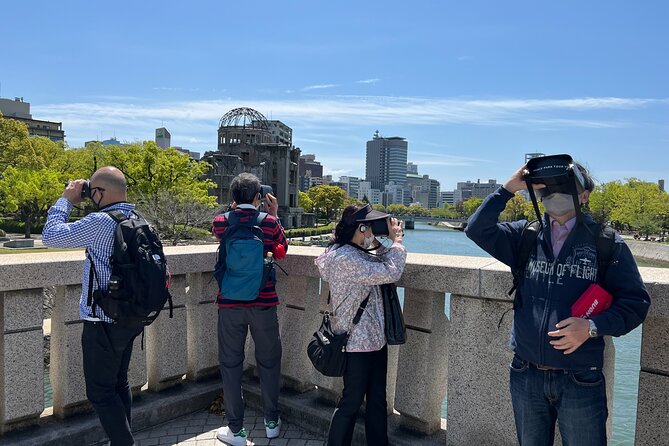
The focus is the Atomic Bomb Dome. You can learn how the building was damaged by the atomic bomb and how it became the structure you see today. The value here comes from comparison. The Dome is familiar to anyone who has seen photographs of Hiroshima, but VR lets you consider it as a working building in a living city before the attack.
The experience also makes clear that the Dome was not created as a memorial. Its present meaning came later, after the bombing left its walls and frame standing. In the headset, that change from ordinary civic building to worldwide peace symbol becomes easier to grasp.
You may find this stop more powerful if you first look carefully at the actual structure. Notice its shape, its exposed framework, and its position near the river. Then the VR reconstruction has a real place to attach to, rather than floating as a series of images.
The limitation is the technology itself. One three-star assessment found the videos shorter and less polished than other VR games and productions. That is fair criticism. If you are paying mainly for high-end graphics, $33.03 may not feel like a bargain.
I would judge the headset as a tool, not the whole product. The guide’s explanation, the location, and the historical record carry much of the experience. The digital material works best when it helps you see the real Dome with fresh attention.
Aioi Bridge and the city two months later
At Aioi Bridge, the tour shifts to the city roughly two months after the bombing. This stop also takes about 15 minutes.
The VR scenes show Hiroshima after the streets had become a sea of fire, with survivor testimony helping describe what happened. The point is not only the moment of impact. You also see the aftermath, when people had to face a destroyed city and begin living through the consequences.
That time shift is important. A tour that focuses only on the explosion can make Hiroshima feel frozen at one terrible instant. This section reminds you that the suffering continued afterward, and that survivors had to rebuild their lives amid ruins, injury, grief, and confusion.
Aioi Bridge is especially meaningful because it helps connect the park’s memorial sites to the city around them. The bridge is not just a viewpoint for a digital scene. It is part of the physical setting where the story unfolds.
The guide also discusses an episode connected with the beginning of recovery. The supplied details do not spell out every part of that episode, so you should expect the guide to provide the fuller explanation during the stop. This is where the small group helps. With no more than six people, you can ask for clarification rather than simply moving along with a large crowd.
The Atomic Bomb Dome as a World Heritage memorial
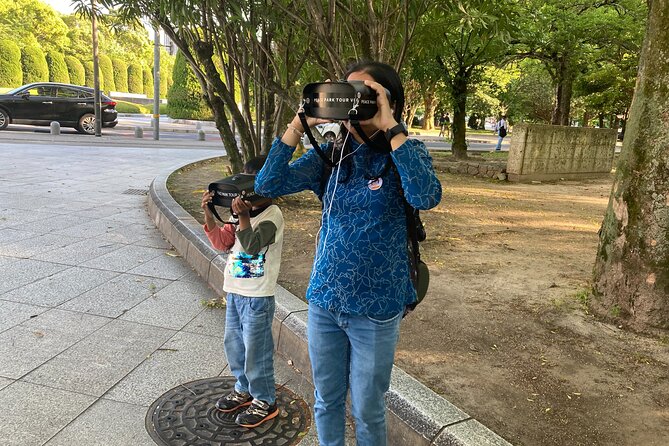
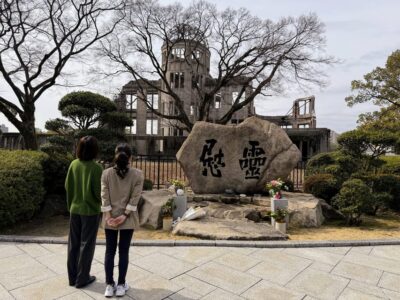
One section of the route focuses on the Atomic Bomb Dome itself. It is the only building in the world to retain visible traces of the atomic bombing, and it became a World Heritage site in 1996.
That designation gives the site global importance, but the tour keeps your attention on the structure’s physical evidence. The Dome is not a reconstructed monument. Its damaged form is part of the message. You can see how a building can carry memory without a long wall of text or a dramatic presentation.
The VR sequence adds the missing before-and-after view. You see what the building was and how it was changed, then return your attention to the remains in front of you. I find that approach useful for visitors who want context but do not want to spend every moment inside a museum.
You should also keep your expectations in check. The experience is not a substitute for the Peace Memorial Museum. It covers selected stories and locations in a compact format. If you have already spent a full day at the museum, the tour may repeat some broad themes rather than offer an entirely new education.
Still, the route has a different strength. The museum gives you documents, objects, and extended displays. This tour places you outside, at the very sites where the history happened, while a guide explains how the images relate to the ground beneath your feet.
A completely different kind of day out:
- Hiroshima Peace Memorial Museum Admission
★ 4.6 · 1,308 reviews - Hiroshima / Miyajima Full-day Private Tour with Government Licensed Guide
★ 5.0 · 1,298 reviews - Hiroshima Historical Walking Tour – Why A-Bomb was Dropped
★ 4.8 · 893 reviews - Hiroshima Peace (Heiwa) Walking Tour at World Heritage Sites
★ 5.0 · 872 reviews
Motoyasu Bridge and Hiroshima’s road to recovery
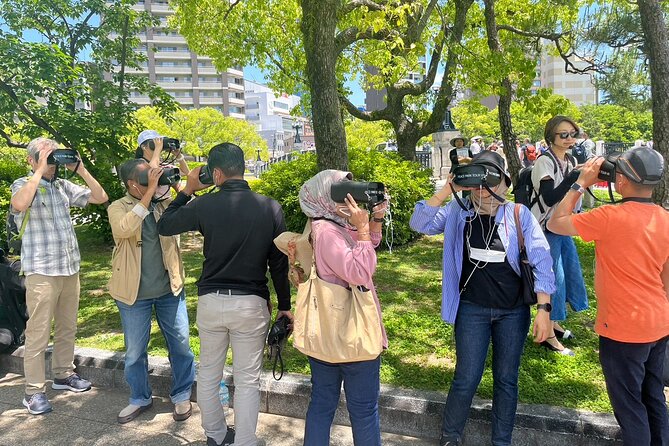
The fourth stop is Motoyasu Bridge, and it lasts about 15 minutes. Here the story moves from the first year after the bombing toward the present.
The guide explains how people rose amid the chaos and began taking steps toward recovery. That change in focus gives the tour a necessary balance. Peace Park is a place of mourning, but it is also a place shaped by the work of people who rebuilt their city and continued to call for peace.
The bridge setting supports that theme. You are not placed in a sealed room with history presented as something finished. You are standing in the modern city, looking at a place connected to both destruction and renewal.
This portion may appeal most to you if you want the tour to address more than tragedy. The survivor accounts and fire-damaged city are difficult subjects, but the story does not end there. The route follows Hiroshima from devastation toward recovery and its continuing appeal for peace.
Again, the guide matters as much as the headset. A five-star assessment praised Kazuko’s professionalism and her ability to bring the experience to life. Her role is not just to press play. She answers questions and helps you connect the VR scenes to the actual bridges, buildings, and open spaces around you.
Returning to the Rest House and writing a peace message
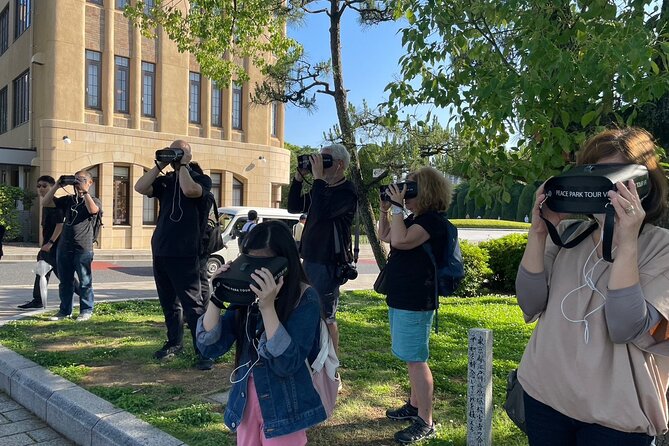
The tour ends back at the Peace Park Rest House, where you spend about 15 minutes reflecting on what you have seen.
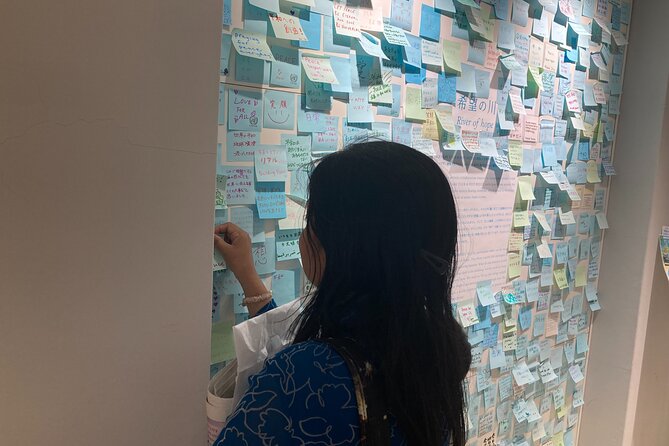
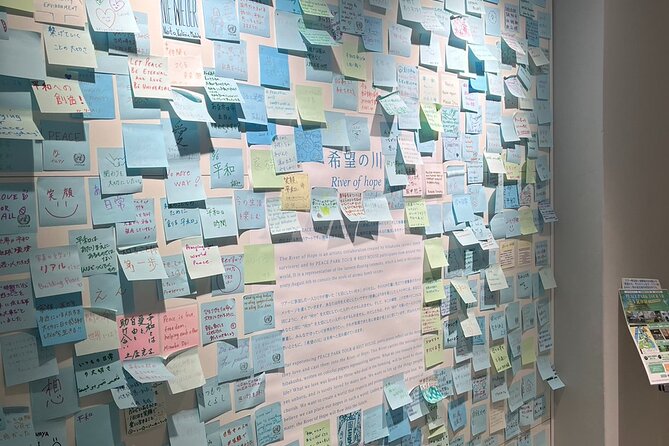
You can write a comment on the River of Hope wall, a space filled with messages from people wishing for peace. You also have the chance to express condolences. This final action is simple, but it prevents the tour from ending with a headset coming off and everyone immediately checking the time.
The closing matters because the experience is designed around remembrance and peace, not spectacle. You are asked to respond in your own words after hearing survivor testimony and seeing the city before and after the bombing.
If you prefer to process quietly, the format also gives you room to do that. The group is small, and the route ends where it began, so you do not need to rush off to find a different meeting point.
Is $33.03 fair for 80 minutes?
At $33.03 per person, this is not a cheap sightseeing add-on. You are paying for an English-speaking guide, headset rental, a small group, and a carefully chosen route through Peace Memorial Park. Admission to the individual stops is free, but the service lies in the interpretation and the VR material.
I think the price makes the most sense when you want a guided introduction to Hiroshima and have limited time. The short walk covers the key ideas without asking you to commit to a half-day activity. A five-star assessment praised the tour for being informative, moving, and shorter than many walking tours, which is useful if your schedule or energy is limited.
The value is less clear if you already visited the museum and know the main history well. One assessment specifically advised booking only with extra time and budget, noting that the videos were few and not as polished as other VR content. I would take that warning seriously.
Book it for the combination of place, guide, and historical reconstruction. Do not book it expecting an elaborate gaming experience with long interactive scenes. The tour’s power comes from seeing the real Peace Park while the headset restores pieces of a city that no longer exists.
Timing, group size, and practical planning
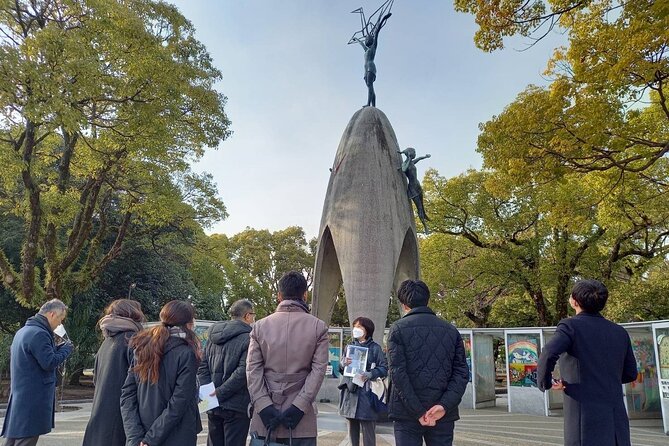
The activity begins at 10:30 am and lasts approximately 1 hour and 20 minutes. It returns to the same Rest House, which keeps the route easy to follow and makes it practical to pair with other Hiroshima plans later in the day.
The maximum group size is six people. That is a real advantage for a subject that often raises difficult questions. You have a better chance of hearing the guide clearly and asking about details at each stop.
The tour includes an English-speaking guide and rental VR goggles. You need to arrange your own transportation to the meeting point, and food and drinks are not included. Confirmation is sent within 48 hours of booking, subject to availability, so avoid assuming your place is final until confirmation arrives.
Most people can participate, according to the supplied activity information. The route includes movement between outdoor sites and a descent to the basement at the Rest House, so consider your own comfort with walking and stairs when deciding.
Free cancellation is available if you cancel at least 24 hours before the start time. Cancellations made less than 24 hours ahead, along with late changes, are not refunded or accepted. The cut-off follows Hiroshima local time.
Who will get the most from PEACE PARK TOUR VR?
I would recommend this experience to you if you are visiting Hiroshima for the first time, want a compact introduction, or prefer a guide to help interpret memorial sites. It also suits you if you find dates and statistics harder to connect with than personal stories and visual scenes.
The tour is a good fit for families and mixed-age groups when a full museum visit feels like too much, though the subject matter is serious. The 80-minute length offers a clear beginning, middle, and end without taking over your day.
It is also useful if you have already seen the Atomic Bomb Dome but felt you were missing context. The before-and-after VR scenes can make the building’s present appearance easier to understand.
I would hesitate if you have a tight budget, already spent extensive time at the museum, or want advanced VR production. You may feel that the videos are too brief for the price. In that case, use the park and museum on your own, or spend your money on a longer guided experience.
Should you book this Hiroshima VR tour?
Book it if you want a short, personal, place-based lesson in Hiroshima’s past, led in English and limited to six people. The most praised part is not the headset by itself. It is the way the guide connects survivor testimony, old photographs, and real locations such as the Rest House, Aioi Bridge, Motoyasu Bridge, and the Atomic Bomb Dome.
Skip it if you expect premium VR effects or a full replacement for the Peace Memorial Museum. At $33.03, the tour asks you to value the guide and the setting more than the amount of digital content.
For many first-time visitors, that tradeoff is reasonable. The route is short, the subject is treated with care, and the final peace message gives you a quiet way to respond. Just arrive with the right expectation: this is a guided memorial walk supported by VR, not a theme-park simulation.
FAQ
Where does the tour start?
The tour starts at the Hiroshima Peace Park Rest House, at 1 Nakajimacho, Naka Ward, Hiroshima, Japan, postal code 730-0811.
What time does the tour begin?
The start time is 10:30 am.
How long does the experience last?
The experience lasts approximately 1 hour and 20 minutes.
What does the price include?
The price includes rental of the VR goggles and an English-speaking guide.
Are food and drinks included?
No. Food and drinks are not included.
How many people can join the tour?
The activity has a maximum of six participants.
Can I cancel for a full refund?
Yes, if you cancel at least 24 hours before the experience start time. Cancellations or changes made less than 24 hours before the start time are not accepted for a refund.
Just added in Hiroshima
- Hiroshima Peace Memorial Museum Ticket★ 4.8 · 2,727 reviews
- Hiroshima Peace Memorial Museum Admission★ 4.6 · 1,308 reviews
- Private Full Day Hiroshima Tour★ 4.5 · 29 reviews
- The Peace Memorial to Miyajima : Icons of Peace and Beauty★ 4.5 · 31 reviews
- Shore Excursion from Hiroshima Port : Private Tour in Hiroshima★ 5.0 · 17 reviews
- Hiroshima & Miyajima All-Inclusive Tour w/Licensed guide Pancho★ 5.0 · 54 reviews
- Okunoshima Rabbit Island Cycling Tour with Local Guide★ 4.5 · 17 reviews
- Hiroshima Country Cycling: Explore Rural Life 1 HR from City★ 5.0 · 22 reviews
Hiroshima Tours, compared.
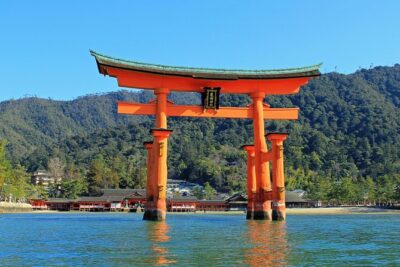
Peaceful Hiroshima & Miyajima UNESCO 1 Day Bus Tour
Read our review →
Hiroshima and Miyajima UNESCO Sites 1-Day Tour
Read our review →
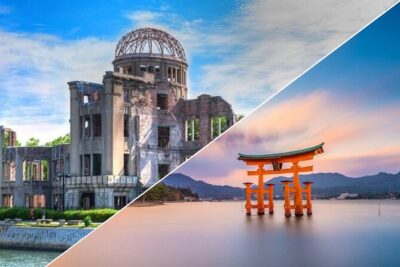
Hiroshima / Miyajima Full-day Private Tour with Government Licensed Guide
Read our review →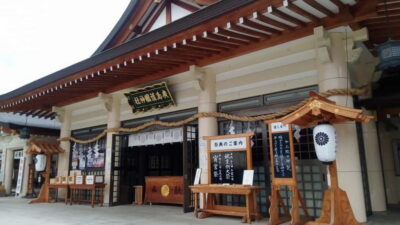
Hiroshima Historical Walking Tour – Why A-Bomb was Dropped
Read our review →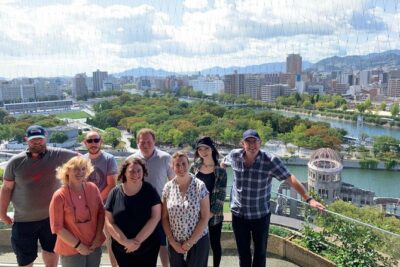
Hiroshima Peace (Heiwa) Walking Tour at World Heritage Sites
Read our review →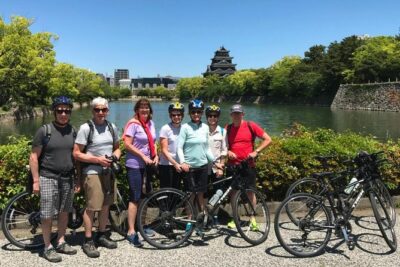
Hiroshima in a Nutshell: Morning Bike Adventure
Read our review →Browse the lists this tour appears in