
Reviewed · HIROSHIMA TOURS
Hiroshima History Tour : A-Bomb Dome, Peace Memorial & City
Hiroshima asks you to slow down. This private walking tour pairs the city’s major peace sites with local family stories, giving you more than dates and memorials. I especially like the small-group format and the chance to spend time with a Hiroshima-born guide such as Masa, whose family connection to the atomic bombing brings a personal layer to the visit. I also like that the tour reaches beyond Peace Memorial Park to Hiroshima Castle and Shukkei-en Garden.
The main consideration is pace. You may walk a good deal, and the tour tries to fit the museum, park, city sights, castle, and garden into three or four hours. Transportation costs are not included, so taxi, tram, or bus fares can add a little to the $103 per-person price.
In This Review
- Five things that make this Hiroshima tour different
- Why a private guide matters at Hiroshima’s peace sites
- Hiroshima Peace Memorial Museum: one focused hour
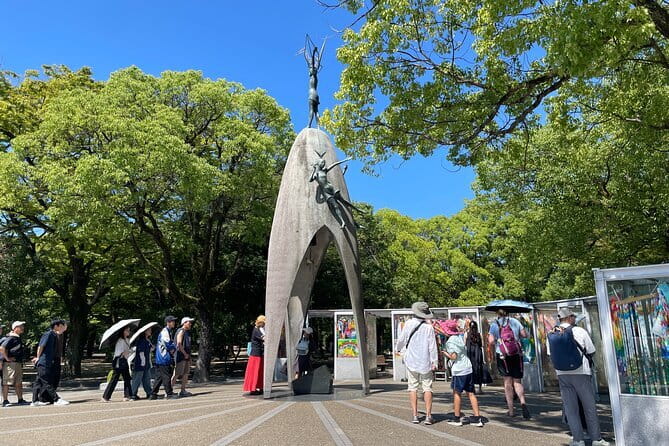
- Peace Memorial Park and the Children’s Memorial
- The A-Bomb Dome, Hiroshima’s clearest visual symbol
- Local streets and Hiroshima today
- Hiroshima Castle adds a different historical layer
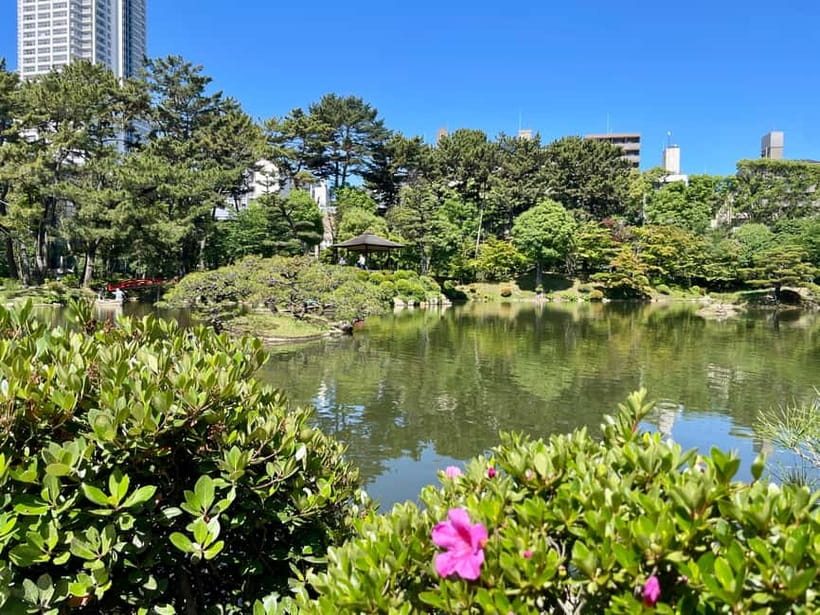
- Shukkei-en Garden: do not skip the final hour
- Walking, public transport, and the real time required
- Is $103 per person good value?
- Who will get the most from this tour?
- How to prepare for an emotional afternoon
- Should you book this Hiroshima history tour?
- FAQ
- How long does the Hiroshima history tour last?
- Is this a private tour?
- Which languages are available?
- Does the tour include the Peace Memorial Museum?
- Is the Peace Memorial Museum always open during the tour?
- Is admission to Shukkei-en Garden included?
- Are transportation costs included?
- Where can the guide pick me up?
- Can cruise ship passengers join the tour?
Five things that make this Hiroshima tour different
- Second-generation survivor perspectives: Some guides, including Masa, share family experiences connected to the atomic bombing.
- A truly private outing: Your group is alone with the guide, so questions, walking speed, and extra stops can be adjusted.
- More than the Peace Museum: The route can include Hiroshima Castle, local streets, the Children’s Memorial, and Shukkei-en Garden.
- A useful balance of sorrow and daily life: You learn about August 6, 1945, then see how Hiroshima lives today.
- Practical help for cruise passengers and families: Guides can arrange a central pickup on foot and help with return directions, including written taxi instructions in Japanese.
- A strong English-language experience: Masa has been praised for clear English, patience, warmth, and the ability to explain difficult subjects with care.
Why a private guide matters at Hiroshima’s peace sites
Hiroshima’s memorials can be difficult to understand on your own. The buildings and names are powerful, but the meaning of each place is not always obvious when you arrive with only a guidebook or a phone map.
A private guide gives you room to ask direct questions. You can pause when something needs more thought, move on when the subject becomes heavy, or spend longer with an exhibit that matters to you. That flexibility is especially useful for families, older visitors, and anyone who wants a conversation rather than a standard speech.
The guides are Japanese locals with close ties to Hiroshima. Some were born and raised in the city. Some have family members affected by the bombing. Others, including Masa, are second-generation atomic bomb survivors. Their stories are not presented as dramatic performances. Instead, you hear how memory has passed through families, sometimes through quiet remarks and everyday habits.
That personal angle is the heart of the experience. The tour does not treat Hiroshima as a frozen historical site. It connects the bombing to the people who live here now and to the city’s continuing message of peace.
A few more options to weigh up in Hiroshima
- Peaceful Hiroshima & Miyajima UNESCO 1 Day Bus Tour
★ 5.0 · 5,309 reviews - Hiroshima Peace Memorial Museum Ticket
★ 4.8 · 2,727 reviews - Hiroshima: Hiroshima and Miyajima UNESCO Sites 1-Day Tour
★ 4.9 · 2,330 reviews
Hiroshima Peace Memorial Museum: one focused hour
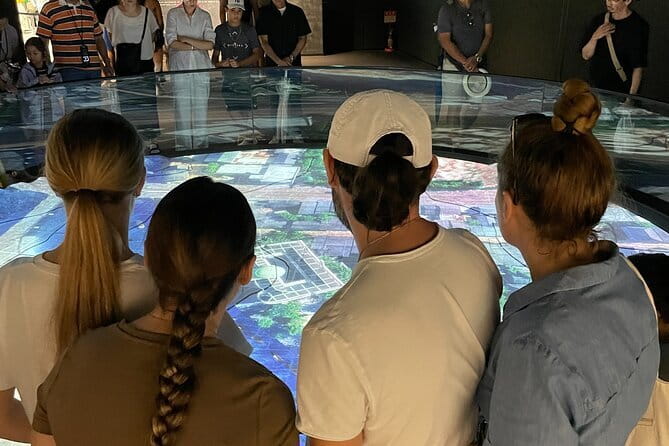
The Peace Memorial Museum is usually the emotional center of the tour. You have about one hour with a guide, and that is enough to see important exhibits without allowing the museum to consume the entire afternoon.
I would not expect to see every display in detail. The museum contains more material than anyone can absorb comfortably in one visit. A guide helps you identify the main themes and place individual objects within the larger story.
The visit deals directly with the human impact of the atomic bombing. You may see personal belongings, photographs, accounts of suffering, and explanations of what happened to Hiroshima’s residents. This is not light sightseeing, and you should allow yourself some quiet time afterward.
Masa’s approach has been praised for being patient, empathetic, and clear. That matters here. A guide who rushes, oversimplifies, or turns the subject into a lecture can make the museum harder to process. The strongest part of this tour is the chance to ask questions in a calm, private setting.
The museum is closed from February 16 through February 21 for renewal. Check the date carefully before booking. If it is closed during your visit, the experience may need to place more weight on the outdoor memorials and other city sights.
Peace Memorial Park and the Children’s Memorial
After the museum, the tour continues through Peace Memorial Park. The outdoor section is shorter, with about 15 minutes listed for a guided visit, but the guide may also take you to additional memorial points depending on your departure location and interests.
This is where the scale of the event becomes easier to grasp. The park places the A-Bomb Dome, memorials, water, and open space within one connected area. You are not simply checking off monuments. You are moving through a place designed for remembrance.
The Children’s Memorial is especially significant for families, though the subject is difficult. A guide can explain its meaning and connect it to the lives of children affected by the bombing. The tour may also include other memorial features and a photo stop near the A-Bomb Dome.
You should expect the mood to remain serious. The guide’s personal connection can make the stop more affecting, but it can also make the experience feel heavier than a conventional sightseeing tour. That is not a flaw, but it is worth knowing before you book.
The A-Bomb Dome, Hiroshima’s clearest visual symbol
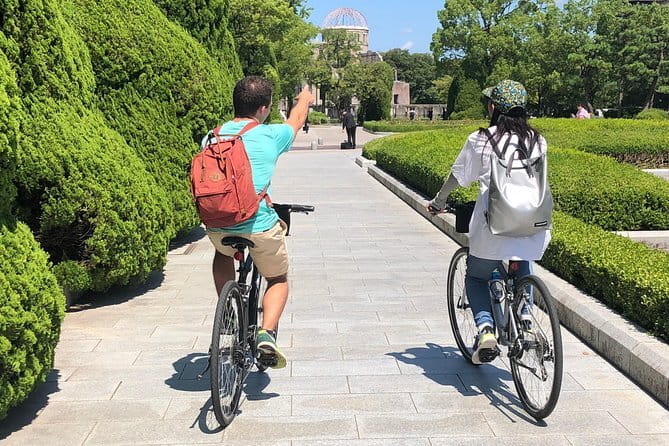
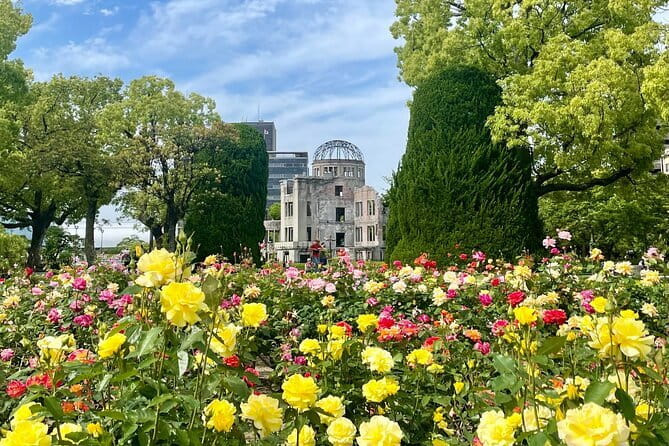
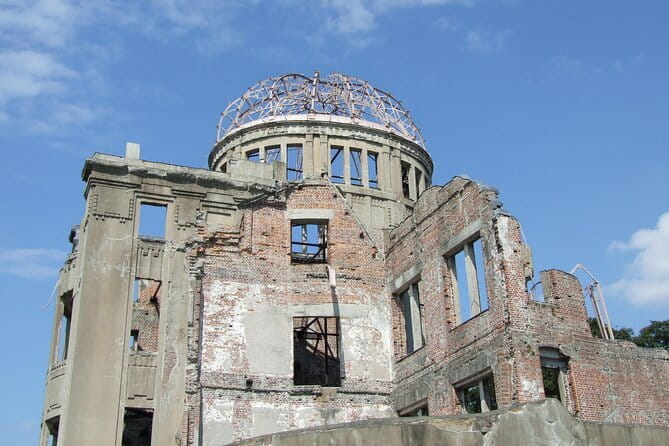
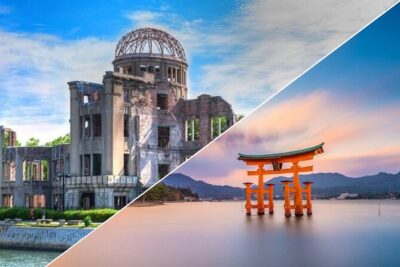
The Atomic Bomb Dome is one of Hiroshima’s most recognizable sights and a UNESCO World Heritage Site. The surviving structure provides a stark contrast to the modern city around it.
A guide can help explain why this particular building remained standing while much of the surrounding area was destroyed. The Dome is also a useful point for understanding the location of the blast and the relationship between the river, park, and central Hiroshima.
You will have time for photographs, but this is not mainly a photo stop. The building carries much of the tour’s visual force. Seeing it in person, after learning about the museum exhibits, gives the history a physical setting.
The guide can also help you consider the difference between a preserved ruin and a rebuilt city. Hiroshima is not only a memorial. It is a functioning Japanese city with shops, offices, gardens, transport, and families. The Dome makes that contrast impossible to miss.
A completely different kind of day out:
- Hiroshima Peace Memorial Museum Admission
★ 4.6 · 1,308 reviews - Hiroshima / Miyajima Full-day Private Tour with Government Licensed Guide
★ 5.0 · 1,298 reviews - Hiroshima Historical Walking Tour – Why A-Bomb was Dropped
★ 4.8 · 893 reviews - Hiroshima Peace (Heiwa) Walking Tour at World Heritage Sites
★ 5.0 · 872 reviews
Local streets and Hiroshima today
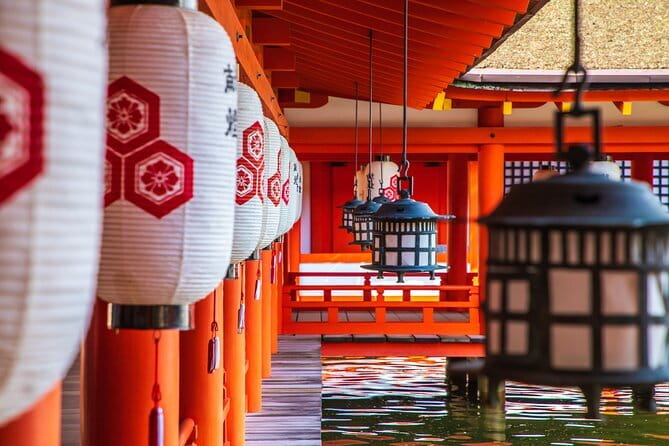
One feature I value is the movement between memorial sites and ordinary city streets. The tour is not limited to the official peace route. Depending on your interests and starting point, you may see parts of central Hiroshima and regional culture along the way.
This helps answer a question many people have after visiting the museum: what happened to Hiroshima after the bombing? The city’s modern life is part of the story. You see a place shaped by destruction, rebuilding, memory, and normal routines.
The guide can also discuss Japanese culture and language. Masa has answered questions about the Japanese alphabet as well as Hiroshima’s past. That sort of side conversation can make the tour feel more natural than a fixed script.
If you are interested in food, ask for recommendations. Masa has offered useful local food tips, and a private guide is a good person to ask for ideas that fit your schedule and tastes.
Hiroshima Castle adds a different historical layer
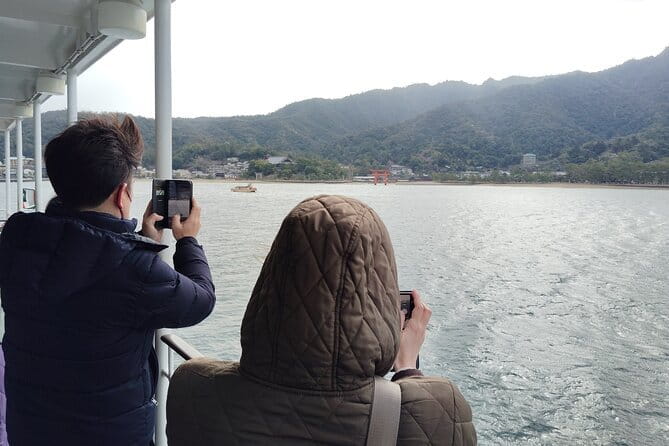
Hiroshima Castle gives the tour a change of mood. After the peace sites, you see an older symbol of the city and learn about Hiroshima before the atomic bombing.
The castle is listed as a photo stop, visit, and guided sightseeing stop. The exact amount of time may change because the route is adjusted to your departure point and preferences. You should think of it as a meaningful city sight rather than a full castle-focused visit.
This part helps widen your view of Hiroshima. The city’s identity did not begin in 1945, and the atomic bombing is not its only historical chapter. Moving from the Peace Memorial area to the castle also gives your feet and mind a different rhythm.
If your main goal is an exhaustive castle visit, three or four hours may not be enough. If you want a broad introduction to Hiroshima, the stop works well.
Shukkei-en Garden: do not skip the final hour
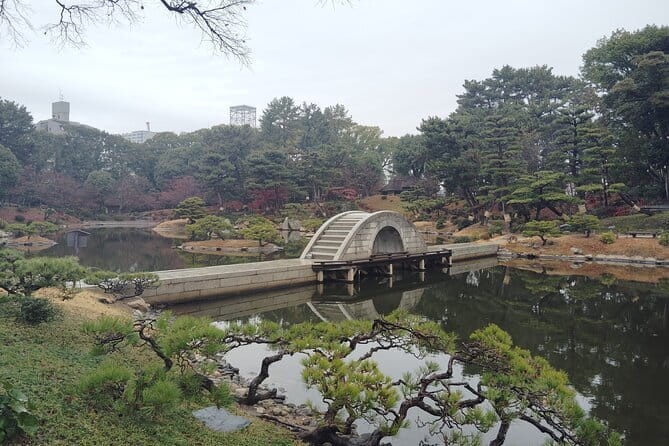
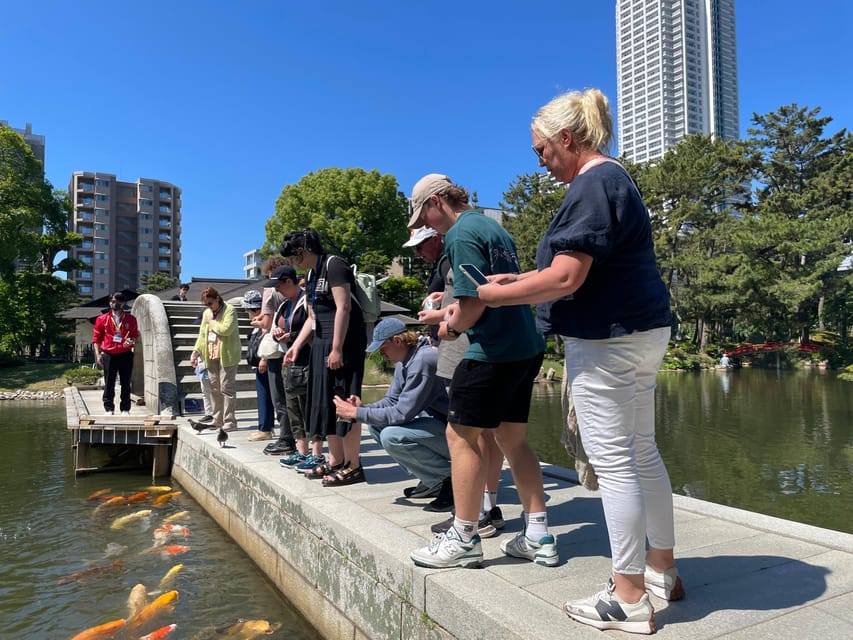
The best practical tip from the available feedback is simple: make room for Shukkei-en Garden. The itinerary allows about one hour here, including a break, photographs, and guided sightseeing. One guest specifically urged future visitors not to miss it, even after seeing the museum, park, castle, and other memorials.
Shukkei-en offers a quiet ending to an intense day. The garden gives you time to walk, pause, and absorb what you have seen. After the starkness of the A-Bomb Dome and museum, its composed design and slower pace feel especially welcome.
This is also where the flexible format pays off. If you need a break, say so. If gardens interest you more than another city stop, your guide can shape the time around that preference when possible.
The garden is included in the price, as is entry to the Peace Memorial Museum. That makes the final stop more than a quick exterior look. You have a proper place to slow down before the tour ends.
Walking, public transport, and the real time required
The experience lasts three to four hours, but the exact route depends on where you start and what your group wants to see. Pickup is on foot from a range of central locations, including Hiroshima Station, major hotels, Hiroshima Orizuru Tower, the Peace Memorial Museum, and several hotels near the station and city center.
If your hotel or Airbnb is not on the listed locations, you can request pickup if you are in central Hiroshima City. Cruise ship passengers should provide their port information in advance.
You may walk between nearby sights, but the tour can use public transportation or a taxi when needed. Those fares are not included, and you are responsible for them. The guide can also conduct the tour by public transportation or taxi if that suits your group.
Wear comfortable shoes. The schedule includes the museum, park, Dome, castle, and garden, with about 10 minutes of walking listed between some stops. Rain may also require changes. Masa has adapted the route for wet weather and for older people, which suggests that the pace can be handled thoughtfully, but you should still tell the guide about mobility concerns before the tour.
The activity is listed as wheelchair accessible. Because the route can involve walking and public transport, communicate your needs in advance so the pickup and route can be planned properly.
Is $103 per person good value?
At $103 per person, this is not the cheapest way to see Hiroshima’s memorial sites. You could visit many locations independently for less. The price makes more sense if you value private guiding, personal interpretation, entry tickets, and a route shaped around your group.
The fee includes the Hiroshima-born guide, Peace Memorial Museum admission, Shukkei-en Garden admission, photography with the digital files provided, and advance communication about your needs. It does not include food, drinks, or transport.
For two people, the private format can feel expensive compared with joining a larger group. For a family or small group, the difference may be easier to justify because you are not paying for separate public tour arrangements and can keep the pace together.
Cruise passengers may find the value particularly strong. A private guide can meet you on foot, adjust the schedule, and help with the return journey. One thoughtful touch described by a guest was a Japanese-language taxi card that made it easier to return to the port.
The strongest value is not the number of stops. It is the quality of the conversation. If you want personal context, patient answers, and help connecting Hiroshima’s past with its present, the price is reasonable.
Who will get the most from this tour?
I would choose this tour if you:
- Want a private experience rather than a large group
- Prefer a conversation with a local guide
- Are visiting Hiroshima for the first time
- Want family stories alongside museum information
- Need a flexible pace for children or older relatives
- Are arriving by cruise ship
- Want to combine peace sites with the castle and garden
- Have questions that a standard group tour may not have time to answer
It is also suitable for a wide age range. Families have found the subject manageable when explained with care, and older couples have appreciated the ability to slow down or change the route.
You may prefer an independent visit if you want several hours inside the museum, extensive time at each memorial, or a very low-cost day. The three to four-hour schedule gives you a broad introduction, not a complete study of every exhibit and monument.
How to prepare for an emotional afternoon
Give yourself mental space. Hiroshima is not a casual stop to squeeze between lunch and shopping. The museum and personal family stories can stay with you long after the tour ends.
Wear comfortable shoes and bring water, since food and drinks are not included. If you are sensitive to heat, rain, or long periods of walking, tell the guide before the start so the route can be adjusted.
Think about what you want to understand. You might ask about family memory, rebuilding, modern Hiroshima, Japanese culture, the museum exhibits, or the meaning of the memorials. The more specific your interests, the more useful the private format becomes.
Masa is the guide whose name appears repeatedly in the strongest experiences. She has been praised for clear English, careful organization, patience with older visitors, help at train gates, food suggestions, and a warm manner. The booking does not promise that every group will receive Masa, but the guide team is made up of local Japanese guides who speak English or Japanese and have close ties to Hiroshima.
Should you book this Hiroshima history tour?
Book it if you want Hiroshima explained by someone connected to the city, not just a route through famous landmarks. The private format, personal family accounts, museum entry, flexible pace, and Shukkei-en Garden make it a thoughtful choice for couples, families, cruise passengers, and first-time visitors.
Skip it if your priority is the lowest possible price or a slow, all-day museum visit. You will need to cover transport costs and accept a fairly active schedule.
For most people, this is a strong way to meet Hiroshima. You see the places that matter, hear how memory continues through local families, and finish in a garden that gives the afternoon room to breathe.
FAQ
How long does the Hiroshima history tour last?
The tour lasts three to four hours. The exact duration and starting time depend on availability, the pickup point, and your group’s preferences.
Is this a private tour?
Yes. The tour is private for your group, and no other guests join.
Which languages are available?
The tour is offered in English and Japanese.
Does the tour include the Peace Memorial Museum?
Yes. Entry to the Hiroshima Peace Memorial Museum is included, with about one hour listed for the guided visit.
Is the Peace Memorial Museum always open during the tour?
No. The museum is closed from February 16 through February 21 for renewal. Check your date before booking.
Is admission to Shukkei-en Garden included?
Yes. The garden entry ticket is included, and the visit is planned for about one hour, including a break and guided sightseeing.
Are transportation costs included?
No. Taxi, tram, bus, and other public transportation costs are paid by you. The route may use walking, public transport, or a taxi depending on your needs.
Where can the guide pick me up?
Pickup is on foot from several central hotels, Hiroshima Station, Hiroshima Orizuru Tower, the Peace Memorial Museum, and other listed locations. If your hotel or Airbnb is not listed, you can request pickup if you are in central Hiroshima City.
Can cruise ship passengers join the tour?
Yes. Cruise ship passengers should provide their port information in advance. The guide can also help with practical return directions, including taxi instructions.
Just added in Hiroshima
- Hiroshima Peace Memorial Museum Ticket★ 4.8 · 2,727 reviews
- Hiroshima Peace Memorial Museum Admission★ 4.6 · 1,308 reviews
- Private Full Day Hiroshima Tour★ 4.5 · 29 reviews
- The Peace Memorial to Miyajima : Icons of Peace and Beauty★ 4.5 · 31 reviews
- Shore Excursion from Hiroshima Port : Private Tour in Hiroshima★ 5.0 · 17 reviews
- Hiroshima & Miyajima All-Inclusive Tour w/Licensed guide Pancho★ 5.0 · 54 reviews
- Hiroshima Country Cycling: Explore Rural Life 1 HR from City★ 5.0 · 22 reviews
- Hiroshima Saijo Sake Tasting Tour with visit to 7 Breweries★ 5.0 · 104 reviews
Hiroshima Tours, compared.
Peaceful Hiroshima & Miyajima UNESCO 1 Day Bus Tour
Read our review →
Hiroshima and Miyajima UNESCO Sites 1-Day Tour
Read our review →
Hiroshima / Miyajima Full-day Private Tour with Government Licensed Guide
Read our review →
Hiroshima Historical Walking Tour – Why A-Bomb was Dropped
Read our review →
Hiroshima Peace (Heiwa) Walking Tour at World Heritage Sites
Read our review →
Hiroshima in a Nutshell: Morning Bike Adventure
Read our review →Browse the lists this tour appears in