
Reviewed · HIROSHIMA TOURS
Hiroshima: Miyajima Peace Memorial Icons of Peace and Beauty
Two very different places, one powerful day. This eight-hour Hiroshima tour pairs the quiet sorrow of the Peace Memorial Park with the grace of Miyajima Island, giving you both the city’s most important historical sites and one of Japan’s most beautiful shrine settings. I like that the day moves from reflection to scenery without feeling like two unrelated excursions.
I especially like having a guide manage the trams, ferry, entrance tickets, and timing. I also like the small-group format, which gives you room to ask questions and makes it easier to avoid long waits. The main consideration is the pace: you cover a lot of ground, and the day includes plenty of walking, so comfortable shoes are essential.
In This Review
- Key details at a glance
- Why this Hiroshima day tour works
- Meeting near the Peace Memorial Park
- Hiroshima Peace Memorial Park: a quiet beginning
- The Atomic Bomb Dome and Hiroshima’s difficult memory
- Hiroshima Peace Memorial Museum: the most demanding stop
- Crossing to Miyajima by public transport
- Itsukushima Shrine at the edge of the sea
- Senjokaku Pavilion and traditional architecture
- Lunch and Miyajima’s local flavors
- Walking Miyajima’s lanes, shops, and hills
- Returning to Hiroshima Station
- What the $163 price gives you
- The guides and the personal touch
- Who should book this tour?
- FAQ
- How long does the Hiroshima and Miyajima tour last?
- Where is the meeting point?
- Where does the tour finish?
- Are public transportation fares included?
- Are entrance fees included?
- Is lunch included?
- Which languages are available?
- Is the tour private or shared?
- What should I bring?
- Can I cancel the booking?
- Should you book it?
Key details at a glance
- Two UNESCO-related icons in one day: See the Atomic Bomb Dome and Itsukushima Shrine, two of Hiroshima’s defining sights.
- A carefully balanced route: The morning focuses on the 1945 atomic bombing and its aftermath, while the afternoon brings shrines, island scenery, food, and shopping.
- Public transport is part of the experience: You travel by tram and ferry rather than sitting inside a tour bus, giving you a more local feel.
- Strong guide support: Guides such as Ken, Kensuke, Minori, and Alex have been praised for clear explanations, thoughtful pacing, and help with transport.
- Lunch is not included: You have about 45 minutes to choose and buy your own meal on Miyajima.
- Professional photography is available: A guide-photographer option can capture moments at the Peace Memorial Park and on Miyajima.
Why this Hiroshima day tour works
Hiroshima can be visited independently, but this is one of those days when a guide saves more than time. The route involves a starting meeting point, tram travel, a ferry, shrine admission, island walking, and a final return to Hiroshima Station. I value having someone handle the practical pieces while I concentrate on the places themselves.
The emotional shape of the tour is also well judged. You begin with the consequences of war in a quiet city park. Later, you cross the water to Miyajima, where the mood turns toward Shinto tradition, food, mountain scenery, and small shops. That contrast does not erase the morning’s sadness. It gives the day a sense of continuity and hope.
This is not a tour for someone who wants a leisurely morning in a café or a long, unstructured afternoon on the island. The schedule is full, and one hour at the Peace Memorial Museum may feel short if you read every display carefully. Still, for a first visit to Hiroshima, the route gives you a strong overview in a single day.
A few more options to weigh up in Hiroshima
- Peaceful Hiroshima & Miyajima UNESCO 1 Day Bus Tour
★ 5.0 · 5,309 reviews - Hiroshima Peace Memorial Museum Ticket
★ 4.8 · 2,727 reviews - Hiroshima: Hiroshima and Miyajima UNESCO Sites 1-Day Tour
★ 4.9 · 2,330 reviews
Meeting near the Peace Memorial Park
The tour begins at the 7-Eleven Hiroshima Motoyasubashi East Store, directly outside the Peace Memorial Park. That is a useful starting point because you are already close to the park’s main sights, rather than spending the first part of the morning commuting from a distant hotel area.
Your guide meets you there and takes charge of the first section on foot. The tour is offered in English or Spanish, with private and small-group options available. The small-group choice is likely the best fit for most people because it keeps the day social without making questions or movement difficult.
Guides have been particularly helpful with preparation. Ken, also called Kensuke, has contacted visitors in advance with practical information, weather warnings, restaurant suggestions, and timing advice. That sort of communication matters in Hiroshima, where rain can change the feel of the park and ferry crossings can affect the rhythm of the day.
Hiroshima Peace Memorial Park: a quiet beginning
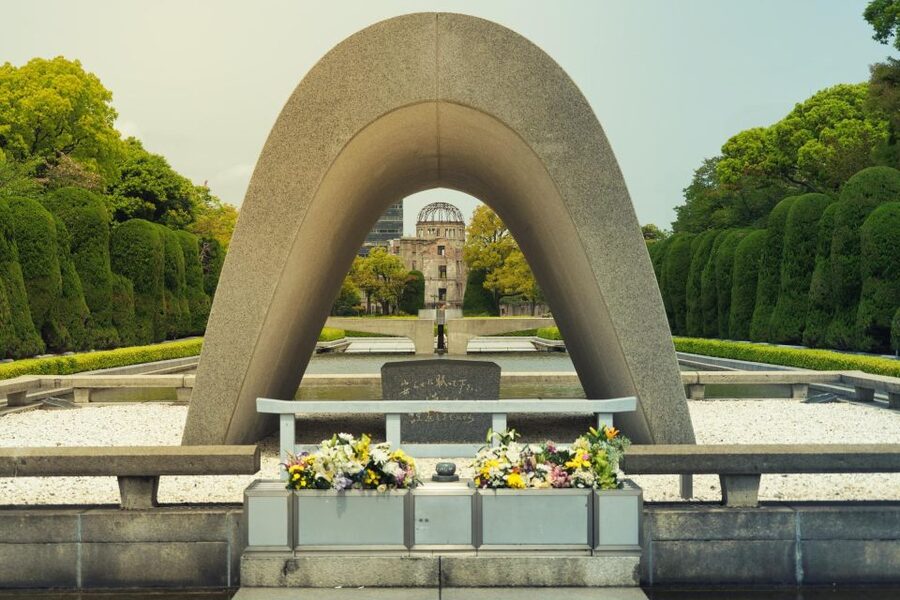
The park is more than a collection of monuments. Its broad paths, greenery, and water create a calm setting for confronting a difficult subject. Your guide explains the meaning of the main sites as you walk, helping connect the physical places with the people and events behind them.
At the Cenotaph for the A-bomb Victims, you see a memorial to those who died in the bombing. Nearby, folded paper cranes express a continuing wish for peace. The Eternal Flame of Peace adds another layer of meaning, representing the hope that nuclear weapons will no longer threaten human life.
I find guided interpretation especially useful here because the park can seem simple at first glance. A monument, a flame, and a line of trees do not explain themselves. The guide gives you the background needed to understand why each place matters, while still allowing quiet time for your own response.
The tour allocates about 30 minutes for the park itself, followed by another 30 minutes around the Atomic Bomb Dome. That timing gives you an introduction, but it is not enough for a slow, independent examination of every memorial. If you want to linger in silence or read every inscription, the schedule may feel brisk.
The Atomic Bomb Dome and Hiroshima’s difficult memory
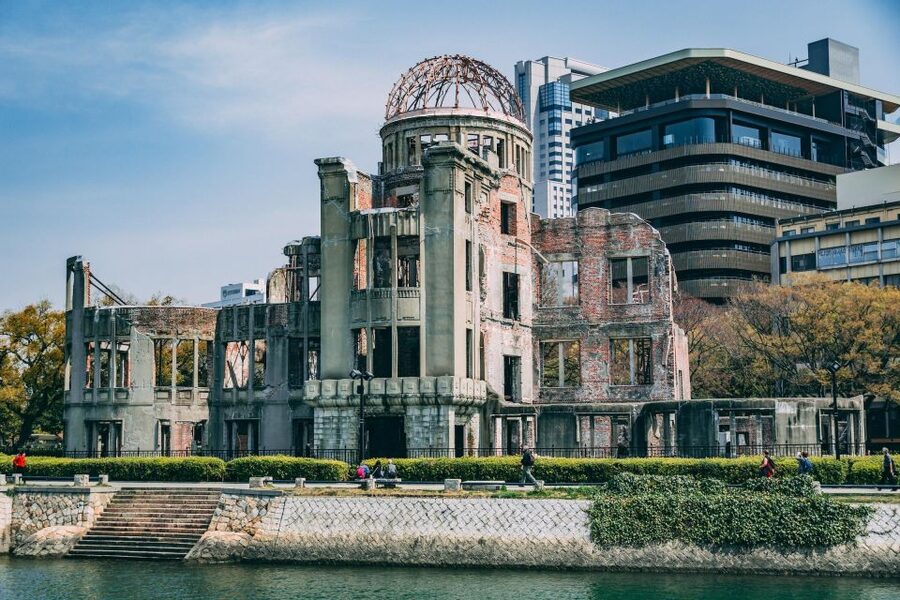
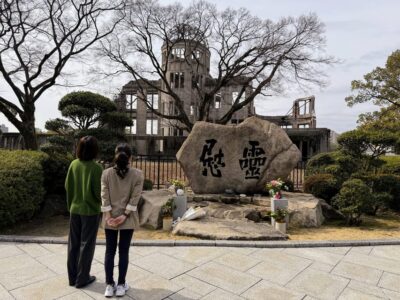
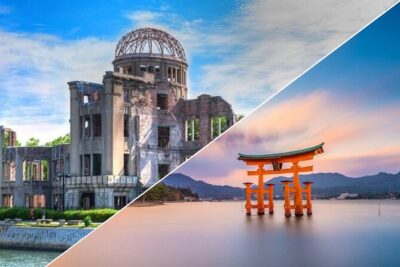
The Atomic Bomb Dome is one of the most recognizable sights in Hiroshima. Its damaged structure remains near the river, a visible reminder of the destruction caused on August 6, 1945. Today, it is a UNESCO World Heritage Site and a symbol of the city’s message of peace.
The guide helps put the building in context without turning the visit into a dry architecture lesson. You look at the surviving framework, then connect it to the wider park and museum nearby. This is also a good point to ask questions, especially if you want to understand how Hiroshima presents its past and future.
Several guides have been praised for explaining different perspectives on the bombing with care. That matters because the subject is emotionally heavy and historically complex. A good guide does not rush you through the painful parts or reduce the story to a string of dates.
A completely different kind of day out:
- Hiroshima Peace Memorial Museum Admission
★ 4.6 · 1,308 reviews - Hiroshima / Miyajima Full-day Private Tour with Government Licensed Guide
★ 5.0 · 1,298 reviews - Hiroshima Historical Walking Tour – Why A-Bomb was Dropped
★ 4.8 · 893 reviews - Hiroshima Peace (Heiwa) Walking Tour at World Heritage Sites
★ 5.0 · 872 reviews
Hiroshima Peace Memorial Museum: the most demanding stop
The Peace Memorial Museum is the morning’s most intense visit. It presents the atomic bombing of Hiroshima and also provides insight into the bombing of Nagasaki, the lives affected, and the long-term human cost.
You should expect difficult material. The museum is not a light sightseeing stop, and some displays may be upsetting. I recommend entering with enough emotional space to pause when needed rather than treating the visit as another item to check off.
The scheduled visit is about one hour. That is enough to see the main material and gain a clear understanding of the museum’s purpose, but you probably will not read every panel in detail. One visitor felt the museum and Miyajima were a little rushed, which is a fair warning for anyone who prefers a slow museum visit.
The advantage of going with a guide is that you receive context before and after the museum. Ken and other guides have been praised for treating the subject respectfully, answering questions, and explaining the city’s past alongside its efforts to promote peace. The museum becomes part of a larger story rather than an isolated stop.
Crossing to Miyajima by public transport
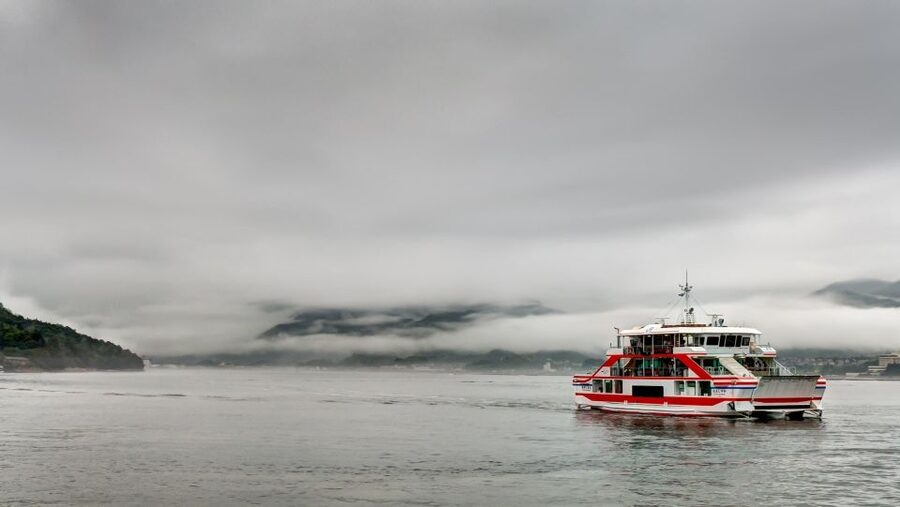
After the Peace Memorial Park and museum, you continue toward Miyajima using public transport, including a ferry. The crossing changes the pace of the day. Instead of moving from one urban sight to another, you are on the water, heading toward an island known for its shrine, traditional buildings, shops, and natural setting.
The tour includes tram and ferry fares, so you do not need to work out the ticketing as you go. This is one of the clearest practical benefits of the experience. Guides have been praised for collecting tickets, keeping the group moving, and reducing unnecessary waiting.
Public transport also keeps the day connected to ordinary Hiroshima life. You see the city from the same systems residents use, then approach Miyajima by boat rather than arriving in a private vehicle. If you enjoy seeing how a place works, this is more rewarding than being sealed inside a coach.
The ferry portion is listed as one hour in the schedule, though the entire transfer section includes the movement involved in reaching and leaving the island. Allow for a full day from the first meeting point to the final arrival at Hiroshima Station.
Itsukushima Shrine at the edge of the sea
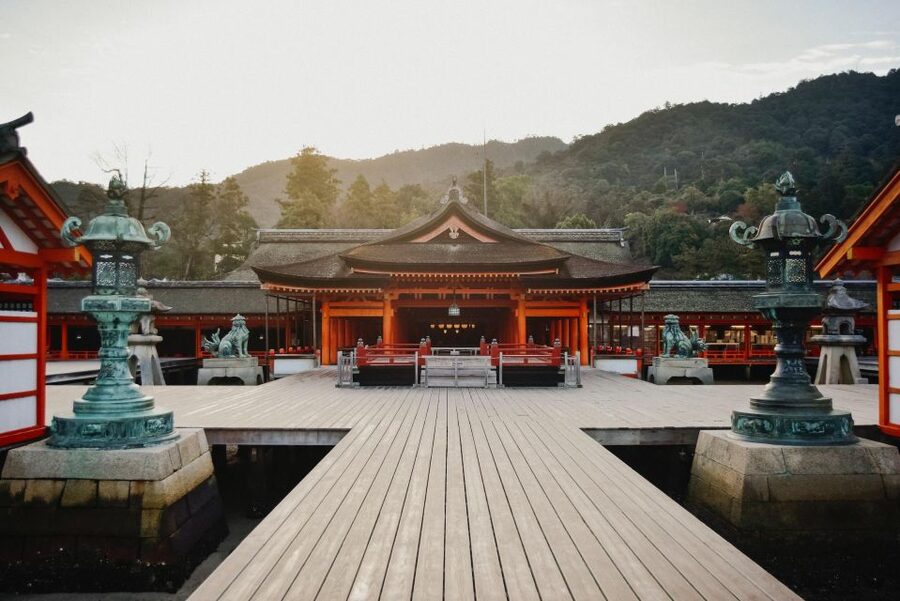
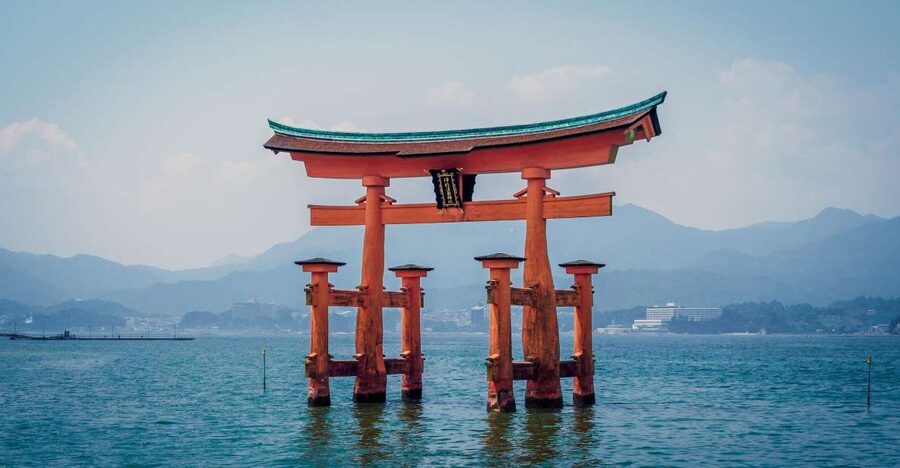
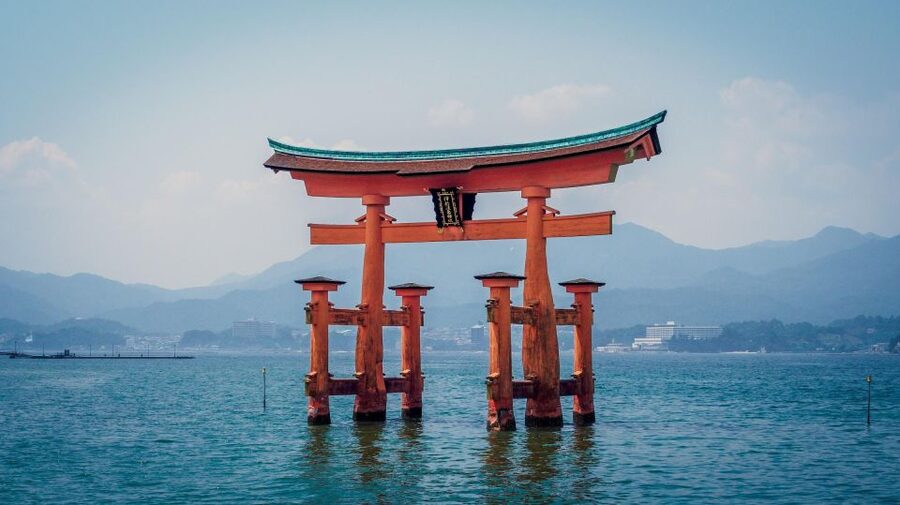
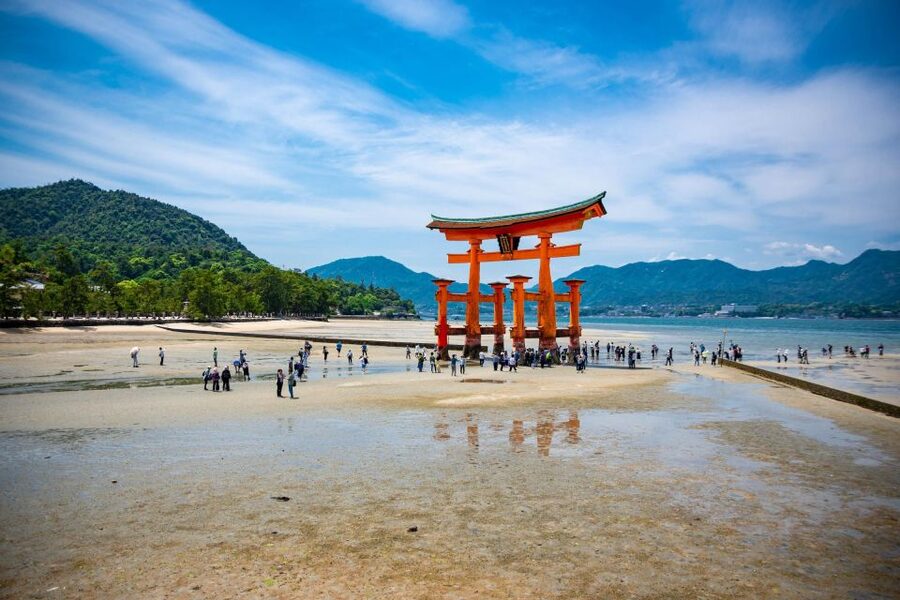
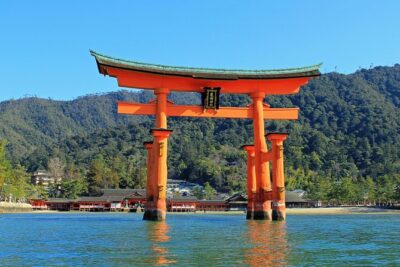
Itsukushima Shrine is Miyajima’s great visual moment. Built beside the Seto Inland Sea, it is famous for the way the complex appears to float during high tide. The effect is especially striking because the water becomes part of the shrine’s design rather than just a backdrop.
The guided visit lasts about 45 minutes. Your guide explains the shrine’s Shinto meaning, architectural details, and relationship with the sea. This makes the visit more than a photo stop. You begin to notice how the buildings, walkways, water, and surrounding hills work together.
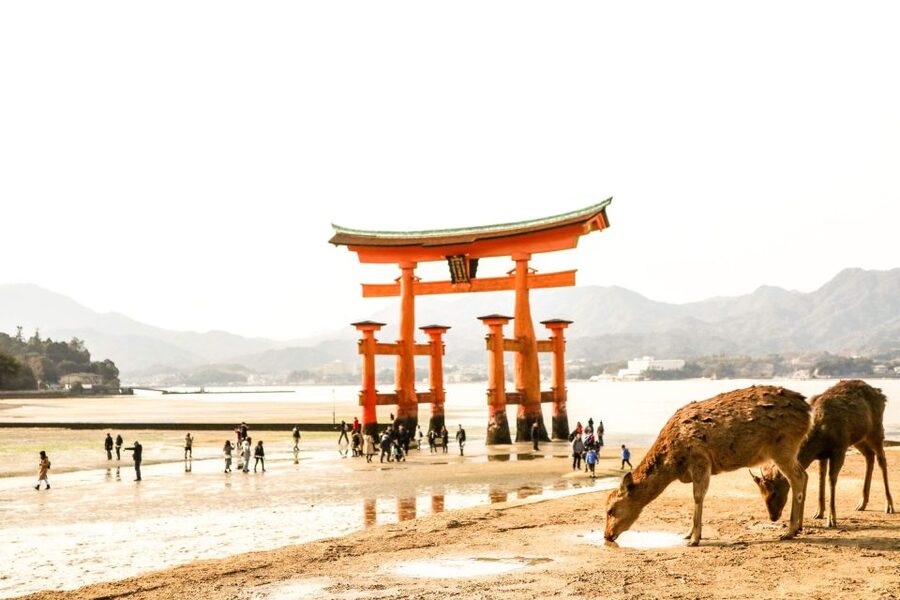
Tide conditions matter. At high tide, the shrine has its floating appearance. At lower water, the view changes, and you may see more of the shoreline around the structure. The experience is still worthwhile, but you should check the day’s tide information if the water-level view is especially important to you.
The shrine can be busy, particularly during peak periods. Guides have been praised for knowing how to move around crowded areas and for reducing time spent waiting in lines. That does not guarantee an empty shrine, but it can make a meaningful difference on a busy day.
Senjokaku Pavilion and traditional architecture
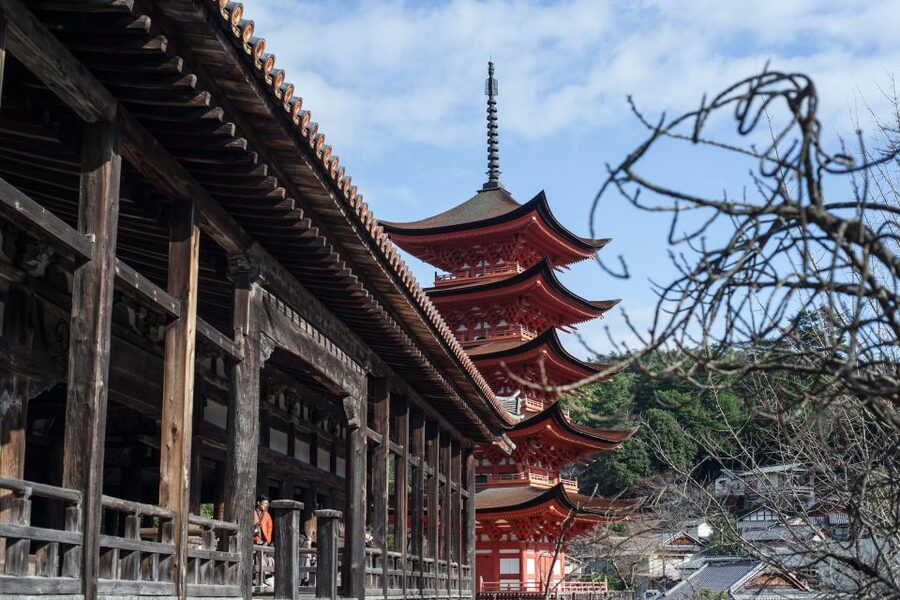
The next major stop is Senjokaku Pavilion, also known as the Pavilion of Heavenly Spirits. The name suggests grandeur, and the open wooden structure delivers a quieter kind of beauty than Itsukushima Shrine.
You see traditional wooden construction and tatami interiors in a peaceful setting. The pavilion offers a useful change of scale: Itsukushima is defined by its placement over the water, while Senjokaku invites you to pay attention to materials, proportions, and the feel of Japanese interior space.
The visit is planned for about 45 minutes. It is a good place to slow down, look carefully, and take photographs without the same visual drama as the shrine. If your interest is mainly in grand views, you may find this stop less immediately exciting. If you enjoy architecture and cultural details, it adds needed depth to the island visit.
Lunch and Miyajima’s local flavors
Lunch is not included, which gives you freedom but also means you need to budget separately. You have roughly 45 minutes to choose a meal on Miyajima, and your guide can point you toward suitable options.
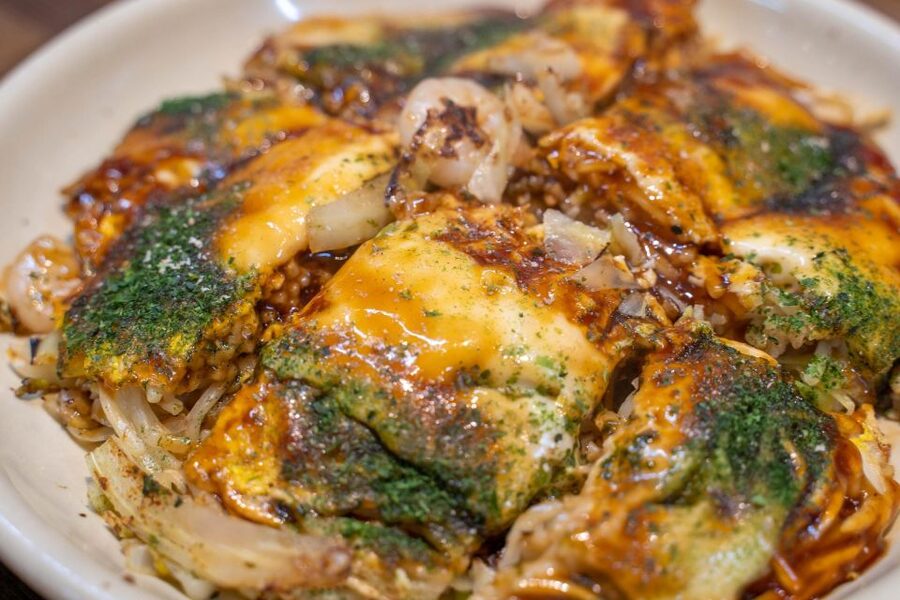
One local food to look for is Momiji Manju, a maple-leaf-shaped cake filled with sweet or savory ingredients. It is an easy snack for the afternoon and a popular souvenir. Eel is another local specialty, and guides have recommended it as a traditional meal choice.
Dietary needs can sometimes be handled with advance communication. A vegan meal was arranged successfully for one group, but you should tell the operator before the tour rather than relying on last-minute choices. Since lunch is short, a long sit-down meal may leave little time for shops and walking.
Walking Miyajima’s lanes, shops, and hills
After lunch, the tour spends about an hour exploring Miyajima on foot. You move beyond the shrine to see the island’s quieter natural areas and the hills behind the main religious sites.
The walking section gives the island a more complete character. Miyajima is not only a famous torii gate and a shrine. Its appeal also comes from narrow streets, tea houses, handicraft shops, small food stalls, and the sense of moving between built spaces and wooded slopes.
You then receive about an hour of free time. Use it for Momiji Manju, handmade souvenirs, tea, or a slower look at the shops. This hour is valuable because a guided route cannot predict every personal interest. You may want a snack, a gift, a cup of tea, or simply time to take your own photographs.
The island section is walk-heavy. One visitor specifically noted that people with mobility limits should prepare for a lot of walking, even though the route can be manageable. If you tire easily, use the free hour for rest rather than trying to visit every shop.
Returning to Hiroshima Station
The day ends at the ferry and continues back toward central Hiroshima, finishing at Hiroshima Station. This is convenient if you are catching a train afterward, and one guide even helped a visitor reach a departing train on time.
The final transfer is another reason the guided format earns its price. You do not need to decipher the route after a long day of walking and emotional sightseeing. Your guide keeps an eye on the group, the schedule, and the next connection.
Still, I would avoid booking a very tight train departure after the tour. Public transport, ferry timing, crowds, and weather can all affect the return. The tour is designed to finish at Hiroshima Station, but a little breathing room is sensible.
What the $163 price gives you
At $163 per person, this is not the cheapest way to see Hiroshima and Miyajima. You could arrange the tram, ferry, shrine, museum, and island visit yourself for less. The question is what your time and confidence are worth.
The price includes the guide, public transportation fares, Peace Memorial Park and Itsukushima Shrine entrance fees, and free time for personal exploration. It does not include lunch. You are paying mainly for interpretation, route planning, ticket handling, language help, and the ability to ask questions throughout the day.
The value is strongest if you have only one day in Hiroshima or feel unsure about managing Japanese transport. It is also useful for visitors who want historical context rather than just photographs. The value is weaker if you prefer to spend several hours in the museum, linger at the shrine, or set your own pace.
The tour is offered privately or in small groups. If the minimum of two participants is not reached, a solo visitor may be offered another date, asked to pay a 16,000 yen supplement, or given a full refund. Check this condition before booking if you are traveling alone.
The guides and the personal touch
Guide quality is the strongest part of this experience. Ken, or Kensuke, receives repeated praise for clear English, careful planning, local suggestions, and friendly conversation. He has helped with restaurant choices, weather preparation, train timing, tickets, photographs, and small details such as pointing out stamp-collecting locations.
Minori has been praised for kindness and clear explanations, while Alex is noted for being respectful, attentive, and helpful with questions. The individual guide can shape the day, but the consistent pattern is clear: this experience depends heavily on human guidance, and that is where it earns its strongest marks.
The professional photo option adds another layer. Guide-photographers can take pictures at the Peace Memorial Park and Miyajima, framing both the reflective and scenic parts of the day. Ask about this option when booking if good photographs are important to you.
Who should book this tour?
I would choose this tour if you are visiting Hiroshima for the first time, have about one full day, and want the major historical and cultural sights arranged in a sensible order. It is particularly suitable for couples, families, and small groups who want an informed guide without joining a large coach tour.
It also suits visitors who want a local perspective. Several guides have discussed Japanese life and culture alongside Hiroshima’s past, making the day feel more personal than a standard audio tour.
I would hesitate if your main goal is a slow museum study or an extended Miyajima visit. The schedule is full, lunch is on your own, and the walking can be tiring. But if you want a well-organized introduction to Hiroshima, the combination of serious history, public transport, sea views, shrine architecture, food, and free time is hard to beat.
FAQ
How long does the Hiroshima and Miyajima tour last?
The tour lasts eight hours, beginning near the Peace Memorial Park and finishing at Hiroshima Station.
Where is the meeting point?
You meet at the 7-Eleven Hiroshima Motoyasubashi East Store, directly outside the Peace Memorial Park.
Where does the tour finish?
The tour finishes at Hiroshima Station.
Are public transportation fares included?
Yes. Tram and ferry fares are included in the tour price.
Are entrance fees included?
Entrance fees to the Peace Memorial Park and Itsukushima Shrine are included.
Is lunch included?
No. Lunch is not included. You have about 45 minutes on Miyajima to choose and purchase your own meal.
Which languages are available?
Live guiding is available in English and Spanish.
Is the tour private or shared?
Private and small-group options are available.
What should I bring?
Bring comfortable shoes because the day includes substantial walking around Hiroshima and Miyajima.
Can I cancel the booking?
You can cancel up to 24 hours in advance for a full refund. Reserve-now, pay-later booking is also available.
Should you book it?
Book this tour if you want Hiroshima’s most important memorial sites and Miyajima in one carefully managed day. The strongest reasons are the excellent guide support, included transport, useful free time, and thoughtful transition from the Peace Memorial Park to the beauty of the island.
Skip it if you want to explore at a very slow pace or spend most of your day inside the museum. For everyone else, especially first-time visitors with limited time, the $163 cost is a reasonable exchange for clarity, convenience, and a fuller understanding of Hiroshima.
Just added in Hiroshima
- Hiroshima Peace Memorial Museum Ticket★ 4.8 · 2,727 reviews
- Hiroshima Peace Memorial Museum Admission★ 4.6 · 1,308 reviews
- Private Full Day Hiroshima Tour★ 4.5 · 29 reviews
- The Peace Memorial to Miyajima : Icons of Peace and Beauty★ 4.5 · 31 reviews
- Shore Excursion from Hiroshima Port : Private Tour in Hiroshima★ 5.0 · 17 reviews
- Hiroshima & Miyajima All-Inclusive Tour w/Licensed guide Pancho★ 5.0 · 54 reviews
- Hiroshima Country Cycling: Explore Rural Life 1 HR from City★ 5.0 · 22 reviews
- Hiroshima Saijo Sake Tasting Tour with visit to 7 Breweries★ 5.0 · 104 reviews
Hiroshima Tours, compared.
Peaceful Hiroshima & Miyajima UNESCO 1 Day Bus Tour
Read our review →
Hiroshima and Miyajima UNESCO Sites 1-Day Tour
Read our review →
Hiroshima / Miyajima Full-day Private Tour with Government Licensed Guide
Read our review →
Hiroshima Historical Walking Tour – Why A-Bomb was Dropped
Read our review →
Hiroshima Peace (Heiwa) Walking Tour at World Heritage Sites
Read our review →
Hiroshima in a Nutshell: Morning Bike Adventure
Read our review →Browse the lists this tour appears in