
Reviewed · HIROSHIMA TOURS
Hiroshima Peace Memorial Park: A Guided Tour
Hiroshima asks you to slow down. This two-hour walk brings the Atomic Bomb Dome and the park’s memorials into a clear human story, with guide Sheraz Alvi, also called Shera, explaining what you are seeing rather than leaving you to read every plaque alone. I like the small group of up to 10 people, and I like the gentle pace, which gives you time to think. The main drawback is that the scheduled museum visit is only about 10 minutes, not enough for a full look at its powerful exhibits.
I also like the range of memorials included here. You will see the Korean Atomic Bomb Victims Cenotaph, the Children’s Peace Monument, the Prayer Fountain, and the Gates of Peace, not just the park’s best-known sights. The subject is painful, so this is not a light sightseeing stop, and children under 6 are not accepted.
In This Review
- Key points at a glance
- Why a guide helps in Hiroshima Peace Memorial Park
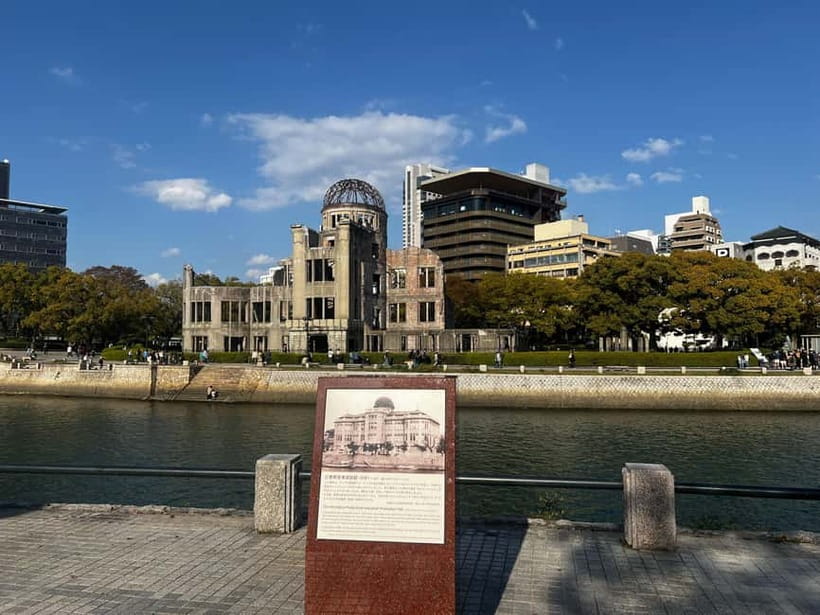
- Starting beneath the Atomic Bomb Dome
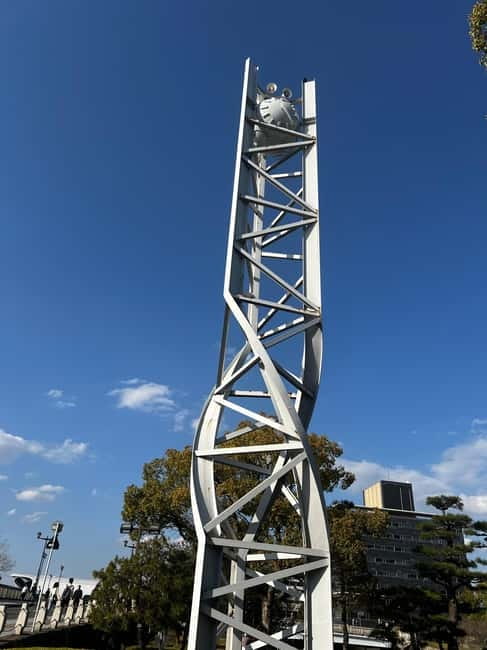
- Clock Tower of Peace and Bell of Peace
- Remembering Korean victims and mobilized students
- The Children’s Peace Monument and a child’s story
- Hiroshima National Peace Memorial Hall
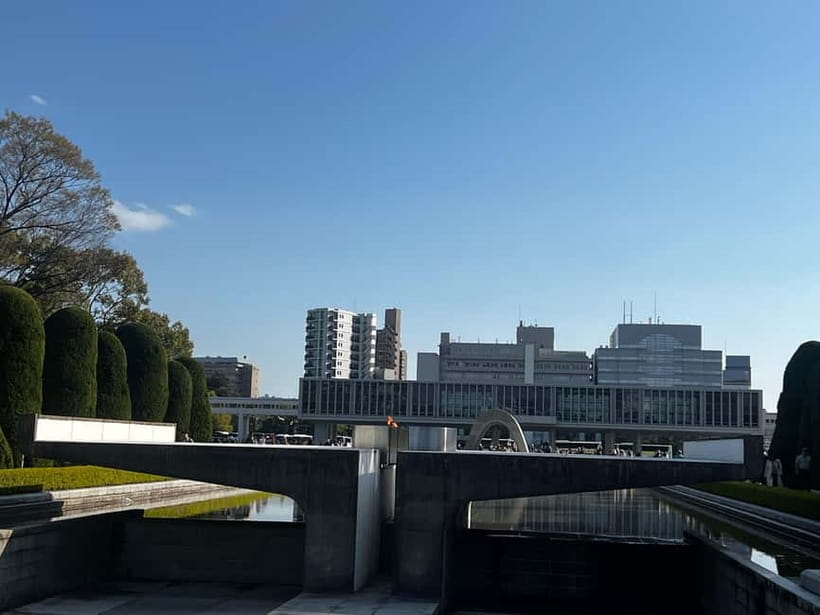
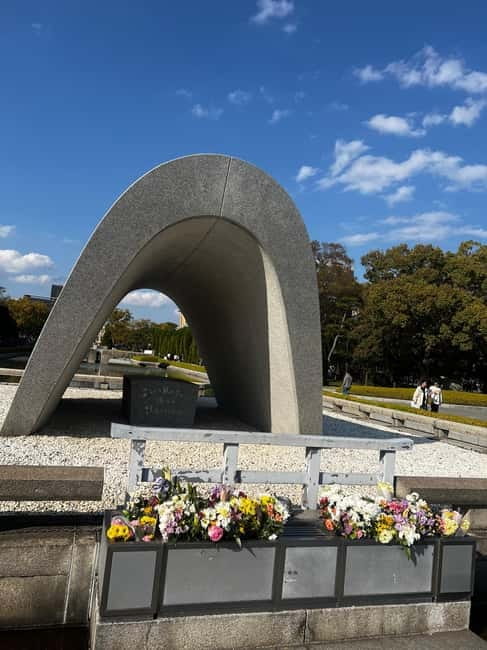
- Cenotaph for the A-bomb Victims and the Peace Flame
- The Peace Memorial Museum in ten minutes
- Prayer Fountain and the Gates of Peace
- What $19 buys you
- Pace, group size, and practical comfort
- Who should book this Hiroshima tour
- Should you book it?
- FAQ
- Where does the Hiroshima Peace Memorial Park tour begin?
- Where does the tour finish?
- How long does the tour last?
- What language is the tour conducted in?
- What locations are included?
- Is the tour wheelchair accessible?
- What should you bring, and what is not allowed?
Key points at a glance
- Sheraz Alvi’s guiding style: He explains the history clearly, answers questions, and takes an interest in the people in his group.
- A wider view of the park: The route includes memorials to Korean victims and mobilized students, along with the better-known sites.
- Small group size: With no more than 10 participants, it is easier to hear the guide and ask questions.
- A steady walking pace: Previous guests praised the relaxed rhythm and the balance between information and quiet reflection.
- Strong value at $19: You receive two hours of guided touring and access to the park’s major memorial areas, with museum entry included.
- A serious, respectful visit: This is best for adults and older children who can engage with the subject thoughtfully.
Why a guide helps in Hiroshima Peace Memorial Park
You can walk through the park on your own, but the memorials make more sense when their connections are explained. A guide can point out why each site exists, who it remembers, and how the park moves from destruction toward a call for peace.
That matters here because the park is not one single monument. It is a collection of places with different purposes. Some honor people who died. Some focus on children. Others remember groups whose stories can be missed if you only follow the main path.
Sheraz Alvi has received especially strong praise for his clear explanations, kind manner, and good command of the area. The useful part of his approach is not simply the amount of information. He appears to give a short introduction, then lets you absorb it before moving on. That is the right rhythm for Hiroshima.
I would not choose this tour if you want a fast checklist of photo stops. The route asks you to pause. You will walk, listen, look closely, and sometimes sit with difficult details for a moment.
A few more options to weigh up in Hiroshima
- Peaceful Hiroshima & Miyajima UNESCO 1 Day Bus Tour
★ 5.0 · 5,309 reviews - Hiroshima Peace Memorial Museum Ticket
★ 4.8 · 2,727 reviews - Hiroshima: Hiroshima and Miyajima UNESCO Sites 1-Day Tour
★ 4.9 · 2,330 reviews
Starting beneath the Atomic Bomb Dome
The meeting point is the Atomic Bomb Dome, at coordinates 34.395483, 132.453592. Arrive with enough time to find the guide, since the tour begins here and the park is spread across several memorial areas.
The Dome is the natural starting point. Its damaged structure is one of the most recognizable reminders of August 6, 1945. Seeing it first gives the rest of the walk a clear focus. You are not beginning with a general history lecture. You are beginning with a physical place that makes the scale of the event easier to grasp.
The guided portion at the Dome lasts about 20 minutes, making it one of the longer pauses on the route. Expect an explanation of the building’s significance and time to look at its remains.
Photography is allowed, but I would keep your camera ready without making it the main reason for stopping. The Dome is visually striking, yet the point of the visit is not simply to collect a dramatic picture.
Clock Tower of Peace and Bell of Peace
The next stops shift the tone from destruction to remembrance and hope. You will spend around 10 minutes at the Clock Tower of Peace, followed by another 10 minutes at the Bell of Peace.
These shorter stops work best when your guide explains their symbols and place within the park. On your own, you might pass them without understanding why they matter. With Sheraz, you can ask questions and connect them to the larger message of the memorial grounds.
The Bell of Peace is also a quiet reminder that this park is concerned with the future, not only the past. The route does not ask you to forget the bombing. It asks you to consider what peace requires after such an event.
Do not expect a long activity at each location. These are guided pauses, not extended museum visits. Their value comes from the explanation and the sequence of the walk.
Remembering Korean victims and mobilized students
The Korean Atomic Bomb Victims Cenotaph is one of the most important reasons to take a guided route rather than only visit the Dome and museum. It points to people whose experiences can be left out of a quick visit to Hiroshima.
The tour also includes the Memorial Tower to the Mobilized Students, mentioned among the places covered during the walk. Together, these stops broaden the story. Hiroshima’s victims came from different backgrounds, and the effects of war did not fall on just one group.
This section is likely to be most useful if you want more than the familiar outline of events. You will hear about remembrance from more than one viewpoint and see how the park gives space to different communities.
The route is also a reminder to move respectfully. Food is not allowed, and respectful behavior is expected at all memorial sites. That is simple practical advice, but it matters here. Keep conversations low and give other people room to reflect.
A completely different kind of day out:
- Hiroshima Peace Memorial Museum Admission
★ 4.6 · 1,308 reviews - Hiroshima / Miyajima Full-day Private Tour with Government Licensed Guide
★ 5.0 · 1,298 reviews - Hiroshima Historical Walking Tour – Why A-Bomb was Dropped
★ 4.8 · 893 reviews - Hiroshima Peace (Heiwa) Walking Tour at World Heritage Sites
★ 5.0 · 872 reviews
The Children’s Peace Monument and a child’s story
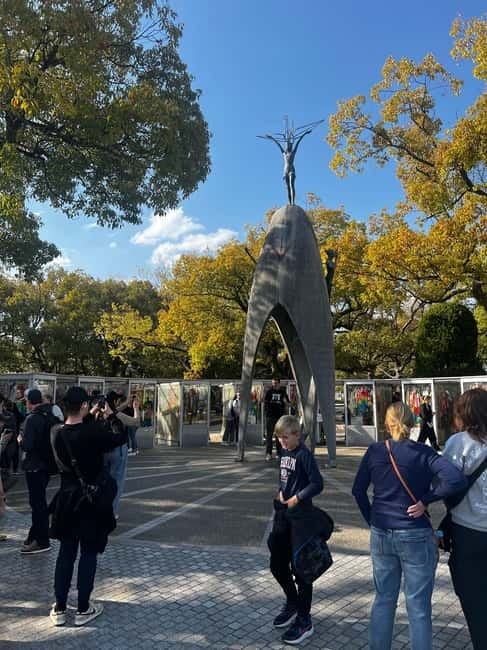
The Children’s Peace Monument is one of the park’s most moving stops. It is dedicated to the young victims of the bombing and is closely associated with the stories of children affected by radiation and war.
The guide’s role here is useful because a memorial can be easy to see without fully understanding. Sheraz can explain the story behind the monument and help connect it to the paper cranes and other acts of remembrance associated with Hiroshima, provided those details arise during your visit.
The scheduled time is about 10 minutes. That is enough for an introduction and a quiet look, but you should not expect a long discussion for every personal story.
If you are visiting with older children, this may be a meaningful stop. The tour does not accept children under 6, and the subject matter can be difficult for young people. Parents should judge their child’s readiness rather than treat this as a standard family attraction.
Hiroshima National Peace Memorial Hall
The Hiroshima National Peace Memorial Hall is another place where a guide can add context. It honors the people who died and preserves personal remembrance connected to the bombing.
The planned visit lasts around 20 minutes, giving it more time than several outdoor memorials. That makes it one of the main interpretive stops of the walk. You can expect a quieter atmosphere and information focused on individual lives rather than only military events or dates.
I value this part of the route because it brings the story down to a human scale. Large numbers can be hard to grasp. Names, memories, and personal accounts are different. They make the loss feel less abstract.
The park has several indoor and outdoor sections, so comfortable shoes are important. Bring water, especially if you are walking in warm weather. The tour is wheelchair accessible, but the activity involves moving through the park, so anyone with a heart condition should take the stated health restriction seriously.
Cenotaph for the A-bomb Victims and the Peace Flame
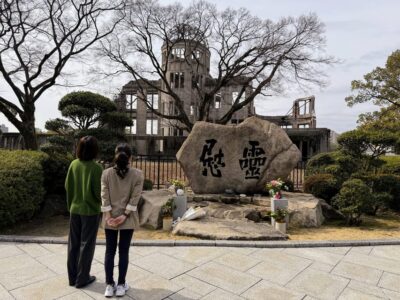
The Hiroshima Victims Memorial Cenotaph, commonly known as the Cenotaph for the A-bomb Victims, is among the central places of reflection in the park. Its purpose is solemn and direct: to remember those who died and to keep their names connected to the hope for lasting peace.
The Peace Flame adds another layer to the visit. It has burned as a symbol of the wish for a world without nuclear weapons. Together, the Cenotaph and flame create one of the most serious pauses on the route.
You may find this part emotionally heavier than the earlier stops. The guide can provide historical framing, but no explanation removes the need for personal reflection. I would allow yourself a little quiet time instead of rushing to the next location.
The tour’s balance is helpful here. The guide speaks, but you also get time to look and think. Several people who took the walk praised this exact mix of information and space to absorb it.
The Peace Memorial Museum in ten minutes
The Peace Memorial Museum is the place where the timeline and human impact come together most forcefully. You will learn more about August 6, 1945, the bombing, and the suffering that followed.
The scheduled guided portion is about 10 minutes. That is the clearest limitation of the experience. Ten minutes can introduce the museum and help you understand what deserves your attention, but it cannot cover the full collection in detail.
If the museum is especially important to you, plan to return on your own, if your schedule allows. The guided walk still has value because the guide can prepare you for what you will see and place the exhibits within the wider park.
This short museum stop also explains why the tour works best as an introduction to Hiroshima rather than a complete study of the bombing. You receive a structured overview, then can choose which parts deserve more of your own time.
Prayer Fountain and the Gates of Peace
The Prayer Fountain is the final memorial stop before the Gates of Peace. It reflects the thirst and suffering of people affected by the bombing, while also serving as a place of prayer and remembrance.
The Gates of Peace bring the walk to a fitting end. Their message faces outward, looking beyond the park and toward peace among nations. Finishing here gives the tour a sense of direction. You have walked through sites of loss, but the final note is a call to prevent such destruction from happening again.
The route ends at the Gates of Peace rather than returning to the Atomic Bomb Dome. Keep that in mind when planning the rest of your day. The tour does not include transport between the start and finish, and no transport is needed during the walk itself.
What $19 buys you
At $19 per person, this is a strong-value introduction to the park. You receive two hours with an English-speaking guide, a small group limited to 10 participants, and coverage of many sites that are easy to overlook when walking alone.
The value is not in skipping admission lines or receiving luxury treatment. The value is in the structure. You move from the Dome through the park’s memorials in an order that builds meaning, while someone explains the less obvious places.
The price is particularly fair if you are visiting Hiroshima for a short time. A self-guided walk costs less, of course, but it requires preparation and attention. You would need to identify the Korean memorial, the student memorial, the Prayer Fountain, and the Peace Flame yourself, then find reliable explanations for each.
The price is less compelling if you already know the park well or want a long museum visit. In that case, a self-guided return to the museum may suit you better.
Pace, group size, and practical comfort
The tour lasts two hours and involves walking through the park. Comfortable shoes are essential, and water is sensible to carry. A camera is allowed, though respectful use is expected.
A maximum of 10 people is a useful middle ground. You are not in a large crowd, yet the tour still has enough people for questions and conversation. The guide’s interaction with the group has been praised, including his habit of asking about people’s backgrounds and their trips in Japan.
The English-language format is clear from the activity details. If you need another language, this is not the right choice.
Wheelchair access is available. Even so, the activity is a walking tour, so you should consider your own comfort and stamina. People with heart problems are specifically advised not to take it, and children under 6 are not suitable for the tour.
You can cancel up to 24 hours before the start for a full refund. You can also reserve now and pay later, which helps if your Hiroshima schedule is still changing.
Who should book this Hiroshima tour
I would recommend it to a first-time visitor who wants a thoughtful introduction without spending half a day in a formal lecture. It suits solo visitors, couples, and small groups who want to ask questions and see memorials beyond the Atomic Bomb Dome.
It is also a good match if you are unsure how to approach Hiroshima. The guide provides a route and a respectful framework, so you do not have to guess which places deserve attention.
History-minded adults will get the most from it, especially those interested in civilian experiences, children affected by the bombing, and the stories of Korean victims. Older children may also benefit, but parents should consider the emotional weight.
I would skip it if you want a casual sightseeing walk, a long museum session, or a tour with lots of entertainment. The guide is described as engaging and enthusiastic, but the subject remains serious. This is a memorial visit first and a tourist activity second.
Should you book it?
Book this tour if you want the park’s major memorials explained by a personable English-speaking guide and you value a small group at a modest price. Sheraz Alvi’s calm pace and clear introductions seem to be the strongest part of the experience, especially for people who want time to think rather than hear a nonstop lecture.
The one important qualification is the museum time. Treat the two-hour tour as a well-organized introduction, then allow extra time for the museum if its exhibits matter greatly to you. Bring good shoes, water, and the right frame of mind. Hiroshima rewards attention, and this walk helps you give it.
FAQ
Where does the Hiroshima Peace Memorial Park tour begin?
The tour begins at the Atomic Bomb Dome in Hiroshima Peace Memorial Park. The meeting coordinates are 34.395483, 132.453592.
Where does the tour finish?
The tour finishes at the Gates of Peace.
How long does the tour last?
The tour lasts two hours. Starting times vary, so you need to check availability for the date you want.
What language is the tour conducted in?
The tour is conducted in English with a live guide.
What locations are included?
The route includes the Atomic Bomb Dome, Clock Tower of Peace, Bell of Peace, Korean Atomic Bomb Victims Cenotaph, Children’s Peace Monument, Hiroshima National Peace Memorial Hall, Cenotaph for the A-bomb Victims, Peace Memorial Museum, Prayer Fountain, Peace Flame, and Gates of Peace.
Is the tour wheelchair accessible?
Yes, the activity is wheelchair accessible. It still involves walking through the park, so you should consider your personal comfort and stamina.
What should you bring, and what is not allowed?
Bring comfortable shoes, water, and a camera. Photography is allowed, but food is not allowed. Respectful behavior is expected at all memorial sites.
Just added in Hiroshima
- Hiroshima Peace Memorial Museum Ticket★ 4.8 · 2,727 reviews
- Hiroshima Peace Memorial Museum Admission★ 4.6 · 1,308 reviews
- Private Full Day Hiroshima Tour★ 4.5 · 29 reviews
- The Peace Memorial to Miyajima : Icons of Peace and Beauty★ 4.5 · 31 reviews
- Shore Excursion from Hiroshima Port : Private Tour in Hiroshima★ 5.0 · 17 reviews
- Hiroshima & Miyajima All-Inclusive Tour w/Licensed guide Pancho★ 5.0 · 54 reviews
- Hiroshima Country Cycling: Explore Rural Life 1 HR from City★ 5.0 · 22 reviews
- Hiroshima Saijo Sake Tasting Tour with visit to 7 Breweries★ 5.0 · 104 reviews
Hiroshima Tours, compared.
Peaceful Hiroshima & Miyajima UNESCO 1 Day Bus Tour
Read our review →
Hiroshima and Miyajima UNESCO Sites 1-Day Tour
Read our review →

Hiroshima / Miyajima Full-day Private Tour with Government Licensed Guide
Read our review →
Hiroshima Historical Walking Tour – Why A-Bomb was Dropped
Read our review →
Hiroshima Peace (Heiwa) Walking Tour at World Heritage Sites
Read our review →
Hiroshima in a Nutshell: Morning Bike Adventure
Read our review →Browse the lists this tour appears in