
Reviewed · HIROSHIMA TOURS
Hiroshima: Peace Memorial Park and Atomic Bomb Dome Tour
History feels different when you walk through it. This two-hour tour gives Hiroshima’s memorials a clear human context, moving from the Gates of Peace to the Atomic Bomb Dome while explaining the bombing, its victims, and the city’s rebuilding. I especially like the personal stories and the guide’s attention to smaller memorials that are easy to miss. I also like the gentle pace, which leaves room for questions.
The main drawback is the amount of walking. The tour runs in all weather and is not suitable for wheelchair users or people with mobility impairments. At $23 per person, it is a strong buy if you want an informed introduction, but it does not include food, hotel transport, or entry to other Hiroshima attractions.
In This Review
- Key points at a glance
- Why this Hiroshima walking tour is worth your time
- Starting at the Gates of Peace
- The Prayer Fountain and the language of remembrance
- Hiroshima Peace Memorial Park in 40 focused minutes
- The Flame of Peace and the weight of the subject
- Sadako and the Children’s Peace Monument
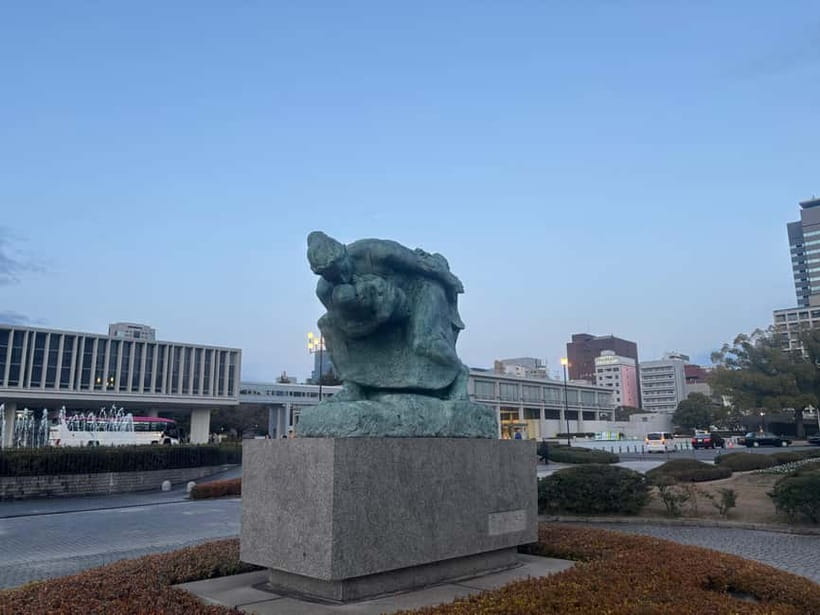
- The Korean Atomic Bomb Victims Cenotaph
- Ringing the Peace Bell
- Aioi Bridge and why the target mattered
- The Atomic Bomb Dome and the final Hypocenter Monument
- How the guides handle the experience
- Price, pace, and what you actually receive
- Who should book this walk
- Should you book the Hiroshima Peace Walking Tour?
- FAQ
- Where does the tour meet?
- How long does the tour last?
- What languages are available?
- Does the tour include the Atomic Bomb Dome?
- Is food included?
- Is hotel pickup and drop-off provided?
- What should I bring?
- Is the tour suitable for wheelchair users?
Key points at a glance
- Two hours on foot: The route connects ten important locations across the Peace Memorial Park area.
- A guide who adds context: Guides such as Syed, Hussain, Shah, Khan, and Aaze have been praised for clear explanations, warmth, and strong English.
- More than the Atomic Bomb Dome: You visit the Children’s Peace Monument, Korean Atomic Bomb Victims Cenotaph, Peace Bell, Prayer Fountain, and other memorials.
- A respectful approach: The subject is painful, but the tour also covers Hiroshima’s reconstruction and life today.
- Good value at $23: This is an affordable way to understand the park before exploring the museum and city on your own.
- Come prepared to walk: Wear comfortable shoes, carry water, and bring sun protection or rain gear.
Why this Hiroshima walking tour is worth your time
Hiroshima Peace Memorial Park is spacious, carefully designed, and filled with memorials. That can make a first visit confusing. You may see a flame, bell, cenotaph, or monument without knowing why it is there or how it fits into the larger story.
This tour solves that problem. You move through the park in a logical order, with explanations tied to the places in front of you. That matters in Hiroshima, where the meaning of a site often comes from a name, a position, or a personal story rather than from a large sign.
The experience also avoids treating Hiroshima as a single tragic date. The bombing is central, but the route includes the city’s postwar recovery, local culture, traditions, food, and modern life. You get a better sense of Hiroshima as a living city, not only as a memorial.
The guides are a major part of the experience. Syed is described as friendly, enthusiastic, and engaging, with a talent for explaining both the broad events and individual lives affected by them. Hussain is also listed as an experience provider and has led tours praised for his passion and ability to involve the whole group. Shah, Khan, and Aaze have also guided groups, so your guide may vary.
A few more options to weigh up in Hiroshima
- Peaceful Hiroshima & Miyajima UNESCO 1 Day Bus Tour
★ 5.0 · 5,309 reviews - Hiroshima Peace Memorial Museum Ticket
★ 4.8 · 2,727 reviews - Hiroshima: Hiroshima and Miyajima UNESCO Sites 1-Day Tour
★ 4.9 · 2,330 reviews
Starting at the Gates of Peace
The meeting point is at the Gates of Peace, on the front side of the Italian restaurant Mario. This is a useful beginning because the gates introduce the tour’s central idea: remembrance linked with a hope for peace.
The opening guided section lasts about 20 minutes. Your guide sets the tone and gives you the basic historical framework before you enter the main memorial area. That early explanation helps you follow the route instead of simply looking at monuments one by one.
You should arrive ready to walk. Hotel pickup and drop-off are not included, so plan your own way to the meeting point. The tour is conducted in English, Urdu, or Hindi, depending on the scheduled guide and departure.
The Prayer Fountain and the language of remembrance
The Prayer Fountain is the next stop, with about 10 minutes of explanation. Its presence is not just decorative. It connects to the suffering of people who needed water after the bombing, and it gives the guide a place to explain how memorials in the park express grief through simple symbols.
This is one reason a guided visit helps. You might understand that a fountain is connected to prayer, but the surrounding meaning can be easy to miss without an explanation. The stop is short, so do not expect a long period here. Instead, think of it as one piece in a carefully connected sequence.
Hiroshima Peace Memorial Park in 40 focused minutes
The main Peace Memorial Park section takes about 40 minutes, making it the longest part of the walk. This is where the tour brings together the park’s layout, memorial purpose, and the story of the atomic bombing.
You learn about Hiroshima before and after 1945, why the city was selected as the primary target, and how the bombing affected people in the city. The guide also discusses individual stories of people who survived and people who did not. Those details give the history a human scale without turning the tour into a list of dates.
The park itself is broad, so the walking time is part of the experience. You are not seated in a museum lecture. You move between places of memory, stopping for explanations and questions. Several people have especially valued the chance to ask questions during the route, which makes this useful for visitors who want more than a prepared speech.
The tour does not replace the Hiroshima Peace Memorial Museum. Instead, it can prepare you for it. The walk explains the meaning of the outdoor sites, while the museum gives you a more detailed indoor presentation. If your schedule allows, combining both gives you a fuller visit.
A completely different kind of day out:
- Hiroshima Peace Memorial Museum Admission
★ 4.6 · 1,308 reviews - Hiroshima / Miyajima Full-day Private Tour with Government Licensed Guide
★ 5.0 · 1,298 reviews - Hiroshima Historical Walking Tour – Why A-Bomb was Dropped
★ 4.8 · 893 reviews - Hiroshima Peace (Heiwa) Walking Tour at World Heritage Sites
★ 5.0 · 872 reviews
The Flame of Peace and the weight of the subject
The Flame of Peace receives around 20 minutes. It is one of the route’s key symbolic stops, and your guide explains its role in the park’s message of peace and the hope that nuclear weapons will no longer be used.
This is a serious part of the experience. The topic can feel heavy, especially when the guide connects the memorials with personal accounts. A good guide needs to allow silence as well as explanation. Syed has been praised for handling difficult material with a gentle and respectful manner, while still answering questions openly.
That balance is important. The tour is not designed as entertainment, even though guides try to keep the group engaged. You should book it expecting a thoughtful, sometimes emotional walk.
Sadako and the Children’s Peace Monument
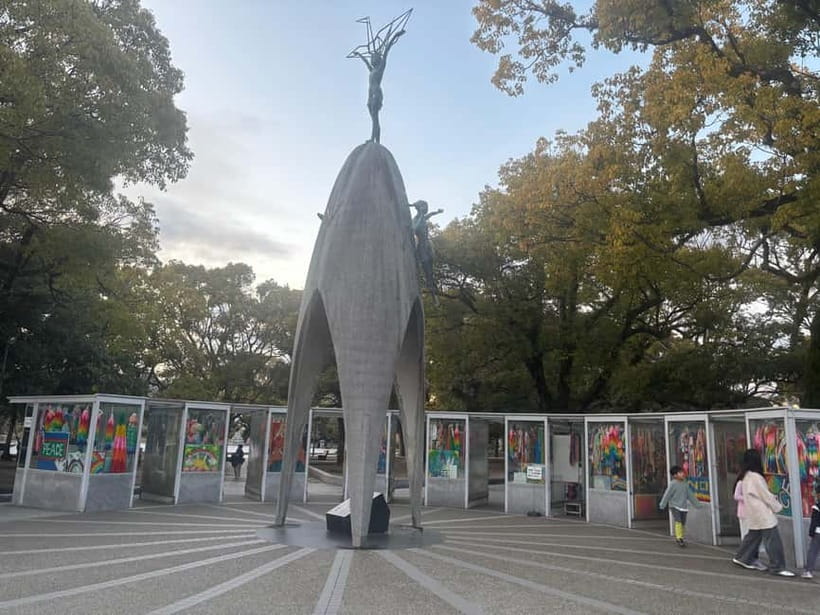
The Children’s Peace Monument is covered for about 10 minutes. Here you learn about Sadako Sasaki and the thousand paper cranes, one of the best-known stories connected with Hiroshima’s children.
This stop brings the bombing’s long-term effects into view. The story is not only about what happened on August 6, 1945, but also about the illnesses, loss, and hope that continued afterward. The monument’s connection with children and paper cranes makes this part especially meaningful for families and younger visitors, although the subject remains difficult.
Your guide can explain why the monument matters rather than leaving you to guess from the cranes and offerings. Photography is allowed, but memorial areas call for respect. Keep your voice low and avoid treating the site like an ordinary sightseeing stop.
The Korean Atomic Bomb Victims Cenotaph
The Korean Atomic Bomb Victims Cenotaph is another short stop, lasting about 10 minutes. It broadens the story beyond Hiroshima’s local population and recognizes Korean victims of the bombing.
This is precisely the sort of memorial you could pass without understanding its significance. Including it makes the tour more complete and helps you see that the bombing affected people from different communities, not only Japanese citizens.
The route also includes the Dr. Marcel Junod Memorial, the Norman Cousins Memorial, and the Hiroshima National Peace Memorial Hall among its points of interest. The exact amount of time spent at each may vary, but together they show that Hiroshima’s memory has been shaped by medical workers, peace advocates, survivors, and international voices.
Ringing the Peace Bell
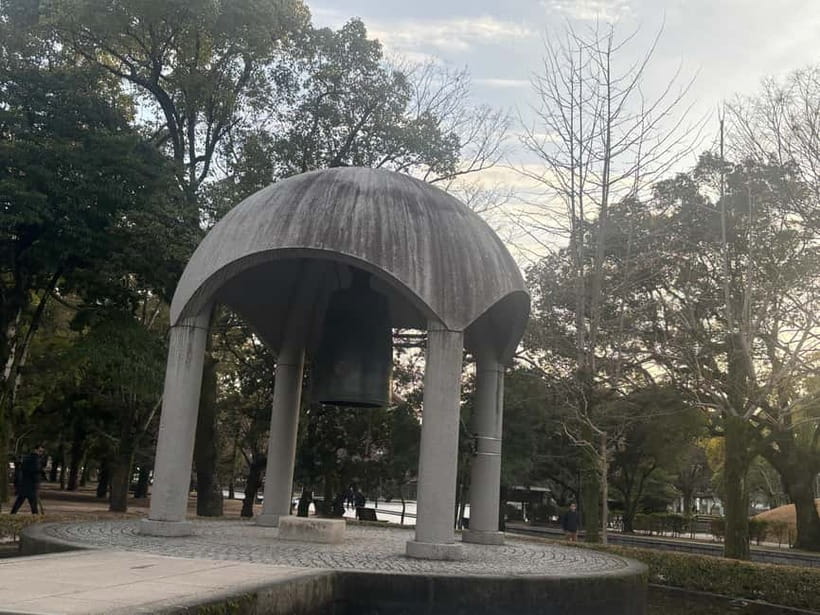
The Peace Bell receives about 10 minutes. You have the chance to ring it as a symbol of hope and world peace.
This is a simple, active moment in a tour that otherwise asks you to listen and reflect. The bell gives you a personal way to participate, but it should still be approached quietly and respectfully. It is not a photo opportunity first and a memorial second.
The stop also helps shift the mood from mourning toward responsibility. The tour asks you to remember the past, then consider the kind of future Hiroshima promotes.
Aioi Bridge and why the target mattered
The tour then reaches Aioi Bridge, with another 10 minutes of guided explanation. The bridge is important because of its connection to the bombing’s targeting and the city’s central geography.
The tour addresses why Hiroshima was selected as the primary target. This historical background is useful because it places the bombing within the military and political conditions of the time, rather than presenting it as an isolated event.
You should expect an explanation rather than a long stop. The bridge is part of the city’s active urban setting, so this section connects the memorial park with Hiroshima’s present-day streets and daily life.
The Atomic Bomb Dome and the final Hypocenter Monument
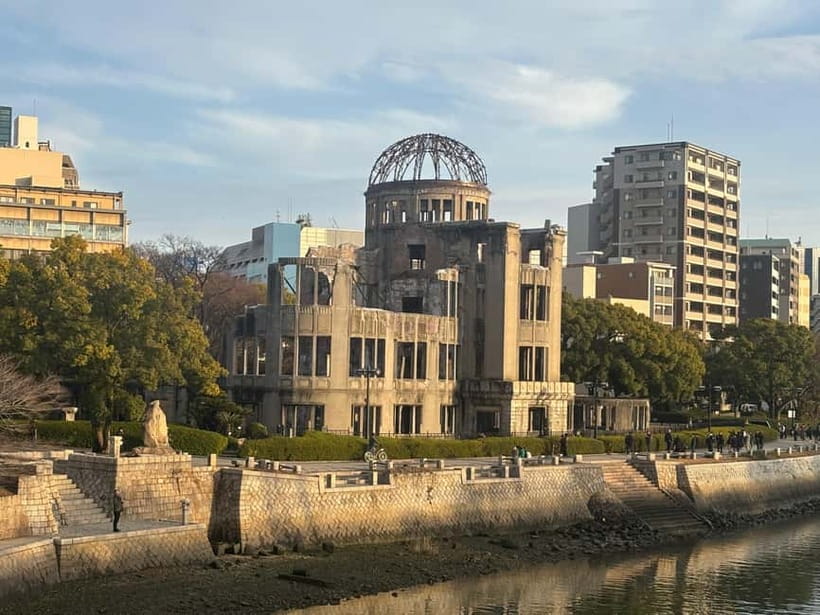
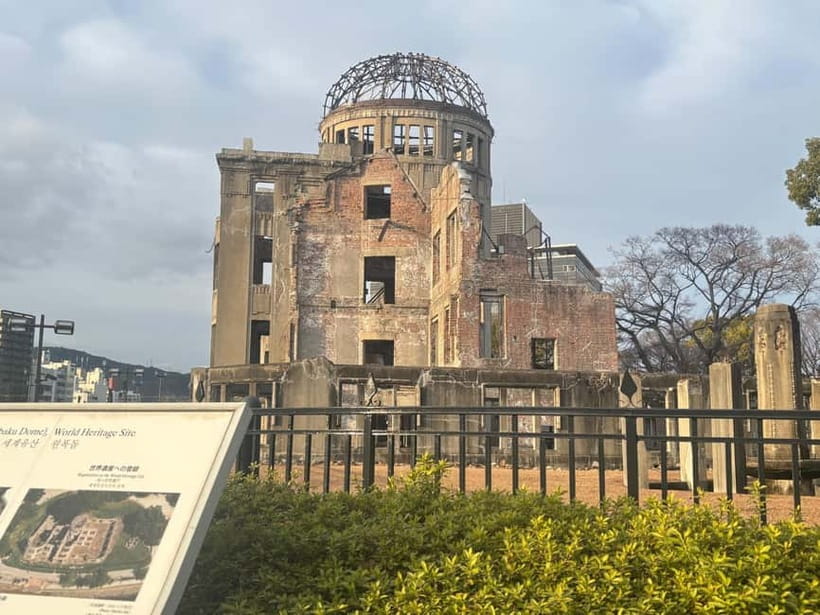
The Atomic Bomb Dome is the visual center of the tour. It is a UNESCO World Heritage Site and one of the most recognizable reminders of the bombing. The guide explains what makes the building important and how it became a symbol of destruction, memory, and peace.
The Dome can be powerful because it is not a reconstructed monument. Its damaged structure remains visible, surrounded by the modern city. That contrast makes Hiroshima’s rebuilding especially clear. A city reduced to ashes rebuilt itself, modernized, and became a global symbol of peace.
The tour finishes at the Hiroshima Atomic Bomb Hypocenter Monument. Ending there gives the walk a direct sense of place. The final stop is close to the central event the tour has been explaining, and it gives you a natural point from which to continue independently.
The Atomic Bomb Dome section itself is listed at about 10 minutes. Do not expect to spend the entire two hours at the Dome. The value lies in the full route, since the surrounding memorials explain the story from several angles.
How the guides handle the experience
The strongest part of this tour is the guiding. Syed is repeatedly described as polite, enthusiastic, articulate, and good at keeping people involved. He has also offered local lunch recommendations, including okonomiyaki suggestions, which is useful after a walking tour.
Other guides have received praise for adjusting to mixed groups. Aaze, for example, worked with both teenagers and adults and used questions to draw people into the discussion. That kind of interaction can make a difference when a group includes people with different levels of historical knowledge.
The tour is not limited to a dry timeline. Guides explain the monuments, answer questions, and share details about people affected by the bombing. Several participants found that the two hours went quickly because the conversation stayed active.
There is one practical warning. One tour finished in about 90 minutes, and another group experienced some confusion over the start time. The advertised duration is two hours, but timing can vary with the guide, group, and pace. Confirm the start time carefully and allow flexibility afterward.
Price, pace, and what you actually receive
At $23 per person, this is one of the more affordable guided ways to approach Hiroshima’s memorial district. You receive a live guide and a two-hour walking route covering the major outdoor sites. There is no hotel transfer, food, or personal expense included.
I think the price works best for first-time visitors. You pay for interpretation and structure, not admission to a grand attraction. Since many of the memorial sites are outdoors, you could visit them without paying for a tour. The question is how much you value having the story explained as you go.
The tour is also useful if you have only a short time in Hiroshima. In two hours, you see the main memorial area and finish near the Hypocenter Monument. If you have several days, it works well as an orientation before returning to the museum or revisiting places at your own pace.
The pace is generally manageable, but the route involves a significant amount of walking. Wear comfortable shoes, carry water, and bring a hat and sunscreen in warm weather. Because the tour runs in all weather, bring suitable rain protection when needed.
Who should book this walk
I would choose this tour if you:
- Are visiting Hiroshima for the first time
- Want the outdoor memorials explained in context
- Prefer a live conversation to reading every sign alone
- Appreciate personal stories alongside major historical events
- Want an inexpensive introduction before visiting the museum
- Enjoy asking questions during a guided walk
- Need local food suggestions after the tour
I would think twice if you have difficulty walking, use a wheelchair, or want a slow, silent visit with lots of time at each monument. The tour covers many locations in a fixed period, and its focus is explanation rather than extended private reflection.
Families can find the route meaningful, especially at the Children’s Peace Monument, but parents should decide how much detail is right for younger children. The subject is serious, and the tour does not soften the human cost of the bombing.
Free cancellation is available up to 24 hours before the tour for a full refund, and you can reserve now while paying later. Those options help if your Japan schedule is still shifting.
Should you book the Hiroshima Peace Walking Tour?
Yes, if you want the Peace Memorial Park to make sense rather than simply look solemn. For $23, you get a focused route, several memorials that are easy to overlook, and a guide who can connect Hiroshima’s wartime destruction with its postwar recovery and peace work.
Book it early in your Hiroshima visit, then use what you learn to explore the museum and city on your own. Just confirm your start time, allow for walking, and do not expect food or hotel transport. If you want a thoughtful introduction led by an engaging guide, this is a worthwhile choice.
FAQ
Where does the tour meet?
The meeting point is at the Gates of Peace, on the front side of the Italian restaurant Mario.
How long does the tour last?
The advertised duration is two hours, although the exact length can vary. One recorded tour lasted about 90 minutes.
What languages are available?
The live tour is available in English, Urdu, and Hindi.
Does the tour include the Atomic Bomb Dome?
Yes. The route includes a guided visit to the Atomic Bomb Dome, a UNESCO World Heritage Site.
Is food included?
No. Food is not served during the tour, and personal expenses are not included.
Is hotel pickup and drop-off provided?
No. You must make your own way to the meeting point, and hotel pickup and drop-off are not included.
What should I bring?
Bring comfortable shoes, water, a hat, sunscreen, and a camera. Dress for the weather because the tour operates in all conditions.
Is the tour suitable for wheelchair users?
No. The tour is not suitable for wheelchair users or people with mobility impairments.
Just added in Hiroshima
- Hiroshima Peace Memorial Museum Ticket★ 4.8 · 2,727 reviews
- Hiroshima Peace Memorial Museum Admission★ 4.6 · 1,308 reviews
- Private Full Day Hiroshima Tour★ 4.5 · 29 reviews
- The Peace Memorial to Miyajima : Icons of Peace and Beauty★ 4.5 · 31 reviews
- Shore Excursion from Hiroshima Port : Private Tour in Hiroshima★ 5.0 · 17 reviews
- Hiroshima & Miyajima All-Inclusive Tour w/Licensed guide Pancho★ 5.0 · 54 reviews
- Hiroshima Country Cycling: Explore Rural Life 1 HR from City★ 5.0 · 22 reviews
- Hiroshima Saijo Sake Tasting Tour with visit to 7 Breweries★ 5.0 · 104 reviews
Hiroshima Tours, compared.
Peaceful Hiroshima & Miyajima UNESCO 1 Day Bus Tour
Read our review →
Hiroshima and Miyajima UNESCO Sites 1-Day Tour
Read our review →
Hiroshima / Miyajima Full-day Private Tour with Government Licensed Guide
Read our review →
Hiroshima Historical Walking Tour – Why A-Bomb was Dropped
Read our review →
Hiroshima Peace (Heiwa) Walking Tour at World Heritage Sites
Read our review →
Hiroshima in a Nutshell: Morning Bike Adventure
Read our review →Browse the lists this tour appears in