Reviewed · PRIVATE TOURS
Kawagoe 4hr Private Tour with Licensed Guide (Kawagoe Dep)
Little Edo is closer than you think. This private Kawagoe tour gives you a smart way to see the old castle town from Tokyo, with a government-licensed multilingual guide shaping the outing around your interests. I like the personal format and the chance to choose only two or three sights instead of racing through every stop. I also like the local focus, from the bell tower and warehouse streets to shrines, temples, food, and souvenirs.
The main drawback is simple: this is a walking tour, and buses and taxis can be sparse around the sights. The $107.78 per-person price is reasonable for a private guide, but entrance fees, food, transport, and personal purchases are extra. You need to choose your priorities before arriving, since four hours is not enough for all ten suggested stops.
In This Review
- Key points to know before booking
- Why Kawagoe makes a good half-day escape
- A four-hour plan needs firm priorities
- Toki no Kane gives Kawagoe its sound
- Koedo Yokocho adds a food break
- The Kurazukuri streets explain Little Edo
- Castle remains and the Honmaru Palace tell a different story
- Hikawa Shrine brings a Shinto focus
- Kitain is the strongest temple choice
- Museums fill in the missing details
- Kawagoe Onsen is a separate kind of outing
- What the $107.78 price really buys
- Walking, mobility, and practical comfort
- Who will get the most from this private tour
- Should you book the Kawagoe four-hour private tour?
- FAQ
- How long is the Kawagoe private tour?
- How many sights can I choose?
- Is transportation included?
- Are entrance fees included?
- Is this a private tour?
- Can I cancel for a full refund?
Key points to know before booking
- Custom itinerary: You select two or three preferred sites from the available Kawagoe attractions.
- Licensed local guide: A government-certified guide can explain Japanese culture and the city’s Edo-period past in English.
- Mostly on foot: Pickup means meeting the guide on foot within the designated Kawagoe area, not riding in a private vehicle.
- Strong guide service: Guides such as Masa, Show, Isao, and Yusuke have been praised for clear explanations, flexibility, and personal attention.
- Good Tokyo side trip: Kawagoe is about 30 minutes by train from central Tokyo, making this a practical half-day escape.
- Extra costs matter: Several museums, the castle palace, the onsen, and the Kurazukuri Museum require separate admission fees.
Why Kawagoe makes a good half-day escape
Kawagoe was once a major castle town during the Edo period. Its old name, Ko-edo, means Little Edo, a reference to its close ties with the former Tokyo and its surviving traditional buildings.
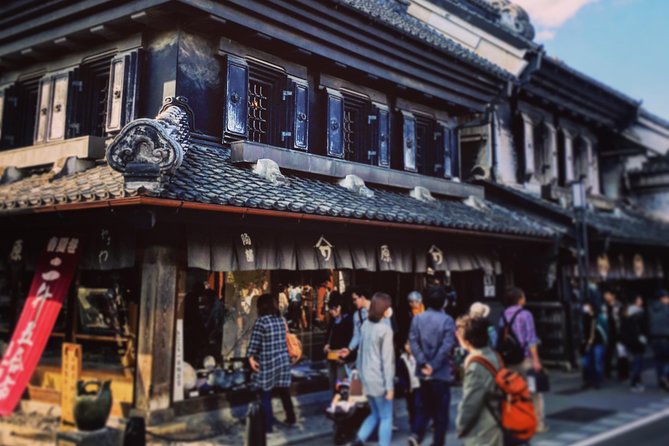
You will not find one enormous monument that explains the whole city. Instead, Kawagoe works through a collection of smaller sights: dark warehouse-style buildings, a wooden bell tower, temple grounds, a Shinto shrine, and the remains of the old castle. A guide helps connect those pieces.
From central Tokyo, the trip takes about 30 minutes by train. That short journey matters. You can spend a morning or afternoon in Kawagoe without giving up a full day of Tokyo sightseeing. The tour itself lasts about four hours, so it fits well on a day when you want a change of pace but still have evening plans elsewhere.
The experience is private, meaning only your group participates. That gives you room to ask questions, pause for photographs, or change the order of the visit. One guide, Show, even adjusted the outing when a guest wanted time for shopping. That kind of flexibility is difficult in a large group.
More Private Tours in Japan:
- Tokyo 6hr Private Tour with Government-Licensed Guide
★ 5.0 · 3,902 reviews - Private Tour to Mt. Fuji and Hakone (Fully Licenced Operator)
★ 5.0 · 1,910 reviews - Tokyo Customized Private Tour (Must See Places in 1 Day)
★ 5.0 · 1,499 reviews
A four-hour plan needs firm priorities
The most important planning detail is also the easiest to miss. The tour includes a customizable visit to two or three sites from a longer list of attractions.
The full selection contains ten possible stops:
- Toki no Kane
- Koedo Yokocho
- Kawagoe Kurazukuri Museum
- Kawagoe Castle Naka no Mon Remain
- Kawagoe Hikawa Shrine
- Kawagoe City Museum
- Kitain
- Kawagoejyo Honmaru Palace
- Kawagoe Onsen
- Kawagoe Matsuri Kaikan
Each listed stop is described as taking about 30 minutes, although Toki no Kane has a shorter listed visit time of five minutes. Even without walking between them, all ten would exceed the tour length. I would decide in advance if your main interest is architecture, religion, castle history, local food, festivals, or a Japanese bath.
For a first visit, a sensible request would be Toki no Kane, the old warehouse district or museum, and either Kitain or Hikawa Shrine. If you care most about castles, choose the palace and castle remains. If you want a more relaxed day, combine one major sight with Koedo Yokocho and time for shopping.
Tell the agency your must-see places when you book. The guide can then build a workable route rather than spending the first part of the tour negotiating priorities.
Toki no Kane gives Kawagoe its sound
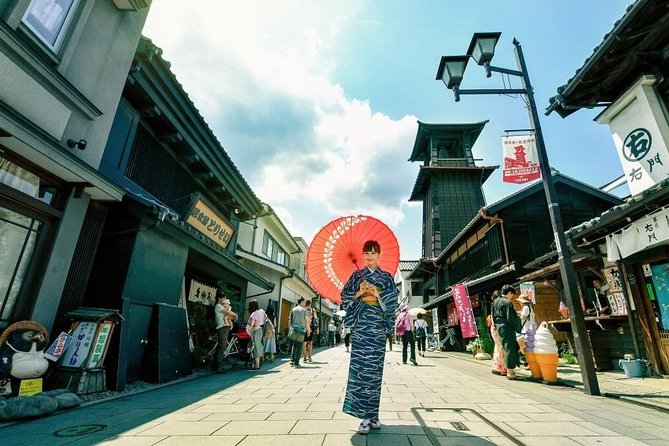
Toki no Kane, or the Bell of Time, is one of Kawagoe’s best-known symbols. During the Edo period, when ordinary clocks were not part of daily life, the tower’s bell announced the time to local residents.
The bell still rings at set times, including 6 a.m., noon, and 3 p.m. The exact experience depends on when your tour arrives, but the tower remains worth seeing even in silence. It offers a quick visual introduction to Kawagoe’s older streets and makes a good starting point for the walking route.
The listed visit takes only about five minutes, so this is not a major time commitment. I would pair it with the Kurazukuri area rather than treat it as a stand-alone stop. The bell tower is the postcard image, while the surrounding buildings show how the town functioned.
Koedo Yokocho adds a food break
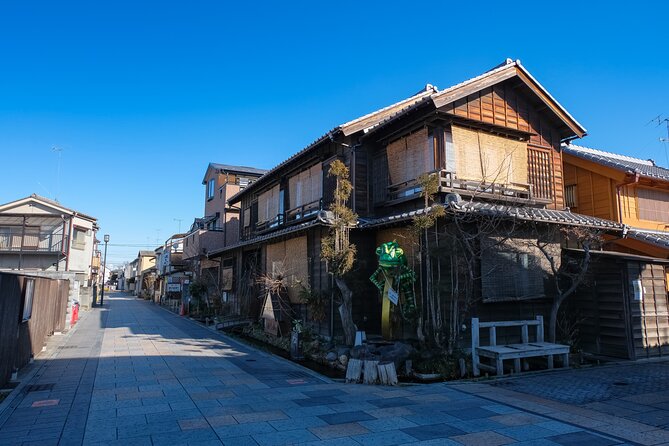
Koedo Yokocho is a warehouse-style building with restaurants serving Japanese dishes such as kamameshi and ramen. Kamameshi is a rice dish with meat and vegetables served in a small pot, giving you a more local meal option than a quick snack.
There is also a free rest area. That makes this stop useful on a walking tour, especially if your group includes someone who wants a pause between museums and temples. The tour price does not include lunch, so you pay for anything you eat here.
I would use Koedo Yokocho as a practical stop rather than a major sightseeing destination. It gives you food and a break, but it may not be the best choice if you have only four hours and want to see Kawagoe’s strongest cultural sights. Ask your guide to include it if food is a central part of your day.
A few more options to weigh up in Japan
- (Okinawa’s No. 1 Popular Northern Day Trip) Chinese-speaking guide · Includes admission tickets · 1 person can book: Churaumi Aquarium · Cape Manzamo · Kouri Island · American Village
★ 4.7 · 1,846 reviews - Shiraito Falls & Forest Cafe & Handmade Flower Salt Pudding & Grilled Seafood & Totoro Forest & Sakurai Futamigaura & Angel’s Wings & Coconut Tree Swing Day Tour (Departing from Hakata Station, with Mandarin, English, and Cantonese speaking guide)
★ 4.9 · 1,840 reviews - Tokyo: Shinjuku Local Bar and Izakaya Guided Walking Tour
★ 4.9 · 1,794 reviews - Tokyo: Private City Highlights Tour with Local Guide
★ 4.8 · 1,433 reviews
The Kurazukuri streets explain Little Edo
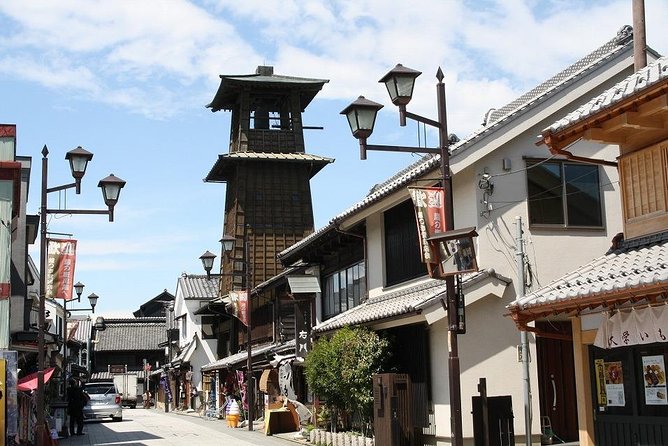
Kawagoe’s warehouse-style buildings are called kurazukuri. These thick-walled structures belonged to prosperous merchants and helped protect goods from fire. A group of them still shapes the city’s old commercial streets.
The Kawagoe Kurazukuri Museum gives more context to that building tradition. The museum is not included in the tour price, and admission is separate. It is a worthwhile choice for anyone who wants more than photographs of the street fronts.
The surrounding area also suits browsing. Kawagoe is known for regional food, drinks, and unusual souvenirs, so this is a natural place to make room for shopping. You can also ask for the kind of route Show provided, with time to browse instead of treating every minute as a formal sightseeing stop.
The trade-off is time. Walking the old streets, entering the museum, and shopping can easily fill a large part of the four hours. If this is your priority, skip the more distant stops.
Castle remains and the Honmaru Palace tell a different story
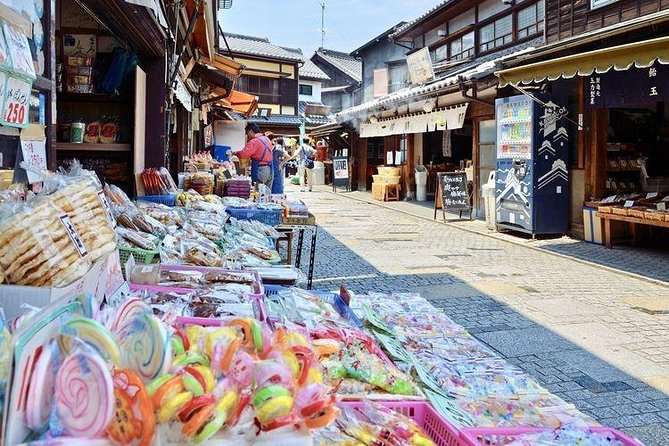
Kawagoe was built around Kawagoe Castle, although most of the original castle no longer survives. The Naka no Mon remains mark the old entrance area, and a few rooms are open to the public. The stop also offers a look at clothing and life from the period.
Kawagoejyo Honmaru Palace gives you another angle on the castle. Japanese castles are popular because their buildings make history easier to picture, but Kawagoe is not a complete castle complex. You should come expecting selected remains and preserved rooms, not a vast fortified site.
The castle options are best for you if political history and old buildings matter more than shopping or religious sites. Since entrance fees are not included, confirm the current cost and opening status when planning. One four-hour visit was affected by museums being closed on a Monday, so checking the calendar is important.
Hikawa Shrine brings a Shinto focus
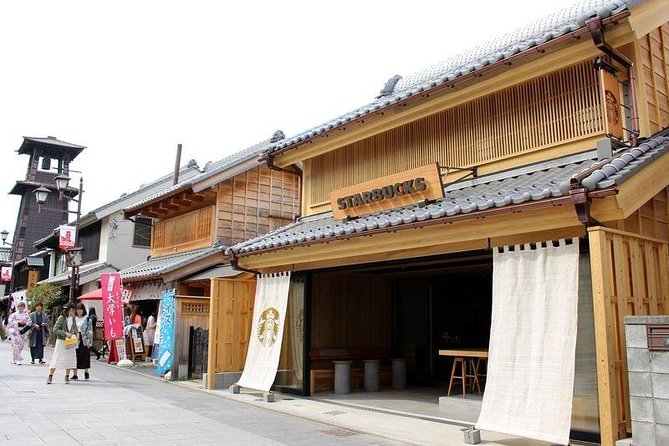
Kawagoe Hikawa Shrine is widely associated with love and successful relationships. Its Enmusubi dama, described as a love-success stone and good-luck charm, gives the shrine a clear theme that is easy to understand even on a short visit.
This stop helps balance the tour. The warehouses and castle sites show commerce and power, while Hikawa Shrine introduces Shinto practice and everyday religious customs. A guide can explain what you are seeing, how shrine visits work, and why the site has become so popular.
I would choose Hikawa Shrine if you want a cultural visit that does not depend on a long museum stay. Admission is free, though charms and other personal purchases cost extra. It is also a good choice for couples, families, or anyone interested in the living side of Japanese tradition rather than only preserved buildings.
Kitain is the strongest temple choice
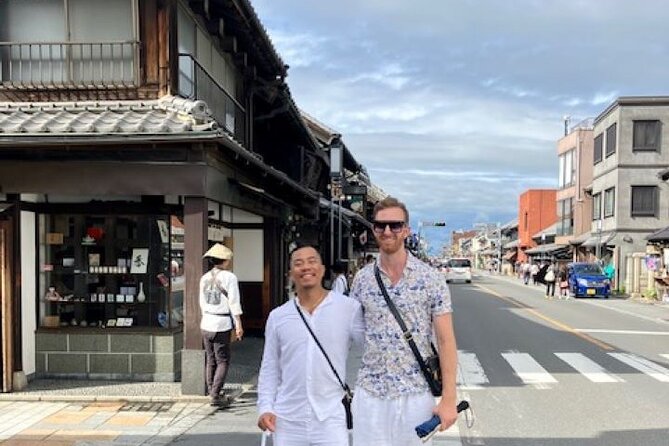
Kitain is a Buddhist temple with about 1,200 years of history. Its grounds and religious atmosphere make it one of the most rewarding choices on the tour, especially if you have room for only one major temple or shrine.
A particularly memorable feature is the group of Buddha statues representing 500 disciples. The temple gives you a sense of age and quiet that differs from the commercial streets. One guide-led visit made Kitain the favorite stop for guests who enjoyed the statues and temple setting.
Kitain is free to enter according to the tour details, though any optional admission areas or personal purchases should be confirmed locally. I would choose it over a second museum if you want a stronger visual and spiritual experience.
Museums fill in the missing details
The Kawagoe City Museum explains why the city is called Little Edo and uses the area’s surviving traditional buildings as a starting point. The Kurazukuri Museum focuses more closely on warehouse-style architecture and the merchant streets.
The Kawagoe Matsuri Kaikan covers local festivals. This is a good pick if you want to understand how community celebrations work in Kawagoe, especially if your visit does not coincide with a festival itself.
All three museums require separate admission. Their value depends on your interests. I would not choose two museums during a four-hour walking tour unless you prefer indoor exhibits and detailed explanations. The guide can help decide which one adds something new rather than repeating what you have already seen outdoors.
Museum schedules also deserve attention. The Monday closure problem mentioned by the guide is a useful warning. Check the day of your visit before making a museum the centerpiece of your plan.
Kawagoe Onsen is a separate kind of outing
Kawagoe Onsen offers natural hot spring bathing, with several baths made from wood and stone. An onsen can be a fine way to end a day in Japan, but it changes the character of this experience.
A 30-minute visit may feel rushed once you account for entry and changing. The entrance fee is not included, and the tour is primarily designed as a walking visit to Kawagoe’s cultural sights. If you specifically want a bath, tell the agency early and ask how the timing would work.
I would choose Kawagoe Onsen only if relaxation matters more to you than the castle, temple, or museum stops. It is not an automatic add-on to a history-focused route.
What the $107.78 price really buys
At $107.78 per person, the tour costs more than exploring Kawagoe independently. That comparison is fair, but it misses the main purchase: your guide’s time and the ability to shape the day around your group.
For two people, the cost buys a private four-hour explanation of the city, help with orientation, and a route adapted to your interests. For a larger group, group discounts may improve the value. The tour does not include transportation, entrance fees, lunch, a private vehicle, or other personal expenses.
I see the best value for first-time visitors who want context and do not want to spend time sorting out which sights fit together. It is less compelling for confident independent visitors who are happy to walk, use maps, and read about the sites on their own.
The guide’s government license is also meaningful. The certification requires a strong understanding of Japanese culture and history, so you are paying for more than basic directions. The strongest praise has focused on guides who explain Shinto and Kawagoe’s past clearly while keeping the outing personable.
Walking, mobility, and practical comfort
This is a walking tour. Pickup is on foot within a designated Kawagoe area, and no private vehicle is provided. Public transportation is nearby, but buses and taxis can be sparse around the sights.
Plan for time between stops, not only the advertised 30 minutes at each location. Comfortable shoes will make the day easier. Heat can also matter. One guide apologized for the difficulty of walking between places in hot weather, so choose a cooler season or a less ambitious route if you are sensitive to heat.
The tour allows service animals, and most people can participate. A guide named Isao helped a guest manage a wheelchair during the visit, which suggests that direct communication about mobility needs can be useful. The supplied details do not promise full step-free access at every site, so ask about your chosen stops before booking.
Who will get the most from this private tour
I would recommend this experience to:
- First-time visitors to Kawagoe who want the city explained, not just photographed
- Couples, families, and small groups who prefer a private pace
- People interested in Edo-period buildings, Japanese religion, or castle towns
- Visitors who want to add a half-day cultural trip to a Tokyo itinerary
- Anyone who values a flexible guide and may want time for shopping
I would be more cautious if you want a vehicle, dislike walking, or expect all entrance fees and meals to be covered. I would also avoid trying to see all ten suggested places. Kawagoe rewards a focused route.
The guide personalities appear to be a real strength. Masa was praised for being personable and professional. Show adjusted the route for shopping. Isao provided extra help for a wheelchair user and brought a personal connection as a Kawagoe native. Yusuke was praised for explaining the town and making the route easy to follow.
Should you book the Kawagoe four-hour private tour?
Book it if you want a focused introduction to Kawagoe with a real guide, especially if your group has a clear list of priorities. I would ask for Toki no Kane, the Kurazukuri district, and Kitain for a balanced first visit, or swap in Hikawa Shrine if Shinto culture interests you more.
Before paying, decide on two or three sites, check museum opening days, and budget for admission, food, and local transport. If you are happy to walk and want a flexible half-day beyond Tokyo, the private format makes this a useful purchase. If you want a cheap, self-guided stroll, save the money and explore independently.
The cancellation terms are forgiving if your plans shift: you can receive a full refund by canceling at least 24 hours before the start time. Changes or cancellations inside that window are not accepted for a refund.
FAQ
How long is the Kawagoe private tour?
The tour lasts approximately four hours.
How many sights can I choose?
The tour includes a customizable itinerary of two or three sites from the listed Kawagoe attractions.
Is transportation included?
No. The tour is conducted on foot, and no private vehicle is provided. Transportation fees are not included.
Are entrance fees included?
Entrance fees are not generally included. Guide entry fees are covered only for sights listed under the tour’s included attractions, so confirm the details for your selected stops.
Is this a private tour?
Yes. Only your group participates, and multiple tour groups cannot be combined.
Can I cancel for a full refund?
Yes, if you cancel at least 24 hours before the experience start time. Cancellations or changes made less than 24 hours before the start time are not accepted for a refund.
Just added in Japan
- A One-of-a-Kind Sushi Experience in a Special Place of Japan★ 5.0 · 15 reviews
- Tokyo Cute Bento Cooking Class – Make a Kawaii Character Lunchbox★ 5.0 · 126 reviews
- Japanese Home Cooking Class & Walk in Todoroki Temple Tokyo★ 5.0 · 88 reviews
- Japan Tokyo Tower Observatory Deck E-Ticket★ 4.0 · 34 reviews
- Catch a Baseball Game in Tokyo with a Local – Tickets Included★ 5.0 · 24 reviews
- JDM Experience with Fast&Furious RX-7 (English speaking Driver)★ 5.0 · 57 reviews
- Tokyo Private Day Tour by Car with English speaking Driver Guide★ 4.0 · 29 reviews
- Japan Classic 10 Day – One Life Adventures★ 5.0 · 129 reviews
Private Tours, compared.
Tokyo 6hr Private Tour with Government-Licensed Guide
Read our review →
Private Tour to Mt. Fuji and Hakone (Fully Licenced Operator)
Read our review →
Tokyo Customized Private Tour (Must See Places in 1 Day)
Read our review →
Mount Fuji Full-Day Private Tour from Tokyo (Customizable)
Read our review →
Tokyo 4hr Private Tour with Government-Licensed Guide
Read our review →
Kyoto 6hr Private Tour with Government-Licensed Guide
Read our review →
Tokyo Customized Private Tour: See Top Attractions in 1 Day
Read our review →