Reviewed · FULL-DAY
Nagoya Full-day Private Custom Tour with National Licensed Guide
Nagoya rewards curious visitors. This private six-hour walking tour lets you shape the day around your interests, with a national licensed English-speaking guide to explain the city as you go. You can focus on samurai history, Toyota, gardens, art, food, shopping, or a sensible mix of several.
I like the freedom to choose three or four sights instead of racing through a fixed program. I also like the practical help with trains, buses, restaurant choices, photos, and timing, praised by guests who toured with guides such as Hisato, Toshie, Sammy, Ryo, and Matt. The main drawback is simple: the tour is on foot and uses public transportation, so you pay for transport, meals, and entrance fees separately.
In This Review
- Key points to know before booking
- What this private Nagoya tour actually offers
- Nagoya Castle: the best choice for samurai history
- Atsuta Shrine: quiet woods inside the city
- Toyota Museum: Nagoya’s industrial identity
- MIRAI Tower and the Sky Promenade: two different city views
- Osu Shopping Street and Shikemichi: the most local-feeling pairing
- Tokugawa Art Museum and Tokugawa Garden: refined Edo culture
- Science, art, ceramics, and swords
- Gardens and shrines for a slower pace
- How the guide improves the day
- Six hours, public transit, and real costs
- Who should book this Nagoya experience?
- Should you book the Nagoya custom tour?
- FAQ
- How long does the Nagoya private tour last?
- Is the tour private?
- How many sights can I choose?
- Is a guide included?
- Is transportation included?
- Where does the guide meet me?
- Are entrance fees included?
- Is lunch included?
- Can I visit Nagoya Castle and Atsuta Shrine?
- Can I cancel for a full refund?
Key points to know before booking
- Choose three or four places: The long list of possible sights is a menu, not a promise to visit every stop.
- Expect a walking day: Pickup is on foot within a designated area, and there is no private vehicle.
- A guide makes transit easier: Past tours have used trains, buses, taxis, and subway connections, with help for cruise-port timing.
- Nagoya offers several different stories: You can connect samurai culture, Shinto worship, Toyota manufacturing, ceramics, art, gardens, and local food in one day.
- Lunch can become part of the tour: Guides have taken groups to local sushi, udon, eel, and miso katsu restaurants.
- The price rewards small private groups: At $155.22 per person, the value improves when your party wants a personal plan rather than a standard group route.
What this private Nagoya tour actually offers
The advertised list includes 15 possible places, but the service includes a customized visit to three or four. That distinction matters. You are not buying a hop-on, hop-off circuit, and you should not expect to see Nagoya Castle, Atsuta Shrine, the Toyota museum, several gardens, and every museum in six hours.
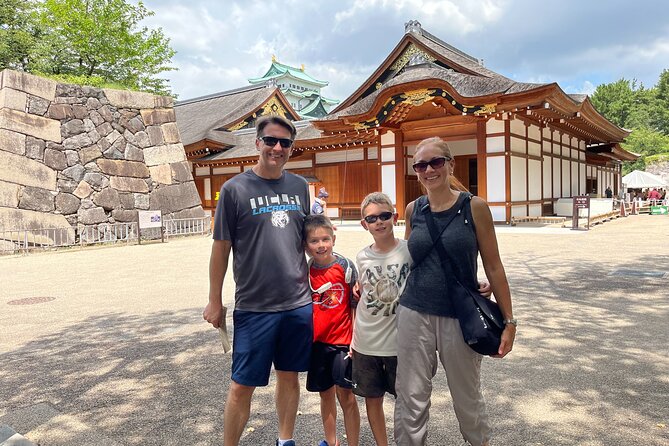
Instead, you and your guide decide what fits your interests and pace. One family may choose Nagoya Castle, Atsuta Shrine, and a local lunch. Another may prefer the Toyota Commemorative Museum of Industry and Technology, Osu Shopping Street, and the Sky Promenade. A cruise passenger with limited time might select only major sights close to efficient rail routes.
The guide meets you on foot within the designated Nagoya area. Pickup from accommodations is offered in this walking format, and several cruise passengers have arranged meetings at Nagoya Port. Confirm the meeting point carefully, especially if you have a ship departure to catch.
More Private Tours in Japan:
- Tokyo 6hr Private Tour with Government-Licensed Guide
★ 5.0 · 3,902 reviews - Private Tour to Mt. Fuji and Hakone (Fully Licenced Operator)
★ 5.0 · 1,910 reviews - Tokyo Customized Private Tour (Must See Places in 1 Day)
★ 5.0 · 1,499 reviews
Nagoya Castle: the best choice for samurai history
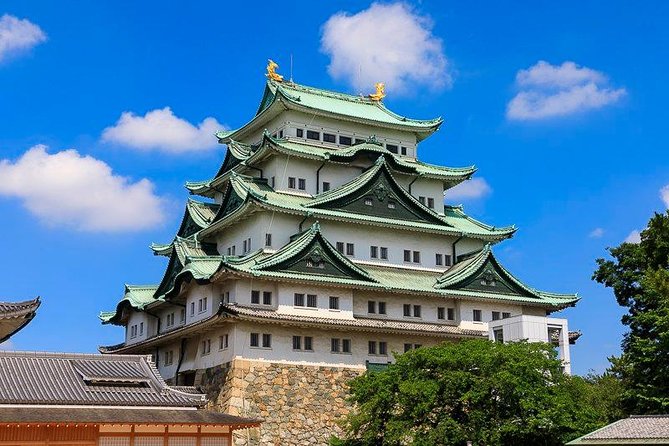
Nagoya Castle is the clearest opening choice if you want the city’s political story. Its roof ornaments, golden shachihoko, have the head of a tiger and the body of a carp. They are easy to spot and give the castle an immediate visual identity.
The castle is tied to Tokugawa Ieyasu, the first shogun, and the broader Tokugawa period. A licensed guide can help you understand why Nagoya mattered as a castle town instead of leaving you with a quick photo and a few labels.
The planned stop is only about 30 minutes, so this is best treated as a focused visit. Admission is not included. One guide regretted that a long line prevented a group from visiting Honmaru Palace, a useful warning that queues and opening conditions can affect the plan. If the palace is your priority, tell the guide before the day begins and allow enough time.
Atsuta Shrine: quiet woods inside the city
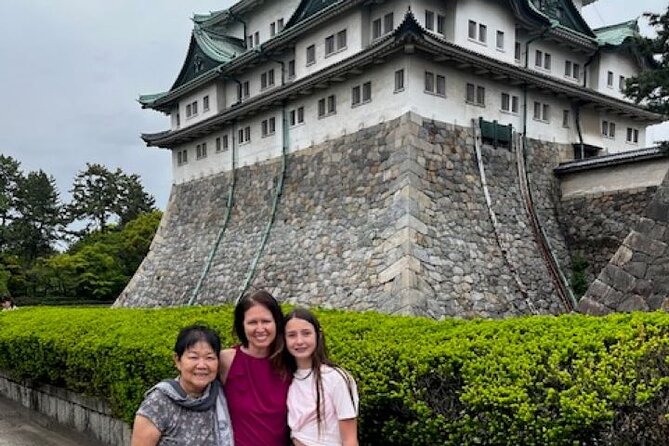
Atsuta Jingu offers a sharp change from the castle. Founded in the eighth century, it occupies a large wooded area within metropolitan Nagoya. The grounds are free to enter, and the brief 30-minute visit can give your day a calmer rhythm.
This is a good pick for anyone interested in Shinto, Japanese ritual, or traditional spaces. Your guide can explain shrine customs and point out what to notice, while you take in the contrast between the trees and the surrounding city.
You may also have time for a fortune slip or a simple shrine ritual. One guide recalled a family enjoying omikuji fortunes, but the tour does not promise a particular activity. The visit is more about atmosphere and cultural context than a long museum-style explanation.
Toyota Museum: Nagoya’s industrial identity
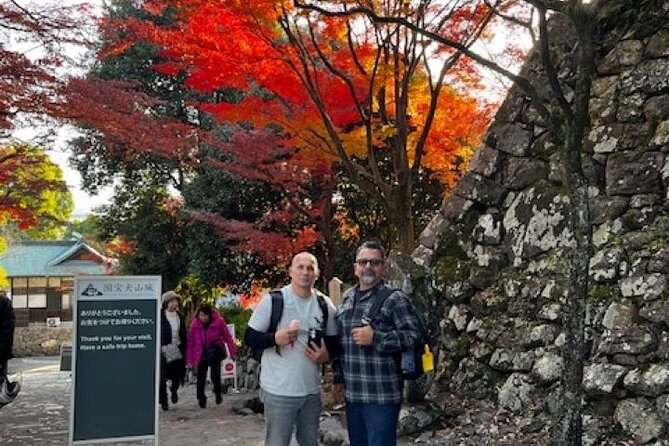
The Toyota Commemorative Museum of Industry and Technology is one of the strongest choices for families, engineers, and anyone curious about modern Japan. It was established in 1994, one hundred years after the birth of Toyota founder Toyoda Kiichiro.
The museum’s appeal is not limited to cars. Its name points to industry and technology, making it a useful place to understand Toyota’s development and Nagoya’s connection to manufacturing. One former Toyota employee, Matt, has guided this part of the city and brought useful professional experience to the subject.
Allow more than the listed 20-minute stop if the museum is central to your plan. Twenty minutes may work for a quick look, but it is a short visit for a large museum experience. Admission is extra, and you should confirm opening days before committing to it. One group received a samurai museum alternative when Toyota was closed, which shows why flexibility matters.
A few more options to weigh up in Japan
- (Okinawa’s No. 1 Popular Northern Day Trip) Chinese-speaking guide · Includes admission tickets · 1 person can book: Churaumi Aquarium · Cape Manzamo · Kouri Island · American Village
★ 4.7 · 1,846 reviews - Shiraito Falls & Forest Cafe & Handmade Flower Salt Pudding & Grilled Seafood & Totoro Forest & Sakurai Futamigaura & Angel’s Wings & Coconut Tree Swing Day Tour (Departing from Hakata Station, with Mandarin, English, and Cantonese speaking guide)
★ 4.9 · 1,840 reviews - Tokyo: Shinjuku Local Bar and Izakaya Guided Walking Tour
★ 4.9 · 1,794 reviews - Tokyo: Private City Highlights Tour with Local Guide
★ 4.8 · 1,433 reviews
MIRAI Tower and the Sky Promenade: two different city views
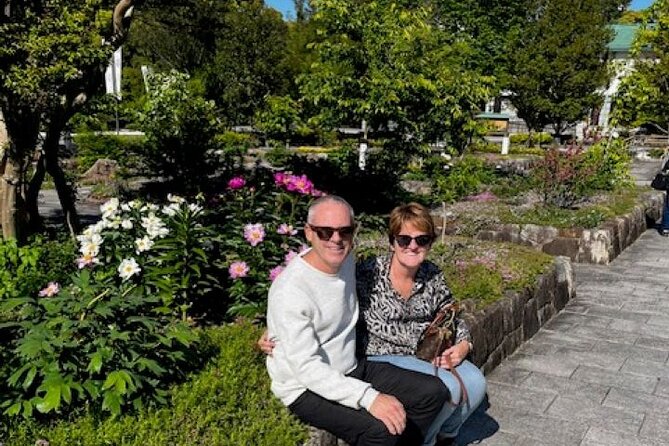
The Chubu Electric MIRAI TOWER, formerly called the Nagoya TV Tower, is one of central Nagoya’s recognizable landmarks. A 30-minute stop can work for a quick visit or a view over the city. Admission is not included.
The Sky Promenade offers a higher viewpoint from Midland Square. The building rises 247 meters and has 47 floors, giving you a broad look over the central region. The suggested stop is about 20 minutes, so it is best for photographs and orientation rather than a long stay.
These two viewpoints are not interchangeable in practical terms. If you want the city’s historic landmark, choose MIRAI TOWER. If you want a high observation deck near Nagoya Station, choose the Sky Promenade. Entrance costs apply to both, and weather can affect how much you see.
Osu Shopping Street and Shikemichi: the most local-feeling pairing
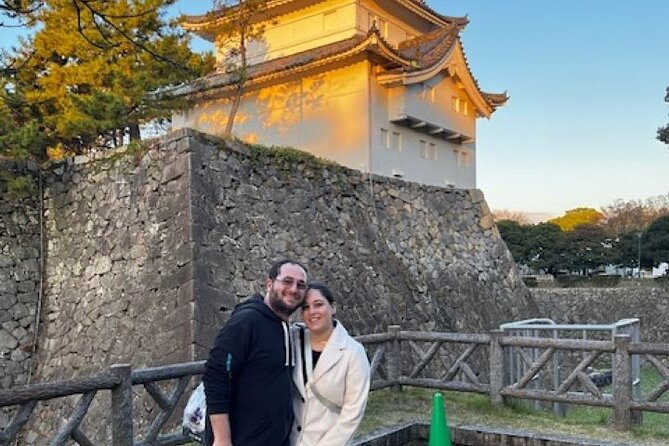
Osu Shopping Street is a strong choice when you want food, shops, and street life rather than formal sightseeing. The area once served as Nagoya’s leading entertainment quarter and later developed into a maze of shopping arcades, electronics stores, and second-hand clothing shops.
The listed stop is about 20 minutes, but you could easily spend longer if you want to browse or eat. A guide can help you make sense of the area and point you toward local specialties. Guides have arranged meals featuring sushi, udon, and Nagoya’s fried pork cutlet, often served with the city’s distinctive miso flavor.
Shikemichi offers a slower historical counterpoint. This merchant district was built in 1610 after the town of Kiyosu moved to Nagoya. Located along the west bank of the Horikawa River, it shows an older side of the castle town through its streets and merchant atmosphere.
Both stops are free to enter. Pick Osu if you want shopping and food. Pick Shikemichi if you want old-town character and a quieter walk. Pairing them may work, but travel time between stops can reduce the time you have to explore.
Tokugawa Art Museum and Tokugawa Garden: refined Edo culture
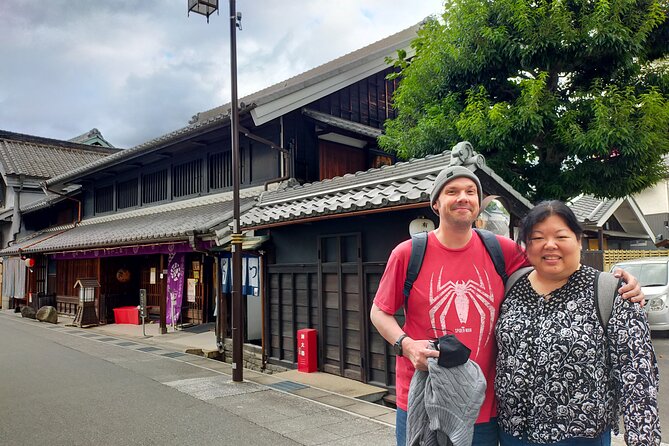
The Tokugawa Art Museum is a private museum in the former Ozone Shimoyashiki compound. Its collection contains more than 12,000 items, making it the best choice on this tour for visitors focused on art, samurai objects, and the culture of the Tokugawa family.
The suggested visit is only 15 minutes, which is enough for a brief introduction but not a serious museum visit. Admission is extra. If you care about the collection, ask to give it more of your six-hour day.
Next door, or in the same general area, Tokugawa Garden provides a different experience. It is a traditional Japanese garden arranged around a pond, based on the style used for major daimyo gardens during the Edo period. The listed 10-minute visit is very short, especially if you want to walk the paths and take photographs.
These sites make sense together, but only if you are willing to spend a large portion of the tour in one cultural district. That can be a good decision for art and garden lovers, but less useful if this is your only Nagoya day and you want a broad introduction.
Science, art, ceramics, and swords
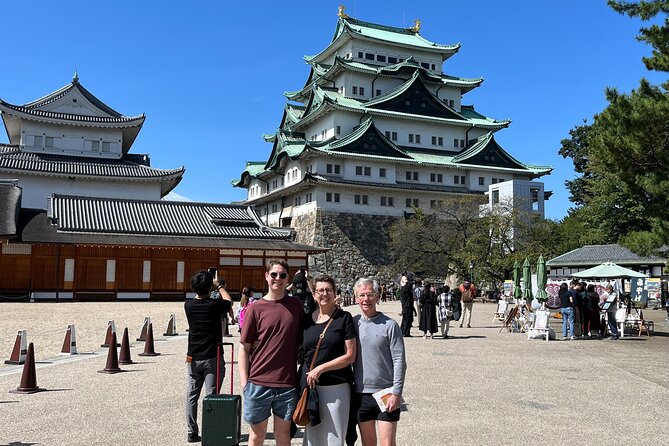
The Nagoya City Science Museum is aimed at visitors who like hands-on learning and astronomy. Its planetarium is described as the largest in the world, and the museum presents the feeling of traveling through the universe. Admission is not included, and the planned 30 minutes is again a quick taste.
The Nagoya City Art Museum is housed in a building designed by Kisho Kurokawa, a leading Japanese architect. A 15-minute stop lets you see the building and perhaps sample the collection, but it is too short for a substantial gallery visit. Choose this only if modern art or architecture is important to you.
Noritake no Mori introduces one of Japan’s best-known tableware names. Noritake began in 1904 and combined Japanese craftsmanship with international ceramics production. The suggested 20 minutes makes this a useful stop for design fans, though admission fees are separate.
The Nagoya Sword Museum, also called Nagoya Sword World, sits in the Sakae district. It displays as many as 200 Japanese swords, including National Treasures and Important Cultural Properties. The planned 10 minutes is brief, so treat it as a targeted stop for sword enthusiasts rather than a complete museum visit.
Gardens and shrines for a slower pace
Shirotori Garden covers about 3.7 hectares and offers traditional Japanese garden scenery. Its design changes with the seasons and the tidal flow of its central water features. The suggested visit is 20 minutes, enough for a short walk but not a leisurely garden outing.
Wakamiya Hachimansha Shrine is another free stop. Its deities include Emperor Nintoku, Emperor Ojin, and Takeuchinosukune, a legendary figure connected with Japan’s first imperial government. The shrine also has ties to the Tokugawa period.
These stops suit you if you want less museum time and more open air. Keep an eye on the weather, though. Rain has made sightseeing less pleasant for some groups, and a walking tour gives you less shelter than a private car.
How the guide improves the day
The guide is the main reason to book this experience. You are not paying only for facts. You are also paying for help with the parts of Japan that can slow an independent day: finding the correct platform, choosing a sensible route, reading the timing, and making a meal decision.
Past guides have helped families use public transportation, store luggage in coin lockers, take group photographs, and board trains on time. This is especially useful at Nagoya Port, where a cruise passenger must return to the ship without delay.
The standard is not identical with every guide. Hisato was praised for punctuality and transit help. Toshie adapted food and activities for adults and teenagers. Ryo adjusted the schedule during the day and shared cultural background. Matt was careful with timing and had Toyota experience. These examples suggest a broad pool of capable guides, but you cannot assume a particular person unless the booking confirms it.
Six hours, public transit, and real costs
The base price is $155.22 per person. That is not cheap for a six-hour walking tour, but it can be fair for a private group that wants a custom plan and English-language help. The value is strongest when several people share the guide and when you would otherwise lose time figuring out transit or choosing sights.
Budget separately for train, bus, subway, taxi, lunch, and admission fees. There is no private vehicle. The guide’s own entry fees are covered only for sights included under the stated program, while your entrance fees remain a separate cost.
The six-hour limit also makes planning important. The 15 listed stops have suggested times ranging from 10 to 30 minutes, but those figures do not include walking, transfers, queues, meals, or unexpected closures. Choose three major sites, or four compact stops in nearby areas, rather than trying to collect them all.
Who should book this Nagoya experience?
I would recommend this tour to families, first-time Nagoya visitors, cruise passengers, and anyone who wants history explained in plain English. It is also a good fit if you have a specific goal, such as Toyota, samurai culture, Japanese gardens, or local food.
You should book it if you value flexibility more than a low-cost group excursion. The private format means only your party participates, so the guide can adjust the pace and explain things that interest you.
I would hesitate if you want a private car, dislike walking, or expect every listed attraction in one day. The tour works best when you choose a clear theme and accept that Nagoya’s size, transit, and opening hours will shape the route.
Should you book the Nagoya custom tour?
Book it if you want a personal introduction to Nagoya and are willing to use public transportation. The strongest plan is to select one headline sight, one cultural stop, and one food or shopping area. Nagoya Castle with Atsuta Shrine and Osu is a balanced first day. Toyota, Noritake no Mori, and the Sky Promenade suit visitors interested in industry, design, and modern city views.
Before booking, share your priorities, mobility needs, arrival point, and departure deadline. Ask the guide to protect time for your must-see site, and keep a little flexibility for closures, queues, heat, or rain. At a 4.9 rating from 61 reviews with 100 percent recommendation, the experience has a strong record, but its success depends on choosing a realistic three or four-stop plan.
FAQ
How long does the Nagoya private tour last?
The tour lasts approximately six hours.
Is the tour private?
Yes. Only your group participates, and multiple tour groups cannot be combined.
How many sights can I choose?
The experience includes a customizable tour of three or four sites from the available list.
Is a guide included?
Yes. A licensed local English-speaking guide is included.
Is transportation included?
No. Transportation fees are not included, and the tour does not provide a private vehicle. It is a walking tour that may use public transportation.
Where does the guide meet me?
You meet the guide on foot within the designated area of Nagoya. Pickup from accommodations is offered in this walking format. Cruise-port arrangements are also described in the tour information and past bookings.
Are entrance fees included?
No. Entrance fees are generally not included. The guide’s entry fees are covered only for sights listed under the stated program.
Is lunch included?
No. Lunch and other personal expenses are separate.
Can I visit Nagoya Castle and Atsuta Shrine?
Yes, both are among the possible stops. Nagoya Castle has an admission fee, while Atsuta Shrine has free admission.
Can I cancel for a full refund?
Yes, if you cancel at least 24 hours before the experience start time. Cancellations or changes made less than 24 hours in advance are not refunded or accepted.
Just added in Japan
- A One-of-a-Kind Sushi Experience in a Special Place of Japan★ 5.0 · 15 reviews
- Tokyo Cute Bento Cooking Class – Make a Kawaii Character Lunchbox★ 5.0 · 126 reviews
- Japanese Home Cooking Class & Walk in Todoroki Temple Tokyo★ 5.0 · 88 reviews
- Japan Tokyo Tower Observatory Deck E-Ticket★ 4.0 · 34 reviews
- Catch a Baseball Game in Tokyo with a Local – Tickets Included★ 5.0 · 24 reviews
- JDM Experience with Fast&Furious RX-7 (English speaking Driver)★ 5.0 · 57 reviews
- Tokyo Private Day Tour by Car with English speaking Driver Guide★ 4.0 · 29 reviews
- Japan Classic 10 Day – One Life Adventures★ 5.0 · 129 reviews
Full-Day, compared.

Mount Fuji Full-Day Private Tour from Tokyo (Customizable)
Read our review →
Hiroshima / Miyajima Full-day Private Tour with Government Licensed Guide
Read our review →
Mount Fuji Full-Day Small Group driver-guide tour (with Pick-up option)
Read our review →

5 Top Highlights of Kyoto Full Day Bike Tour (E-bike option)
Read our review →