Reviewed · HALF-DAY
Nagoya Half-day Private Custom Tour with National Licensed Guide
Nagoya rewards a flexible plan. This four-hour private tour lets you choose two or three sights with a national licensed English-speaking guide, rather than follow a preset group route. You might visit Nagoya Castle and Atsuta Jingu, focus on Toyota’s industrial story, or spend your time among gardens, museums, and old merchant streets.
I like the freedom to shape the day around your interests, and I like having a guide who can handle the language, explain local customs, and lead you through Nagoya’s public transport system. The main drawback is simple: four hours passes quickly, especially when trains, entrance fees, meals, and walking time all come out of your own pocket.
In This Review
- Key points to know before booking
- Why a private Nagoya tour works well
- Nagoya Castle: the best history lesson in one stop
- Atsuta Jingu: customs, trees, and a slower pace
- Toyota and Noritake: Nagoya’s working character
- Tokugawa Garden and Tokugawa Art Museum
- City views, science, and art in central Nagoya
- Osu, Shikemichi, and smaller local stops
- Nagoya Sword Museum and the value of a good guide
- Timing, walking, and transport costs
- Is $108.99 per person good value?
- How I would plan the four hours
- Should you book this Nagoya tour?
- FAQ
- How long is the Nagoya private custom tour?
- How many sights can I choose?
- Is transportation included?
- Are entrance fees included?
- Is the tour private?
- Can I cancel for a full refund?
Key points to know before booking
- Choose two or three sights: The tour is designed for a small, focused selection, not a race through all 15 suggested stops.
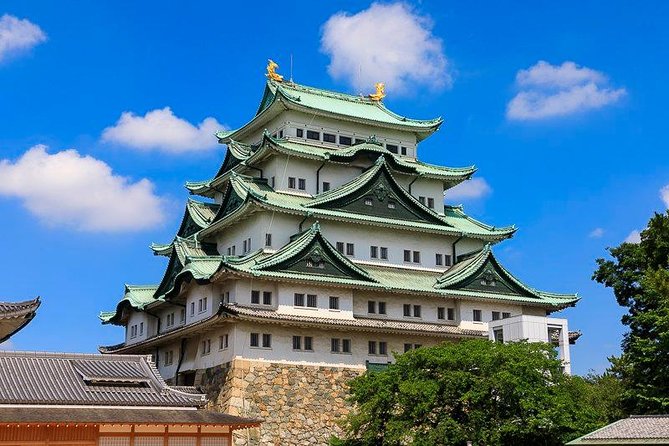
- Nagoya Castle is a strong first choice: Its golden shachihoko roof ornaments and Tokugawa connections give the city immediate historical context.
- Atsuta Jingu adds a quieter cultural stop: The large wooded shrine grounds offer a useful introduction to purification, prayer, and Japanese religious customs.
- Guides can adapt the day: Todd Miura, Elvis, Toshie, Hiroshi, Tomoko Tabata, Masami, Matt, and Yumi are among the guides named in the tour feedback.
- You walk and pay for transport separately: Pickup means meeting the guide on foot within the designated Nagoya area, not a private car transfer.
- The price is easier to justify for groups: At $108.99 per person, the private format offers more value when several people share the guide’s attention.
Why a private Nagoya tour works well
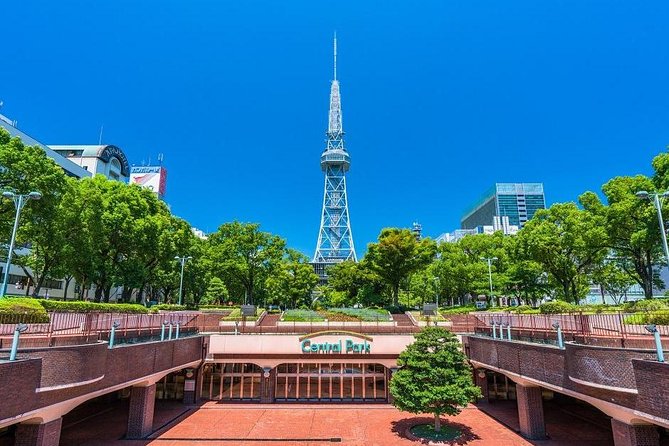
Nagoya is spread out. Its castle, shrine, museums, gardens, shopping arcades, and observation points do not form one tidy walking circuit. A private guide helps you turn a scattered city into a sensible half-day.
I especially like this format for a first visit, a short port stop, or a day between train connections. You can tell the guide what matters most, then let that person build a workable route. If you are interested in samurai history, the plan can lean toward Nagoya Castle, Tokugawa Garden, and the Tokugawa Art Museum. If industry is your subject, the Toyota Commemorative Museum of Industry and Technology makes more sense.
The private setup also gives you room to ask questions. Guides have helped visitors understand shrine rituals, Japanese history, art, cars, local shopping, and the relationship between Nagoya’s industries and its growth. That personal exchange is the real reason to choose this tour instead of simply buying a sightseeing pass.
The four-hour limit requires discipline. You are generally choosing two or three major stops, not fifteen. Some places are listed with only 10 or 15 minutes, but those short allocations are best understood as possible stop lengths, not enough time for a full museum visit. A castle, museum, and garden can easily fill the entire tour once transport and walking are counted.
More Private Tours in Japan:
- Tokyo 6hr Private Tour with Government-Licensed Guide
★ 5.0 · 3,902 reviews - Private Tour to Mt. Fuji and Hakone (Fully Licenced Operator)
★ 5.0 · 1,910 reviews - Tokyo Customized Private Tour (Must See Places in 1 Day)
★ 5.0 · 1,499 reviews
Nagoya Castle: the best history lesson in one stop
Nagoya Castle is the natural anchor for a first visit. Its roof ornaments, called shachihoko, are mythical creatures with a tiger’s head and carp’s body. The gold figures are instantly recognizable and give the castle a clear visual identity.
The castle is tied to Tokugawa Ieyasu, the first shogun, and to the political importance of Nagoya. A guide can help you understand why the city grew into a major center and how the castle fit into the Tokugawa order. That context is more useful than simply taking a photograph of the main tower.
The site also requires honest timing. The suggested itinerary allows roughly 15 minutes, but that is a brief look, not a leisurely visit. If Nagoya Castle is your priority, tell the guide at the start and consider selecting only one other nearby stop. One couple who visited the castle, Tokugawa Garden, and MIRAI TOWER in four hours wished they had spent longer at the castle and garden.
Admission is not included in the stated tour price. Entrance charges are separate, and the tour information notes that guide entry fees are covered only for sights listed under the expected stops. Ask for clarification when you decide on your route, especially if you choose a museum or observation deck.
Atsuta Jingu: customs, trees, and a slower pace
Atsuta Jingu offers a different side of Nagoya. Founded in the eighth century, it is one of Japan’s highest-ranking shrines and occupies a large wooded area within the city. The contrast is part of its appeal: traffic and modern buildings are nearby, but the shrine grounds provide a calmer setting.
This is one of the best places to use a guide actively. You can learn how to purify yourself at the fountain, how to approach the shrine, and how to pray. One guide also helped visitors understand omikuji and a fountain associated with beautiful skin. These small explanations turn a quick shrine visit into a practical cultural lesson.
Atsuta Jingu has no admission fee, which helps keep the day’s added costs down. Still, it takes time to reach, and you should not pair it with too many distant stops. Atsuta Jingu and the Toyota museum make a sensible combination for people who want both culture and modern industry, as Todd Miura demonstrated with one family.
Toyota and Noritake: Nagoya’s working character
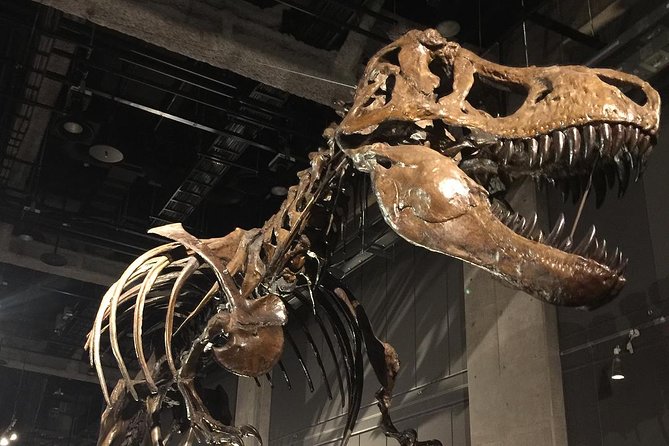
The Toyota Commemorative Museum of Industry and Technology is a good choice if you want more than temples and castles. The museum was established in 1994, one hundred years after the birth of Toyota founder Toyoda Kiichiro. Its purpose is tied to the company’s development and to the industrial identity of Nagoya.
You might choose this museum if cars, engineering, manufacturing, or business history interest you. The guide can give you a local frame for what you see, rather than leaving you to read every display alone. The planned visit is about 20 minutes, but that is not enough for a detailed museum session. Treat it as a short introduction unless you arrange a longer visit by dropping other stops.
Noritake no Mori offers another look at Nagoya’s industrial and artistic past. Noritake began in 1904 and became a respected name in tableware and ceramics. The site can connect craftsmanship, design, manufacturing, and the city’s commercial growth.
Yumi provided one group of six with pictures and diagrams before arriving at Noritake. That kind of preparation matters. It gives you a story to follow and helps explain why the site belongs in Nagoya’s wider history. If Noritake is your main interest, make it the center of the tour instead of squeezing it between several famous landmarks.
A few more options to weigh up in Japan
- (Okinawa’s No. 1 Popular Northern Day Trip) Chinese-speaking guide · Includes admission tickets · 1 person can book: Churaumi Aquarium · Cape Manzamo · Kouri Island · American Village
★ 4.7 · 1,846 reviews - Shiraito Falls & Forest Cafe & Handmade Flower Salt Pudding & Grilled Seafood & Totoro Forest & Sakurai Futamigaura & Angel’s Wings & Coconut Tree Swing Day Tour (Departing from Hakata Station, with Mandarin, English, and Cantonese speaking guide)
★ 4.9 · 1,840 reviews - Tokyo: Shinjuku Local Bar and Izakaya Guided Walking Tour
★ 4.9 · 1,794 reviews - Tokyo: Private City Highlights Tour with Local Guide
★ 4.8 · 1,433 reviews
Tokugawa Garden and Tokugawa Art Museum
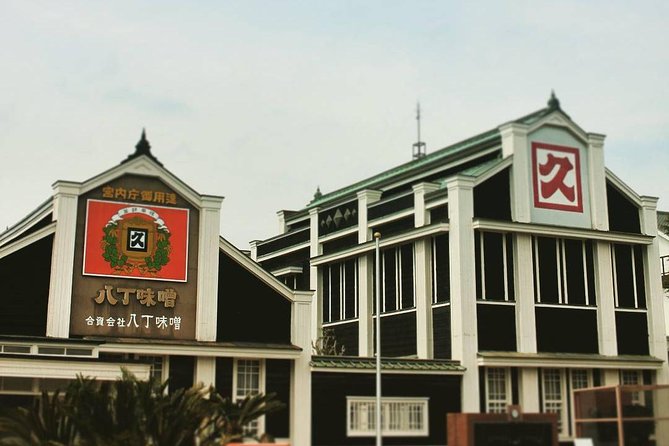
Tokugawa Garden is a traditional Japanese garden arranged around a central pond. Its design reflects the style favored by major daimyo during the Edo period. This is a good place to slow down after the harder facts of castle or museum visits.
The garden is listed as a 10-minute stop, so you should set expectations carefully. Ten minutes may be enough for a brief look and a few photographs, but not for a relaxed circuit. A visitor who combined the castle, Tokugawa Garden, and MIRAI TOWER found all three worthwhile but wanted more time at the castle and garden.
The Tokugawa Art Museum is the stronger choice if you want objects and historical detail. It is a private museum on the former Ōzone Shimoyashiki compound, with a collection of more than 12,000 items. The tour suggests about 20 minutes here, which again is an introduction rather than a complete museum visit.
I would pair the museum with the garden because they make an obvious thematic match. You can see the setting associated with the Tokugawa family, then explore objects connected with that world. Just remember that both require admission fees, and the four-hour clock keeps moving.
City views, science, and art in central Nagoya
The Chubu Electric MIRAI TOWER, still often called the Nagoya TV Tower, is a central city landmark. It gives you a modern counterpoint to castles and shrines. The suggested stop takes about 15 minutes, with admission separate.
Sky Promenade offers another high viewpoint from Midland Square. The building rises 47 floors and 247 meters, and the observation area can help you understand Nagoya’s size and layout. Choose one viewpoint, not both, unless city views are the main purpose of your tour.
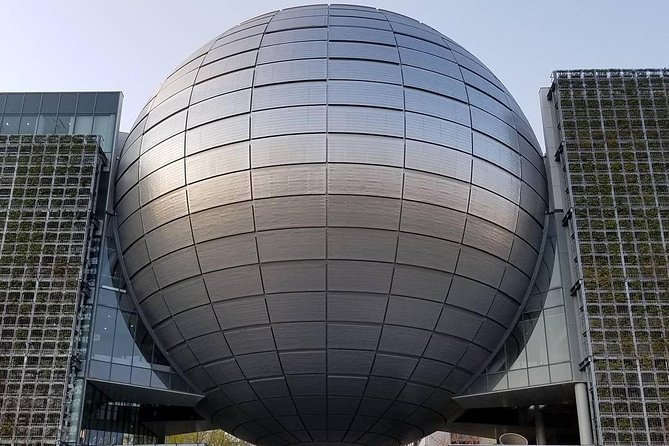
The Nagoya City Science Museum is a strong pick for families and anyone curious about space. It has the world’s largest planetarium, according to the tour description, and presents the experience of moving through the universe. A 15-minute stop will only introduce the building, so select it only if you can accept a brief visit or arrange the route around it.
The Nagoya City Art Museum focuses on modern and international art, including works by Surrealist artists and others from around the world. Its suggested time is only 10 minutes. That is enough to orient yourself, but not enough to appreciate a serious collection. Museum lovers should ask the guide to make one museum the main stop.
Osu, Shikemichi, and smaller local stops
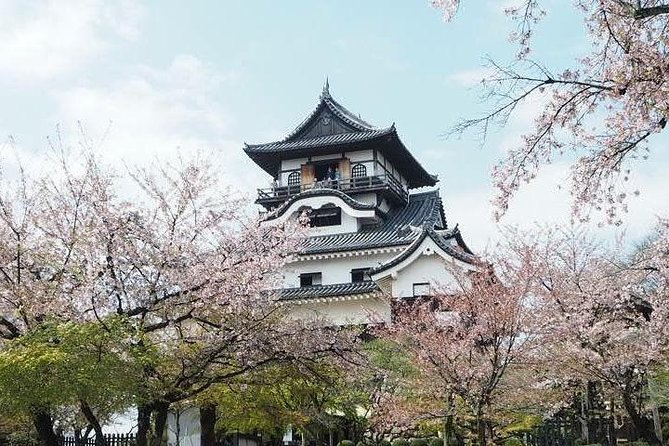
Osu Shopping Street is a useful choice when you want everyday Nagoya rather than formal sights. The district once served as the city’s leading entertainment quarter and later developed into a broad shopping area with electrical goods, second-hand clothing, and other stores.
The stop is free and listed at about 20 minutes. That makes it easy to add, but twenty minutes will give you only a taste. If you want time to browse, eat, or shop, Osu should be one of your two main stops.
Shikemichi offers another kind of city experience. This merchant quarter on the west bank of the Horikawa River was built in 1610, when the town of Kiyosu moved to Nagoya. The area helps explain how the castle town developed beyond the castle walls.
Wakamiya Hachimansha Shrine is a smaller shrine stop with connections to Emperor Nintoku, Emperor Ojin, Takeuchinosukune, and the Tokugawa period. It is free and can work well for someone who wants a less famous religious site.
Shirotori Garden covers about 3.7 hectares and presents a traditional Japanese garden setting. It is listed at 20 minutes, though you will see only part of its character in that time. These smaller stops work best when you have already seen Nagoya’s headline attraction or have a very specific interest.
Nagoya Sword Museum and the value of a good guide
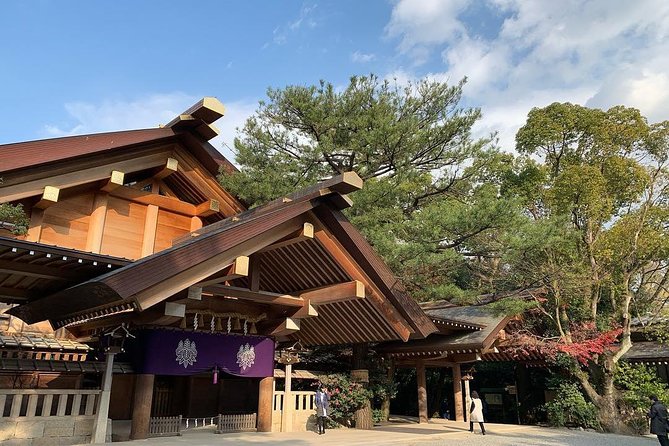
The Nagoya Sword Museum in the Sakae district focuses on Japanese swords. Its collection can include up to 200 swords, including National Treasures and Important Cultural Properties. The suggested stop is only 10 minutes, so the museum is best for a focused introduction.
This is where the guide’s role matters most. Displays can be difficult to interpret without background, especially when you are unfamiliar with sword forms, status, craftsmanship, and preservation. If Japanese arms and samurai culture interest you, make this a priority and cut the route down to one other site.
The strongest praise across the tour feedback goes to the guides’ preparation and care. Todd Miura is repeatedly described as warm, professional, and good at explaining history. Tomoko Tabata used an iPad to give background on Nagoya Castle, and Yumi prepared visual material for a Noritake visit. Toshie was praised for her friendly manner and clear explanations, while Matt made shrine customs interactive.
That range suggests the guide is not simply there to point at buildings. You get the most from the tour when you share your interests before the meeting. Ask for a history-heavy route, a food and shopping focus, industrial Nagoya, Japanese gardens, or a gentle plan if walking is difficult.
Timing, walking, and transport costs
This is a walking tour with a guide meeting you on foot within a designated area of Nagoya. Pickup does not mean a private vehicle. Transportation fees, entrance fees, lunch, and personal purchases are excluded, and there is no private vehicle included.
That arrangement keeps the tour flexible but shifts planning to you and the guide. Public transport may be needed between distant sights. One person found that buying train tickets took a large part of the tour, and lunch reduced the time available for sightseeing. If you want three substantial stops, skip a sit-down meal during the four-hour period.
The tour is private, so only your group participates and you cannot combine separate tour groups. That is a major advantage for families, couples, and small groups with different walking speeds. A guide also accommodated a family with wheelchair users, though you should discuss your needs before booking because the route includes walking and public places with different layouts.
The tour has a 98 percent recommendation rate and a 4.9 rating from 40 reviews. Those figures point to consistently strong guide service, but they do not remove the need to plan carefully. The main limitation is not the guide. It is the short duration and the distance between many of Nagoya’s sights.
Is $108.99 per person good value?
At $108.99 per person, this is not a budget sightseeing walk. You still pay for transport and most admissions, so the final cost will be higher.
I think the price makes better sense for a private group than for a solo visitor. You are paying for a licensed guide, a custom route, language help, local orientation, and the ability to ask questions throughout the day. If you are only interested in taking photographs outside two buildings, the price is harder to defend.
The value rises when you have limited time or a clear concern about navigating Nagoya. It also rises for families, older visitors, cruise passengers, and anyone who wants help choosing between sites. Group discounts are offered, though the amount is not specified, so check the price for your party before deciding.
Free cancellation is available if you cancel at least 24 hours before the start time. Changes or cancellations inside that window are not accepted and are not refunded.
How I would plan the four hours
For a first visit, I would choose Nagoya Castle, Atsuta Jingu, and one central stop only if the transport works cleanly. This gives you a major historical site, a shrine, and a glimpse of modern Nagoya, but the castle may receive less time than it deserves.
For Japanese history, choose Nagoya Castle plus Tokugawa Garden and the Tokugawa Art Museum. This is the most coherent route, though you should expect a quick look at each place unless you arrange extra time.
For industry and design, choose the Toyota museum and Noritake no Mori, then add Osu Shopping Street if the route allows. This plan avoids trying to turn every stop into a photo opportunity.
For a shorter or less strenuous outing, choose one major site and one nearby central stop. Tell the guide about knee, leg, or mobility concerns early. One visitor had swollen knees and had to drop a shrine from the plan, a useful reminder that Nagoya’s distances can catch up with you.
Should you book this Nagoya tour?
Book it if you want a private, flexible introduction to Nagoya and you value explanation more than checking off a long list. It is especially useful for first-time visitors, families, cruise passengers, and anyone who wants a guide to adjust the route around history, art, gardens, industry, or shopping.
Do not book it expecting a private car, a full museum visit, or all 15 suggested stops. Choose two or three sites before you arrive, protect your walking time, and keep lunch separate from the tour if you want the best use of the four hours.
If you plan carefully, the tour can give you a clear sense of Nagoya in half a day, with a local guide helping you see why the city is more than a stop between Tokyo and Kyoto.
FAQ
How long is the Nagoya private custom tour?
The tour lasts approximately four hours.
How many sights can I choose?
The tour includes a customizable route covering two or three sites from the listed options.
Is transportation included?
No. Transportation fees are not included, and the tour does not include a private vehicle. The guide meets your group on foot within the designated area of Nagoya.
Are entrance fees included?
Entrance fees are generally not included. The tour information says guide entry fees are covered only for sights listed under the expected stops.
Is the tour private?
Yes. Only your group participates, and separate tour groups cannot be combined.
Can I cancel for a full refund?
Yes, if you cancel at least 24 hours before the experience start time. Cancellations or changes made less than 24 hours in advance are not accepted and are not refunded.
Just added in Japan
- A One-of-a-Kind Sushi Experience in a Special Place of Japan★ 5.0 · 15 reviews
- Tokyo Cute Bento Cooking Class – Make a Kawaii Character Lunchbox★ 5.0 · 126 reviews
- Japanese Home Cooking Class & Walk in Todoroki Temple Tokyo★ 5.0 · 88 reviews
- Japan Tokyo Tower Observatory Deck E-Ticket★ 4.0 · 34 reviews
- Catch a Baseball Game in Tokyo with a Local – Tickets Included★ 5.0 · 24 reviews
- Tokyo Private Day Tour by Car with English speaking Driver Guide★ 4.0 · 29 reviews
- Japan Classic 10 Day – One Life Adventures★ 5.0 · 129 reviews
- JDM Experience with Fast&Furious RX-7 (English speaking Driver)★ 5.0 · 57 reviews
Half-Day, compared.
Kyoto Arashiyama Bamboo forest & Garden Half-Day Walking Tour
Read our review →
Miyajima Half-day Trip Historical Walking Tour
Read our review →

Naha, Okinawa: Kerama Islands Half-Day Whale Watching Tour
Read our review →
Himeji Half-Day Private Tour with Government-Licensed Guide
Read our review →