
Reviewed · DAY TRIPS
Miyajima Half-day Trip Historical Walking Tour
Miyajima rewards slow looking. This five-and-a-half-hour walking tour links the island’s famous torii, Itsukushima Shrine, Daisho-in Temple, scenic parks, and food stalls without asking you to solve the route yourself. I like the small maximum of six people and the included Hiroshima-style lunch, especially oysters and momiji dumplings. The main drawback is that the ferry costs an extra 500 yen round-trip, and the tour involves plenty of walking, stairs, and outdoor exposure.
This is more than a photo stop at the red gate. Guides such as Mariko, Hika, Eri, Yuji, Hiro, Kaori, and Kiki have been praised for explaining Shinto and Buddhist traditions in clear, personal ways. I also like that the tour continues in rain, though summer heat, limited food substitutions, and one reported meeting failure are worth considering before you book.
In This Review
- Miyajima in six useful points
- Why a guide helps on Miyajima
- Ferry views from Miyajimaguchi to Miyajima
- Walking the coast to Otorii Gate
- Itsukushima Shrine and the changing tide
- Daisho-in Temple and its Buddhist statues
- Momijidani Park and Senjokaku
- Lunch with oysters and momiji dumplings
- Omotesando Street and the final hour
- Is $109.43 a fair price?
- Who will enjoy this Miyajima walk?
- Should you book the Miyajima Half-day Trip?
- FAQ
- How long does the Miyajima walking tour last?
- Where does the tour start?
- Where does the tour end?
- Is the ferry to Miyajima included?
- What is the maximum group size?
- Is lunch included?
- Are vegetarian and vegan meals available?
- Are entrance fees included?
- Can I cancel for a full refund?
Miyajima in six useful points
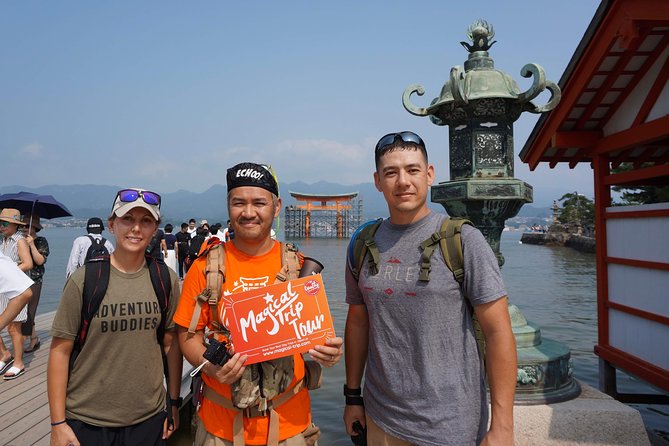
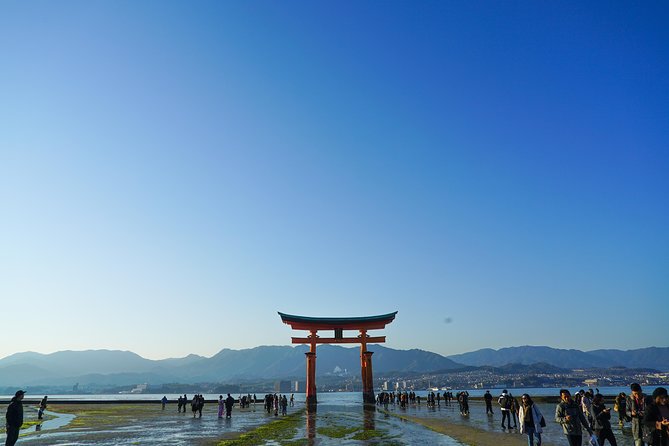
- Small groups of six or fewer: You get a better chance to ask questions, adjust the pace, and receive help with photos.
- A full cultural route: The walk includes Otorii Gate, Itsukushima Shrine, Daisho-in Temple, Momijidani Park, Senjokaku, and Omotesando Street.
- Food is part of the experience: Hiroshima local lunch is included, with oysters and momiji dumplings among the featured island treats.
- The ferry is extra: Budget 500 yen for the round-trip boat ride from Miyajimaguchi.
- Guides add the needed context: The buildings are beautiful on their own, but the tour focuses on Japanese spirituality, temple statues, shrine customs, and local stories.
- Good in changing weather: The route has been enjoyed in rain and overcast conditions, though you should bring water, sun protection, and suitable shoes.
Why a guide helps on Miyajima
Miyajima is easy to reach, but it is not always easy to understand. You can walk to the giant torii and Itsukushima Shrine on your own, yet the meaning of the buildings, the relationship between land and sea, and the difference between Shinto and Buddhism are not always obvious from a map.
That is where this tour earns its price. A good guide turns a pretty island walk into a lesson in Japanese spirituality. You hear why the shrine architecture was designed around the tides, learn about the Buddhist statues at Daisho-in, and get a clearer sense of why Miyajima has been treated as a sacred place.
The small group size matters here. With no more than six participants, you are not listening to a speech from the back of a crowd. You can ask a question when something catches your eye, and the guide can stop to explain a detail or help take a photo.
The experience also has a personal quality. Guides named in the feedback include Mariko, Hiro, Hika, Kaori, Shun, Eri, Yuji, Kiki, and Tomohiro. Praise centers on friendly explanations, flexibility, humor, and thoughtful photo help. One guide even recommended a favorite place for momiji manju, the maple-leaf-shaped cake associated with Miyajima.
More Day Trips in Hiroshima
- Hiroshima: Hiroshima and Miyajima UNESCO Sites 1-Day Tour
★ 4.9 · 2,330 reviews - From Hiroshima: Hiroshima & Miyajima 1 Day Tour with Lunch
★ 4.7 · 395 reviews - Hiroshima and Miyajima Day Trip with Itsukushima Shrine & Ferry
★ 5.0 · 378 reviews
Ferry views from Miyajimaguchi to Miyajima
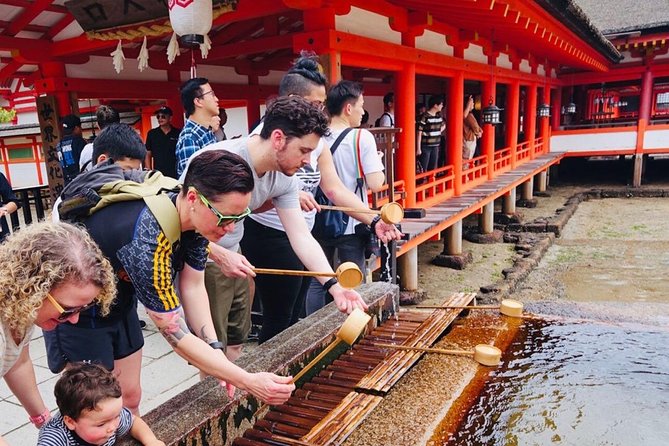
The meeting point is at 1-chōme-3-26 Miyajimaguchi, Hatsukaichi, Hiroshima 739-0411. From there, the group boards a ferry for Miyajima. The boat crossing is not just transport. It gives you your first broad views of the Seto Inland Sea and a chance to see the Otorii Gate from the water.
The ferry fee is not included in the tour price. You should allow 500 yen, or about 4 dollars, for the round trip. This is a small extra cost, but it is easy to miss when comparing the headline price of $109.43 per person.
Keep your camera ready as the island comes closer. The torii is Miyajima’s best-known symbol, and the approach from the boat gives it a useful sense of scale. Tide levels change the view considerably. At some times the gate appears to float offshore, while at low tide you may be able to walk close to it.
The group spends about an hour in this opening Miyajima segment, including the crossing and the start of the walk. The ferry is exposed to weather, so a hat, water, and rain protection are sensible additions to your day bag.
Walking the coast to Otorii Gate
After arriving, the route follows the coast toward Otorii Gate and Itsukushima Shrine. This is an enjoyable way to begin because you see the island from the outside before entering its main sacred complex.
The coastline also gives you chances to notice details that disappear when you rush straight to the shrine. You might see deer around the island, a feature noted in the tour experiences, and you can watch the water and changing angle of the gate as you walk.
The torii is famous, but the guide gives it a setting and purpose beyond its status as a popular photograph. The walk is a good time to ask about the island’s religious traditions and the way the sea shapes the appearance of the shrine.
This part is mostly about orientation and atmosphere. If you expect a long nature hike, adjust your expectations. The tour is an urban and cultural island walk, with paved routes, busy public areas, temple grounds, and shopping streets mixed with coastal scenery.
Itsukushima Shrine and the changing tide
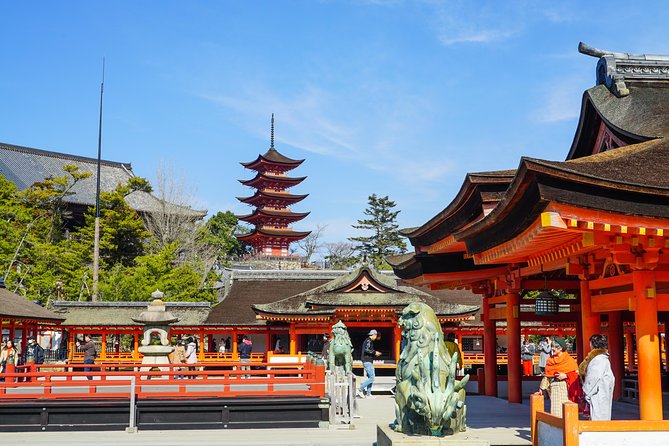
Itsukushima Shrine is the central sight of the tour. Its distinctive buildings were constructed during the Heian period, from 794 to 1192, and their design is closely linked to the water around them.
You will have time to see the shrine and take photographs with its architecture as a backdrop. The admission fee is included, so you do not need to pay separately at the included sites.
The shrine is most rewarding when you look beyond the famous gate. Notice the raised structure, the long walkways, and the way the surrounding water changes the mood of the complex. A guide can explain the religious meaning of the site and help you understand why the setting matters.
Tide conditions affect what you see. At high tide, the water can make the shrine and gate appear to float. At low tide, the shoreline may offer a much closer look at Otorii. One particularly memorable account describes walking up to the gate and touching its weathered surface during low tide, though you should not assume that exact experience on your date.
Allow about an hour for Itsukushima Shrine and the nearby coastal walk. This is one of the tour’s strongest sections for photographs, but it can also be the busiest. The guide helps you focus on the important features instead of simply following the largest crowd.
More Walking Tours in Hiroshima
- Hiroshima Historical Walking Tour – Why A-Bomb was Dropped
★ 4.8 · 893 reviews - Hiroshima Peace (Heiwa) Walking Tour at World Heritage Sites
★ 5.0 · 872 reviews - Hiroshima City 4hr Private Walking Tour with Licensed Guide
★ 5.0 · 437 reviews - Hiroshima Walking Tour Why A Bomb was dropped to Hiroshima
★ 5.0 · 347 reviews
Daisho-in Temple and its Buddhist statues
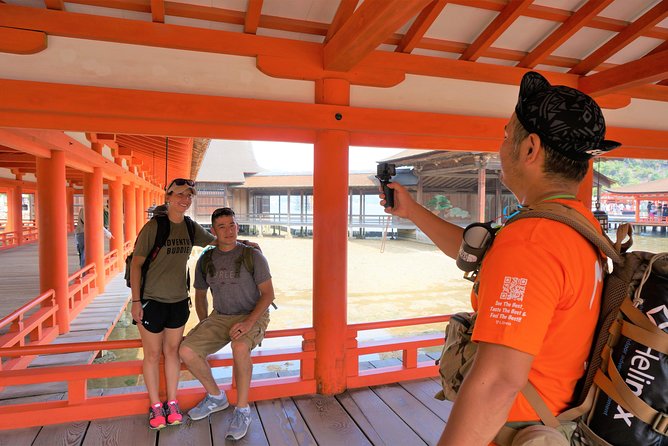
Daisho-in Temple is, for many people, the quiet highlight of the day. The temple is the main temple of the Omuro school of Shingon Buddhism and is located on Miyajima in Hatsukaichi City.
The planned visit lasts about 30 minutes. That sounds short, but the stop is focused: your guide explains Buddhism and the statues, helping you read the site rather than just walk through it.
The temple has been praised for its beauty and peaceful feeling. Several tour accounts describe the Buddhist temple as their favorite part of Miyajima, despite the stairs and uphill sections. That is important practical advice. You should bring walking shoes and expect some effort, especially if you find hills or stairs tiring.
Daisho-in also gives the tour a useful balance. Itsukushima Shrine presents Shinto traditions in a grand coastal setting. Daisho-in offers a different religious atmosphere, with Buddhist imagery and a more contemplative visit. Seeing both places in one morning or afternoon makes the island’s spiritual character easier to grasp.
Your guide can also adjust the pace to some degree. Eri was specifically praised for allowing enough breaks on stairs and hills. Still, this is not a flat, seated sightseeing tour.
Momijidani Park and Senjokaku
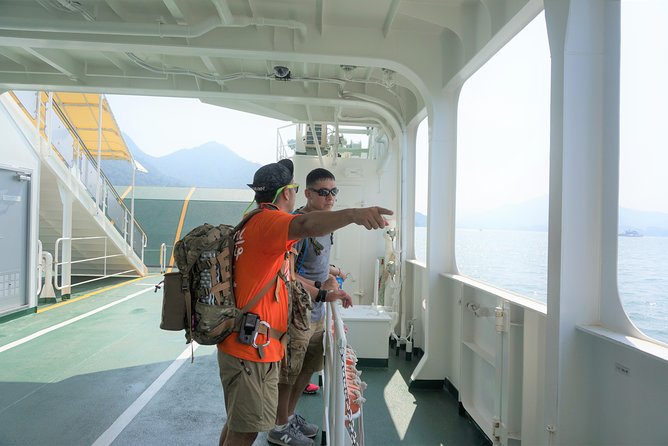
Momijidani Park is a 30-minute photo stop. The park adds greenery and open space after the shrine and temple visits, and it gives you a chance to slow down before the final sights and food.
The stop is especially appealing in autumn because the name refers to maple leaves, but the supplied information does not promise a particular seasonal display. Think of it as a scenic pause rather than a guaranteed peak foliage experience.
Next comes Senjokaku, the common name for the main hall of Toyokuni Shrine, also associated with the terminal shrine of Itsukushima Shrine. The visit lasts about 30 minutes and includes an explanation of the building.
Senjokaku provides another architectural viewpoint and a useful change from the famous gate and shrine walkways. The tour does not treat Miyajima as one single attraction. Instead, it connects several religious and historic sites, each with a different mood and purpose.
These two stops are also a reminder that the schedule is fairly full. You will not spend long stretches wandering wherever you please. If you prefer a completely unstructured day, a self-guided visit may suit you better.
Lunch with oysters and momiji dumplings
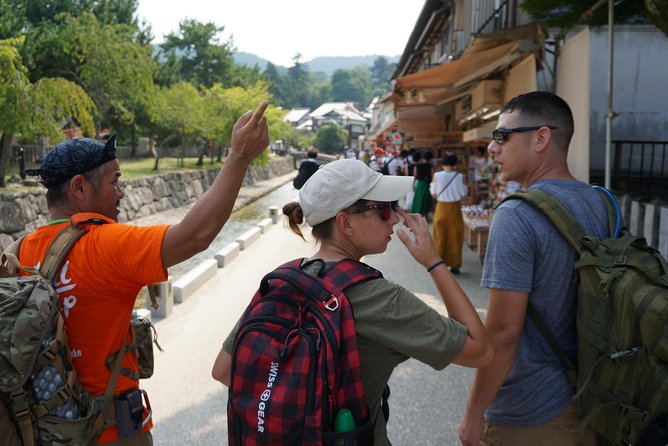
Food is one of the tour’s practical advantages. A Hiroshima local lunch is included, and the experience highlights fresh or grilled oysters and momiji dumplings. Some meals have also included dishes such as fried oysters and unagi, according to the available tour details.
This is useful because Miyajima’s food culture is easy to sample badly when you are hungry and short on time. The guide can point you toward local specialties along Omotesando Street and help explain what you are eating.
After the included meal, additional food and drinks are available for purchase. You may also have time for snacks, including the island’s famous momiji manju. A guide has been praised for recommending a particularly good spot for these maple-leaf-shaped sweets, and another tour ended with a treat at a favorite local cafe.
Food restrictions require careful planning. Vegetarian and vegan lunch choices are available but limited. Gluten-free lunch is not available. The operator cannot guarantee an allergy-free meal because the food is prepared in kitchens it does not control, and substitutions may not be possible at every stop.
Tell the operator about dietary requests or allergies at least one day before the tour. Same-day requests cannot be accommodated. If food is a major part of your trip and you have serious restrictions, this may not be the right tour.
Omotesando Street and the final hour
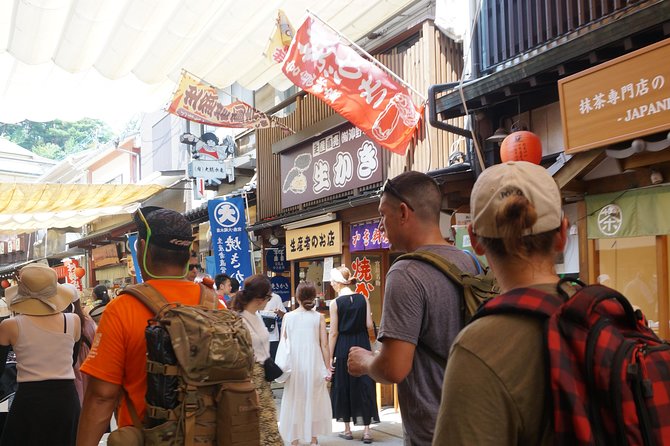
The tour finishes at Miyajima Omotesando Shopping Street, where you can find souvenir shops, food stalls, grilled oysters, and other local specialties. The planned time here is about an hour.
Omotesando is lively and commercial, so it is a different experience from Daisho-in or the shrine. That contrast is useful. You get sacred sites, coastal views, temple architecture, and an ordinary tourist street in one compact route.
This is a good place to buy momiji manju or try another snack, but remember that extra food and drinks are not included. You may also want to keep some cash available for small purchases, though the tour information does not specify which shops accept cards.
The activity ends back at the original meeting point. That makes the experience convenient if you are continuing through Hiroshima afterward, but you should allow time for the return ferry and the final walk to your next transport connection.
Is $109.43 a fair price?
At $109.43 per person, this is not the cheapest way to visit Miyajima. The ferry costs another 500 yen, and the island itself can be explored independently.
The value comes from what is bundled into the day. You receive a certified MagicalTrip guide, entrance fees to the shrines, temples, and museum included in the route, tour photos, and a Hiroshima local lunch. You also receive route planning and cultural interpretation, which can save you from spending your limited time searching for the best sequence of sights.
The maximum of six people makes the cost easier to justify than a large coach excursion. If your group ends up being the only booking, the experience can feel almost private. Several people had that experience, including a family of five and solo participants, though you should treat that as a possibility rather than a promise.
For a solo visitor or first-time Miyajima visitor, the price may be worthwhile. For a family comparing total costs, the ferry, food needs, and per-person tour price add up quickly. You should also ask yourself how much you value a guide. If you mainly want photographs and free time, independent sightseeing will cost less.
The feedback is very strong overall, with a 4.9 rating, 99 percent recommendation rate, and 284 reviews. Still, one serious report describes a guide failing to appear at the meeting point because the reservation had not been checked. That is a major service problem, even though the overall record is highly favorable. Keep your booking confirmation and contact details handy on the day.
Who will enjoy this Miyajima walk?
I would choose this tour if you want the main sights explained in one organized visit, particularly on a first trip to Hiroshima. It suits solo visitors, couples, families, and small groups who prefer conversation over a large guide-led crowd.
It is also a good match if you want to understand Japanese religious sites rather than simply photograph them. The combination of Itsukushima Shrine and Daisho-in gives the day real cultural range.
You should think twice if you need a gluten-free meal, require guaranteed allergy control, dislike stairs, or want a slow day with long periods of free time. Summer can be extremely hot and humid, with possible highs of 40°C, while winter can fall as low as -5°C. Wear suitable clothing, carry water, and use a hat in hot weather.
Rain does not automatically ruin the experience. The route has been enjoyed in steady drizzle and overcast weather, and wet conditions can make the island feel quieter. But rain may reduce the quality of your photographs, and the torii or sea views may not look as dramatic.
Should you book the Miyajima Half-day Trip?
Book it if you want a compact, well-guided introduction to Miyajima, with shrine and temple context, an included local lunch, and a small group capped at six. The strongest reasons are the guide quality, the careful route, the contrast between Shinto and Buddhist sites, and the chance to sample island food without planning every stop yourself.
Skip it if you are comfortable organizing your own ferry, shrine visits, food, and route, or if dietary restrictions make the included meal unsuitable. You will pay less independently, but you will also lose the explanations and personal help that make the island’s sacred places easier to appreciate.
For most first-time visitors with a full day available in Hiroshima, I see this as a useful and well-rounded choice. Bring walking shoes, check the weather, tell the operator about food needs early, and remember to budget for the ferry.
FAQ
How long does the Miyajima walking tour last?
The tour lasts approximately 5 hours and 30 minutes.
Where does the tour start?
It starts at 1-chōme-3-26 Miyajimaguchi, Hatsukaichi, Hiroshima 739-0411, Japan.
Where does the tour end?
The activity ends back at the meeting point.
Is the ferry to Miyajima included?
No. The round-trip ferry costs 500 yen, or about 4 dollars, and is paid separately.
What is the maximum group size?
The tour has a maximum of six participants.
Is lunch included?
Yes. A Hiroshima local lunch is included in the tour price. Fresh or grilled oysters and momiji dumplings are among the featured foods, and some meals may include dishes such as fried oysters or unagi.
Are vegetarian and vegan meals available?
Vegetarian and vegan lunch options are available but limited. Gluten-free lunch is not available.
Are entrance fees included?
Yes. Entrance fees to the shrines, temples, and museum included in the tour are covered.
Can I cancel for a full refund?
Yes. You can cancel at least 24 hours before the experience start time for a full refund. Cancellations or changes made less than 24 hours before the start time are not accepted for a refund.
Just added in Hiroshima
- Hiroshima Peace Memorial Museum Ticket★ 4.8 · 2,727 reviews
- Hiroshima Peace Memorial Museum Admission★ 4.6 · 1,308 reviews
- Private Full Day Hiroshima Tour★ 4.5 · 29 reviews
- The Peace Memorial to Miyajima : Icons of Peace and Beauty★ 4.5 · 31 reviews
- Shore Excursion from Hiroshima Port : Private Tour in Hiroshima★ 5.0 · 17 reviews
- Hiroshima & Miyajima All-Inclusive Tour w/Licensed guide Pancho★ 5.0 · 54 reviews
- Hiroshima Country Cycling: Explore Rural Life 1 HR from City★ 5.0 · 22 reviews
- Hiroshima Saijo Sake Tasting Tour with visit to 7 Breweries★ 5.0 · 104 reviews
Day Trips, compared.
![[Kyoto & Nara Day Tour] Sagano Scenic Railway & Nara Park & Fushimi Inari Taisha Thousand Torii Gates & Togetsukyo Bridge & Bamboo Grove & Kimono Forest (Departing from Osaka)](https://media.japanvisits.com/wp-content/uploads/kyoto-nara-day-tour-sagano-scenic-railway-nara-park-fushimi-inari-taisha-thousand-torii-gates-togetsukyo-bridge-bamboo-grove-kimono-forest-departing-from-osaka-k110001-400x257.jpg)
Kyoto Amanohashidate & Ine Funaya & Ine Bay Scenic Day Trip (Departing from Osaka or Kyoto)
Read our review →
Kyushu: Mount Aso, Kusasenri & Takachiho Gorge Day Tour (Optional Takachiho Boat Ride Experience)
Read our review →
Kyushu One-Day Tour: Yufuin no Mori Train & Yufuin Town & Nyoirin-ji Temple & Dazaifu & Hell Hot Springs (Departing from Fukuoka)
Read our review →
Browse the lists this tour appears in