Reviewed · HALF-DAY
Half-day Tokyo Afternoon Tour by Hato Bus
Tokyo rewards a good first look. This four-hour Hato Bus outing links the Imperial Palace, Senso-ji Temple, Nakamise Street, and Tokyo Tower, giving you a useful introduction without the usual subway puzzle. I especially like the air-conditioned bus and the English-speaking guides, who add context that is easy to miss when sightseeing alone. The main catch is time: traffic can eat into your stops, and the Imperial Palace visit is mainly an exterior view.
The afternoon starts at 1:50 pm near Tokyo Station and finishes around 6:00 pm at the Marunouchi South Exit. Guides such as Masako, Makoto, Kiki, Ayaka, Tomoko, and Rio have earned praise for clear explanations, friendly help, and keeping the group moving. Still, this is a group tour of up to 40 people, so you trade freedom and leisurely pacing for convenience.
In This Review
- Key points to know before booking
- A useful first afternoon in Tokyo
- The Imperial Palace and Nijubashi Bridge
- Senso-ji, Kaminarimon, and Nakamise Street
- The Kabuki theater stop
- Tokyo Tower and the 150-meter view
- What the guides add
- The real cost of a four-hour bus tour
- Meeting point, timing, and small practical details
- Who should book this afternoon tour?
- Should you book the Hato Bus Tokyo afternoon tour?
- FAQ
- How long is the Half-day Tokyo Afternoon Tour?
- Where does the tour begin?
- Where does the tour end?
- Is Tokyo Tower admission included?
- What sights are included?
- Is transportation included?
- Can I cancel for a refund?
Key points to know before booking
- Tokyo Tower’s 150-meter Main Observatory is included: You get broad city views, with Tokyo Skytree visible and Mount Fuji possible on a clear day. The 250-meter Special Observatory costs extra.
- The Imperial Palace stop is mainly for views: You see the National Garden area and Nijubashi Bridge, but do not expect a full palace tour.
- Senso-ji gives you the strongest cultural stop: The Kaminarimon Gate, temple grounds, pagoda, and Nakamise shopping street offer the most atmosphere in one place.
- The bus removes much of Tokyo’s transport stress: You do not need to work out several train connections between distant sights.
- Traffic is the main wildcard: The itinerary can change, and arrival times may be delayed on busy days or during seasonal congestion.
- The $41.61 price is fair for a first afternoon: It covers the guide, bus, and Tokyo Tower admission, though independent visitors can see some of these sights for less.
A useful first afternoon in Tokyo
I see this tour as an orientation ride rather than a complete Tokyo experience. In four hours, you move from the formal heart of Japan’s capital to one of its oldest Buddhist sites, then finish above the city at Tokyo Tower. That range is the point.
You will not spend long enough in any one area to understand it fully. But you will come away with a mental map, a few cultural basics, and a better sense of where you may want to return on your own.
The bus matters more than it might at first seem. Tokyo’s rail system is excellent, but its many lines, stations, exits, and signs can be tiring during your first day. A professional driver handles the transfers while your guide explains what you are seeing. That is a good deal for visitors who have limited time, are not comfortable navigating in Japan, or simply want a low-effort afternoon after a long flight.
The group may reach 40 people, and odd-numbered parties may share seats with other customers. The vehicle is generally a hybrid bus, with heating or cooling switched off while it waits as part of the company’s environmental policy. Keep your seatbelt fastened while riding.
A few more options to weigh up in Tokyo
- Tokyo Disney Resort – Tokyo Disneyland & Tokyo DisneySea Park Tickets
★ 4.8 · 99,488 reviews - SHIBUYA SKY Ticket
★ 4.7 · 46,509 reviews - JR Whole Japan Rail Pass
★ 4.8 · 29,150 reviews
The Imperial Palace and Nijubashi Bridge
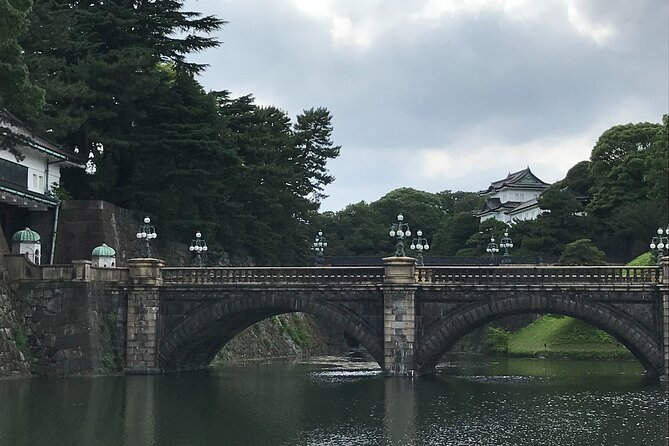
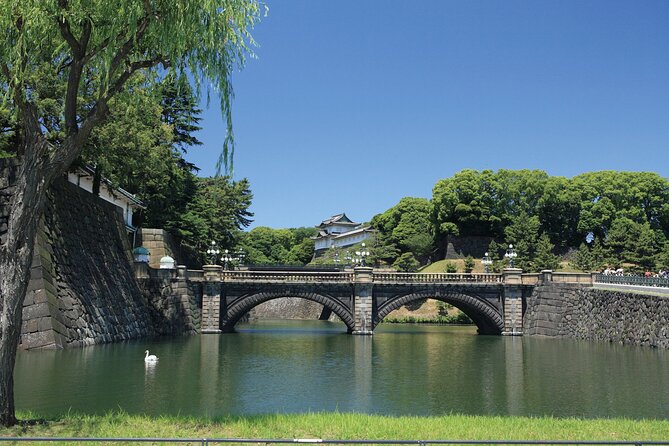
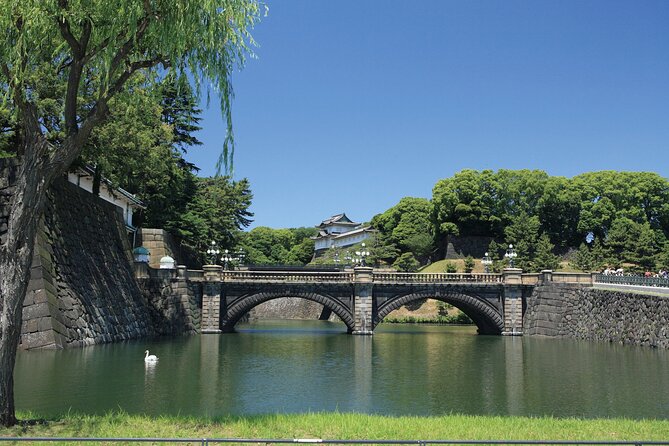
The first scheduled stop lasts about 40 minutes and takes you to the Imperial Palace area. The grounds here include a national garden that was once used privately by the royal family. The main photo focus is Nijubashi Bridge, often described as the face of the Imperial Palace.
This is a pleasant introduction to Tokyo’s formal side. You get open space, carefully maintained grounds, and a view tied to the modern imperial institution. After the tightly packed streets and giant stations around central Tokyo, the setting gives you a pause.
But set your expectations correctly. The palace itself is not opened up for a full interior visit on this tour. You are primarily admiring the exterior setting and bridge area. One of the clearest criticisms of the experience is that the stop can feel like standing outside without a complete view of the palace.
I would treat this as a short orientation stop and photo opportunity, not the star of the afternoon. If palace architecture is your main reason for booking, you may feel short-changed. If you want a quick look at Tokyo’s political and royal center without arranging a separate visit, the stop does its job.
Road restrictions can affect access around the Imperial Palace. The route may be altered, and in some circumstances departure from the stated meeting point may not be possible. That is unusual rather than guaranteed, but it is worth knowing before you build a tight evening plan.
Senso-ji, Kaminarimon, and Nakamise Street
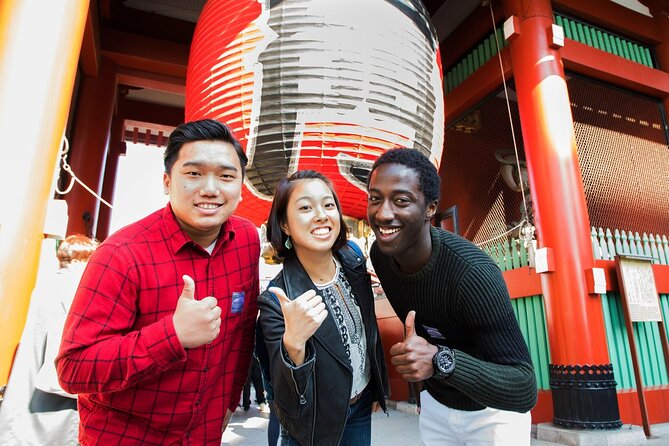
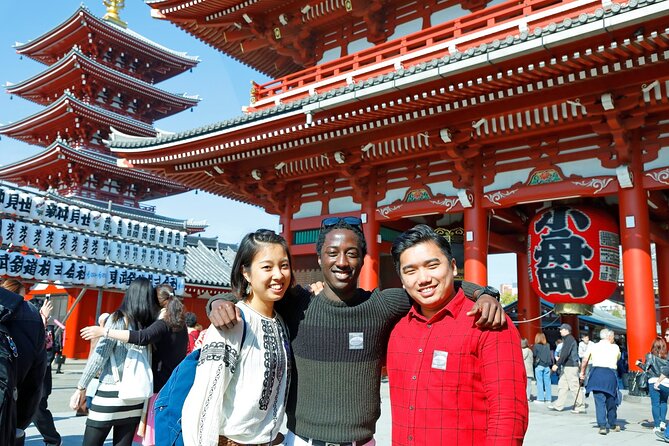
Senso-ji is the tour’s most rewarding ground-level stop. Founded in AD 645, it is Tokyo’s oldest temple and one of the city’s best-known Buddhist sites. You begin near the bright red Kaminarimon Gate, associated with the god of thunder, then continue toward the temple precinct.
The gate and its large central lantern make an immediate impression. From there, the approach leads toward Nakamise, a shopping street lined with stalls selling traditional souvenirs and Japanese snacks. You have about an hour in the area, enough to walk through the main sights and make a few purchases.
Your guide adds useful background about the temple’s origins, gates, architecture, gardens, and five-story pagoda. This is where the language support earns its keep. Without a guide, you can admire the colors and shapes, but you may miss the meaning behind the statues and buildings.
The area is also very popular. Nakamise can be crowded, and the shopping street is designed for sightseeing, not quiet contemplation. Some visitors find it overly commercial. I understand that reaction, but the shops are also part of the experience. Traditional sweets, small crafts, and religious souvenirs give you a practical look at how an old temple precinct functions today.
You should allow a little mental space for the pace. The guide needs to gather the group and keep everyone on schedule, so you will not have unlimited time for browsing or photography. If you find a snack or souvenir you want, do not wait until the last minute.
Senso-ji is also the place where comfortable shoes matter most. The tour does not require strenuous hiking, but you will be walking around the temple grounds and shopping street. The stated fitness requirement is moderate, which is a fair description.
The Kabuki theater stop
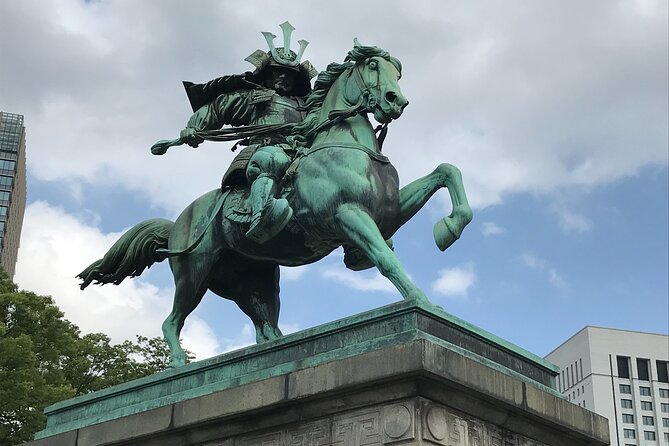
The route also includes a classic Japanese-style theater where traditional Kabuki performances are held. The information provided for the tour does not describe this as a full performance visit or provide a separate admission ticket, so you should view it as a sightseeing stop rather than a theater booking.
That brief look adds another cultural note to the afternoon. Kabuki is one of Japan’s signature traditional performance forms, known for stylized acting, costumes, and stage presentation. Your guide may provide useful context during the stop or while the bus is moving between sites, though the amount of explanation can vary by guide and traffic conditions.
This is a good example of why you should not read the tour as a series of long, in-depth visits. It samples several Tokyo themes in a short window: imperial, Buddhist, commercial, theatrical, and modern urban.
A completely different kind of day out:
- Mt Fuji and Hakone 1-Day Bus Tour Return by Bullet Train
★ 5.0 · 26,383 reviews - TOKYO SKYTREE® Ticket
★ 4.7 · 25,136 reviews - teamLab Borderless Tickets: MORI Building DIGITAL ART MUSEUM
★ 4.7 · 24,126 reviews - teamLab Planets TOKYO Ticket
★ 4.7 · 21,663 reviews
Tokyo Tower and the 150-meter view
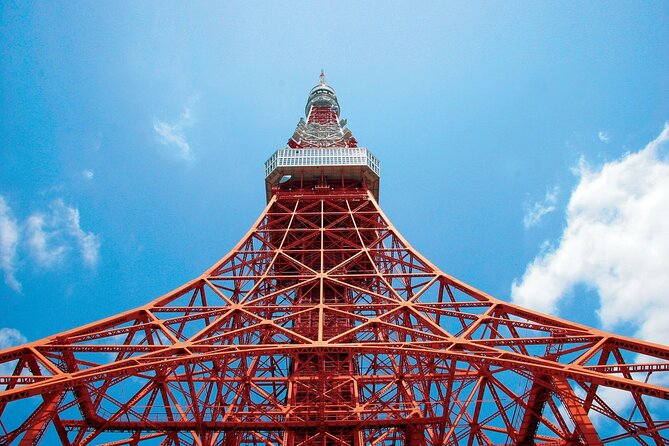
The final major stop is Tokyo Tower, the familiar red-and-white communications tower that has become one of Tokyo’s visual symbols. The tour includes admission to the Main Observatory at 150 meters, where you can look out in all directions across the city.
This is the most satisfying finish because it pulls the afternoon together. From ground level, Tokyo can feel like a collection of separate districts. From the observation deck, the scale becomes easier to grasp. You can look for Tokyo Skytree, and on a clear day Mount Fuji may appear in the distance.
Weather controls how much you get from the tower. On a hazy or rainy day, distant views can disappear, though the city immediately below still provides plenty to see. One practical point is easy to miss: admission covers the Main Observatory only. The Special Observatory at 250 meters requires an additional fee paid by you.
The scheduled tower visit lasts about 45 minutes. That gives you time to reach the observatory, take photos, and look around, but it is not an open-ended visit. If the tower is your priority, remember that traffic earlier in the afternoon can reduce the time available at later stops.
The tower is also a useful value check. Tokyo Tower admission is already included in the $41.61 tour price, along with the bus and guide. That makes the package more attractive than a basic sightseeing ride with no admissions. It still will not be the cheapest way to visit the sights independently, but you are paying for coordination and explanation, not just entry tickets.
What the guides add
The strongest part of this experience is the human element. Masako has been praised for friendly, clear English and useful explanations. Makoto is noted for answering a wide range of questions about Japanese culture, while Kiki is credited with keeping the group informed, entertained, and on time.
Ayaka has received warm comments for her historical and cultural explanations, and Tomoko has helped people find their way back to their hotels after the tour. Rio has been described as interactive and attentive to what participants wanted from the afternoon.
That range tells you what to hope for, but not what to demand from every departure. Guide quality can differ, and one account describes an English-speaking guide whose explanations were harder to understand. Other comments call for more historical detail during the bus rides.
I would make a point of asking questions when the guide invites them. You may get more from the tour by asking about food, language, customs, or places to return to later. One guide has also been praised for giving food suggestions beyond the official route, which can be especially helpful on your first day.
The real cost of a four-hour bus tour
At $41.61 per person, this is a reasonable orientation tour, especially when you count the included Tokyo Tower ticket. You also receive an English-speaking professional guide and transportation in a heated or air-conditioned bus.
The value depends on what you are buying. If your goal is the lowest possible cost, you can visit Senso-ji and the Imperial Palace area independently, and Tokyo’s rail network makes that practical. You will have more control over your timing and may spend less.
If your goal is to cover several major sights with minimal planning, the price is easier to justify. You avoid separate train rides, station transfers, and the work of deciding how to connect central Tokyo with Asakusa and Tokyo Tower. For a first afternoon, that convenience has real value.
The weak point is time lost in traffic. Tokyo’s roads can slow sharply depending on the day, season, and time of day. Some departures spend more time sitting in the bus than expected, and a late arrival may shorten a stop or push the end time later.
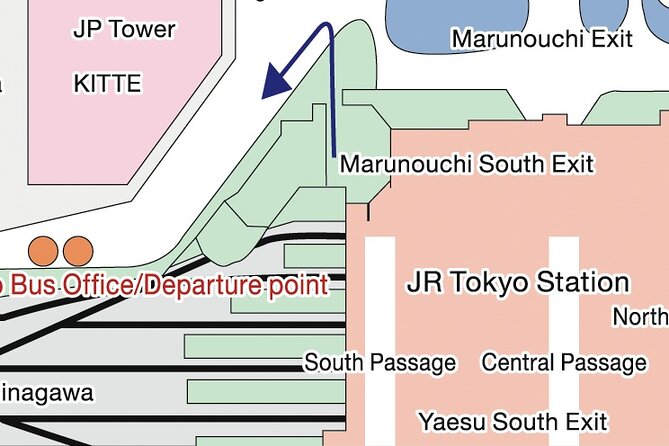
Do not schedule a fixed dinner reservation immediately after the stated 6:00 pm finish. The tour ends near Tokyo Station’s Marunouchi South Exit, but traffic can cause delays. The location is useful for continuing your evening, provided you leave yourself a cushion.
Meeting point, timing, and small practical details
The tour begins at the Hato Bus Tokyo office at 1-chōme-10-15 Marunouchi, Chiyoda City, Tokyo 100-0005. The start time is 1:50 pm, and the normal end point is Tokyo Station near the Marunouchi South Exit at about 6:00 pm.
Tokyo Station is huge, so I would allow extra time to find the correct exit and office. One person missed the departure after receiving confusing directions and not getting a reply from the operator until after the bus had left. That is a serious warning for first-time visitors: do not arrive at the last minute.
The mobile ticket is convenient, but you still need to be at the right meeting point. Confirmation is sent within 48 hours of booking, subject to availability. Free cancellation is available when you cancel at least 24 hours before the start time. Cancellations or changes inside that window are not accepted for a refund.
Children aged five and under may join free, but they do not receive a bus seat unless you book the child rate. Written parental permission is required for anyone under 18, and participants under 15, or those not yet in middle school, must be accompanied by a parent or guardian.
The tour is limited to 40 people. That is not an intimate walking tour, but it is small enough for a guide to manage if everyone returns to the bus on time.
Who should book this afternoon tour?
I would recommend it most strongly to first-time visitors with only a short stay in Tokyo. It gives you a quick look at several major sights and helps you understand the city’s layout before you spend later days exploring by yourself.
It also suits people who dislike public transport puzzles, want an English-language guide, or prefer a structured afternoon. Older visitors and families may appreciate the bus, since the route avoids repeated train changes.
You may want to skip it if you already know Tokyo well, dislike fixed schedules, or prefer quiet, unhurried visits. Independent sightseeing is likely to be cheaper and gives you more time at Senso-ji, Nakamise, or the palace area.
This is not the best choice for anyone seeking hidden neighborhoods, long meals, or detailed time inside each attraction. It is a sampler, and the popular sites come with popular crowds.
Should you book the Hato Bus Tokyo afternoon tour?
Book it if you want an easy first look at Tokyo and place a high value on transport, a guide, and a Tokyo Tower ticket. The best parts are the clear city view from 150 meters, the cultural setting at Senso-ji, and the practical help supplied by guides such as Masako, Makoto, Kiki, Ayaka, Tomoko, and Rio.
Skip it if you want to set your own pace or have already visited these areas. The Imperial Palace stop is limited, traffic can disrupt the schedule, and 45 minutes at Tokyo Tower or one hour at Senso-ji will feel brief to independent sightseers.
For a first afternoon, though, this is a sensible way to get your bearings. Just arrive early at Tokyo Station, wear comfortable shoes, and leave your evening schedule flexible.
FAQ
How long is the Half-day Tokyo Afternoon Tour?
The tour lasts approximately four hours. It starts at 1:50 pm and normally ends near Tokyo Station’s Marunouchi South Exit around 6:00 pm.
Where does the tour begin?
The meeting point is the Hato Bus Tokyo office at 1-chōme-10-15 Marunouchi, Chiyoda City, Tokyo 100-0005, Japan.
Where does the tour end?
The tour ends near Tokyo Station’s Marunouchi South Exit in Marunouchi.
Is Tokyo Tower admission included?
Yes. Admission to Tokyo Tower’s Main Observatory at 150 meters is included. The Special Observatory at 250 meters requires an additional fee.
What sights are included?
The scheduled stops include the Imperial Palace area, Senso-ji Temple and Nakamise shopping street, a traditional Kabuki theater exterior or sightseeing stop, and Tokyo Tower.
Is transportation included?
Yes. Transportation is provided by an air-conditioned and heated tour bus. An environmentally friendly hybrid bus is planned, though the vehicle may change because of maintenance or other unavoidable reasons.
Can I cancel for a refund?
You can cancel at least 24 hours before the start time for a full refund. Cancellations or changes made less than 24 hours before the start time are not accepted for a refund.
Just added in Tokyo
- A One-of-a-Kind Sushi Experience in a Special Place of Japan★ 5.0 · 15 reviews
- Tokyo Cute Bento Cooking Class – Make a Kawaii Character Lunchbox★ 5.0 · 126 reviews
- Japanese Home Cooking Class & Walk in Todoroki Temple Tokyo★ 5.0 · 88 reviews
- Japan Tokyo Tower Observatory Deck E-Ticket★ 4.0 · 34 reviews
- Catch a Baseball Game in Tokyo with a Local – Tickets Included★ 5.0 · 24 reviews
- JDM Experience with Fast&Furious RX-7 (English speaking Driver)★ 5.0 · 57 reviews
- Tokyo Private Day Tour by Car with English speaking Driver Guide★ 4.0 · 29 reviews
- Japan Classic 10 Day – One Life Adventures★ 5.0 · 129 reviews
Half-Day, compared.
Kyoto Arashiyama Bamboo forest & Garden Half-Day Walking Tour
Read our review →
Miyajima Half-day Trip Historical Walking Tour
Read our review →
Naha, Okinawa: Kerama Islands Half-Day Whale Watching Tour
Read our review →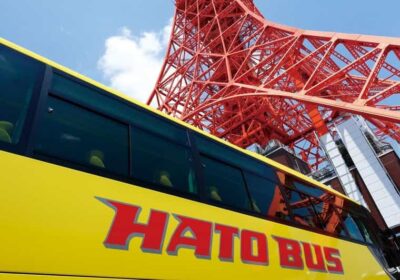
Himeji Half-Day Private Tour with Government-Licensed Guide
Read our review →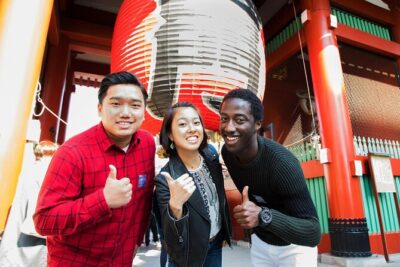
Miyajima Half-day Private Tour with Government Licensed Guide
Read our review →