
Reviewed · CASTLES AND HISTORIC SITES
Okinawa 2-Hours Genuine Kendo/Samurai Experience in Japan
Samurai spirit meets hands-on practice in Naha. This two-hour session gives you a direct introduction to kendo, the Japanese form of fencing that grew from samurai training, rather than a passive history lesson. You learn etiquette, basic technique, and the meaning behind the discipline, then put on rental kendo armor and practice for yourself.
I like the small maximum group of five, which should give you useful attention from the instructor. I also like the chance to learn from Taiji Yamakawa, an English-speaking instructor with 20 years of kendo experience and a former Okinawa champion. The main consideration is physical: armor, footwork, and repeated strikes require a moderate level of fitness, and two hours can feel demanding if you want only a light cultural activity.
The price is $118.60 per person. That is not cheap for a two-hour activity, but it includes all equipment, bottled water, a kendo towel, and direct instruction in a specialized Japanese art. If you want an activity you can actively take part in, rather than simply watch, the cost may be fair.
In This Review
- Key points before you book
- What this Naha kendo session is really about
- Arriving at 52 Ōnoyamachō in Naha
- Meeting Taiji Yamakawa and learning from an expert
- The first lesson: manners before strikes
- Putting on the armor and handling the equipment
- Practicing strikes, footwork, and controlled combat
- Why the small five-person limit matters
- The cultural meaning behind lifelong kendo
- How the $118.60 price measures up
- Who should book this Okinawa experience
- Practical booking advice for a smooth afternoon
- Should you book the Naha kendo lesson?
- FAQ
- Where does the kendo experience begin?
- What time does the activity start?
- How long does the kendo experience last?
- Where does the activity end?
- Is hotel pickup included?
- Is the instructor English-speaking?
- Who teaches the class?
- Is kendo equipment provided?
- Do I receive anything to take home?
- Can I cancel for a full refund?
Key points before you book
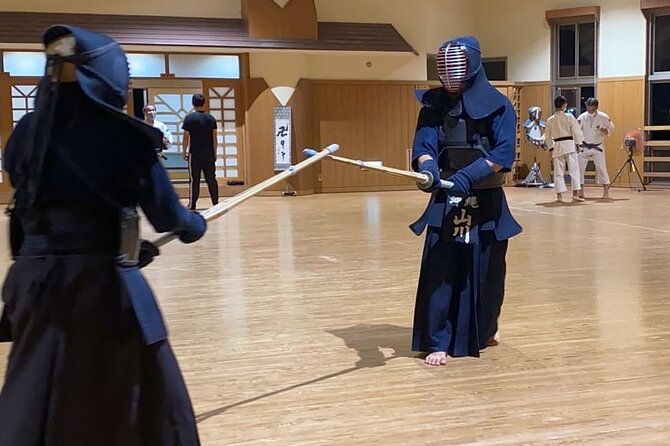
- Former Okinawa champion as instructor: Taiji Yamakawa brings 20 years of kendo experience to the lesson.
- A small group of up to five: The format allows for closer instruction than a large demonstration.
- Real kendo armor included: You do not need to bring protective gear or training equipment.
- Culture and etiquette matter: The session covers manners, discipline, history, and spiritual ideas as well as striking technique.
- A useful souvenir is included: You receive a complimentary kendo towel at the end.
- Central Naha meeting point: The activity starts and ends at 52 Ōnoyamachō, near public transportation.
What this Naha kendo session is really about
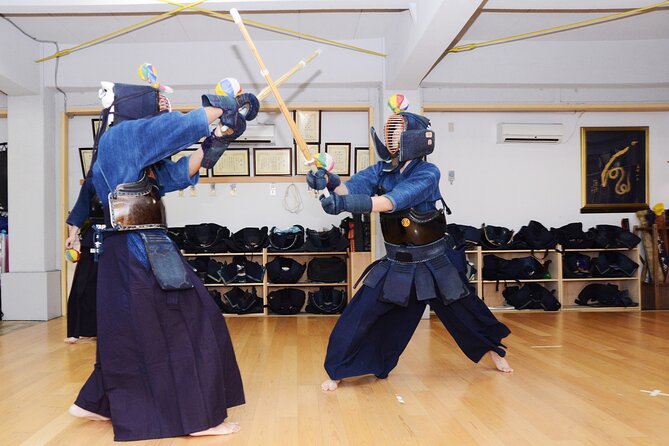
Kendo is often described as Japanese fencing, but that comparison only gets you so far. The physical action is important, yet the lesson also centers on conduct, control, and respect. The three ideas presented in the session are unify your spirits, manners, and lifelong kendo.
That combination makes this more than a short sword-fighting game. You learn that kendo involves the mind, skill, and body together. The point is not simply to hit another person or win a contest. Your posture, attitude, timing, and behavior are part of the practice.
That cultural layer is the best reason to choose this activity. You can find many martial arts demonstrations in Japan, but putting on the armor and trying the movements yourself gives you a better sense of the discipline. You will still be a beginner after two hours, of course, but you should understand why kendo is treated as a way of life by many practitioners.
More Castles and Historic Sites in Naha:
- Okinawa Full Tour: Castle, Manza, Kouri, Aquarium & American
★ 5.0 · 17 reviews - Osaka Castle Ticket
★ 4.7 · 12,450 reviews - Osaka Castle: Museum and Tower Entry Ticket
★ 4.5 · 2,380 reviews
Arriving at 52 Ōnoyamachō in Naha
The meeting point is 52 Ōnoyamachō, Naha, Okinawa 900-0026, Japan. The location is near public transportation, which makes it easier to reach without arranging a private transfer. The activity begins at 1:00 pm and returns to the same meeting point when the session ends.
There is no hotel pickup or drop-off. Plan your route before the day begins, and allow enough time to arrive calmly. A kendo lesson starts with etiquette and preparation, so rushing through the door would work against the spirit of the experience.
The fixed central meeting point also keeps the tour simple. You know where to start and where to finish, and the two-hour length fits neatly into an afternoon in Naha. You could place it between other activities, but leave some breathing room around the start time. The published information does not give a detailed arrival procedure, so your booking confirmation should be your final check for meeting instructions.
Meeting Taiji Yamakawa and learning from an expert
The instructor is Taiji Yamakawa, an English-speaking kendo teacher with 20 years of experience. The supplied information also identifies him as a former Okinawa champion, a detail that gives the lesson useful local credibility.
You are not being handed equipment and left to copy a few moves. The instructor explains the culture and etiquette that shape the sport, then guides you through the practical side. Several comments about the class point to an instructor who is patient, attentive, funny, and clear in his directions.
English ability may not be perfectly fluent in every moment. One account specifically notes that Taiji’s English is limited, but his directions were still easy to understand. That is worth knowing before you book. You should expect instruction supported by demonstrations and clear movement cues, not a long academic lecture in English.
For a physical lesson, that may be enough. Kendo relies heavily on watching, repeating, and correcting. The small group limit of five should also help, since the instructor can watch your form and give attention to each person.
The first lesson: manners before strikes
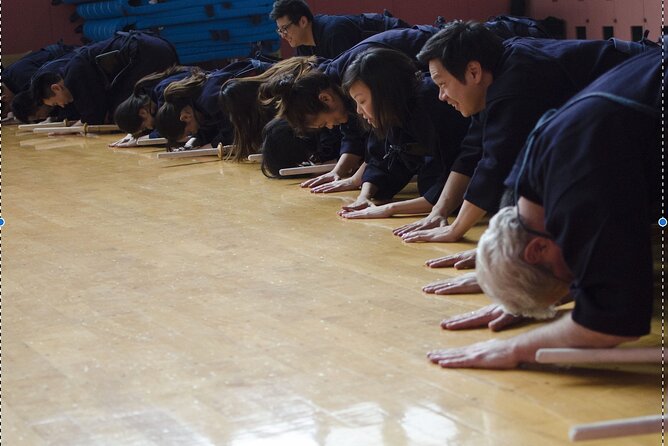
The session introduces kendo as an art built on manners. That means etiquette is not a brief preface before the real activity. It is part of what you are there to learn.
You will hear about the history of kendo and its connection to the samurai era. You will also be shown the proper attitude toward the practice, your instructor, and the people training with you. The exact sequence is not provided, so I would not promise a particular bowing routine or formal ceremony. Still, you can expect the class to place clear importance on respect and self-control.
This is where the experience may differ from a novelty sword lesson. The goal is not to make you look like a movie samurai for a few photographs. The focus is on how kendo is practiced and why its rules matter.
Keep an open mind if you are more interested in action than etiquette. The manners may seem slow at first, especially during a short two-hour session, but they explain the character of the art. Kendo treats discipline as part of the technique.
A few more options to weigh up in Naha
- (Okinawa’s No. 1 Popular Northern Day Trip) Chinese-speaking guide · Includes admission tickets · 1 person can book: Churaumi Aquarium · Cape Manzamo · Kouri Island · American Village
★ 4.7 · 1,846 reviews - Northern Okinawa: Churaumi Aquarium & Kouri Island & Cape Manza & American Village Day Tour (Departing from Naha & Chatan)
★ 4.8 · 1,115 reviews - Official Street Go-Kart Tour – Okinawa Shop
★ 5.0 · 699 reviews - Naha: North Okinawa Sightseeing Tour & Churaumi Aquarium
★ 4.4 · 472 reviews
Putting on the armor and handling the equipment
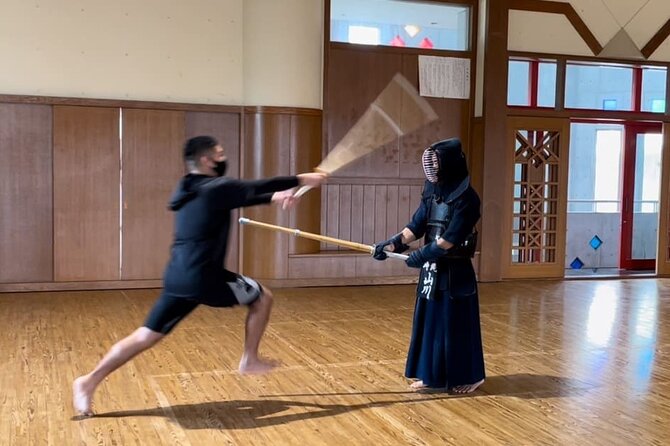
All kendo equipment is provided as part of the price. You do not need to purchase or pack protective gear, and the activity is designed for beginners who want to try the practice in proper equipment.
Wearing kendo armor changes the feel of the lesson. It gives the session a physical reality that a simple demonstration cannot provide. You will feel the weight and structure of the protective clothing, then learn how your body moves while wearing it.
The available information does not specify the exact armor-fitting process or the type of practice sword used. Do not assume that every piece of historical samurai equipment will be included. This is a kendo activity, not a museum display of battlefield armor.
The armor can also make the session more strenuous. You need enough fitness for movement, repeated practice, and the general demands of wearing protective gear. The activity specifically calls for a moderate physical fitness level. If you have limited mobility or do not feel comfortable with physical exercise, contact the provider before booking.
Practicing strikes, footwork, and controlled combat
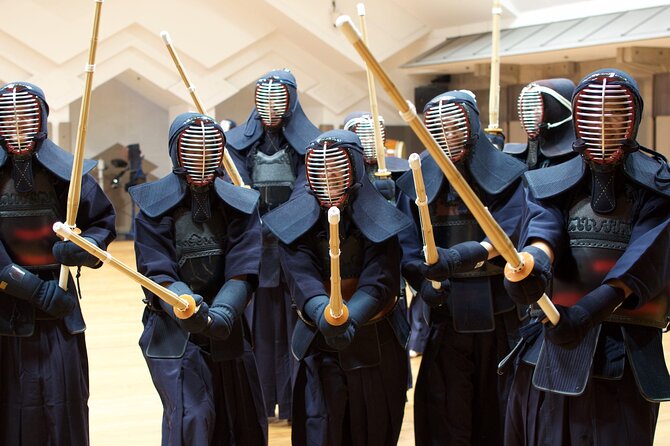
The practical section lets you try your kendo skills while wearing the armor. You practice combat under the instructor’s direction, with the emphasis on learning rather than uncontrolled sparring.
The experience information stresses that kendo involves more than hitting and competition. You will work on the connection between your mind, skill, and body. That means concentration matters as much as force. The class is likely to feel structured, with the instructor explaining what to do and helping you repeat it.
You may also practice against another person in the group. One account describes trying to fight each other while attempting not to laugh, which captures the friendly beginner nature of the session. That playful side is part of the appeal, but you should still follow the instructor carefully and treat the equipment and other participants with respect.
Do not book this expecting a full kendo qualification or advanced training. Two hours is enough for an introduction, not mastery. The value comes from gaining a physical sense of the art and learning how its technical and cultural parts fit together.
Why the small five-person limit matters
The maximum group size is five people. For a martial arts lesson, this is a helpful limit. You are less likely to spend the session waiting for a large crowd to rotate through the equipment or instructions.
A small class also makes it easier to ask questions and receive corrections. Beginners often need repeated explanations of stance, timing, and movement. With fewer people in the room, the instructor can pay closer attention to how each person is handling the lesson.
The downside is that the activity requires a minimum number of participants to run. If that minimum is not reached, the provider may cancel and offer another date or experience, or give you a full refund. That is a normal practical risk with a small-group class, so avoid placing it immediately before a flight or an important connection.
The 1:00 pm start is useful for an afternoon plan. The activity ends back at the meeting point after about two hours, giving you a clear finish time for the rest of your day.
The cultural meaning behind lifelong kendo
The idea of lifelong kendo gives the lesson its most thoughtful dimension. You are introduced to kendo not as a one-time stunt, but as a practice that can develop character over time.
The supplied description connects kendo with unified spirit and manners. In plain terms, you are learning how concentration, conduct, and physical skill support one another. Even if you never pick up a shinai again, the lesson can help you understand why Japanese martial arts often place so much weight on ritual and behavior.
This also helps explain why the activity includes history and etiquette. Without that context, putting on armor and practicing strikes could feel like a themed attraction. With the cultural explanation, the movements have a purpose beyond entertainment.
I would especially recommend this aspect to you if you enjoy learning through participation. You do not need prior martial arts experience. The class is intended for any skill level, according to the experience information and direct feedback about the lesson.
How the $118.60 price measures up
At $118.60 per person, this costs more than a casual cultural demonstration. You are paying roughly $59 per hour, before considering the time spent getting to and from the meeting point.
The price includes rental kendo equipment, bottled water, and a free kendo towel. More important, it includes a private-feeling lesson in a specialized discipline with an instructor who has 20 years of experience and a championship background in Okinawa. The maximum of five adds to the value because your time is spent taking part rather than watching a large group.
Still, value depends on what you want from your afternoon. If you mainly want a low-cost look at samurai culture, this may feel expensive. If you want to wear the armor, practice the skills, and learn the etiquette directly from an experienced teacher, the price is easier to justify.
The towel is a pleasant extra, but it should not be the reason you book. The real value is the instruction and the chance to take part in kendo at beginner level.
Who should book this Okinawa experience
This activity suits you best if you want an active cultural experience and have a moderate level of fitness. It also works well for people who prefer a small group, clear instruction, and a focused two-hour lesson.
You do not need previous kendo experience. The class is presented as suitable for any skill level, and the strongest praise centers on the teacher’s patience and ability to make first-time practice enjoyable.
It may suit families with older children or teenagers, but the supplied information does not give an age requirement. Check the booking details before reserving for a child. The same applies to anyone with physical limitations, since no accessibility information is provided.
You may want to skip it if you dislike physical activity, feel uncomfortable wearing protective equipment, or want a long historical tour with extensive sightseeing. This is a hands-on lesson, not a broad tour of Naha or Okinawa.
Practical booking advice for a smooth afternoon
Your mobile ticket makes the booking easy to carry, but arrive at the stated meeting point rather than expecting hotel transport. Bring comfortable clothing that allows movement, since you will be practicing in rented equipment. Specific clothing requirements are not provided, so check the confirmation if you have any concerns.
Drink water before the lesson and use the included bottled water during the session. The activity does not include lunch, so plan to eat before or after the 1:00 pm start.
Free cancellation is available if you cancel at least 24 hours before the local start time. Changes or cancellations inside that window are not accepted and are not refunded. The provider may also cancel if the minimum number is not met, in which case you are offered another date or experience, or a full refund.
Should you book the Naha kendo lesson?
Book it if you want to do more than look at samurai culture from the sidelines. The combination of armor, instruction, etiquette, and practice gives you a real beginner’s introduction to kendo, and Taiji Yamakawa’s long experience adds weight to the lesson.
The strongest reasons to go are the small group, the patient teaching style, and the chance to connect physical movement with Japanese manners and discipline. The main reasons to hesitate are the price, the moderate fitness requirement, and the fact that two hours can only provide an introduction.
For an active afternoon in Naha, I think it is a good choice for curious beginners. You should book with realistic expectations: you will not become a skilled swordsman in one session, but you will leave with a better understanding of why kendo is about spirit and conduct as much as striking.
FAQ
Where does the kendo experience begin?
It begins at 52 Ōnoyamachō, Naha, Okinawa 900-0026, Japan.
What time does the activity start?
The stated start time is 1:00 pm.
How long does the kendo experience last?
The activity lasts approximately two hours.
Where does the activity end?
It ends back at the meeting point.
Is hotel pickup included?
No. Hotel pickup and drop-off are not included.
Is the instructor English-speaking?
Yes. The lesson is guided by an English-speaking kendo instructor with 20 years of experience.
Who teaches the class?
The instructor is Taiji Yamakawa. He is also identified as a former Okinawa champion.
Is kendo equipment provided?
Yes. Rental kendo equipment is included in the price.
Do I receive anything to take home?
Yes. A complimentary kendo towel is included.
Can I cancel for a full refund?
Yes, if you cancel at least 24 hours before the experience start time. Cancellations made less than 24 hours in advance are not refunded.
Just added in Naha
- Northern Okinawa: Churaumi Aquarium & Kouri Island & Cape Manza & American Village Day Tour (Departing from Naha & Chatan)★ 4.8 · 1,115 reviews
- (Okinawa’s No. 1 Popular Northern Day Trip) Chinese-speaking guide · Includes admission tickets · 1 person can book: Churaumi Aquarium · Cape Manzamo · Kouri Island · American Village★ 4.7 · 1,846 reviews
- Zodiac Shrines and Naha Backstreets Cycling Tour★ 5.0 · 29 reviews
- E-Bike Nature Tour in Shuri★ 5.0 · 25 reviews
- Sushi Making Experience Class in Naha Makishi Public Market★ 5.0 · 35 reviews
- Tokashiki Island Day Trip from Naha★ 4.0 · 15 reviews
- Port Pick-Up: Naha Private Tour Licensed Guide& Vehicle★ 4.5 · 16 reviews
- Kintsugi Experience in Naha, Okinawa – Art from Broken Pieces!★ 5.0 · 28 reviews
Castles and Historic Sites, compared.
Imperial Palace and Shogun Historical Walking Tour
Read our review →
Tokyo Castle & Imperial PalaceーShogun Walking Tour
Read our review →
Nijo-jo Castle and Ninomaru Palace Guided Tour
Read our review →
Samurai Ninja Museum Guided tour and Experience
Read our review →Browse the lists this tour appears in