Reviewed · SHOW
Osaka: UTAGE Japanese Taiko Live Show
Feel the drumbeat before the show begins. Osaka’s UTAGE Live Show pairs powerful Japanese taiko with shamisen, shakuhachi, shinobue, computer music, and lively stage action. I like the close-up theater setting, where the musicians can work directly with the audience, and I like that you may get to play one song yourself. The main drawback is that the performance is in Japanese, so visitors seeking detailed spoken explanations may find the cultural context limited.
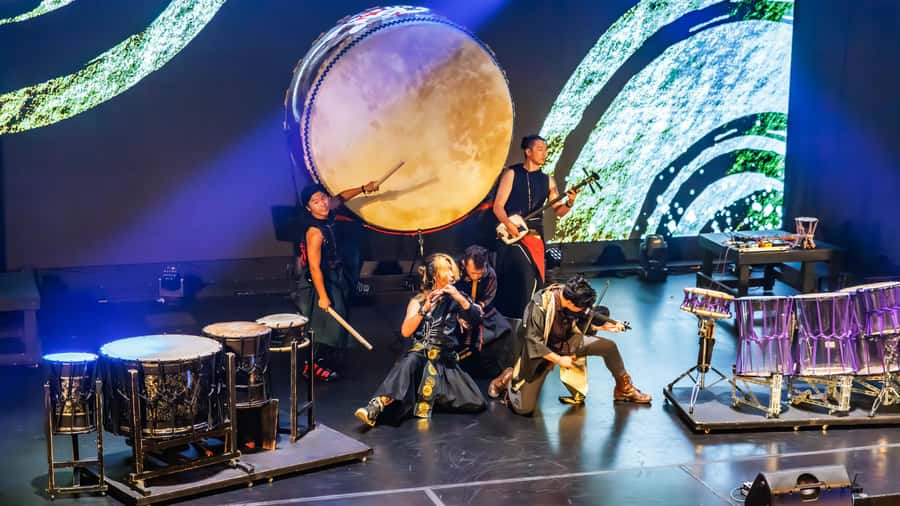
This is not a quiet museum-style introduction to Japanese music. It is a high-energy concert built around traditional instruments and modern entertainment. The 180-centimeter drum is the visual and sonic star, but the fun comes from the full mix: strong rhythms, electronic sounds, audience interaction, dancing, and photo opportunities after the performance.
In This Review
- Key points to know before booking
- What UTAGE is really offering
- Inside the intimate Osaka Cultural Center setting
- The 180-centimeter drum and the opening impact
- Traditional instruments with a modern pulse
- Audience participation: fun, but not entirely passive
- Photos, performers, and the experience after the music
- Who will get the most from the $40 price?
- How the experience suits different types of visitors
- Practical details that can make or break the visit
- The main drawbacks to consider
- Should you book UTAGE?
- FAQ
- Where does the UTAGE Japanese Taiko Live Show take place?
- Where does the activity end?
- How much does the show cost?
- How long does the performance last?
- What instruments are used?
- How large is the featured drum?
- Can I participate in the performance?
- Is the show available in English?
- Can I take photographs?
- What happens if I arrive late?
Key points to know before booking
- A 180-centimeter drum takes center stage: The show includes one of Kansai’s largest large drums, giving the performance plenty of physical force.
- Traditional instruments meet computer music: Taiko, shamisen, shakuhachi, and shinobue are used alongside modern sound and visual effects.
- You may perform with the band: Audience members can be invited onstage to play Japanese instruments during one song.
- The setting can feel very intimate: One account described about 30 people seated in three rows, with the musicians only a few meters away.
- Photos are part of the experience: Photography is allowed during the performance, and photo opportunities with the musicians may follow.
- The price is $40 per person: For roughly an hour of live music and audience participation, this is a solid evening value.
What UTAGE is really offering
UTAGE is best understood as a live music experience rather than a formal cultural lecture. You are there to feel the force of taiko, hear the contrast between old and new sounds, and take part in the show.
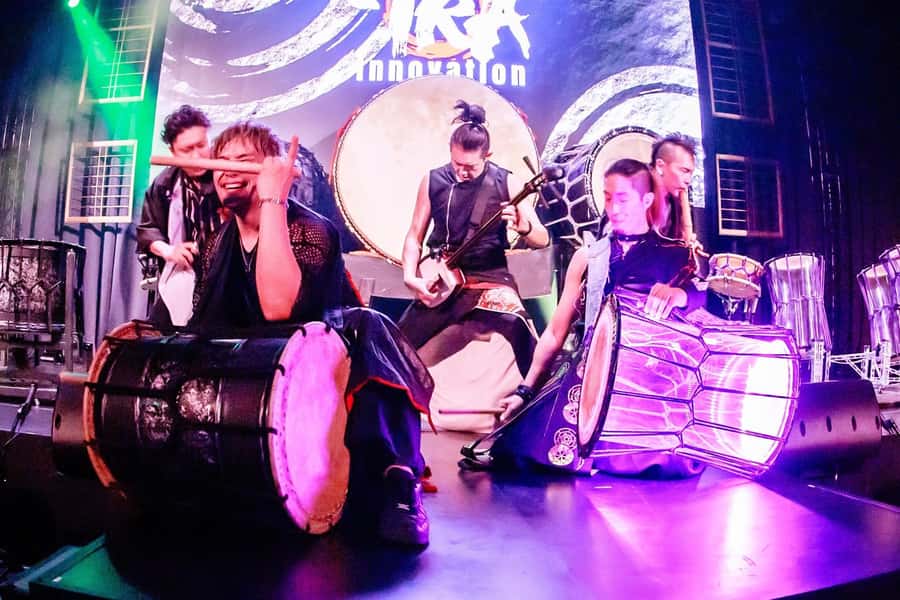
The instrument lineup gives the performance its Japanese identity. Taiko supplies the hard, physical pulse. The shamisen adds its sharp, plucked sound, while the shakuhachi and shinobue bring the breathy tones associated with Japanese bamboo flutes. Computer music adds a modern layer, keeping the program from feeling like a traditional recital.
That combination is the heart of the show. You do not simply watch a musician perform one instrument at a time. The production places these sounds in a contemporary concert format, with visual elements and energetic staging designed to hold the attention of an international audience.
I would not book this expecting a detailed explanation of the origins of every instrument. The stated language is Japanese, and the focus is on performance. If you want a lively introduction through sound, movement, and rhythm, UTAGE makes good sense. If you want a slow, scholarly presentation, choose another type of cultural activity.
A few more options to weigh up in Japan
- Mt Fuji & Hakone Cruise, Drum Show Bullet Train 1 Day from Tokyo
★ 4.0 · 7,413 reviews - Tokyo: Sumo Show Experience with Chicken Hot Pot and a Photo
★ 4.8 · 6,678 reviews - Tokyo: Sumo Live Show with Photo in Shinjuku
★ 5.0 · 3,438 reviews
Inside the intimate Osaka Cultural Center setting
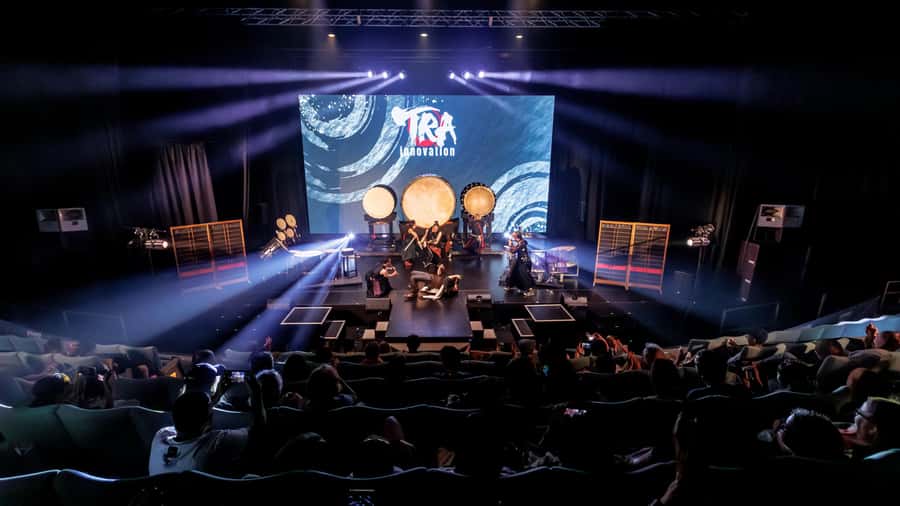
The meeting point is the Osaka Cultural Center, and the activity finishes back there. The theater arrangement matters. One audience member described about 30 people sitting in three rows, with the performers just a few meters away. That gives the show a close, almost private feel rather than the scale of a large concert hall.
A small room can be a real advantage for taiko. You can see the musicians’ arm movements, posture, and timing at close range. The visual force of a large drum is easier to appreciate when it is not far across a huge stage.
The trade-off is that this is not a grand arena production. If you want elaborate scenery or a long evening program, keep your expectations realistic. The strength is direct contact with the performers, not a massive venue.
You should arrive at least five minutes before the start. Once the show begins, late entry is not allowed because it would interfere with the production. That rule is worth taking seriously. Build in extra time to reach the Osaka Cultural Center, find the entrance, and settle in before the first beat.
The 180-centimeter drum and the opening impact
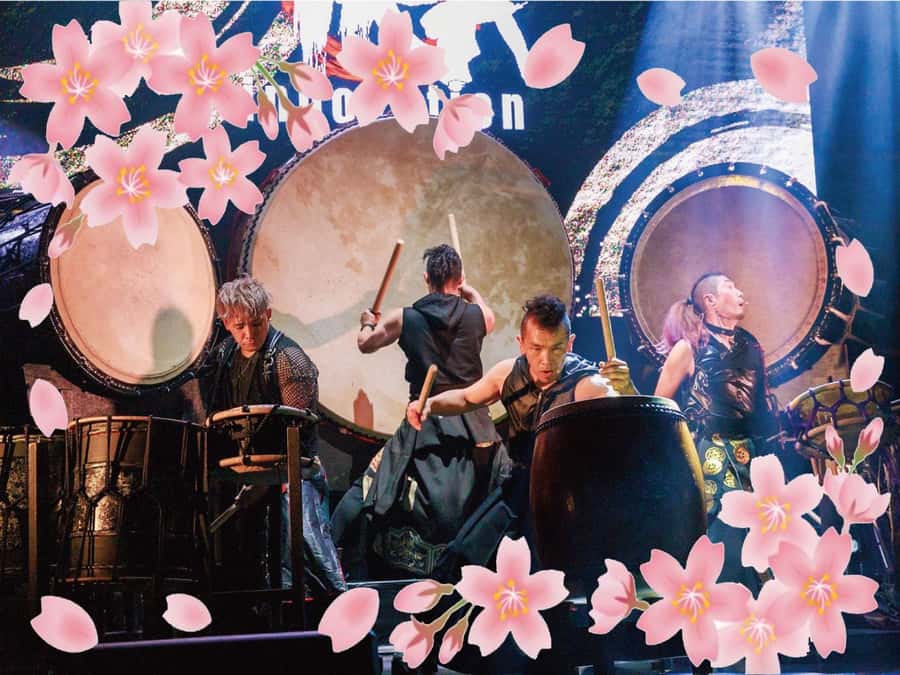
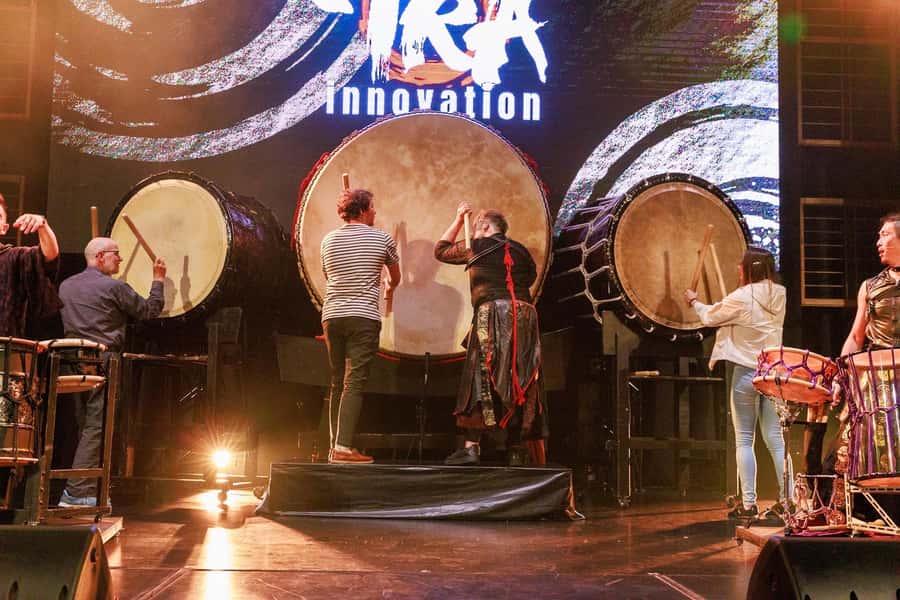
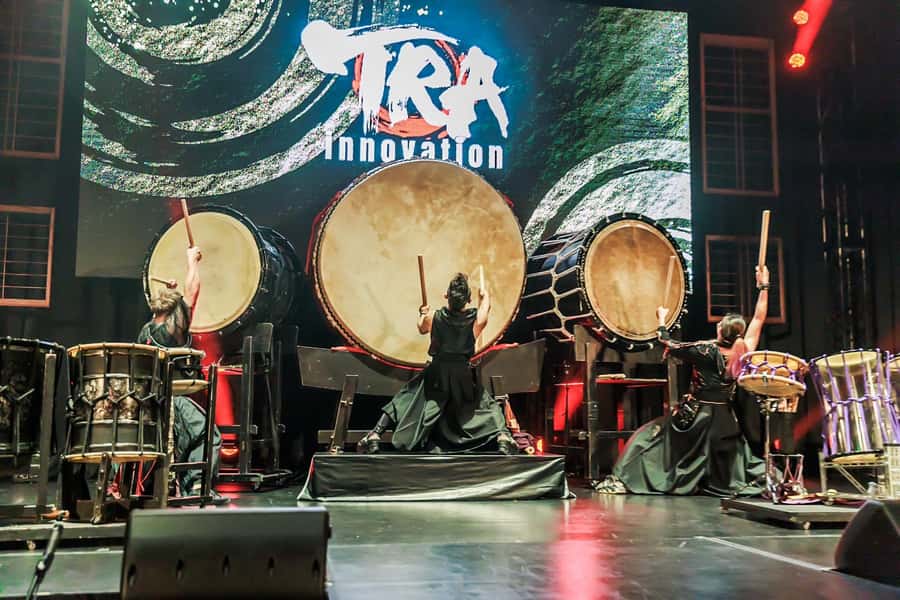
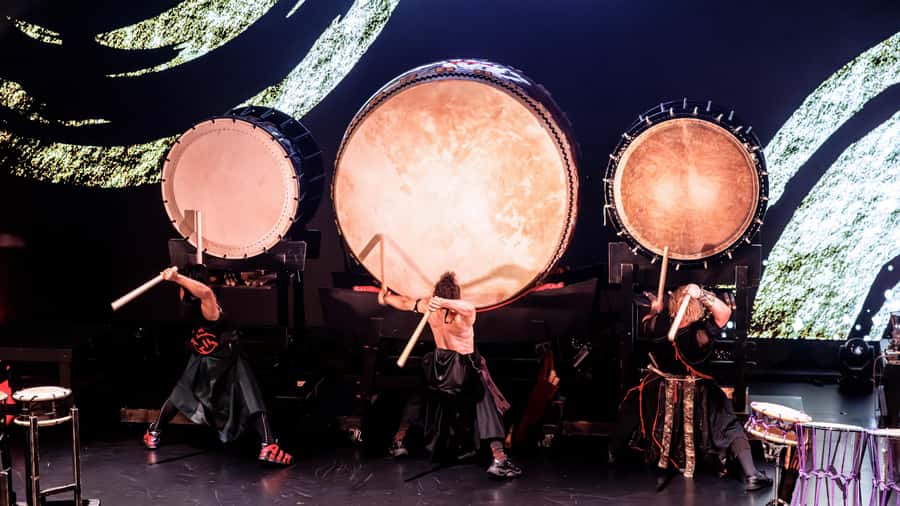
The largest drum is one of the clearest reasons to choose UTAGE. With a diameter of 180 centimeters, it is not a background prop. It gives the performers a broad surface and a deep sound that you can feel as much as hear.
Taiko performance is physical theater. The movement of the players is part of the music, and the large drum gives that movement a strong visual focus. You can expect forceful strikes, coordinated rhythms, and a sense of controlled power.
The show also includes other Japanese instruments, so the drum does not carry the whole program alone. The contrast between percussion, string sounds, bamboo flutes, and computer-generated music keeps the performance changing. That variety helps the roughly hour-long show move at a good pace.
The strongest praise centers on energy and musicianship. That is useful when deciding if the $40 price is right for you. You are paying for a polished live performance with highly skilled players, not simply for access to a drum demonstration.
Traditional instruments with a modern pulse
UTAGE’s modern side is important. The production uses computer music and visual elements to give traditional instruments a current concert format. This makes the show easier to enjoy if you are new to Japanese music or if your group includes people with different interests.
You might hear a passage led by a shamisen, then move into a larger rhythmic section built around taiko. Bamboo flutes add another color, while the electronic elements help connect the traditional sounds to modern stage entertainment.
The band behind the performance is TRAinnovation, which is described as having won a world number one indie band title. The show presents the group as more than a traditional ensemble. It is a band-led production with a strong interest in sound, visual presentation, and crowd response.
That approach also explains why the performance appeals across age groups. Children can respond to the big drums and movement. Adults may pay closer attention to the instrument mix. Families, couples, solo visitors, and older children can all find an entry point.
A completely different kind of day out:
- Tokyo Disney Resort – Tokyo Disneyland & Tokyo DisneySea Park Tickets
★ 4.8 · 99,488 reviews - Universal Studios Japan Studio Pass
★ 4.8 · 89,883 reviews - Universal Studios Japan Express Pass
★ 4.7 · 53,138 reviews - SHIBUYA SKY Ticket
★ 4.7 · 46,509 reviews
Audience participation: fun, but not entirely passive
The most unusual feature is the chance to participate in one song. Audience members may be invited onto the stage to play Japanese instruments alongside the performers.
This is not a minor photo trick. It changes the mood of the room. You are watching a show, but you may also become part of it. One person specifically described getting a chance to play one of the large drums, while another praised the fun of being asked to join the performers.
I like this feature because it turns a concert into a shared activity. You do not need to understand Japanese music in advance. You simply follow the performers and enjoy the rhythm.
Still, participation is not a guaranteed private lesson. The information says customers have the opportunity to participate in a one-song show, but it does not promise that every person will be selected. If you are shy, you can enjoy the music from your seat. If you hope to play, sit ready to respond if the performers invite you.
The show also includes audience interaction beyond the instrument experience. Dancing and direct engagement have been part of the fun for some people, and solo visitors have found the atmosphere comfortable enough to join in. You should expect an outgoing performance style rather than a formal concert where the audience remains silent.
Photos, performers, and the experience after the music
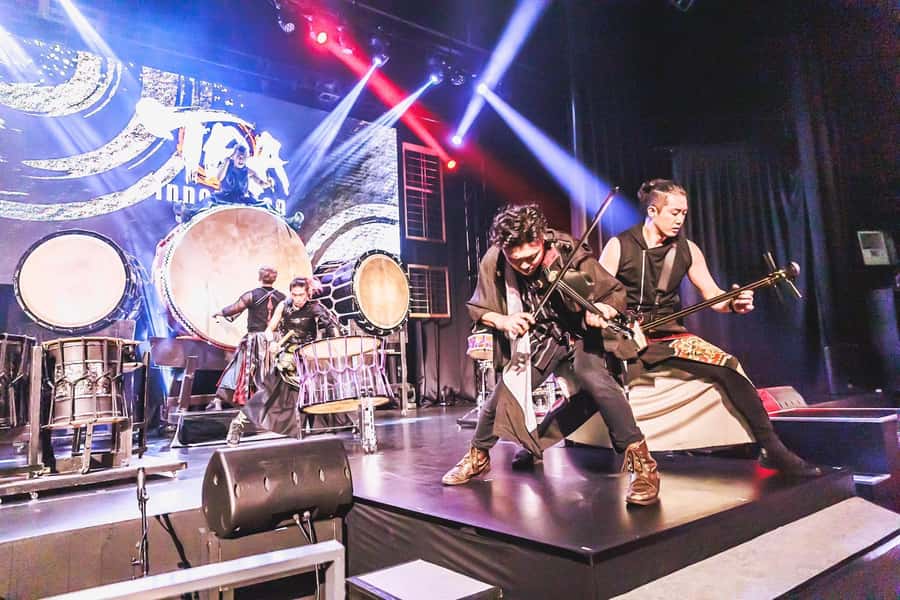
Photography is allowed during the performance, which is a useful detail for visitors who want a record of the large drum, instruments, and stage action. You should still use common sense and avoid letting your phone distract the people around you.
Photo opportunities may continue after the show. The musicians may meet the audience for pictures, and the downstairs shop offers complimentary photo setups involving samurai swords and traditional Japanese umbrellas. These extras give the visit a broader Japanese-themed finish.
The post-show contact also fits the tone of UTAGE. The musicians are presented as warm and engaging rather than distant figures who disappear as soon as the last note ends. If you enjoy meeting performers and taking photos, allow a little time after the music instead of rushing away.
The shop details are especially useful for families. Children may enjoy the visual props, while adults can take home a more personal memory than a standard stage photograph. These elements are not the main reason to book, but they add value to the visit.
Who will get the most from the $40 price?
At $40 per person, UTAGE is priced like a special evening activity rather than a casual street performance. The question is what you want from that money.
I think the value is good for anyone looking for a focused, roughly hour-long cultural show with strong musicians, a close setting, and possible audience participation. The program gives you several distinct elements: traditional instruments, a very large drum, modern computer music, visual production, crowd interaction, and possible photos afterward.
It is also a practical choice when you want something that does not require a full day. You can fit the show into an Osaka itinerary without giving up an entire afternoon or evening. One person noted that an aquarium and Ferris wheel can also form part of a wider day out, making the performance easy to pair with other entertainment in the area.
Families should find the price easier to justify if everyone enjoys music and participation. The show has enough physical action to hold attention, but it is still a seated theater experience. Couples and solo visitors can also enjoy it without needing a large group.
For a visitor who only wants to hear completely traditional Japanese music, the computer music and modern staging may feel like a compromise. For me, that blend is the point. It gives you a lively introduction instead of asking you to appreciate unfamiliar instruments in a formal setting.
How the experience suits different types of visitors
Families: The big drum, colorful action, visual effects, and audience participation make this a strong family choice. Children may be especially interested if someone from the audience is invited to play.
First-time visitors to Japan: You get a direct encounter with Japanese instruments without needing prior knowledge. The show communicates through rhythm and movement, which helps when Japanese is not your language.
Music fans: The mix of taiko, shamisen, shakuhachi, shinobue, and computer music gives you plenty to listen for. The performance also highlights the physical skill of the musicians.
Solo visitors: The interactive mood can make it easy to feel included. One solo attendee described joining the dancing and feeling comfortable, though your own level of participation is up to you.
Visitors wanting quiet cultural context: This may not be the best match. The language is Japanese, and the show favors energy, entertainment, and crowd involvement over detailed explanation.
Practical details that can make or break the visit
The most important practical tip is simple: arrive early. The requirement is at least five minutes before the show, and entry is refused once the performance begins. I would not cut this close, especially if you are unfamiliar with the Osaka Cultural Center.
The activity begins and ends at the same meeting point. That makes planning easier, since you do not need to arrange a separate return transfer or find a second venue afterward.
The listed language is Japanese. That does not prevent you from enjoying the music, but you should know what kind of communication to expect. The main story is carried by the instruments, the performers’ gestures, and the visual production.
Booking can remain flexible because you can reserve now and pay later. Cancellation is available up to 24 hours before the start for a full refund. Those terms are helpful if your Osaka schedule is still changing, though you should confirm the exact conditions when booking.
The published rating is 4.9 from 167 reviews, and the praise is notably consistent around the same points: high energy, talented musicians, audience interaction, the blend of traditional and modern sounds, and strong value. I would give those themes more weight than any single superlative. They describe the actual shape of the experience.
The main drawbacks to consider
The Japanese-only format is the clearest limitation. You may understand the mood and action easily, but you may miss spoken details or jokes if you do not understand Japanese.
Audience participation can also cut both ways. If you love being part of a show, it is a major benefit. If you dislike being called onstage, the possibility may make you uneasy. You are not required to perform simply because the option is offered, but the atmosphere is designed to encourage involvement.
The modern production may not satisfy purists who want an entirely traditional concert. Computer music and visual effects are central to the concept. I see that as a strength for most first-time visitors, but it is still worth knowing before you buy.
Finally, the performance is relatively short at about an hour. That is convenient, but you should not expect a full-night concert. The value comes from the concentration and quality of the show, plus the interaction and photo opportunities around it.
Should you book UTAGE?
Book it if you want Japanese music with real physical force, a friendly atmosphere, and a chance to take part. The 180-centimeter drum, close seating, skilled performers, and modern sound design give the show a clear identity. At $40, it is a fair buy for a polished cultural activity that fits easily into an Osaka day.
I would especially recommend it to families, music lovers, solo visitors, and anyone who wants more than a passive sightseeing stop. Go in ready for noise, movement, humor, and possible audience involvement.
Skip it if you need English explanations, a quiet recital, or a long program centered only on traditional technique. For everyone else, UTAGE offers a memorable way to hear Japanese instruments up close, with enough modern energy to keep the evening lively.
FAQ
Where does the UTAGE Japanese Taiko Live Show take place?
The show takes place at the Osaka Cultural Center in Osaka, on Honshu, Japan.
Where does the activity end?
The activity ends back at the meeting point, the Osaka Cultural Center.
How much does the show cost?
The listed price is $40 per person.
How long does the performance last?
The show is described in the supplied information and direct feedback as lasting about one hour.
What instruments are used?
The performance includes Japanese drums, shamisen, shakuhachi, and shinobue, along with computer music.
How large is the featured drum?
The show features a large drum measuring 180 centimeters in diameter.
Can I participate in the performance?
You may have the opportunity to join the performers onstage and participate in one song. Selection is not stated as guaranteed for every audience member.
Is the show available in English?
The listed language for the experience is Japanese.
Can I take photographs?
Photography during the performance is allowed. Photo opportunities with the performers may also be available after the show.
What happens if I arrive late?
You should arrive at least five minutes before the start. Entry is not allowed once the show has begun because of production requirements.
Just added in Japan
- A One-of-a-Kind Sushi Experience in a Special Place of Japan★ 5.0 · 15 reviews
- Tokyo Cute Bento Cooking Class – Make a Kawaii Character Lunchbox★ 5.0 · 126 reviews
- Japanese Home Cooking Class & Walk in Todoroki Temple Tokyo★ 5.0 · 88 reviews
- Japan Tokyo Tower Observatory Deck E-Ticket★ 4.0 · 34 reviews
- Catch a Baseball Game in Tokyo with a Local – Tickets Included★ 5.0 · 24 reviews
- Tokyo Private Day Tour by Car with English speaking Driver Guide★ 4.0 · 29 reviews
- Japan Classic 10 Day – One Life Adventures★ 5.0 · 129 reviews
- JDM Experience with Fast&Furious RX-7 (English speaking Driver)★ 5.0 · 57 reviews
Show, compared.

Mt Fuji & Hakone Cruise, Drum Show Bullet Train 1 Day from Tokyo
Read our review →
Sumo Show Experience with Chicken Hot Pot and a Photo
Read our review →
Tokyo Shinjuku Sumo Show & Experience with Photo
Read our review →
Asakusa Sumo Club Sumo Show Admission with Chankonabe in Tokyo
Read our review →