
Reviewed · FOOD TOURS
Shinjuku: Food Tour – 15 Dishes at 4 Eateries
Tokyo tastes better after dark. This three-hour Shinjuku food tour gives you a useful shortcut through a district packed with more than 10,000 restaurants, from tiny izakayas to local dining spots in Nishishinjuku. I like the small group limit of 10, which makes shared dishes and guide conversation easier. I also like that food and drinks are included, so you can focus on eating rather than sorting out every order. The main caution is walking: some people found the distance between stops tiring, and the food quality can vary from one eatery to the next.
The route mixes food with the character of Shinjuku. You pass through Kabukicho, see the old alleyways of Omoide Yokocho, and hear about the district’s customs, nightlife, and past. Guides such as Dai, Mak, Naruto, Alma, Haydn, Lisa, and Yota have earned especially warm praise for their English, humor, and ability to explain what you are eating. Still, this is not a polished fine-dining crawl. It is a social food walk, with simple settings and a menu that may appeal more to curious eaters than to serious food critics.
In This Review
- Key points to know before booking
- Why Shinjuku is such a good setting for a food tour
- Kabukicho: neon, nightlife, and the first restaurant
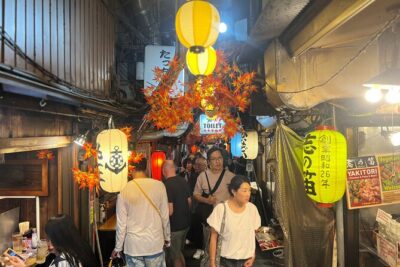
- Omoide Yokocho: a short walk through Memory Lane
- Nishishinjuku: the quieter food stop
- Godzilla Head and the visual side of the tour
- What 15 dishes really means
- Guides make the biggest difference
- Is $77.60 a fair price?
- Walking, group size, and practical comfort
- Who should book this Shinjuku food tour?
- Should you book it?
- FAQ
- How long does the Shinjuku food tour last?
- How many dishes are included?
- Are food and drinks included in the price?
- Where does the tour start and finish?
- How large is the group?
- Can I cancel for a full refund?
Key points to know before booking
- 15 dishes at four eateries: You get a broad tasting session rather than one large restaurant meal.
- Okinawan food and sashimi may appear: Past menus included distinctive Okinawan dishes, sake sours, and about seven varieties of sashimi, but the exact food can change.
- Kabukicho is part of the story: The tour explores Tokyo’s famous entertainment district, including the area near the Godzilla Head landmark.
- Omoide Yokocho adds old Tokyo atmosphere: You walk past a narrow lane lined with small izakayas dating back to the postwar period.
- Maximum of 10 people: The group size suits people who want company without joining a large bus-style outing.
- Plan for plenty of walking: Good shoes matter, and this may not be the best choice if you want to sit for most of the evening.
Why Shinjuku is such a good setting for a food tour
Shinjuku can feel like several cities squeezed into one district. Around the station, you find department stores, office towers, neon-lit streets, narrow drinking alleys, and Kabukicho’s nightlife. The station itself is among the busiest in the world, so arriving with no plan can mean spending your evening wandering past restaurants without knowing which ones are worth entering.
That is where a guided food walk earns its keep. You are not simply buying 15 samples. You are paying for a route through places you might overlook, plus help with ordering, customs, neighborhood details, and the social rhythm of Japanese dining.
I especially like the way the tour uses different parts of Shinjuku rather than staying beside the main station. Kabukicho gives you the famous neon and entertainment district. Nishishinjuku feels more local and less aimed at first-time sightseers. Omoide Yokocho provides a quick look at a much older style of Tokyo dining.
The tour begins at AOKI Shinjukunishiguchi Honten, at 1-chome-8-5 Nishishinjuku. The area is close to public transportation, but Shinjuku Station is large and confusing, so allow time to find the correct west-side area. The tour ends back at the meeting point, which makes the start and finish easy to manage when planning dinner or evening plans.
More Food Tours in Tokyo
- Tokyo: Shinjuku Food Tour (13 Dishes at 4 Local Eateries)
★ 5.0 · 6,603 reviews - Tokyo: Shinjuku Food Tour (15 Dishes and 4 Eateries)
★ 4.9 · 2,033 reviews - Best of Shinjuku: Izakaya Food Tour (4 Stops, 14+ Tastings)
★ 5.0 · 1,863 reviews
Kabukicho: neon, nightlife, and the first restaurant
The first substantial stop is Kabukicho, one of Tokyo’s best-known entertainment districts. Your guide introduces the area before taking you into a local restaurant. The setting helps explain why Shinjuku food culture is not just about elegant sushi counters or department-store dining. Here, narrow businesses, late-night restaurants, bars, and casual eateries sit close together.
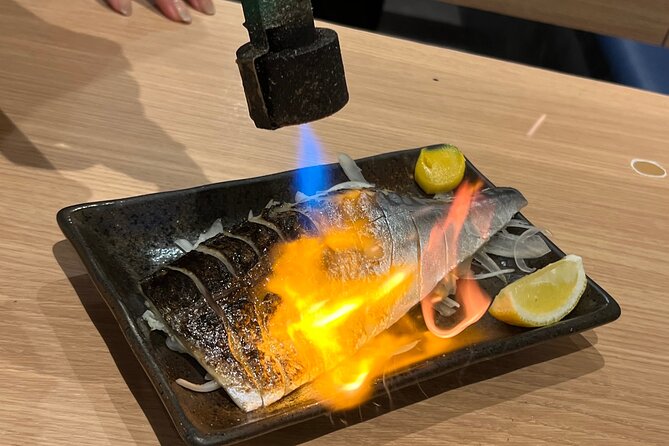
The food at this first stop often seems to make the strongest impression. One past menu included excellent seafood and drinks, and other food choices mentioned by diners included sashimi, pork tonkatsu, and Okinawan specialties. The first restaurant is also where you begin to understand the tour’s format: several smaller tastings, shared around the table, rather than a single fixed meal.
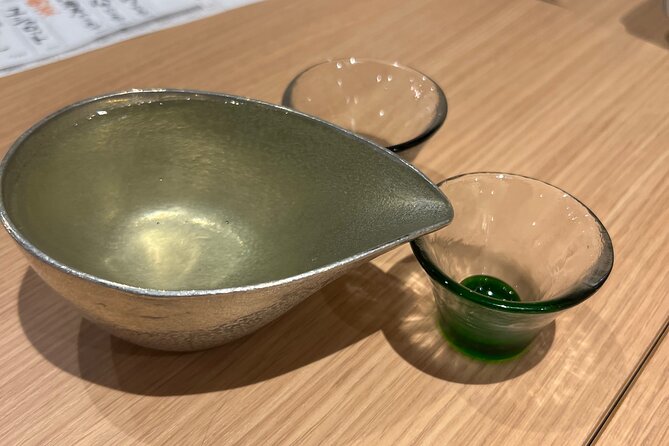
The drink element adds to the social side. Sake sours were especially well received, and drinks are included in the tour price. If you do not drink alcohol, one participant noted that they could not judge the alcoholic beverages personally, so you should treat the drink offering as part of the experience rather than the central reason to book.
Kabukicho also comes with a little edge. Guides may discuss the red-light district, organized crime, and the area’s changing reputation. Some people enjoy that context because it explains the streets around them. Others felt the talk focused too much on nightlife and the mafia rather than on food. If you want a quiet, food-first evening, this may feel like more neighborhood commentary than you expected.
Omoide Yokocho: a short walk through Memory Lane
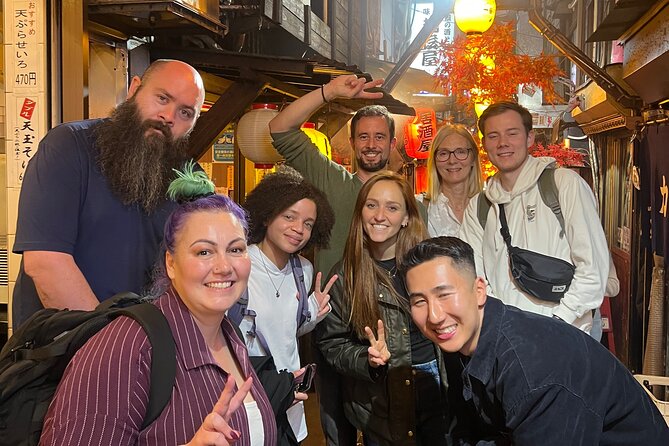
The tour passes Omoide Yokocho, also called Memory Lane. The stop lasts about 15 minutes, so think of it as a walking and photo moment rather than a long meal. The lane is known for its old izakayas and restaurants, many of which reflect the postwar style of compact Tokyo dining.
This is one of the most atmospheric parts of the route. The narrow passage gives you a clear contrast with Shinjuku’s towers and large commercial buildings. It is also the kind of place where a guide can explain why small counter restaurants and shared plates remain such an important part of Japanese urban food culture.
The limitation is time. You walk past the lane rather than spending the evening sampling every stall. If you want to eat specifically at Omoide Yokocho, you will need to return on your own. The tour uses it as part of a larger story, not as the main dining stop.
Because the route continues on foot, this is also where you may start to notice the pace. One person found the guide walked too quickly and spoke mainly to those nearest him. That appears to be an occasional guide issue rather than the standard experience, but you should stay close to the group and speak up if you are being left behind.
Nishishinjuku: the quieter food stop
Nishishinjuku is the tour’s counterpoint to Kabukicho. It has restaurants that many first-time visitors miss, and the group stops at a local favorite. This part of the route is useful because it moves you away from the most obvious tourist streets and shows how ordinary dining fits into the wider district.
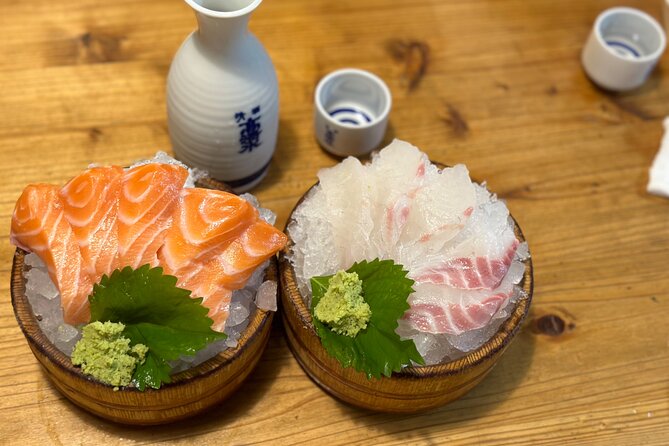
The food variety is the chief attraction. Past menus and accounts describe sashimi, tonkatsu, Okinawan dishes, and several drink choices. One particularly strong meal included around seven varieties of sashimi, while another visit featured Okinawan food that felt unusual and memorable. The exact menu is not fixed in the information provided, so you should expect variety rather than a guaranteed list of dishes.
That flexibility cuts both ways. Some meals were described as plentiful, tasty, and far better than expected. Others found the food average, with the tonkatsu providing the clear highlight while other items seemed ordinary. Two people felt the restaurant choices did not justify the time spent on the tour and left early. I would book this with the right expectation: you are sampling local places selected for the group, not receiving a high-end tasting menu.
The shared format helps you try dishes you might skip alone. If you are unsure about raw fish, unfamiliar vegetables, or regional food, the guide can provide context and the group setting makes experimentation less awkward. If you have strict dietary needs, the available information does not promise substitutions, so you should confirm before booking.
A completely different kind of day out:
- Tokyo Disney Resort – Tokyo Disneyland & Tokyo DisneySea Park Tickets
★ 4.8 · 99,488 reviews - SHIBUYA SKY Ticket
★ 4.7 · 46,509 reviews - JR Whole Japan Rail Pass
★ 4.8 · 29,150 reviews - Mt Fuji and Hakone 1-Day Bus Tour Return by Bullet Train
★ 5.0 · 26,383 reviews
Godzilla Head and the visual side of the tour
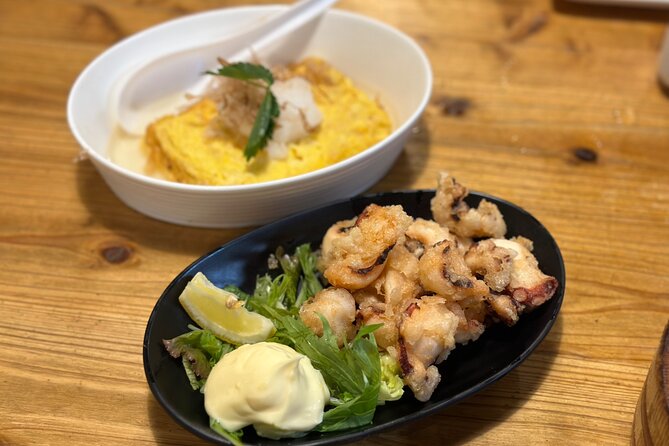
Shinjuku’s Godzilla Head rises above Kabukicho and provides one of the route’s easiest photo references. It is a playful landmark, but it also captures the district’s mix of cinema, neon, shopping, and nightlife.
The Godzilla sighting is not the main attraction, and the information does not specify a long viewing stop or entry inside the building. Treat it as a memorable point along the walk rather than a separate attraction. I like having these visual markers because they help you understand where you are in a district that can otherwise feel like a maze of similar streets.
The tour’s sightseeing content works best in the spaces between meals. Guides have explained local customs, neighborhood changes, and the social character of Shinjuku. Naruto, for example, received praise for his English and for linking the area’s food to stories about a narrow alley and streets once associated with the yakuza. Dai was also praised for adding historical details between restaurants instead of treating the evening as a simple sequence of meals.
What 15 dishes really means
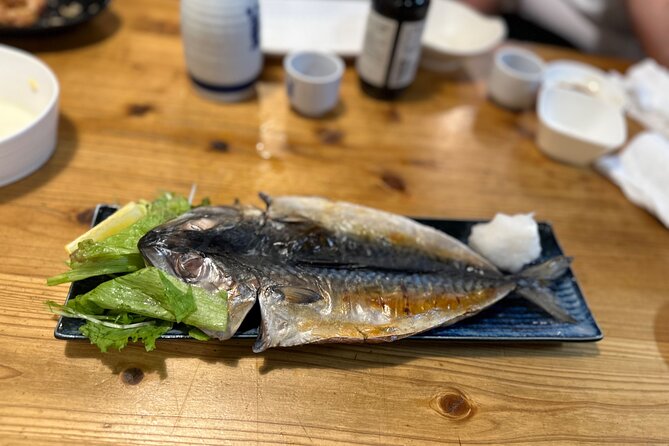
Fifteen dishes sounds like a full dinner, and the food portions appear generous enough that most people will not finish the evening hungry. The number likely refers to shared tastings across the four eateries, not 15 individual full-size meals. That makes the experience better for sampling but less suitable if you want to choose one dish and eat at your own pace.
The best feature is range. In one evening, you might move from seafood to fried food, regional Okinawan cooking, and Japanese drinks. This gives you a quick introduction to styles that are easy to miss if you order only familiar items.
The tradeoff is consistency. A multi-stop route cannot guarantee that every plate will be your favorite. Some people praised all four stops. Others thought only the first restaurant was worth the visit, or said that two restaurants were disappointing. Your guide’s choices and the day’s menu matter, so I would focus on the total experience rather than judge the tour by one average dish.
The pace can also affect how much you enjoy the food. Eating several dishes while walking between districts is lively, but it is not leisurely. You may prefer this format if you want to taste broadly and meet people. You may prefer a single restaurant booking if you care most about atmosphere, service, or careful presentation.
Guides make the biggest difference
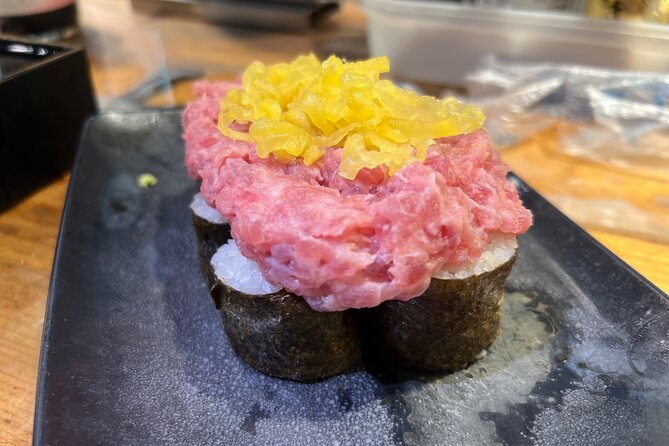
The guide is the hinge of the evening. A good guide turns a plate of unfamiliar food into a story about place and custom. The strongest guide feedback centers on people such as Dai, Mak, Alma, Naruto, Haydn, Lisa, Yota, Naoya, Izzy, and Fu.
Dai was praised for being friendly, punctual, helpful, and generous with local details. Mak received strong marks for enthusiasm and for taking the group to places it would not likely find alone. Alma was praised for excellent English and an entertaining manner. Haydn was noted for explaining food, culture, and the social character of Shinjuku.
Yota and Naoya also received especially warm praise for explaining dishes and keeping the mood easy. Izzy was appreciated for insight into customs, while Fu was praised for showing local places and explaining everyday life. These details suggest that guide quality is often the difference between a memorable evening and a merely adequate one.
There is some unevenness in the feedback. One person felt the guide rushed and failed to address the whole group. Another found the tour disjointed and too focused on crime and nightlife. If you join, stay near the guide, ask questions early, and say something if the walking pace is too fast. A small group makes that easier.
Is $77.60 a fair price?
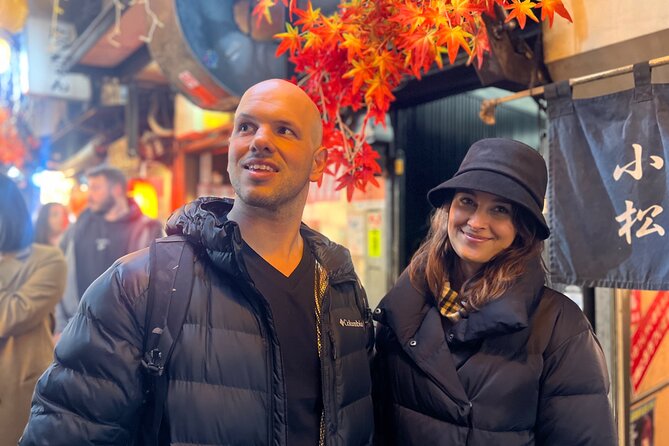
At $77.60 per person, this is not the cheapest way to eat in Shinjuku. You are paying for 15 tastings, drinks, four restaurant visits, a professional guide, neighborhood interpretation, and the convenience of entering places as part of an organized group.
The value is strongest if you are new to Tokyo, uneasy about ordering in small restaurants, or eager to try food beyond the standard tourist list. The tour can also save time. Instead of researching izakayas, checking menus, and guessing which alleys are worth entering, you receive a ready-made evening route.
The value is weaker if you already know Shinjuku well or want full control over what you eat. You may find individual meals that cost less, and you cannot assume every one of the 15 dishes will be exceptional. The tour works best as an introduction to the district and Japanese food culture, not as a bargain-only dinner.
With food and drinks included, the price is reasonable for a three-hour guided activity, especially if you use it early in your Japan trip to learn what to order later. Several people found the amount of food more than sufficient, which makes the price easier to justify.
Walking, group size, and practical comfort
The maximum group size is 10 people. That is small enough for a more personal conversation and practical enough for shared plates. It also means the group can enter compact eateries more easily than a large sightseeing party.
You should still expect a proper city walk. The route covers Kabukicho, Omoide Yokocho, and Nishishinjuku, with dining stops separated by stretches on foot. One person called the walking excessive and pointed out that many restaurants sit closer together. That is a fair concern if you have limited mobility, tired children, or a full day of sightseeing behind you.
Most people can participate, and the meeting point is near public transportation. The activity uses a mobile ticket, and confirmation is provided at booking. Gratuity is optional. Free cancellation is available up to 24 hours before the start time, while cancellations or changes made within 24 hours are not accepted for a refund.
Who should book this Shinjuku food tour?
I would recommend it to first-time visitors who want a friendly introduction to Tokyo food without spending hours planning. It suits adventurous eaters, solo visitors who want company, and couples or friends who enjoy trying many small dishes. It is also a strong choice for anyone interested in the stories behind Kabukicho and the older restaurant lanes around Shinjuku.
I would be more cautious if you are a serious food traveler seeking top-level cooking at every stop. I would also hesitate if you dislike raw seafood, want a slow dinner, or find long urban walks difficult. The food is generally plentiful, but quality and atmosphere can change from one restaurant to another.
Should you book it?
Book this tour if you want to get oriented to Shinjuku through food, local streets, and conversation. The small group, included tastings, and strong guide performances make it a practical first-night activity in Tokyo. You can learn what kinds of dishes appeal to you, pick up dining customs, and return later to places you liked.
Skip it if your priority is a carefully controlled menu or a single outstanding restaurant. For most visitors, though, the mix of sashimi, tonkatsu, Okinawan food, drinks, Kabukicho stories, and Omoide Yokocho makes $77.60 a fair price for a busy but useful evening.
FAQ
How long does the Shinjuku food tour last?
The tour lasts approximately three hours.
How many dishes are included?
The experience includes 15 dishes served across four eateries.
Are food and drinks included in the price?
Yes. Food and drinks are included. Gratuity is optional and not included.
Where does the tour start and finish?
The tour starts at AOKI Shinjukunishiguchi Honten, 1-chome-8-5 Nishishinjuku, Shinjuku City, Tokyo 160-0023, Japan. It ends back at the meeting point.
How large is the group?
The maximum group size is 10 people.
Can I cancel for a full refund?
Yes, if you cancel at least 24 hours before the experience start time. Cancellations or changes made less than 24 hours before the start time are not accepted for a refund.
Just added in Tokyo
- A One-of-a-Kind Sushi Experience in a Special Place of Japan★ 5.0 · 15 reviews
- Tokyo Cute Bento Cooking Class – Make a Kawaii Character Lunchbox★ 5.0 · 126 reviews
- Japanese Home Cooking Class & Walk in Todoroki Temple Tokyo★ 5.0 · 88 reviews
- Japan Tokyo Tower Observatory Deck E-Ticket★ 4.0 · 34 reviews
- Catch a Baseball Game in Tokyo with a Local – Tickets Included★ 5.0 · 24 reviews
- JDM Experience with Fast&Furious RX-7 (English speaking Driver)★ 5.0 · 57 reviews
- Tokyo Private Day Tour by Car with English speaking Driver Guide★ 4.0 · 29 reviews
- Japan Classic 10 Day – One Life Adventures★ 5.0 · 129 reviews
Food Tours, compared.
Shinjuku Food Tour (13 Dishes at 4 Local Eateries)
Read our review →
Shinsekai Food Tour with 13-15 Dishes at 5 Eateries
Read our review →
Osaka Food Tour: 13 Dishes at 5 Local Eateries
Read our review →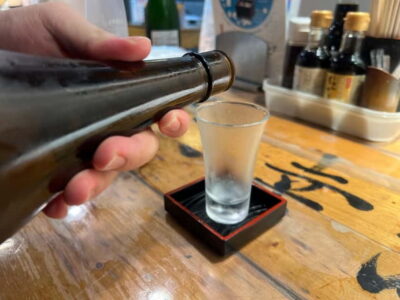
Shinjuku Food Tour (15 Dishes and 4 Eateries)
Read our review →
Best of Shinjuku: Izakaya Food Tour (4 Stops, 14+ Tastings)
Read our review →
Kyoto Night Foodie Tour in Gion (9+ dishes + 6 Sake tastings)
Read our review →
Hungry Osaka Street Food Tour:15 Tastings & 3 Drinks with a Local
Read our review →
Tokyo Night Foodie Tour in Shinjuku – Seasonal Sushi, Wagyu Beef
Read our review →Browse the lists this tour appears in