
Reviewed · SUMO EXPERIENCES
Sumo Tournament Experience in Osaka
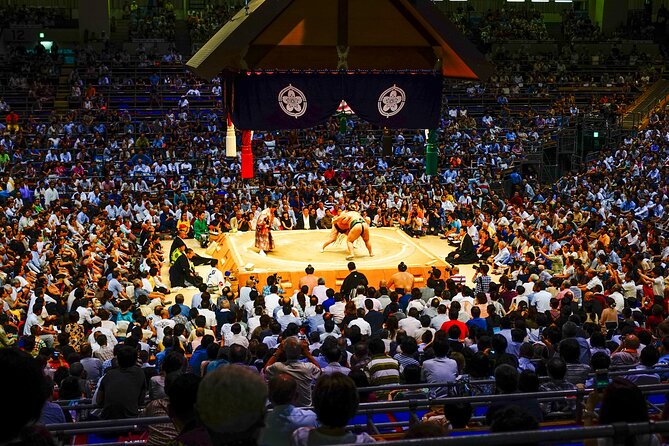
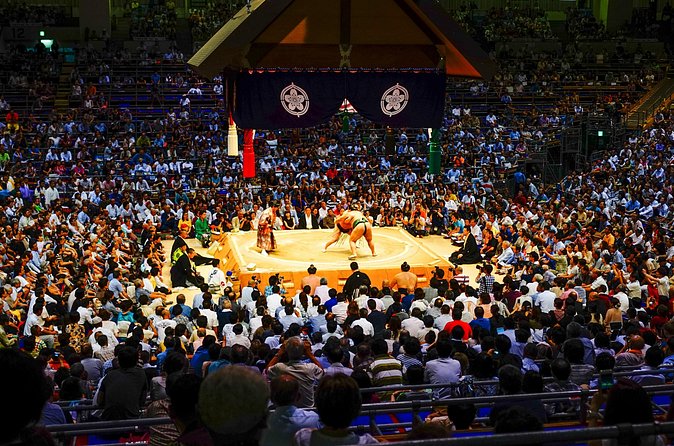
Sumo gets serious fast. This Osaka experience puts you inside the official March basho at EDION Arena, where you can watch Japan’s top wrestlers compete while an English-speaking sumo guide explains the rules, rituals, rankings, and customs. I especially like the reserved arena seating and the audio headset, which make it easier to follow the action in a large, noisy venue.
I also like the chance to greet wrestlers as they enter the stadium and to add a traditional chanko hot pot dinner afterward. The main consideration is timing: this is a group experience, tickets are limited, and the minimum group size is 15 people. The tour can also involve a wait before seating, since the group must wait for earlier matches to finish.
In This Review
- Key points to know before booking
- Why Osaka’s March basho is worth planning around
- Meeting near EDION Arena Osaka at 2:00 pm
- Greeting wrestlers before the matches
- Learning the rituals through an English-speaking guide
- Choosing between D, B, C, A, and S seats
- Waiting before entry and visiting the Sumo Museum
- What to expect inside the arena
- Adding chanko nabe after the tournament
- Group size, timing, and the tour’s practical limits
- What the strongest praise tells you
- Who should book this Osaka sumo experience?
- Should you book it?
- FAQ
- When does the Osaka sumo tournament take place?
- Where does the experience take place?
- What time does the tour start?
- How long does the experience last?
- What seats are available?
- Is dinner included?
- Can I bring food or drinks into the arena?
- What happens if I am late?
- Can I cancel or change my booking?
Key points to know before booking
- Osaka’s only official tournament: The Grand Sumo Tournament comes to Osaka only once a year, in March, and runs for 15 days.
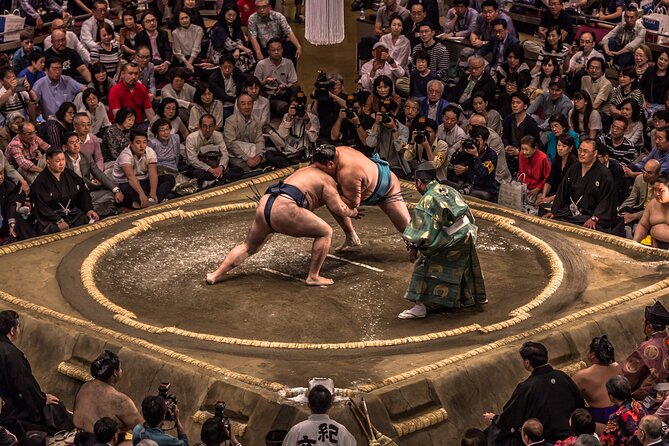
- Reserved seats are included: Choose from distant D seats, central B or C seats, or premium A or S seats near the ring.
- A guide makes sumo easier to follow: An English-speaking local sumo expert explains the ceremonies, wrestlers, rankings, and match rules through an audio headset.
- The experience lasts about four hours: The meeting time is 2:00 pm, with the exact meeting point sent by email at least one week before the date.
- Dinner is optional: Add chanko nabe, sukiyaki, or a vegetarian meal when booking. Special meal requests must be made at least one week ahead.
- Book early: Group tickets are released only four to seven weeks before the tournament, and the tour operator recommends reserving about three months before your visit.
Why Osaka’s March basho is worth planning around
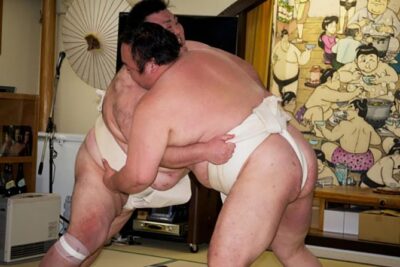
Sumo is not simply a contest between two large men. It is a formal sport shaped by ceremony, rank, discipline, and rules that have been preserved for centuries. The wrestlers live in communal heya, or training stables, where their meals, clothing, training, and daily routine are closely controlled.
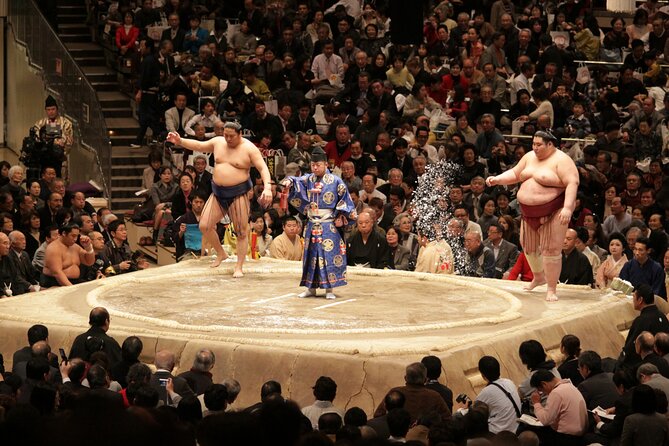
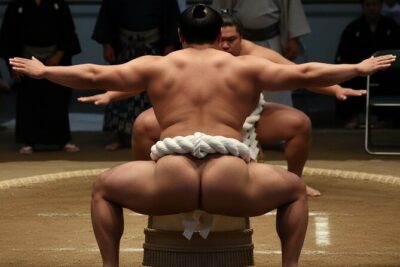
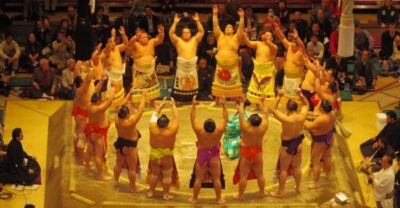
That structure gives the tournament a different feel from a typical sporting event. Before the match begins, the wrestlers perform ritual actions such as stomping, clapping, and throwing salt into the ring for purification. The salt is not decoration. It is part of the ceremony that prepares the dohyo, or ring, for the contest.
Osaka hosts one official tournament each year, in March. The others take place in Tokyo in January, May, and September, Nagoya in July, and Fukuoka in November. Each basho lasts 15 days, beginning and ending on a Sunday.
That limited schedule matters. If your visit to Osaka falls outside March, you will not be able to attend an official tournament in the city. For a sumo fan, this experience may be the reason to plan a Japan trip around the dates. For a first-time visitor, it offers a rare chance to see the sport in its proper setting rather than only on television.
More Sumo Experiences in Osaka:
- Osaka: Sumo Show & Experience w/ Optional Kimono & Hot Pot
★ 4.5 · 609 reviews - Osaka: Sumo Stage Show with Bento or Snack + Fight & Photo
★ 4.3 · 364 reviews - Osaka Sumo Experience with Live Show and Audience Challenge
★ 5.0 · 162 reviews
Meeting near EDION Arena Osaka at 2:00 pm
The experience begins at or near EDION Arena Osaka, with the meeting details sent by email at least one week before the event. You should arrive at least 10 minutes early. This is not the kind of tour where arriving at the last moment is a safe gamble.
The group can include up to 24 people, and at least 15 are needed for the experience to operate. That size is large enough to create some crowding, especially around the arena and museum, but the audio headsets help you hear the guide without everyone needing to gather close.
One useful touch is the guide’s phone number, provided before the tour. If you are late, the group may leave without you. You may be able to meet the group at the next location, but that requires calling the guide and arranging it yourself. In plain terms, plan your route carefully and allow extra time for Osaka’s public transportation.
The exact meeting point is not included in the general details until closer to the date. You should check your email rather than assume the group meets at the arena entrance.
Greeting wrestlers before the matches
One of the most appealing parts of the experience comes before you take your seat. The group has a chance to cheer for and greet some of the best-known wrestlers as they enter the stadium for their matches.
This gives you a better sense of the tournament as a public event, not just a series of bouts viewed from a chair. Dedicated local fans gather around the entrances, and the atmosphere grows as the wrestlers arrive. The chance to see them up close also helps put the sport’s scale into perspective.
The guide can explain who the wrestlers are and why certain names matter. Sumo rankings are important, and the included banzuke-hyo, a printed table of rankings, gives you a helpful reference as the day unfolds.
You should keep your expectations sensible. This is not a private meeting or a guaranteed personal introduction with every major wrestler. It is an opportunity to greet and cheer as wrestlers enter the venue, with a group and local fans nearby.
Learning the rituals through an English-speaking guide
The guide is a major part of the value here. Sumo can be confusing at first because the matches are short, the rules are strict, and much of the meaning comes from ritual and rank.
An English-speaking local sumo expert explains what you are seeing through an audio headset. You can hear the commentary while watching the action instead of trying to stand beside the guide in a crowded arena.
The guide covers the origins and customs of sumo, the careers of famous wrestlers, and the structure of the tournament. The explanations also help you notice details that might otherwise pass quickly, such as the use of salt for purification and the importance of a wrestler’s rank.
The audio system is especially useful once you are inside the venue. Sumo matches may end quickly, so having context before and during the bouts makes the experience easier to appreciate. You are not left to guess why a particular ceremony matters or why the crowd reacts to a certain wrestler.
The guide also provides a sumo information pamphlet. It is a small but practical addition, since you can refer to it during the tournament and use the ranking sheet to identify competitors.
A few more options to weigh up in Osaka
- Osaka Go Karting Tour with Funny Costume
★ 5.0 · 2,658 reviews - Osaka Castle: Museum and Tower Entry Ticket
★ 4.5 · 2,380 reviews - Osaka: Shinsekai Food Tour with 13-15 Dishes at 5 Eateries
★ 4.8 · 2,204 reviews - Osaka Food Tour: 13 Dishes at 5 Local Eateries
★ 5.0 · 2,149 reviews
Choosing between D, B, C, A, and S seats
The seat category makes a real difference, so check the option carefully before paying.
Basic D seats are in the upper corners of the arena. They provide a full view of the ring, but the wrestlers will look distant. The arena is compact enough for visibility to remain clear, yet binoculars are recommended if you want to study the action closely.
Standard B or C seats are chair seats in the main arena. These offer a better balance of view and cost, with more atmosphere than the upper balcony. Binoculars are still suggested for a closer look.
Premium A or S seats are in the front arena section, closest to the ring. These are the most exciting seats for watching the wrestlers and seeing the ceremonies at close range, but you should expect to pay more for the privilege.
The advertised starting price is $142.40 per person. That price should be judged against what is included: a reserved ticket, ticket service, an English-speaking specialist, sumo materials, an audio headset, and group coordination for a difficult-to-arrange event.
The value is strongest if you would struggle to obtain tournament tickets yourself or want explanations in English. If you only need an entry ticket and are happy sitting high in the arena, the Basic option may be enough. If the match itself is the main reason you are visiting Osaka, Standard or Premium seats may make more sense.
Waiting before entry and visiting the Sumo Museum
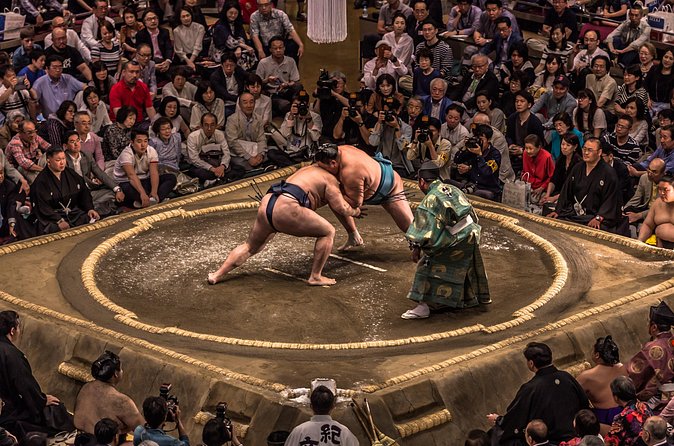
There may be a wait before the group takes its seats. The reason is straightforward: the organizers must wait for all sumo matches to finish before entering the seating area.
That can be frustrating if you expect to sit down immediately at the 2:00 pm start time. It is also part of the practical reality of managing a group at a major sporting event. Bring patience, and do not plan another fixed activity too close to the end of the tour.
The Sumo Museum may also be crowded. If the area becomes difficult for a group of up to 24 people, the guide may ask you to visit on your own rather than lead everyone through together. That means the museum portion may feel less structured than the main arena experience.
I would treat the museum as a useful extra, not the main reason to book. The tournament, the ceremonies, the guide, and the seat are the central attractions.
What to expect inside the arena
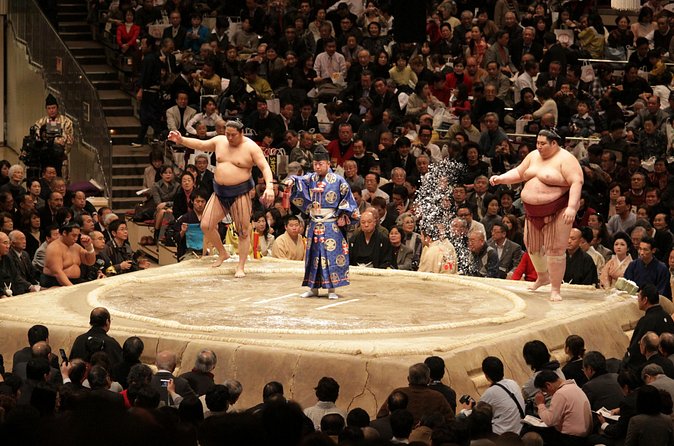
No outside food or drinks are allowed inside EDION Arena Osaka. You can buy food and beverages from vendors within the arena, but those purchases are not included in the tour price.
Your reserved chair seating gives you a clear place to watch, rather than leaving you to search for an open spot. The headset lets you follow the guide’s explanations, while the crowd provides the local energy that makes a live basho different from a broadcast.
The matches themselves can be brief and intense. A wrestler wins by forcing the opponent out of the ring or making any part of the body other than the soles of the feet touch the ground. The guide’s explanations help you understand why a quick bout can still be packed with strategy and ceremony.
The experience is also a good fit for people who are curious about Japanese customs but do not know much about the sport. You do not need to arrive as a sumo expert. The guide and printed material provide enough background to make the event approachable.
Adding chanko nabe after the tournament
At checkout, you can add dinner at a local chanko hot pot restaurant. Chanko nabe is known as sumo stew, a hot pot commonly made with chicken stock, vegetables, and other ingredients.
The dish is associated with sumo wrestlers because it can be cooked in a large quantity and served to many hungry athletes after training. The meal gives the day a cultural link that goes beyond watching the matches.
Chanko nabe is the default dinner choice if you select the meal option. Sukiyaki or a vegetarian meal can be requested, but you need to state that preference at least one week in advance in the special requirements field.
You should also understand the limits of the vegetarian option. Traditional chanko broth is often made with pork or chicken, though the restaurant may substitute the broth for a vegetarian request. Once the dinner request has been accepted, changes cannot be made within one week of the tour date.
Drinks are not included. Meals and drinks are also not included if you do not select the dinner option during checkout.
The dinner is worth considering if you want a full half-day built around sumo. If you already have restaurant plans in Osaka, skip it and keep the experience focused on the arena.
Group size, timing, and the tour’s practical limits
A group of up to 24 people is manageable, but it will not feel private. You may wait for other members, move through the venue at a group pace, and have less time to linger in crowded areas.
The total experience lasts about four to five hours. The core tournament visit is described as about four hours, but the full timing can vary because of seating arrangements, venue congestion, and the optional dinner.
The start time is 2:00 pm, so the experience occupies much of the afternoon and may continue into the evening if dinner is selected. You should avoid booking a night train, theater performance, or restaurant reservation at a tight time afterward.
The tour is near public transportation, and most people can participate. Hotel pickup and drop-off are not included, so you are responsible for reaching the meeting point and returning to your accommodation.
Japan Awaits uses licensed tour guides and handles the ticket purchase, restaurant arrangements, and group planning. That service is useful here because group tickets are not released by the Sumo Association until roughly four to seven weeks before the tournament date.
The operator recommends booking about three months in advance, or at least one month before your travel date. Even an early booking does not remove all uncertainty. If group tickets cannot be obtained, the operator says it will notify you within four weeks of the tour and offer another date or a full refund.
The tour also requires a minimum of 15 people. If that minimum is not reached and the experience is canceled, you can receive a different date or experience, or a full refund.
What the strongest praise tells you
The highest praise centers on two things: the guide and the overall excitement of the day.
Yuka is specifically praised for being easy to find beside the arena, easygoing, informative, and happy to help. That matters because a group tour can feel stressful if the meeting point is unclear or the guide is hard to approach. Having a guide who is visible and welcoming makes the first few minutes much easier.
The other strong point is the sense that the tournament can become a highlight of an Osaka visit. Sumo offers something you cannot replicate in a standard city sightseeing tour. You are watching a living sporting tradition in the place where it is practiced, surrounded by fans who understand its importance.
The overall rating is 4.9 from 12 reviews, with 100 percent recommending the experience. That is a small sample, so I would not treat the number as a guarantee. Still, the praise aligns with the practical strengths: clear guidance, an exciting venue, and access to an event that only comes to Osaka once each year.
Who should book this Osaka sumo experience?
I would recommend it most strongly to:
- First-time sumo spectators who want the rules and ceremonies explained in English
- Visitors in Osaka during the March Grand Sumo Tournament
- Sports fans who value atmosphere as much as the contest
- Couples, families, and small groups who prefer reserved seats and organized ticket handling
- People who want to pair the tournament with a traditional chanko dinner
- Visitors willing to plan early and accept a fixed, non-refundable booking
It may be less suitable if you need flexible cancellation, dislike group tours, or want complete control over your schedule. The experience is non-refundable and cannot be changed for any reason after booking, so confirm your Osaka dates before paying.
You should also think carefully about the seat category. A low price with a D seat may be good value for simply being inside the basho, while Premium seats are better for someone who wants the closest possible view and is willing to spend more.
Should you book it?
Book this experience if you are in Osaka during the March tournament and want more than a ticket. The English-speaking sumo expert, headset, ranking sheet, reserved seating, and optional chanko meal turn a potentially confusing sporting event into a clear, well-planned afternoon.
I would choose Standard B or C seats for the best balance of cost, comfort, and atmosphere. Choose Premium if sumo is a major priority, and Basic only if you are comfortable with an upper-balcony view and plan to bring binoculars.
Book early, arrive before 2:00 pm, check your meeting email, and leave room in your schedule for waiting. With those points in mind, this is a memorable and practical way to experience Osaka’s once-a-year sumo tournament.
FAQ
When does the Osaka sumo tournament take place?
The official Osaka tournament takes place in March. It lasts 15 days, with the opening and closing dates both falling on Sundays.
Where does the experience take place?
The experience takes place at EDION Arena Osaka. The exact meeting point is sent in the tour details by email at least one week before the tour date.
What time does the tour start?
The scheduled start time is 2:00 pm. You should arrive at least 10 minutes before the designated meeting time.
How long does the experience last?
The experience lasts approximately four to five hours. The exact timing can vary, especially if you add the dinner option or encounter a wait before seating.
What seats are available?
Basic tickets use D seats in the upper corners of the arena. Standard tickets use B or C seats in the main arena. Premium tickets use A or S seats in the front arena section.
Is dinner included?
Dinner is optional and must be selected at checkout. Chanko hot pot is the default meal, while sukiyaki or a vegetarian option can be requested at least one week in advance. Drinks are not included.
Can I bring food or drinks into the arena?
No. Outside food and drinks are not allowed, but food and drinks are available for purchase from vendors inside the arena.
What happens if I am late?
The group may begin without you if you arrive late. You receive the guide’s phone number before the tour and may call to arrange meeting the group at the next location.
Can I cancel or change my booking?
No. The experience is non-refundable and cannot be changed for any reason. If the minimum number of participants is not reached or group tickets cannot be obtained, you may be offered another date or experience, or a full refund.
Just added in Osaka
- 1.5〜2 Hours Traditional Kintsugi Work Shop in Namba Osaka★ 5.0 · 75 reviews
- The Dark Side of Osaka Walking Tour★ 5.0 · 49 reviews
- Three Types of Ramen Cooking Class in Osaka★ 5.0 · 119 reviews
- Samurai Show, Tea Ceremony, Japanese Traditional Activities★ 5.0 · 56 reviews
- Traditional Japanese Music show & Experience Tour in Osaka★ 5.0 · 25 reviews
- Traditional Home cooking Experience in Osaka, Japan★ 5.0 · 14 reviews
- Sushi and Japnese foods cooking class in Osaka★ 5.0 · 51 reviews
- Osaka Street Food Festival :Takoyaki&Okonomiyaki for Families★ 5.0 · 13 reviews
Sumo Experiences, compared.
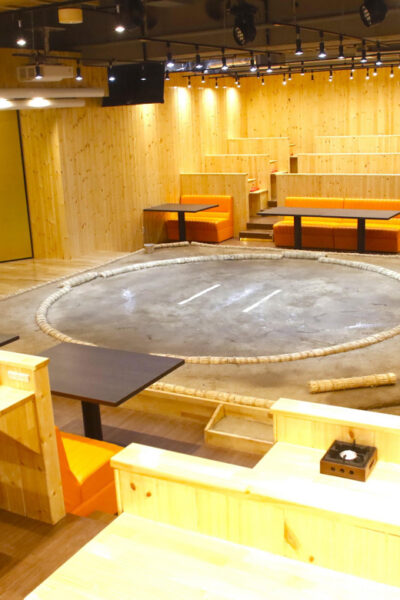
Sumo Show Experience with Chicken Hot Pot and a Photo
Read our review →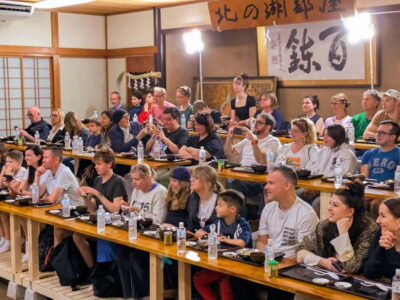
Tokyo Shinjuku Sumo Show & Experience with Photo
Read our review →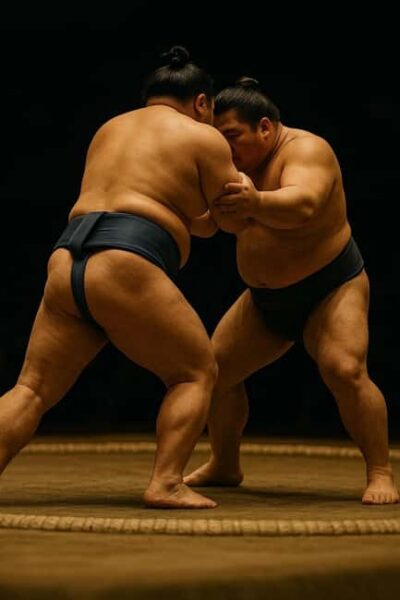
Sumo Show & Experience w/ Optional Kimono & Hot Pot
Read our review →
Authentic Sumo Experience in Tokyo: Enter the Sanctuary
Read our review →Browse the lists this tour appears in