
Reviewed · FOOD TOURS
Tokyo: Food Tour in Ueno with 10+ Tastings of Japanese Classics
Small bites reveal big pieces of Tokyo. This Ueno food tour pairs sushi, gyoza, yakitori, fruit, tea, and matcha ice cream with walks through markets, train tracks, parks, shrines, and Buddhist grounds. I like the chance to see a part of Tokyo that many first-time visitors miss, and I like having an English-speaking guide handle ordering and local customs.
The route is short enough to fit into a busy Tokyo schedule, and guides such as Harumi, Natsumi, Yumi, and Mari have earned strong praise for their warmth and practical restaurant tips. The main drawback is the price: at $142 per person, you are paying for guidance, planning, and access to small local stops, not simply for three and a half hours of food.
In This Review
- Key points to know before booking
- Why Ueno is a smart place for a food tour
- What the 10-plus tastings include
- The market stop: a practical introduction to Ueno
- Food beneath the train tracks
- Ueno Park adds breathing room
- A 1627 Shinto shrine
- A Buddhist site with a quieter mood
- How much food will you actually eat?
- The guide can make or break the experience
- Is $142 a fair price?
- Timing, meeting point, and cancellation terms
- Who should book this Ueno food tour?
- Should you book it?
- FAQ
- How long does the Tokyo Ueno food tour last?
- Where does the tour start?
- Where does the tour end?
- How many food tastings are included?
- Are drinks included?
- Is hotel pickup included?
- How many people can join the tour?
- Can dietary requirements be accommodated?
- Can I cancel for a full refund?
Key points to know before booking
- Ten or more tastings fill the 3.5-hour route: Expect sushi, gyoza, yakitori, seasonal fruit, two kinds of tea, matcha ice cream, beer, and a secret dish.
- Ueno supplies the setting: The tour moves through a market, shops under elevated train tracks, Ueno Park, a Shinto shrine, and a Buddhist worship site.
- Guides make the food easier to navigate: An English-speaking local guide helps with the language barrier and explains customs, ingredients, and the area.
- Come hungry: The portions add up quickly. One useful tip is to skip breakfast or eat only a very light meal beforehand.
- The route can change: Food stops and dishes depend on weather, availability, and other local conditions.
- The group may be small or may reach 15 people: The experience is described as private, but the stated maximum is 15 travelers, so confirm the setup when booking.
Why Ueno is a smart place for a food tour
Ueno gives you more than a string of restaurant visits. It is a district where food, transport, religion, shopping, and everyday city life sit close together.
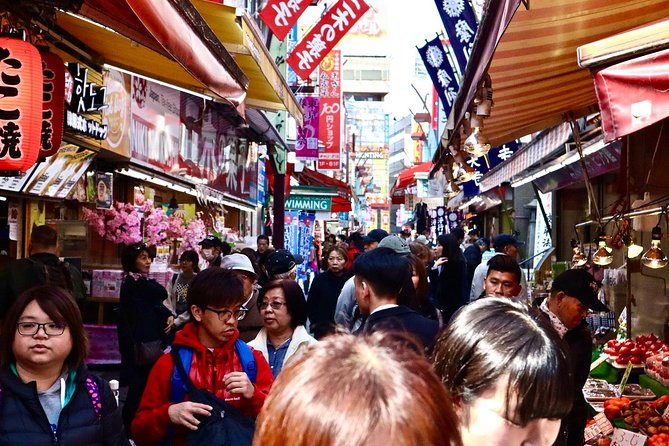
You begin at Ueno Station, a practical meeting point with good public transportation links. From there, the walk takes you into a popular indoor and outdoor market filled with shops selling food, gifts, clothing, and other goods. This is useful context before the tastings begin. You see how food fits into ordinary shopping rather than encountering only polished dining rooms aimed at tourists.
The district also has a strong connection to Tokyo’s older neighborhoods. The route includes an area beneath the elevated train tracks, known by a Japanese term referring to the space under the girders. It is an interesting contrast to Ueno’s temples and parkland: trains pass overhead while small food businesses operate below.
I like this mix because it keeps the tour from becoming a simple eating contest. You get food in places shaped by the city around them, then a chance to see religious and public spaces that explain more about Ueno.
More Food Tours in Tokyo
- Tokyo: Shinjuku Food Tour (13 Dishes at 4 Local Eateries)
★ 5.0 · 6,603 reviews - Tokyo: Shinjuku Food Tour (15 Dishes and 4 Eateries)
★ 4.9 · 2,033 reviews - Best of Shinjuku: Izakaya Food Tour (4 Stops, 14+ Tastings)
★ 5.0 · 1,863 reviews
What the 10-plus tastings include
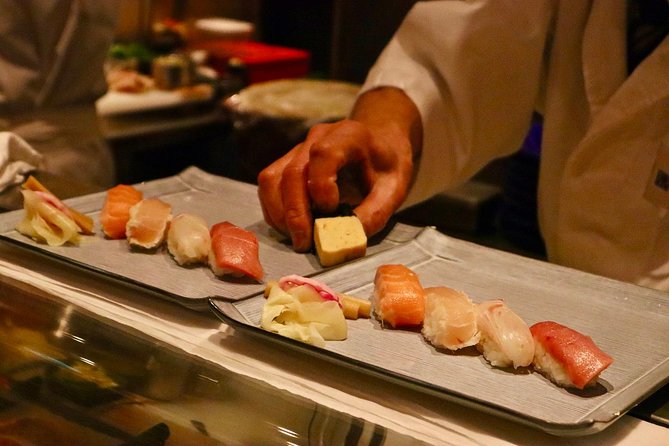
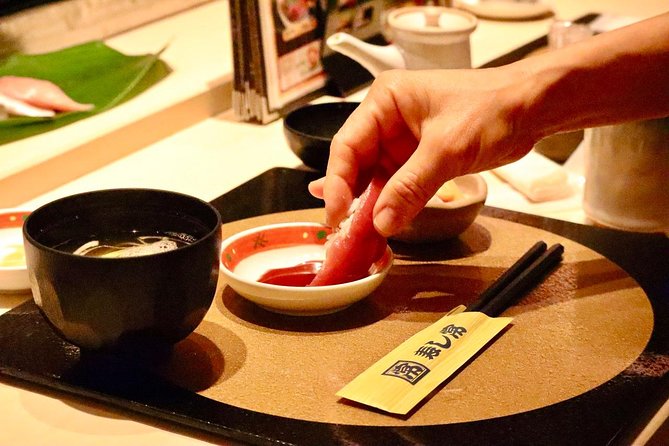
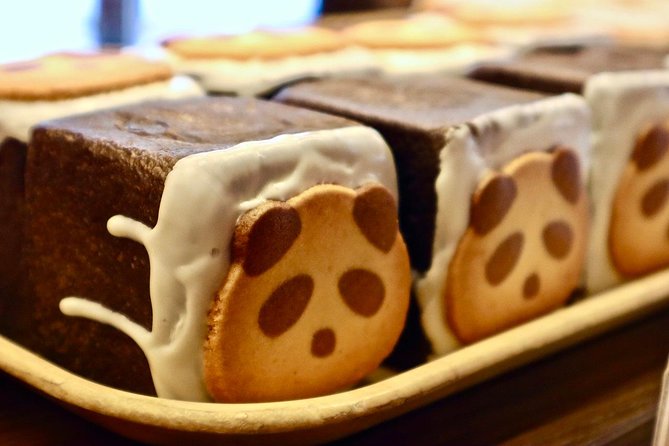
The food list is broad, and that variety is one of the tour’s strongest features. You can expect fresh Japanese sushi, crisp gyoza, grilled yakitori, seasonal fruit, traditional matcha ice cream, two types of tea, water, one draft beer, and a secret dish.
The exact menu can change, so you should not treat this as a fixed restaurant tasting. Still, the range gives you a good introduction to familiar Japanese classics. Sushi shows off the country’s seafood tradition. Gyoza brings a hot, savory dumpling with a crisp texture. Yakitori adds smoky grilled chicken served on skewers.
The tour also includes sweets and drinks, which helps pace the meal. Matcha ice cream is a particular highlight for anyone who likes a slightly bitter tea flavor with creamy sweetness. Seasonal fruit gives you something fresh between richer dishes.
The secret dish is a nice touch, though its very nature means you cannot plan around it. A food tour works best when you are open to trying something outside your usual order. If you have a long list of must-eat dishes, tell the guide early so your preferences can shape the route when possible.
The market stop: a practical introduction to Ueno
The first market area is likely to be one of the most useful parts of the walk for first-time visitors. It contains many shops and a mix of food, gifts, and apparel, so you get a fast look at how locals shop and browse.
You should expect a crowded commercial setting rather than a quiet gourmet hall. That can make it harder to hear every explanation, especially if the group reaches the maximum of 15 people. Stay close to the guide and keep your belongings secure in busy areas.
The benefit is variety. Instead of seeing only one type of Japanese food, you can get a sense of the range available in Ueno. The guide can also help you understand what you are seeing, which matters when labels and menus are not in English.
This is where the language support earns its keep. You do not have to guess what something contains or worry about pointing to the wrong item. That said, dietary needs should be shared in advance. The operator specifically asks for notice before the tour so it can try to accommodate them.
Food beneath the train tracks
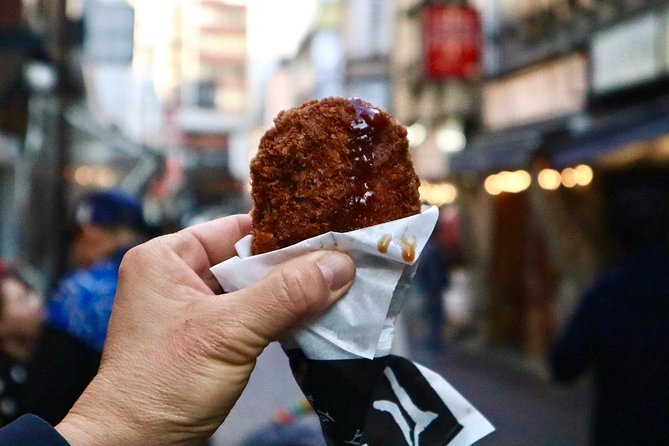
The section under the elevated tracks adds a distinctly urban note. The setting is not designed to feel grand. It is part of the working city, where the sound and movement of trains form a backdrop for small eateries and shops.
This kind of stop can be more revealing than a famous sightseeing platform. You are seeing how Tokyo uses limited space and how food businesses fit into transport corridors. The guide’s role here is important because the place may look like a passageway at first glance rather than a destination.
The food itself may be one of the stops listed above, or it may change according to availability. The operator warns that the itinerary and menu can shift with local conditions. I would see that as a normal part of eating in a busy city, but you should not book if you require a precise sequence of dishes.
A completely different kind of day out:
- Tokyo Disney Resort – Tokyo Disneyland & Tokyo DisneySea Park Tickets
★ 4.8 · 99,488 reviews - SHIBUYA SKY Ticket
★ 4.7 · 46,509 reviews - JR Whole Japan Rail Pass
★ 4.8 · 29,150 reviews - Mt Fuji and Hakone 1-Day Bus Tour Return by Bullet Train
★ 5.0 · 26,383 reviews
Ueno Park adds breathing room
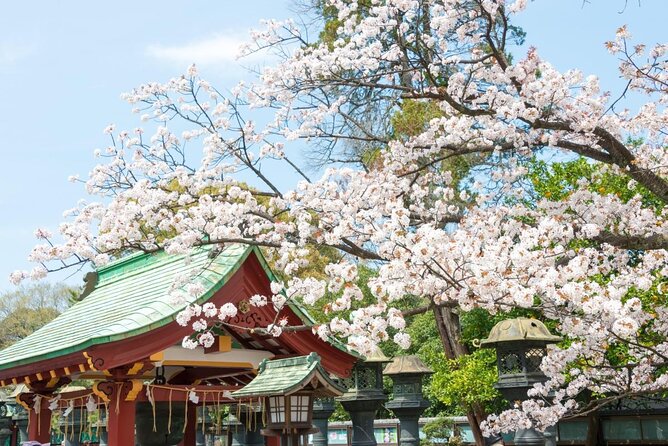
After the market and train-track areas, Ueno Park changes the pace. This is a spacious public park in Taito City, known especially for cherry blossoms and spring hanami gatherings.
The park gives the tour room to breathe and provides a setting for the guide to discuss Ueno beyond food. Depending on the season and the day’s route, you may see a quieter side of the district than the market provides.
You will still be walking, so comfortable shoes matter. The total duration is about three and a half hours, and the route includes several stops rather than one seated meal. If you have mobility concerns, ask for more information before booking, since the tour description specifically warns that it involves a fair amount of walking.
The park also helps you understand why Ueno appeals to different kinds of visitors. It is not just a shopping district or dining neighborhood. It combines open public space with cultural landmarks and transport connections.
A 1627 Shinto shrine
One stop is a Shinto shrine built and dedicated in 1627 to Tokugawa Ieyasu, founder of the Tokugawa Shogunate. That detail gives the food walk a clear historical anchor.
You do not need to be an expert in Japanese history to appreciate the stop. The guide can explain the basic customs and the role of a shrine in Japanese religious life. You may also learn how to behave respectfully in the space, which is useful if this is your first visit to Japan.
The shrine visit is valuable because it connects the district’s present-day shops and restaurants with the political and religious traditions that shaped Tokyo. It also breaks up the food stops with a place intended for reflection and prayer.
Keep in mind that this remains a food tour, not a dedicated history tour. The amount of explanation will depend on the guide, the group, and the time available. The strongest guide experiences described by the operator included area history alongside food explanations, so guide quality is an important part of what you are buying.
A Buddhist site with a quieter mood
The itinerary also includes a storied Buddhist center used for worship and prayer, with tranquil grounds. This is another useful change of mood after the noise of the market and the city streets.
The contrast between Shinto and Buddhist sites makes the cultural side of the tour more complete. You are not just checking off buildings. You are seeing two major religious traditions represented within the same compact part of Tokyo.
As with the shrine, dress and behavior should be respectful. The guide can help you understand what is appropriate. The stop is likely to appeal most to people who enjoy linking meals with place and custom rather than rushing from one snack to the next.
How much food will you actually eat?
A lot. The tour includes more than 10 tastings, and the list covers savory dishes, sweets, fruit, tea, water, and beer. A past route example included sushi, gyoza, croquette, yakitori, and sukiyaki, though the menu is not guaranteed to repeat exactly.
I would skip breakfast or keep it very light. Several dishes arrive over the course of the walk, and the portions can become substantial by the third or fourth stop. This is not the best choice for someone who wants only a single snack and a coffee.
The meal also works well for families. Children aged 8, 9, and 10 were reported to enjoy the simple format, and the variety gives younger eaters several chances to find something appealing. Still, picky eaters may find the changing menu less comfortable than a restaurant where they can choose every dish.
Vegetarians and people with allergies should contact the operator before the tour. The menu is not presented as vegetarian, vegan, gluten-free, or allergy-free, and last-minute changes may not be possible.
The guide can make or break the experience
The guide is the tour’s human center. You are not simply buying food. You are paying for someone to lead you through Ueno, explain what you are eating, manage communication, and point out places you may not find on your own.
Several named guides, including Harumi, Natsumi, Yumi, and Mari, received praise for being friendly, upbeat, patient, and helpful with restaurant suggestions. Yumi was also praised for explaining the history of Ueno and Tokyo, while Mari was noted for combining food knowledge with local history.
That kind of help matters most in small restaurants and market settings. You can ask questions, learn basic customs, and get recommendations for later meals. If your group is small, conversation with the guide should be easier. The maximum group size is 15, so the experience may feel more social and less personal when fully booked.
There is one important caution. Guide quality can vary, and one unhappy customer felt the tour did not explain enough about the food, its ingredients, or Japanese culture. That criticism points to the central risk of any guided experience. The route and menu have value, but the guide determines how much meaning you get from them.
Is $142 a fair price?
At $142 per person, this is not a bargain food crawl. You can certainly eat Japanese classics for less by ordering directly at local restaurants and food stalls.
The price makes more sense if you value convenience and context. You receive 10 or more tastings, a local English-speaking guide, help across the language barrier, a planned route, tea, beer, water, and a secret dish. You also spend time in several parts of Ueno instead of staying at one venue.
I would compare it to the cost of three things: the food itself, the time spent researching and choosing stops, and the confidence that comes with having someone guide you. If you are comfortable ordering on your own and enjoy finding restaurants through trial and error, the price may feel high. If this is your first day in Tokyo and you want a quick introduction to Japanese food and Ueno, it can be a useful splurge.
The experience receives a 4.9 rating from 303 reviews, with 99 percent recommending it. Those figures suggest strong consistency, but they do not remove the need to consider your own eating habits, budget, and interest in guided sightseeing.
Timing, meeting point, and cancellation terms
The tour lasts about three hours and 30 minutes. It starts and ends at Ueno Station, at 7 Chome-1 Ueno, Taito City, Tokyo 110-0005. Hotel pickup and drop-off are not included, so you need to reach the station yourself.
Confirmation is sent within 48 hours of booking, subject to availability. The tour is near public transportation, and most people can participate, but you should plan for a fair amount of walking and wear comfortable shoes.
Free cancellation is available up to 24 hours before the start time for a full refund. Cancellations or changes made within 24 hours are not refunded or accepted. The tour also requires good weather and a minimum number of participants. If poor weather or low enrollment causes cancellation, you are offered another date or a full refund.
Who should book this Ueno food tour?
I would choose this tour if you are visiting Tokyo for the first time, want to try several Japanese classics in one sitting, or feel unsure about ordering in smaller local places. It is also a good fit if you have limited time and want food plus a compact cultural walk.
Families can benefit from the easy structure and broad menu. Couples and solo visitors may enjoy the social side, especially if the group is small. The tour also suits anyone who wants restaurant suggestions for the rest of a Japan trip.
I would hesitate if you have a strict diet, dislike walking, prefer large restaurant portions chosen at your own pace, or judge value mainly by the cheapest price per dish. You should also contact the operator before booking if you need dietary accommodation.
Should you book it?
Book this Ueno tour if you want an efficient introduction to Japanese food and the district’s markets, public spaces, shrine, and Buddhist site. The strongest reason to go is not the sushi or matcha ice cream alone. It is the combination of many small tastings with a guide who can help you understand where you are and what you are eating.
Skip it if you are already confident navigating Tokyo’s food scene and would rather spend $142 on several independent meals. For everyone else, especially first-time visitors with only a few days in the city, it offers a generous amount of food and a practical start in Ueno. Just arrive hungry, wear good shoes, and give the guide advance notice about dietary needs.
FAQ
How long does the Tokyo Ueno food tour last?
The experience lasts approximately 3 hours and 30 minutes.
Where does the tour start?
It starts at Ueno Station, located at 7 Chome-1 Ueno, Taito City, Tokyo 110-0005, Japan.
Where does the tour end?
The tour ends back at the meeting point at Ueno Station.
How many food tastings are included?
The tour includes more than 10 tastings. The menu can include sushi, gyoza, yakitori, seasonal fruit, matcha ice cream, tea, beer, and a secret dish.
Are drinks included?
Yes. The inclusions list one draft beer, two different types of tea, and water.
Is hotel pickup included?
No. Hotel pickup and drop-off are not included.
How many people can join the tour?
The maximum group size is 15 travelers. The experience is also described as a private food tour, so you should confirm the exact arrangement when booking.
Can dietary requirements be accommodated?
You should contact the operator in advance with any dietary requirements so it can try to accommodate them. The menu and stops may change according to availability.
Can I cancel for a full refund?
Yes. You can cancel at least 24 hours before the local start time for a full refund. Cancellations made less than 24 hours before the start time are not refunded.
Just added in Tokyo
- A One-of-a-Kind Sushi Experience in a Special Place of Japan★ 5.0 · 15 reviews
- Tokyo Cute Bento Cooking Class – Make a Kawaii Character Lunchbox★ 5.0 · 126 reviews
- Japanese Home Cooking Class & Walk in Todoroki Temple Tokyo★ 5.0 · 88 reviews
- Japan Tokyo Tower Observatory Deck E-Ticket★ 4.0 · 34 reviews
- Catch a Baseball Game in Tokyo with a Local – Tickets Included★ 5.0 · 24 reviews
- Tokyo Private Day Tour by Car with English speaking Driver Guide★ 4.0 · 29 reviews
- Japan Classic 10 Day – One Life Adventures★ 5.0 · 129 reviews
- JDM Experience with Fast&Furious RX-7 (English speaking Driver)★ 5.0 · 57 reviews
Food Tours, compared.
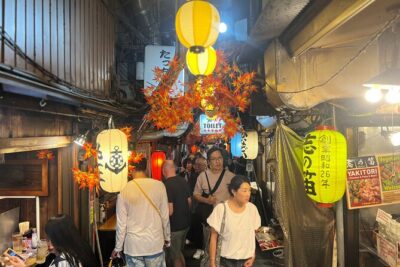
Shinjuku Food Tour (13 Dishes at 4 Local Eateries)
Read our review →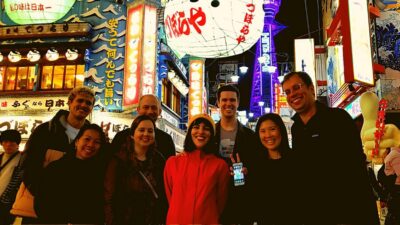
Shinsekai Food Tour with 13-15 Dishes at 5 Eateries
Read our review →
Osaka Food Tour: 13 Dishes at 5 Local Eateries
Read our review →
Shinjuku Food Tour (15 Dishes and 4 Eateries)
Read our review →
Best of Shinjuku: Izakaya Food Tour (4 Stops, 14+ Tastings)
Read our review →
Kyoto Night Foodie Tour in Gion (9+ dishes + 6 Sake tastings)
Read our review →
Hungry Osaka Street Food Tour:15 Tastings & 3 Drinks with a Local
Read our review →
Tokyo Night Foodie Tour in Shinjuku – Seasonal Sushi, Wagyu Beef
Read our review →Browse the lists this tour appears in