
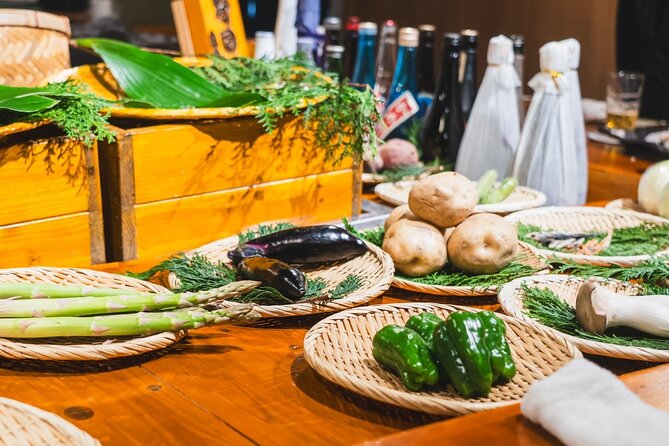
Reviewed · BAR HOPPING AND IZAKAYA TOURS
Tokyo Ginza Authentic Food Tour (Izakaya Hopping by local guide)
Ginza after dark tastes better. This small-group food walk leads you into three local-style eateries for fresh seafood, Japanese Wagyu, Kyoto-style home cooking, and four drinks, including sake. I like the way it mixes food with neighborhood orientation, and I especially like the tiny izakaya stops that would be difficult to find without a guide.
The maximum group size is six, so you can ask questions without shouting across a crowded table. The main drawback is the price: at $175 per person, this is not a cheap dinner. You should also be comfortable with a 5 p.m. start, several food stops, and the possibility that dietary substitutions may be limited.
In This Review
- What Makes This Ginza Food Tour Worth Noticing
- Starting Near Yurakucho at 5 p.m.
- Fresh Fish and Sake at the First Izakaya
- A Ten-Minute Ginza Photo Break
- Wagyu Barbecue in Central Ginza
- Obanzai Along Ginza Corridor Street
- The Small Alley Under the Train Tracks
- How Ryo Shapes the Evening
- Is $175 a Fair Price?
- Group Size, Timing, and Dietary Notes
- Who Will Enjoy This Most?
- My Verdict on This Ginza Izakaya Route
- FAQ
- How long does the Tokyo Ginza food tour last?
- What time does the tour begin?
- Where does the tour meet?
- Where does the tour finish?
- How many people can join the tour?
- What food and drinks are included?
- Can dietary restrictions be accommodated?
What Makes This Ginza Food Tour Worth Noticing
- Three different dining styles: You move from Tsukiji seafood and sake to Wagyu barbecue, then to Kyoto-style obanzai home cooking.
- A maximum of six people: The small group gives you more time with the guide and makes narrow local eateries easier to manage.
- Four drinks are included: The tasting portion includes sake and other drinks, not just food samples.
- Ryo brings local context: His personal stories and explanations about Tokyo food culture are a major part of the evening.
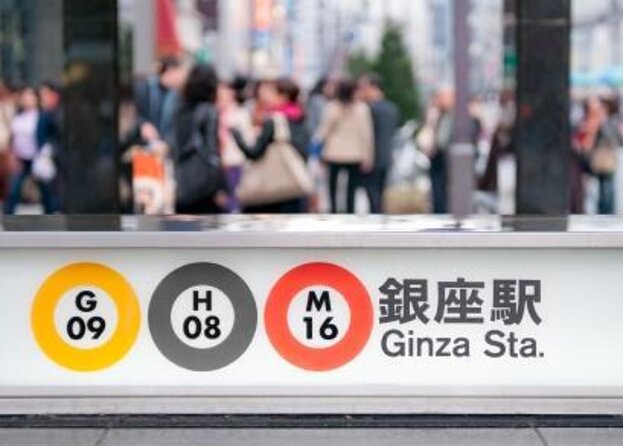
- The route finishes near Ginza Station areas: Your guide can help point you toward a subway station or nearby hotel after the final restaurant.
- You get photographs as well as dinner: The local foodie guide also serves as a photographer during the tour.
Starting Near Yurakucho at 5 p.m.
The meeting point is the 7-Eleven Yūrakuchō Ekimae, at 2-chōme 8 in Yurakucho. The tour begins at 5 p.m., a useful time for seeing Ginza shift from daytime shopping district to after-work dining zone.
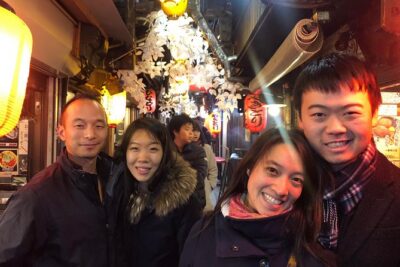
That timing matters. Izakayas are closely tied to Japanese workday culture, and this tour is built around the way local people eat and drink after work. You are not simply being shown famous restaurants. You are being taken into the kind of compact places where the menu may change according to what the owner found that day.
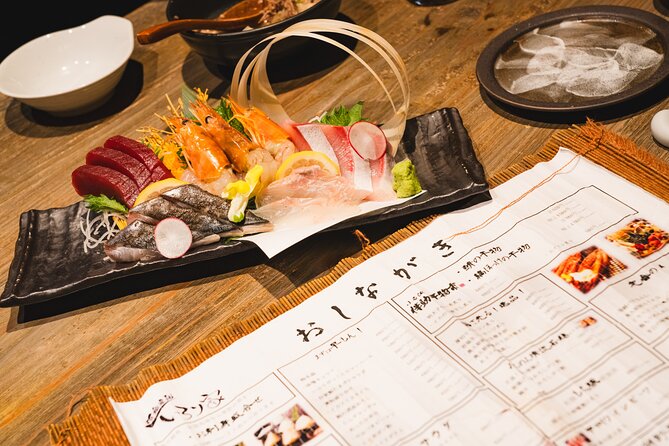
The first stop lasts about an hour and focuses on fresh fish from Tsukiji Market and high-quality sake from different parts of Japan. The exact menu changes, which is a plus if you like food that follows the market rather than a fixed tourist script. It also means you should not expect to know every dish in advance.
I like this opening stop because seafood and sake make a good introduction to Japanese dining. The guide can explain what is on the table while you taste it, rather than leaving you to decode an unfamiliar menu on your own. The food portion is included, as are the planned drinks, but extra orders cost more.
More Bar Hopping and Izakaya Tours in Tokyo
- Tokyo Bar Hopping Tour in Shinjuku (All-You-Can-Drink + Dinner)
★ 5.0 · 3,587 reviews - Best of Shinjuku: Izakaya Food Tour (4 Stops, 14+ Tastings)
★ 5.0 · 1,863 reviews - Tokyo: Shinjuku Local Bar and Izakaya Guided Walking Tour
★ 4.9 · 1,794 reviews
Fresh Fish and Sake at the First Izakaya
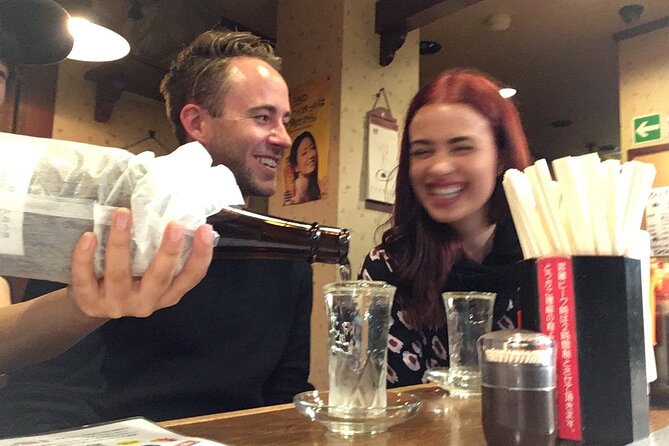
The first restaurant is described as a seafood-focused izakaya supplied with fish from Tsukiji Market. Its menu changes daily depending on what the owner obtains, so this part of the experience has a sense of chance that a standard restaurant reservation does not.
You may find that the appeal is less about one famous dish and more about the range of small plates. Across the full evening, the tour includes eight to ten dishes. The first stop helps set up that variety, with seafood paired against Japanese sake.
This is also where a guide earns his keep. Ryo can explain the role of izakayas in Japanese food culture and help you understand how the meal is meant to unfold. Several people who took the tour found his personal stories and local information as valuable as the food itself.
There is one practical point to keep in mind: a changing menu can be harder to manage for strict eaters. Vegetarian, vegan, and gluten-free adjustments may be requested in advance, but the operator cannot promise an allergy-free meal. Some restaurants may not have a workable substitute, though the guide will try to make up for it at another stop.
A Ten-Minute Ginza Photo Break
Between restaurants, the route pauses at Ginza Mitsukoshi for photographs. You get a view of the main Ginza crossing from behind the Seiko clock tower, one of the district’s most recognizable city scenes.
This stop lasts only about ten minutes, so think of it as a quick orientation break rather than a sightseeing visit. It gives you a chance to take pictures, check your bearings, and see the polished Ginza shopping streets before returning to the food route.
There is no admission charge listed for the stop, but it is not a separate attraction with an included ticket. The value is in the location and the brief pause between meals.
Wagyu Barbecue in Central Ginza
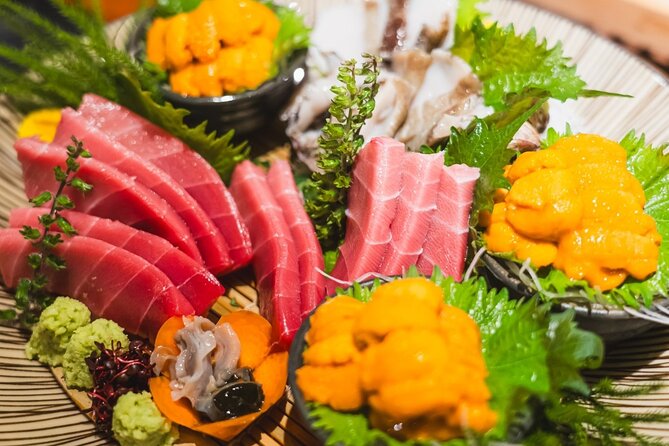
The second restaurant focuses on Japanese Wagyu barbecue. The planned tasting includes Wagyu tongue, Wagyu beef loin, and a fresh lemon cocktail. This is a clear change from the opening seafood stop, and it gives the meal a stronger, richer middle course.
I appreciate the choice of barbecue rather than serving Wagyu only as a steak. The format lets you experience different cuts and textures, while the smaller portions help keep the evening from becoming one heavy plate of beef. The tour description also notes that Wagyu can feel greasy when eaten as a steak, while this approach is intended to make it easier to enjoy.
Still, this may be the most filling part of the night. If you are not a large eater, pace yourself at the first restaurant. You have another full stop to come, and the total food count can reach ten dishes.
The lemon cocktail provides some contrast to the beef, but the included drinks are part of a planned tasting rather than an unlimited bar tab. Additional drinks and food are not included. If you want to keep the final bill predictable, stick to the included selections.
More Food Tours in Tokyo
- Tokyo: Shinjuku Food Tour (13 Dishes at 4 Local Eateries)
★ 5.0 · 6,603 reviews - Tokyo: Shinjuku Food Tour (15 Dishes and 4 Eateries)
★ 4.9 · 2,033 reviews - Tokyo Night Foodie Tour in Shinjuku – Seasonal Sushi, Wagyu Beef
★ 5.0 · 1,161 reviews - Eat and Drink Like a Local: Tokyo Ueno Food Tour-Taverns&Ramen
★ 5.0 · 957 reviews
Obanzai Along Ginza Corridor Street
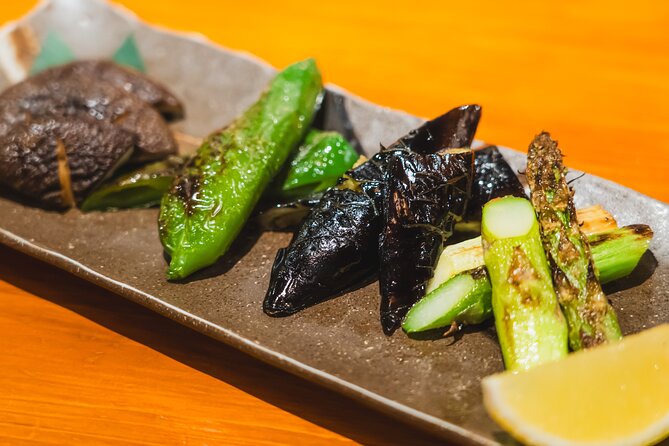
The last main restaurant is on Ginza Corridor Street and serves obanzai. This is a Kyoto-style approach to everyday home cooking, built around simple seasoning and side dishes that make use of the natural taste of the ingredients.
After seafood and Wagyu, obanzai gives the evening a welcome change of pace. It is less about luxury ingredients and more about the sort of food that fits into ordinary Japanese meals. That contrast is one of the strongest features of the route: you are not eating the same type of dish three times in a row.
The stop lasts about an hour. It is also the official end point, at Ginza Karin, in the Soire de Ginza Yayoi Building on Ginza 7-chome. Your guide can help you find a subway station or give directions toward a nearby hotel.
The final restaurant is useful for anyone who feels unsure about navigating Ginza at night. You are not dropped at a random street corner after dinner. You finish at a known restaurant, with help available before you set off on your own.
The Small Alley Under the Train Tracks
Before the evening is fully over, the route includes a stop at a very small izakaya alley beneath the train tracks. These bars are described as operating around the clock, and you may stay for extra time after the formal tour ends.
This is an optional-feeling extension of the evening rather than another major tasting course. It is valuable because it shows a rougher, more intimate side of Tokyo dining than the polished Ginza department stores suggest.
You should clarify with the guide how long the planned visit lasts and which drinks are included before ordering anything extra. The tour includes four drinks overall, but additional beverages are your responsibility.
For me, this final alley stop is the kind of detail that gives the tour its personality. The food stops provide the meal, while the under-track izakaya offers a glimpse of the city’s after-work drinking culture. It is also the part most likely to appeal to someone who wants local atmosphere instead of another famous restaurant.
How Ryo Shapes the Evening
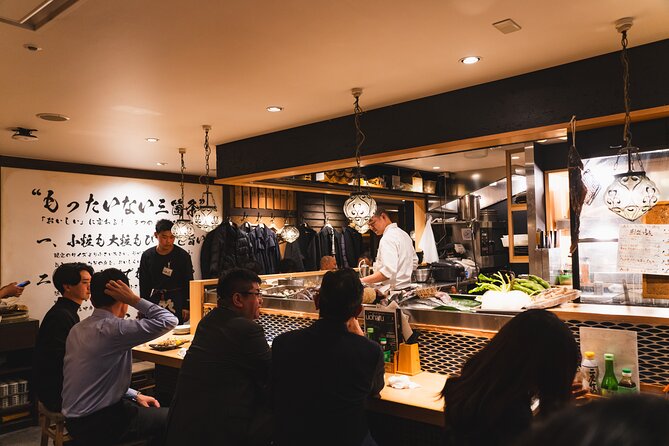
A food tour can be reduced to a series of reservations. This one depends heavily on the guide. Ryo is repeatedly praised for being kind, trustworthy, and generous with local information, and the personal connection appears to be a central part of the experience.
He is also described as a photographer, so you do not have to choose between taking pictures and being in them. In a small group, there should be more room for questions about ingredients, eating customs, sake, and the role of izakayas in Tokyo life.
The group limit of six is important here. You are more likely to hear explanations clearly, and the guide can respond to individual interests. A larger group would be harder to fit into tiny food businesses and would make conversation less natural.
The experience seems best for people who want interpretation along with dinner. If you only want to eat a large meal at the lowest possible cost, you can spend less by choosing your own Ginza restaurants. You are paying partly for access, navigation, explanations, photography, and a prepared progression through different food styles.
Is $175 a Fair Price?
At $175 per person, the tour costs more than an ordinary evening meal in Tokyo. The price includes a three to four-hour guided experience, eight to ten dishes, four drinks, three food stops, and local navigation.
The value improves if you are new to Tokyo or uncomfortable ordering in small Japanese eateries. The guide handles the route and restaurant sequence, and you do not need to spend time comparing menus or guessing which places welcome first-time visitors.
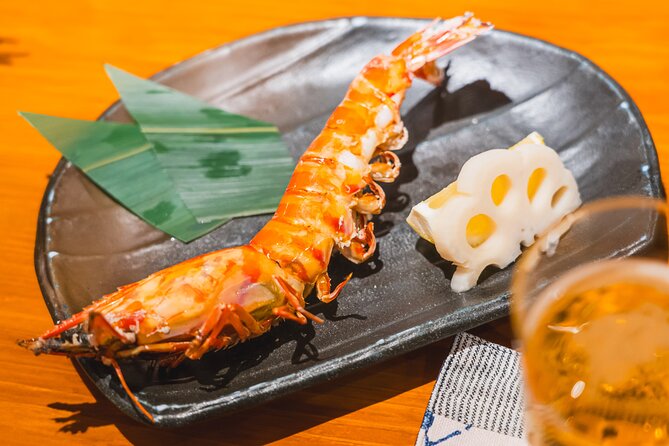
The price also covers variety. Instead of paying for one dinner at one restaurant, you get seafood, sake, Wagyu, a cocktail, obanzai, and a final look at an under-track izakaya area. That does not guarantee that every dish will suit your taste, but it reduces the risk of spending an entire evening on one style of food.
I would consider the tour good value for a first visit, a special evening, or anyone who places a high value on context and small local venues. I would be less likely to recommend it to budget-conscious diners, people who do not drink, or anyone who wants full control over every dish and ingredient.
Group Size, Timing, and Dietary Notes
The tour lasts roughly three to four hours and begins at 5 p.m. You should plan for a full evening rather than a quick tasting. The walking route connects Yurakucho and Ginza, though the exact amount of walking is not specified.
The experience is near public transportation, and most people can participate. You need to be over 21 years old. Hotel pickup and drop-off are not included, so you must reach the Yurakucho meeting point yourself.
Dietary requests such as vegetarian, vegan, and gluten-free needs can be discussed if you give advance notice when booking. That is helpful, but it is not an allergy-free guarantee. The food is prepared in kitchens operated by the individual restaurants, and some stops may not offer a suitable replacement.
If you have a serious allergy, ask detailed questions before paying. The operator says it will try to compensate at other stops, but you should not assume that every tasting can be changed.
Who Will Enjoy This Most?
I would recommend this tour to you if you enjoy trying several dishes instead of ordering one main course. It is also a good fit if you want a local guide to explain how izakayas work and to lead you into places you might pass without noticing.
It suits couples, friends, and solo visitors who like conversation. The six-person limit makes it easier for a solo participant to join without feeling lost in a large group.
It may not suit families with younger children because the tour requires participants to be over 21. It is also not ideal for a strict nondrinker, since sake and other drinks are built into the included tastings.
You should also think about appetite. Eight to ten dishes over three restaurants is a substantial evening, especially with Wagyu in the middle. Arrive ready to eat, but do not fill up before the meeting point.
My Verdict on This Ginza Izakaya Route
I like this tour because it treats Ginza as a place where people eat, not just a district of department stores and luxury shops. The seafood opening, Wagyu barbecue, obanzai finale, and under-track izakaya stop create a clear progression through different sides of Japanese dining.
The strongest reason to book is Ryo’s role. His stories, food explanations, kindness, and photography add something you cannot get from walking into three restaurants alone. The strongest reason to hesitate is the cost, especially if you are mainly paying for food rather than guidance.
Book it if you want a carefully arranged introduction to Tokyo’s izakaya culture, prefer a small group, and are happy to spend $175 for food, drinks, local insight, and navigation. Skip it if you need a low-cost dinner, have strict allergy concerns, or prefer to choose every restaurant yourself.
FAQ
How long does the Tokyo Ginza food tour last?
The tour lasts approximately three to four hours.
What time does the tour begin?
The tour starts at 5 p.m.
Where does the tour meet?
The meeting point is the 7-Eleven Yūrakuchō Ekimae in Yurakucho, Tokyo.
Where does the tour finish?
The tour finishes at Ginza Karin in Ginza. The guide can help you find a subway station or give directions toward a nearby hotel.
How many people can join the tour?
The tour has a maximum of six participants.
What food and drinks are included?
The experience includes food at three stops, with approximately eight to ten dishes and four drinks. The food includes fresh seafood, Wagyu, and obanzai-style dishes. Sake is among the drinks offered.
Can dietary restrictions be accommodated?
Vegetarian, vegan, gluten-free, and some other dietary requests may be discussed with advance notice. However, the operator cannot guarantee an allergy-free meal, and some restaurants may not have suitable substitutions.
Just added in Tokyo
- Manga Lesson with a Professional Japanese Manga Artist in Nakano★ 5.0 · 77 reviews
- Making a bento box with cute character look in Japan★ 5.0 · 15 reviews
- Tokyo/Ikebukuro Manga drawing workshop by pro-Manga artists★ 5.0 · 65 reviews
- Luxury Tokyo Sake, Cocktail, Whisky and Pairing Tour★ 5.0 · 18 reviews
- Tokyo Ueno Food & Nature & Localtown Tour: 10Dishes+ Drinks★ 5.0 · 34 reviews
- Make Your Own Bonsai with a Professional Bonsai Artist in Tokyo★ 4.5 · 18 reviews
- Make Traditional Nerikiri Sweets & Matcha experience in Shibuya★ 5.0 · 130 reviews
- Daikoku Parking Tokyo Drift & APIT Car Meet JDM Culture Tour★ 5.0 · 79 reviews
Bar Hopping and Izakaya Tours, compared.
Tokyo Bar Hopping Tour in Shinjuku (All-You-Can-Drink + Dinner)
Read our review →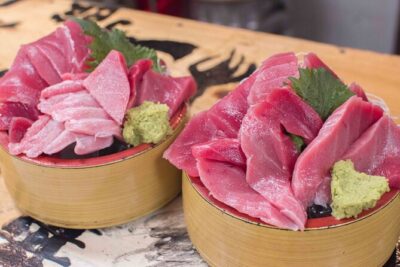
Best of Shinjuku: Izakaya Food Tour (4 Stops, 14+ Tastings)
Read our review →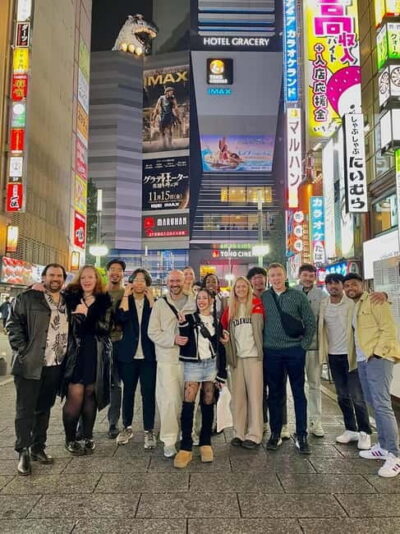
Shinjuku Local Bar and Izakaya Guided Walking Tour
Read our review →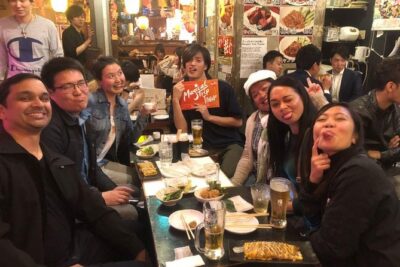
Shibuya Meltdown Nightlife Tour: All-You-Can-Drink Bar Hopping
Read our review →
Osaka Bar Hopping Night Walking Tour in Namba (3 bars, 6 tastes)
Read our review →
Browse the lists this tour appears in