
Reviewed · CITY TOURS AND SIGHTSEEING
Tokyo: Mount Fuji Must-see Attractions One Day Sightseeing Tour
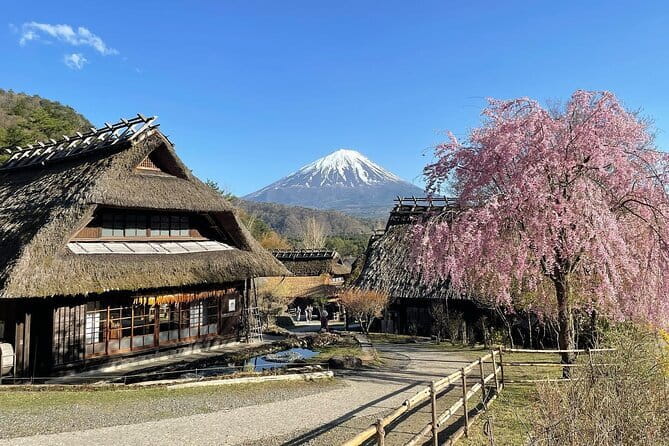
Mount Fuji rewards a flexible plan. This $60 day tour gives you a simple way to leave Tokyo behind and see several famous sights around the mountain without working out trains, buses, or connections. I like the wide mix of stops, from a restored thatched-roof village and clear spring ponds to shrine grounds and classic Fuji viewpoints. I also like that live guides such as Kevin, Yulina, Andrew, Maddy, and Mrs. Yuan add local history, Japanese words, and practical tips instead of simply pointing at scenery.
The main catch is time. Ten hours sounds generous, but the route covers a broad area and traffic can affect the day. Some stops receive only 10 to 25 minutes, while the pagoda viewpoint comes late, when clouds may have rolled in. Fuji visibility is never guaranteed, so you should book this for a full day in the Fuji region, not only for one perfect photograph.
In This Review
- Key points to know before booking
- Why this day trip works from Tokyo
- Saiko Iyashi no Sato Nemba and the thatched-roof village
- Lake Kawaguchiko: a quick look at the Five Lakes region
- Oishi Park and the Kawaguchiko Natural Living Center
- Arakurayama Sengen Park and Chureito Pagoda
- Arakura Fuji Sengen Shrine and the mountain’s sacred side
- Oshino Hakkai and the eight clear springs
- Guides make the difference
- Group size, comfort, and the real pace
- Weather, crowds, and how to set expectations
- Who should book this tour?
- Should you book the Mount Fuji day tour?
- FAQ
- How long does the Mount Fuji tour last?
- How much does the tour cost?
- Is transportation from Tokyo included?
- Is lunch included?
- Are admission fees included?
- How many people can join the tour?
- Can I expect to see Mount Fuji?
- Which stop includes the Chureito Pagoda view?
- Can I bring a stroller or large luggage?
- What is the cancellation policy?
Key points to know before booking
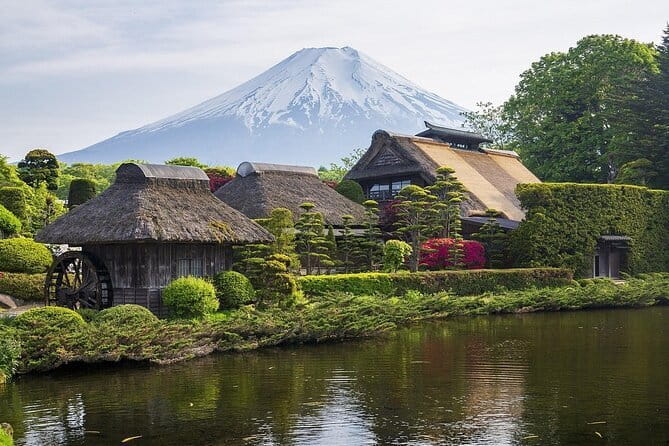
- Seven different stops cover village life, lakes, flowers, shrines, a pagoda, and spring water.
- Round-trip coach transport from Tokyo removes the stress of arranging several public transport connections.
- Chureito Pagoda is not the first stop, so the famous Fuji view may come after the weather has changed.
- The $60 price is strong value if you want many sights in one day and do not need lunch included.
- Guides are a major strength, with praise for clear timing instructions, historical explanations, and friendly energy.
- A maximum of 45 people means this is a shared coach tour, not a quiet private outing.
Why this day trip works from Tokyo
Mount Fuji is close enough to tempt you into a self-guided day trip, yet the surrounding sights are spread across Yamanashi Prefecture. Getting to one lake is manageable. Reaching a village, flower park, pagoda, shrine, and spring village in one day takes more planning.
That is where this tour earns its keep. You board an air-conditioned vehicle in Tokyo and let the operator manage the route. You still have to follow a group schedule, but you avoid the usual train changes, bus waits, and uncertainty over which Fuji viewpoint is operating that day.
The tour lasts about 10 hours. That makes it a long outing, but the distance and number of stops explain the length. The day is built around sightseeing rather than a leisurely lunch or a single extended visit.
With a price of $60 per person, the value is best for someone who wants variety. Admission fees and taxes are included, and you receive transport to several locations. Lunch and personal expenses are not included, so keep money available for food and anything you buy along the way.
More Sightseeing Tours in Tokyo
- Tokyo: Private City Highlights Tour with Local Guide
★ 4.8 · 1,433 reviews - Tokyo Private Sightseeing Tour by Car- English speaking chauffeur
★ 5.0 · 1,004 reviews - Tokyo: 3-Hour Bike or E-Bike City Highlights Tour
★ 4.8 · 435 reviews
Saiko Iyashi no Sato Nemba and the thatched-roof village
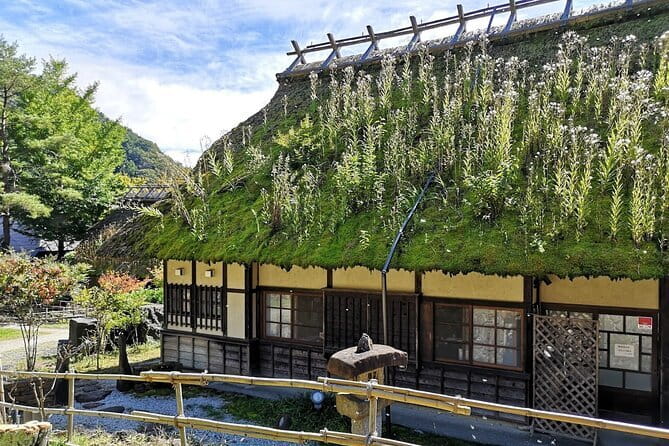
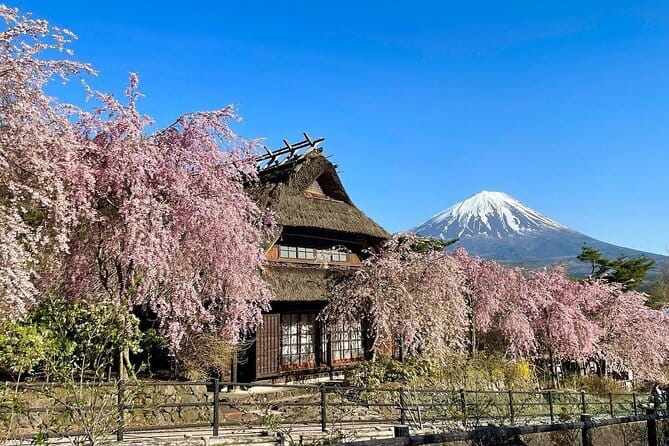
The first substantial stop is Saiko Iyashi no Sato Nemba, where you have about one hour and admission is included. This traditional village in Fujikawaguchiko Town is known for its thatched-roof houses and views toward Mount Fuji.
The village was destroyed by a landslide during a typhoon in 1966 and later restored as a cultural site. That gives the stop more weight than a quick photo break. You are seeing a carefully rebuilt version of rural Japanese life, with architecture and mountain scenery working together.
I would use this hour to walk beyond the first few buildings. The village is one of the places where the tour feels more distinctive than a simple Fuji lookout. If Fuji is hidden by cloud, the houses and surrounding setting still give you something to see.
Several comments about the day suggest that this stop can feel too short, especially for anyone who wants to explore slowly. If you enjoy traditional architecture or photography, one hour will pass quickly. Keep an eye on the meeting time, since the coach cannot wait for a long village stroll.
Lake Kawaguchiko: a quick look at the Five Lakes region
Lake Kawaguchiko receives about 20 minutes. Admission is free, and the lake is famous for its changing shoreline views toward Mount Fuji.
The short visit is useful for getting a sense of the area, but it is not enough for a relaxed lakeside outing. You will have time for photographs and a brief look around, not a long walk or a café stop. The lake can also look very different depending on cloud, light, and wind.
This is one of the stops where the schedule may feel uneven. Some people find 20 minutes perfectly adequate for a viewpoint, while others would prefer that time added to the village or pagoda. I would treat Lake Kawaguchiko as a scenic pause between longer visits, not as the heart of the tour.
Oishi Park and the Kawaguchiko Natural Living Center
Oishi Park offers about 25 minutes. It is known for seasonal flower displays, with the scenery changing through the year. Cherry blossoms, lavender, autumn red leaves, kochia, snow, and reeds each give the park a different look.
The appeal here depends heavily on the season. At the right time, the flowers add color in front of Fuji. If the mountain is covered, the park still provides a pleasant natural setting, but the famous combination of flowers and peak may not appear.
The next stop, the Kawaguchiko Natural Living Center, lasts only 10 minutes. The useful feature is upstairs, where you can frame a red torii gate with Mount Fuji in the distance. It is a very specific photograph, so listen carefully to your guide before wandering off.
Ten minutes is enough if the view is clear and you move directly to the second floor. It is not enough for browsing at a slow pace. This is a good example of the tour’s basic style: several carefully chosen photo opportunities, each handled at speed.
A completely different kind of day out:
- Tokyo Disney Resort – Tokyo Disneyland & Tokyo DisneySea Park Tickets
★ 4.8 · 99,488 reviews - SHIBUYA SKY Ticket
★ 4.7 · 46,509 reviews - JR Whole Japan Rail Pass
★ 4.8 · 29,150 reviews - Mt Fuji and Hakone 1-Day Bus Tour Return by Bullet Train
★ 5.0 · 26,383 reviews
Arakurayama Sengen Park and Chureito Pagoda
The one-hour stop at Arakurayama Sengen Park is likely to be the main reason many people choose this excursion. The park in Fujiyoshida is famous for the view of Chureito Pagoda with Mount Fuji behind it.
The pagoda is a five-storied structure, and the classic composition is instantly recognizable. Reaching the viewpoint involves a climb, so the hour needs to cover both the walk and the time at the top. Allow yourself enough time to return to the meeting point. A beautiful photograph is not worth missing the bus.
This stop also brings the tour’s biggest scheduling risk. The pagoda is visited late in the day, and cloud conditions can worsen as the hours pass. One piece of practical advice is simple: do not book this tour expecting perfect Fuji visibility at the pagoda. Weather around the mountain changes fast, and even a well-run itinerary cannot control it.
Some people would prefer this stop first, when morning conditions may be clearer. The operator has chosen a fixed route, so you do not have that flexibility. Still, the park is worthwhile even without Fuji, thanks to the pagoda, wooded grounds, and elevated viewpoint.
Arakura Fuji Sengen Shrine and the mountain’s sacred side
Arakura Fuji Sengen Shrine receives about 15 minutes. It was built in 705 and has more than 1,300 years of history. The shrine is associated with prayers for well-being and family happiness.
The site also connects to Mount Fuji’s volcanic past. In 807, a major eruption caused widespread fear, and the shrine held a ceremony connected with the crisis. That detail helps explain why Fuji is not merely a scenic peak in Japanese culture. The mountain has long carried religious meaning as well as visual power.
Fifteen minutes is a brief introduction. You can see the grounds and hear the basic story, but you will not have time for a slow visit. This is where the guide matters most. Kevin was praised for adding historical detail, while Yulina was appreciated for explaining Japanese words connected with the places on the route.
Oshino Hakkai and the eight clear springs
The final major stop is Oshino Hakkai, with about one hour and no separate admission charge. The site is known for eight clear springs formed by snowmelt from Mount Fuji. The water is recognized as one of Japan’s 100 Famous Waters, and you can taste the spring water for free.
Oshino Hakkai gives the tour a different ending from the pagoda or lake stops. Instead of another high viewpoint, you get ponds, water, village scenery, and a closer look at how the mountain shapes the surrounding region.
The hour should allow time to see the springs and sample the water. You may also find food and small shopping opportunities, but lunch is not included, so do not assume the tour provides a meal. If you want a proper lunch, plan to use available free time carefully.
This stop can feel busy, particularly when several coaches arrive together. One Spanish-language comment criticized the crowds and felt that the springs received too much time compared with the thatched-roof village and pagoda. I think the stop works well for variety, but visitors who care most about architecture and photography may agree that the hour could be better divided.
Guides make the difference
The strongest part of this experience is the guiding. Kevin is praised for being organized, friendly, and energetic, with clear historical explanations and useful advice for the rest of a Japan trip. Andrew received similar praise for explaining each location in detail and making pickup times easy to follow.
Yulina is noted for teaching Japanese words related to the region. Maddy is described as entertaining and well informed, while Mrs. Yuan is praised for being warm and pleasant. These details matter because the tour includes several short stops. A clear guide helps you understand what to look for before the clock starts ticking.
Do not expect a private walking tour at every location. Guides may explain the stop, give you a meeting point and return time, then let you explore independently. That is useful for people who like freedom, but less suitable if you want constant personal guidance.
Group size, comfort, and the real pace
The maximum group size is 45 people. That is a fairly large shared outing, and it affects the feel of the day. You may wait while people leave the coach or gather at meeting points, and popular sites can feel crowded when multiple buses arrive.
The vehicle is air-conditioned, which matters during a long day. Comfort reports are mixed. Some people found the bus comfortable, while another described an older, less comfortable vehicle without Wi-Fi. Since the exact vehicle can vary, I would bring entertainment, water, and anything you need to stay comfortable during the drive.
The schedule is the bigger issue. Lake Kawaguchiko, Oishi Park, and the Natural Living Center are quick visits. Saiko Iyashi no Sato Nemba, Arakurayama Sengen Park, and Oshino Hakkai receive about an hour each. That is enough for an introduction, but not for unhurried exploration.
If you like seeing many places in one day, the pace keeps the outing lively. If you prefer sitting with a view, browsing village buildings, or taking dozens of photographs, you may feel rushed.
Weather, crowds, and how to set expectations
Mount Fuji is notoriously unpredictable. Several people had enjoyable days despite seeing little or none of the mountain because of low cloud. That is an important warning, not a minor footnote.
The route still has value in poor weather. You have a traditional village, shrine grounds, flowers, spring ponds, and a pagoda to explore. But the tour is clearly more rewarding when the mountain appears, especially at Oishi Park, the Natural Living Center, and Chureito Pagoda.
Crowds are another factor. The popular Fuji sites attract many coaches, and some stops can feel designed around sightseeing traffic rather than quiet local life. If your idea of an authentic day means empty paths and long conversations with residents, this is not the right format.
If your goal is to see the classic Fuji sights efficiently, the crowds are part of the tradeoff. You pay less and see more, but you share the experience with a large group.
Who should book this tour?
I would recommend this tour to you if you are staying in Tokyo and want a straightforward first visit to the Mount Fuji region. It suits people who value transport, variety, and a guide’s explanations more than a slow pace.
It is also a good fit if you want to avoid public transport planning. The route includes places that are awkward to combine independently, and the $60 cost is reasonable for an air-conditioned coach, included fees, and a full day of sightseeing.
You may want another option if you care most about Chureito Pagoda, dislike fixed schedules, or want to avoid busy coach-tour sites. A self-guided outing may give you more time at one or two locations, though it will not offer the same number of stops as easily.
Families and most able-bodied visitors can participate, but tell the operator in advance if you have a stroller or large luggage. Also notify the operator at least one day ahead if you booked separately from relatives or friends and want to ride together.
Should you book the Mount Fuji day tour?
Book it if you want breadth and convenience. For $60, you get a well-packed day covering seven notable places, with transport and admission fees handled for you. The guides appear to be the tour’s best asset, especially when Kevin, Yulina, Andrew, Maddy, or Mrs. Yuan leads the group.
Go in with realistic expectations. You may see only clouds where Fuji should be, the pagoda comes late, lunch is your responsibility, and some stops are short. If you can accept those limits, this is a practical and fairly priced introduction to the Fuji region from Tokyo.
Free cancellation is available up to 24 hours before the start time. After that point, the amount paid is not refunded, and late changes are not accepted.
FAQ
How long does the Mount Fuji tour last?
The tour lasts approximately 10 hours.
How much does the tour cost?
The listed price is $60 per person.
Is transportation from Tokyo included?
Yes. The tour includes round-trip transfers from Tokyo in an air-conditioned vehicle.
Is lunch included?
No. Lunch is not included, and personal expenses are also excluded.
Are admission fees included?
Yes. All fees and taxes are included. Saiko Iyashi no Sato Nemba specifically includes an admission ticket, while the other listed stops have no separate admission charge.
How many people can join the tour?
The maximum group size is 45 travelers.
Can I expect to see Mount Fuji?
Visibility is not guaranteed. Mount Fuji can be hidden by low clouds or poor weather, even when the rest of the day remains scenic.
Which stop includes the Chureito Pagoda view?
The Chureito Pagoda viewpoint is at Arakurayama Sengen Park. The tour allocates about one hour there.
Can I bring a stroller or large luggage?
You should indicate this when booking so the operator can take it into account.
What is the cancellation policy?
You can cancel at least 24 hours before the experience start time for a full refund. Cancellations or changes made less than 24 hours before the start time are not accepted for a refund.
Just added in Tokyo
- Very popular in Harajuku♡Animal petting zoo★ 4.6 · 39 reviews
- Yokohama Port: Private Customizable Tour with Transfer★ 5.0 · 19 reviews
- Wagyu & Sake 8 Course Tasting Dinner in Shinjuku★ 4.9 · 20 reviews
- Warner Bros. Studio Tour Tokyo – The Making of Harry Potter★ 4.8 · 181 reviews
- Yanaka District: Historical Walking Tour in Tokyo’s Old Town★ 4.8 · 117 reviews
- Tokyo: Classic Tsukiji Food Tour★ 4.9 · 78 reviews
- Tokyo: Tsukiji Fish Market Tour with 6 Stops & Seafood Lunch★ 4.5 · 165 reviews
- Tokyo Wagyu & Sake Pairing Tasting Experience with Local Flavors★ 5.0 · 108 reviews
City Tours and Sightseeing, compared.
Private City Highlights Tour with Local Guide
Read our review →
Tokyo Private Sightseeing Tour by Car- English speaking chauffeur
Read our review →
Naha: North Okinawa Sightseeing Tour & Churaumi Aquarium
Read our review →
Private Highlights Tour with Guide and Luxury Vehicle
Read our review →
Custom Hidden Gems & Highlights Tour with Local Guide
Read our review →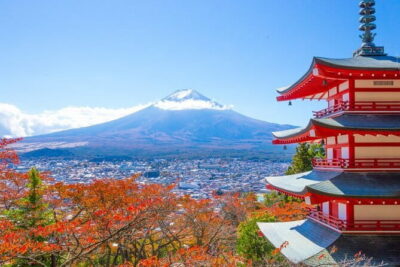
Mount Fuji Full Day Sightseeing Tour from Tokyo
Read our review →Browse the lists this tour appears in