
Reviewed · PRIVATE TOURS IN TOKYO
Tokyo Private Tour: One Day Highlights and Optional Shibuya Sky
Tokyo rewards a good game plan. This seven-hour private tour links Senso-ji, Shibuya Crossing, Meiji Shrine, and Takeshita Street in one busy but useful day. I like the personal guide service and the fact that public transportation is part of the experience, not hidden behind a private bus window. The main drawback is pace: ten stops in seven hours leave little room for lingering, shopping, or a long meal.
I also like the hotel pickup and drop-off within Tokyo’s 23 wards, which removes some early-day confusion. Guides such as Rie, Emiko, Kaori, Eriko, Keita, Takeshi, and Yoko have been praised for flexibility, warm care, and practical help. Still, expect plenty of walking, train changes, and a full day on your feet.
In This Review
- Key points to know before booking
- Tokyo in seven hours: what this tour is really offering
- Starting in Asakusa at the Kengo Kuma information center
- Kaminarimon and Nakamise: the approach to Senso-ji
- Senso-ji and Asakusa Shrine: two faiths close together
- Sumida Park and the Tokyo Skytree view
- Shibuya Sky at 230 meters
- Shibuya Crossing and Hachiko in fifteen minutes
- Meiji Jingu: a calm change beside Harajuku
- Takeshita Street and the final burst of Harajuku
- Public transportation makes this more useful
- What $178.38 per person buys you
- Who will get the most from this day
- Practical details that matter on the day
- Should you book this Tokyo tour?
- FAQ
- How long does the Tokyo private tour last?
- What time does the tour start?
- Is hotel pickup available?
- Is this a private tour?
- Is an English-speaking guide included?
- Does the tour use public transportation?
- Is admission to Shibuya Sky included?
- Are food and drinks included?
- What is the cancellation policy?
Key points to know before booking
- A private guide keeps the day flexible: Your group alone participates, with one to ten people per booking.
- Public transportation is part of the lesson: Your guide handles the trains and helps you understand Tokyo’s system.
- The route covers old and new Tokyo: You move from Asakusa’s temple district to Shibuya’s glass towers and Harajuku fashion streets.
- Shibuya Sky reaches about 230 meters: The outdoor Sky Edge offers the big-city view, but high winds can close the open-air area.
- The tour is best for first-time visitors: It gives you a practical first look at several major districts in one day.
- The price is $178.38 per person: That can be fair for a private guide, transport, hotel service, and included Shibuya Sky admission, though food is extra.
Tokyo in seven hours: what this tour is really offering
This is not a slow temple walk or a food tour. It is a fast orientation to Tokyo, built around three districts that feel very different: Asakusa, Shibuya, and Harajuku.
You begin at 9:30 a.m., usually with hotel pickup inside Tokyo’s 23 wards. From there, you use public transportation between areas. That matters. Tokyo’s rail system can feel like a maze on a first visit, and a guide who knows the routes can save time while showing you how the city works.
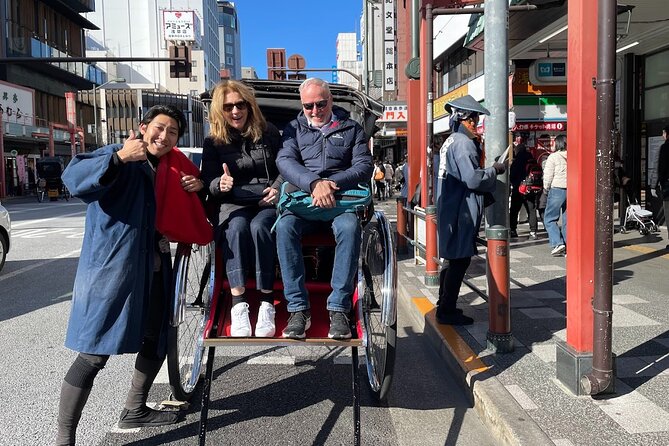
The private format is the strongest reason to choose this experience. A group of one to ten people travels with its own English-speaking guide. Guides have adjusted routes for personal interests, helped with rail pass exchanges, explained train fares, and provided follow-up help after the tour. That kind of practical assistance can be worth more than a standard list of facts.
The tradeoff is simple: this is a lot of Tokyo in one day. The listed stops add up to about three hours of scheduled sightseeing, but trains, walking, hotel transfers, and moving between neighborhoods use the rest. You will see the main sights, but you should not expect a leisurely exploration of every street.
More Private Tours in Tokyo
- Tokyo 6hr Private Tour with Government-Licensed Guide
★ 5.0 · 3,902 reviews - Private Tour to Mt. Fuji and Hakone (Fully Licenced Operator)
★ 5.0 · 1,910 reviews - Tokyo Customized Private Tour (Must See Places in 1 Day)
★ 5.0 · 1,499 reviews
Starting in Asakusa at the Kengo Kuma information center
Your first stop is the Asakusa Culture Tourist Information Center, an eight-story building designed by Japanese architect Kengo Kuma. Admission is free, and the stop lasts about 15 minutes.
This is a smart place to begin because it gives you an introduction to Asakusa before you enter the temple district. The building itself is part of the neighborhood’s modern face, while the sights ahead belong to old Tokyo.
Do not expect a long architectural visit. Fifteen minutes is enough to orient yourself, look around, and perhaps take in the building’s design. The guide’s explanation is likely more valuable here than the stop’s short duration.
Kaminarimon and Nakamise: the approach to Senso-ji
Next comes Kaminarimon, the Thunder Gate, followed by Nakamise Shopping Street. The listed time is 15 minutes, with no separate admission charge.
The gate is one of Asakusa’s defining images. It marks the entrance to Senso-ji and gives the approach a ceremonial feel. Nakamise is the shopping street leading toward the temple, lined with small shops selling traditional goods and snacks.
Here, the short timing is the biggest limitation. You can walk through and get the main impression, but you will not have much time to browse carefully. If you want souvenirs, note what catches your eye and return later on your own.
Your guide can add context that turns a quick passage into a more useful visit. One praised guide, Rie, was specifically appreciated for explaining Japanese customs and traditions as the group moved through the city. That is the kind of interpretation that helps you understand what you are seeing instead of merely photographing it.
Senso-ji and Asakusa Shrine: two faiths close together
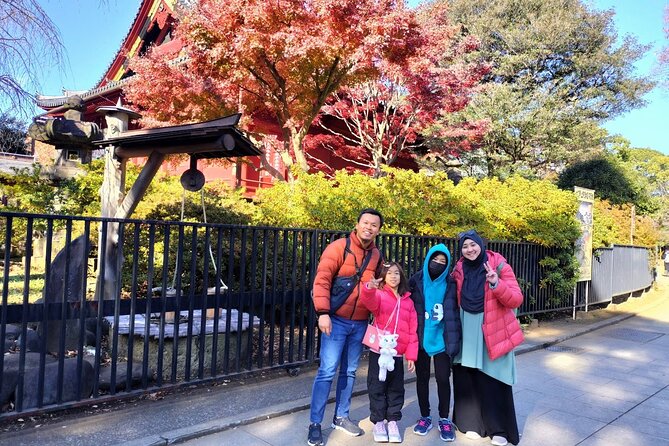
Senso-ji receives about 30 minutes. This Buddhist temple, also called Asakusa Kannon Temple, is one of Tokyo’s most colorful and popular religious sites.
The temple’s legend reaches back to the year 628, when two brothers reportedly found a statue of Kannon in the Sumida River. The details of the story are part of what gives Senso-ji its identity, and your guide can explain how the temple became connected with Asakusa.
Thirty minutes is enough for the main approach and temple grounds, but it is not enough for a quiet, unhurried visit at a busy time. You will need to follow the guide’s timing and keep moving.
Asakusa Shrine is only a short distance away and receives about ten minutes. It belongs to Shinto, Japan’s native religion, and is much smaller than Senso-ji. Seeing both places close together gives you a useful introduction to the difference between Buddhist and Shinto spaces.
The pair works well in a tour because you do not need a long transfer to compare them. Look for the change in atmosphere and the different religious traditions rather than treating the smaller shrine as just another photo stop.
A completely different kind of day out:
- Tokyo Disney Resort – Tokyo Disneyland & Tokyo DisneySea Park Tickets
★ 4.8 · 99,488 reviews - SHIBUYA SKY Ticket
★ 4.7 · 46,509 reviews - JR Whole Japan Rail Pass
★ 4.8 · 29,150 reviews - Mt Fuji and Hakone 1-Day Bus Tour Return by Bullet Train
★ 5.0 · 26,383 reviews
Sumida Park and the Tokyo Skytree view
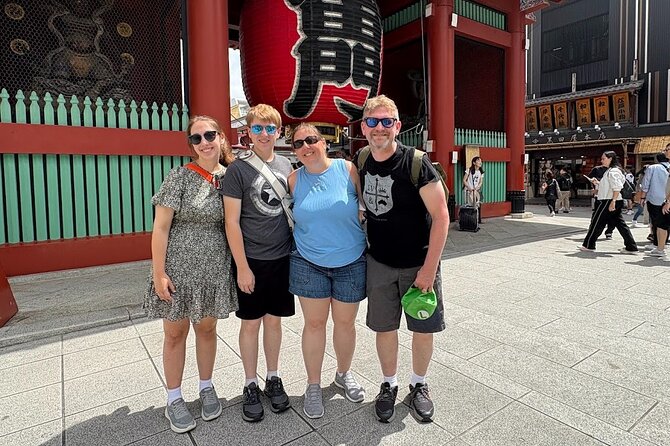
The Asakusa portion ends at Sumida Park, along the Sumida River. The stop lasts about ten minutes and is free.
This is a short pause after the temple complex. The park offers open views toward Tokyo Skytree, with the river adding breathing room to an otherwise tightly packed morning. I like this stop because it breaks up the religious sites and gives you a chance to look across the city.
Ten minutes will not allow a long riverside stroll. Think of it as a viewpoint and a brief rest, not a park visit. If you want more time beside the river, ask your guide if the schedule allows it, but the full route leaves limited flexibility.
Shibuya Sky at 230 meters
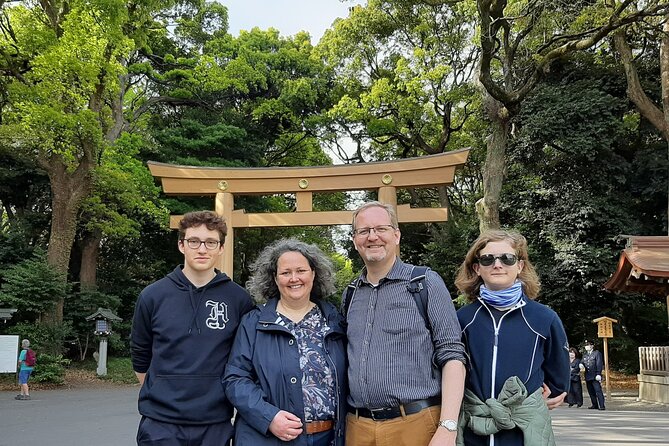
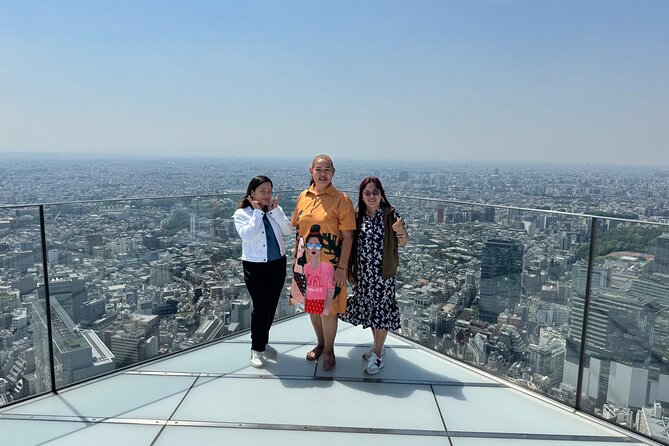
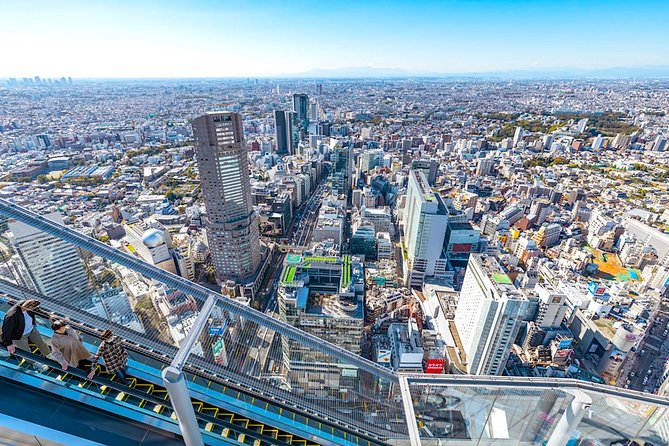
Shibuya Sky is scheduled for about 30 minutes, with admission included in the tour details. The attraction rises approximately 230 meters above the ground and is described as the highest point in the Shibuya district.
The main draw is the open-air Sky Edge, where you can look down over the city. This gives the tour a strong change of scale. In Asakusa, you study gates, temple roofs, and local streets. At Shibuya Sky, Tokyo becomes a vast spread of buildings, roads, and moving crowds.
The title describes Shibuya Sky as optional, while the tour details list its admission ticket as included. Because of that wording, confirm the exact arrangement when booking, especially if the observatory is a deciding factor for you.
There is also a practical concern. One family reached Shibuya Sky, but the outdoor area was closed because of high winds. You may still enter the attraction, but the open-air experience can depend on conditions. The tour cannot control the weather.
Thirty minutes is enough for the main view and photos, but not for a long visit to the building’s other facilities. The observatory works best as a focused highlight rather than an afternoon spent at leisure.
Shibuya Crossing and Hachiko in fifteen minutes
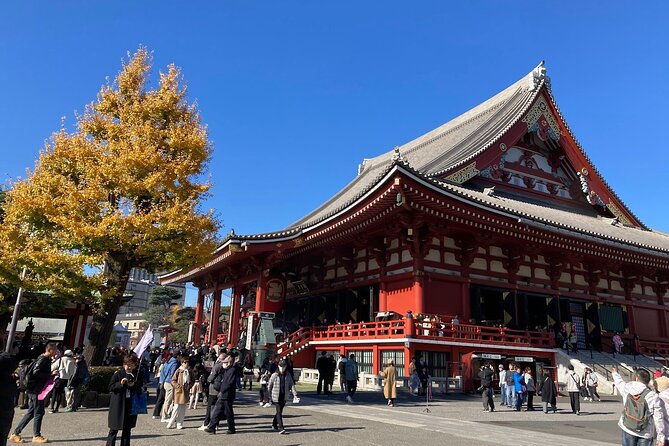
After the high view comes the street-level spectacle. Shibuya Crossing is allotted about 15 minutes, with no admission fee.
The crossing can send thousands of people across at a single green light, and the surrounding station area gives you one of Tokyo’s clearest examples of modern city life. Your guide can help you choose where to stand and explain why the intersection has become such a famous image of Tokyo.
Fifteen minutes is enough to cross once, take pictures, and understand the scene. It is not enough to watch the intersection through several traffic cycles while exploring the surrounding shopping streets. If you want the classic view from above or more time in Shibuya, plan a separate visit.
Hachiko’s bronze statue is nearby and receives about five minutes. The dog is remembered for its loyalty, and the plaza around the statue is a standard meeting place for locals. This is a very short stop, but it fits naturally with the crossing and gives the neighborhood a human story amid all the signs and traffic.
Meiji Jingu: a calm change beside Harajuku
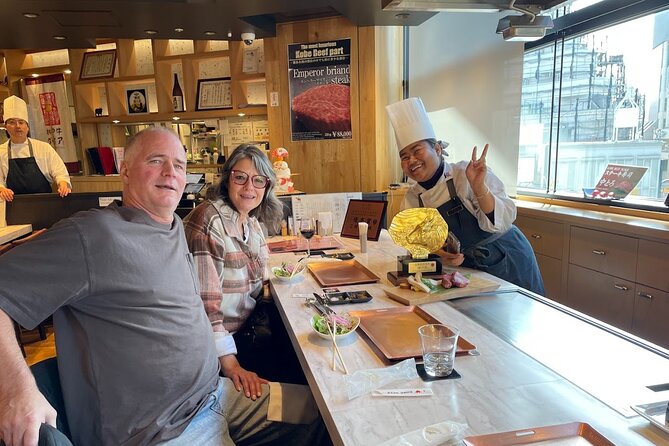
The tour then moves to Meiji Jingu Shrine, with about 45 minutes allotted. The shrine is dedicated to the deified spirits of Emperor Meiji and Empress Shoken, and it sits beside busy Harajuku Station.
The contrast is the point. You leave one of Tokyo’s most crowded urban districts and enter a major Shinto shrine setting. Forty-five minutes gives you more time here than at most other stops, which is appropriate because the approach and grounds require a little patience.
Your guide can explain shrine customs and help you understand what to do respectfully. The experience is not only about the buildings. It is also about observing how a sacred place functions within a city that is otherwise filled with rail lines, fashion shops, and giant screens.
This stop may be the most restorative part of the day, but do not confuse a scheduled 45 minutes with a complete visit to every part of the shrine grounds. The tour is still moving on a fixed route.
Takeshita Street and the final burst of Harajuku
Takeshita Street receives about 30 minutes. The 350-meter street begins across from JR Harajuku Station and caters to Tokyo’s fashion-conscious youth culture.
This is where the tour shifts from old religious sites to pop culture, shopping, and trends. You can walk the main stretch, see the storefronts, and get a quick sense of why Harajuku has such a strong identity.
The time is enough for an introduction, not serious shopping. If you want to inspect stores or stop for food, you will probably need to return later. Food and drinks are not included, so plan to buy your own meal or snack if the schedule provides a suitable break.
One useful strength of a private guide is that the day can sometimes be adjusted around your interests. Eriko and Yoko were praised for tailoring the route, while Keita was appreciated for taking a group to local eateries and helping a young visitor enjoy the day. Still, the published route is packed, so ask about priorities before setting out.
Public transportation makes this more useful
Private transportation is not included. Instead, public transportation is included, and the guide accompanies you between districts.
That is good value for many first-time visitors. You are not merely being delivered to famous places. You learn how to move around Tokyo, how to handle the stations, and how to make sense of the city’s rail network. Takeshi was praised for showing how to calculate fares and buy tickets, and Keita even helped with a JR rail pass voucher exchange.
This benefit depends on the guide. Strong guides such as Rie, Emiko, Shizuko, and Takeshi were praised for being organized, friendly, patient, and helpful with navigation. One guide sent a picture in advance so the group could identify him at pickup, while another continued communicating after the tour to help with the journey back to the hotel.
You should still expect walking and stairs in stations. The stated requirement is moderate physical fitness. Service animals are allowed, and the route is near public transportation, but no promise is made that every part of the day will be easy for people with limited mobility.
What $178.38 per person buys you
At $178.38 per person, this is not a budget sightseeing walk. The value comes from the private format, the English-speaking guide, public transportation, hotel pickup and drop-off within Tokyo’s 23 wards, taxes and fees, participant photos, and Shibuya Sky admission as described.
For one person or a couple, the price may feel high. For a family or small group, the calculation improves because the guide serves the whole booking, up to ten people. Group discounts are also offered, though the exact saving is not stated.
You are paying for time and reduced stress as much as for admission. A guide who can manage trains, explain customs, adjust the route, and care for an older parent or a child can make the day much easier. One guide was praised for looking after a guest’s mother, and another helped a family with a two-year-old and a 66-year-old parent.
Food and drinks are extra. Private taxis, cars, and buses are also not included. If you want a private vehicle, this is not the right product. If you are happy to ride trains and want to learn Tokyo’s system, the transport arrangement is a benefit.
Who will get the most from this day
I would choose this tour for a first visit, especially if you have only one free day for major Tokyo sights. It covers historic Asakusa, modern Shibuya, and trend-focused Harajuku without requiring you to design the route yourself.
It also suits families, older relatives, and visitors who want help with rail travel. The private setting lets you explain dietary needs, religious needs, or mobility concerns in advance. Past guides have helped with halal food, prayer time, and Muslim-friendly maps, although this is not presented as a dedicated Muslim tour and food is not included in the standard details.
You should think twice if you prefer slow travel. Ten stops, train journeys, and several short visits can feel rushed. Shoppers, photographers, and temple enthusiasts may want to use this as an orientation day, then return independently to the places that deserve more time.
The tour is offered for a minimum of one person and a maximum of ten per booking. That makes it more personal than a large coach outing, but the price makes the best financial sense when shared by several people.
Practical details that matter on the day
The start time is 9:30 a.m. Hotel pickup and drop-off are offered in Tokyo’s 23 wards, so provide accurate hotel details when arranging the meeting.
Wear comfortable shoes. Even though the itinerary gives time in minutes, the actual day includes walking between sights and moving through train stations. You should also carry money or a payment method for food and drinks.
Free cancellation is available up to 24 hours before the start time for a full refund. Changes or cancellations made less than 24 hours before the start time are not accepted, and the cut-off uses Tokyo local time.
The experience has a five-star rating from 81 reviews, with 100 percent recommendation shown in the supplied information. I would not treat that as a promise that every guide or weather condition will be identical, but the repeated praise points to a clear strength: the human service. Guides are often praised for being on time, courteous, flexible, and willing to help beyond the bare route.
Should you book this Tokyo tour?
Book it if you want a well-organized first look at Tokyo and value a guide who can make public transportation less intimidating. The combination of Senso-ji, Meiji Jingu, Shibuya Crossing, Takeshita Street, and Shibuya Sky gives you a useful picture of the city’s many sides.
Skip it if you want long temple visits, serious shopping time, a private car, or a food-focused day. The schedule is tight, and the open-air part of Shibuya Sky can close in high winds.
For families, small groups, first-time visitors, and anyone uneasy about Tokyo’s rail system, I consider the price reasonable when divided among several people. Before booking, confirm how Shibuya Sky is handled, tell the company your priorities, and accept that this is an orientation day, not a slow pilgrimage through every neighborhood.
FAQ
How long does the Tokyo private tour last?
The tour lasts approximately seven hours.
What time does the tour start?
The scheduled start time is 9:30 a.m.
Is hotel pickup available?
Yes. Hotel pickup and drop-off are offered within Tokyo’s 23 wards.
Is this a private tour?
Yes. Only your own group participates, with a minimum of one person and a maximum of ten people per booking.
Is an English-speaking guide included?
Yes. An English-speaking guide is included.
Does the tour use public transportation?
Yes. Public transportation is included. Private taxis, cars, buses, and other private transport are not included.
Is admission to Shibuya Sky included?
The tour details list the Shibuya Sky admission ticket as included. The title describes Shibuya Sky as optional, so confirm the exact arrangement when booking.
Are food and drinks included?
No. Food and drinks are not included.
What is the cancellation policy?
You can cancel at least 24 hours before the local start time for a full refund. Cancellations or changes made less than 24 hours before the start time are not accepted.
Just added in Tokyo
- Very popular in Harajuku♡Animal petting zoo★ 4.6 · 39 reviews
- Yokohama Port: Private Customizable Tour with Transfer★ 5.0 · 19 reviews
- Wagyu & Sake 8 Course Tasting Dinner in Shinjuku★ 4.9 · 20 reviews
- Warner Bros. Studio Tour Tokyo – The Making of Harry Potter★ 4.8 · 181 reviews
- Yanaka District: Historical Walking Tour in Tokyo’s Old Town★ 4.8 · 117 reviews
- Tokyo: Classic Tsukiji Food Tour★ 4.9 · 78 reviews
- Tokyo: Tsukiji Fish Market Tour with 6 Stops & Seafood Lunch★ 4.5 · 165 reviews
- Tokyo Wagyu & Sake Pairing Tasting Experience with Local Flavors★ 5.0 · 108 reviews
Private Tours in Tokyo, compared.
Tokyo 6hr Private Tour with Government-Licensed Guide
Read our review →
Private Tour to Mt. Fuji and Hakone (Fully Licenced Operator)
Read our review →
Tokyo Customized Private Tour (Must See Places in 1 Day)
Read our review →
Mount Fuji Full-Day Private Tour from Tokyo (Customizable)
Read our review →
Tokyo 4hr Private Tour with Government-Licensed Guide
Read our review →
Tokyo Customized Private Tour: See Top Attractions in 1 Day
Read our review →
Mt Fuji Private Tour with English Speaking Driver
Read our review →
Mt. Fuji & Hakone Private Day Tour with English-Speaking Driver
Read our review →Browse the lists this tour appears in