
Reviewed · FOOD TOURS
Tokyo: Shibuya Food Tour (13 dishes and 4 Eateries)
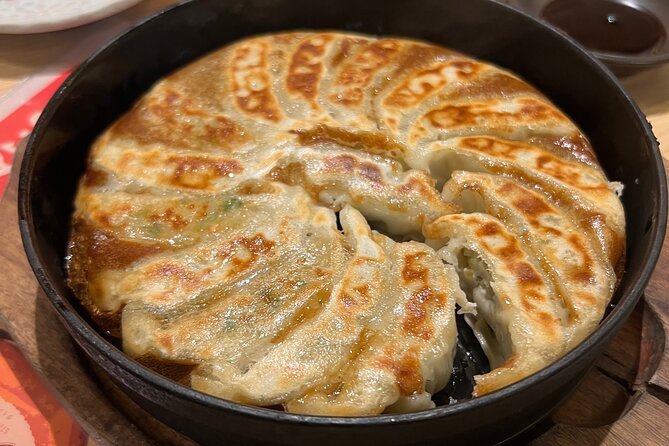
Shibuya tastes better after dark. This three-hour walking tour takes you beyond the giant screens and photo stops, leading you through Dogenzaka, Center Gai, and local food spots for 13 Japanese dishes at four different eateries. You get food at an izakaya, a street food stall, a traditional restaurant, and a dessert stop, plus two drinks.
I like the mix of food and neighborhood walking. You are not parked in one restaurant for the whole evening. I also like the practical help from the guides, who explain how dishes are eaten, answer questions about customs, and suggest places to eat or shop later in your trip. The main consideration is pace: three hours covers several stops, so this is a walking tour in a crowded part of Tokyo, not a slow, quiet dinner.
In This Review
- Key points at a glance
- Four food stops make this more than a restaurant crawl
- What the three-hour route actually feels like
- Shibuya City: a useful first look at Tokyo nightlife
- Center Gai: Tokyo energy between bites
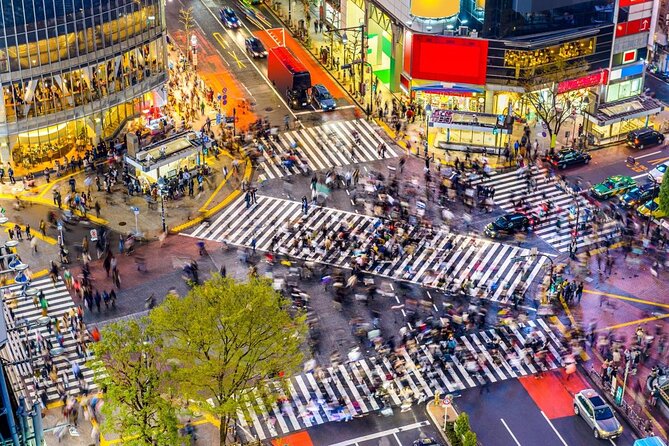
- Shibuya Crossing: ten minutes at Tokyo’s best-known intersection
- Dogenzaka: the final food stretch
- The food quality and range
- Guides are the biggest reason this tour earns its price
- Is $77 a fair price?
- Who should book this Shibuya evening?
- Final verdict: a strong first-night food tour
- FAQ
- How long is the Shibuya food tour?
- How much does the tour cost?
- How many dishes are included?
- What kinds of places does the tour visit?
- Are drinks included?
- Is Shibuya Crossing part of the tour?
- Where does the tour meet?
- What language is the tour conducted in?
- Can I cancel the booking?
Key points at a glance
- Four very different food stops: The meal includes an izakaya, street food, a traditional eatery, and dessert.
- Thirteen dishes in one evening: This gives you a broad first taste of Japanese cooking without ordering full meals at every stop.
- Shibuya beyond the crossing: The route includes Center Gai and Dogenzaka, not just the famous intersection.
- Two drinks included: You receive both alcoholic and non-alcoholic options as part of the experience.
- Guides make the difference: Hoshi, Kei, Naruto, Rio, Yota, Will, and others are repeatedly praised for warmth, food advice, and help with local customs.
- Useful for your first Tokyo days: The guide can offer ideas for restaurants, shopping, transport, and the rest of your Japan stay.
Four food stops make this more than a restaurant crawl
The structure is the best part of the tour. Instead of asking you to choose one unfamiliar restaurant and hope for the best, the guide takes you through four types of Japanese eating places.
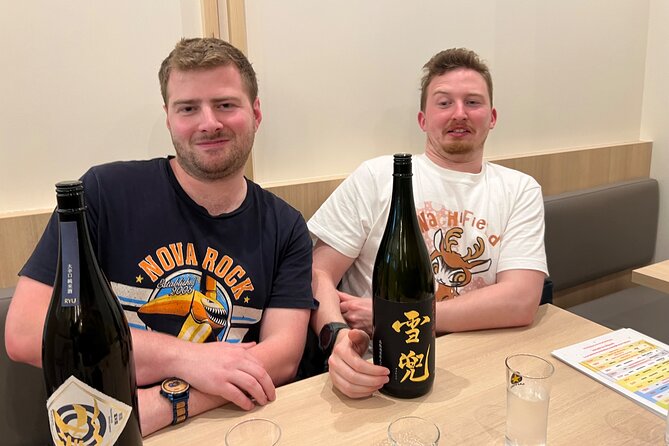
At the izakaya, expect a casual setting built around shared dishes and drinks. Yakitori is one of the foods singled out in the tour description and the strongest praise from the feedback. One person called the yakitori at an izakaya a favorite part of the evening, while others especially enjoyed tuna served both as sushi and cooked food.
The street food stop changes the mood. Street food is often easier to understand when someone explains how it is served and eaten. You may encounter foods you would not have chosen alone, which is one of the real reasons to book a guided food walk in Tokyo.
The traditional eatery gives the meal more cultural context. The food is not simply presented as a checklist. Guides explain garnishes, eating customs, and the role different dishes play in Japanese dining. Lisa from Canada specifically appreciated being shown how food is normally eaten and garnished.
Dessert closes the food portion. This seems to be the least universal part of the meal. Most of the feedback praises the food as a whole, but one person did not care much for the dessert. If you are particular about sweets, keep your expectations flexible.
The tour promises 13 dishes, but the exact menu can vary. That is normal for a food walk using several working restaurants. The description gives examples such as yakitori, sushi, tuna, and dessert, but it does not promise a fixed list of every item.
More Food Tours in Tokyo
- Tokyo: Shinjuku Food Tour (13 Dishes at 4 Local Eateries)
★ 5.0 · 6,603 reviews - Tokyo: Shinjuku Food Tour (15 Dishes and 4 Eateries)
★ 4.9 · 2,033 reviews - Best of Shinjuku: Izakaya Food Tour (4 Stops, 14+ Tastings)
★ 5.0 · 1,863 reviews
What the three-hour route actually feels like
The evening begins in front of the 7-Eleven at Tokyu Plaza in Shibuya, near Kusumoto Building. This meeting point matters because Shibuya has several large stations, many exits, and a maze of busy streets. Give yourself enough time to reach Tokyu Plaza and find the guide rather than arriving at the last second.
From there, the route moves through Shibuya City and Center Gai before reaching the crossing and Dogenzaka. The schedule allows about an hour for the first Shibuya City section, another hour around Center Gai, ten minutes at Shibuya Crossing, and about 50 minutes in Dogenzaka.
The time is not divided into four isolated blocks. You will walk between stops, and those walks are part of the experience. The guide can point out features of the neighborhood, explain local habits, and help you read the area as more than a wall of advertisements and passing crowds.
The route finishes in Shibuya. That is convenient if you want to continue your evening nearby, although no onward activity is included.
Shibuya City: a useful first look at Tokyo nightlife
The opening hour gives you time to settle into the group and start eating. The guide acts as your bridge into the local food scene, especially if you are still unsure about ordering, sharing dishes, or understanding a menu.
This is where a good guide earns the price. Hoshi was praised for humor, food explanations, and hospitality. Kei was singled out for choosing foods that one person probably would not have tried alone. Those details point to the value of the tour: you are not just paying for plates of food, but for someone to make unfamiliar choices feel manageable.
The opening section also works well for first-time visitors. Several people used the tour early in their Japan trip and received suggestions for later meals and places to shop. One guide helped a solo participant reach the right subway for the hotel at the end, while another helped a participant communicate with a cab driver and meet them outside.
You should not expect a formal lecture. The tone described across the feedback is relaxed, friendly, and conversational. That suits a food tour. You learn while eating, walking, and asking questions.
Center Gai: Tokyo energy between bites
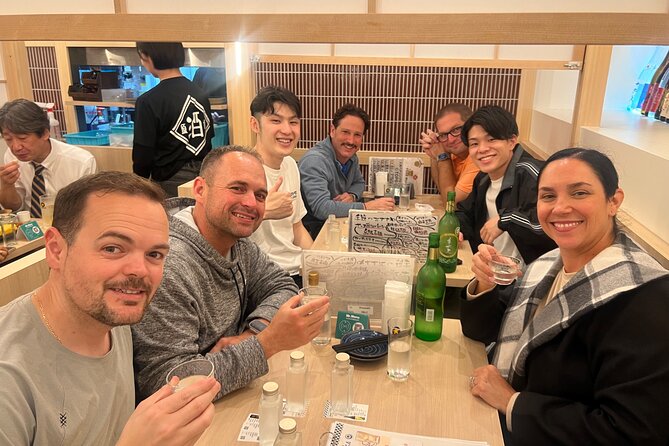
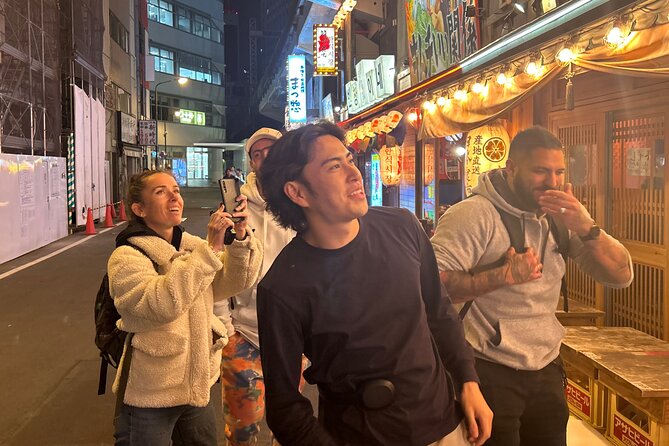
Center Gai is one of the liveliest parts of the route. The tour uses it as both a food area and a chance to experience Shibuya on foot. You will be surrounded by shops, signs, restaurants, and people moving in every direction.
The benefit of having a guide here is simple: you can pay attention to the city instead of constantly checking your phone. The guide keeps the group moving and adds background about the area and Japanese food culture.
The drawback is the same energy that makes Center Gai interesting. It can be noisy and crowded, and the group may need to stay close together. This is not the best choice if you want a calm evening in a quiet neighborhood.
The food stops help break up the walking. You get time to sit, eat, and talk before heading back into the streets. The format also makes it easier to sample several dishes without committing to a large order at one restaurant.
A completely different kind of day out:
- Tokyo Disney Resort – Tokyo Disneyland & Tokyo DisneySea Park Tickets
★ 4.8 · 99,488 reviews - SHIBUYA SKY Ticket
★ 4.7 · 46,509 reviews - JR Whole Japan Rail Pass
★ 4.8 · 29,150 reviews - Mt Fuji and Hakone 1-Day Bus Tour Return by Bullet Train
★ 5.0 · 26,383 reviews
Shibuya Crossing: ten minutes at Tokyo’s best-known intersection
The crossing receives about ten minutes as a photo stop and guided walk. That is enough for the classic experience, but not enough for a long history lesson or extended people-watching session.
The crossing works best as a highlight within the meal, not as the main reason to book. You will cross with the flow of pedestrians and have a chance to take photographs. One person described the scene as chaotic but organized, which is a fair expectation.
If you want to take pictures, have your phone ready before the group reaches the intersection. The stop is short, and the route continues to Dogenzaka afterward. The guide may help you get the best sense of the crossing, but you should not expect a long pause in the middle of the intersection.
Dogenzaka: the final food stretch
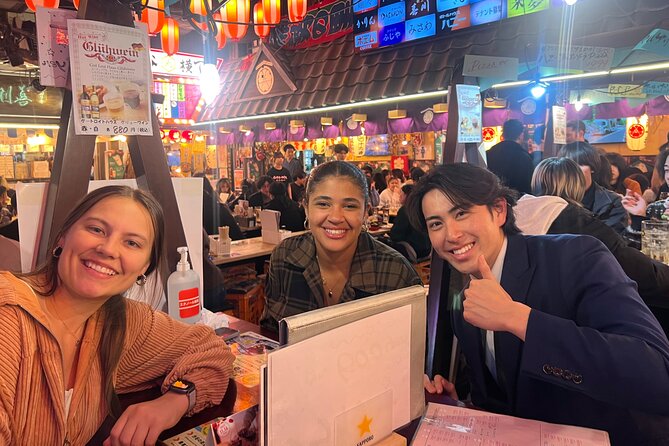
The route spends about 50 minutes in Dogenzaka, giving you another chance to eat and learn about Shibuya’s nightlife streets. This section helps the tour finish with food rather than ending immediately after the crossing.
Dogenzaka is also where the contrast between old and new Tokyo becomes clear. The tour description frames the area as a meeting point of tradition and modern style, and the combination of small eateries, nightlife, and bright city streets supports that idea without requiring a separate sightseeing tour.
The final stop can be a good time to ask for restaurant suggestions. Several people valued the guides’ tips for the rest of their stay. If you discover a dish you like, ask the guide where you could try something similar later.
The food quality and range
The strongest pattern in the available feedback is satisfaction with the variety and taste. People repeatedly describe the food as delicious, high quality, and broad enough to offer dishes they had never tried before.
Tuna receives special praise. One participant enjoyed smoked tuna, while another highlighted both tuna sushi and a cooked version as the best tuna they had eaten. That does not mean every tour will serve exactly the same tuna preparation, but it shows that seafood may be a memorable part of the evening.
Yakitori is another strong point. The izakaya stop can introduce you to the casual side of Japanese dining, where grilled skewers and drinks make a natural pairing. A guide who explains the food can also show you details such as garnishes and the usual way to eat each item.
The 13-dish format sounds large, and it is a substantial amount of food for three hours. The dishes are spread across four venues, so you are tasting rather than ordering a full dinner at each place. Still, you should arrive ready to eat and tell the guide about dietary concerns before the tour begins if possible. The supplied details do not specify vegetarian, vegan, allergy, or religious-diet arrangements.
Two drinks are included. The description says they may be alcoholic and non-alcoholic, which makes the tour suitable for mixed groups. It does not specify the exact drinks, so do not book expecting a particular beer, sake, or soft drink.
Guides are the biggest reason this tour earns its price
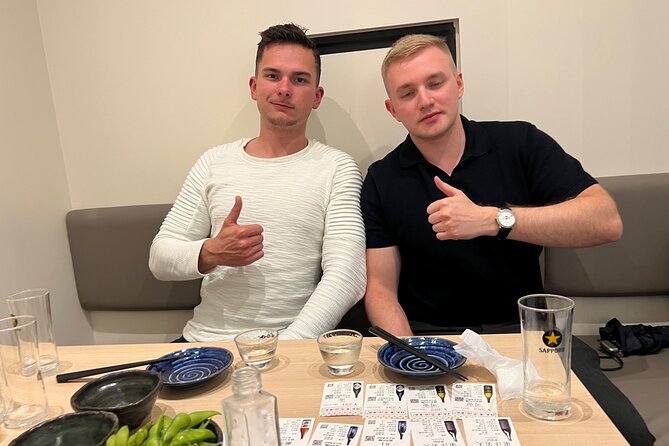
Food is important, but the guide seems to shape the evening. The praise covers many different guides, including Hoshi, Kei, Kay, Nathan, Nicola, Nicolas, Will, Naruto, Matt, Osato, Taiga, Haydn, Rio, Yota, Doren, and Shingo.
Hoshi is praised for humor, clear English, food explanations, and kindness. Kei receives credit for introducing foods people might not try alone. Naruto is repeatedly described as welcoming and especially good at sharing local foods and tips for the rest of a Tokyo visit.
Will is praised for his friendly manner and food knowledge. Rio receives strong marks for explaining Japanese culture, while Yota is remembered as funny, friendly, and well informed about the city. These comments suggest a consistent guide-training approach, but you cannot select a particular guide unless the booking system allows it.
A nice detail is the way guides respond to individual needs. One participant booked that morning and felt comfortable as a solo traveler. Another guide changed the food selection for a returning participant to provide more variety. Those are small actions, but they can turn a standard group meal into a more personal evening.
Is $77 a fair price?
At $77 per person, the tour is not a budget dinner. But the price includes food at four stops, 13 dishes, two drinks, an English-speaking guide, the walking route, the Shibuya Crossing experience, and advice for the rest of your trip.
The value is strongest if you are new to Tokyo food. You avoid the risk of choosing four restaurants without knowing the menus, and you get a guided introduction to dishes you might otherwise skip. The guide also saves you time and helps with social and ordering customs.
The value is weaker if you already know Shibuya well, speak Japanese comfortably, and prefer choosing your own restaurants. You could likely spend less by eating on your own, though you would not receive the same range of samples or personal explanations.
I would see the tour as an early-trip purchase. Book it near the start of your Japan visit, then use the guide’s advice for later meals. It is also a good choice for solo visitors who want an easy way to meet people without committing to a full group excursion.
Who should book this Shibuya evening?
I would recommend it to first-time Tokyo visitors, food-focused travelers, and anyone nervous about ordering unfamiliar dishes. The guide removes much of the guesswork, while the varied menu keeps the evening from feeling repetitive.
It also suits solo visitors. The group setting gives you company, and the tone is described as relaxed rather than formal. Couples and friends can enjoy it too, especially if you want a planned first night in Shibuya.
Families should consider the walking and nightlife setting. The tour is wheelchair accessible, but the route includes busy streets and several eateries, so it is still sensible to confirm any specific mobility needs before booking.
I would skip it if your main goal is a quiet, slow meal, a fixed tasting menu, or a detailed architectural tour. The food and neighborhood experience are the focus. Shibuya supplies the noise, crowds, neon, and constant motion.
Practical details are favorable. You can cancel up to 24 hours before the start for a full refund, and you can reserve now while paying later. Starting times vary, so check availability for your date. The live tour is conducted in English.
Final verdict: a strong first-night food tour
I would book this tour early in a Tokyo stay, especially if you want to get comfortable with Japanese food and Shibuya at the same time. Four eateries, 13 dishes, two drinks, and a guided crossing make $77 reasonable for the convenience and range.
The food receives the most consistent praise, with tuna and yakitori earning special attention. The guides add the real personal value, particularly when they explain customs, adapt the experience, or help with later plans.
Just keep the setting in mind. You will walk through crowded streets, eat at several different venues, and finish with a dessert that may not suit everyone. If that sounds like your kind of evening, this is a practical and enjoyable way to begin eating your way through Tokyo.
FAQ
How long is the Shibuya food tour?
The tour lasts three hours.
How much does the tour cost?
The listed price is $77 per person.
How many dishes are included?
The experience includes 13 Japanese dishes across four eateries.
What kinds of places does the tour visit?
The food is served at one izakaya, one street food stall, one traditional eatery, and a dessert stop.
Are drinks included?
Yes. Two drinks are included, with alcoholic and non-alcoholic options listed.
Is Shibuya Crossing part of the tour?
Yes. The tour includes a guided walk and photo stop at Shibuya Crossing, scheduled for about ten minutes.
Where does the tour meet?
Meet the guide in front of the 7-Eleven at Tokyu Plaza in Shibuya.
What language is the tour conducted in?
The live tour guide speaks English.
Can I cancel the booking?
Yes. You can cancel up to 24 hours in advance for a full refund. You can also reserve now and pay later.
Just added in Tokyo
- A One-of-a-Kind Sushi Experience in a Special Place of Japan★ 5.0 · 15 reviews
- Tokyo Cute Bento Cooking Class – Make a Kawaii Character Lunchbox★ 5.0 · 126 reviews
- Japanese Home Cooking Class & Walk in Todoroki Temple Tokyo★ 5.0 · 88 reviews
- Japan Tokyo Tower Observatory Deck E-Ticket★ 4.0 · 34 reviews
- Catch a Baseball Game in Tokyo with a Local – Tickets Included★ 5.0 · 24 reviews
- JDM Experience with Fast&Furious RX-7 (English speaking Driver)★ 5.0 · 57 reviews
- Tokyo Private Day Tour by Car with English speaking Driver Guide★ 4.0 · 29 reviews
- Japan Classic 10 Day – One Life Adventures★ 5.0 · 129 reviews
Food Tours, compared.
Shinjuku Food Tour (13 Dishes at 4 Local Eateries)
Read our review →
Shinsekai Food Tour with 13-15 Dishes at 5 Eateries
Read our review →
Osaka Food Tour: 13 Dishes at 5 Local Eateries
Read our review →
Shinjuku Food Tour (15 Dishes and 4 Eateries)
Read our review →
Best of Shinjuku: Izakaya Food Tour (4 Stops, 14+ Tastings)
Read our review →
Kyoto Night Foodie Tour in Gion (9+ dishes + 6 Sake tastings)
Read our review →
Hungry Osaka Street Food Tour:15 Tastings & 3 Drinks with a Local
Read our review →
Tokyo Night Foodie Tour in Shinjuku – Seasonal Sushi, Wagyu Beef
Read our review →Browse the lists this tour appears in