
Reviewed · DINING EXPERIENCES
Deep Backstreet Osaka Tours (Option to add Dinner)
Osaka has more stories than its neon shows. This evening walk takes you through narrow lanes, family-run food stalls, old neighborhoods, an unusual worship site, abandoned homes, and districts most sightseeing routes skip. I especially like the small-group format, capped at 15 people, and the chance to taste Osakan food while learning how class, religion, homelessness, sex work, and organized crime have shaped the city. The main drawback is that this is a serious subject tour, not a light stroll through pretty streets.
I also like the way the evening timing connects food and local life. Guides such as Mari, Knox, Josh, Bennett, and Rudy have been praised for making difficult subjects clear without losing their sense of humor. You should expect about three hours of walking, with pauses along the way, and some standing outdoors where mosquitoes may be a nuisance.
In This Review
- Key points at a glance
- Why this Osaka walk feels different
- Starting at Daikokucho at 5:30 pm
- Narrow alleys and Osaka’s retro side
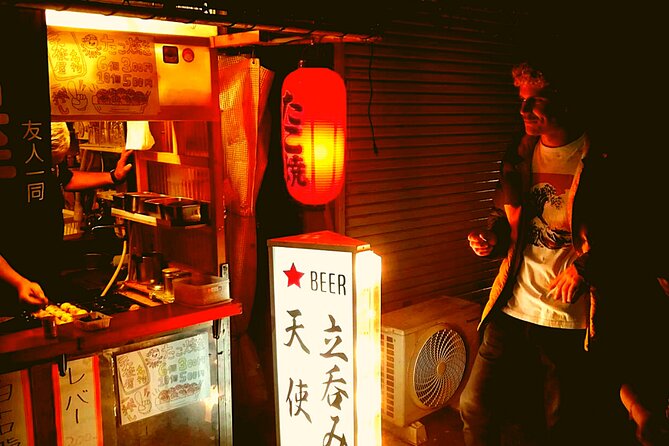
- Two family-run food stalls
- A place of worship most tourists miss
- Abandoned houses and the weight of family names
- The red-light district and former ghetto
- What guides add to the experience
- The optional izakaya dinner
- Price, walking, and overall value
- Who should book this experience
- Should you book Deep Backstreet Osaka Tours?
- FAQ
- How long is Deep Backstreet Osaka Tours?
- What time does the tour start?
- Where does the tour meet?
- Where does the tour finish?
- How many people can join the tour?
- Is dinner included?
- Are drinks included with dinner?
- Is food included during the walking tour?
- Can I cancel for a full refund?
Key points at a glance
- A different Osaka: See former ghettos, a historic red-light district, abandoned homes, old alleys, and lesser-known religious sites.
- Food along the way: Try Osakan street food at two family-run stalls during the walk.
- Dinner upgrade: Add an izakaya meal with tonpeiyaki, karaage, nikudofu, yakitori, and dessert.
- Thoughtful local context: Learn about class, mental health, homelessness, religion, sex work, gangs, and politics.
- Manageable group size: The maximum of 15 people gives the guide room to answer questions and keep the group together.
- Good evening timing: Meet at 5:30 pm near Daikokucho Station and finish back at the same meeting point.
Why this Osaka walk feels different
Most first visits to Osaka focus on Dotonbori, Osaka Castle, Shinsekai, and the city’s famous food streets. Those places have their value, but they show only the public face of Osaka. This tour looks at the neighborhoods and social issues that are usually left out of a standard sightseeing route.
I like that the experience does not treat the city’s difficult areas as a sideshow. The former ghetto, red-light district, homeless population, abandoned houses, and links to organized crime are presented as parts of Osaka’s story. That gives you more useful context than a tour that simply points at colorful signs and moves on.
The tone depends partly on your guide. The strongest guides, including Mari, Knox, Josh, Bennett, Mark, and Rudy, are described as funny, patient, direct, and able to explain sensitive topics in a thoughtful way. One guide, an Irish rock singer, apparently brought a particularly unusual personality to the walk. That variety can be part of the charm, but the experience is not a scripted museum visit.
A few more options to weigh up in Japan
- Tokyo Bar Hopping Tour in Shinjuku (All-You-Can-Drink + Dinner)
★ 5.0 · 3,587 reviews - Tokyo: Sumo Show and Dining Experience
★ 4.8 · 2,742 reviews - Tokyo: Samurai Restaurant Show Ticket with 2 Drinks
★ 4.5 · 1,307 reviews
Starting at Daikokucho at 5:30 pm
The meeting point is the FamilyMart MYS Daikokucho Station at 2-chōme-5-16 Shikitsuhigashi, in Naniwa Ward. The starting time is 5:30 pm, which makes this easy to fit into an Osaka sightseeing day, especially if you spend the afternoon around Namba or nearby districts.
A mobile ticket is accepted, and confirmation comes at booking. The start is close to public transportation, but you should still allow enough time to find the correct FamilyMart. Japanese station areas can have several convenience stores, and arriving a little early is smarter than rushing in at the last minute.
The evening schedule matters. As daylight fades, the tour moves naturally toward food, entertainment areas, and the city’s after-dark side. It also means you should wear comfortable shoes and be ready to walk for roughly three hours. The walking is not described as strenuous, but you will spend a fair amount of time on foot, with breaks built into the route.
Narrow alleys and Osaka’s retro side
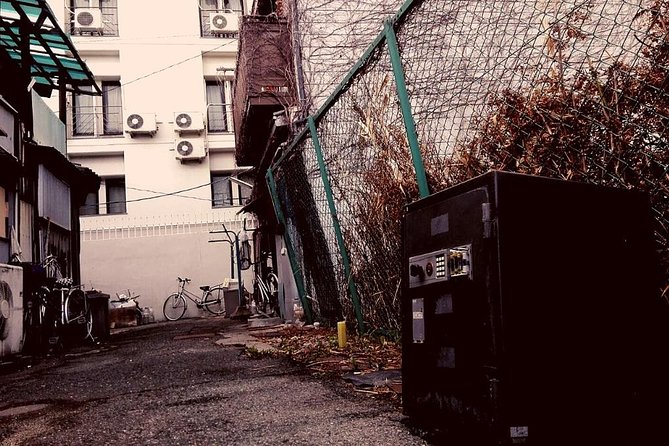
One of the early pleasures is simply leaving the broad, familiar streets and entering old twisting lanes. These backstreets can reveal a side of Osaka that is hard to locate on your own. The appeal is not a single grand monument. It is the collection of small details: aging buildings, unusual shops, quiet corners, and streets that still feel connected to local daily life.
The retro zone includes bizarre and outlandish shops, giving the walk a touch of Osaka’s famous eccentricity. You get the city’s humor and oddness, but without being confined to the main shopping arcades.
I would keep your expectations realistic. This is not a polished historic district filled with preserved architecture. Some areas may look worn, plain, or even bleak. That is part of the point. You are seeing how older parts of the city continue to exist beside redevelopment and modern commercial areas.
Two family-run food stalls
Food is one of the tour’s strongest practical features. During the walk, you stop at two street-run family stalls and taste local items. The exact dishes can vary, but the format gives you a quick introduction to Osaka’s everyday eating culture rather than a formal restaurant lesson.
These stops also help break up the walking. A small bite, a short rest, and a chance to ask questions make the route easier to manage. If you enjoy food tours, you will appreciate the connection between neighborhood life and what people actually eat. If you are expecting a full meal at this stage, remember that the main street-food tastings are samples, not a replacement for dinner.
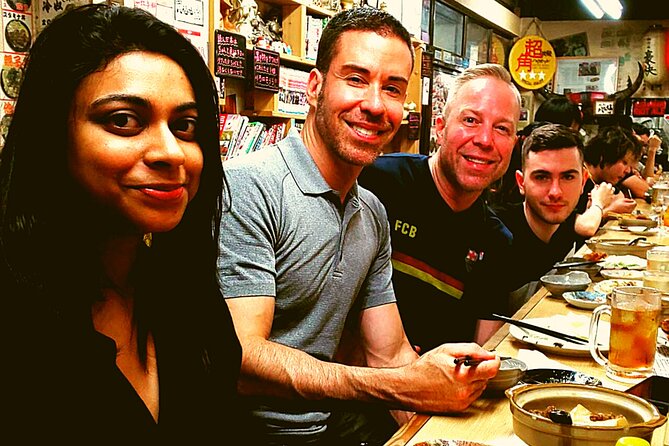
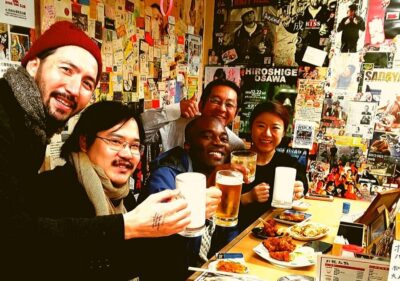
The optional dinner is a separate upgrade. It is served at a traditional izakaya, a type of casual Japanese dining place that can be easy to miss if you do not know the area. The advertised menu includes tonpeiyaki, karaage, nikudofu, yakitori, and dessert. The dinner is also described as vegetarian-friendly, which makes it more useful for mixed groups than a meal built entirely around meat or seafood.
Alcohol is not included, though drinks at the restaurant are described as reasonably priced. You should budget separately if you want beer, sake, or another drink with dinner.
A completely different kind of day out:
- Tokyo Disney Resort – Tokyo Disneyland & Tokyo DisneySea Park Tickets
★ 4.8 · 99,488 reviews - Universal Studios Japan Studio Pass
★ 4.8 · 89,883 reviews - Universal Studios Japan Express Pass
★ 4.7 · 53,138 reviews - SHIBUYA SKY Ticket
★ 4.7 · 46,509 reviews
A place of worship most tourists miss
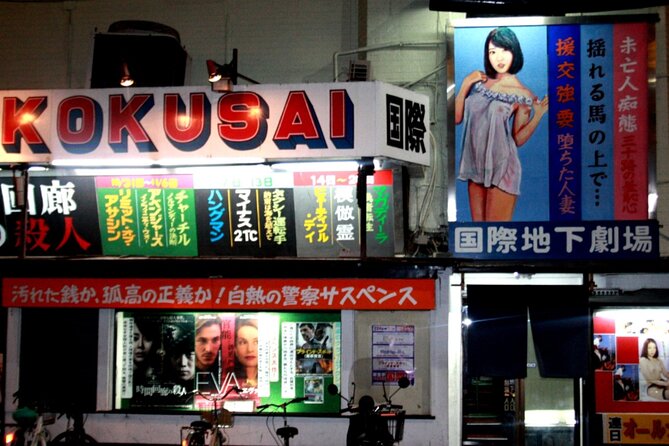
The route includes Osaka’s most important but little-known place of worship, along with a temple and shrine where the guide explains what these sites mean in present-day life. This section adds needed balance to the tour.
Without it, the experience could feel like a tour of social problems. The religious stop shows another side of the city, where belief, custom, community, and local identity continue to shape everyday life. Guides have also explained how construction and upkeep are funded, which helps connect the physical buildings to the people who use them.
You should expect interpretation rather than a long formal visit. The value comes from asking questions and listening to how the guide links religion to class, family names, neighborhood status, and social structure.
Abandoned houses and the weight of family names
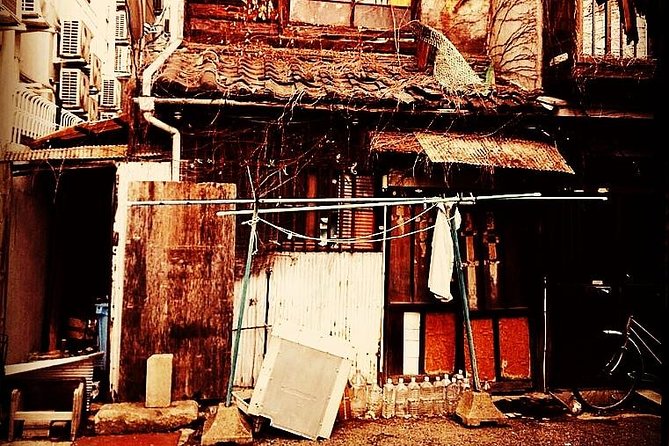
The abandoned-house area is one of the tour’s more revealing stops. At first glance, old empty homes may look like a simple urban problem. The explanation given here is more complicated, involving family names, class, inheritance, and the social history attached to particular neighborhoods.
A home can carry associations that affect how it is viewed by later generations. The guide may explain why a family house is not always easily passed on, even when a building has sentimental or practical value. This gives you a more personal way to understand social divisions in Japan.
This part may feel sad rather than entertaining. That is appropriate. The tour asks you to consider how history can remain attached to a place long after the original events have faded from public conversation.
The red-light district and former ghetto
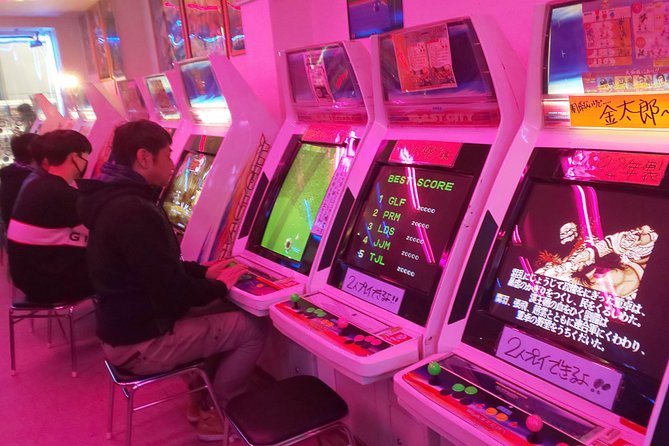
The red-light district is one of the most sensitive sections of the route. It has a long history and links to the yakuza, Japan’s organized crime groups. The tour does not present the area as a playground for voyeurism. Instead, it places the district within Osaka’s social and economic story.
You may also enter an area described as a former ghetto, with a controversial past. That language requires care, and the quality of the guide matters here. The best approach is to listen respectfully, avoid treating residents or workers as attractions, and understand that the area is a living neighborhood, not a stage set.
The subject matter includes sex work, homelessness, mental health, gangs, and politics. This is why the experience can feel more useful than a standard city walk, but it is also why it will not suit everyone. I would not book it if you want only cheerful food stops and photogenic streets.
The route is described as safe, including for solo participants. Still, safety does not make the subject matter light. You are being asked to look at parts of society that are often ignored, and the experience works best when you approach it with curiosity rather than a desire for shock value.
What guides add to the experience
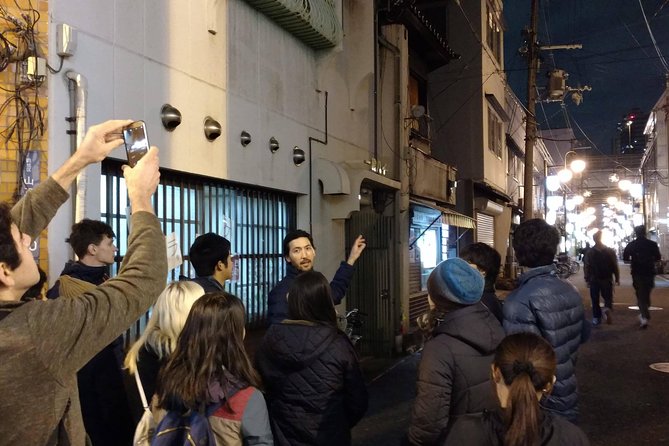
The guide is the heart of this tour. Names frequently associated with strong experiences include Mari, Knox, Josh, Bennett, Rudy, Alex, Mark, Thomi, Tommy, Nox, Kane, Dillan, and Rat. Their styles differ, but the praise is consistent around clear explanations, humor, patience, and the ability to answer questions.
A good guide keeps the walk from becoming a list of grim facts. One guide was praised for giving a direct, no-nonsense explanation without unnecessary filler. Another was appreciated for being patient with questions about Japanese society. That matters because the topics can be complex, and a rushed explanation could easily become simplistic.
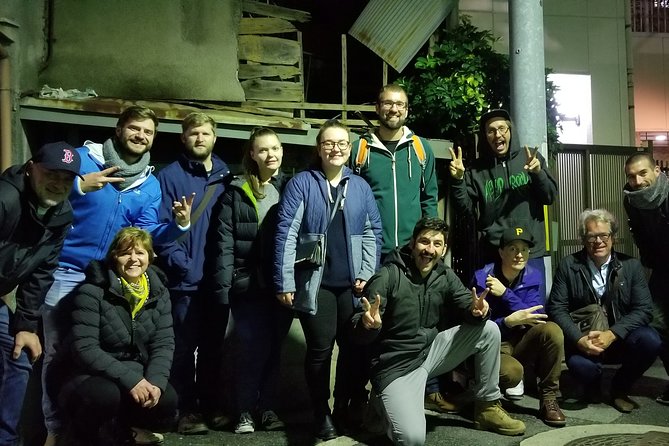
Group size is limited to 15 people. That is not a private tour, but it is small enough for conversation and practical enough for the guide to keep everyone moving through narrow streets. You may meet people from several countries, which adds a social element, especially if you are traveling alone.
The optional izakaya dinner
Adding dinner makes the experience feel more complete. After several hours of walking and food samples, sitting down for an Osakan meal gives the evening a clear finish. The menu includes several classic dishes rather than one large centerpiece, so you get a range of flavors and textures.
Tonpeiyaki offers an Osaka-style savory bite, while karaage brings crisp fried chicken. Nikudofu is a comforting meat and tofu dish, yakitori provides grilled skewers, and dessert finishes the meal. The dinner is presented as local soul food, and the restaurant is the sort of place you might not find by searching only in major tourist areas.
The vegetarian-friendly note is useful, but you should confirm your exact dietary needs when booking if they are strict. The supplied information does not specify how many vegetarian dishes are provided or how cross-contact is handled.
If you want to continue the evening, after-tour assistance is available. The guide can take you toward a bar, shopping area, or entertainment district. This is a nice extra for first-time visitors who want help choosing where to go next, though it is not part of the core three-hour route.
Price, walking, and overall value
At $53.06 per person, the tour sits in a reasonable range for a three-hour small-group experience in Osaka. The price includes the guided walk and food tasting at a stall. Dinner is an additional option, and alcoholic drinks are extra.
I see the value in the combination. You are not paying only for directions between sights. You are paying for access to places that are difficult to interpret alone, plus a guide who can explain social history, local customs, religion, and current issues. The food samples make the cost easier to justify, especially if you want a structured evening rather than another restaurant meal chosen at random.
The value is lower if you dislike walking, want major landmarks, or prefer a polished cultural presentation. The tour does not focus on Osaka Castle, panoramic views, or famous photo stops. Its appeal is the information and the access to less familiar neighborhoods.
A maximum of 15 people keeps the format personal without private-tour pricing. With a strong guide, that is a good balance. The overall rating is 4.9 from 1,290 reviews, with 97 percent recommending it, which supports the idea that the format works well for its intended audience.
Who should book this experience
I would recommend this tour to you if you have already seen Osaka’s headline sights and want more social context. It also suits solo visitors who enjoy meeting people, curious food lovers, and anyone interested in the parts of Japanese life that guidebooks often soften or skip.
It is especially useful early in your Osaka stay. The guide’s local suggestions can help you choose a bar, shopping area, or entertainment district afterward, and the walk may change how you understand neighborhoods you pass through later.
I would think twice if you want a relaxed sightseeing loop with little serious discussion. The tour covers homelessness, sex work, class, mental health, gangs, and political issues. It is safe, but it is not carefree.
Wear comfortable shoes, bring water, and expect some outdoor standing. If mosquitoes bother you, insect repellent may be sensible because one stop may involve waiting in a park or parking area. The walk requires good weather. If rain or other poor conditions cancel it, you can receive a different date or a full refund.
Should you book Deep Backstreet Osaka Tours?
Book it if you want Osaka with the polish removed. The best parts are the back alleys, family-run food stalls, unusual worship site, abandoned homes, and direct discussion of subjects that rarely appear on ordinary tours.
Add dinner if you want a full evening and like trying several local dishes in an izakaya. Skip the upgrade if you already have a dinner reservation or prefer to choose your own restaurant.
For curious visitors, this is one of the more worthwhile ways to spend an Osaka evening. It will not show you the postcard version of the city. It may give you something better: a fuller understanding of how the city works, including the parts that are complicated, uncomfortable, and very human.
FAQ
How long is Deep Backstreet Osaka Tours?
The tour lasts approximately three hours.
What time does the tour start?
The tour starts at 5:30 pm.
Where does the tour meet?
The meeting point is FamilyMart MYS Daikokucho Station at 2-chōme-5-16 Shikitsuhigashi, Naniwa Ward, Osaka.
Where does the tour finish?
The activity ends back at the meeting point.
How many people can join the tour?
The maximum group size is 15 travelers.
Is dinner included?
Dinner is available as an optional upgrade. The meal includes dishes such as tonpeiyaki, karaage, nikudofu, yakitori, and dessert.
Are drinks included with dinner?
Alcoholic beverages are not included. Drinks at the restaurant are described as reasonably priced.
Is food included during the walking tour?
The tour includes tasting food at a street stall. The experience also includes tastings at two family-run food stalls.
Can I cancel for a full refund?
Yes. You must cancel at least 24 hours before the experience start time for a full refund. Changes or cancellations made less than 24 hours before the start time are not accepted or refunded.
Just added in Japan
- MT. FUJI/ Private Tour delivered and guided by a top-tier driver★ 5.0 · 27 reviews
- Mt fuji & Hakone customizable day tour w/ English speaking driver★ 5.0 · 45 reviews
- Fuji Speedway Self Drive & Mt. Fuji Private Tour pickup & dropoff★ 5.0 · 14 reviews
- Mt.Fuji Trekking 1 Day Tour up to the summit★ 5.0 · 14 reviews
- Seasonal Mt. Fuji Scenic Views, Fruit Picking and Ropeway Ride!★ 4.5 · 35 reviews
- Customisable Mt.Fuji Private Day Trip, English Speaking Driver★ 5.0 · 22 reviews
- Private Mt Fuji Tour from Tokyo: Scenic BBQ and Hidden Gems★ 5.0 · 146 reviews
- Private Mount Fuji Tour in Luxury Vehicle with English Guide★ 4.5 · 39 reviews
Dining Experiences, compared.
Tokyo Bar Hopping Tour in Shinjuku (All-You-Can-Drink + Dinner)
Read our review →
Deep Backstreets Walking Tour with Dinner Option
Read our review →
Sumida River: Japanese Traditional Yakatabune Dinner Cruise
Read our review →
Kyoto Gion Cultural Walk & Geisha Show with Dining Options
Read our review →Kyoto Gion Cultural Walk & Geisha Show with Dining Options
Read our review →
Tokyo Bay Yakatabune Dinner/Day Cruise with Japan Show and Drinks
Read our review →Browse the lists this tour appears in