
Reviewed · KIMONO AND CULTURAL DRESS
Kyoto Gion Cultural Walk & Geisha Show with Dining Options
See Gion beyond the usual photographs. This three-hour Kyoto experience pairs a small-group walk through Gion with a 45-minute meeting and show featuring an apprentice geisha, known in Kyoto as a maiko. You learn about Kabuki, Shinto, Zen Buddhism, geiko traditions, and the working streets of the district rather than simply wandering past pretty wooden buildings. I especially like the careful cultural context and the chance to ask a maiko questions through an interpreter. Guides such as Akari, Ken, and Kenta are repeatedly praised for their warmth, preparation, and strong grasp of local customs.
The main consideration is the dining option. Some people praise the meal as delicious and considerate of dietary needs, while one particularly unhappy diner found the portion too small for the extra cost. The walk also includes several stops and is not recommended if you have leg problems. At about $121.37 per person, this is not a cheap night out, but the personal meeting and performance can make it worthwhile for anyone seriously curious about Kyoto’s geiko world.
In This Review
- Key points to know before booking
- Why this Gion experience is different
- Starting with Kabuki at Izumo-no-Okuni
- Minamiza Theater and Kyoto’s stage traditions
- Gion Shirakawa, where the setting does much of the work
- Tatsumi-jinja and the meaning of Shinto
- Hanamikoji Street and the working side of Gion
- Kennin-ji, Zen, and a little extra temple context
- Zenkyo-an and its boar guardians
- The 45-minute maiko meeting and show
- Is the meal worth the extra money?
- Timing, group size, and practical comfort
- Who should book this Kyoto experience?
- Should you book the Gion walk and maiko show?
- FAQ
- How long does the Kyoto Gion cultural walk and geisha show last?
- What does the tour include?
- Is a meal included?
- How many people can join the group?
- Where does the tour begin?
- Does the tour finish at the starting point?
- Is admission to Kennin-ji included?
- Is the tour suitable for people with leg problems?
- What is the cancellation policy?
Key points to know before booking
- A real maiko meeting: The 45-minute finale includes conversation, questions, and one or two dances by an apprentice geisha.
- Small group size: The tour accepts a maximum of nine people, which helps the question-and-answer time feel personal.
- Gion with context: You visit Gion Shirakawa, Hanamikoji Street, Tatsumi-jinja Shrine, Kennin-ji, and a small subtemple rather than seeing only one famous lane.
- Strong guide element: Akari, Ken, and Kenta receive repeated praise for translation, cultural explanation, and making solo participants feel included.
- Food needs checking: Dining feedback ranges from high praise to disappointment over portion size, so confirm exactly which option you are buying.
- Plan for walking: The experience lasts about three hours and includes several outdoor stops, with no recommendation for people with leg problems.
Why this Gion experience is different
Many first visits to Gion are built around trying to spot a geisha. That approach misses the point. Gion is a working cultural district, and the people dressed as geiko or maiko are professional artists with years of training, not costumed attractions waiting for photographs.
This tour gives you a framework before the performance. You begin near the statue of Izumo-no-Okuni, hear how Kabuki began with a woman, see the Minamiza Theater, and walk through streets linked to Kyoto’s geiko culture. Later, an apprentice maiko performs and answers questions. That order matters. By the time you sit down for the show, you have some sense of the traditions behind the makeup, clothing, dance, and music.
The group limit of nine is another real advantage. A large bus tour would make a quiet cultural meeting feel flat. Here, the guide can answer questions as you walk and translate during the maiko session. Akari is praised for including solo participants, while Ken and Kenta are noted for explaining sensitive subjects with respect.
The tour is also useful if you have heard inaccurate ideas about geisha culture. Several comments praise the guides for correcting common misunderstandings and explaining the difference between geiko and maiko. In Kyoto, geiko is the local term for a fully trained geisha, while maiko refers to an apprentice.
More Kimono Experiences in Kyoto
- [Kyoto & Nara Day Tour] Sagano Scenic Railway & Nara Park & Fushimi Inari Taisha Thousand Torii Gates & Togetsukyo Bridge & Bamboo Grove & Kimono Forest (Departing from Osaka)
★ 4.9 · 10,942 reviews - Kyoto Geisha Walking Tour: Gion District & Hidden Gems
★ 4.7 · 3,273 reviews - Kyoto: Gion Magical Night Walking Tour with Geisha Trivia
★ 4.9 · 2,393 reviews
Starting with Kabuki at Izumo-no-Okuni
The meeting point is the Statue of Izumo-no-Okuni in Kawabatacho, near public transportation. This is a fitting place to begin because Izumo-no-Okuni is associated with the early development of Kabuki.
The guide explains that Kabuki began with women, even though modern Kabuki is performed by men. You get about 15 minutes here, enough for a clear introduction rather than a long lecture. The subject also gives you an early reminder that Japanese theater traditions have changed over time.
I like this opening because it links popular performance, gender, and Kyoto’s theater culture before the tour reaches the geiko districts. If you arrive early, use the time to confirm that you are at the statue, since the listed address is in the Kawabatacho area rather than at the theater itself.
Minamiza Theater and Kyoto’s stage traditions
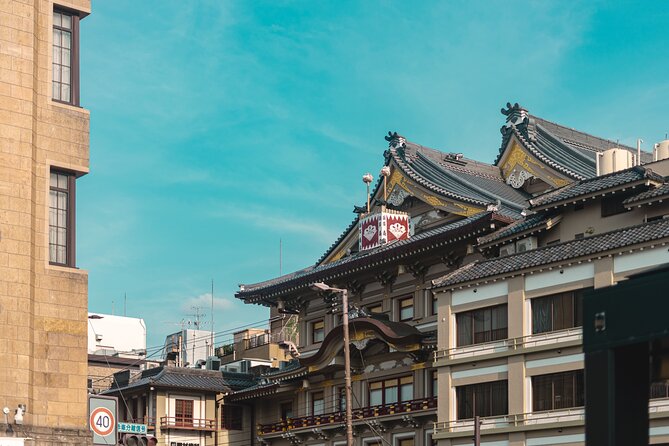
The next stop is Minamiza Theater, one of Kyoto’s major Kabuki landmarks. The visit is brief, about 10 minutes, and focuses on the building’s architecture and the connection between Kabuki and modern technology, including the use of virtual reality.
You should not expect a theater performance here. This is an exterior stop and a chance to understand why the theater matters. The guide’s explanation helps connect the stage traditions of Kabuki with the later performance you will see from the maiko.
The stop works best for people who enjoy cultural background. If your interest is limited to the geisha meeting, this portion may feel like a slow start, but it adds useful context and helps prevent the evening from becoming a simple photo opportunity.
Gion Shirakawa, where the setting does much of the work
Gion Shirakawa is one of the most attractive parts of the district, with older buildings, riverside scenery, traditional theaters, and narrow streets. The stop lasts about 15 minutes, but the walk between locations also gives you time to take in the area.
This is the part of the route most likely to match your picture of old Kyoto. Still, the guide’s commentary is more valuable than the scenery alone. You learn why the district developed around performance and entertainment, and how geiko culture fits into the city’s wider traditions.
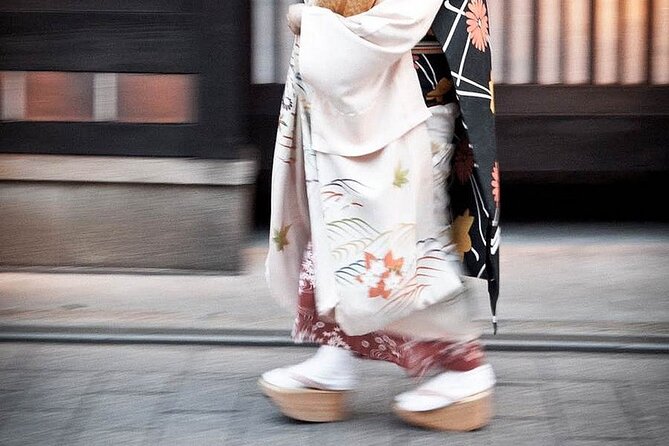
You may see geiko or maiko moving through Gion, but there is no guarantee. If you do, give them space and do not treat the street like a stage. The tour is at its best when it teaches respectful observation rather than promising a sighting.
A completely different kind of day out:
- PERFECT KYOTO 1-Day Bus Tour
★ 5.0 · 13,518 reviews - Kyoto: Fushimi Inari, Kinkakuji, Bamboo Grove 1 Day Bus Tour
★ 4.8 · 4,316 reviews - Kyoto: Tea Ceremony in a Traditional Tea House in Kiyomizu
★ 4.9 · 3,519 reviews - Kyoto: Gion Make Your Own Chopsticks with Engraving Option
★ 5.0 · 3,465 reviews
Tatsumi-jinja and the meaning of Shinto
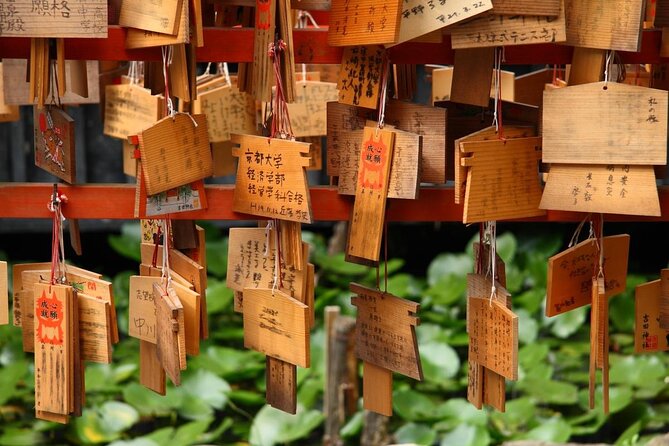
At Tatsumi-jinja, also called Tatsumi Dai-myojin, the guide introduces Shinto, Japan’s native religious tradition. The explanation includes the idea that Japan has eight million gods, a phrase that helps show how Shinto can be understood through many spirits and sacred presences rather than one central figure.
You spend about 15 minutes at the shrine. The visit is short, but it broadens the tour beyond geisha culture. Kyoto’s old districts make more sense when you notice how shrines, temples, theaters, shops, and homes sit close together.
This is also a place to behave quietly and follow the guide’s instructions. The tour does not list an admission charge here, and the stop is included in the walking portion.
Hanamikoji Street and the working side of Gion
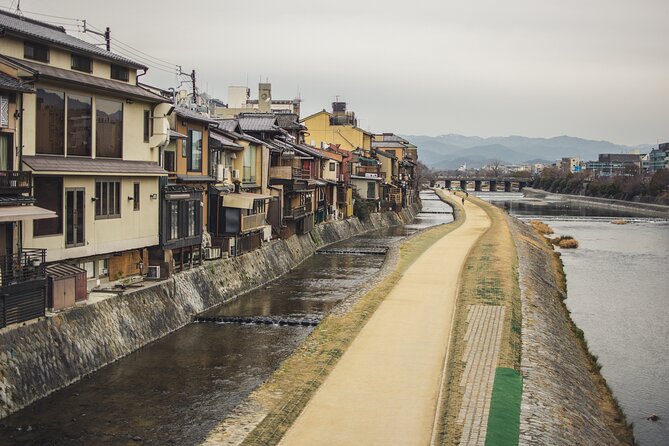
Hanamikoji Street is the main street of Gion and another likely photo stop. The scheduled visit lasts around 10 minutes, with the possibility of seeing geiko or maiko passing through.
The street can be visually striking, but the important point is that it is not a theme park. The guide helps you understand the area as a place where artists work and people live. That distinction matters, especially because Gion has faced problems with intrusive photography and visitors blocking entrances.
I appreciate that the tour presents the district with some restraint. You are given a chance to see the setting, but the emphasis remains on culture and etiquette. Keep your camera ready if you want street photographs, but do not follow or stop a performer.
Kennin-ji, Zen, and a little extra temple context
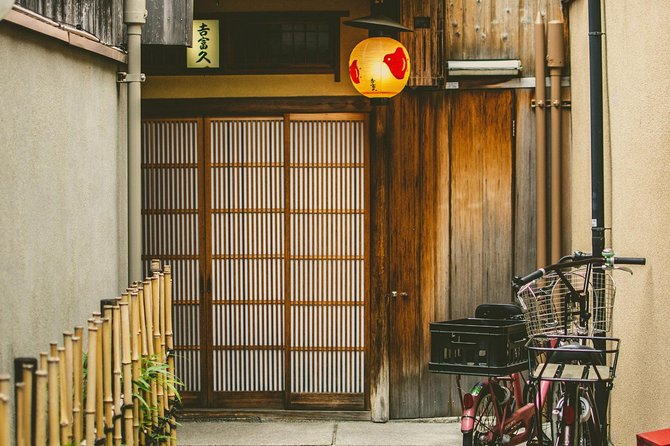
Kennin-ji is a Zen Buddhist temple founded in 1202. The planned stop lasts about 15 minutes and introduces Zen Buddhism. Admission is not included, so you should be prepared for a separate entry charge if the group goes inside under the schedule in effect that day.
The temple adds a useful contrast to the earlier Shinto stop. You see how two major Japanese religious traditions appear within the same Kyoto neighborhood. The tour does not reduce Zen to a quick slogan, but the exact depth depends on your guide and the questions you ask.
The route includes several stops, so comfortable footwear is sensible. The activity information specifically says it is not recommended for people with leg problems. That warning deserves attention because the experience combines outdoor walking, standing, and moving between cultural sites.
Zenkyo-an and its boar guardians
The final listed walking stop is Zenkyo-an, also called Marishitendo, a Kennin-ji subtemple in Gion. It is known for boar guardians and associations with luck and safety.
This is a more unusual stop than the famous streets. You get a small piece of local religious culture that many independent visitors could easily miss. Admission is not included, and the scheduled visit is about 15 minutes.
The boar imagery gives the guide something memorable to explain, while the subtemple helps keep the walk from feeling like a checklist of only Kyoto’s best-known sights. The route then moves to the meeting and performance portion, which is the main reason most people book the experience.
The 45-minute maiko meeting and show
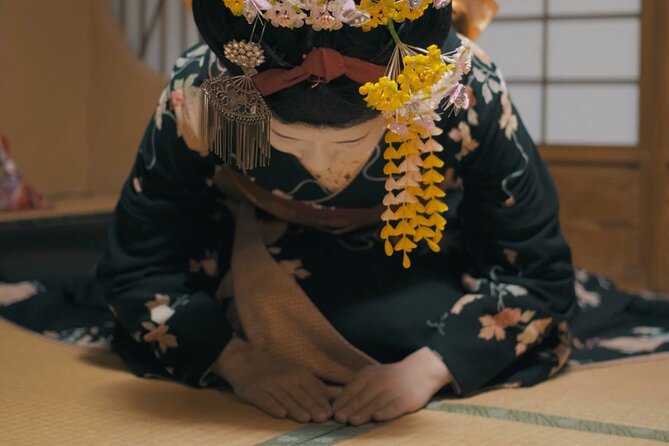
The central event lasts about 45 minutes. An apprentice geisha performs one or two dances and speaks with the group. You can ask questions, with the guide helping to interpret and explain the answers.
This is not a large theater production. Its value comes from the direct contact and the chance to hear about the maiko’s world in a setting designed for conversation. The performance gives you a glimpse of the discipline and grace involved, while the question period lets you move beyond surface impressions.
Several guides are praised for making this section work well. Akari is described as warm and attentive, even helping with practical matters during the meal. Ken is praised for explaining the links between Kabuki and geiko culture. Kenta is noted for translating and handling the meeting with care.
The experience may include tea and food depending on the option booked. The supplied details confirm a 45-minute meeting and show, but they do not define every dining package in the same way. Check the exact selection at checkout so you know if you are choosing the walking tour with the performance alone or an option that includes a meal.
Photography rules can matter here. One person was disappointed that photographs from the meeting could not be shared on social media. Do not assume that normal restaurant photography rules apply. Ask the guide before taking pictures or posting them.
Is the meal worth the extra money?
At $121.37 per person, the price needs to be judged against the full evening, not just the food. You are paying for a guided Gion walk, a small group, translation, the performance, and the chance to speak with an apprentice maiko. If the cultural meeting is your priority, the price can make sense.
The food itself receives mixed impressions. Some people describe the meal as high quality and delicious, while another person who paid more than £120 for a meal option felt the amount was too small and left hungry. That is a clear warning for anyone choosing this mainly as dinner.
The safest approach is to treat the meal as part of the setting, not the main value of the booking. If you need a substantial dinner, consider eating something beforehand or confirming the menu and portion expectations. At the same time, several people specifically praise the food, including family-style service and attention to dietary restrictions, so the experience can vary by dining package and occasion.
Timing, group size, and practical comfort
The full activity lasts approximately three hours. The walking portion runs about 1.5 to 2 hours, followed by the 45-minute maiko meeting and show. The route begins at the Statue of Izumo-no-Okuni and ends somewhere different, so check the end point before arranging your next activity.
The group maximum is nine people. That is small enough for questions and guide support, but it is still a shared experience. You should expect the pace and conversation to be shaped by the whole group.
The activity is near public transportation, and most people can take part. The stated restriction about leg problems is important, since the walking route includes several outdoor stops and temple areas. Wear shoes you can walk and stand in comfortably.
Weather can affect the tour. It requires good weather, and poor conditions may lead to a different date or a full refund. One guide, Kenta, was praised for carrying cold cloths, icy drinks, umbrellas, and rain ponchos during a sudden storm. That kind of preparation is helpful, but you should still check the forecast and dress sensibly.
Free cancellation is available up to 24 hours before the start time. Cancellations or changes made within 24 hours are not refunded or accepted, and all cut-off times use Kyoto local time.
Who should book this Kyoto experience?
I would choose this tour if you want an introduction to geiko and maiko culture with an actual chance to ask questions. It suits first-time visitors who want help finding Gion’s important places, as well as returning visitors who want more cultural background than a self-guided walk provides.
It is also a strong choice for solo visitors. Akari is praised for making a solo participant feel included, and a maximum of nine people gives the guide room to notice if someone is being left out.
Families and curious older children may enjoy it if they can manage the walking and sit quietly during the performance. Anyone mainly seeking a large stage show, a guaranteed geisha sighting, or a filling dinner should set expectations lower.
Should you book the Gion walk and maiko show?
Yes, if the meeting with an apprentice geisha is your main goal and you value explanation over spectacle. The best part is the combination of place, context, translation, and personal conversation. The repeated praise for Akari, Ken, and Kenta suggests that the guide can shape the evening in a meaningful way.
Book with caution if your main concern is dinner value. The food feedback is not entirely consistent, and the meal may not justify the price on its own. Confirm the dining option, prepare for a fair amount of walking, and respect photography rules during the maiko meeting.
For the right audience, this is one of the more thoughtful ways to approach Gion. You are not simply hoping to spot a geisha in the street. You are learning why the district matters, then meeting an apprentice artist in a setting where questions are welcome.
FAQ
How long does the Kyoto Gion cultural walk and geisha show last?
The experience lasts approximately three hours. About 1.5 to 2 hours are spent walking and learning about Gion, followed by a 45-minute maiko meeting and show.
What does the tour include?
It includes guided touring in Gion and a 45-minute meeting and show with an apprentice geisha. The maiko performs one or two dances, and you can ask questions.
Is a meal included?
Dining options are available, but the exact food inclusion depends on the option selected. Check the specific package before booking because the listed experience details do not define every dining choice.
How many people can join the group?
The maximum group size is nine people.
Where does the tour begin?
It begins at the Statue of Izumo-no-Okuni in Kawabatacho, Higashiyama Ward, Kyoto.
Does the tour finish at the starting point?
No. The activity ends at a different location, so check the end point before scheduling transportation or another activity.
Is admission to Kennin-ji included?
No. Admission to Kennin-ji is not included. Admission to Zenkyo-an is also listed as not included.
Is the tour suitable for people with leg problems?
The activity is not recommended for people with leg problems. The route includes walking and several outdoor stops.
What is the cancellation policy?
You can cancel up to 24 hours before the start time for a full refund. Cancellations or changes made less than 24 hours before the start are not accepted or refunded. If poor weather or an insufficient minimum group causes cancellation, you are offered another date or a full refund.
More Dinner Experiences in Kyoto
- Kyoto Evening Gion Food Tour Including Kaiseki Dinner
★ 5.0 · 62 reviews - Kyoto: Maiko Dinner in Traditional Restaurant and Tour
★ 4.8 · 55 reviews - Kyoto: Lunch or Dinner with Maiko
★ 4.2 · 52 reviews - Private Dinner with Maiko and Geiko in Kyoto
★ 5.0 · 28 reviews
More Dining Experiences in Kyoto
- Kyoto Gion Cultural Walk & Geisha Show with Dining Options
★ 5.0 · 518 reviews - Dinner with Maiko in a Traditional Kyoto Style Restaurant Tour
★ 5.0 · 175 reviews - Kyoto: Geisha Dinner & Gion Cultural Walk
★ 5.0 · 73 reviews - Private Dinner with a Geisha
★ 5.0 · 65 reviews
Just added in Kyoto
- The “Golden Route” and Ancient Japan by DIAMIR Erlebnisreisen – 14-Day Tour★ 2.0 · 2 reviews
- Japan: Castles & Cuisine by G Adventures – 6-Day Kyoto to Osaka Tour★ 4.5 · 4 reviews
- Cycle Japan by Explore! – 13-Day Kyoto to Tokyo Tour★ 4.7 · 12 reviews
- Cycle Japan by Intrepid Travel – 11-Day Kyoto to Tokyo Tour★ 4.8 · 2 reviews
- Classic Japan by Intrepid Travel – 11-Day Kyoto to Tokyo Tour★ 4.4 · 14 reviews
- Ancient & Modern Japan 14-Day Tour by Exodus Adventure Travels★ 4.4 · 40 reviews
- 5 Day Cultural Adventure of Kyoto, Nara & Osaka by Tourist Journey★ 2.5 · 2 reviews
- 12 Days Kinosaki Onsen Escape: A Journey Through Japan’s Timeless Towns by UME Travel★ 4.8 · 5 reviews
Kimono and Cultural Dress, compared.
![[Kyoto & Nara Day Tour] Sagano Scenic Railway & Nara Park & Fushimi Inari Taisha Thousand Torii Gates & Togetsukyo Bridge & Bamboo Grove & Kimono Forest (Departing from Osaka)](https://media.japanvisits.com/wp-content/uploads/kyoto-nara-day-tour-sagano-scenic-railway-nara-park-fushimi-inari-taisha-thousand-torii-gates-togetsukyo-bridge-bamboo-grove-kimono-forest-departing-from-osaka-k110001-400x257.jpg)

Tokyo Asakusa Kimono&Yukata Rental at Kimono Miyabi Asakusa Station
Read our review →
Kyoto Geisha Walking Tour: Gion District & Hidden Gems
Read our review →
Gion Magical Night Walking Tour with Geisha Trivia
Read our review →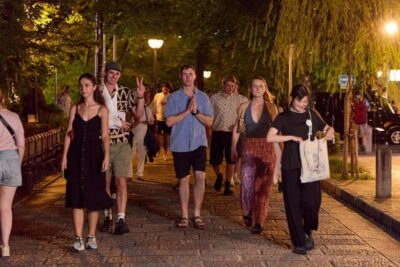
Gion Geisha District Walking Tour – Stories of Geisha
Read our review →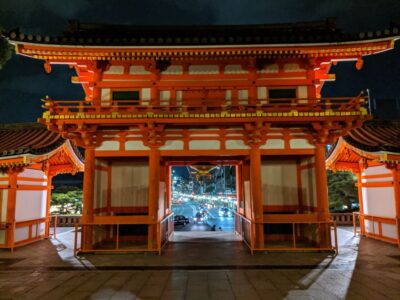
Best of Kyoto: Gion, Geisha, Pagodas & Cobblestones
Read our review →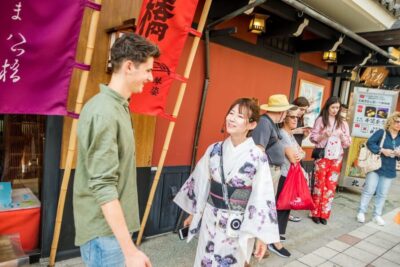
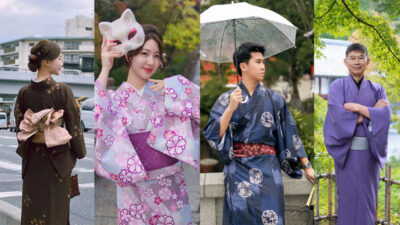
Kyoto Kimono Rental Experience (Optional Exquisite Hair Styling/Japanese Makeup/Photography) (Ookini Kiyomizu-dera Main Store)
Read our review →Browse the lists this tour appears in