
Reviewed · KIMONO AND CULTURAL DRESS
Kyoto Gion Cultural Walk & Geisha Show with Dining Options
Gion reveals more when someone explains it. I like the way this tour joins a thoughtful walk through Kyoto’s geisha district with a rare meeting and performance by a maiko. I also like the small group, limited to eight people, and the clear English guidance from hosts such as Kenta, Ken, and Akari. The main drawback is that the walking portion may not suit anyone with mobility limitations, and the meal portions, especially at dinner, may feel modest to big eaters.
This is not just a quick photo stop beside a dressed-up performer. The guide explains the difference between geisha, geiko, and maiko, discusses training and daily customs, and helps you behave respectfully around a living community. The 50-minute meeting includes questions, conversation, photographs when permitted, and one or two traditional songs and dances. At $108 per person, the price is fair if you value personal access and cultural explanation, though it is more than a simple neighborhood walk.
In This Review
- Key points before you book
- Starting beside Izumo-no-Okuni’s statue
- Walking Gion with a guide who explains the details
- Meeting a maiko at Miyagawasuji
- Watching the dance and noticing what matters
- Choosing lunch, tea, or dinner
- Why the guides make a difference
- Timing, walking, and group size
- Who should book this Gion experience?
- Should you book it?
- FAQ
- Where does the tour meet?
- How long does the experience last?
- Is the tour offered in English?
- What food options are available?
- Can I ask the maiko questions?
- Is the tour suitable for people with mobility impairments?
Key points before you book
- Gion and Miyagawa-cho in one outing: The route introduces you to historic entertainment areas, with some departures visiting parts of two geisha districts.
- A real conversation with a maiko: You can ask about her training, work, routine, clothing, and path toward becoming a geiko.
- One or two traditional dances: The performance is close enough for you to notice the poise, kimono, hair, makeup, and controlled movements.
- Three food choices: Select lunch, an afternoon tea break, or an evening dinner with eight shared dishes.
- Strong English-speaking guides: Kenta, Ken, and Akari are repeatedly praised for clear explanations, warmth, humor, and care with cultural etiquette.
- A compact group: With no more than eight participants, you can ask questions without shouting across a crowd.
Starting beside Izumo-no-Okuni’s statue
Your meeting point is in front of the statue of Izumo-no-Okuni, near Exit 4 of Keihan Gion-Shijo Station. This is a useful location because it puts you right beside one of Kyoto’s best-known entertainment areas, but you should still allow time to find the correct station exit.
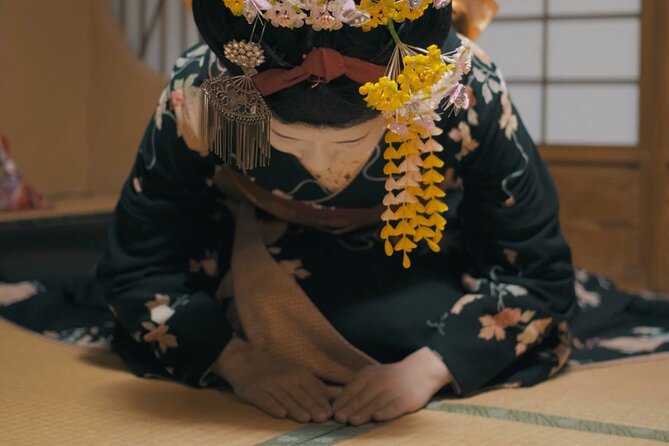
The tour begins with a short introduction to the world you are about to enter. This matters because the words geisha, geiko, and maiko are often used loosely outside Japan. Your guide explains the local terms and the stages of training, helping you replace movie stereotypes with a more accurate picture of professional artists working in music, dance, conversation, and ceremony.
I especially value this opening because it gives the walk a purpose. You are not simply looking at wooden buildings and hoping to spot a maiko. You learn what the neighborhood is for, how its traditions developed, and why certain rules of conduct matter.
More Kimono Experiences in Kyoto
- [Kyoto & Nara Day Tour] Sagano Scenic Railway & Nara Park & Fushimi Inari Taisha Thousand Torii Gates & Togetsukyo Bridge & Bamboo Grove & Kimono Forest (Departing from Osaka)
★ 4.9 · 10,942 reviews - Kyoto Geisha Walking Tour: Gion District & Hidden Gems
★ 4.7 · 3,273 reviews - Kyoto: Gion Magical Night Walking Tour with Geisha Trivia
★ 4.9 · 2,393 reviews
Walking Gion with a guide who explains the details
The first section lasts about 90 minutes, with some descriptions allowing up to two hours for the district walk. You move through Gion while your English-speaking guide points out important streets, temples, shrines, schools, and places connected with the geiko and maiko community.
Gion can look like a collection of attractive lanes if you do not know what you are seeing. A good guide turns those lanes into a working cultural district. Kenta, Ken, and Akari have been praised for explaining both the past and present of geiko life, not treating it as a frozen museum display.
The strongest part of the walk is the correction of common myths. Kenta is particularly passionate about separating the real profession from the often inaccurate image sold by popular entertainment. That approach gives the tour more value than a costume-focused presentation. You learn about discipline, study, performance, and the demanding path from maiko to geiko.
The pace is described as moderate, and the small group makes it easier to stay together. Guides have also helped take photographs for participants and adjusted to the needs of the group. If you are visiting during a hot month, bring water and dress for walking. Akari has provided cold drinks on hot days, but you should not rely on that as a guaranteed part of every departure.
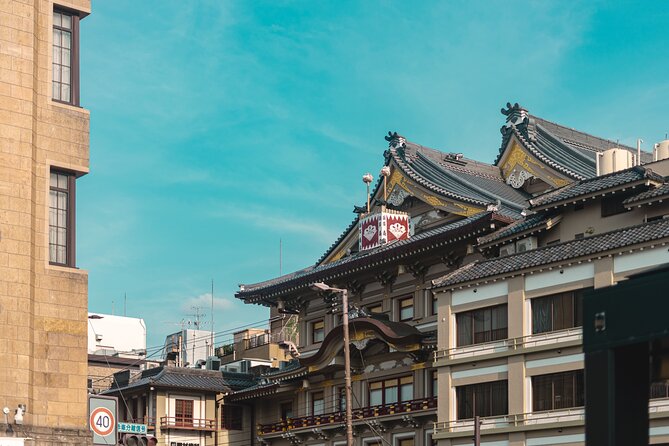
You may also pass through Miyagawa-cho, another traditional entertainment area, depending on the route. That gives you a broader sense of Kyoto’s geiko culture rather than limiting the visit to the most famous streets of Gion.
One practical point: this is an active neighborhood, not a stage set. You should listen carefully when the guide explains where photographs are appropriate and how to avoid disturbing residents, workers, and performers. The tour’s value comes partly from showing you how to look without treating people as scenery.
Meeting a maiko at Miyagawasuji
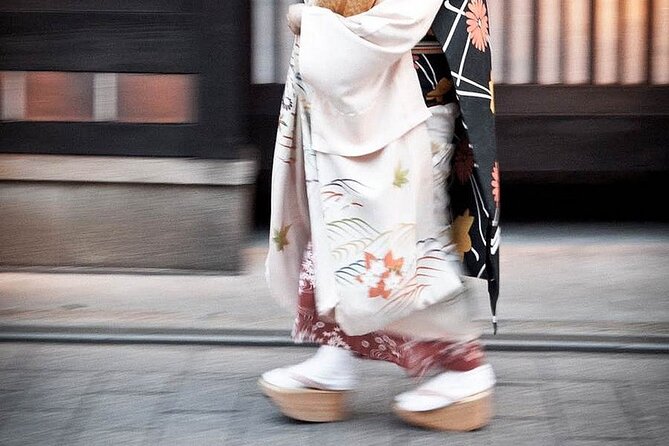
After the walk, the group goes to a venue in the Miyagawasuji area for the meeting and performance. The maiko is an apprentice geiko, still in training and only a few months away from becoming a geiko in some cases. That detail helps you understand why the encounter feels different from a standard stage show.
The meeting lasts about 50 minutes. It includes a question-and-answer session, a performance, and one or two songs or dances. Depending on the schedule and performer, you may also play a traditional game. The tone is interactive, but it remains formal and respectful.
This is the part that justifies much of the price. You are not watching from the back of a large theater. You have time to ask direct questions and observe the performer’s clothing, hairstyle, makeup, manners, and movement at close range. Questions about training and daily life can make the tradition feel human rather than mysterious.
The maiko’s answers are delivered through the tour setting, so you should remember that this is a hosted cultural presentation, not an unplanned glimpse into private life. That is not a weakness. In fact, it gives the encounter a clear structure and protects the performer from intrusive behavior.
Photography is permitted in the setting described by the experience, but one participant was asked not to share photographs online. Rules can vary, so follow the guide’s instructions and ask before taking or posting images. The right attitude is simple: enjoy the moment, take photographs only when invited, and respect any request to keep them private.
Watching the dance and noticing what matters
The dance is short, but it is not casual entertainment. The performance gives you a glimpse of a highly trained art form in which small gestures carry weight. You may notice the deliberate pace, precise hand movements, posture, fan work, and the way the kimono shapes every step.
The setting also lets you see details that disappear in a large theater. The elaborate hair and makeup are part of the visual language, while the music and movement show why training takes years. Your guide supplies context before or after the performance, so you understand more than simply that it looks beautiful.
Several people have described the performance as the emotional high point of the outing. That reaction makes sense, but expectations matter. This is a cultural presentation with a short performance, not a full evening of multiple acts. If you want a long theater program, this may feel brief. If you want an intimate introduction with time for questions, the length works well.
The meeting can also feel more personal because the group is small. With eight or fewer participants, each person has a better chance to ask something and see the performer clearly. A larger group would likely dilute that sense of connection.
A completely different kind of day out:
- PERFECT KYOTO 1-Day Bus Tour
★ 5.0 · 13,518 reviews - Kyoto: Fushimi Inari, Kinkakuji, Bamboo Grove 1 Day Bus Tour
★ 4.8 · 4,316 reviews - Kyoto: Tea Ceremony in a Traditional Tea House in Kiyomizu
★ 4.9 · 3,519 reviews - Kyoto: Gion Make Your Own Chopsticks with Engraving Option
★ 5.0 · 3,465 reviews
Choosing lunch, tea, or dinner
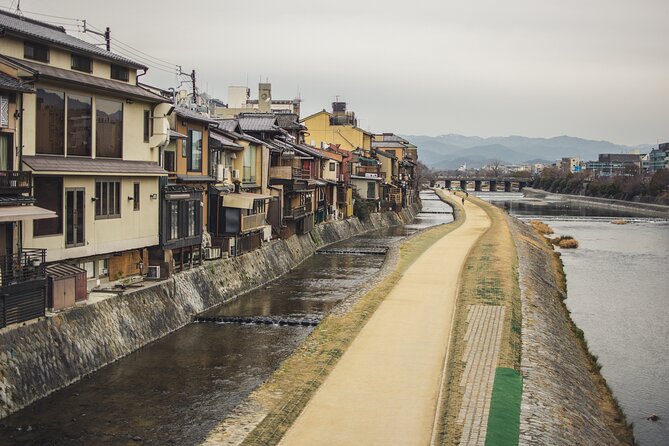
You can select the food option that best fits your day:
- The 10:30 a.m. departure includes a Japanese lunch plate.
- The 2:30 p.m. departure includes a cup of tea during the meeting.
- The 6:30 p.m. departure includes dinner with eight shared dishes.
The lunch option is a smart choice if you want the cultural activity early and prefer to keep your evening free. It has been described as tasty and well arranged, though it may not be a large meal. You should see it as a Japanese meal plate paired with a cultural program, not as a feast.
The tea option is the lightest and likely the easiest to fit between sightseeing stops. It gives you a cup of tea while you speak with the maiko, but it does not include lunch or dinner. Choose it if the conversation and performance matter more to you than dining.
The dinner option provides the fullest food setting. The meal consists of eight shared dishes, with some descriptions noting a kaiseki-style presentation. The dishes are attractively arranged and offer a range of Japanese flavors, though the small portions may leave you wanting more. Plan on the dinner as a refined tasting-style meal rather than a filling banquet.
The restaurant setting adds useful context. You are not eating in isolation from the cultural program. The meal gives you a relaxed period to ask questions, notice the maiko’s formal presentation, and let the conversation develop. Drinks are included in the dinner setting according to the experience descriptions, while the exact choices are not specified.
At $108, the value depends on how you price access. A neighborhood walk alone would not justify this amount for most people. The cost becomes easier to defend because it combines a 1.5 to 2-hour guided walk, a small-group meeting, a live performance, and food or tea. It is still a premium activity, so budget-minded visitors should compare it with a regular Gion walk and a separate meal.
Why the guides make a difference
The guide is central to this outing. Kenta and Ken receive especially strong praise for their English, warmth, humor, and ability to explain sensitive subjects without making the material dry. Akari is also noted for her enthusiasm, clear storytelling, and willingness to answer questions beyond the scheduled tour.
That last point matters in Kyoto. A guide who simply recites facts can leave you with dates and vocabulary but little understanding. Here, the better guides connect the streets to current practice and explain how to observe the district without causing offense.
You also get a chance to ask questions throughout the walk and again during the maiko meeting. This makes the tour suitable for curious first-time visitors, families with older children, and anyone who wants more than a polished performance.
The English is generally described as easy to follow. If you prefer a slower explanation, guides have adjusted their pace for participants who are less comfortable with English. Still, the tour is offered in English only, so it may not be ideal if you need another language.
Timing, walking, and group size
The activity lasts 210 minutes, or three and a half hours, although it is also commonly described as a three-hour experience. The walk and meeting together account for roughly three hours, with meal timing and transitions included in the schedule.
Daylight and evening departures create different moods. The evening option lets you see Gion after dark, which can feel especially atmospheric. The daylight option may be better if you want to identify buildings and streets clearly, and one participant specifically preferred taking the tour during daylight hours.
The walk is not described as strenuous, but it does require steady movement through the district. People with mobility impairments may find it unsuitable. Large luggage and oversized bags are not allowed, so leave suitcases at your hotel or in appropriate storage before meeting the group.
A maximum of eight participants is a real advantage. You can hear the guide, stay close on narrow streets, and have a fair chance to speak during the question period. The small size also supports the respectful tone that this subject requires.
Who should book this Gion experience?
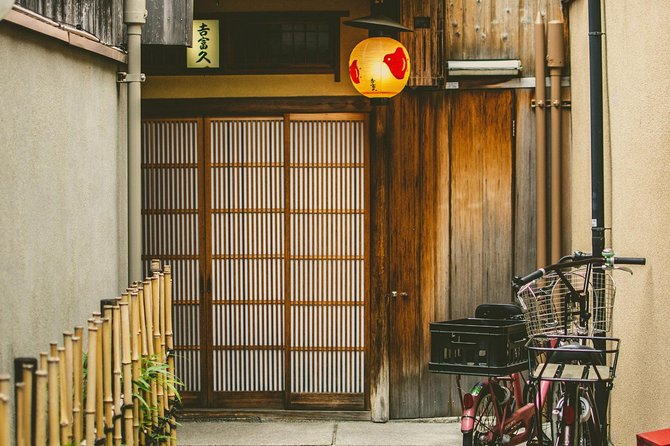
I would choose this tour if you want to understand Kyoto’s geiko culture instead of merely seeing a performer in costume. It suits first-time visitors who want a strong introduction, couples looking for a memorable evening, and families with children old enough to appreciate a formal cultural setting.
It is also a good fit if you enjoy asking questions. The meeting is not passive, and your experience will be better if you arrive with genuine curiosity about training, music, dance, clothing, and daily routines.
You may want to skip it if your main goal is a cheap walking tour, a large dinner, or a long theatrical production. The meal portions are controlled, the performance is relatively short, and the cultural setting calls for respectful behavior rather than casual sightseeing.
Should you book it?
Book this experience if the chance to speak with a maiko matters to you. The combination of a guided Gion walk, clear cultural background, a small group, food or tea, and a live dance makes it one of Kyoto’s stronger choices for visitors seeking direct contact with traditional arts.
I would select the lunch option for an easy daytime plan, tea for the lightest commitment, and dinner if you want the most complete evening. Choose daylight if you care most about seeing the streets clearly, or evening if you prefer Gion’s quieter nighttime atmosphere.
For $108, this is not the cheapest way to see Gion. It is a reasonable price for a carefully managed meeting that gives you context, conversation, and performance rather than a quick photograph. If you respect the setting and arrive ready to listen, this tour can become one of the most memorable parts of your Kyoto visit.
FAQ
Where does the tour meet?
Meet in front of the statue of Izumo-no-Okuni near Exit 4 of Keihan Gion-Shijo Station.
How long does the experience last?
The listed duration is 210 minutes, or three and a half hours. The program includes about 1.5 to 2 hours of walking and a 50-minute meeting with the maiko, along with the selected meal or tea option.
Is the tour offered in English?
Yes. The tour includes a live English-speaking guide.
What food options are available?
You can choose Japanese lunch, an afternoon tea break, or dinner. Lunch includes a Japanese lunch plate, tea includes one cup of tea, and dinner includes eight shared dishes.
Can I ask the maiko questions?
Yes. The meeting includes a question-and-answer session, along with a traditional dance performance and one or two songs.
Is the tour suitable for people with mobility impairments?
No. The activity is listed as unsuitable for people with mobility impairments. Large bags and luggage are also not allowed.
More Dinner Experiences in Kyoto
- Kyoto Evening Gion Food Tour Including Kaiseki Dinner
★ 5.0 · 62 reviews - Kyoto: Maiko Dinner in Traditional Restaurant and Tour
★ 4.8 · 55 reviews - Kyoto: Lunch or Dinner with Maiko
★ 4.2 · 52 reviews - Private Dinner with Maiko and Geiko in Kyoto
★ 5.0 · 28 reviews
More Dining Experiences in Kyoto
- Kyoto Gion Cultural Walk & Geisha Show with Dining Options
★ 5.0 · 483 reviews - Dinner with Maiko in a Traditional Kyoto Style Restaurant Tour
★ 5.0 · 175 reviews - Kyoto: Geisha Dinner & Gion Cultural Walk
★ 5.0 · 73 reviews - Private Dinner with a Geisha
★ 5.0 · 65 reviews
Just added in Kyoto
- The “Golden Route” and Ancient Japan by DIAMIR Erlebnisreisen – 14-Day Tour★ 2.0 · 2 reviews
- Japan: Castles & Cuisine by G Adventures – 6-Day Kyoto to Osaka Tour★ 4.5 · 4 reviews
- Cycle Japan by Explore! – 13-Day Kyoto to Tokyo Tour★ 4.7 · 12 reviews
- Cycle Japan by Intrepid Travel – 11-Day Kyoto to Tokyo Tour★ 4.8 · 2 reviews
- Classic Japan by Intrepid Travel – 11-Day Kyoto to Tokyo Tour★ 4.4 · 14 reviews
- Ancient & Modern Japan 14-Day Tour by Exodus Adventure Travels★ 4.4 · 40 reviews
- 5 Day Cultural Adventure of Kyoto, Nara & Osaka by Tourist Journey★ 2.5 · 2 reviews
- 12 Days Kinosaki Onsen Escape: A Journey Through Japan’s Timeless Towns by UME Travel★ 4.8 · 5 reviews
Kimono and Cultural Dress, compared.
![[Kyoto & Nara Day Tour] Sagano Scenic Railway & Nara Park & Fushimi Inari Taisha Thousand Torii Gates & Togetsukyo Bridge & Bamboo Grove & Kimono Forest (Departing from Osaka)](https://media.japanvisits.com/wp-content/uploads/kyoto-nara-day-tour-sagano-scenic-railway-nara-park-fushimi-inari-taisha-thousand-torii-gates-togetsukyo-bridge-bamboo-grove-kimono-forest-departing-from-osaka-k110001-400x257.jpg)

Tokyo Asakusa Kimono&Yukata Rental at Kimono Miyabi Asakusa Station
Read our review →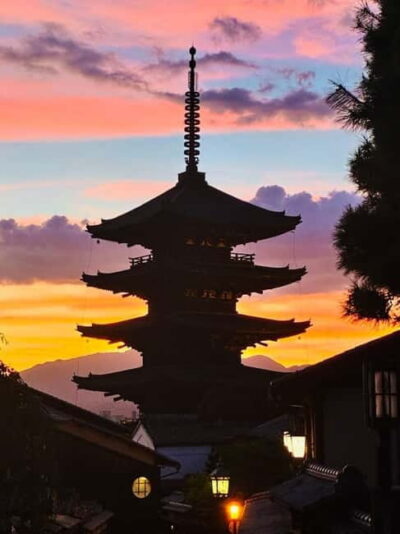
Kyoto Geisha Walking Tour: Gion District & Hidden Gems
Read our review →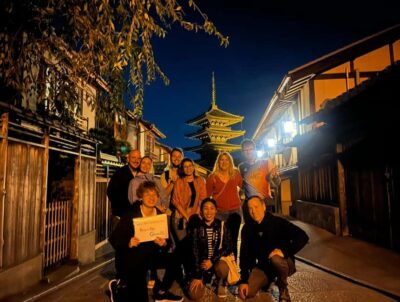
Gion Magical Night Walking Tour with Geisha Trivia
Read our review →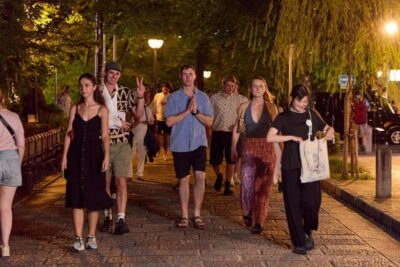
Gion Geisha District Walking Tour – Stories of Geisha
Read our review →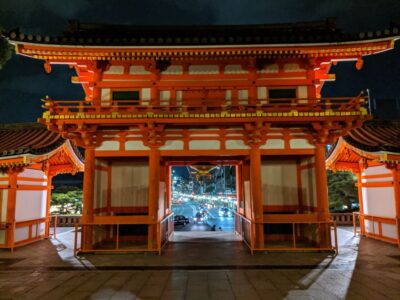
Best of Kyoto: Gion, Geisha, Pagodas & Cobblestones
Read our review →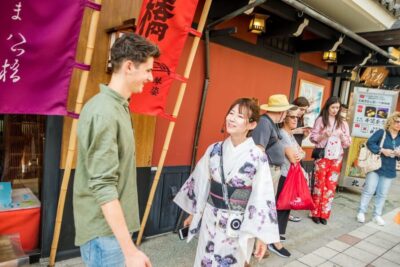
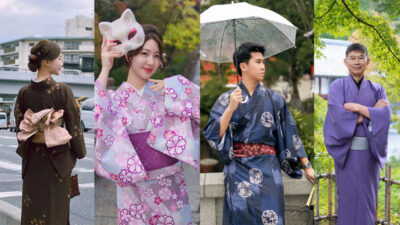
Kyoto Kimono Rental Experience (Optional Exquisite Hair Styling/Japanese Makeup/Photography) (Ookini Kiyomizu-dera Main Store)
Read our review →Browse the lists this tour appears in