
Reviewed · KIMONO AND CULTURAL DRESS
Kyoto: Geisha Dinner & Gion Cultural Walk
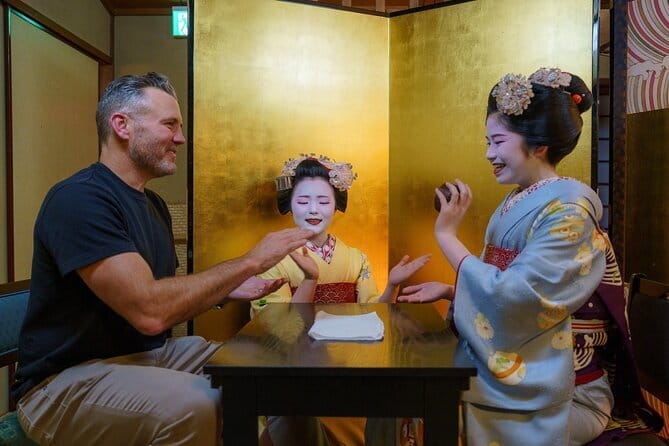
Kyoto reveals itself after sunset. This three-hour evening combines a 40-minute walk through Gion with a kaiseki-style dinner, unlimited sake, and time with a geiko or maiko. I like the way it puts the dinner in context first, instead of dropping you into a cultural performance with no explanation. I also like the relaxed contact with the performer, including questions, traditional dances, and games such as Konpira.
The main caution is that this is not a guaranteed nightly appointment with a geiko or maiko. The performer depends on availability, and the group tour needs at least four participants to operate. At $257 per person, the price is serious, so you should book this for the cultural access and personal conversation, not simply for a meal.
In This Review
- Key points to know before booking
- Why this Gion evening feels different
- Starting at CACAO MARKET by MARIEBELLE KYOTO
- Walking Gion with an English-speaking guide
- Entering the local restaurant for a kaiseki-style meal
- Meeting the geiko or maiko
- The guides make or break the evening
- Is $257 a fair price?
- Group size, timing, and practical comfort
- Who will enjoy this Kyoto evening most?
- My final take on the Gion dinner
- FAQ
- How long does the Kyoto geisha dinner tour last?
- Where does the tour begin?
- Where does the tour finish?
- What is included in the price?
- Are extra food and drinks included?
- Is a geiko or maiko guaranteed to attend?
- How many people are needed for the group tour to operate?
- Is the tour available in English?
- Can I cancel for a full refund?
Key points to know before booking
- The evening begins at CACAO MARKET by MARIEBELLE KYOTO, then continues on foot through Gion before dinner.
- You receive about two hours with a geiko or maiko, including traditional dancing, conversation, and games.
- The dinner is kaiseki-style, with unlimited sake included, while extra food and drinks cost more.
- The English-speaking guides are a major strength, with Taiga, Andi, Takuma, Tomoko, Soma, Moto, and Endy all praised for clear explanations and helpful translation.
- The group needs at least four participants, and geiko or maiko attendance depends on availability.
- The tour lasts three hours, ends at FamilyMart, and private groups can be arranged.
Why this Gion evening feels different
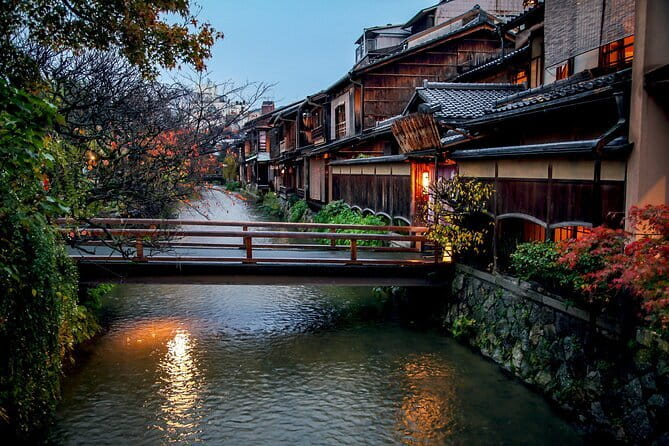
Gion is not a stage set built for tourists. It is a traditional Kyoto district where the streets, teahouses, and narrow lanes connect to a working performing-arts culture. A guide helps you read what you are seeing, which matters because much of Gion’s meaning is easy to miss from the outside.
The evening also gives you something a standard sightseeing walk cannot: time to ask questions. You are not just watching a short dance and moving on. The performer may explain her work, answer questions about training and daily life, play a traditional game, and perform more than one dance.
That personal contact is the heart of the tour. Past participants described their geiko or maiko hosts as graceful, charming, open, and generous with their time. One evening included two dances and a game of Konpira, while another featured questions, conversation, and a fun game after dinner.
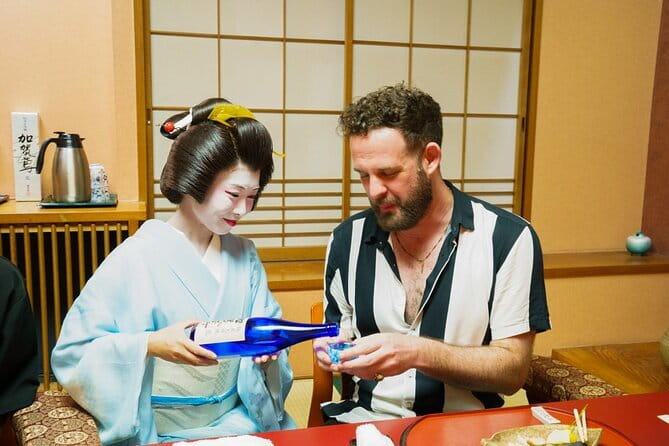
I especially value the guide’s role as a bridge. The guide explains Kyoto customs in English and can help with translation between you, the performer, and the restaurant staff. Andi was repeatedly praised for combining humor, kindness, cultural respect, and clear explanations. Taiga was also singled out for his energy, excellent English, and ability to make the evening easy to follow.
More Kimono Experiences in Kyoto
- [Kyoto & Nara Day Tour] Sagano Scenic Railway & Nara Park & Fushimi Inari Taisha Thousand Torii Gates & Togetsukyo Bridge & Bamboo Grove & Kimono Forest (Departing from Osaka)
★ 4.9 · 10,942 reviews - Kyoto Geisha Walking Tour: Gion District & Hidden Gems
★ 4.7 · 3,273 reviews - Kyoto: Gion Magical Night Walking Tour with Geisha Trivia
★ 4.9 · 2,393 reviews
Starting at CACAO MARKET by MARIEBELLE KYOTO
The meeting point is CACAO MARKET by MARIEBELLE KYOTO. From there, the group begins the Gion walk.
This is a useful starting point because it gives you a clear place to meet before entering the district. You should arrive ready to walk, since the route takes about 40 minutes before the main dinner portion begins. The published itinerary describes the walking section as a guided tour of Gion, followed by a local restaurant visit.
Do not expect a full-day exploration of Kyoto here. The walk is short and focused. Its purpose is to introduce the district, explain the connection between Gion and geiko culture, and set the tone for dinner.
The exact balance can vary. One participant described about 30 minutes of walking and the rest of the evening in a teahouse. That is useful to keep in mind: the Gion portion is an introduction, not the main event.
Walking Gion with an English-speaking guide
The guide-led walk is where the evening gains its historical and social context. You learn about the lives, customs, and training of geiko and maiko, along with the part Gion plays in Kyoto’s cultural identity.
A good guide can explain details that would otherwise seem mysterious. One participant learned about the demanding class timetable followed by geiko and maiko. That small detail helped explain the discipline behind the polished performance later in the evening.
The guides also explain language and terminology. In Kyoto, geiko refers to a professional entertainer, while maiko is an apprentice. The activity description uses both terms because the person joining your dinner may be either, depending on availability. Your guide should help clarify who you meet and explain her place within the tradition.
The walk is not described as crowded or frantic. One person noted that the part of Gion visited was quieter than expected. That can be a plus if you want a calmer introduction, though anyone hoping for a dramatic parade of performers on the street may find the walk more subdued.
Please respect the district. This tour offers a proper introduction, but Gion is not a place for treating people as scenery. The guide’s explanations help you understand why discretion and good manners matter.
Entering the local restaurant for a kaiseki-style meal
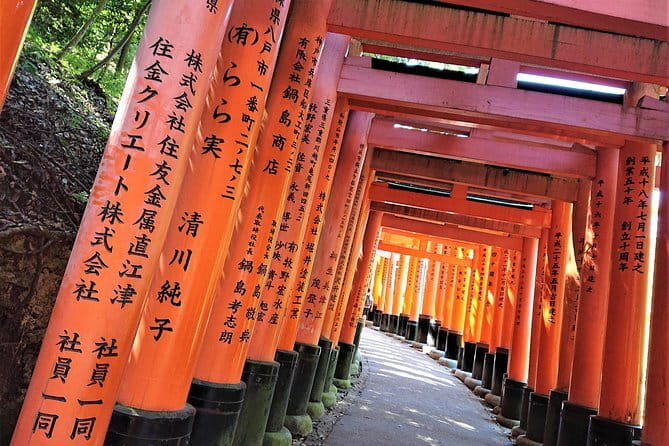
After the walk, you spend roughly two and a half hours at a local restaurant, with about two hours accompanied by a geiko or maiko. This is where the evening settles into its main rhythm: dinner, conversation, performance, and questions.
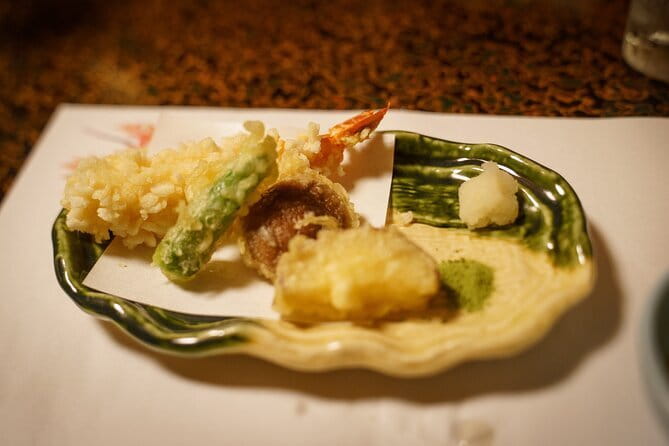
The meal is described as kaiseki-style. That usually means a sequence of carefully arranged Japanese dishes rather than one large plate, and the supplied details describe the food as attractive, filling, delicious, and well presented. One participant enjoyed a multi-course meal but wished each dish had been explained more fully. That is a fair point to remember.
If food is an important part of your trip, ask your guide about the dishes as they arrive. The guide may be able to explain ingredients, serving order, or the reason for a particular presentation. The meal is part of the cultural setting, but the listing does not promise a detailed food lecture with every course.
Unlimited sake is included. That adds value for adults who want to try Japanese sake during the meal, though extra food and drinks are not included. The activity does not provide a detailed beverage menu, so you should not assume every drink beyond the included sake is covered.
The restaurant itself appears to contribute to the welcome. The restaurant owner and staff were praised for being hospitable and fun. That helps create the informal atmosphere promised by the tour, especially for people who feel nervous about attending a formal cultural event.
A completely different kind of day out:
- PERFECT KYOTO 1-Day Bus Tour
★ 5.0 · 13,518 reviews - Kyoto: Fushimi Inari, Kinkakuji, Bamboo Grove 1 Day Bus Tour
★ 4.8 · 4,316 reviews - Kyoto: Tea Ceremony in a Traditional Tea House in Kiyomizu
★ 4.9 · 3,519 reviews - Kyoto: Gion Make Your Own Chopsticks with Engraving Option
★ 5.0 · 3,465 reviews
Meeting the geiko or maiko
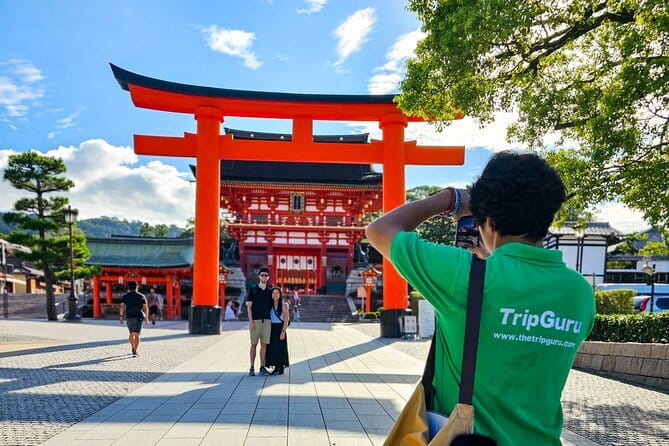
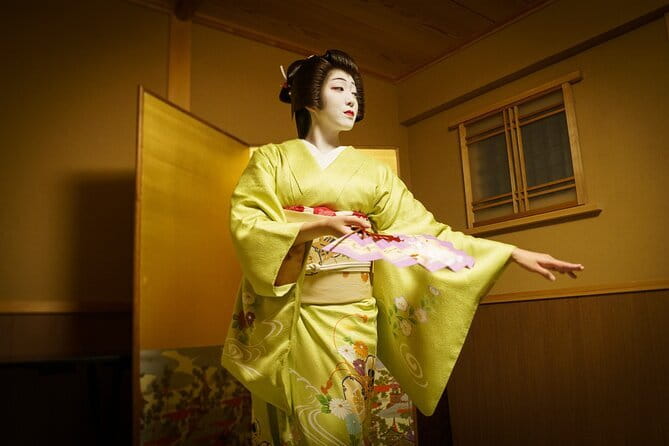
The performer is the reason most people consider this tour. You can expect traditional dance, music, conversation, and a chance to ask questions. The setting is designed to be welcoming rather than stiff, which makes the experience easier for first-time visitors.
The dances are not just decoration. Your guide explains the work and training behind the performance, helping you notice the controlled movement, costume, makeup, and formal manner. Several people described the dancing as beautiful, graceful, and professional.
Conversation is just as important. You may learn about the performer’s perspective, daily schedule, customs, and role in Kyoto’s traditional arts. A guide helps with translation, so you can ask questions without worrying about a language barrier.
The game element gives the evening a lighter turn. Konpira was specifically mentioned, and participants also described playing games with their maiko or geiko host. These moments matter because they break the distance between audience and performer. You are still taking part in a formal cultural meeting, but the evening does not remain solemn from beginning to end.
The length of the visit is another strength. You are not limited to a quick appearance followed by a photograph. The published details allow about two hours with the geiko or maiko, and several people described substantial time for conversation, questions, dancing, and games.
Still, attendance is not guaranteed. The provider notes that geiko or maiko availability can change, and you will be informed as early as possible if the arrangement cannot be made. That condition should be taken seriously when you decide how much of your trip budget to commit.
The guides make or break the evening
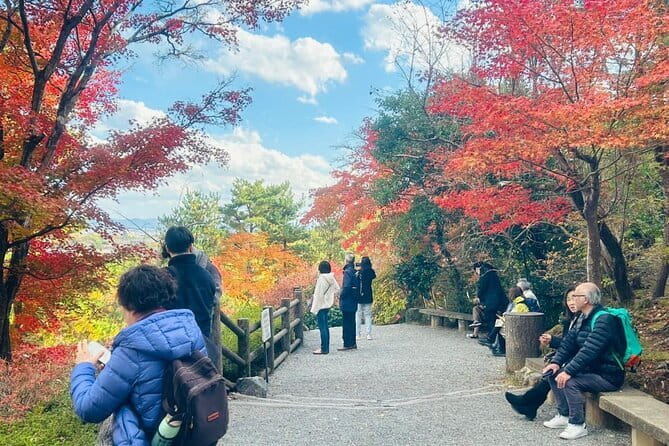
The strongest pattern in the feedback is the quality of the guides. Andi was praised for her cultural knowledge, kindness, humor, and translation help. Taiga received similar praise for enthusiasm, professionalism, and detailed explanations of Kyoto customs.
Takuma was described as energetic, positive, friendly, and kind. Tomoko was especially helpful with translation, while Soma and Moto were praised for answering questions and explaining the evening clearly. Endy was noted for giving a strong introduction to Gion and the lives of geiko.
That list is useful because it tells you what to expect from the guide’s role. This is not simply someone who walks you to a restaurant. The guide explains the district, introduces the cultural setting, manages communication, and helps you understand what is happening at dinner.
Guide assignment can vary, so you cannot count on requesting a specific person. Still, the repeated praise suggests that the company places real weight on English communication and cultural interpretation.
I would ask questions throughout the evening. This is one of the few activities where your curiosity improves the experience for everyone. Ask about training, performance, clothing, schedules, Kyoto customs, and the meaning of what you see.
Is $257 a fair price?
At $257 per person, this is an expensive evening. You are paying far more than you would for a regular dinner in Kyoto, and the meal alone does not justify the cost.
The value comes from the combination of several difficult-to-arrange parts: an English-language Gion introduction, a local restaurant, a kaiseki-style meal, unlimited sake, guide support, and extended time with a geiko or maiko. If you tried to arrange comparable access on your own, the language and booking barriers could be substantial.
I would call the price fair for someone who considers this a special cultural occasion. It makes less sense if you mainly want a cheap dinner, a quick performance, or a general walking tour of Gion.
The strongest value comes when you use the time well. Ask questions, listen to the explanations, try the sake, pay attention to the dances, and treat the performer as a working artist rather than a photo opportunity.
Private groups are available, which may improve the value for families or friends who want a more personal setting. The supplied information does not state the private-group surcharge, so you will need to check the price before choosing that option.
Group size, timing, and practical comfort
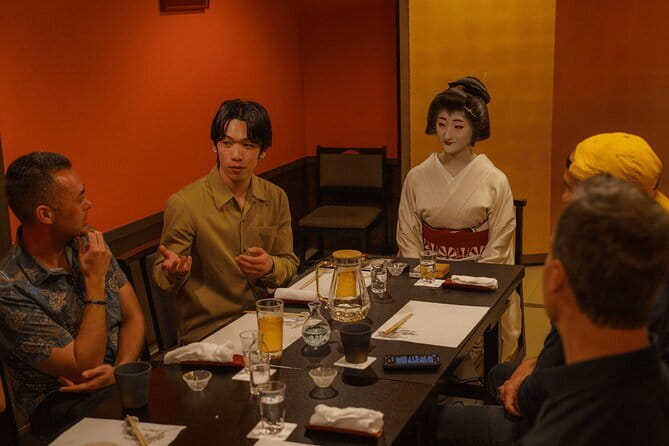
The tour lasts three hours. The evening begins at CACAO MARKET by MARIEBELLE KYOTO and ends at FamilyMart, so you should plan your onward route from the finishing point rather than assuming you will return to the start.
The group tour needs at least four participants. If fewer than four people are booked as the date approaches, the activity may be difficult to operate. That is another reason to avoid placing this on the one night of your trip when nothing else can be rearranged.
The experience is listed as wheelchair accessible. However, the itinerary includes a 40-minute walk through Gion, so you should confirm the specific route and restaurant setup if you have mobility needs. Accessibility is provided as a feature, but the walking portion still deserves attention.
English is the stated tour language, and a live English-speaking guide leads the activity. The translation support described in the feedback is particularly useful during the dinner and conversation with the geiko or maiko.
Cancellation is free up to 14 days in advance for a full refund. That is a relatively firm deadline, so check your plans before booking and avoid waiting until the last two weeks if your schedule is uncertain.
Who will enjoy this Kyoto evening most?
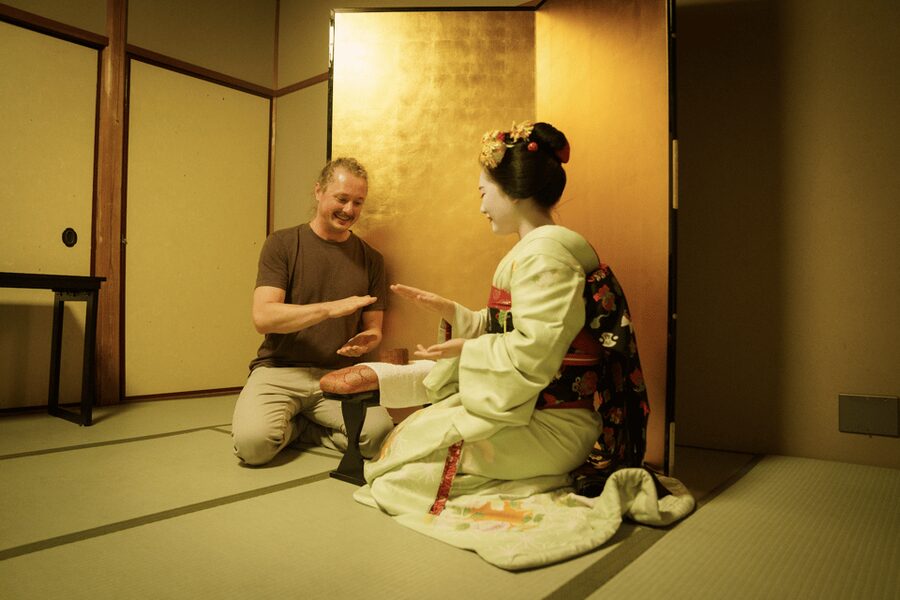
I would recommend this tour to you if you want cultural explanation along with the performance. It suits first-time visitors who have heard of geiko and maiko but want to understand the difference, the training, and the traditions behind the appearance.
It also fits couples and small groups looking for one memorable evening rather than another temple visit. The dinner, conversation, dances, and games create a strong change of pace after daytime sightseeing.
Families with older children may also find it worthwhile if everyone can take part respectfully and follow the three-hour schedule. The private-group option could help if you want a quieter arrangement.
I would be more cautious if you are mainly interested in food. The meal is well regarded, but the evening is not presented as a specialist culinary tour, and one participant wanted more explanation of the dishes.
You should also reconsider if your budget is tight. Kyoto offers many less expensive cultural activities, and this tour only earns its price if meeting a geiko or maiko is a major priority.
My final take on the Gion dinner
This is one of Kyoto’s more distinctive evening activities because it joins place, food, performance, and conversation. The Gion walk gives you basic context, while the dinner provides the rare opportunity to spend real time with a geiko or maiko.
I like the guides most of all. Their explanations and translation turn an unfamiliar tradition into something you can approach with respect and curiosity. The food and unlimited sake add comfort, but the personal exchange is what makes the evening memorable.
Book it if you want a serious cultural splurge and can accept that performer availability is not absolute. Skip it if you only want a standard dinner or if the $257 price would make the rest of your Kyoto trip uncomfortable. For the right visitor, this is a strong choice, and the repeated praise for guides such as Andi, Taiga, and Takuma suggests you will be well supported throughout the evening.
FAQ
How long does the Kyoto geisha dinner tour last?
The activity lasts three hours. The schedule includes about 40 minutes walking through Gion and approximately two and a half hours at a local restaurant.
Where does the tour begin?
The meeting point is CACAO MARKET by MARIEBELLE KYOTO.
Where does the tour finish?
The tour finishes at FamilyMart.
What is included in the price?
The price includes the Gion walking tour with a local guide, about two hours with a geiko or maiko, a kaiseki-style dinner, and unlimited sake.
Are extra food and drinks included?
No. Extra food and drinks are not included. Unlimited sake is included, but the activity does not cover additional beverages or food.
Is a geiko or maiko guaranteed to attend?
No. Attendance depends on geiko and maiko availability. If the provider cannot arrange attendance, you will be informed as early as possible.
How many people are needed for the group tour to operate?
The group tour requires at least four participants. If fewer than four people are booked as the date approaches, operation may become difficult.
Is the tour available in English?
Yes. The tour has a live English-speaking guide, and English is the stated tour language.
Can I cancel for a full refund?
Yes. You can cancel up to 14 days in advance for a full refund. The experience is also listed as wheelchair accessible, and private groups are available.
More Dinner Experiences in Kyoto
- Kyoto Evening Gion Food Tour Including Kaiseki Dinner
★ 5.0 · 62 reviews - Kyoto: Maiko Dinner in Traditional Restaurant and Tour
★ 4.8 · 55 reviews - Kyoto: Lunch or Dinner with Maiko
★ 4.2 · 52 reviews - Private Dinner with Maiko and Geiko in Kyoto
★ 5.0 · 28 reviews
More Dining Experiences in Kyoto
- Kyoto Gion Cultural Walk & Geisha Show with Dining Options
★ 5.0 · 518 reviews - Kyoto Gion Cultural Walk & Geisha Show with Dining Options
★ 5.0 · 483 reviews - Dinner with Maiko in a Traditional Kyoto Style Restaurant Tour
★ 5.0 · 175 reviews - Private Dinner with a Geisha
★ 5.0 · 65 reviews
Just added in Kyoto
- The “Golden Route” and Ancient Japan by DIAMIR Erlebnisreisen – 14-Day Tour★ 2.0 · 2 reviews
- Japan: Castles & Cuisine by G Adventures – 6-Day Kyoto to Osaka Tour★ 4.5 · 4 reviews
- Cycle Japan by Explore! – 13-Day Kyoto to Tokyo Tour★ 4.7 · 12 reviews
- Cycle Japan by Intrepid Travel – 11-Day Kyoto to Tokyo Tour★ 4.8 · 2 reviews
- Classic Japan by Intrepid Travel – 11-Day Kyoto to Tokyo Tour★ 4.4 · 14 reviews
- Ancient & Modern Japan 14-Day Tour by Exodus Adventure Travels★ 4.4 · 40 reviews
- 5 Day Cultural Adventure of Kyoto, Nara & Osaka by Tourist Journey★ 2.5 · 2 reviews
- 12 Days Kinosaki Onsen Escape: A Journey Through Japan’s Timeless Towns by UME Travel★ 4.8 · 5 reviews
Kimono and Cultural Dress, compared.
![[Kyoto & Nara Day Tour] Sagano Scenic Railway & Nara Park & Fushimi Inari Taisha Thousand Torii Gates & Togetsukyo Bridge & Bamboo Grove & Kimono Forest (Departing from Osaka)](https://media.japanvisits.com/wp-content/uploads/kyoto-nara-day-tour-sagano-scenic-railway-nara-park-fushimi-inari-taisha-thousand-torii-gates-togetsukyo-bridge-bamboo-grove-kimono-forest-departing-from-osaka-k110001-400x257.jpg)

Tokyo Asakusa Kimono&Yukata Rental at Kimono Miyabi Asakusa Station
Read our review →
Kyoto Geisha Walking Tour: Gion District & Hidden Gems
Read our review →
Gion Magical Night Walking Tour with Geisha Trivia
Read our review →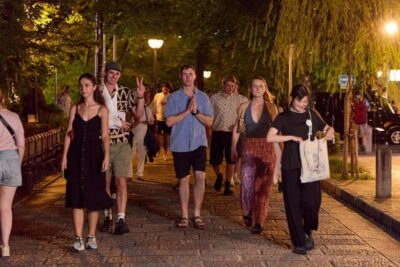
Gion Geisha District Walking Tour – Stories of Geisha
Read our review →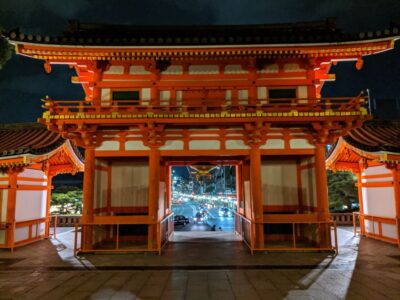
Best of Kyoto: Gion, Geisha, Pagodas & Cobblestones
Read our review →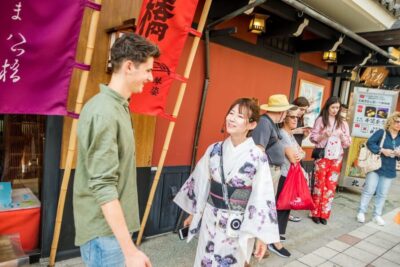
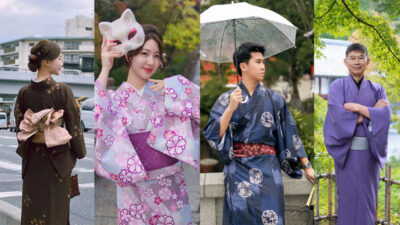
Kyoto Kimono Rental Experience (Optional Exquisite Hair Styling/Japanese Makeup/Photography) (Ookini Kiyomizu-dera Main Store)
Read our review →Browse the lists this tour appears in