
Reviewed · KIMONO AND CULTURAL DRESS
Private Dinner with a Geisha
Some Kyoto evenings are worth planning around. This one combines a guided walk through Gion with a private meal, conversation with a geiko or maiko, and a traditional dance performance. At $381.49 per person, it is a serious splurge, but the chance to meet a working geisha in a private setting is rare.
I especially like the English-speaking guides, who prepare you for the customs and explain what you are seeing. I also like the personal questions, songs, dances, games, and stories shared during dinner. The main caution is the food: the fixed kaiseki menu can be difficult for picky eaters, vegetarians, vegans, or anyone uneasy with seafood.
The evening lasts about three to three and a half hours and begins at 5 p.m. in front of Minamiza Kabuki Theatre. Your group then walks through Gion before settling into a Japanese restaurant or tea house. The event is highly rated, with 97 percent recommending it, but careful planning matters because the booking cannot be refunded or changed.
In This Review
- Key Points Before You Book
- Meeting the Guide at Minamiza Kabuki Theatre
- Walking Through Gion Before Dinner
- Entering the Private Restaurant or Tea House
- Conversation With a Maiko or Geiko
- Dance, Shamisen, Songs, and Traditional Games
- How Much Value Does $381.49 Provide?
- Timing, Comfort, and Dietary Planning
- Who Will Enjoy This Kyoto Evening?
- Should You Book Private Dinner With a Geisha?
- FAQ
- Where does the private geisha dinner begin?
- What time does the experience start?
- How long does the dinner experience last?
- Is dinner included?
- Are drinks included?
- Can children join the experience?
- Can I cancel or change the booking?
Key Points Before You Book
- Gion comes first: You begin with a guided walk through Kyoto’s famous geiko district before dinner.
- The cultural meeting is the main event: You can ask a geiko or maiko about training, daily life, clothing, performance, and tradition.
- Expect a real performance: Singing, shamisen music, dancing, and traditional games may all be part of the evening.
- Kaiseki is fixed and traditional: Dinner includes multiple courses, often featuring seafood, vegetables, and tempura.
- The guide makes a big difference: Guides such as Mia, Mie, and Mei have been praised for clear English, warmth, humor, and strong cultural preparation.
- This is an expensive, non-refundable splurge: Book it for the geiko or maiko encounter, not simply for dinner.
Meeting the Guide at Minamiza Kabuki Theatre
The meeting point is in front of the main gate of Minamiza Kabuki Theatre, at 198 Nakanochō in Kyoto’s Higashiyama Ward. Face Shijo Street and look for your guide near the theater entrance. The scheduled start is 5 p.m., so arrive early enough to find the theater without rushing.
Minamiza is a useful meeting point because it sits near Gion and is close to public transportation. Still, Kyoto streets around the theater can be busy and confusing, especially at night. I would save the address in your phone and allow extra time if you are coming from another part of the city.
Your guide is more than a person who leads you to dinner. The strongest part of this experience begins before you meet the geiko or maiko. A good guide explains the difference between a geiko and a maiko, describes the training involved, and helps you ask questions in a respectful way.
Several guides have received especially warm praise. Mia is described as funny, welcoming, and highly informed about Gion and geisha culture. Mie has also been praised for excellent English and a kind manner. Mei is noted for her strong grasp of the subject and her obvious care for the maiko and geiko tradition.
That preparation matters. Without it, you might spend the evening admiring the clothing and performance without understanding the work behind them. With it, small details become more meaningful.
More Kimono Experiences in Kyoto
- [Kyoto & Nara Day Tour] Sagano Scenic Railway & Nara Park & Fushimi Inari Taisha Thousand Torii Gates & Togetsukyo Bridge & Bamboo Grove & Kimono Forest (Departing from Osaka)
★ 4.9 · 10,942 reviews - Kyoto Geisha Walking Tour: Gion District & Hidden Gems
★ 4.7 · 3,273 reviews - Kyoto: Gion Magical Night Walking Tour with Geisha Trivia
★ 4.9 · 2,393 reviews
Walking Through Gion Before Dinner
For most options other than the casual dinner, the evening begins with a walk through Gion. The walking portion takes about 45 minutes according to the detailed itinerary, and the full experience lasts roughly three hours, or up to three and a half hours depending on the option and timing.
Gion is known for its traditional wooden houses, narrow lanes, restaurants, and tea houses. The walk gives you a look at the district before you enter the private dining setting. It also provides context about the people who work there and the difference between public sightseeing and private entertainment.
This is not a general Kyoto sightseeing walk packed with temples and major monuments. The focus is the geiko district and the customs surrounding it. That makes it most useful for you if you already have other time set aside for Kyoto’s major sights.
The guide also helps you separate fact from popular myths. The evening is built around actual cultural practice rather than a staged costume photo opportunity. That distinction is important in Gion, where visitors need to behave carefully and avoid treating the neighborhood like a theme park.
One practical concern is group size. The activity is described as private for your party, but some versions may involve a larger gathering or a shared setting, depending on the option selected. One detailed account described a group large enough that hearing the guide during the walk was difficult. If a quiet, fully private evening is essential, confirm exactly which package you are buying.
Entering the Private Restaurant or Tea House
After the walk, you go to a Japanese restaurant or tea house. The room is traditionally styled, and the setting is a major part of the experience. You are not simply eating in a standard tourist restaurant. You are entering the sort of space associated with formal Japanese entertainment.
The dining option determines what is included. A half or full kaiseki meal may be offered, while the private tea house option includes drinks such as sake and beer. Drinks are not included with every package, so check the option carefully before paying.
Kaiseki is served in several courses rather than as one large plate. The meal may include seafood, vegetables, tempura, and other traditional preparations. The food is intended to be part of the cultural lesson, with seasonal presentation and carefully arranged courses.
I would not choose this tour expecting familiar Western food or flexible substitutions. The menu is fixed, and several people have praised the meal as delicious and beautifully traditional. Others have found it hard to enjoy because of raw fish, seafood, unfamiliar flavors, or dietary restrictions.
This is the biggest practical weakness of the experience. Specific dietary requirements are requested at booking, but the handling of those requests has not always been consistent. Some diners who avoided seafood or followed a vegetarian diet found that the fixed menu did not meet their needs.
If you have a serious allergy, strict religious diet, vegan diet, or strong dislike of seafood, contact the operator before booking and get a clear answer. Do not assume that writing a note at checkout guarantees a replacement meal. The safest choice may be to skip this experience or book only if the operator confirms suitable arrangements.
Conversation With a Maiko or Geiko
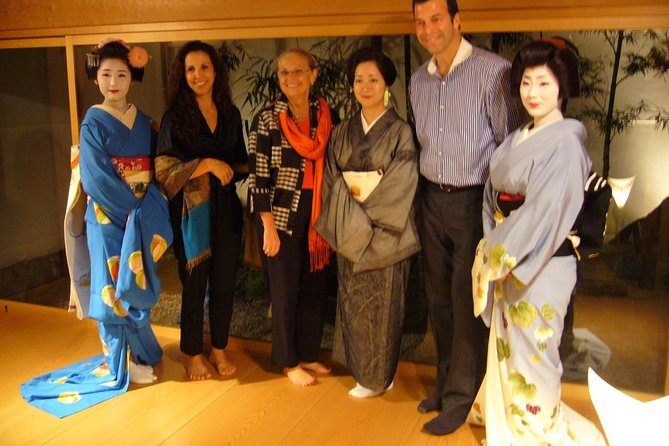
The heart of the evening is the conversation. A maiko is an apprentice geiko, while a geiko is an experienced professional entertainer. Depending on the booking and availability, you may meet one or both.
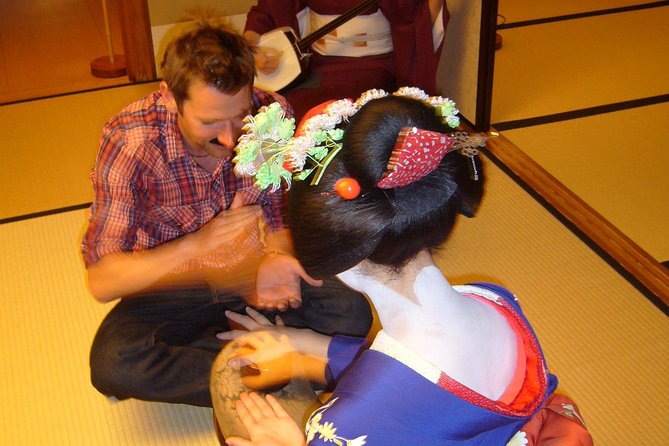
Your guide translates and keeps the conversation moving. You can ask about training, daily routines, clothing, hair, sleep, studies, music, and the path from maiko to geiko. One family even asked how a maiko sleeps while keeping her traditional hairstyle in place. Another young participant discussed pop culture interests with her host.
This personal exchange is what makes the price easier to understand. You are not just watching a performance from a distance. You have time to ask questions and hear answers through a guide who can explain the cultural meaning behind them.
The tone can be warm and playful. The maiko may teach you a simple game, join a drinking game, or keep the conversation lively between courses. Children and teenagers have taken part, though children must be accompanied by an adult. The minimum drinking age in Japan is 20, so younger participants should not be included in alcohol-based activities.
The quality of the conversation depends partly on the individual performer and partly on translation. Some maiko may speak little or no English, which is normal and why the guide is present. You should expect an interpreter-led exchange rather than a fluent conversation in English.
Be polite and curious. Ask about training and tradition rather than treating the maiko or geiko as a costume model. The operator warns that it can refuse service to people who do not respect the customs of the experience. That rule is reasonable, but it means you should treat the evening with more care than a casual dinner show.
A completely different kind of day out:
- PERFECT KYOTO 1-Day Bus Tour
★ 5.0 · 13,518 reviews - Kyoto: Fushimi Inari, Kinkakuji, Bamboo Grove 1 Day Bus Tour
★ 4.8 · 4,316 reviews - Kyoto: Tea Ceremony in a Traditional Tea House in Kiyomizu
★ 4.9 · 3,519 reviews - Kyoto: Gion Make Your Own Chopsticks with Engraving Option
★ 5.0 · 3,465 reviews
Dance, Shamisen, Songs, and Traditional Games
During or after the meal, the geiko or maiko performs. Depending on the booking, you may see Japanese dance, singing, shamisen music, or more than one of these. Games often follow the performance and give the evening a relaxed, social feel.
The dancing is usually the most visually striking part. The movements are controlled and deliberate, and the costume, posture, and music create a very different mood from a modern stage show. Some evenings include two maiko or a geiko and maiko, though that is not guaranteed.
Keep your expectations sensible. A private room may not have a large performance area. One detailed account found that the maiko had little space to move and that the dance was brief. That does not make the performance unimportant, but it does mean you should not expect a full theater production.
The event is designed around personal contact, not a long concert. The performer may have another appointment afterward, so the entertainment portion can be shorter than you imagine. The pleasure comes from the mix of dance, conversation, music, and informal games.
Photography is part of the experience in some settings, and people have taken pictures with their host. Still, follow your guide’s instructions and ask before taking photographs. The traditional setting deserves a little restraint.
How Much Value Does $381.49 Provide?
At $381.49 per person, this is one of Kyoto’s costly cultural activities. If you judge it only by the meal, the price may seem high. A kaiseki dinner alone does not explain the cost.
The fee covers a guide, the Gion walk, dinner, the geiko or maiko appearance, translation, and a live performance. The tea house package also includes drinks. Most important, it gives you access to a private cultural encounter that is not normally available to casual visitors.
I think the value is strongest for people who have a real interest in Japanese performing arts, Kyoto customs, or the life of a maiko and geiko. It is also a good choice for a special family occasion, since several families have found the evening memorable for teenagers and adults alike.
The value is weaker if you mainly want an excellent meal. Food quality has been praised by many people, but it has also been the source of the sharpest complaints. You are paying for access and interpretation, not a guaranteed favorite menu.
There may be group discounts, and the activity is booked well ahead, about 38 days in advance on average. That is a useful sign that you should not leave it until the final days of a Kyoto trip, especially if your schedule is tight.
Timing, Comfort, and Dietary Planning
The start time is fixed at 5 p.m., and the evening finishes at the restaurant or tea house, or back at the stated meeting point depending on the arrangement. Since the activity can last three to three and a half hours, do not schedule a late-night show or distant dinner afterward.
You will walk through Gion before sitting down, so wear comfortable shoes. The walk is not described as strenuous, and most people can participate, but traditional dining rooms may involve floor seating or low tables. The information provided does not guarantee chair seating, so ask ahead if that matters to you.
Tell the operator about dietary needs when booking. Then follow up if the request is important. Communication has not always been prompt, and one person had difficulty getting a response before the evening.
Drinks are another detail to check. They are available for purchase in some packages, but included with the private tea house option. The minimum drinking age is 20 in Japan, and no one under that age should count on alcohol being part of the event.
The activity is private for your group according to the tour details, but the available options can differ. Read the exact package name carefully. A casual dinner, half kaiseki, full kaiseki, and private tea house experience may not provide the same meal, drinks, or level of privacy.
Who Will Enjoy This Kyoto Evening?
I would recommend this experience to you if you:
- Want a rare meeting with a real maiko or geiko
- Care about Japanese culture more than ticking off another sight
- Enjoy asking questions through an interpreter
- Are comfortable with traditional food and a fixed menu
- Have the budget for a major Kyoto splurge
- Want a memorable family or anniversary evening
I would hesitate if you are vegan, highly selective with food, allergic to seafood, or uncomfortable with formal cultural settings. I would also think twice if you want a long dance show, a large performance space, or complete control over the meal.
The tour works especially well for people who prepare. Read a little about maiko and geiko customs before arriving, think of a few respectful questions, and choose the package that matches your expectations. The guide can explain the rest.
Should You Book Private Dinner With a Geisha?
Yes, if the geiko or maiko encounter is your reason for coming. The most praised parts are consistent: the guides are warm and well prepared, the personal conversation is unusual, and the performance gives you a glimpse into a private Kyoto tradition.
I would book the private tea house option if drinks and a more intimate setting matter to you. I would choose the half kaiseki option if you want the cultural meeting without committing to the longest and fullest meal.
Do not book this as a food tour. Book it as a cultural evening that happens to include dinner. Confirm dietary arrangements, check the package details, arrive early at Minamiza, and remember that the reservation is non-refundable and cannot be changed.
For the right person, this can be the evening around which an entire Kyoto visit is planned.
FAQ
Where does the private geisha dinner begin?
The meeting point is in front of the main gate of Minamiza Kabuki Theatre at 198 Nakanochō, Higashiyama Ward, Kyoto. Face Shijo Street when looking for the meeting location.
What time does the experience start?
The scheduled start time is 5 p.m.
How long does the dinner experience last?
The experience lasts approximately three to three and a half hours. The walking tour and party together are also described as taking about three hours, depending on the selected option.
Is dinner included?
Yes. Dinner is included, with the exact meal depending on the package selected. Options may include a half or full kaiseki meal.
Are drinks included?
Drinks are included with the private tea house option. For other options, drinks are available to purchase and are not included in the listed inclusions.
Can children join the experience?
Yes. Children may participate, but they must be accompanied by an adult.
Can I cancel or change the booking?
No. The experience is non-refundable and cannot be changed for any reason after booking.
More Dinner Experiences in Kyoto
- Kyoto Evening Gion Food Tour Including Kaiseki Dinner
★ 5.0 · 62 reviews - Kyoto: Maiko Dinner in Traditional Restaurant and Tour
★ 4.8 · 55 reviews - Kyoto: Lunch or Dinner with Maiko
★ 4.2 · 52 reviews - Private Dinner with Maiko and Geiko in Kyoto
★ 5.0 · 28 reviews
More Dining Experiences in Kyoto
- Kyoto Gion Cultural Walk & Geisha Show with Dining Options
★ 5.0 · 518 reviews - Kyoto Gion Cultural Walk & Geisha Show with Dining Options
★ 5.0 · 483 reviews - Dinner with Maiko in a Traditional Kyoto Style Restaurant Tour
★ 5.0 · 175 reviews - Kyoto: Geisha Dinner & Gion Cultural Walk
★ 5.0 · 73 reviews
Just added in Kyoto
- The “Golden Route” and Ancient Japan by DIAMIR Erlebnisreisen – 14-Day Tour★ 2.0 · 2 reviews
- Japan: Castles & Cuisine by G Adventures – 6-Day Kyoto to Osaka Tour★ 4.5 · 4 reviews
- Cycle Japan by Explore! – 13-Day Kyoto to Tokyo Tour★ 4.7 · 12 reviews
- Cycle Japan by Intrepid Travel – 11-Day Kyoto to Tokyo Tour★ 4.8 · 2 reviews
- Classic Japan by Intrepid Travel – 11-Day Kyoto to Tokyo Tour★ 4.4 · 14 reviews
- Ancient & Modern Japan 14-Day Tour by Exodus Adventure Travels★ 4.4 · 40 reviews
- 5 Day Cultural Adventure of Kyoto, Nara & Osaka by Tourist Journey★ 2.5 · 2 reviews
- 12 Days Kinosaki Onsen Escape: A Journey Through Japan’s Timeless Towns by UME Travel★ 4.8 · 5 reviews
Kimono and Cultural Dress, compared.
![[Kyoto & Nara Day Tour] Sagano Scenic Railway & Nara Park & Fushimi Inari Taisha Thousand Torii Gates & Togetsukyo Bridge & Bamboo Grove & Kimono Forest (Departing from Osaka)](https://media.japanvisits.com/wp-content/uploads/kyoto-nara-day-tour-sagano-scenic-railway-nara-park-fushimi-inari-taisha-thousand-torii-gates-togetsukyo-bridge-bamboo-grove-kimono-forest-departing-from-osaka-k110001-400x257.jpg)

Tokyo Asakusa Kimono&Yukata Rental at Kimono Miyabi Asakusa Station
Read our review →
Kyoto Geisha Walking Tour: Gion District & Hidden Gems
Read our review →
Gion Magical Night Walking Tour with Geisha Trivia
Read our review →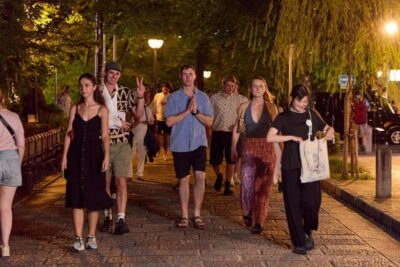
Gion Geisha District Walking Tour – Stories of Geisha
Read our review →
Best of Kyoto: Gion, Geisha, Pagodas & Cobblestones
Read our review →
Kyoto Kimono Rental Experience (Optional Exquisite Hair Styling/Japanese Makeup/Photography) (Ookini Kiyomizu-dera Main Store)
Read our review →Browse the lists this tour appears in