
Reviewed · CASTLES AND HISTORIC SITES
From Nagoya: Inuyama Castle, Ena Gorge, Magome, Tsumago Tour
Japan beyond the big cities comes into focus on this long day from Nagoya. For $60, you visit a national treasure castle, a scenic gorge, and two preserved Nakasendo post towns, with bus transport handling the awkward distances between them. I especially like the mix of history and scenery, plus the generous free time at Magome and Tsumago.
I also like the convenience of starting near Nagoya Station and not having to piece together several local trains and buses. The main drawback is the pace: ten hours is a long day, and the schedule gives you a useful taste of each place rather than a slow, lingering visit. Comfortable shoes are essential, and English support may depend on translation tools rather than a fully English-speaking guide.
In This Review
- Key points to know before booking
- Why this Nagoya day trip works
- Meeting near Nagoya Station
- Climbing into Inuyama Castle
- A short pause at Ena Gorge
- Lunch and old streets at Magome-juku
- Tsumago-juku and the final old-road stop
- Guide support and language expectations
- What the $60 price really covers
- The walking, weather, and daily rhythm
- Should you book this tour?
- FAQ
- Where does the tour meet in Nagoya?
- How long does the tour last?
- Is transportation included?
- Is admission to Inuyama Castle included?
- Are meals included?
- What languages are available?
Key points to know before booking
- Inuyama Castle is the historical highlight: You enter one of Japan’s twelve surviving original castle towers, with steep stairs and an exposed upper lookout.
- Ena Gorge changes with the seasons: The dam lake, unusual rocks, bridge, and trees offer a short scenic break between the castle and mountain towns.
- Magome is your best stop for food: You get about 90 minutes here, enough for local snacks, lunch, stone streets, shops, and old wooden buildings.
- Tsumago feels smaller and quieter: Its preserved post-town streets are ideal for a gentle final walk, though you have only about an hour.
- The bus saves serious planning time: Round-trip transport connects four places that are not simple to combine independently in one day.
- The guide service is practical rather than polished: The guide speaks Japanese and Chinese, and English assistance may involve audio or translation support.
Why this Nagoya day trip works
This excursion is built around contrast. Inuyama gives you a compact, serious piece of Japanese castle history. Ena Gorge adds water and rock formations. Magome and Tsumago then shift the mood to old roads, wooden houses, tea shops, and local food.
That range is the main reason I think the tour is good value. You are not spending the full day at one attraction, and you are not simply riding around looking out of a bus window. You get four distinct places, each with a clear purpose.
The trade-off is time. The full day includes roughly four hours of transfers, including the return ride to Nagoya. That leaves about four and a half hours for sightseeing, lunch, and walking. You should book this with the mindset of sampling the Kiso Valley area, not mastering every corner of it.
The timing also means you need to watch the clock. At each stop, your guide will set meeting instructions and departure times. A relaxed coffee that turns into an hour can become a very fast walk back to the bus.
More Castles and Historic Sites in Nagoya:
- Nagoya Castle Ticket
★ 4.6 · 326 reviews - Nagoya Samurai & Toyota Tour guided by a friendly local
★ 5.0 · 24 reviews - Osaka Castle Ticket
★ 4.7 · 12,450 reviews
Meeting near Nagoya Station
The meeting point is easy to find if you use the west side of Nagoya Station. Look for the BIC CAMERA at the West Exit, then find the Ministop convenience store behind it.
Arrive at least ten minutes before departure. That sounds simple, but Nagoya Station is large, and station exits can be confusing if you are carrying luggage or arriving from another train line. Give yourself extra time to get above ground and locate the convenience store.
The day begins with a bus transfer of about one hour to Inuyama. Round-trip transport is one of the strongest parts of the experience. Without it, combining Inuyama, Ena, Magome, and Tsumago would require careful connections and a much firmer grip on rural transport schedules.
The vehicle also gives you a chance to rest between stops. Bring water, since drinks and meals are not included. Cash is smart too, as some smaller shops and food stalls may not accept cards.
Climbing into Inuyama Castle
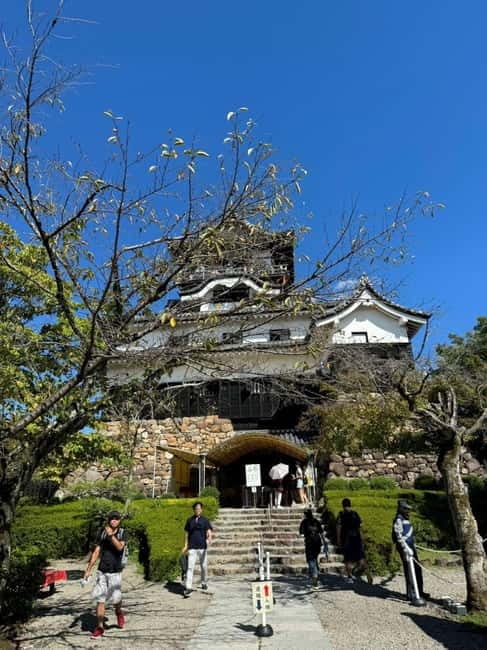
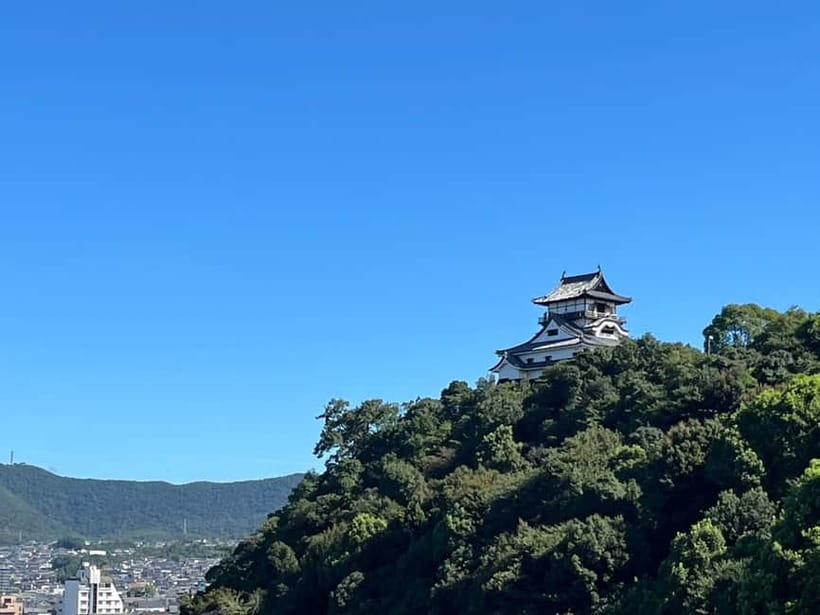
Inuyama Castle is the first major stop, with about an hour for a guided visit, sightseeing, and walking. Built during the Muromachi Shogunate period, it sits on a hill beside the Kiso River. Its setting gives you an immediate sense of why castles were placed where they were: high enough for views and defense, close enough to control movement along the river.
The castle is also called Baidi Castle. That name recalls the Chinese poem Early Departure from Baidi Castle by Li Bai, an unusual cultural connection for a Japanese castle.
The building itself is the reason to pay attention. Inuyama is one of only twelve ancient castle towers still existing in Japan. It is also counted among Japan’s four National Treasure Castles, along with Himeji, Matsumoto, and Hikone.
Inside, the proportions are compact and the stairs are steep. The tower has three floors on the outside, four floors inside, and two underground levels. That unusual arrangement makes the castle feel more like a working fortress than a reconstructed museum.
You should expect wooden floors, narrow passages, and steep climbs. This is not a smooth, modern attraction. Wear shoes that stay firmly on your feet, and take care on the stairs.
The upper level provides the reward. From the castle, you can look toward the Kiso River and surrounding area. The one-hour stop is enough for the main interior and views, but not for a slow exploration of every nearby street.
A short pause at Ena Gorge
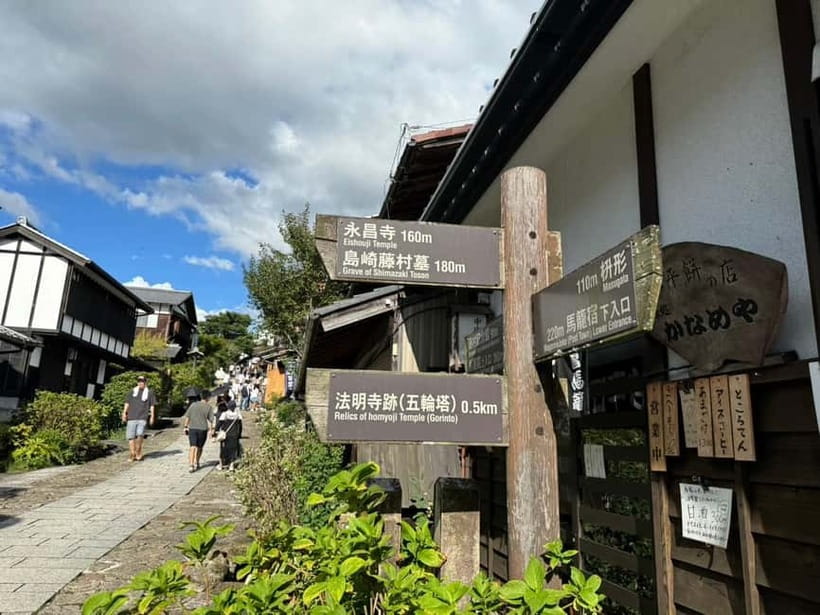
After Inuyama, the bus continues for about an hour and a half to Ena Gorge. You have roughly 30 minutes here for sightseeing and walking.
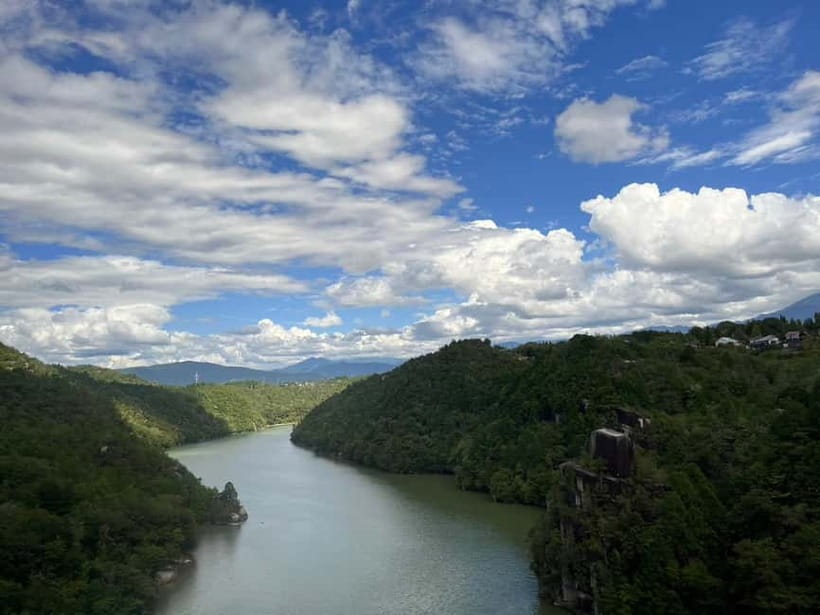
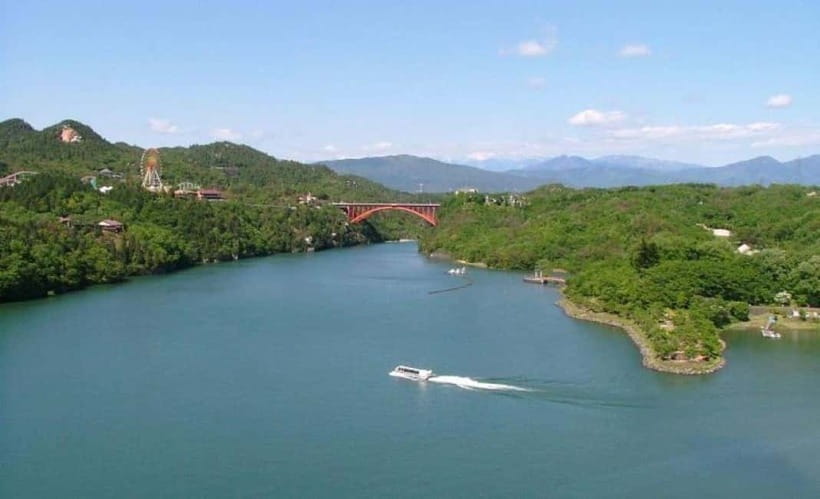
Ena Gorge is not a purely natural river valley. It is a man-made lake created when the Kiso River was stopped for construction of the Oi Dam about 80 years ago. The name Ena Gorge was given by geographer Shige Subaru in 1920.
The area stretches from the lake formed by the dam toward the Nakatsu River upstream. Water, exposed rock, and wooded slopes make it a pleasant change after the dark timber of the castle.
The unusual rocks are the star of this stop. Umbrella Rock, which appears to pierce up from the ground, is a nationally protected natural feature. Another notable formation is a red rock covered with brown moss. These formations were shaped by natural erosion and give the gorge more character than a simple reservoir view.
Thirty minutes is enough for a look and photographs, but not for extensive walking. Think of Ena Gorge as a scenic interlude, not a full hiking stop. If you prefer long trails and quiet observation, this portion may feel brief.
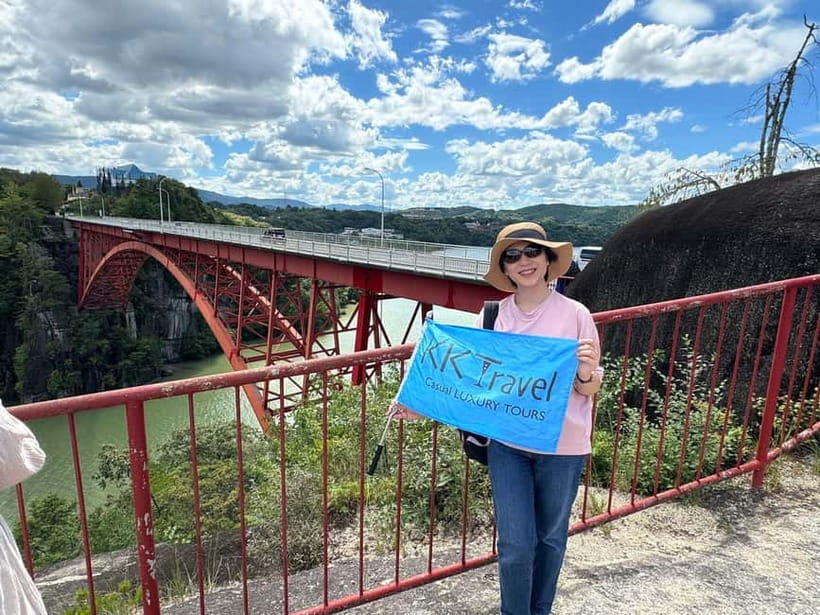
The season can change the view considerably. About 200 cherry trees bloom in Ren Park in spring. Summer brings thick green foliage around the red Ena Gorge Bridge. Autumn adds red leaves and maple color to the water. In winter, mandarin ducks and starlings may appear, making the area useful for bird observation.
That seasonal variety is worth keeping in mind when you choose your date. The tour does not depend on one single view, but the gorge will feel different in April than it does in November.
A few more options to weigh up in Nagoya
- LEGOLAND® Japan Ticket
★ 4.7 · 11,787 reviews - Port of Nagoya Public Aquarium Ticket
★ 4.8 · 4,343 reviews - Shirakawa-go & Takayama Old Town Day Tour (Optional Hida Beef Lunch)
★ 4.6 · 3,936 reviews - Hida Takayama & Shirakawa-go Gassho Village Day Trip (Departing from Nagoya, optional observatory tour included)
★ 4.7 · 2,837 reviews
Lunch and old streets at Magome-juku
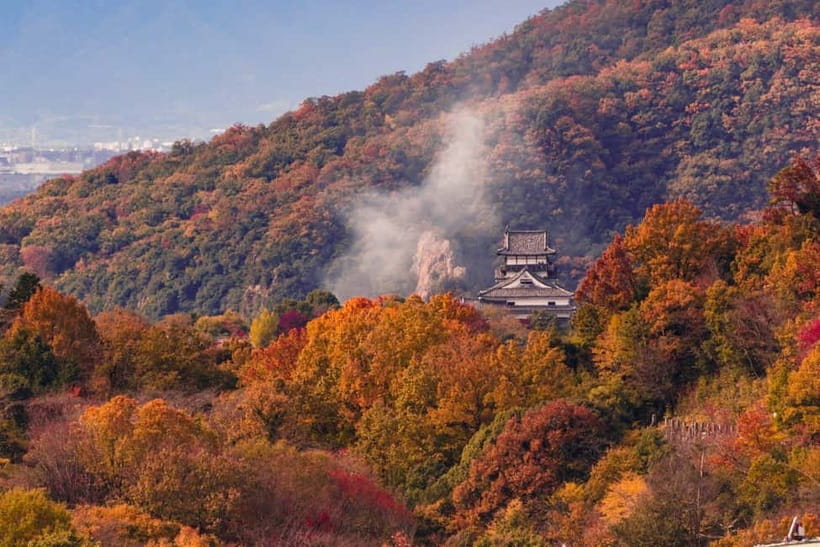
The next transfer takes about 45 minutes, bringing you to Magome-juku for around 90 minutes. This is the most useful stop for lunch, local snacks, and unhurried wandering.
Magome was the 43rd of the 69 post stations along the Nakasendo Road during the Edo period. The route connected Edo, now Tokyo, with other parts of Japan across roughly 540 kilometers. Magome is about 332 kilometers from Edo Nihonbashi, the road’s starting point.
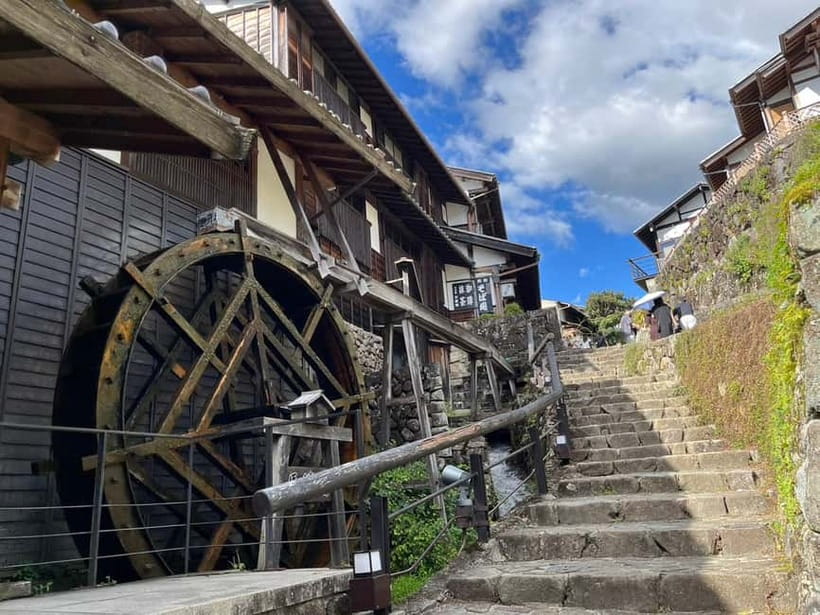
The street climbs along a steep mountain route, with stone paving and wooden buildings on both sides. The old wells and waterwheels remain, and flowers sit outside many of the houses. The result is attractive without feeling like a modern shopping district dressed up for photographs.
You can browse tea shops, small food businesses, art shops, inns, and izakayas. Lunch is not included, so this is where you should use your cash for regional food and snacks.
Ninety minutes gives you a sensible amount of freedom. You can eat, walk the main street, step into a shop or two, and take photographs without racing from one end to the other. Still, you probably will not have time for a long meal followed by a full exploration of every side street.
Magome is also one end of the well-known post road to Tsumago. The route between the two towns is now popular for hiking and has received one star in the Michelin Green Guide. This tour takes you by bus to both towns rather than giving you a dedicated hike between them.
That point matters. If walking the entire Magome to Tsumago route is your main goal, this is not the right format. If you want to see both historic towns without committing to a longer trail, the bus tour is much more practical.
Tsumago-juku and the final old-road stop
A 30-minute transfer brings you to Tsumago-juku. You have about an hour for a guided visit, free time, sightseeing, and walking.
Tsumago is described as a small, charming place, and the scale is part of its appeal. Preserved buildings line the old street, giving you a clear sense of a former post town rather than a broad tourist complex.
After the busier activity of lunch in Magome, Tsumago works well as the quieter final stop. You can walk at an easy pace, study the wooden facades, and take photographs without needing to cover a large area.
The hour is enough for a good introduction. As with Magome, it is not enough for endless browsing or a long sit-down meal. You will need to keep an eye on the departure time, especially if you stop in a shop.
The post road connection gives Tsumago extra meaning. You are not looking at isolated old buildings. You are seeing part of the route used by merchants and other travelers during the Edo period, when the Nakasendo was an important overland road.
Guide support and language expectations
The listed tour languages are Japanese and Chinese. That is important to understand before booking if you need detailed English commentary throughout the day.
English assistance may still be available in practical ways. One guide used audio material and translation support to explain routes and times, and another guide was described as able to handle three languages. The useful lesson is to expect help with meeting instructions and basic information, but not necessarily a continuous English lecture at every stop.
The guide’s role appears especially valuable for keeping the day moving. With four stops and several long transfers, clear departure instructions matter as much as historical commentary.
The strongest service points are punctuality, helpfulness, and smooth transport. One account specifically praised the driver’s kindness and willingness to communicate through a translator. Another praised the guide’s clear explanations and the way the route and times were explained.
There is one practical reservation: seats may not be assigned in advance. If sitting with a companion is important to you, check the current arrangement before booking. The exact vehicle and seating process are not specified here.
What the $60 price really covers
At $60 per person, this tour offers strong value if you want several rural sights in one day. The price includes round-trip bus transport, a live guide, and admission to Inuyama Castle’s First Avenue area.
You still pay for lunch, snacks, drinks, and personal purchases. That is normal for a day built around historic town streets, where food stalls and small shops are part of the experience.
The biggest saving is not the ticket price. It is the time and effort saved by avoiding separate transport planning. You move from Nagoya to Inuyama, then to Ena Gorge, Magome, and Tsumago, before returning to the station area. Doing that independently may give you more freedom, but it also demands careful research and leaves more room for missed connections.
I would call the price particularly good for a first visit to the Kiso Valley area. It is less compelling if you already know Magome and Tsumago well, or if you want to spend half a day inside Inuyama Castle and its surrounding streets.
The walking, weather, and daily rhythm
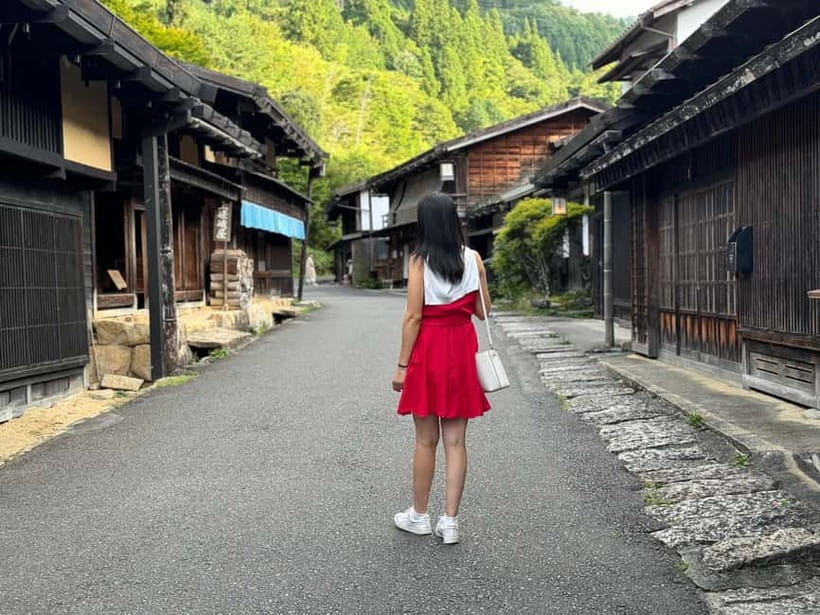
This is a walking day, even though the bus handles the long distances. You will climb at Inuyama Castle, walk stone streets in Magome, and explore preserved streets in Tsumago. Comfortable shoes are not optional.
Bring water and dress for the forecast. The schedule includes outdoor stops in every season, and the experience changes with weather. Spring may bring cherry blossoms, summer can highlight the green trees around the gorge, autumn adds maple color, and winter can offer bird sightings.
A camera is worth bringing, but do not let photography slow you too much. The stop lengths are fixed, and the return transfer to Nagoya takes about two hours.
The tour suits you best if you like variety, organized transport, and a full day away from the city. Families with children may appreciate the clear structure, though steep castle stairs and a long day could test younger legs. It also suits anyone who wants historic streets and local food but does not want to arrange rural buses alone.
It is a weaker match if you dislike fixed schedules, need extensive English guiding, or want a full hiking day on the Nakasendo route.
Should you book this tour?
I would book this tour if you have one free day in Nagoya and want a broad sample of central Japan beyond the city. The combination of Inuyama Castle, Ena Gorge, Magome, and Tsumago gives you real variety for a modest price.
Book it knowing that the day is busy and the commentary may rely on Japanese, Chinese, translation, or audio support. Arrive early at the Ministop behind BIC CAMERA, bring cash, wear sturdy shoes, and treat the free time as focused exploration rather than a leisurely stay.
If your priority is convenience and range, this is a smart choice. If your priority is slow travel, long walks, or detailed English history talks, arrange the area independently instead.
FAQ
Where does the tour meet in Nagoya?
The meeting point is at the Ministop convenience store behind BIC CAMERA at Nagoya Station’s West Exit.
How long does the tour last?
The experience lasts about 10 hours, including transfers between Nagoya, Inuyama Castle, Ena Gorge, Magome-juku, and Tsumago-juku.
Is transportation included?
Yes. Round-trip bus transportation from the Nagoya meeting point is included.
Is admission to Inuyama Castle included?
Yes. The price includes the Inuyama Castle First Avenue admission ticket.
Are meals included?
No. Dining expenses, personal purchases, and other costs not specifically listed are excluded. Bring cash because not every place accepts credit cards.
What languages are available?
The listed languages are Japanese and Chinese. English assistance may be provided through translation tools or audio, but continuous English guiding is not guaranteed.
Just added in Nagoya
- Hida Takayama & Shirakawa-go Gassho Village Day Trip (Departing from Nagoya, optional observatory tour included)★ 4.7 · 2,837 reviews
- Shirakawa-go & Takayama Old Town Day Tour (Optional Hida Beef Lunch)★ 4.6 · 3,936 reviews
- Nagoya Castle Ticket★ 4.6 · 326 reviews
- Port of Nagoya Public Aquarium Ticket★ 4.8 · 4,343 reviews
- LEGOLAND® Japan Ticket★ 4.7 · 11,787 reviews
- Ghibli Park Ticket in Aichi★ 4.4 · 2,205 reviews
- Nagoya Endoji Food and Cultural Tour★ 5.0 · 12 reviews
- Sumo Tournament Experience in Nagoya★ 5.0 · 12 reviews
Castles and Historic Sites, compared.

Imperial Palace and Shogun Historical Walking Tour
Read our review →
Tokyo Castle & Imperial PalaceーShogun Walking Tour
Read our review →
Nijo-jo Castle and Ninomaru Palace Guided Tour
Read our review →
Samurai Ninja Museum Guided tour and Experience
Read our review →Browse the lists this tour appears in